
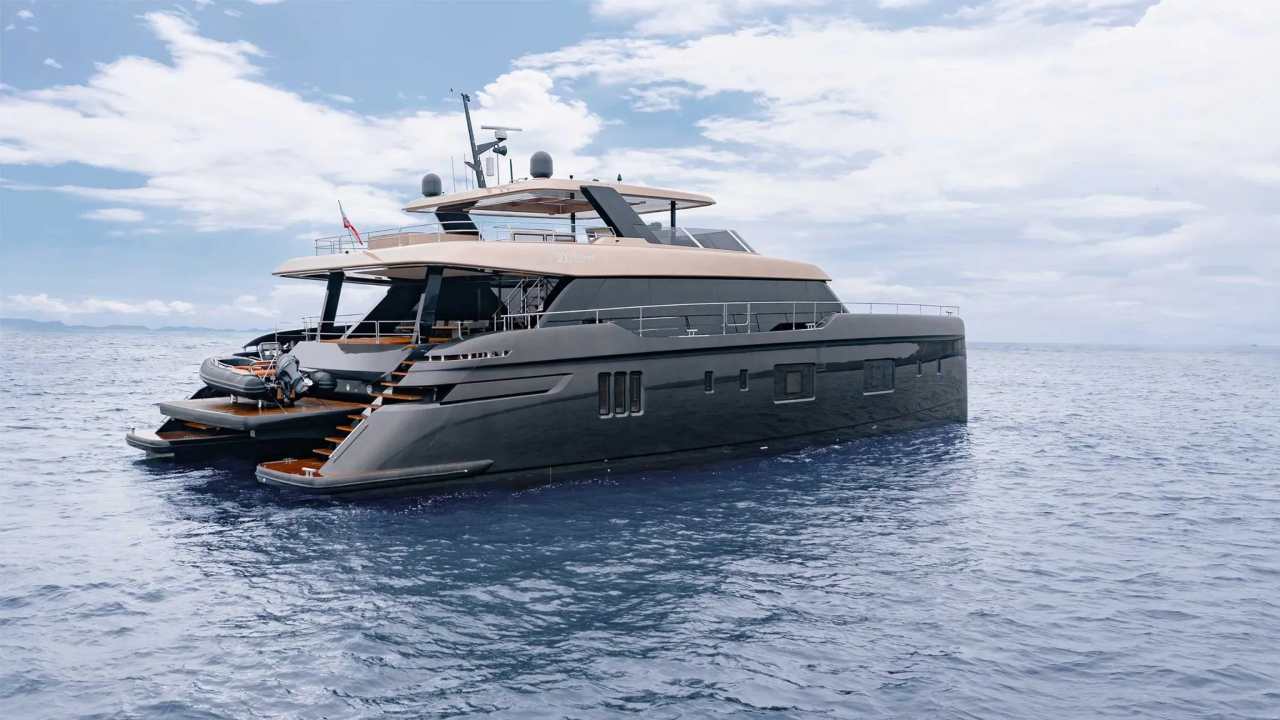
The 100 Sunreef Power S represents a particularly refined declination of the concept of motor superyacht on multiscafi platform. In a length within 30 meters, it offers a width greater than 13 meters and a useful surface that, according to the yard, can exceed the 500 m2 overall between indoor and outdoor spaces, bringing on board a typical life quality of units over 35-40 meters. The combination of double bass fishing hull, large horizontal volumes and baricentro content allows you to get extended passive stability, reduced roll angles and an extremely efficient cruising platform. The result is a yacht capable of combining comfort, autonomy and personalization, with a range of custom layouts and solutions that make it a design tool adaptable to the user profile of the owner, from family cruising of long range to the charter of high range.

Profile of the construction site: Sunreef Yachts
History, construction philosophy, reputation
Born in Gdansk (Poland), Sunreef Yachts is recognized as a leader in construction customized of luxury sailing and motor boats, with a production ranging from 60 feet to large units over 40 meters. The construction site has built its reputation on the ability to industrialize customization, integrating advanced composite processes, excellence carpentry and superyacht naval planting. In recent years Sunreef has accelerated on sustainable research (composite matrix integrated solar panels, hybrid/electric systems, energy optimizations), without sacrificing sartorial finishes and unconventional layout that exploit the large free-plane footprint typical of the catamaran.
Shipbuilding and dimensions
Geometry, proportions, multi-stage platform
The 100 Sunreef Power S platform adopts two symmetrical hulls bass fishing (about 1.5 m indicative) connected by a robust bridge deck carrier. The maximum width about 13,5 m allows you to get a torque rigidity high of the main bridge and, at the same time, a huge living area: wide living room, aft cockpit of dimensions “superyacht” and a garage poppiero transversal of unusual volumes for a 28-29 meters. The length outside is in the order of 28,6 m, measure placing the unit in the segment of the super-cat engine.
Weight distribution and dynamic impact
The separation of floating volumes involves moments straightening higher than equivalent monohulls and a minor resistance induced by beaking at low and medium speeds: the boat moves with reduced angles, for the benefit of comfort and efficiency. The wide connection beams between the hulls (bridge deck) is dimensioned to contain bending and cutting stresses, preserving stiffness and limiting vibrations. In the waters chop, the free height of the central bridge is optimized to mitigate phenomena of slamming and impacts of residual wave, typical of fast multiscafi.

Materials and construction
Advanced compounds and plant integration
The hull is in fiberglass / composite (GRP) with vacuum infusion techniques and targeted use of fiber reinforcements for bulkheads, longherons and structural modules. This approach allows for calibrating stiffness where it serves and lightens secondary volumes, improving dynamic response. The superstructure offers large glass surfaces, with integrated mountings in the composite to contain weights and maximise brightness. The internal carpentry employs fine essences, natural skins and metals, with a level of customization very high for mood, palette and texture.
Photovoltaic integration: “Eco” technology applicable
While being the “S” version focused on thermal propulsion, many Eco line solutions are translatable on request: solar panels integrated into the composite (tect, superstructure, vertical areas) and distributed generation capacity to feed onboard and hotel load, with concrete benefits on reduction of diesel cycles generators.
Motors, propulsion and transmissions
Basic scheme: high reliability diesel twin
The 100 Sunreef Power S typically adopts two diesel engines 1.300 hp each with axis line transmission: a robust configuration, easily maintainable and with wide support network on a global scale. In relation to the profile of use (charter vs. private owner) are possible propeller calibration, reduction adjustments and configurations exhaust and cooling to optimize consumption, noise and vibration.

Alternatives and hybridization
On request, the yard can integrate hybrid modules or solutions of distributed generation for prolonged manoeuvres and permanences in low impact satin. In profiles slow cruising you get a sensitive reduction of specific consumption, with benefits on autonomy and acoustic comfort. High-density batteries, housed in ventilated rooms and monitored by dedicated BMS, power “hotel” and electric pods forharbor maneuvering where required. (Conceptual transfer from Eco implementations).
Performance: speed, cruise, autonomy and consumption
Indicative trends and range
The performance varies according to the installation, load and configuration of the propellers/reducers. Public information on units for sale and testing indicate maximum speed in the order of 16-20 knots, with economic cruising between 8 and 12 knots, where the multiscafi platform offers the best compromise between efficiency and comfort. Fuel tanks can reach 20,000 litres, enabling transocean autonomy to displaced cruise regimes.
The signature of low speed resistance is favourable thanks to the slenderness of the hulls: the specific consumption at 8-10 knots results bottom to that of monoscaphs of equal footprint. The longitudinal arrangement is maintained dish, with aerodynamic benefits on front surfaces and perceptive comfort on board. In sea format, the greater width reduces lateral acceleration and long-term dynamic fatigue for passengers and crew.

Onboard systems: electronics, home automation, navigation
Plancia and network
The control bridge integrates latest generation electronic suites with radar doppler, chartplotter multi-touch in 4K, autopilot adaptive and integration of AMS (Alarm Monitoring System) systems for centralized control of engines, generators, HVAC, pumps and tanks. The network is based on NMEA 2000 backbone and Ethernet segmentation for high-band data.
Domotics and comfort
The part domours includes RGBW lights management, electrical curtains and obscures, multiroom A/V with D dedicated and outdoor cinema on flybridge via concealed projector and retractable screen. The fly also houses a spa pool custom with area lounge e wet bar, scanned by ergonomic routes and calibrated wind protections for use on a cruise.
Interior design and architecture
Layout and space study
The main deck offers a wide lounge with 360° view and direct connection to the cockpit poppiero through sliding windows at full height. The shipowning cabin can be placed on the main deck with reserved access to a terrace of bow, solution that exploits the geometry of the multiscafi to obtain privacy and natural light out of scale. The guest cabins find place in the two hulls, generally in configuration 4 or 5 suites, all with en-suite bathroom. The crew zone is separate and soundproofed, with dedicated technical paths.

Designers, materials and details
Exterior lines, hard top aerodynamic and horizontally developed stained glass make up a contemporary formal language, accentuated by metal palette and inserts rose gold seen on some inaugural units. On board, the project lends itself to moodboard very different: from vintage warm with dark wood and satin brass minimal with lightened stones and pale metals. Customized carpentry allows you to integrate architectural furnishings (kitchen islands, structural libraries, day bar), without penalizing functional passages and escape routes.
Life on board and usability
Common spaces and “beach mode”
The stern adopts a beach area at water level with modular platform and symmetrical side stairs; it accesses a garage suitable for tenders of generous size and water toys. Theaft cockpit offers outdoor dining with table for large companies and deep sitting, while the flybridge is thought as panoramic terrace equipped for social living and entertainment.
Privacy and routes
One of the distinctive traits of multiscafi is the functional separation between guest and crew areas, with service corridors that allow the staff to operate without interfering with the life on board. The shipowning room up main deck eliminates vertical sharing with technical premises, mitigando noise and vibrations. The remarkable width allows to respect curved rays and more generous accessibility standards, improving usability and safety.

Navigation performance: testing and feedback
Sea trials and behavior
The tests in the Baltic and the first exits of the varate units highlighted a stable trim and one silence above the category average, with a clean and predictable wave of trail. The platform reacts well to transversal gusts, while exceptional widths give feeling of “land on the sea” even in prolonged transfers. Industry sources emphasize usability of the beach club and custom finishes as elements of differentiation.
Perceptive comfort
Beyond pure speed, the 100 Sunreef Power S convinces to the accelerations contained and the sweet answer on long sea, which results in less fatigue for passengers and crew: a key attribute for transocean autonomy at the displacement cruise speed.
Market and competition
Positioning for price and segment
The 100 Sunreef Power is placed in the band superyacht multiscafi 28–30 m, with prices in the order of eight digits in euro for a complete custom construction. The question is growing, fed by shipowners who seek volumes from 40 m in a footprint of 30 m, and by operators luxury charter oriented to high privacy “resort-like” layout.
Direct Competitor and Context
- Horizon PC90/ PCB (lower scale or different setting): excellent motor multiscafi but with generally lower volumes and widths.
- Fountaine Pajot Power 67: smaller size solution, ideal for premium charters, but not comparable for metratures and garages.
- SILENT 120 Explorer (full-electric): different concept focused on solar energy and electric propulsion; interesting comparison on the technological/sustainable level, but with different settings and costs.
Key monohull, alternatives for similar volumes require Top (over 35 m), with inevitable repercussions on operating costs, moorings and crews. In this sense, the 100 Sunreef Power S stands as solution “smart size” to maximize dwelling and horizontal spaces. (Section analysis on a comparative basis of market and public data).
Target customer
Private owner
Family profiles and owner-operator with professional crew find in the 100 Sunreef Power S a platform transversal: slow cruises in the Mediterranean, seasonal transfers to Caribbean, living in shady with residential comfort e entertainment by larger superyacht (cinema, gym, spa pool, wet bar, beach club).

Luxury charters and representative companies
The model responds well to charter programs high value added: equivalent multiple cabins on separate hulls, large common areas and privacy superior. The poppiero garage and the large platforms allow an offer water toys competitive.
Results, awards and roadmaps
Orders and Interest
The 100 Power line registered multiple fees, sign of market interest towards super-cat custom with ocean autonomy and adaptable layout. The varate units and evolutions “2.0” confirm a learning curve of the construction site in continuous rise and a strong backlog on this platform.

Future prospects and direction of the yard
Evolution “2.0” and Eco contamination
Recent iterations (version 2.0) have introduced updates of propulsion package, finishes and layout optimizations, with focus onefficiency and onenergy integration. Technological contamination from the Eco range suggests a growing hybridization of utilities and a reliable management of integrated solar production, in line with industry trends oriented to reduction of emissive prints without sacrificing luxury of home.
Standardization of the “residential yachting”
The 100 Sunreef Power S is a key vector of the Sunreef strategy that pushes towards yachting residential: volumes, privacy, acoustic comfort and autonomy as primary parameters of the project. In perspective, it is reasonable to expect further integrations of energy management, anti-rolling systems and predictive sensors, as well as solutions of connected to reduce technical stops and optimize operating costs.
Image gallery


Synthetic specifications (indicative and configurable data)
- Length f.t.: ~28,63 m
- Maximum width: ~13,50 m
- Fishing: ~1.5 m
- Typical motorization: 2 × 1.300 hp diesel, axis line
- Fuel tanks: up to ~20.000 L
- Fresh water capacity: ~2.400 L
- Maximum indicative speed: ~16–20 kn (depending on setup)
- Layout cabins: 4–5 guests + crew, highly custom
Video
Critical synthesis and positioning
Strengths: unparalleled dwelling for LOA, intrinsic stability, garage and beach club of superyacht scale, flybridge with spa pool and integrated cinema, shipowning layout with access to bow terrace, strong customization and two hulls that enable privacy and distribution of services.
Trade-off: peak speed contained compared to maxi monohull planners; handling mooring and beam important to evaluate in some marines; mass and important surfaces require commissioning accurate HVAC/AV systems and energy management to make the most of the benefits of the platform.
Technical verdict: the 100 Sunreef Power S is a surface multiplier and quality housing, ideal for long stays in ray and ocean transfers at economic level. It does not look for speed records: it maximises instead efficiency, comfort and customization, with a contemporary aesthetic language and a technological system aligned with superyacht standards. In a market where the value per square meter “viable” is increasingly relevant, this platform is placed between absolute references of the super-cat segment.