
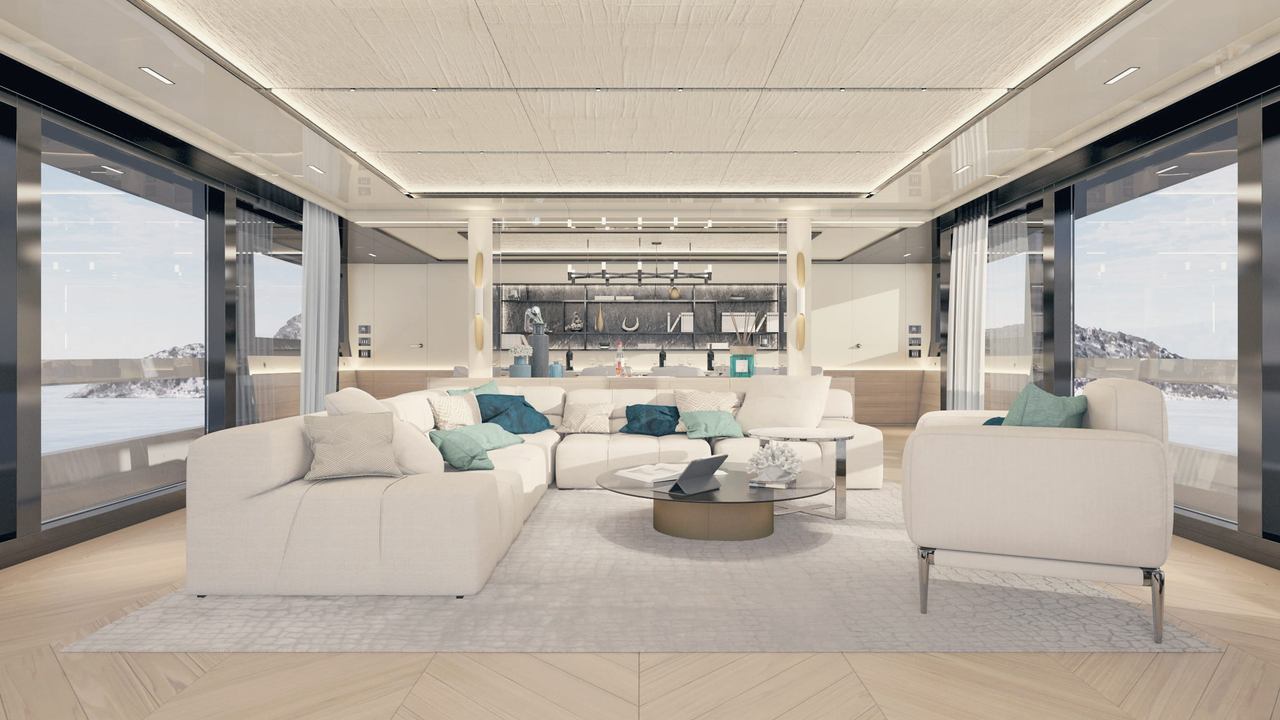
The Arcadia A115 should be configured as a hotel system for ten guests in five cabins or twelve in six, with eight crew beds in four cabins according to the current table. Two 55 kW generators, 324,000 Btu/h air conditioning, 4,100 litres of water and 2,200 litres of total waste must support the mission. Photovoltaics, windows, terraces and upper deck expand the experience, but add interfaces. The quality of the specimen depends on the consistency between layout, energy, weights, service and maintenance.
| Decision | Base declared | Configuration verification |
|---|---|---|
| Guests | 10 beds/5 cabins; 12/6 optional | Bathrooms, escape, climate and storage |
| Equipment | 8 beds in 4 cabins | Comparison with capacity up to nine described elsewhere |
| Generation | 2 × 55 kW, 50 Hz | Charges, redundancy and night mode |
| Climate | 324.000 Btu/h | Sun, glass, people and openings |
| PV | About 4–5 kW declared | Contractual power and real production |
| Fresh water | 4.100 l | Consumption, production and reserve |
| Grey water | 1.200 l | Levels, pumps, vents and discharge |
| Black water | 1,000 l | Capacity for people and operational area |
| Fuel | 23 000 tonnes | Usable, transfers and prefiltration |
| Bar and sixth cabin | Layout Options | Drawings, weights and utilities of the specimen |
Define private or commercial use
The plan was born from the profile: weeks in rada, transfers, events on board, number of guests, crew shifts and seasons. A private use with five cabins can favour storage and privacy; the optional six cabin layout increases capacity but also load on bathrooms, kitchen and air conditioning. Commercial use adds procedures, spare parts and requirements to be checked with flag and certification.
Each scenario includes normal operation and avary. It establishes what remains available with a generator, pump or off-service counter. The capitulate assigns every power, location, interface and maintenance user. Decorative choices arrive after closing the balance sheets.
Salone: try the service with all the seats occupied
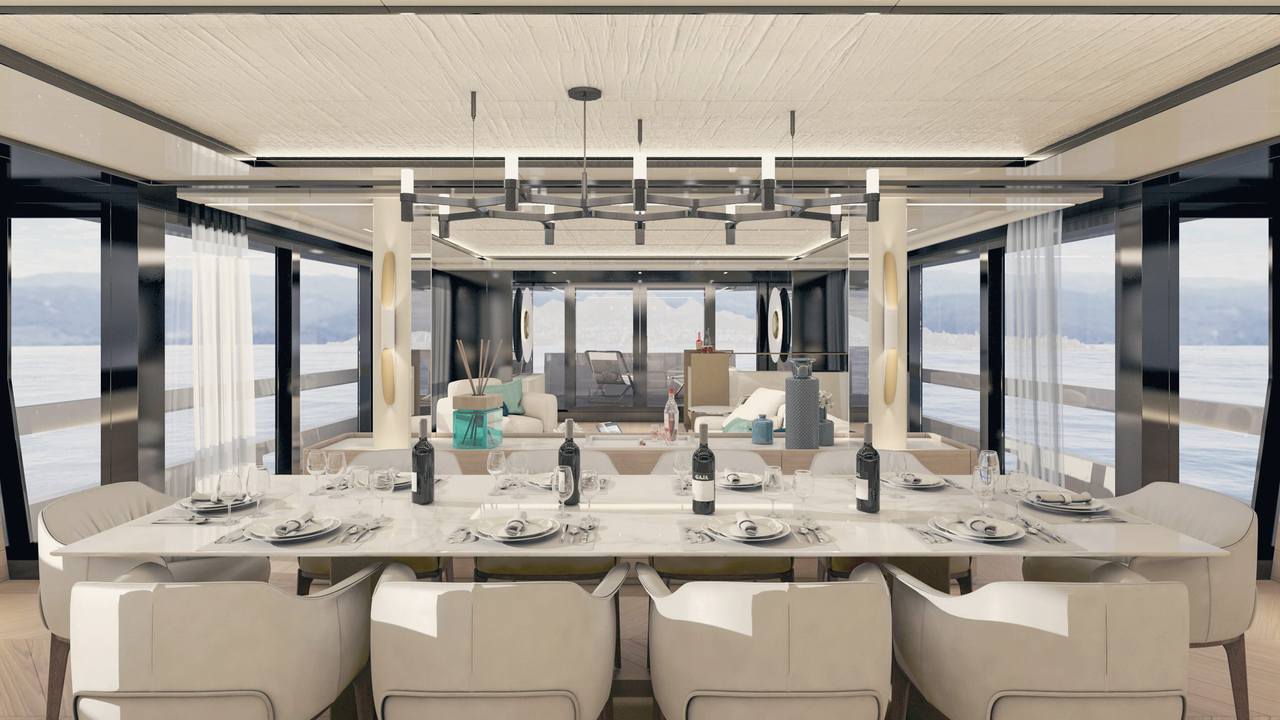
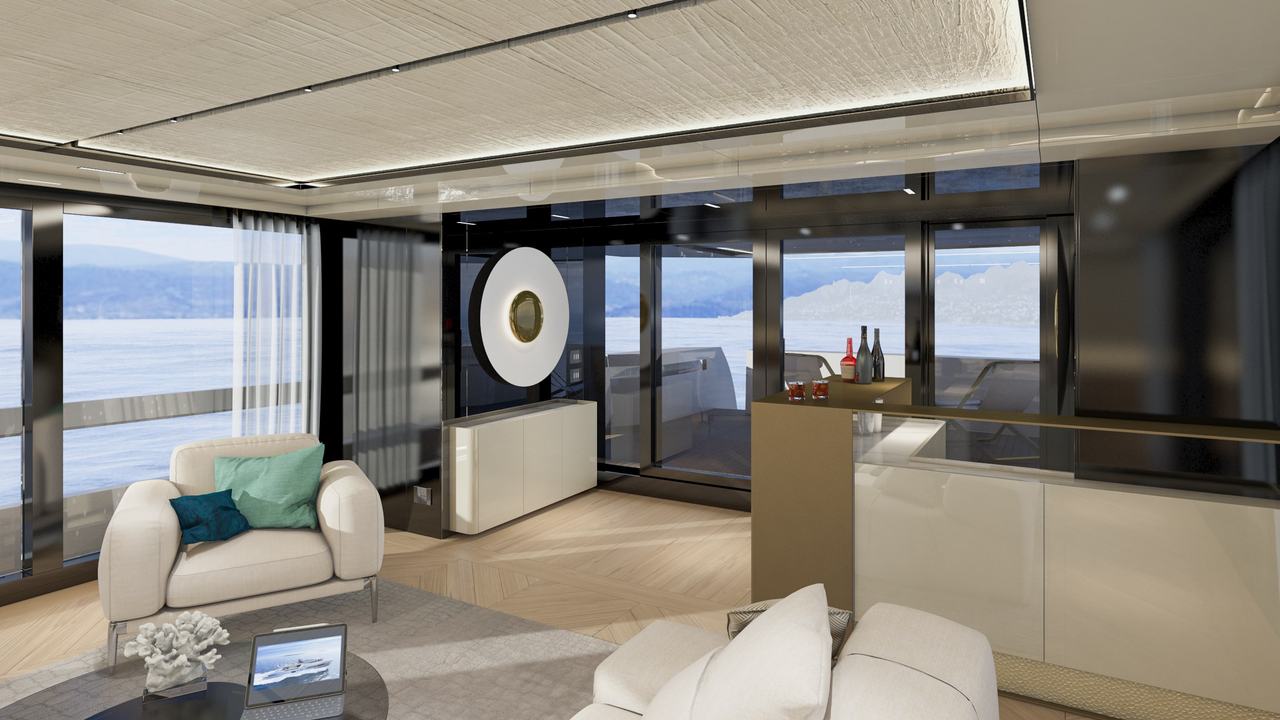
The panoramic lounge offers large surfaces and free furnishings. A real test uses chairs, tables and doors in the ordered configuration. The routes from the kitchen to lunch must remain free; furniture and objects need stops for navigation. Panels and bases should not cover fan-coil, squares or valves.
The thermal load changes with sun, people and appliances. It measures temperature and humidity at multiple points, not only near the sensor. Curtains and shields must have secure positions. Night reflections should not interfere with the bridge. Visual continuity has succeeded when service and maintenance remain possible.
Lunch and kitchen: a single operating flow
The table can accommodate many guests, but busy chairs and moving staff reduce the steps. The testing simulates preparation, service and reorganization. Doors and drawers must open without conflicts. Glasses, dishes and bottles require containment. The exits are always accessible.
The kitchen must support the maximum agreed number. Refrigeration, cooking, washing and hot water work simultaneously as tension, pressure and ventilation are observed. The discharges must not flow with variable trim. An elegant but slow layout in the service is not suitable for mission.
Jardin d’hiver and photovoltaic cover
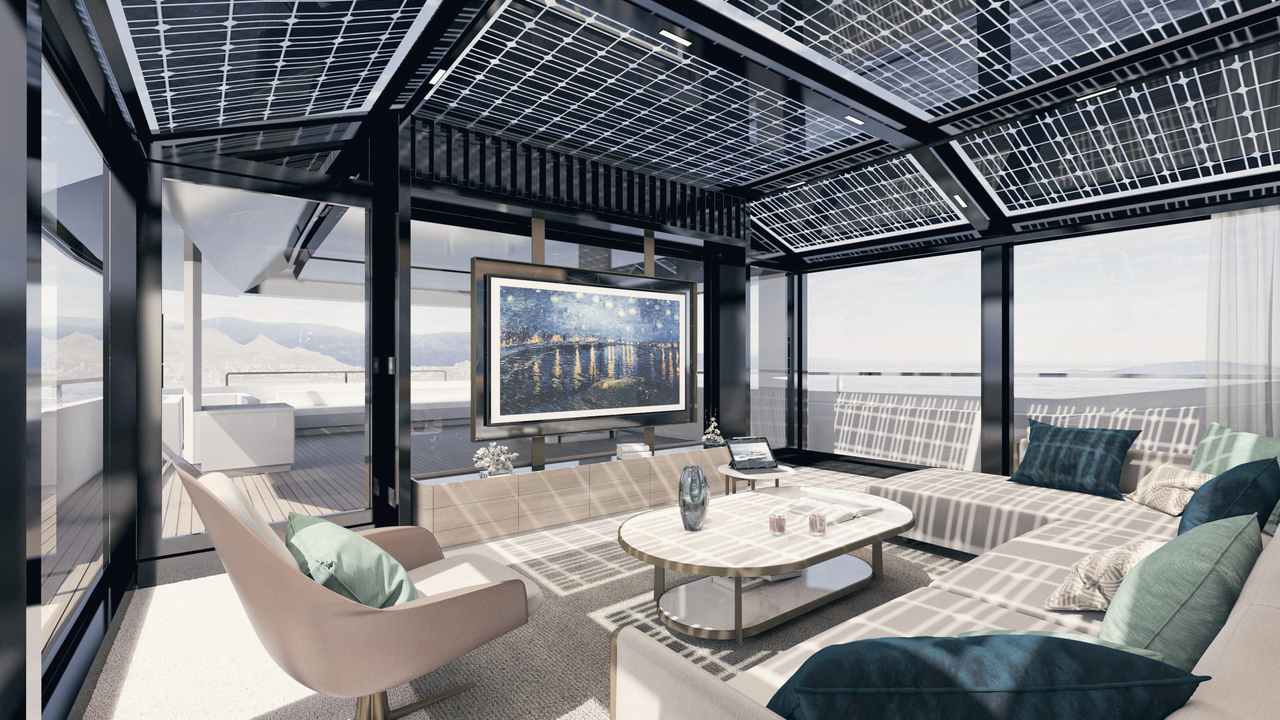
The jardin d’hiver uses an integrated cover with solar modules. The overview speaks of more than 40 square meters and about 4 kW; the technical table shows ±5 kW. The specific contract must clarify modules, peak power, regulators and accumulation. Daily production depends on sun, temperature, shadow and cleanliness.
Glass and panels also regulate shadow and heat. Temperature under cover, seal, condensate and access for cleaning. Cables and penetrations must be protected. Added antennas should not create persistent shadows. Production is recorded to identify faults or degradation.
Four or five kW do not replace generators
Photovoltaics can feed selected services or reduce generation hours, but its contribution must be included in the budget. Four or five kW peak is not equivalent to continuous energy. Refrigeration, air conditioning, kitchen and laundry can easily exceed this power. Battery and inverter determine when the energy is usable.
The monitoring system must show production, charge, consumption and alarms. It proves the behavior with partially shaded modules and with battery close to the limits. Protections and cleaning must be accessible. The crew must know about shutdown and overheating response.
Harbour office: silence, climate and accessibility
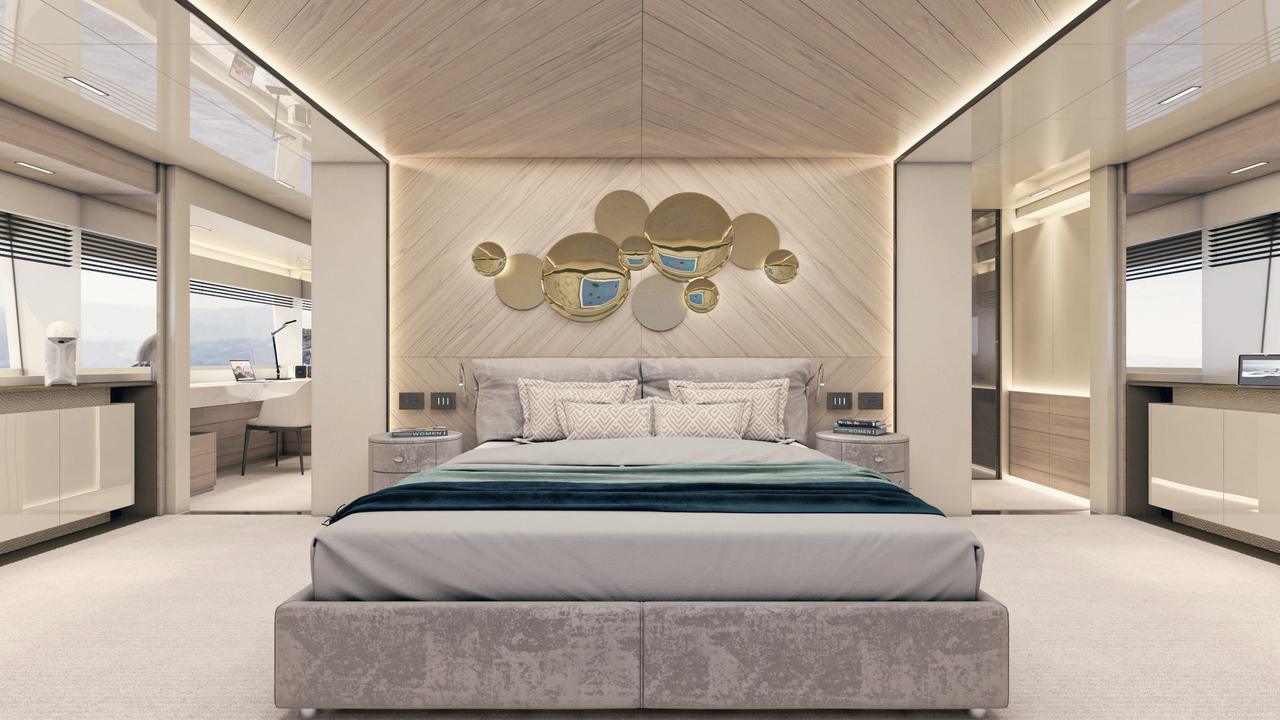
The cabin must be tested with engines, generators and air conditioning. Noise and vibration are measured, ventilation of the mattress, condensation and obscuring is controlled. Takes and lights must be reached. Cabinets and drawers need stops; the exit routes should not depend on the location of the furniture.
Decorative panels must be removed without damage. Fan-coil, valves and wiring require tool space. Finish codes and spare parts must be delivered. Customization is valid when it does not sacrifice maintenance or weight.
Five cabins or six: choose with a budget
The base declares ten beds in five cabins; twelve in six are the option. The sixth cabin can affect the upper deck according to the plans presented and must be defined in the signed drawings. The change affects air conditioning, bathrooms, storages, people and high mass.
Daily consumption of water, linen, galley and waste is compared. The rafts and equipment must follow people and certification. An additional cabin can reduce service spaces or flexibility. The decision must be taken with crew and technician, not only on the nominal capacity.
Guest cabins: ergonomics with real luggage
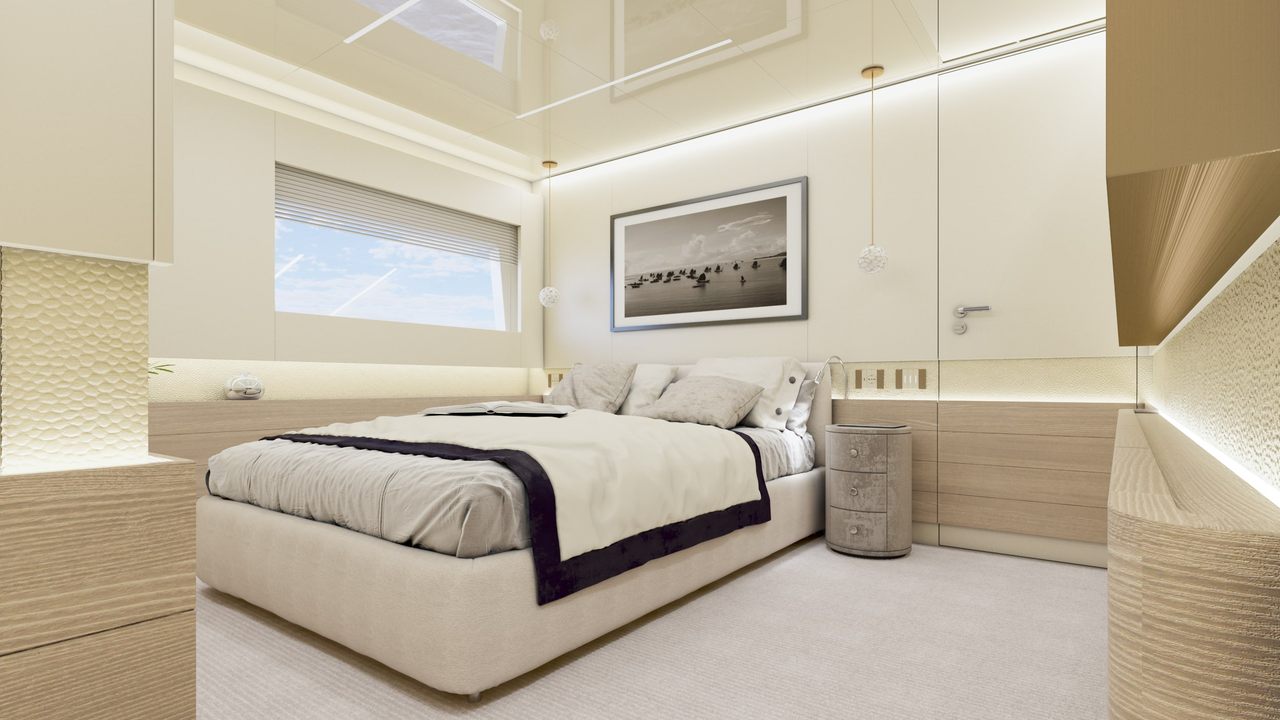
Beds, doors and cabinets try with suitcases and people. Steps must remain free. Ventilation, obscuring, sockets, night lights and alarms are controlled. Mattresses and furniture should not cover technical access. Each cabin needs an escape route consistent with the plan.
The temperature is measured at closed door and with the fan-coil at different regimes. Condensation and waste must be inspected. Noise of pumps or generators may vary between cabins. The test must therefore be room per room, not a general check of the salon.
Bathrooms: water, boiler and waste in the same test
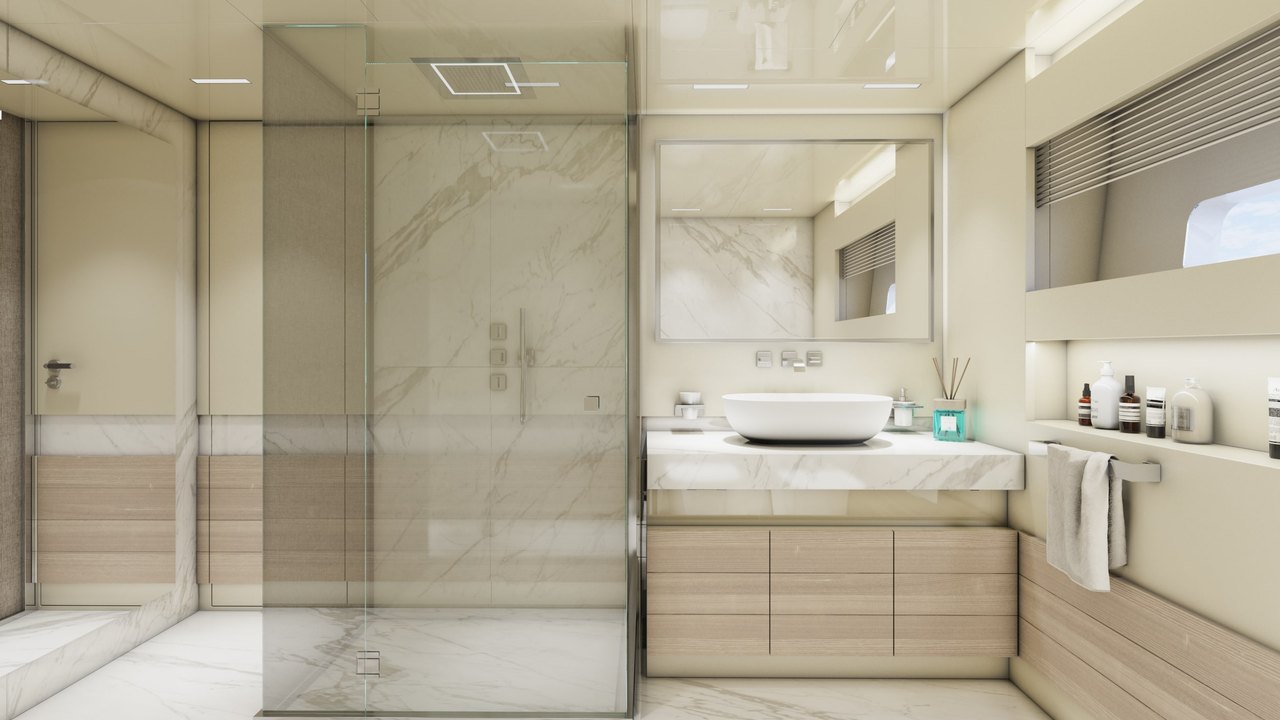
With ten or twelve guests, showers and WC can work together. Pressure, hot water, drainage, ventilation and tank alarms. The shower plates must also be downloaded with not perfectly horizontal trim. Gaskets and furniture must contain water.
Valves, filters and pumps must be reached. The crew needs procedures for blocking the toilet, pump spoiler or full tank. Products and spare parts must be compatible. Odours and wastes indicate venting or management problems to be resolved before delivery.
Four thousand hundred liters of water
The volume should be translated into liters per person and day. Showers, kitchen, laundry and washing make up the question. A dissalator eventually ordered adds energy, filters, membranes and maintenance; it does not eliminate the reserve. Indicators and alarms must be calibrated.
Autoclaves, accumulators and switches are tested. Pipes and collectors must be marked. The cleaning of the tanks must have access. The budget also considers 1,200 litres of grey water and 1,000 litres of black, because autonomy can be limited by waste storage before fresh water.
Lobby, scales and route separation
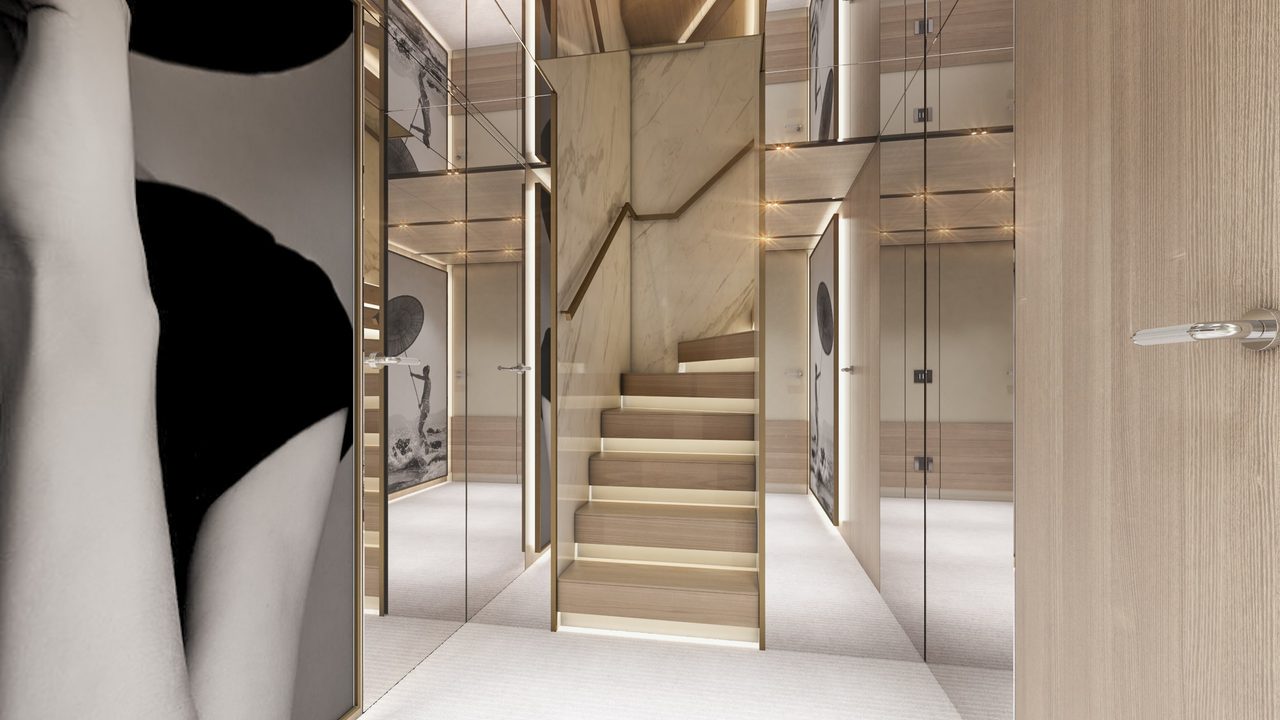
The staircase connects bridges and must be safe with boat moving. Corrimans, lighting and anti-slip are tried day and night. Doors and furnishings should not restrict the passage. The escape routes must be marked without turning the environment into an intrusive technical space.
Guests and crew should have routes that reduce interference. The layout must be simulated during service, mooring and emergency. Lifts or lifts, if ordered, require certification and recovery mode. Each vertical element adds maintenance and consumption.
Equipment: eight beds, capacity described up to nine
The technical table shows eight beds in four cabins. The dedicated page talks about crew up to nine people. It can be a difference between beds and operational capacity, but it should not be interpreted without plan and certificate. The contract must indicate bunks, bathrooms, storages and authorized persons.
Turns and rest require ventilation, sound insulation and functional paths. The crew must reach kitchen, bridge and mooring stations without unnecessarily crossing the guest areas. Documents, uniforms and spare parts need space. A ninth person without a dedicated kitchenette changes the organization.
Optional lounge and bar
The floors indicate a solution with optional internal bar. Refrigeration, sink, ice, lighting and storage add loads. The bar must have ventilation, drains and access to compressors. Bottles and glasses require stops. Water should not reach electronics or sensitive furnishings.
The bar with kitchen and active climate is used during the test. The budget is recorded and pressure is controlled. The location must maintain passages and visibility. If not ordered, any predispositions must be documented with cables, pipes, protections and limits.
Two 55 kW generators: redundancy to prove
The Mediterranean version declares two units from 55 kW to 50 Hz. The double machine does not guarantee continuity if it shares sea sockets, starter batteries or frames without protection. The schemes must highlight the common points. The essential load must be defined.
The test turns on realistic utilities and tests a generator at a time. If provided, parallel and transfer occurs. Temperatures, voltage, frequency, smoke and noise are recorded. Fire, fire and fuel locks must be marked and tested.
Climate 324,000 Btu/h
The nominal power must support cabins, lounges, kitchen and service areas. Vetrates and openings increase the load. The project indicates circuits, pumps, sea sockets, fan-coil and condensation discharges. zoning only works with balanced flow rates and sensors.
It measures response with sun, closed doors and people. Filters and tanks must be reached. It proves reboot after energy loss and operation with an excluded area. Noise and vibration are evaluated in the cabins during the night.
Service and control stations
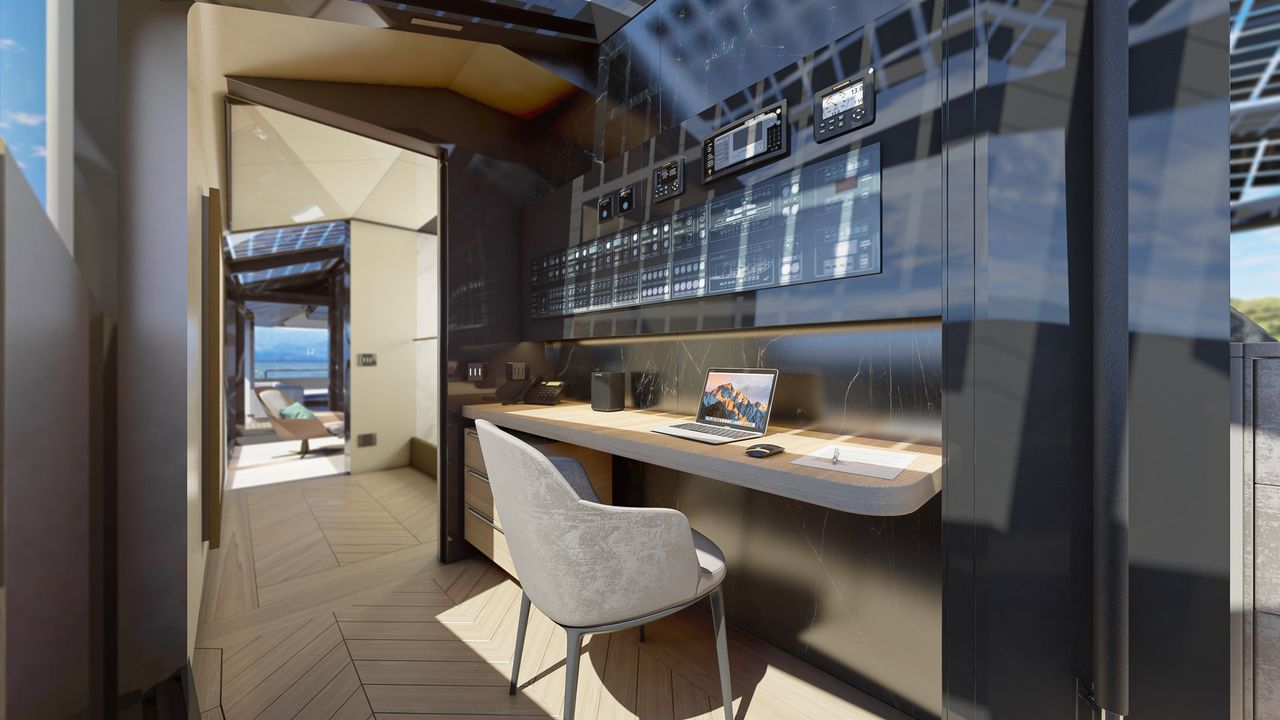
Each interface must have model, version, power supply and network. Monitoring, alarm and climate control display should not depend on a single screen. The crew must be able to identify a fault and isolate the component. Credentials and configuration backups are part of the delivery.
Network loss, reboot and alarm are proven. Essential data must remain available. Manuals and schemes must coincide with the installation. An elegant but opaque interface slows the emergency response.
Professional cuisine: the most severe test
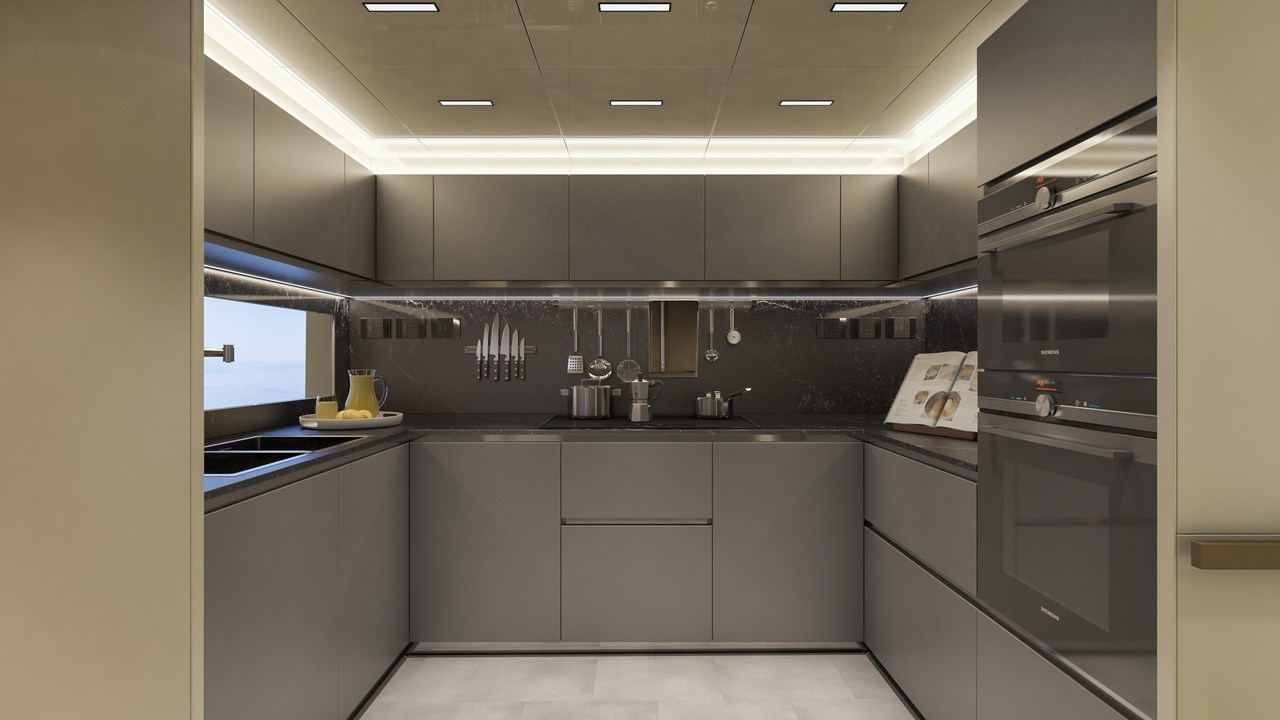
The kitchen concentrates refrigeration, cooking, washing, ventilation and staff. It prepares a complete service with simultaneous appliances. Electric load, temperature, water and drains are observed. Doors, drawers and pots need stops.
Compressors, filters, valves and protections must be accessible. Ventilation should not spread smells in the cabins. Floors and surfaces must be anti-slip and cleanable. Cambusa and waste require distinct volumes. The test includes operation with a single generator.
Laundry, refrigeration and invisible loads
Washing machine, dryer, cells and freezers work many hours. The budget must include real cycles and snacks. Ventilation and drains influence nearby premises. Refrigeration redundancy protects the cambuse during long cruises.
Temperatures are measured after stabilization and the alarm is experienced. Filters and capacitors must be clean. The laundry requires water, boiler and disposal. Plan shifts reduce peaks, but it does not replace properly sized cables and protections.
Fuel and autonomy: do not fill an empty line
The 23,000 litres must be managed between tanks, engines and generators. The scheme shows fillings, vents, returns, valves and travases. The usable quantity and the reserve must be defined. Levels compare with real data.
The current page does not publish a numerical autonomy. Planning starts from consumption measured to multiple regimes, hours of generators and hotel profile. Carena, cargo and sea change the result. A figure derived from only volume is not acceptable.
Tender and water games: they are not standard
Plans specify that tender and toys are not included in the standard configuration and price. The choice must start from mass, size, fuel and handling method. The vehicle must not block escape routes or technical access. Cranes and cradles have documented limits.
The test includes varo and recovery with allowed conditions, commands, arrests and emergency modes. Batteries and charging enter the budget. Wet boots require drainage and ventilation. Each medium adds maintenance and spare parts.
sequence of acceptance checks in port
It starts from inventory, certificates, schemes, weights and serial numbers. Cabins, bathrooms, kitchens and crew areas are tested one by one. Generators, inverters, docks, batteries, pumps and levels work in realistic combinations. Doors, terraces and drainage complete more cycles.
Each anomaly receives photography, location, responsibility and expiry. After correction, the test is repeated. The predispositions are opened and identified. Acceptance only closes when documents and units coincide.
sequence of checks at sea and degraded modes
Liquids, people, winds, seas and famine status are recorded. Spins, speed, consumption, temperature, trim, noise and vibration are measured at stabilized systems. They're trying virates, arrest, reverse gear and manoeuvre.
According to approved procedures, the loss of a source or interface is simulated. The crew demonstrates the answer. On the return we inspect machines, bilge and seals. The report separates measures, declarations and conditions.
Maintenance plan and stocks
Each output begins with audible, levels, filters, government, communications and security. Weekly, pumps, batteries, drains and refrigeration are controlled. Hours and calendar regulate engines, generators, climate and water treatment.
Trimestrably, alarms, closures and emergency modes are felt. Software, certifications, backpacks, extinguishers and inventory are updated annually. Spare parts must match the real equipment. A single register connects hours, intervention and replaced component.
Recommended configuration: margin before aesthetics
The choice between five and six cabins must be guided by mission, people and service. The inner bar and the upper furnishings enter the balance sheets. The generation must be able to support essential loads with a machine; the photovoltaic reduces consumption without being treated as a continuous source.
Water, waste, refrigeration and air conditioning should be dimensioned with margin. The discrepancies on solar power and crew capacity are resolved in the specimen documents. The A115 can offer a remarkable hotel platform, but only a consistent configuration makes the volume really usable and maintainable.