
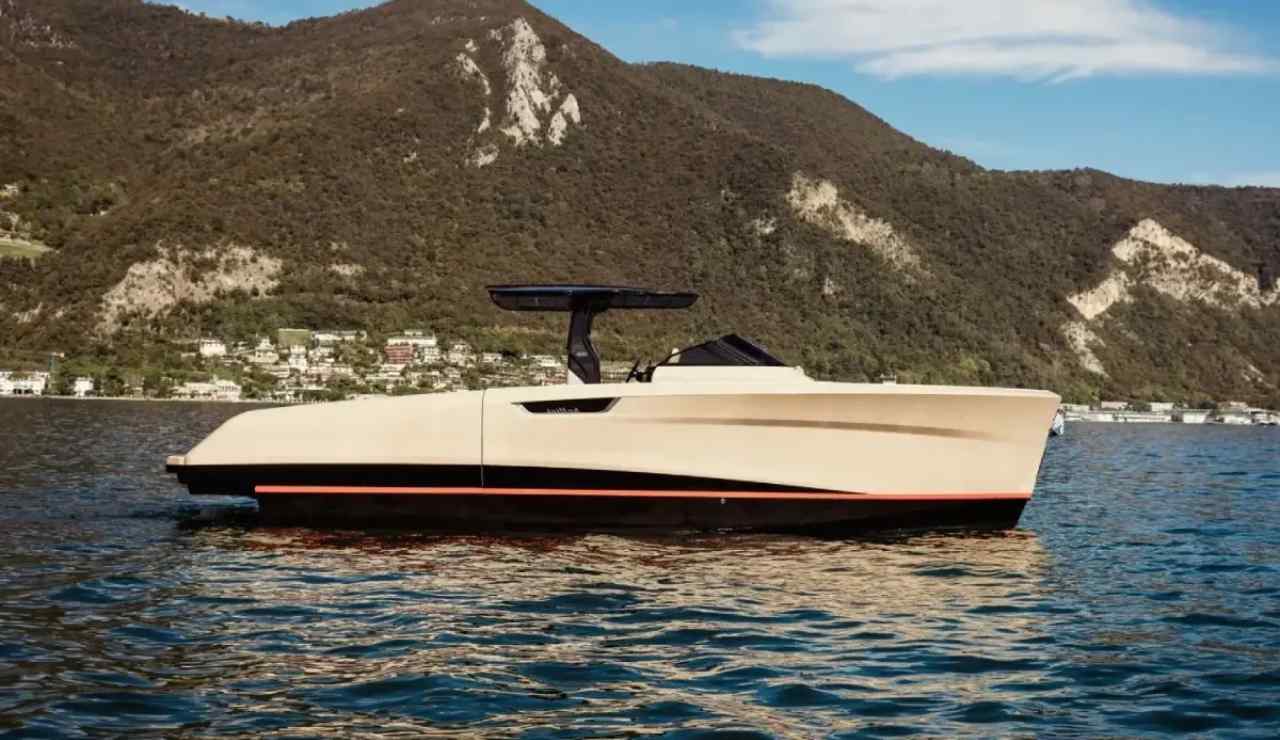
The Bellini Astor 36 marks the return of a historical name of the italian marine industry with a walkaround sports-cruiser 36 feet capable of conjugating timeless lines, overall efficiency and attention to detail. In this analysis we face the model with the look of thenaval engineer and the onboard expert: numbers, constructive choices, ergonomics, planting, performance and competitive positioning, with references to official data and tests and “first look” of international publications such as Motor Boat & Yachting, Powerboat & RIB and YachtBuyer. The goal: to offer a reasoned technical sheet and a guide to choice for private owners, luxury charter companies and dealers.
Site profile: inheritance, philosophy and reputation
Aesthetic and engineering roots
Bellini Yacht declares a vision based on “rational essence”: essential forms and functionality as a first criterion, with a mediterranean stylistic grammar that favours clean surfaces, gentle curves and daylighting accurate. Corporate communication insists on the balance between traditional craftsmanship and technological innovation, an approach consistent with the approach walkaround of the Astor 36, where accesses, passers and protections are decisive for safety and viability.

Return to the scenes and perception of the brand
The Astor 36 fits into revitalization of the brand with a recognizable image product: the specialized press spoke of “comeback” to the roots glam years ’60 reinterpreted in contemporary key. The collaboration with European dealers and distributors consolidates a growing reputation, while the tours and tests published in 2025 amplified its visibility.
In-depth technical analysis
- Length outside everything (LOA): 11,30 m
- Length of hull (LH): 9,99 m
- Floating length (LWL): 9,30 m
- Maximum: 3,90 m
- Fishing: 0,70 m
- Vacuum Dislocation: ~7,8 t; full load
- Tanks: fuel 700 l; water 150 l
- Approved posts: up to 10 people (site card); some dealer cards indicate CE Cat. B up to 12 people
Data taken from the official data sheet and selected dealer lists (Sebino Yachts, Metropol). The dimensional ratio glare/length (≈0,345) denotes a stable platform to the stationary and adequate volumes for cabins and services in an LH footprint < 10 m, strategic for docking and transfer logistics costs.

Water and weight distribution lines
The naval architecture of the Astor 36 is marked by a hull Moderate V with generous bow volumes and deadrise useful to the comfort of march in the Mediterranean ondous motion. The baricent is contained thanks to the inboard torque positioned to the stern and to the transmission to foot poppieri: this allows a trim natural in the displacement phase and an entry into progressive planata, limiting beaking and losses for wave formation. Weight management (generators, plants, possible ♪) is designed to leave free technical corridors and ease of maintenance, as confirmed in depths.
Construction materials
Exhaust and superstructure are in fiberglass (GRP) with calibrated stratifications and reinforcements in stressed areas (paglioli, longheroni, hull-cover joints). The choice of GRP allows:
- Controlled elasticity to absorb dynamic vibrations and loads;
- Weight optimization at equal costs vs. advanced composites, with advantages in maintenance and repairability;
- Resistance to osmosis through quality barrier and gelcoat cycles.
For interior and furnishings, the approach is wood-vetroresin with fine finishes, leathers and padded seas; the vertical surfaces exploit light to amplify the natural light filtered by glass surfaces to longitudinal development.

Engines, propulsion and transmission
The offer includes couples of Volvo Penta petrol V8 350 hp and diesel D4 300 hp (DPH/DPI); in some product communications the solution is also indicated D6 400 hp as a top option. The transmission dPI/DPH enable key features:
- Hydraulic clutch e electric steering wheel (DPI) for soft frames and fine manoeuvrability;
- Joystick Driving/Docking and platform Assisted Docking integrated with EVC and sensors;
- Compatible with autopilot and Dynamic Positioning System in latest generation Volvo Penta/plotter ecosystems.

Performance: speed, cruise, autonomy, consumption
Performance varies according to engines and load. The most accredited references report:
- Maximum speed: about 36 kn in typical configuration; listing with performing trims indicate peaks up to ♪;
- Cruise: 25–27 kn for the diesel version D4 according to dealer cards;
- Autonomy: indicative 200–250 nm with tank 700 l in real cruise profiles;
- Consumption: consistent with a 300–350 hp inboard torque on GRP 9–9,5 t; as an orientation, at 25 kn the market case for D4/DPI is often placed in the order of ~70–90 l/h total (indicative values, dependent on hull, propellers, trim and sea state).
Onboard systems: electronics, home automation, navigation
The bridge forecast multifunctional instrumentation with compatible plotters (eg. Garmin) and eVC integration for Volvo Penta packages (Autopilot, Joystick, Assisted Docking). Common options include generator, air conditioning, lighting LED scenarios and management home loads via domomatic modules. Perimeter cameras and systems surround view can be integrated according to the chosen electronics. YachtBuyer signals engine compartment sized to accommodate electrogen group and, at the bow of the compartment, space for gyro stabilizer if required.

Innovation and research: efficiency, stabilization, safety
- Assisted Docking & Joystick: the Volvo Penta platform extends to the DPI line active service functions to the maneuver (wind/current compensation, end-to-pair scaling), improving safety in tight spaces;
- Gyroscopic stabilization: the space in the machine room allows installation ♪; on size 36’ are typical Seakeeper 2/3 (range 30–39’), alternatively the new SK4 for upsize;
- Reduced consumption: combination of efficient hull, prop soft briefs optimized on DPI and electronic load management; possibility to integrate solar service support panels (option to check on specific orders).
Design, layout and architecture
The layout prefers the deck living: a cockpit deep and modular, T-top protection, wide walks (flush) connecting the convivial bow. Undercover, the Astor 36 offers 2 cabins e 1 bathroom, with volumes that exploit useful height and natural lighting. The ergonomics of the rudder receives positive comments in real sea tests for posture, control and visibility.


Life on board and comfort
The project favours daytime usability: modular seats, convertible tables, wet bar equipped with refrigerators, grill and ice tanks. On the deck, the protection of the T-top and high fenders ensures family safety and ease of movement. Below deck, the acoustic insulation of the motor compartment and the bulkheads improves the rest in satin. The bathroom is windowed with separate shower. The air conditioning, combined with opening windows, allows extended seasonality.
Navigation performance: professional tests and feedback
In real sea riscontri, the Astor 36 is described as reactive but comfortable: well calibrated rudder, visibility without shadow cones, meeting sessions. The response to acceleration is progressive, with entrance to the ordered planata; in the vault the boat maintains a coherent radius and clear reading of the famine feedback, with predictable trim. The peak speed, depending on the engines and the propeller/reports, varies in the range 36–40 kn, while the cruise 25–27 kn is balanced for noise and consumption.

Market and competition
Positioning in price and segment
The Astor 36 is located in the cluster of 36–38 premium walkaround feet. Indications of starting price communicated in preview print report from ~€450.000 (basic configurations; accessories and options can significantly affect: generators, stabilizers, advanced electronics). In brokerage listings with complete sets and recent vintages you can see higher demands, especially with packs high range.
Direct competitor analysis
Pardo 38
- Dimensions: LOA 11,56 m, bay 3,60 m;
- Engines: Volvo inboard (up to D6-440) or outboard; max speed declared up to 45–50 kn depending on setup;
- Notes: more vocationperformance oriented” when configured with triple outboard; subcover volume comparable but with different style setting.
Fjord 38 Open
- Dimensions: LOA 11.5 m, bay 3,64 m; tank 600 l;
- Engines: mainly Volvo D4 inboard; max speed ~40 kn;
- Notes: iconic design of the T-top, finishes “nordic chic”, strong customization covered.
Windy SR38
- Dimensions: LOA 12≈,2–12,85 m based on IB/OB;
- Engines: D6-440 DPI (IB) or high-performance outboard; max speed >43–48 kn;
- Notes: more settlingsport rib tender” with high performance, top finishes and higher pricing in equal preparation.
Competitive advantages of Astor 36
- Project coherence: hull and weights in balance with powers 300–350 hp for a efficient package without resorting to extreme cavalry;
- Pure Walkaround with trim family-safe: wide loops, high edges, diffuse protections;
- Italian finishing with “clean” setting and great care of selleries and details;
- Proof of maneuver thanks to DPI, joystick and Assisted Docking on generation 2025 (source).
Trade-off and considerations
- Compared to competitors with high-powered outboards, the Astor 36 privileged efficiency and quiet more than the number of absolute nodes;
- The undercover volume is optimized for weekends and short cruises: for prolonged cruises, the 150 l of water require plant management or upgrade;
- The customization (gyro, generators, A/C, advanced electronics) significantly affects price, weight and autonomy.
Target customer
- Private owners looking for an elegant 36’, safe for family and guests, with predictable operating costs;
- Luxury Charter “day & weekend” in areas with strong demand (Council of the Mediterranean, Balearics, French Riviera), with aesthetic appeal and ease of use in dock;
- Company of representation/dealer who want a distinctive model on which to build event experiences and premium lead generation.

Results and awards
The model has collected a growing consensus in the technical press: YachtBuyer and Powerboat & RIB underline impact and perceived quality, while events such as the British Motor Yacht Show have extended its visibility to the UK public. The brand’s social campaigns and dealers confirm the market’s focus and calendarization sea trials dedicated.

Future prospects
The Astor 36 acts as poster of style and method for Bellini Yacht: essential lines, modular fittings and electronic integration driver-oriented. The most likely development guidelines include: range extensions (40–45’), options hybrid-mild on diesel base in combination with hotel load optimized, expansion of stabilization solutions (Seakeeper DC-first) and packages Assisted Docking increasingly widespread on DPI. The current technical base leaves margins up without distorting the DNA of efficiency and simplicity maintenance.
Summary data sheet
- Model: Bellini Astor 36
- Year: Bellini Yacht
- LOA: 11,30 m L: 9,99 m — L: 9,30 m
- Baglio: 3,90 m Fishing: 0,70 m
- Dislocation: 7.8 t (empty) — 9.2 t (full load)
- Tanks: fuel 700 l — water 150 l
- Engines: 2× Volvo Penta V8 350 hp (benzina) / 2× Volvo Penta D4 300 hp (diesel); top options reported on press sources
- Transmission: DPH/DPI double feet with joystick and Assisted Docking (MY2025)
- Interior: 2 cabins — 1 bathroom
- PAX: up to 10 (workplace); CE Cat. B indicated up to 12 on certain dealer lists
- Speed: top ~36–40 kn; cruise ~25–27 kn
- Typical autonomy: ~200–250 nm (config. diesel, real profiles)
In depth: housing and ergonomics
The circulation from stern to bow is continuous: protected passers, coaming high, well arranged handrail. The bow area welcomes one sunpad wide with adjustable backs; the well integrates a disconnect convertible. The windscreen winding reduces turbulence in navigation; the T-top, with lighting system and predispositions, creates a real microclimate covered. Below deck, the use of light shades and light cuts emphasizes the perception of volume. The technical rooms are inspected, with neatly wired system and cable/tube paths identified.
Test at sea: engineering synthesis of behaviour
With a sea of 0.5–0.8 m of short wave, the Astor 36 presents mild impact on the mascone and ability to damp the residual roll; in acceleration, the climb on the plan is linear, with peak bow laugh content thanks to baricentro/pesi and D4 pair. A 25–27 kn the arrangement is neutral, precise rudder and “sodo” but progressive feedback; the noise perceived in rudder remains on comforting values for a normal conversation (merit of isolation and average regimes). In narrow turns the hull rests predictable without loss of perceived adherence. The manoeuvrability in the dock, with Joystick Docking e Assisted Docking, result user-friendly also for reduced crews.
Iconographic deepening


Configuration Tips
- Family private use: D4 300 DPI, joystick package & Assisted Docking, A/C 16–24k BTU, double fridge, hardtop lighting, premium audio;
- Charter day & weekend: add Seakeeper 2/3 (if programmed anchoring in rada), ice maker, poppiero tent on carbon poles, electric catwalk;
- Sports use: optimized step propellers, trim tabs automatic, electronic package with double MFD and radar overlay.
Video
Conclusions: positioning in the sector
The Bellini Astor 36 is proposed as essential and elegant sport-cruiser that prefers the balance between comfort, usability and real performance. It is not a “number of knots” from poster, but a boat rationalization that makes of perceived quality, technical consistency and ease of conducting its strengths. In a market populated by iconic names (Pardo, Fjord, Windy), the Astor 36 cut out space thanks to italian style clean, modern plants and a performance/consumption package that makes it convincing for demanding shipowners and premium charter fleets. The perspectives, in the light of the relaunch of the brand and the capillary adoption of the Volvo Penta 2025 suites, are of growth and consolidation in segment 35–40 feet.