
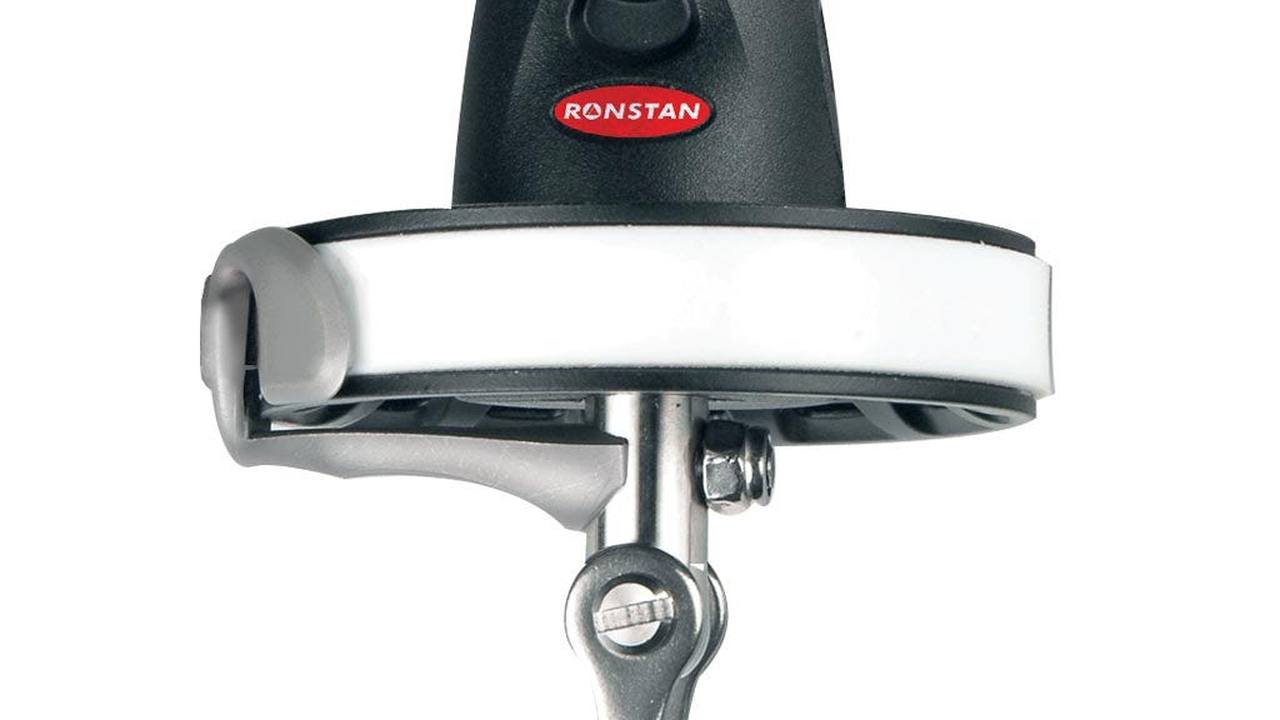
When a sail does not wrap, the temptation is to pull stronger on the continuous line. It is often the worst answer: it can increase abrasion without correcting an incorrect choice between standard and top-down, a twist that does not get in the head or a disallined referral. The Ronstan range includes winders for bow, gennaker and continuous systems from series 80 to 280. this analysis separates identity, loads, laying, testing and diagnosis before the problem becomes an open sail without control.
Diagnostic path one: identifies sail without interpretations
Write type, surface, attack board, sailer configuration and scheduled mode. A straightboard sail designed to wrap itself from the bottom belongs to the standard logic. A soft sail on board free, like many asymmetrics and gennaker, requires top-down. Do not deduce the family by observing only the drum. If sail and winder were not purchased as set, recover codes and directions before trying any maneuver under load.
Diagnostic path two: read series and code on each component
Drum, turn, adapter, pins and accessories must be identified. The 80, 120 and 160 series have dedicated top-down models; for 200 and 280 specific adapters are provided. An aesthetically similar lap does not prove same class of load. Register codes and compare them with manual and drawing. If a label is missing or a part does not match, the system remains out of service until compatibility is clarified.
| Control | Conformed statement | Stop signal |
|---|---|---|
| architecture | standard or top-down consistent with sailing | freeboard sail on standard drum unsuited |
| series | drum, lap and documented accessories | mixed or unreadable codes |
| line | correct diameter, joint and path | jumps, flattening, rubbing |
| attacks | pins inserted and oriented | load on the tip or abnormal game |
| test | uniform closure and free opening | late torsion or partially open sail |
Diagnostic path three: compare the loads, not only the boat
The selection guide uses typical dimensions of boat and sail, but also asks for the workload. For the standard, the 80 series is associated with 0,95 tons, 120 to 1,80, 160 to 3,00, 200 to 5,00 and 280 to 8,00. Two values appear in the top-down: load on the swivel ring and load on the pins. Do not use the greater value to justify each part. Check the really stressed interface.
Diagnostic path four: distinguishes wall load and cable load
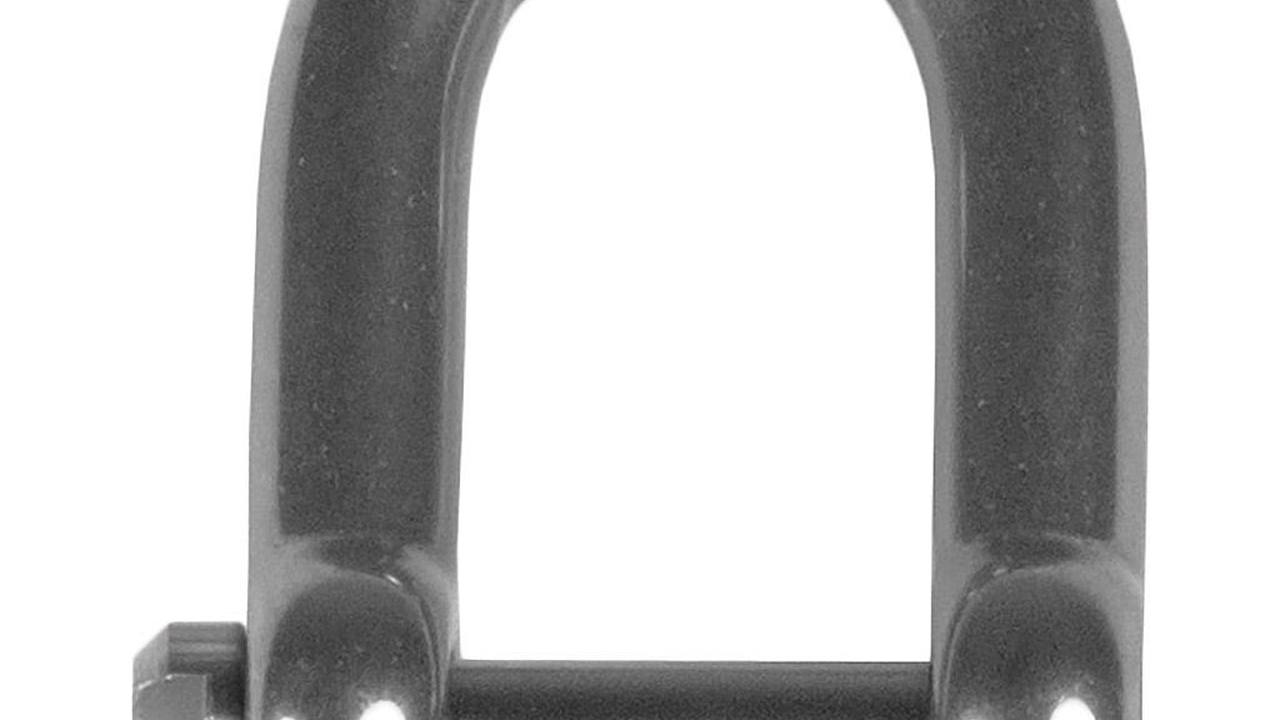
For the top-down, the 80 series declares 0,47 tons on the ring and 0,95 on the pins; 120 0,90 and 1,80; 160 1,50 and 3,00; 200 3,00 and 5,00; 280 5,00 and 8.00. These couples explain why a redundancy or a connection of walls cannot be chosen using indiscriminately the limit of the drum. Check the load pattern, textile and hardware components before the collection.
Diagnostic path five: check the typical surface without turning it into a guarantee
For standard sails the guide indicates, in sequence from series 80 to 280, 40, 90, 130, 270 and 350 square meters. For the top-down point 75, 140, 200, 400 and 525 square meters. These are typical references along with boat size, not a license to ignore material, shape and conditions of use. If the sailer prescribes a different load or series, the divergence is resolved before mounting the set.
Diagnostic path six: check the hand drum
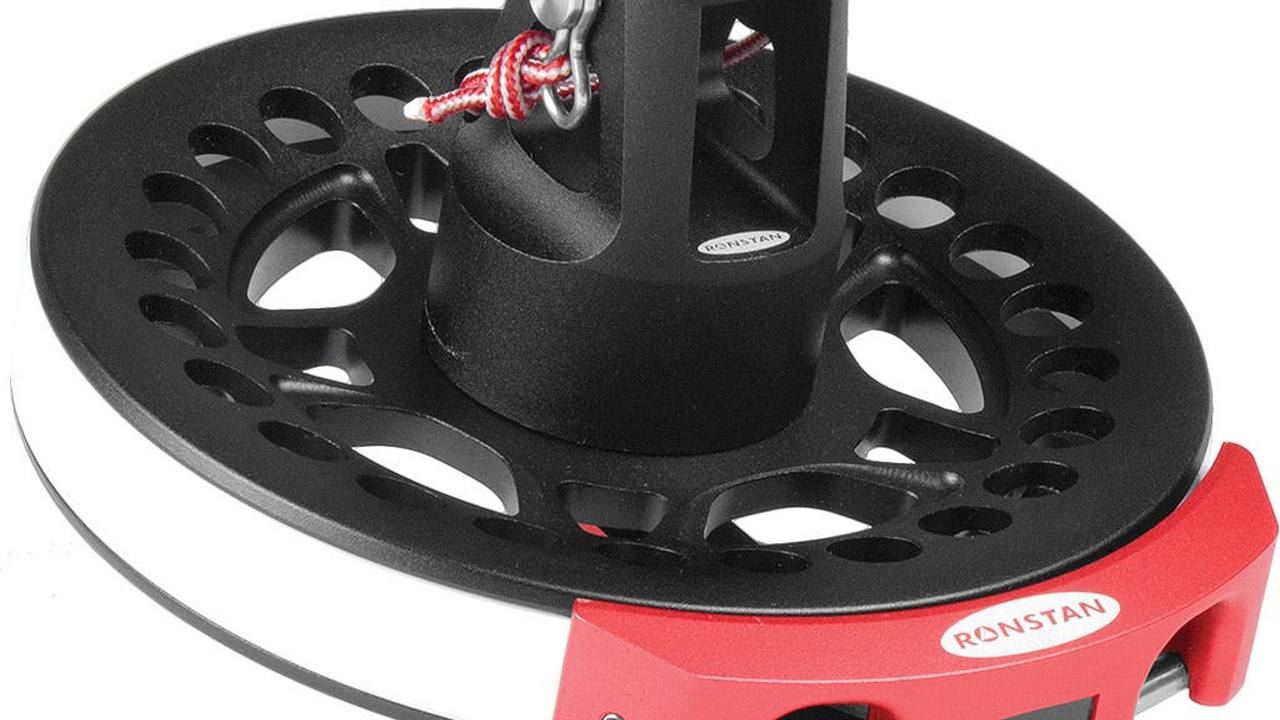
Isolate the sail from the load and turn the drum. The system uses sealed bearings with rollers on hardened slopes, described as maintenance-free. The rotation must be regular, without noise, game or hard points. Do not open the group and do not add lubricants for attempts. Instead, it looks like shocks, corrosion, deformations and freedom of attacks. A vacuum hard drum is not “unlocked” by pulling the line with the sailed.
Diagnostic path seven: observes throat and peripheral strip
The processed throat and crossed holes must offer grip on the line during closing. In the opening, the top should expel from the grip area and stay still. The PTFE strip keeps the line discharged into the drum. Look for cuts, edges, contamination or damage that can alter these functions. If the line falls or is dragged during the opening, stop the test and verify component, diameter and route.
Diagnostic path eight: measure the continuous line
Compare diameter and construction with the series, then measure the complete circuit. The joint must be uniform and cross drum and unscrew. Equipment, polish stocking, broken fibres or sectional variations require competent replacement or evaluation. The range also includes pre-assembled lines; this does not make a universal measure. The line must arrive at the station, maintain sufficient tension and be removed without tools where the model provides it.
Diagnostic path nine: follow each referral with the hand
Start from the drum and walk through both branches. They must remain legible, without crossings with rocks, dragons, anchor or pulpit. The speed guide can be adjusted for zero or 90 degrees attack, but the output must still be aligned. Each bottle or cable has a stable support and a compatible radius. Tap the top after a short test: a hot point reveals friction even when at sight the circuit seems correct.
Diagnostic path ten: test the upper spin separately
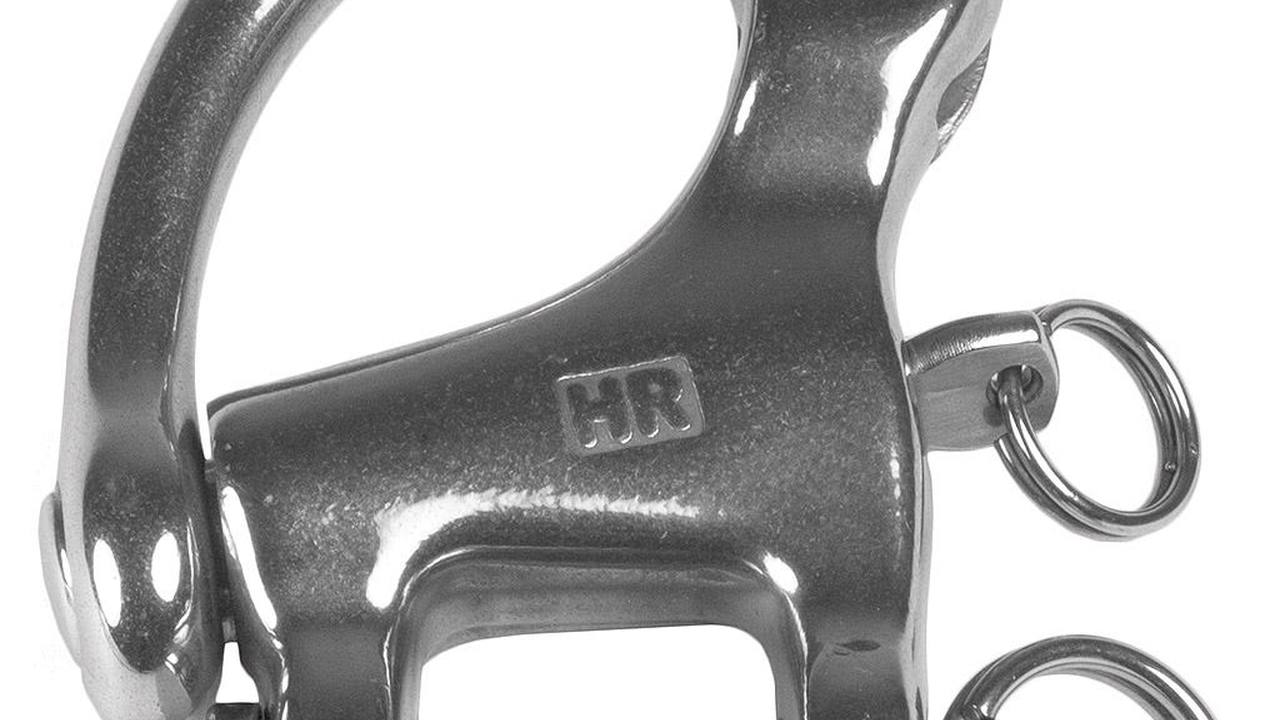
The spin must rotate without dragging terminal or fabric. Check restraint pin, low-profile head, any ligature and lack of clutter marks. The series must match the drum. Do not support the decision only on the size of the hole. If the spin was bumped or tilted, remove the set and check. In the top-down the response of the upper part directly depends on the freedom and compatibility of this component.
Eleven diagnostic path: examines anti-tortion cable
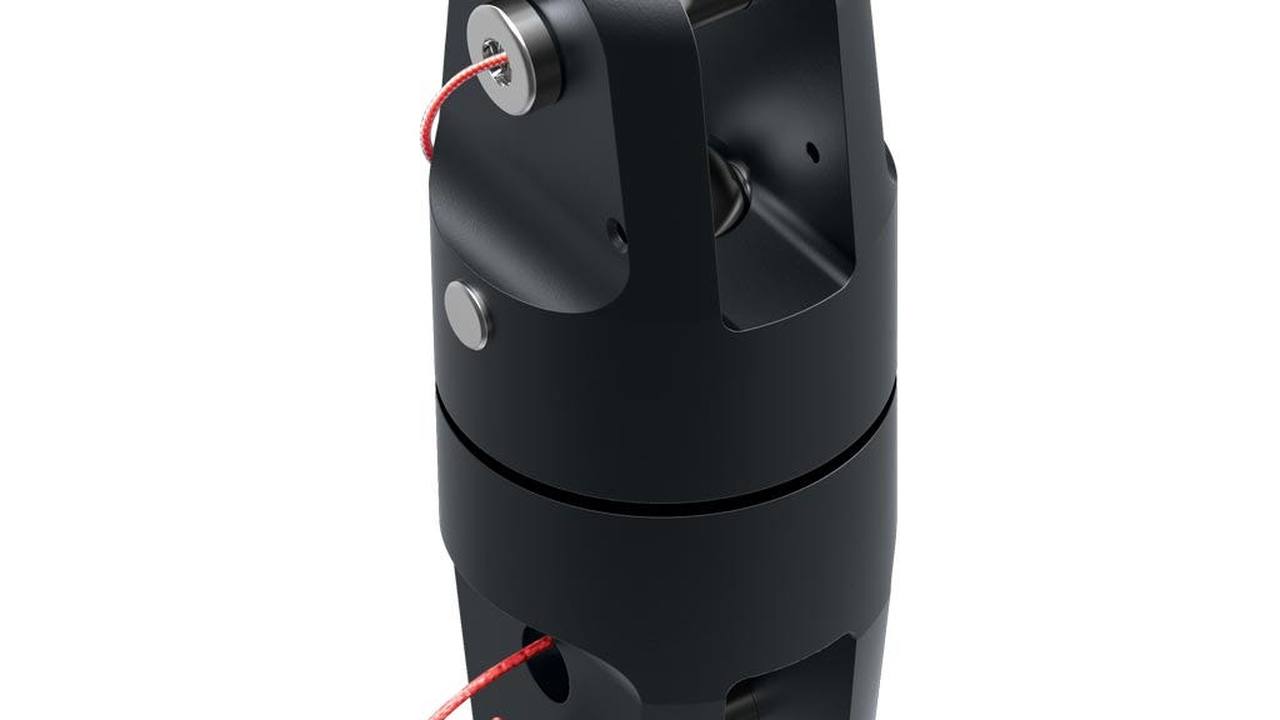
Spread the cable, observe terminals, stocking and continuity. In the top-down must transmit the rotation to the head before closing down. If the drum does many turns while the top remains firm, do not increase the strength: it controls cable, length, pretension and connections with the sailer. Permanent folds, crushing or moving terminals are incompatible with a loaded test. The twist is a property of the whole set, not just the drum.
12 diagnostic path: frees the ring of walls
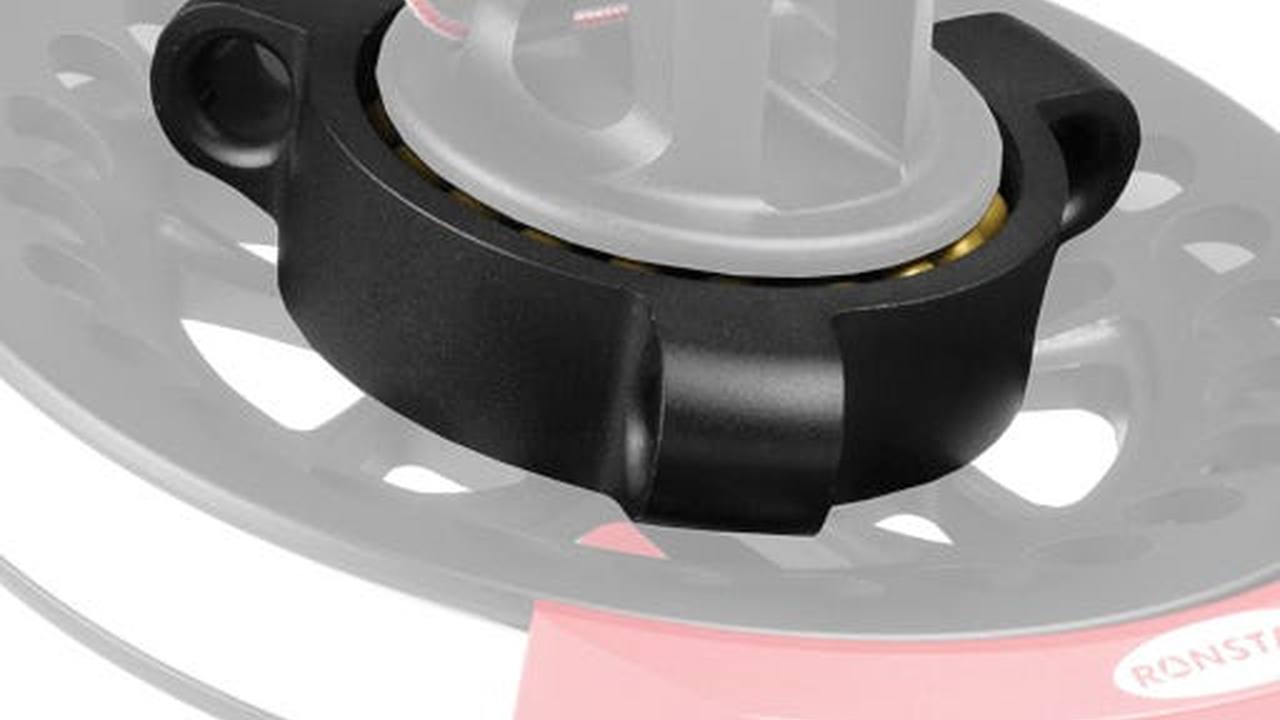
In top-down systems the swivel ring receives the load of walls and has to move as planned without catching sloping, fabric or hardware. Check that it does not beat on the drum and that the load is not transferred to a board. Remember that its limit can be lower than that of the pins. During the test, it observes the ring from a safe point: a snap rotation or an increasing inclination require immediate shutdown.
Thirteen diagnostic path: check each pin in two directions
The pin must be inserted to the bottom and held; then it occurs that the load works on the intended body and not on the tip. Quick pins, high-strength crickets and snaps have different uses. Do not replace them with similar diameter pieces. Move the set without tension to discover contacts and possible involuntary openings. Fast assembly is only useful when the crew maintains an always equal control sequence.
Fourteen diagnostic path: check rotation stop
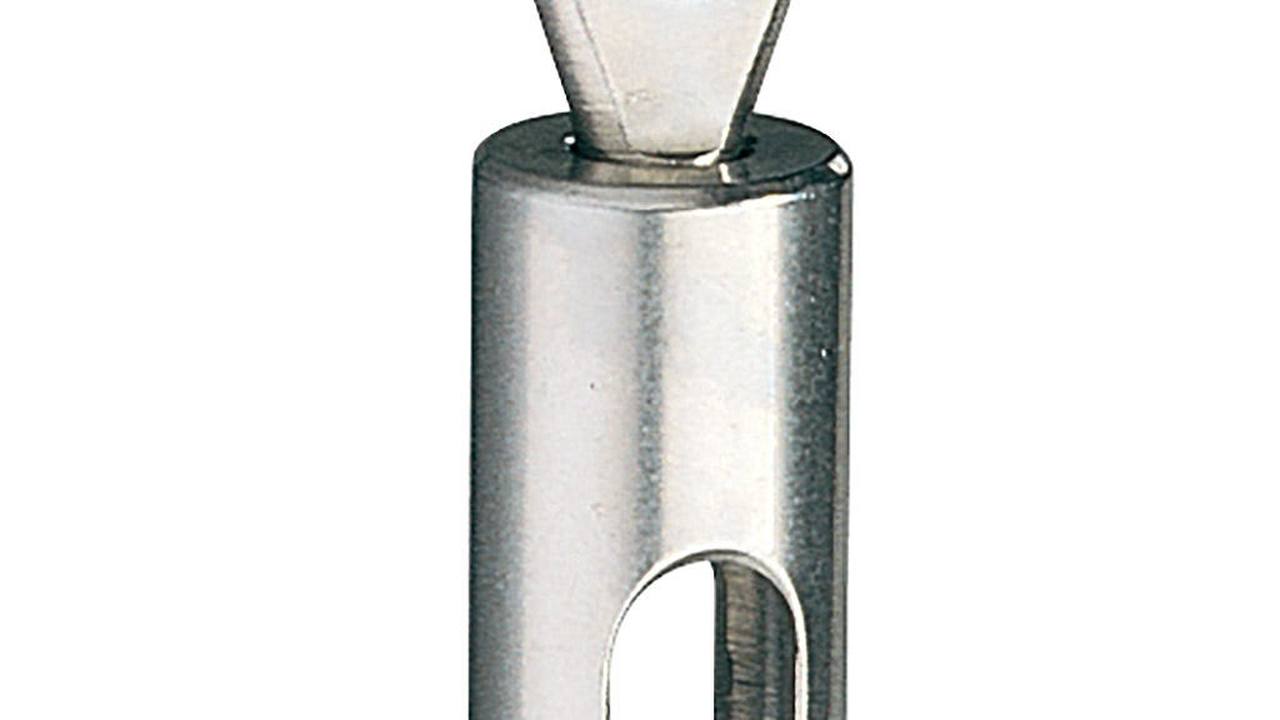
The optional stop on compatible models prevents the sail from opening unintentionally when it is closed or raised. Check presence, fixing, position and freedom when excluded. Do not use it as a brake to stop a faulty closing under load. Before explaining the sail, everyone should know if the stop is inserted. Before booting, its condition is checked together with the safety of the pins.
15 diagnostic path: separates small winders for bow
A system for drift or catamaran does not automatically follow the dimensional rules of the larger continuous series. The RF76 model is described with 65 mm closed drum, acetalic body, stainless ball spins and 6.4 mm pins. The RF1246 uses an 114 mm open drum. If you work on these systems, check the line wrapped in drum, capacity, pins and dedicated lap; do not apply top-down components by analogy.
16 diagnostic path: prepares a test with assigned roles
Choose light wind and free space. A person controls the continuous line, a shovel and a guard head and walls when the crew allows it. Nobody wraps the top on the hand. Run a few turns first, then a partial closure. Verification towards, grip, propagation of torsion and roll shape. The line must remain under control without being dragged during the opening. Every anomaly interrupts the sequence.
17-seven diagnostic path: symptom diagnosis, not force
If the sail closes from below on a top-down, check torsion and sequence. If the line jumps, it checks diameter, joint, throat and tension. If the drum tilts, examines attack and alignment. If the sail reopens, it controls closure, stop and route without entrusting the cargo to the stop. If the turn warms or hardens, dismantle the set. Writing symptom and condition helps not to confuse different causes during subsequent tests.
18th diagnostic path: clean without dismantling what is sealed
After use remove salt and contaminants according to the manual, dry and inspect. Sealed bearings are not open or greased without specific procedure. Control line, joint seams, anti-tortion cable, pins, crickets, drum and spin. Protect the set from bumps during the boot. A seemingly small component can receive the entire load of the sail; cleaning is also the time to discover deformations and games.
19th year diagnostic path: register the set as one equipment
In the dossier notes sail, series, codes, loads, line, length, accessories and test date. Keep photos of the attacks and indicate the mounting direction. Add observed symptoms and interventions, avoiding generic descriptions as “hard wrapper”. If you change sail, cable, drum or spin, reopen the verification. the procedure works because it prevents successive replacements from turning a consistent set into a assembly of only similar parts.
The correct maneuver must be repeatable
A good winder does not require increasing force or interpretation every time. The sail closes in the planned direction, the drum remains aligned, the line does not jump and the attacks do not change position. Standard and top-down solve different problems; series and accessories must belong to the same configuration. If the crew can explain why each part is present and what signals impose the stop, the system is ready for a real and controlled test.