
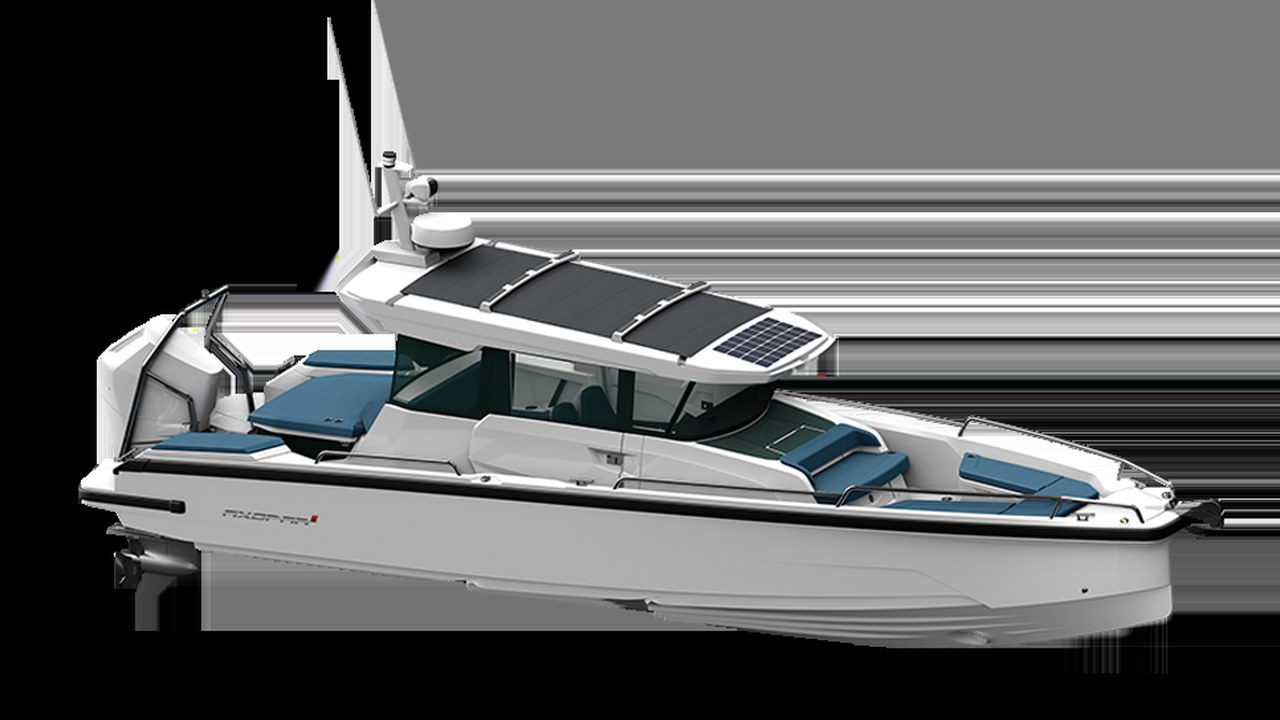
The Axopar 29 XC Cross Cabin translates the 9.31-metre walk-around platform, measured without engines, into a protected boat for use throughout the year. The closed rudder, sliding side doors and the panoramic view change the way to configure the model compared to an open: ventilation, disconnection, passages and electric budget become as important as engines and seats. The stern also has no unique solution, because it can stay free or accommodate benches, wet bars or cabins. The best result comes from a consistent configuration with crew, climate and output duration.
Axopar 29 XC Cross Cabin: declared measurements and data
| Voice | Official data | Practical consequence |
|---|---|---|
| Length outside everything | 9.31 m, excluding motors | Encumbrance to check with installed outboards |
| Baglio | 3,00 m | External switches and volume of the rudder |
| Fishing at the propellers | 1,05 m | Share to respect with lowered outboard |
| Construction | GRP | Scafo and superstructure in composite |
| Carena | Double step, 22° V | Load-sensitive asset, trim and propellers |
| Average weight without engines | 2.900 kg | Base declared with medium optional |
| Fuel | 400 l | Autonomy to calculate on real consumption |
| Engines | 300–500 hp | Installation to check for model year |
| Persons | 6 in B, 9 in C | Distinct limits by category |
| Sleeps | 2 + 2 optional | Depending on cabin configuration |
Double step Carena and setup management
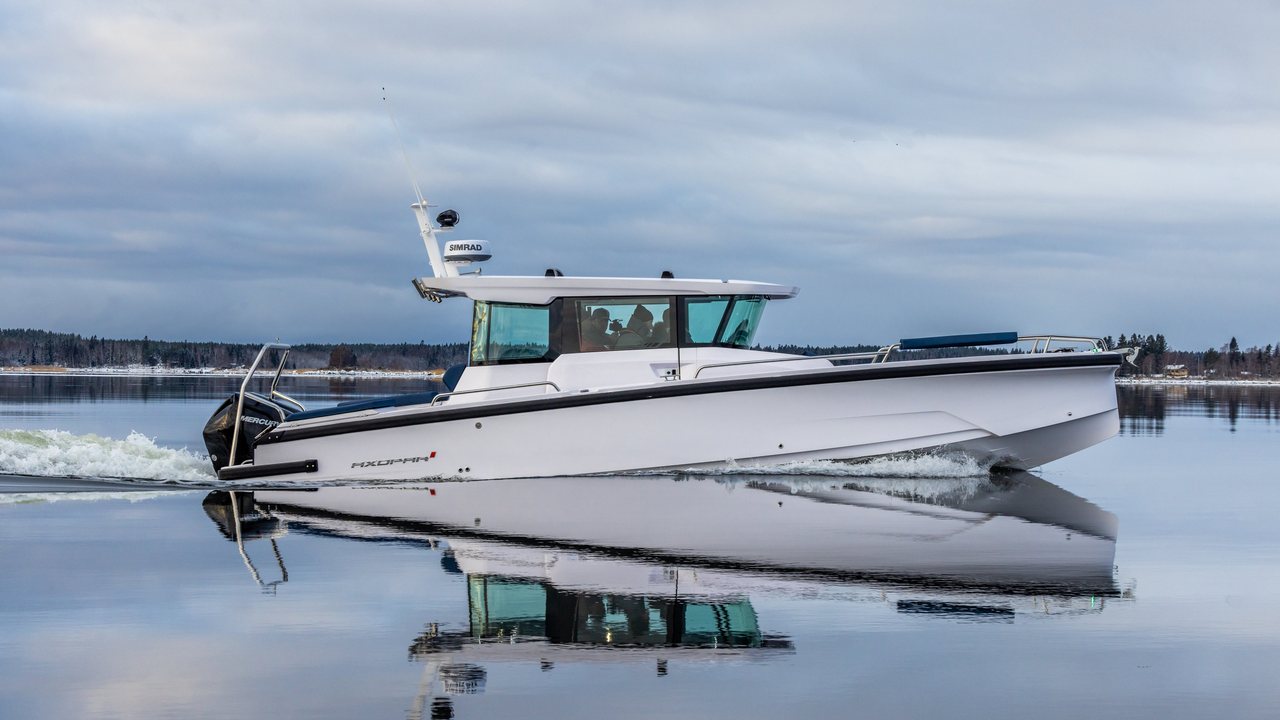
The fiberglass hull adopts two steps and a stern of 22 degrees. The construction site describes it as a fine entry form, but these elements do not allow to deduce the behaviour of each specimen. Height of outboards, propellers, load distribution and trim use affect the set. During testing, regime, speed, consumption and position of the correctors with full tank and with usual load are recorded. The maximum indicative speed of 50 knots remains linked to the preparation and conditions of the official test.
Engines from 300 to 500 horses
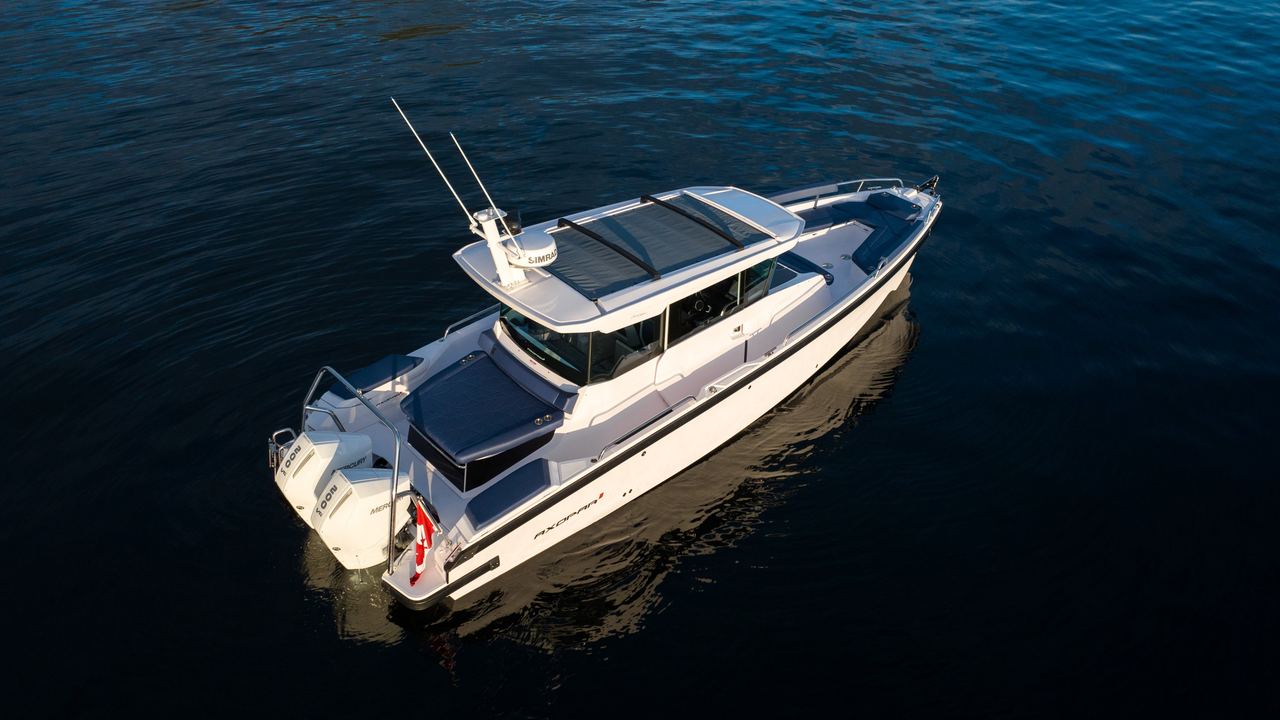
The current range declares a total power of 300 to 500 hp. However, the number and model of outboards must correspond to the documentation of the model year delivered. A single simplifies maintenance, weights, tools and starting circuit; a pair offers differential manoeuvre and partial redundancy, but multiplies foot, propeller, cutting and connections. The contract must report model, weight, foot ratio, propellers and installation height. The choice must be verified together with batteries, charging and optional poppieri, because cabin, wet bar and loads change the longitudinal balance.
Four hundred liters and autonomy to measure
The tank contains 400 liters. The current board publishes a reference of 1,65 litres per mile with a single 350 hp in the economic range between 24 and 34 knots. It is the data of a defined configuration, not a valid promise in every sea. Operational autonomy must include reserve, unusable fuel and worsening due to wave, wind, fouling and load. Level sensor, vent, separator filter and pipe access should be tested before delivery.
Pilothouse panoramic and side doors
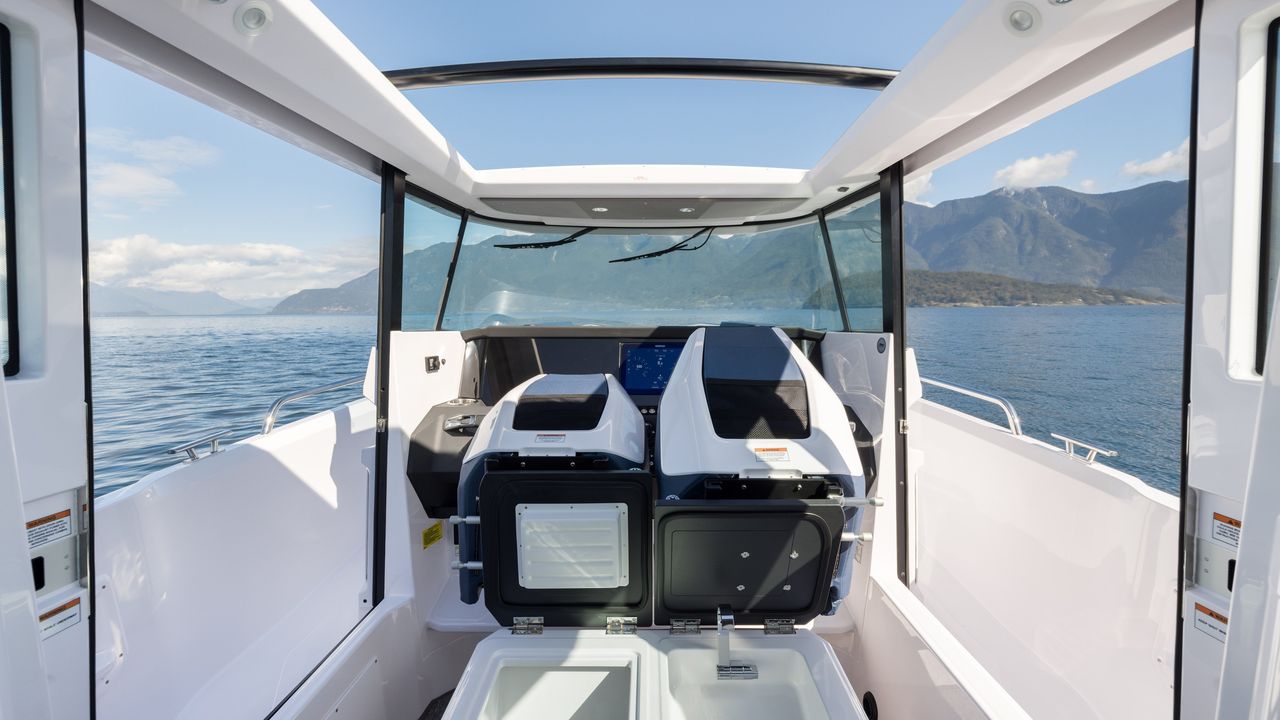
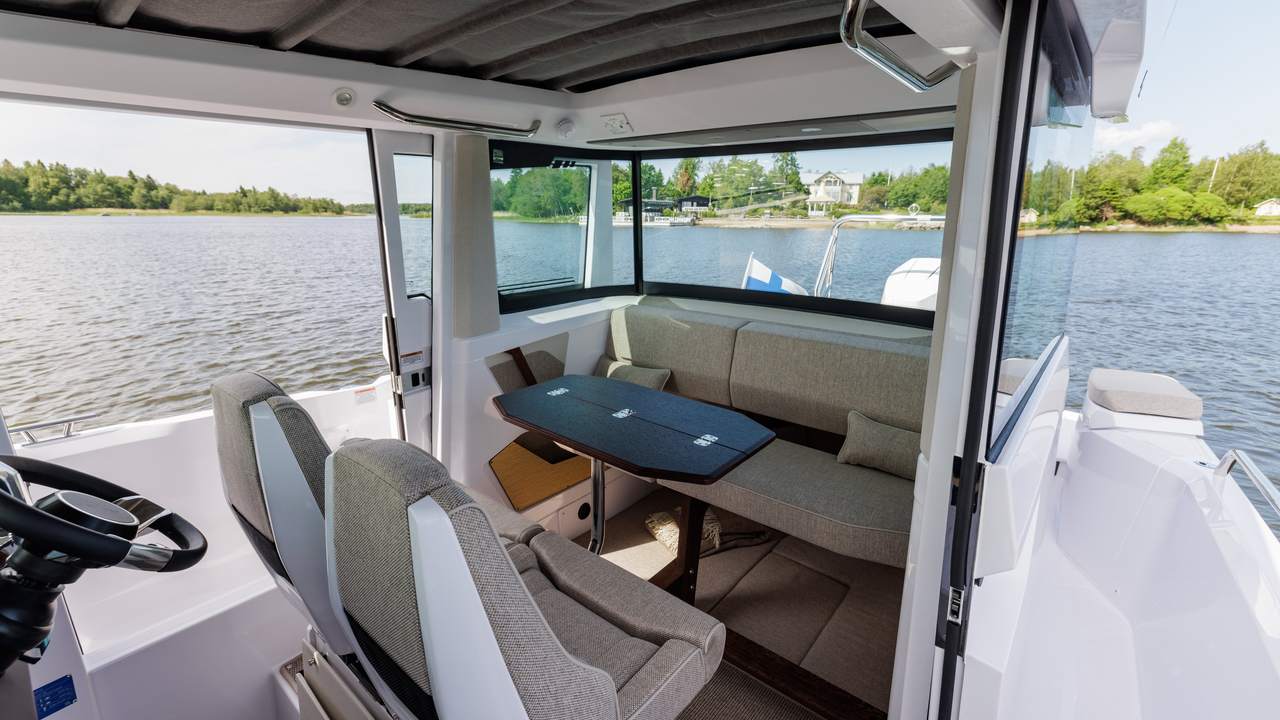
The closed rudder uses extended stained glass surfaces, wrapping rear screen and two sliding side doors. The advantage is quick communication with passersby without sacrificing protection. In test it is necessary to control sliding, blocks, drains and seals, then to observe the reflections on the glass in different directions of light. Windscreen, windshield wipers, washers and ventilation must work together. A light cabin is really safe only when it keeps visibility with rain, splashes, condensation and night navigation.
Driving and electronics
The place of government should be built around the information sequence. Paper, depth, engine data, alarms and electrical status must remain legible without covering the view. Current documentation shows the integration of multifunction display, but number and model depend on the order. Before the withdrawal, we need proof of the data network, updates, transducers, compass, VHF and location sources. The command of the trim should not require to leave the cap, while steering and sitting should allow both sitting and raised driving.
Poppiera cabin or multifunctional volume
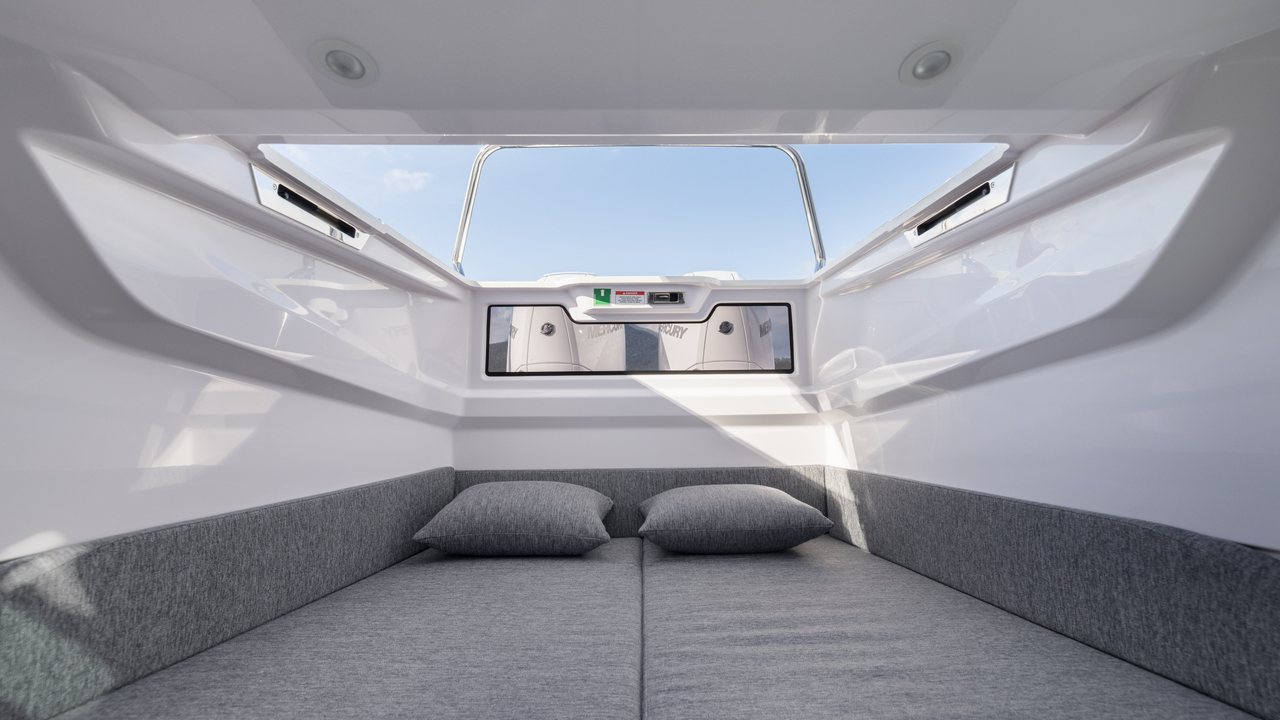
The optional aft cabin adds two beds and can also work as a large storage compartment. The choice, however, reduces the freedom of the hood and requires attention to ventilation, lighting and access to the plants. If the volume is used to sleep, it is necessary to check for air change, exit routes and separation from technical rooms. If it becomes a deposit, each load must be fixed and maintained away from wiring and piping. The configuration must be decided before purchase, not treated as simple added furniture.
Two plus two beds without confusing the spaces
The official data of two plus two places indicates the combination of the available night solutions, not four identical bunks. The prodier multicabin uses the volume under the bow, while the optional cockpit creates a second environment. Before considering the boat for repeated overnight stays, useful length, accesses, height, ventilation and personal storage should be measured. It is equally important to check where to place pillows, table and obligatory safety equipment when the spaces are prepared for the night.
Open poppiera cover, bench or wet bar
The standard configuration leaves the stern open. Alternatively you can choose bench, wet bar or cabin with multifunctional compartment. The free blanket is the most flexible for equipment and loads; the bench adds seats while maintaining a part of the passage; the wet bar introduces water, drains and absorbments. Each option changes the accessibility of the gavones and the location of tops and parbords. The correct decision starts from a design of the real movements: boarding, mooring, access to the engines, recovery of a person and management of the equipment.
Modular prodiera area and circulation
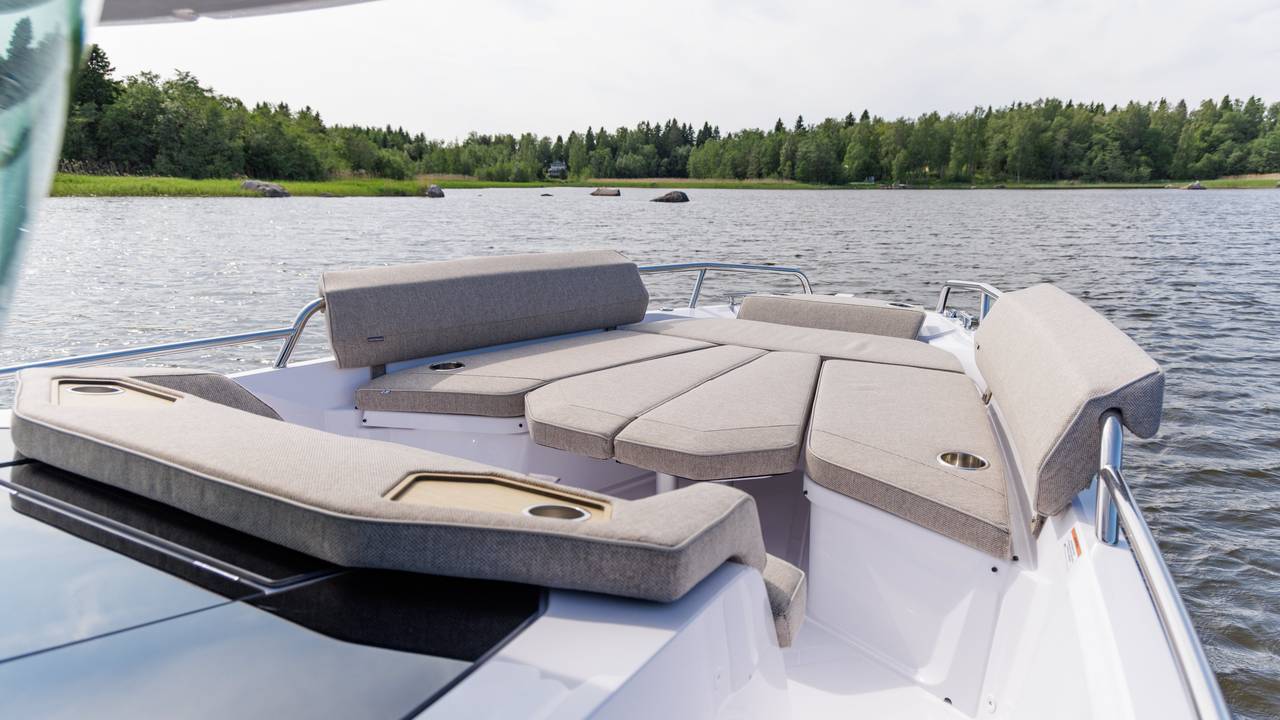
The bow bridge can receive seats and a configuration to U for sociality. The site declares room for eight people in the enlarged area, but the number of seats does not replace the assessment of safe places during navigation. Tables, backs and cushions must have reliable stops and a storage place. The widest fronts and side doors facilitate movement, as long as tientibene and supports remain continuous even after installation of tents, doors or other equipment.

Water, refrigerator and wet bar utilities
Refrigerator, sink and wet bar turn an essential boat into a more autonomous day cruiser, but add circuits that must remain inspectable. The capitulate must specify tanks, pumps, drains, electrical protections and emptying modes. Each fitting should be observed while the pump is under pressure; the discharges must work with a steady and inclined boat. The refrigerator requires a calculation on the time of use to off engines. Convenience should not compromise the necessary reserve for start-up, tools and bilge pumps.
Electric balance and batteries
A closed rudder concentrates display, lighting, wipers, ventilation and possible comfort utilities. This is why the electrical balance should be required in the final configuration. Battery capacity, separation between start and service, alternator current, cable sections and protections must be consistent with optional. It is useful to try the plant with all the main active utilities and engines at the minimum, measuring tension and falls. Fuses, detachments and mass points must be identified, accessible and reported in the schemes delivered to the shipowner.
Ventilation, heating and drainage
The use in each season depends more on the management of the air than on the only closing of the cabin. Large windows favour light and visual but can generate condensation and thermal load. The ordered system must be verified in its real mode: air outlets, fans, heating or cooling, windscreen speakers and condensation discharge. The sliding doors allow natural ventilation, but do not replace the disappearance during cold rain. Even night cabins require independent air change from the driving space.
Sentine, drainage and technical access
Covers, platforms and passers must download water without stagnations. Each change to the stern can change the drainage pathways, so the test must be repeated with the module actually installed. Sentry pumps must be accessible and tested manually; floats, alarms and valves must be identified. The presence of wet bar pipes increases the possible loss points. Pictures of the rooms before loading the equipment help preserve a real map of cables, pumps and fittings for future maintenance.
Categories B and C and distribution of people
The 29 XC is declared for six people in category B and nine in category C. The limits belong to different design conditions and must correspond to the single unit tag. With large crew, the distribution changes trim, visibility and time needed to move between indoor and outdoor. The commander must assign safe places, keep the doors free and reduce speed when conditions require it. Seats available for mooring and authorized capacity are not equivalent concepts.
Axopar 29 XC Delivery Test
The test must start from the correspondence between order and boat: serial numbers, engines, propellers, modules, electronics and fittings. Batteries, charging, lights, windshield wipers, pumps, levels, alarms, refrigerator and ventilation. In the water there are regimen, speed, consumption and trim with the expected load, verifying entrance into the plan, turn and visibility. Doors, windows and gavones should be checked after testing to detect infiltrations or movements. Manuals and schemes must describe the specimen delivered, not a generic configuration.
Final judgment: protection and modularity to be coordinated
The Axopar 29 XC Cross Cabin combines a truly protected rudder with the external circulation of a walk-around. 300 to 400 hp engines, 400 liters of fuel and very different modules allow to adapt it to transfers, family days or short nights. Just this freedom makes it necessary to choose with discipline. An effective configuration leaves the plants accessible, keeps free passages and simplifies energy on actual utilities. The value of the model is not in the optional accumulation, but in the working cabin, blanket and propulsion as a single system.