
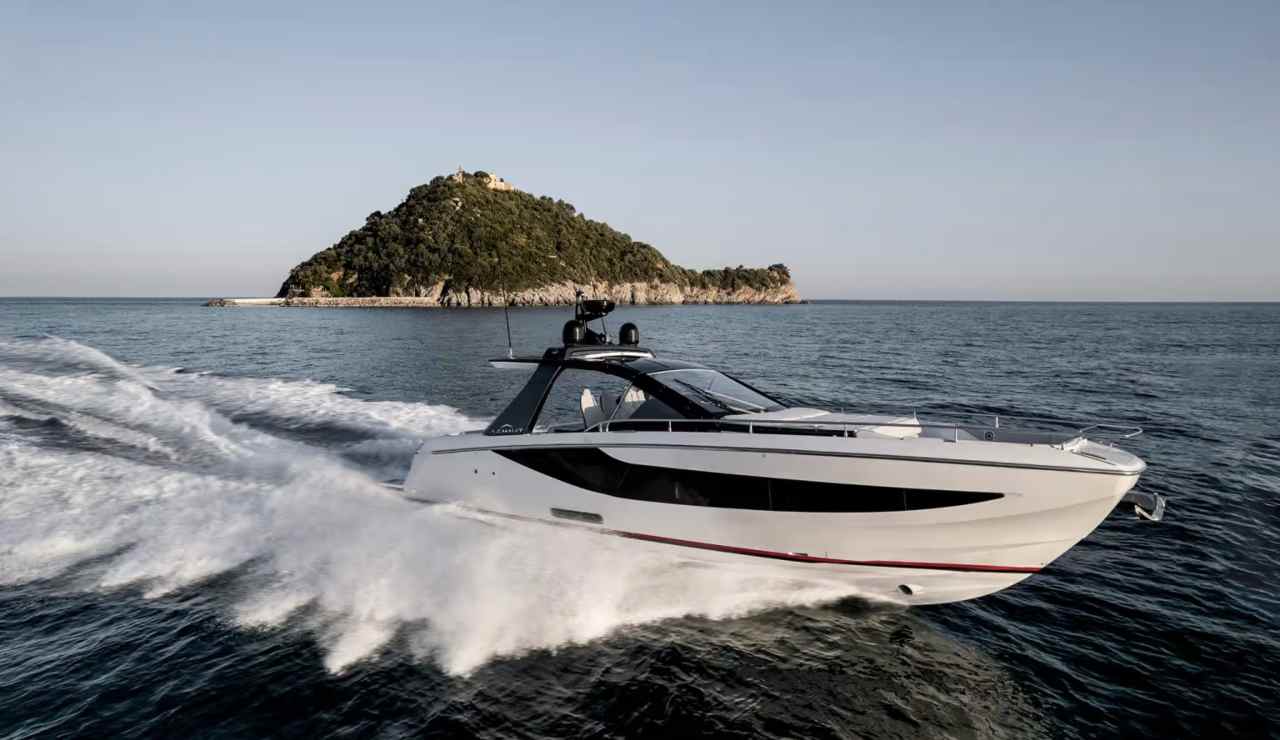
The Verses 42 by Azimut is the most compact among the “performance cruisers” of the Verve line, but fully embodies the idea of mediterranean weekend high performance: famine SVVT (Stepped-V Ventilated Tunnel) signed Michael Peters, triple Mercury outboard motorization, low-weight composite materials, evolved edge fittings and surprising viability for a 42-foot. It is the hull to choose when you want acceleration, sea support format and a layout alternating day boating and short cruises without compromises.
The construction site: history, philosophy and reputation
Azimut Yachts in summary
Born in the late 1960s, Azimut Yachts is one of the most recognizable italian brands in the segment yachts and superyacht, with a range ranging from Fly and S series to line crossover Magellano up to the big flagship Great. The product family Verse interprets the formula of sport cruiser outboard, emphasizing speed, ease of conduction and usability all-day. The company is known for the widespread adoption of advanced composites (carbon on superstructures) and continuous research on efficiency and weight reduction.
Azimut's reputation is based on high certification standards, international service network diffusion and solid collaborations with renowned naval designers and designers. In the case of Verve 42, the famine signature of Michael Peters and integration with the latest generation Mercury propulsions confirm its performance pedigree.

Technical introduction to the model
The Verses 42 was born as “baby brother” of Verve 47, but it was designed from scratch to maximise the weight/power ratio and preserve, in scale, the qualities from offshore sports cruiser of the older sister. The engineering heart is the famine SVVT patented: a deep-V with two transversal steps e central ventilated tunnel aft. This solution puts air under the hull, reducing wet surface and hydrodynamic resistance; the central tunnel increases longitudinal stability in high speed and adverse situations, improving control and comfort.
In-depth technical analysis
Dimensions and naval architecture
- Length outside everything (LOA): ~12,90 m (42’4′′′′)
- Maximum: ~3,94 m (12’11”)
- Full load fishing: ~1,19 m (3:11”)
- Full load dislocation: ~14 t (≈30.865 lb)
- Certification: CE Category A
The hull geometry is a deep-V with deadrise to transport ~22,5° and central value of ~24,5°, combined with skates (strakes) and spray rails generous to deviate the wave. The step+tunnel combination is the key to Verve 42’s behaviour: it reduces the resistance to high stretches, increases the portance and guarantees “flats” and predictable virates, with soft impacts on the wave.
Materials and layers
The hull is in fiberglass (GRP) with vinyl resins for resistance to osmosis; covered and hard-top integrated carbon fibers to increase stiffness at equal weight, lower inertia moments and improve dynamic stability. The structural bulkheads and stiffenings are optimized to cleanly convey the stresses of the three high load outboards, limiting vibrations and noise.

Engines, propulsion and transmission
- Standard: 3 × Mercury Verado 400 hp (1200 hp total)
- Performance option: 3 × Mercury 450R (1350 hp total)
- Controls: Digital Throttle & Shift, joystick docking with Skyhook station
- Explanatory: Mercury series propellers on outboard poppieri feet
The choice of three outboards binds Verve 42 to a philosophy “light & fast”: backward center, instant push, simplified maintenance, medium-high-range efficiency. With 400 hp, Azimut declares 43 kn of tip and 32 kn of cruise; with the 450R, several press tests have recorded 45–50 kn real depending on load and sea.
Performance: speed, autonomy, consumption
- Maximum speed (3×400): ~43 kn declared
- Economic Cruise (3×400): ~30–32 kn (clean water, medium load)
- Maximum speed (3×450R): ~45–50 kn measured in multiple tests
- Tanks: fuel 1750; water ♪
The typical consumption profile of a 42’ “triplo” depends a lot on trim (trim flaps and jack-plate virtual via trim engines), propellers and sea status. The SVVT famine allows maintain average regimen with positive trim e spray well deviated, favoring the slide to 30–35 kn. The 450R torque reserve expands the fast cruise window (33–38 kn) with high loads or long sea. Considering the 1750 L, the practical autonomy of fast cruise routes is placed in the order ~180–230 nm depending on the sea, wind, load and target of specific consumption (consistent indications with the category, to check case by case).
Onboard systems: electronics, home automation, navigation
- Command Bridge: double raymarine display of large format (up to ~15′′′) integrated (chartplotter, radar, escandaglio), glass cockpit clean and legible
- Autopilot, VHF DSC, integration Mercury VesselView and motor management
- Domotic: management lights/users, air conditioning, on-board systems via MFD interface where expected
- Stabilization (option): Seakeeper (cut according to displacement) to reduce roll to anchor and transfer
- Mooring: joystick with Skyhook for automatic position maintenance
The logic is that of plug-and-play for the shipowner who alternates fast ray and weekend: integrated instrumentation, few essential commands, many automated functions.

Design and architecture: style, layout, ergonomics
The Verve 42 reinterprets walk-around sporty with a design tense, aerodynamic and strongly “driver-centric”. The composite hard-top creates a protective shell on the cockpit, while leaving wide passages along the sidewalks. The bow offers a recessed sunbathing, the well is multi-modal (living/dining/relax), with furniture on modules and one foldable side (beach-mode) available on the left that increases surface and water access.
Undercover, layout with a cabin and convertible dinette (beds 2+2), separate toilet, natural light filtered by lateral openings and contemporary material tones. The useful height and sound insulation declare the vocation weekend more than the prolonged cruise, but the air conditioning and the facilities allow comfortable stops on coastal routes.


Innovation and research: efficiency, emissions, safety
- Carena SVT: reduction of wet surface and resistance; increase vir stability thanks to the central tunnel
- Advanced compounds: carbon on blanket/hard-top to hold weights and lower baricentre
- Outboard- latest: filters and electronic management, reduction NVH (noise/vibration), digital diagnostics
- Gyroscopic stabilization (opz.): Seakeeper (sizes 4/6 depending on setup) to reduce roll up to ~95%
- Security: certification EC, dimensional planting for open sea
It is a package of solutions that contribute to a real efficiency at typical usage speeds: not only maximum peaks, but cruise comfort, predictability and reduction of crew fatigue and guests.
Life on board and comfort
- Pozzetto with outdoor kitchen (grill, fridge), convertible dining table, padded chairs
- Adjustable side left to widen the beach platform
- Prua with sunbathing and chairs
- Undercover: a cabin + convertible dinette (2+2 seats), separate bathroom
- Climate, LED lighting, optimized boots
The modularity of furnishings is central: the Verve 42 passes in a few minutes from sociality (aperitif / lunch) to bathing (beach mode) to the return cruise, with large passers and reliable sockets to move safely even with live sea.

Navigation performance: testing and feedback
Press tests agree on three points: (1) soft landings on the wave thanks to deadrise and volume distribution; (2) estate in virata very stable, with clean trajectories even at high speeds; (3) bridge readable and intuitive controls that reduce the cognitive load of the pilot. A sea test “arrabbiato” highlighted the ability of the SVVT hull to keep the route and download the impact in the wave climb with spray deviated.
Comparison with direct competitors
Cruisers Yachts 42 GLS OB
The 42 GLS OB is among the most “vicine” alternatives for size and concept: open sports with triple outboard, convivial well and strong imprint day cruiser. The measurements are aligned (12.8–12.9 m of LOA), the beam is similar (~3,94–3,96 m). The GLS tends to a “American” furniture setting (very generous spaces in cockpit and cockpit bar), while the Verve 42 prefers tense lines, weight content e carena more specialist for high ranges with sea size.
It’s 42’ center console pure, suitable for high-rise fishing with quadruples or triples of great power (also V12 600). It has “brutali” performance and a proverbial solidity, but ergonomics is calibrated on angling e mission profile different: less lounge, more fishability. Compared to the 420 Outrage, the Verve 42 offers inhabitability and cruiser finishes and a fruition lifestyle more marked, in front of a smaller “hardcore equipment” for towing.
Pardo 43 (IPS)
Pardo 43 is an icon walk-around with inboard engines Volvo Penta IPS. Offers a more (up to ~4,2 m), great liveability of blanket and a quieter cruise on average. It does not reach the speed peaks of a 42’ triple outboard and requires a different maintenance approach (axis line/IPS). The Verve 42 remains the reference for those who put the speed at the center of the brief, with simplified management and fishing content typical of the outboard.
Sex Key Largo 40
Another Mediterranean outboard, very fast (up to ~55 kn with spindle couplings) and shorter/lighter. It is a dayboat extremely bright, but with undercover volumes and lower storages than the Verve; more suitable for daily and weekend light.
Market, positioning and customers
Price and segment
The Verve 42 takes over the segment outboard luxury sport cruiser 40–45’. Quotations vary according to motorization and optional packages (stabilization, premium electronics, finishes): the typical band is located in the top of the market, in line with brands and specifications. Offers a differential value in thefamine engineering and inweight balance/rigidity thanks to composites.

Target customer
- Private owners with driver-oriented profile, looking for acceleration and comfort from cruiser
- Luxury Charter for day-experience premium in high demand areas (Costiera, Balearics, Côte d’Azur)
- Representative companies for events/hospitality, where the aesthetic impact of Verve 42 enhances the brand
Industry Trend
The outboarding of 40–45 feet continues to grow: performance, simplicity maintenance and modularity push demand. Integration of gyroscopic stabilizers on light boats has cleared the comfort on board without compromising the fast peaks. The yards play the game on hydrodynamic efficiency (step, spray rails, tunnel), weight reduction ( targeted carbon) and ergonomics (digital plane, joystick, beach mode).
Results and awards
The Verve 42 has collected great attention in the fairs (e.g. FLIBS) at the exit and excellent market feedback thanks to the balance between Italian style and engineering substance. The coverage of the main international publications performance consistency of the project.
Future prospects and direction of the yard
Verve 42 reflects Azimut's trajectory towards sustainable performance on average hulls: more hydrodynamic efficiency (SVVT), intelligent composites in superstructures, auxiliary systems stabilization and deep electronic integration to reduce human errors and fatigue. The next step is theoptimization of consumption profiles between 25 and 35 kn (where you really navigate), by calibrating prop-engine and maps that privilege the miles for liter without sacrificing reactivity. In parallel, the increase in hybrid functions on board (more capacious batteries, DC/AC energy management) will make the “day luxury” even more silent and usable in shaving.
Image gallery


Final positioning assessment
For those looking for a 42 feet outboard capable of joining italian design, breed famine engineering e viability from true cruiser, the Azimut Verve 42 is a reference. It is less “pure fishing” than a console center like the 420 Outrage and less beam-centric of a walk-around inboard like Pardo 43, but just in this balance is his strength: driver’s boat that holds the sea, makes real numbers in speed, and at the same time welcome family and friends. If your mission profile it is going out, running, resting in shady with beach mode, return fast and start again in the morning, the Verve 42 hits the target.
Technical data (resume)
- Famine projectMichael Peters, SVVT (stepped-V + ventilated tunnel)
- Deadrise: ~22,5° aft (~24,5° in the center)
- LOA: ~12,90 m — Baglio: Fishing~1,19 m
- Full load dislocation~14 t
- Tanks: Fuel ~1,750 L — Water ~250 L
- Cabins/Posts: 1 cabin — 2+2 beds — 1 bathroom
- Engines: 3× Mercury 400 (std) / 3× Mercury 450R (opt)
- Speed: 43 kn (3×400) — 45–50 kn (3×450R, favourable conditions)
- Cruise: ~30–32 kn (3×400) — ~33–38 kn (3×450R)
- Certification: CE Category A