

The AIS MOB beacon is often declared "installed" when it is only threaded into the vest. The real test starts from the activation tape and arrives to the plotter and the DSC radio. Ocean Signal rescueME MOB2 is a local Class M device with AIS, transmitter and DSC receiver, GPS/Galileo, white and infrared lights and NFC. It does not use the satellite system Cospas-Sarsat and does not replace EPIRB or PLB. This analysis checks assembly, programming, reception and training without real emergency transmissions and without assuming that all VHFs or displays react the same way.
Confirm model, version and application market
The beacon label is read and the model corresponds to the manual. MOB1 and MOB2 are not interchangeable in documentation: the second adopts Class M architecture and also receives the DSC confirmation. The ECC/DEC/(22)02 decision was adopted in several countries, but conditions of sale and use must be verified by area and flag. the procedure records this verification without extending it to uncontrolled countries. Serial number, AIS identity, battery date and assigned vest enter the same inventory.
The board must follow the signal from person to boat
| Point | What to check | Typical error |
|---|---|---|
| Jacket | Compatible model and mounting | Beacon free in the pocket |
| Activation | Tape, cursor and armed state | Sudden path |
| AIS | Receiver and alarm plotter | Date antenna presence for sufficient |
| SDC | MMSI recipient and compatible radio | Confusion with identity 972 |
| Test | Modes and frequency | Excessive repetitions |
| Recovery | Gear and Lift | Location without boarding |
Open the vest without altering the mounting
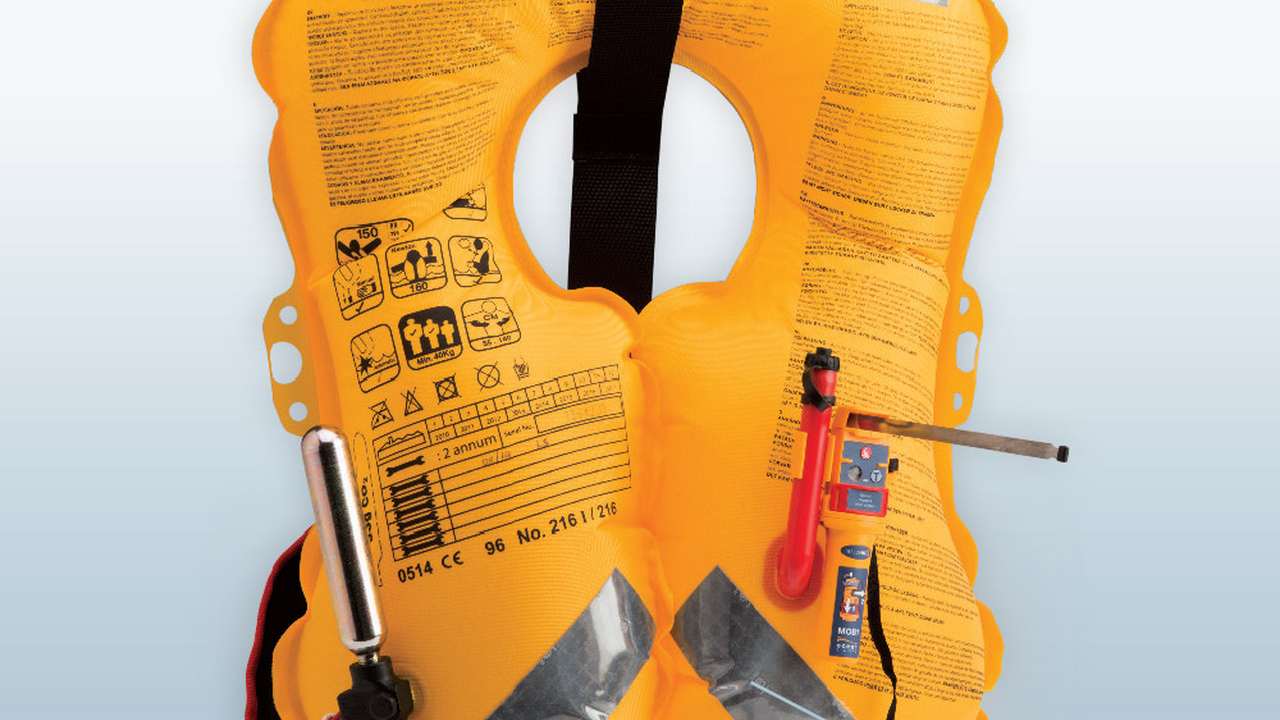
Before intervening, the inflating system is secured according to the instructions of the vest. You photograph the initial position, then you open the case without pulling antenna or tape. The beacon must be fixed with the components provided and not by clamps, velcro or added seams. They control air chamber, oral tube, sprayhood, light of the vest and other equipment that could interfere. If the jacket has been revised recently, the presence of the beacon does not guarantee that it has been properly reinstalled.
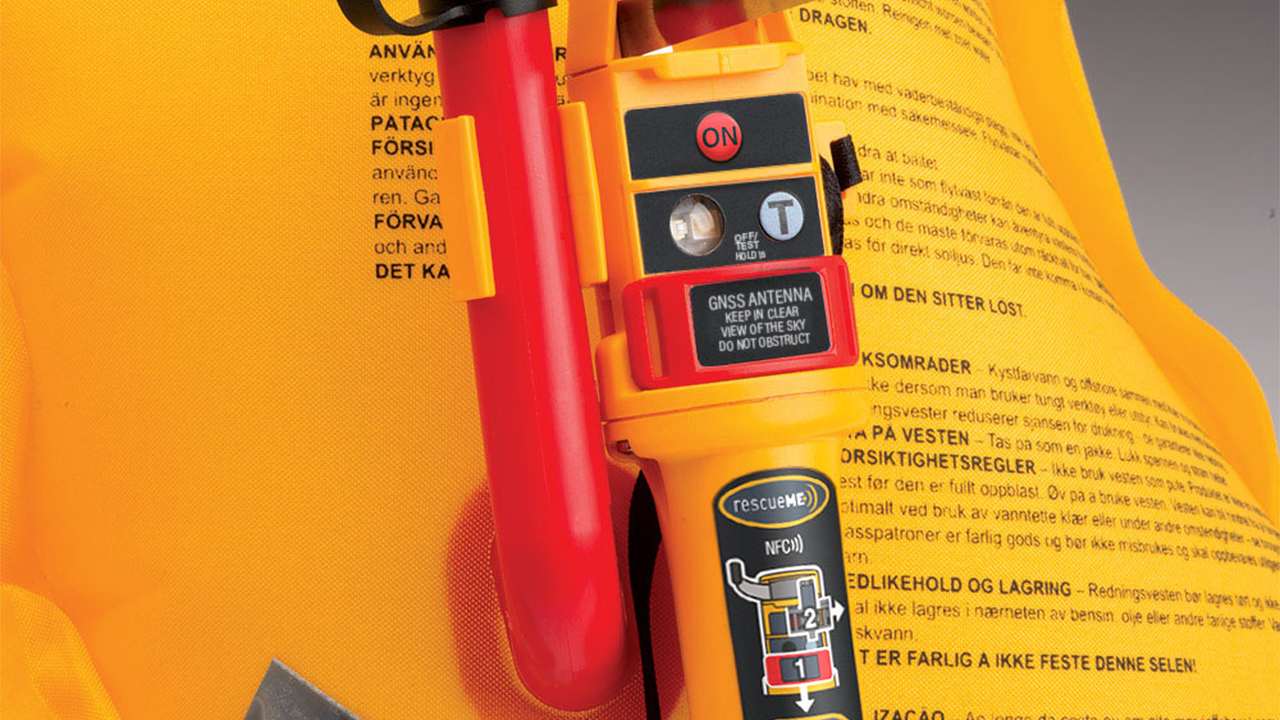
The clip on the oral tube must be the one expected
The MOB2 uses a specific bracket on the oral inflator tube and a system that connects the device to the jacket chamber. The clip must be oriented and tightened as indicated, without crushing or damaging the tube. It occurs that the beacon remains in the useful position when the room expands. the procedure does not accept a "similar" assembly seen on another jacket: the manufacturer of the savior can provide dedicated instructions. If there is no compatibility, the installation is suspended and an approved solution is sought.
Tape and slider command deployment
The activation tape must wrap or connect to the room in the specified way, reach the cursor and stay free from knots, twists and hinges. When the jacket inflates, the planned movement extracts the system, releases the antenna and activates the beacon. A tape too long can not pull; a too short can operate the device during closing. They control stickers, buckles and material status. After any inflating test the installation is done from the beginning, not simply folded.

ARMED coverage must indicate the real status
ARMED is not a decorative label. Its position must correspond to the ready device and prevent random drives without blocking the emergency command. It happens that it is closed, integrated and readable. During maintenance, the planned disarmament sequence is followed and it is prevented that someone closes the vest leaving the beacon in a non-operative state. The delivery uses a two-person control: one mount, the other compares tape, slider, antenna and cover with the procedure.
The wrapped antenna must be completely freed
The wrapper keeps the antenna drawn; it should not be replaced by elastic or adhesive tape. Base, radiant tract, path and exit space are observed. Sprayhood, belt and light of the vest must not trap it. Mechanical testing takes place in permitted modes and non-transmitter beacons. After opening, it only revolves as prescribed. A folded antenna to better close the case can seem ordered dry and fail right during inflating.

Distinguish associated activation and manual command
The device can be operated by the mechanism linked to the inflating when installed and armed correctly, or manually in emergency. The wearer must be able to reach the command even if the jacket did not inflate as expected. the procedure asks for a verbal and gesture demonstration without activation. It also explains how to stop a false alarm. The word "automatic" must not make the beacon solve any defect of the vest or that it does not need any conscious action.
Read the AIS 972 identity without changing it
The identity transmitted by AIS MOB is programmed in the factory and for MOB2 begins with a 97260 sequence indicated by the manufacturer. On the plotter the target is associated with that number, not to the name of the person as for a telephone contact. You do not change this identity. The card combines number, serial and crew member, so the alarm can be interpreted. If two beacons are exchanged between vests, the inventory is updated; otherwise the display can indicate a correct identity but assigned to the wrong person.
Programming the correct boat MMSI DSC
The DSC recipient number is set by the application provided and can be reprogrammed when the beacon changes the boat. It is not the AIS 972 identity of the device. the procedure compares the MMSI inserted with that of the radio and records the date. The availability of the function depends on the country rules and the compatibility of the VHF. Each programming uses a small amount of energy, so it does not repeat without reason. After radio, license or boat change, the line returns open until the new verification.
Check VHF DSC for message and software
A DSC radio is not automatically compatible with any MOB behavior. The manufacturer maintains proven directions and models, while older devices may require specific control. You note brand, model, software version, MMSI and antenna. With functional/ Expected SDC occurs the path without real alarm and you see confirmation on the MOB2 when applicable. If the radio does not react, you control programming, distance, settings and compatibility before accusing the beacon. The silence of the VHF is not offset by the presence of the AIS alone.

Check how the plotter shows the MOB target
The AIS receiver must bring the message to the instrument that the crew really looks. It identifies symbol, sound, page, priority and recognition possibilities. Filters, volume, silent mode and data networks can change the outcome. the procedure uses the authorized test procedure and demonstration functions of the apparatuses, not an emergency transmission. The commander notes the steps to recall the screen and the difference between the dynamic position of the beacon and the MOB point manually marked. Both must remain comprehensible under pressure.
The functional and DSC test has its own cadence
Ocean Signal indicates a functional/ test for MOB2 Monthly DSC during the life of the battery installed. First you need the programmed MMSI and the target radio must be in the radius. You read the full sequence, you look at LEDs and response and you record the outcome once. Repeat as long as a confirmation appears is not correct diagnostics and consumes energy. If the test fails, the result is kept, the radio occurs and the technical procedure applies. The calendar does not anticipate evidence for commercial convenience.

The AIS/GNSS test should not be repeated every month
The AIS/GNSS test activates the position receiver and uses more capacity. For MOB2 the manufacturer indicates that it is not performed more than once a year during battery life. It takes place with view of the sky and compatible conditions, following the sequence; it is noted acquisition and visualization previewed. An uncertain result does not authorize ten consecutive attempts. You control environment and instructions, then you require assistance when necessary. The distinction between the two tests must be evident in the register.
NFC must read the same specimen just checked
With a compatible smartphone, NFC opens the app and can show battery life, autotest counts, GNSS tests and activation time. Before reading, you compare serials or identities to avoid linking a screen to the nearby vest. The result is dated and connected to the card. NFC does not transmit AIS or DSC and does not test the radio path. If the app does not work, the beacon is not declared fault without additional controls; if the app is green, the mechanical assembly is not declared correct for this only reason.

Inspection of white and infrared strobe
The two lights must remain exposed when the jacket is swollen. They control lens, orientation and absence of covers. White helps visual research; infrared requires compatible devices and is not evaluated directly. The test only follows the expected mode, avoiding glare. If the sprayhood covers the beacon, the overall configuration occurs and you do not cut the fabric without permission. MOB2 jacket light and strobe are different components that can cooperate.
Compare battery, test and operating life
The MOB2 is declared with five-year battery and at least 24 hours operating less than 20 °C in test conditions. The date on the unit remains the practical reference and is compared with the number of tests recorded. Programming, testing and activations use capacity; it is not calculated to the eye how much it remains. Deadline, real emission, false prolonged alarm, damage or abnormal dive lead to service according to the indications. No one opens the shell to replace unplanned cells.
Try the reaction of the crew without transmitting
A simulacrum produces the event: viewer, alarm, point marking, maneuver, communications and recovery preparation. The tools can use training mode, while real beacons remain unenabled. Each member must recognize the expected target and know that AIS MOB is a local, non-satellite signal. Measure time until speed reduction and visual contact, then try lifting. If the system locates the person but no one can report it on board, the procedure is not closed.
Close the vest with a two-person control
After inspection or revision, antenna, slider, tape, cover and jacket chamber are restored in the planned sequence. A second person compares the installation with the procedure and signs the card. They control cylinders, pastels or inflating mechanism according to the model, as well as MOB2. The vest is closed without compressing the beacon improperly. On the outer bag an identifier allows to reconnect the device to the inventory line without opening each time the room.
The procedure is exceeded only by the whole chain
A MOB2 with positive autotest but wrong MMSI, incompatible radio or trapped antenna is not ready. The same goes for a perfect electronics on a boat without physical recovery. The final result requires beacon identified, compatible jacket, armed state, registered AIS identity, programmed DSC, plotter and VHF verified, limit testing and trained crew. So AIS, DSC, GNSS, lights and NFC become consistent parts of a local procedure. The device does not replace EPIRB or PLB, but reduces the time when your boat does not know where to look for the fallen person.