
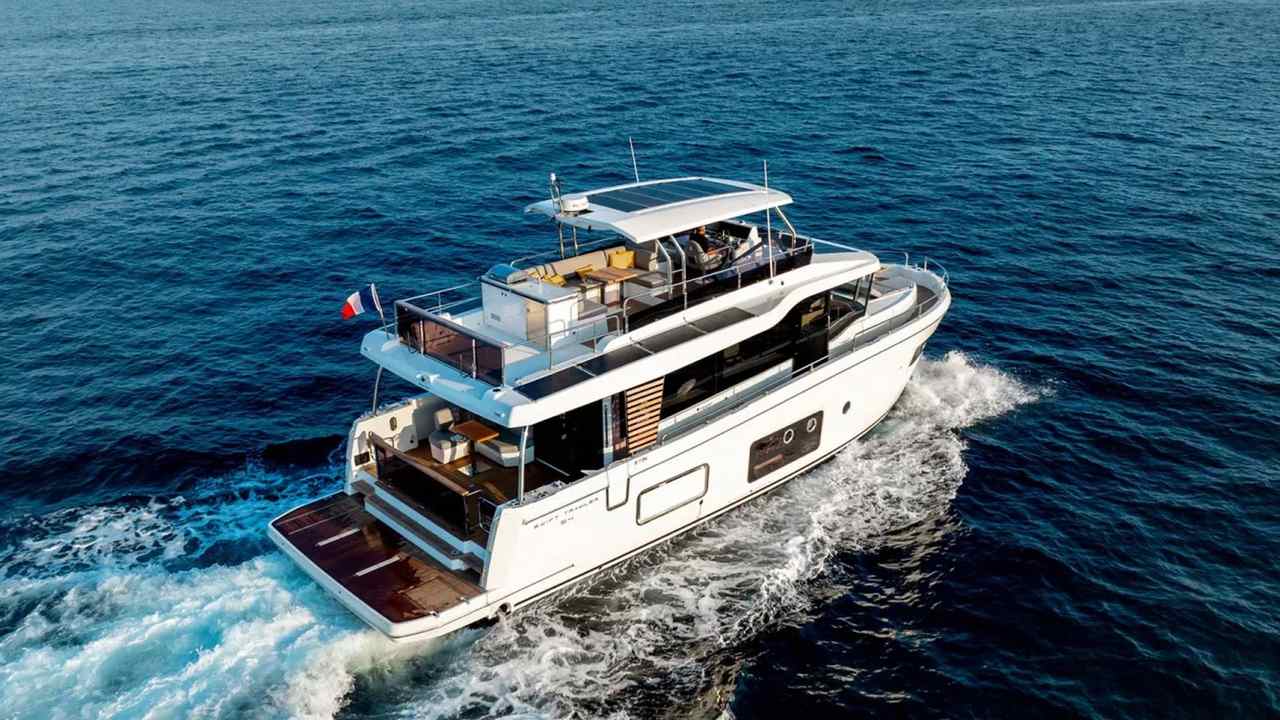
The Fusion hull of Dixon, three cabins and the Silent Boat package aim to make efficient the long family cruise.
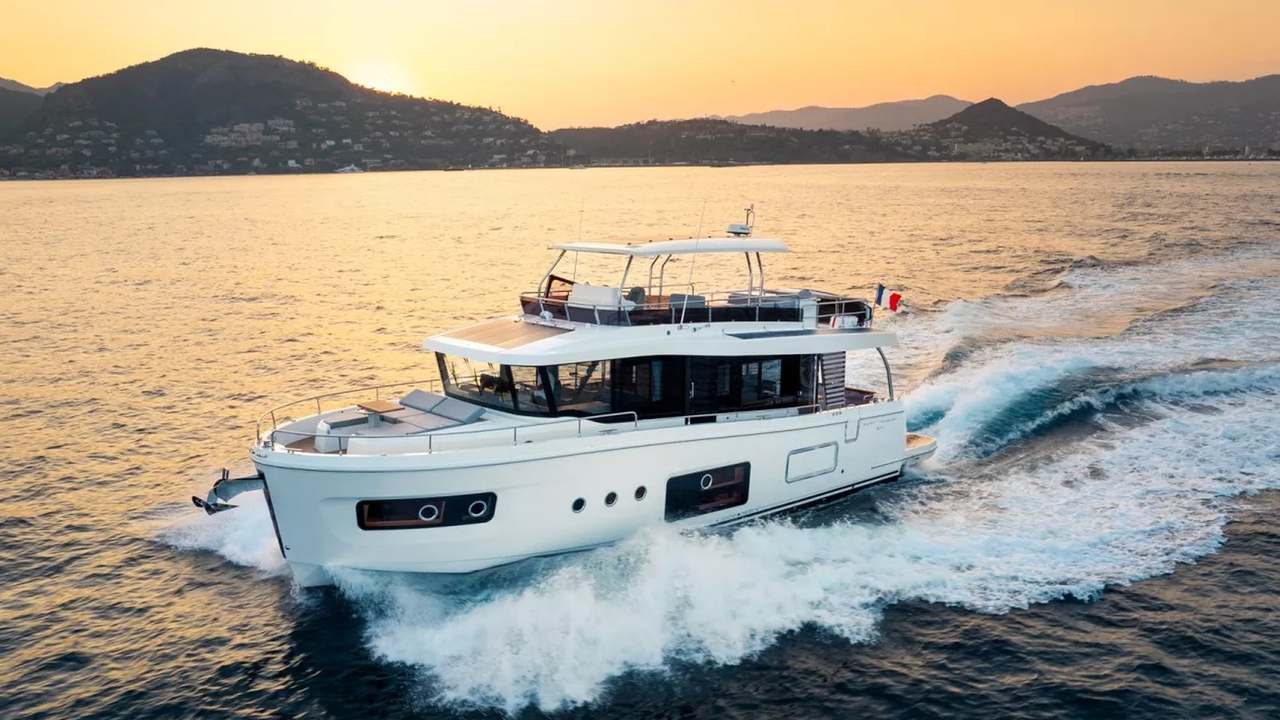
Green in brief
Swift Trawler 54 is credible as a travelling home for a family that prefers travel and spaces. The best equipment is not the one with more options, but the one with energy balance, tender, stabilization and spare parts calibrated on the planned routes.
Reference numbers
| Length outside everything | 17.13 m |
|---|---|
| Baglio | 4,98 m |
| Fishing | 1,14 m |
| Light dislocation | 21.518 kg |
| Engines | 2 × 550 CV |
| Fuel | 2 × 1.720 l |
| Water | 2 × 400 l |
| Category | EC B14 / C14 |
The plate data are project references. The test must specify people, liquids, equipment and conditions: a speed or autonomy without trim and reserve is not a repeatable data.
Component analysis by component
Fusion Hull
The hull developed with Dixon combines displacement efficiency and ability to accelerate. The test must measure liters for mile from 8 knots to the fast cruise: the best regime is not necessarily the one with lowest hour consumption, but the one with best ratio between speed, comfort and autonomy.
Double 550 CV
The two diesels have 3.440 liters of diesel. Filters, returns, valves and drains must be readable on the side. Maneuvers with only one motor and response of the controls must be tested; joysticks and thrusters are aids, not substitutes of rudder and propellers.
Silent Boat
The package includes 18 panels for 2.540 Wp and ten lithium batteries from 200 Ah to 24 V. The promise of many hours at anchor depends on loads. BMS, ventilation, fuses, inverter and priority between air conditioning, kitchen and services must be documented and simulated.
Stabilizers
The Sleipner Vector Gen3 fins reduce roll in navigation and, according to configuration, to the anchor. However, appendices, actuators and absorption increase. Tents, control units, local control and maintenance spaces must be verified; a shock requires inspection of the structural areas.
Tender lift
The platform can handle up to 400 kg. The data includes equipped dinghy, motor, fuel and accessories. Cylinders, sensors and mechanical blocks need to work without relying on hydraulic pressure alone. With the embarked dinghy change poppiera dive and drainage.
Three cabins
The 4.98-metre bay allows three cabins and passage-maker routes. 1800 liters of water, 170 black and 320 optional grays must be related to people. Inspections to pumps, boilers and valves must remain possible without dismantling fixed furniture.
Engine, transmission and response
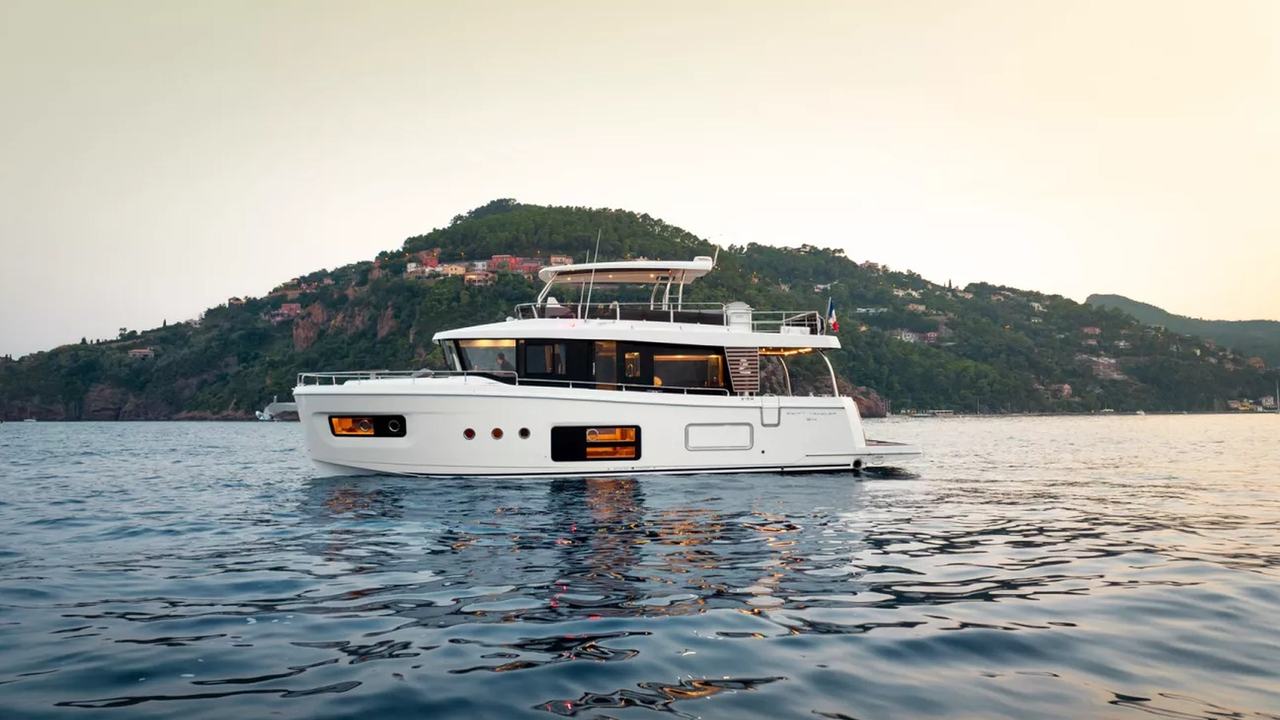
Two 550 hp diesels and 3.440 litres of diesel oil give freedom to choose the regime according to the stage. Efficiency does not always coincide with the lowest speed: light consumption curves, trim and load of the semi-dislocating hull. The Sleipner Vector Gen 3 fins can work in navigation and anchor; they add comfort, but they require space, hydraulic or electric power and maintenance of hull passes.
In the sea trial we would note turns, knots, consumption, temperature, noise and vibration at stable intervals. We would also try degraded manoeuvre, arrests and local commands. Electronics and joysticks increase precision, but they do not have to hide mechanical differences between the two sides or a incorrect trim.
Available configurations: how to choose
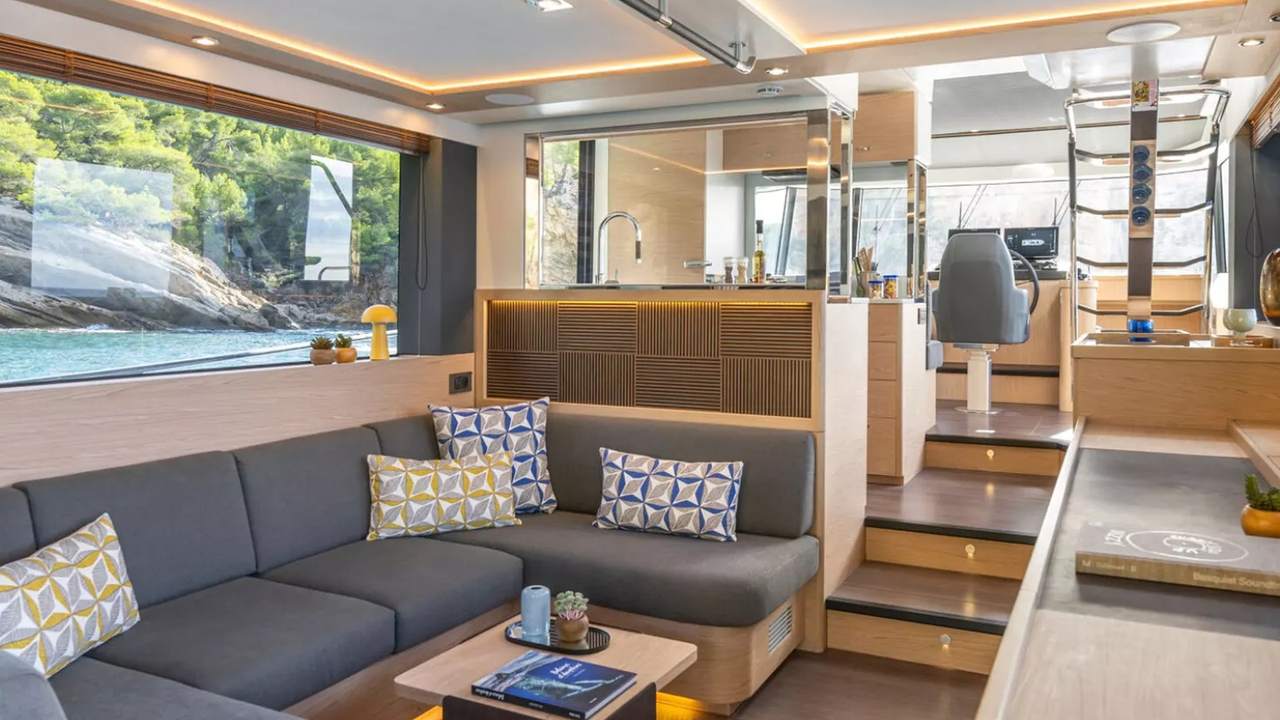
For long stops the Silent Boat is sensible if a rigorous budget is accepted. Pinne and dinghy lifts improve the use, but add two important hydraulic systems. Before ordering the tender must be weighed complete, not read only the dry weight of the boat.
The choice must be made before sizing batteries, generator, tanks and storages. Changing advanced capitulate layout or propulsion can leave over or undersized plants, or concentrate mass where the famine tolerates it less.
Accessories and onboard services
Silent Boat package with lithium and photovoltaic
In the capitulate they must be declared brand, model, weight installed and position. It is also necessary to identify power supply, protection and access for disassembly: the commercial name of the option, alone, does not allow to assess its integration and maintenance.
Pine Sleipner Vector Gen3
The verification does not end with the ignition in the dock. The component must be tested with engine, generator or network services under the conditions provided, annoting absorption and alarms. Local commands and emergency procedures must appear in the on-board documentation.
320 litre grey water tank
This item changes the operating configuration and can move electric masses or loads. Before the order, a scheme is needed, the consumption data and the interference with the existing gavones, passages and equipment. It should be added to the spare parts plan.
Tender lift up to 400 kg
The installation must preserve inspection of valves, filters, fixings and nearby cablings. We would also ask what assistance can be made in frequent areas and what mode can be used if sensor, display or actuator is not available.
Radar, AIS, autopilot and machine room cameras
The benefit is real only if crew and plant can support it. In the test the continuous operation is measured, not a demonstration of a few seconds; in the manual must be limits, maintenance and conditions that require not to use it.
Filters oil duplex and spare parts by passagemaking
Before delivery, this equipment must be included in the technical inventory with registration, schema and wear parts. The full weight includes brackets, cables, fluids and accessories: it is the complete value, not that of the only device, which enters the balance of the boat.
Layout, ergonomics and hidden plants
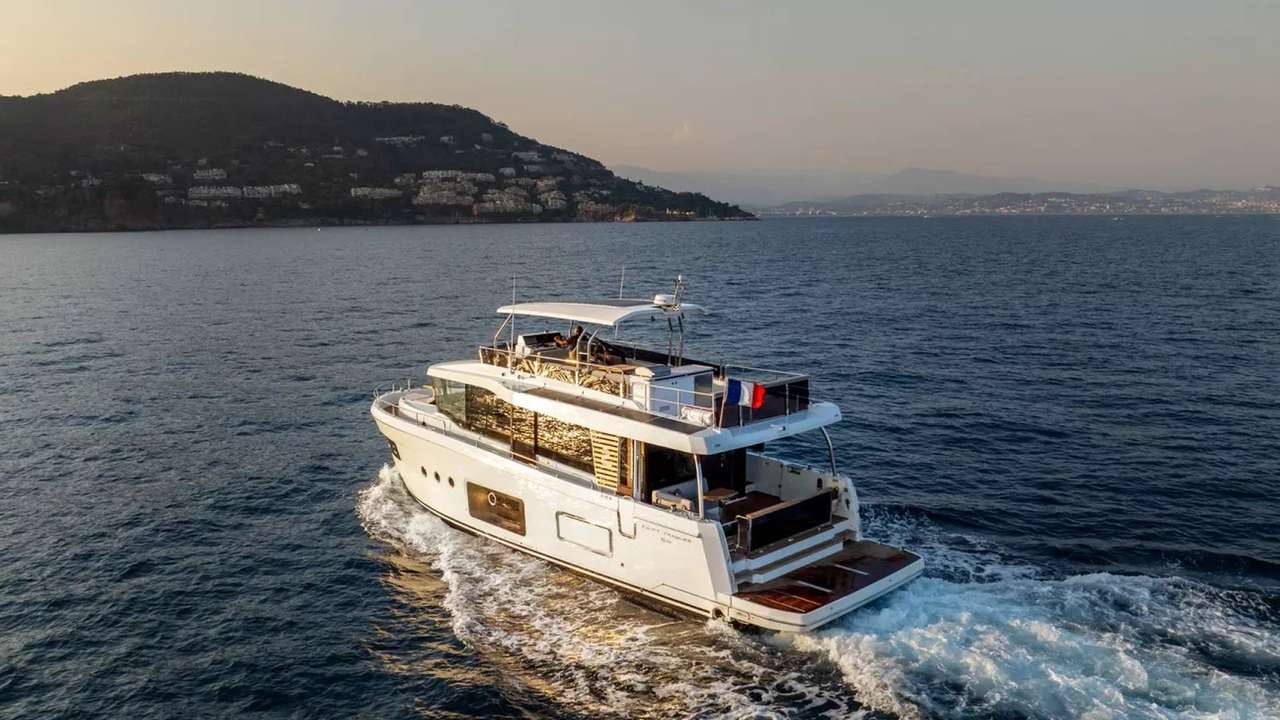
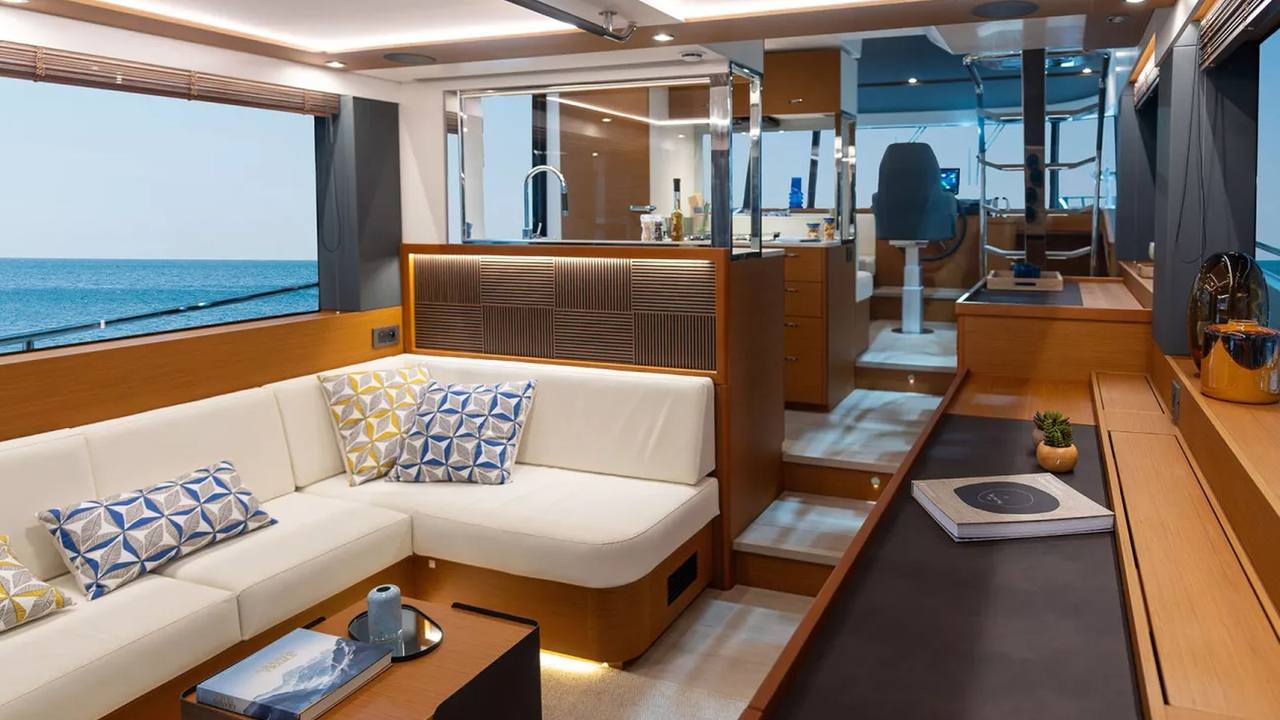
Three cabins, six beds and laundry allow weeks on board. The hydraulic platform lifts 400 kg and manages dinghy, kayak or SUP, provided the weight is included in the trim. The Silent Boat package adds 2.540 Wp of solar and ten lithium batteries from 200 Ah to 24 V, declaring up to ten hours of hotel autonomy at anchor: air conditioning and kitchen remain the utilities to be carefully measured.
We would open all the panels to identify sea sockets, pumps, valves, filters and connections. We would change drains with water, ventilation with closed environments and possibility to reach emergency equipment in night and day configuration.
verification of the expert for this model
In pre-purchase control or delivery testing we would not limit ourselves to visible finish. On this model we would put in writing at least these points:
Liter/mile curve with stabilized regimes
The point should be documented with photography, initial condition and result after the test. If different games, losses or values emerge between the sides, the cause must be isolated before acceptance.
Lithium Package Real Capacity and Security
No static verification is enough: a complete cycle is needed under operating conditions and a second hot check. Noise, temperature, absorption or abnormal pressure must become a measure, not an impression.
Tents and supports of stabilizers fins
We would ask for physical access, schema and isolation procedure. The component must be able to be reached with the mounted furniture and without making any other essential function of the boat.
Effective weight of the tender on the platform
The minutes must distinguish ordinary wear, regulation and defect. For each anomaly, spare parts, hours of work, any feed and consequences on use until restoration are indicated.
Access to pumps, filters and valves of the three water networks
The result must be compared with the configuration delivered and the maintenance historian. Software, calibrations or subsequent modifications must be recorded along with the date and subject that has performed the operation.
General control also includes CE documentation, freshmen, work history, fire protection, batteries, bilge and insulation tests where relevant. The anomalies must be quantified in hours, spare parts and boat stop, not described with a generic “to be reviewed”.
Reasoned maintenance plan
Before each exit
Quick control must include curve liters/mill to stabilized regimens and capacity and real lithium package security. Levels, bilge, alarms and mandatory safety equipment occur before starting, when an anomaly can still be corrected without operational pressure.
After navigation or heavy use
Salt, heat and vibration make priority seals and supports of the stabilizing fins and actual weight of the dinghy on the platform. The rinse should not push water into the connectors; hot inspections should be carried out respecting protections and cooling times.
Seasonal cutting
In addition to the cycles prescribed by the manufacturer, we would insert access to pumps, filters and valves of the three water networks in the annual report. Photographs, fluid analysis when relevant, alarm logs and operating hours allow you to read a trend before you become still boat.
Who really needs it
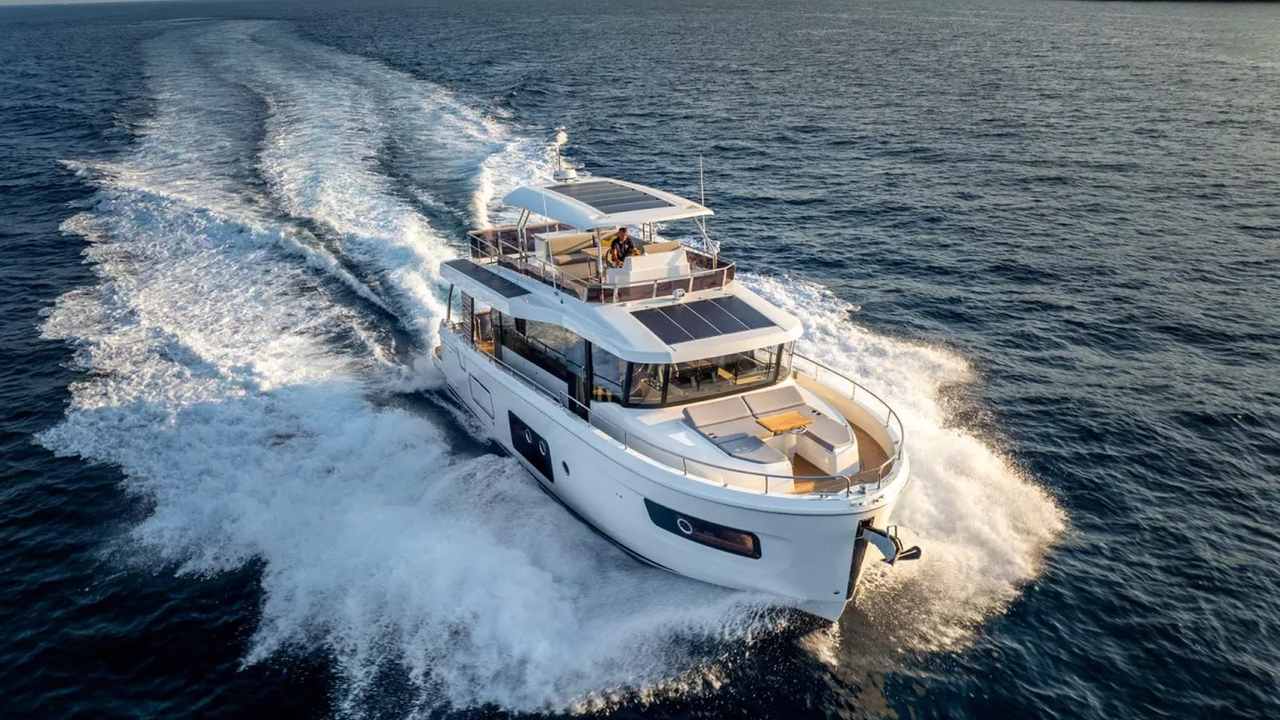
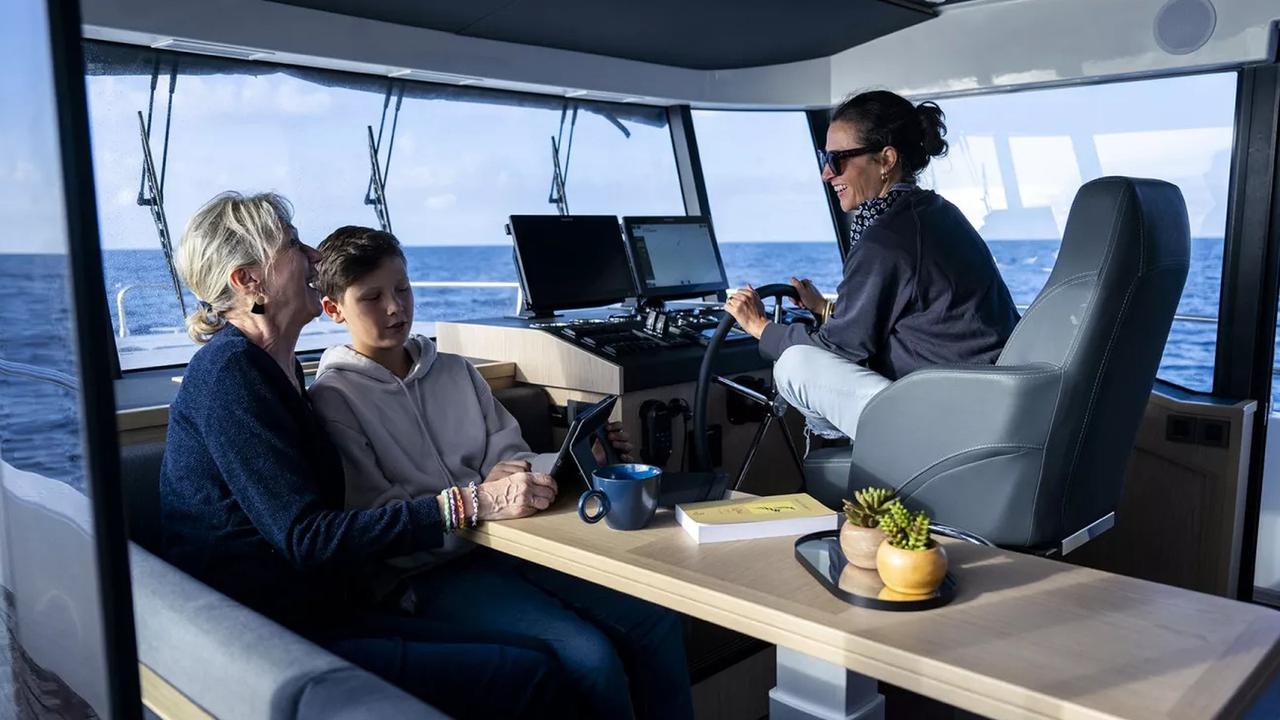
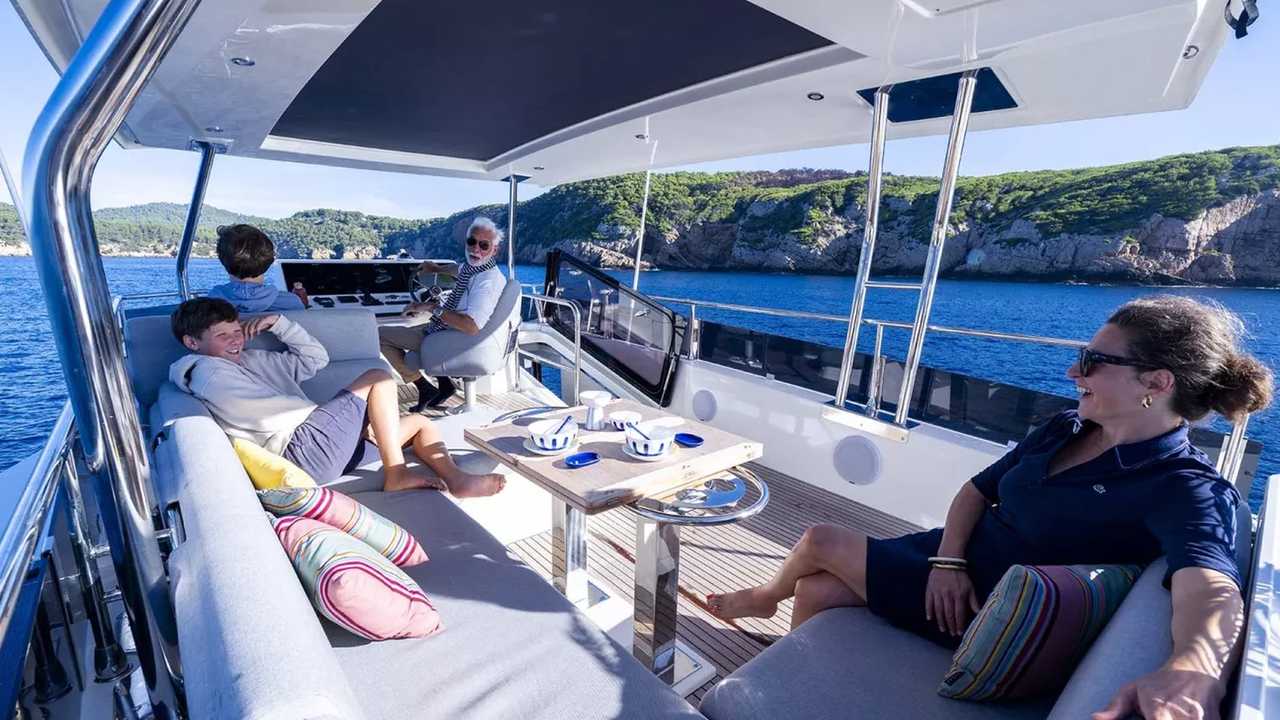
The Fusion hull designed by Dixon wants to work well between displacement and bridge without forcing the shipowner to a single speed. The fishing of 1,14 meters facilitates bays and canals, while the bay almost five meters produces volume and stability. The side doors near rudder and kitchen shorten the routes for peaks; the panoramic visibility and the internal staircase of the flybridge reduce the exposure of the crew.
The successful configuration is the one that keeps margin: load, energy, autonomy and accessibility. It is this margin, more than the maximum, that distinguishes a pleasant boat on display from a convincing boat after many seasons.