
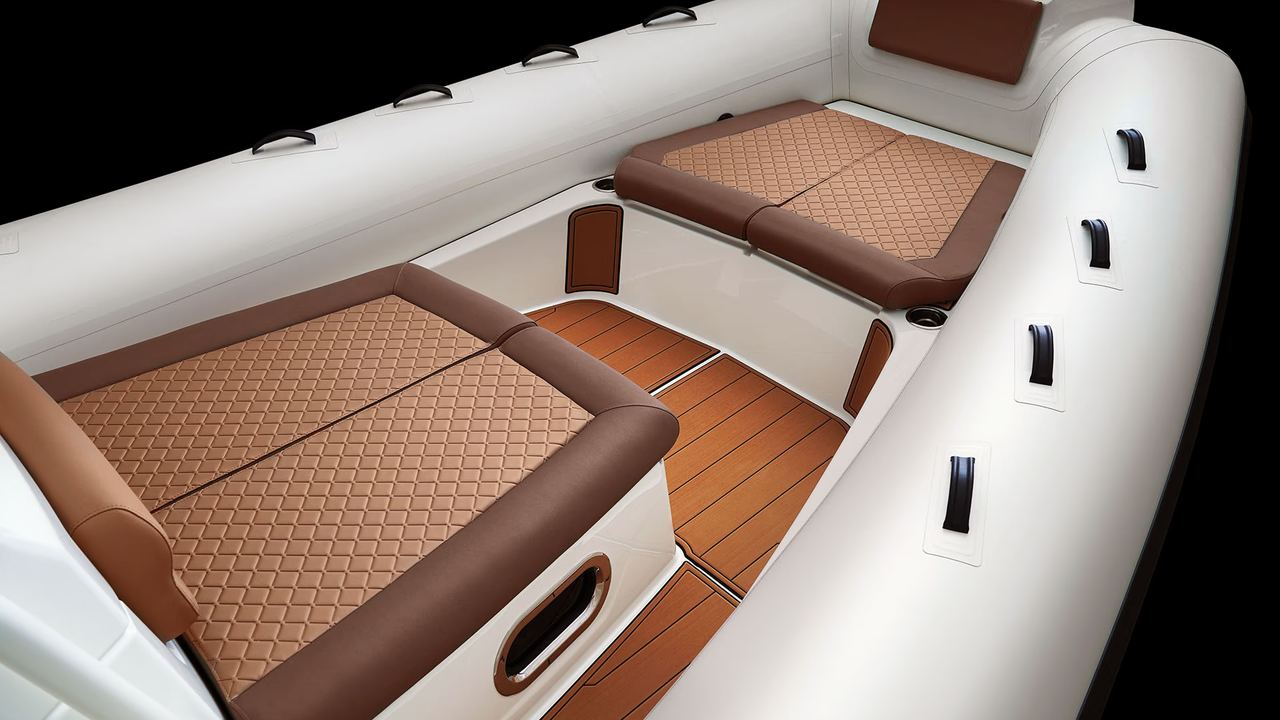
Configuring a BRIG Eagle 10 means connecting engines, fuel, electricity, drainage, water and furnishings to a single verifiable distinction. The official documentation provides detailed data, but the different market pages do not coincide in each item. The verification sequence does not hide these differences: it uses them to impose a control on the plate, on the applicable manual and on the components actually installed. No performance is deducted from the declared horses and no option is considered present only because it appears in photography.
Identify the drive before configuration
The first record number of hulls, year, version, category, tag and documents delivered. The manual distinguishes a length of 9,95 meters without rear platforms and 10,30 with them; the UK and Sweden pages report 9.95 and 9.90 respectively. Also the number of people changes: twelve in manual and United Kingdom, ten on the Swedish page. These discrepancies require punctual identification, not a more convenient value choice.
Configuration testing table
| Voice | Documented data | Control on board |
|---|---|---|
| Recommended engines | 2 × 300 hp in manual | model, masses, stems, propellers |
| Maximum motors | 2 × 350 hp; 700 hp total | plate and installation |
| Mass engines | maximum 740 kg with controls and batteries | components documents |
| Fuel | 585 l manual; 580 l UK/Sweden | tank plate and pattern |
| Water shower | 45 l | pump, vent, vent |
| Water sink | 39 l in manual | actual presence and circuit |
| Black water | 55 l in manual | presence, valves, exhaust |
| Sentry pumps | 2 automatic | automatic and manual testing |
| Tubular pressure | 0.2 bar | instrument and temperature |
The documented data guides the test; the separate exemplary determines what really needs to be tried.
Choice of the two outboards
The manual recommends two 300 hp engines and allows up to two 350 hp units. The Swedish page has 600 hp as a minimum and recommended power; the UK contains an abnormal table in which 700 hp appears at a minimum and maximum. You do not configure a propulsive apparatus on these only commercial lines. Approval of the manufacturer, mass, engine boards, type of command, alternators, stems and propellers, connecting everything to the tag.
Gambi, mounting and mirror geometry
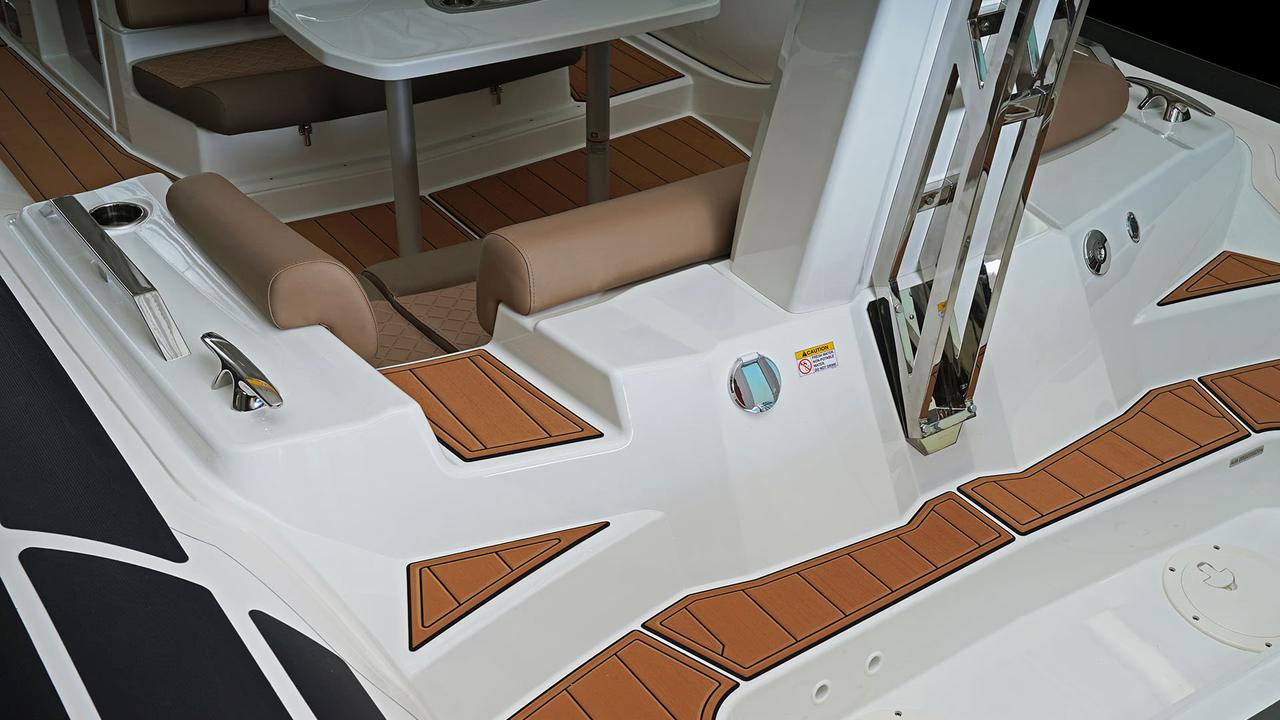
The documentation indicates two 25-inch stems or a 30-inch single, while the standard configuration is double. The manual shows 760 mm in the mirror and 22 degrees of deadrise in the poppiera section. Mounting heights, holes and clamps occur on the applicable instructions. The test photos fixtures, sealings, steps and freedom of branding and trim. No installation value is invented if it does not appear in the documentation delivered.
Engine mass and overall budget
The manual limit of 740 kilograms includes engines, controls and batteries. The vacuum mass is 2,200 kilograms; the document indicates 3,000 kilograms in light condition with the engines. Before the launch a sheet is prepared with engines, batteries, fuel, water, people, safety and optional. The total maximum load of 2,000 kilograms and that of 1.430 plate have distinct definitions. The budget does not use the commercial data alone or confuses mass of the complex and useful load.
585 or 580 liters fuel circuit
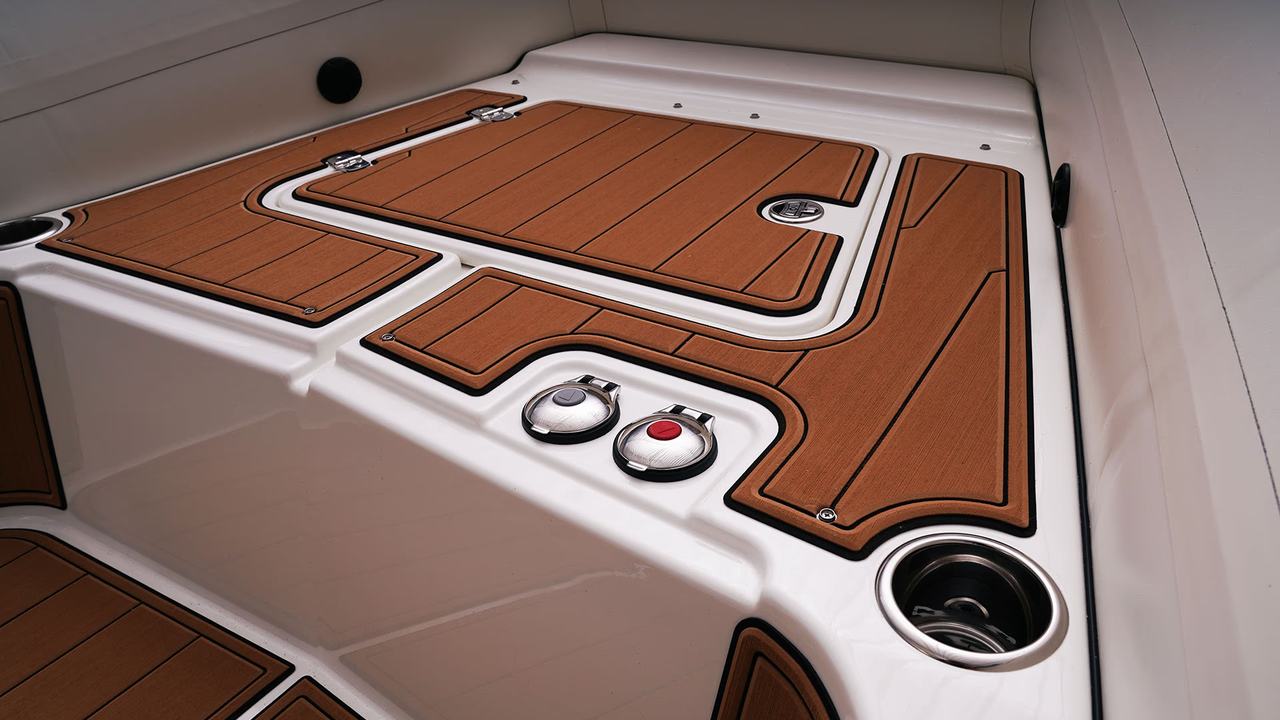
The manual indicates a fuel tank of 585 liters, while the UK and Sweden pages report 580. On the single specimen we read the tank plate and compare the pattern. The check sequence identifies box, vent, send lines, filters, valves and links to the two engines. They seek rubbing, forced curves, smells and traces of liquid. The test does not require to fill without criterion: it follows the procedure and safety conditions of the manufacturer.
Ventilation and fuel insulation
The commercial equipment cites the ventilation system and the integrated fuel system. The test checks that openings and routes are not covered by luggage or changes. Each valve must be identified and accessible. Pipes, clamps and fittings are associated with the separate, without taking any materials or undeclared ranges. Before any intervention the procedures of the manual and the components apply, keeping distant sources of ignition and entrusting the repairs to competent personnel.
Batteries and Disconnection
The manual represents battery disconnectors and an articulated electrical system; the UK page includes container and insulation switch. The verification records number, technology, capacity, position and fixing of the delivered batteries, without deducting them from the general design. Terminals must be protected and supported cables. Each disconnector receives a clear label and is tested according to the procedure. The ventilation of the compartment and the access cannot be reduced by the storage.
Electric panel and protection
Bridge, navigation lights, pumps, winch, refrigerator and services depend on the electric. The test associates each switch to its user and checks labels, protections and schematics. The back of the console must remain inspectable. It does not change a fuse to solve a defect and does not add an accessory without calculating absorption, section, protection and path. The tests take place first individually and then in the combination provided by the manufacturer.
Two automatic binder pumps
Documents indicate two automatic pumps. For each location, power, control, sensor or float and exhaust is recorded. The test includes automatic activation and, when expected, manual, observing that the flow arrives outside without losses. Suctions and mobile parts must remain free. The verification sequence is not limited to hearing the engine noise: it checks the water movement. An alarm or stagnation is resolved before delivery.
Cover vacuuming
The UK page includes two self-empting systems, distinct from the bilge pumps. They inspect cockpits, drains, pipes and valves according to the configuration. Water washing or rain should not migrate to compartments or remain trapped by objects. The setup can affect the drainage, so the test is repeated with the boat in the condition. The ability to compensate for infiltration or openings left inappropriately accessible is not attributed to a discharge.
45 liters shower water
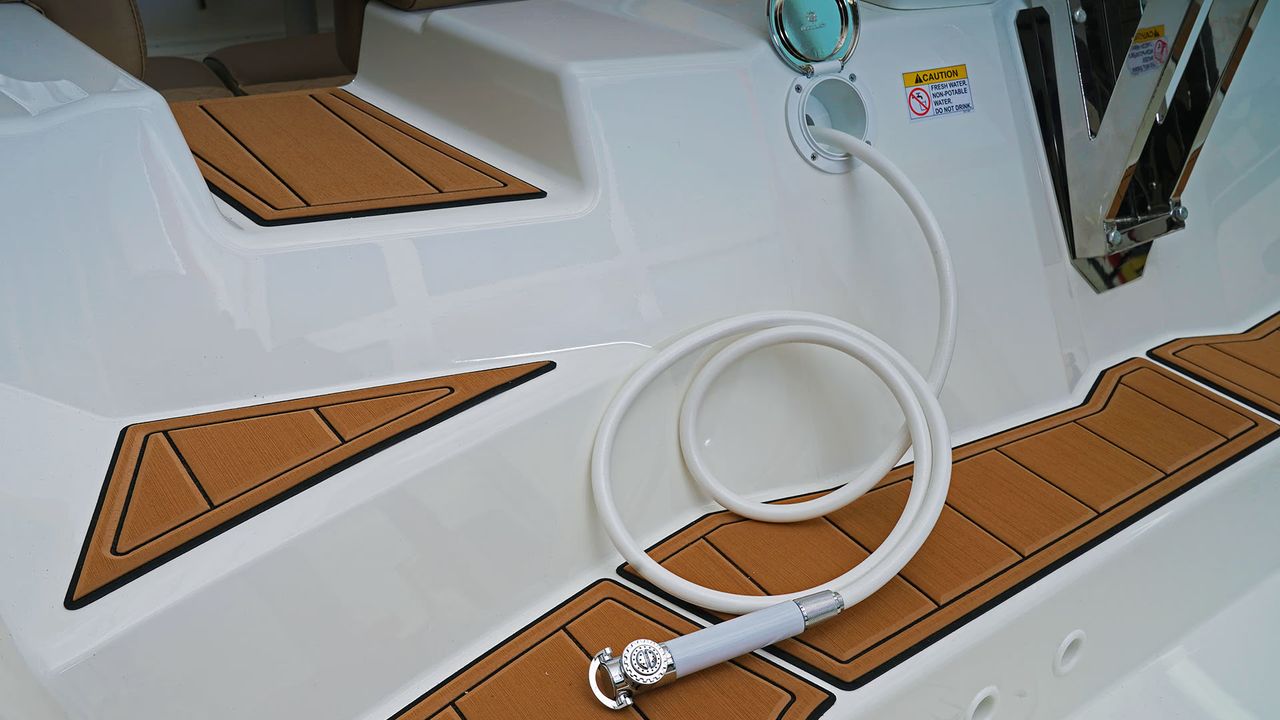
Manual and commercial pages agree on 45 liters for shower water. Bocchettone, tank, vent, pump, pipes, shower and drainage of the use area are identified. The test searches for pump losses off and activates and checks that the pipe is not crushed in the hold. The inboard water adds mass and is included in the budget. Cleaning and remittance follow the system instructions actually installed.
Lavello with dedicated circuit
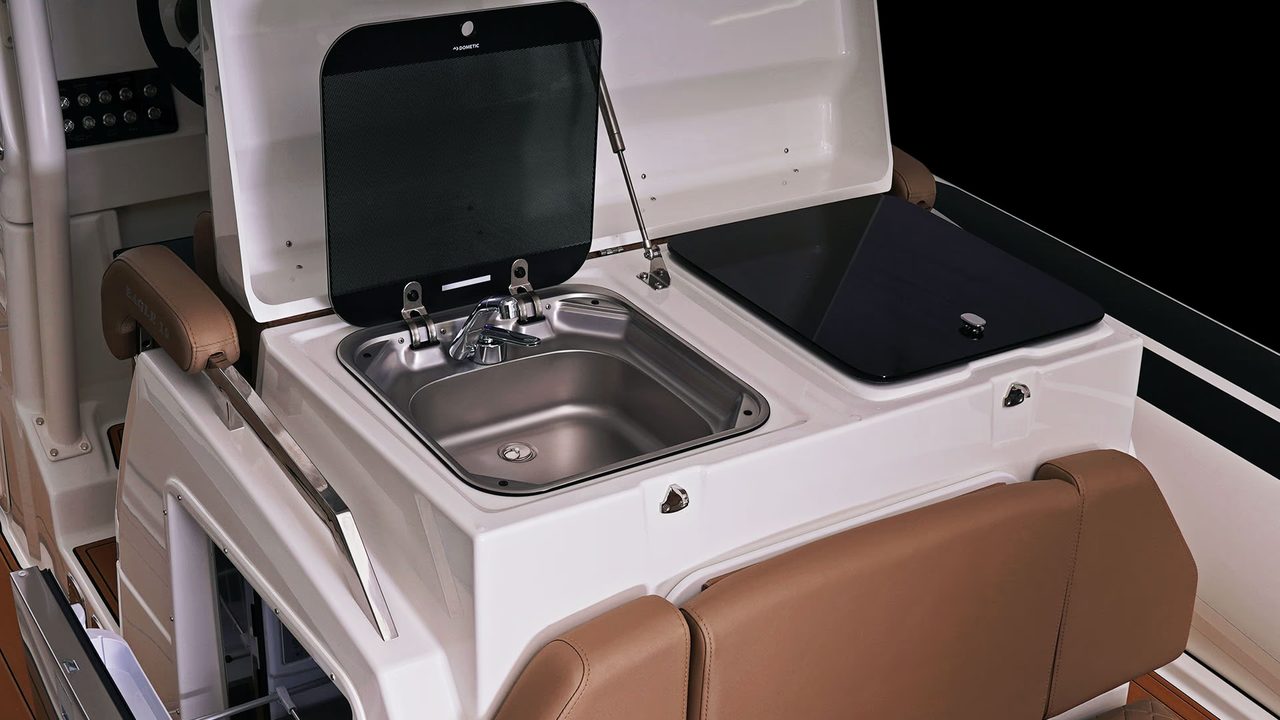
The manual represents a 39 litre tank for the sink, but the kitchen module can depend on the preparation. The first question is therefore whether it is present in the separate. In case of positive, load, pump, tap, drain and access are tested. The floor should not prevent the ventilation of the refrigerator or hide electrical protections. Covers and mobile parts receive a proper stop. Residual water is managed according to the manual, without improvising connections between circuits.
Black water tank
The manual includes a configuration with 55 liters toilet and tank; the British page lists the electric toilet between the optional. Presence and scheme must therefore be confirmed. The test identifies power supply, input, pump, valves, vent, tank and expected emptying method. Each command is labeled and tried without any improper discharge. Odours or humidity require inspection of fittings. Access and ventilation of the premises should not be blocked by luggage.
Verricello and anchor chain
The manual represents the electric winch and the commercial page includes anchorage and gavones in the published configuration. The verification sequence checks that the apparatus is actually installed, with protection, control, fixation and manual. They control musone, chain or top, final attack and drainage of the gavone. The command is tried safely, without hands near the mobile parts. Prodier cushions must not prevent operational access or inspection.
Hydraulic steering and controls
Hydraulic rudder appears on the UK list. On board there are built-in, model, cylinders, pipes, fittings and fluids. With the off engines, the end-of-the-race movement occurs, seeking interference with cables and pipes; the water test follows the approved procedure. Flyer, handcuffs, stops and tools must be reached by the planned driving posture. Loss, games or rubbing block acceptance until correction.
Refrigerator and electric load
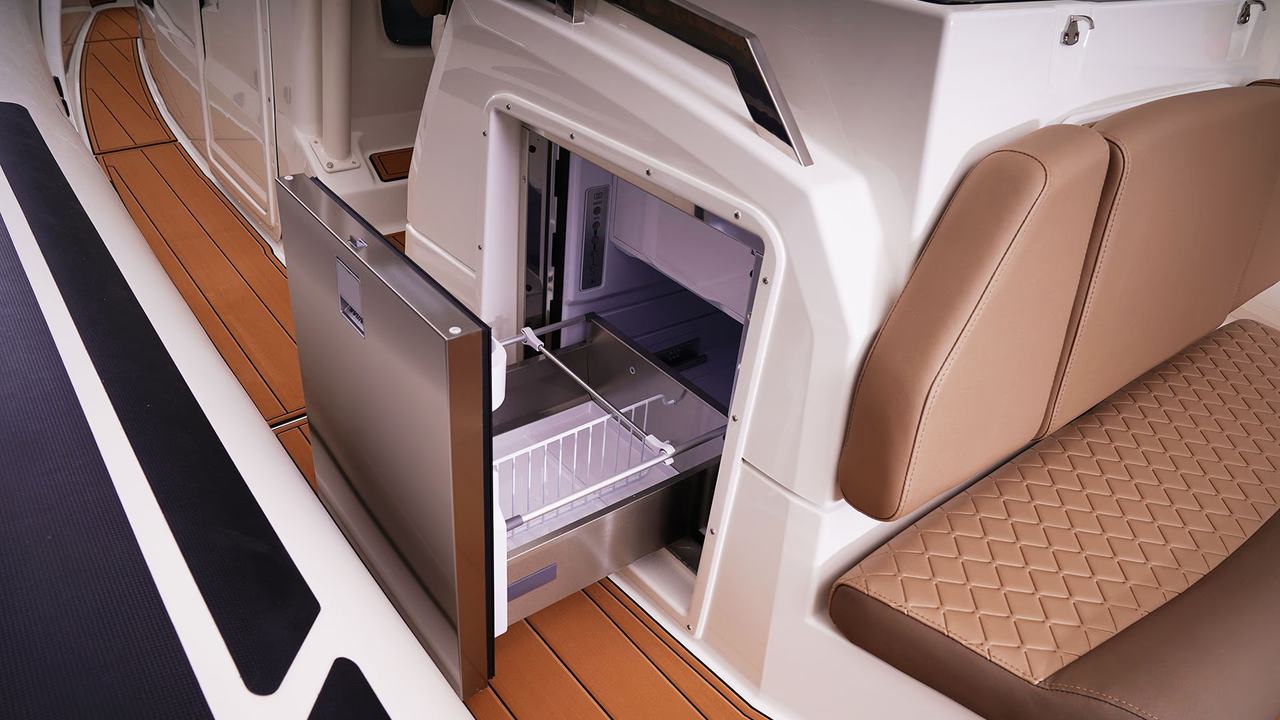
The refrigerator appears in the preparation documentation, but is also listed among the British optionals. If present, fixing, closing, ventilation, drainage and protected feeding occurs. Absorption enters the electrical balance with pumps, lights, winch and instruments. The test includes cooling according to the component instructions, not an instant evaluation. The compartment does not become a space for objects that block grids or wires.
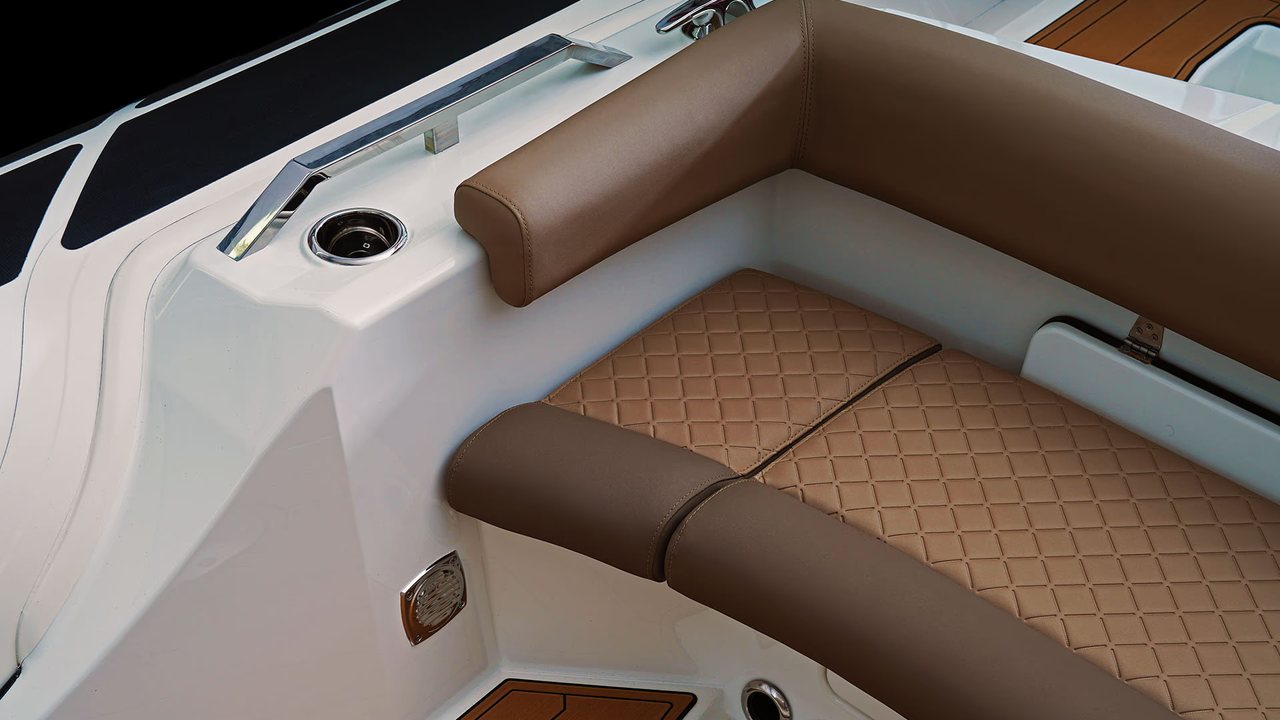
Table, sun and removable parts
Table and kitchens transform social areas, but each element must have a seat and a stop. The test performs assembly and disassembly, controls supports and checks that the steps remain available. Removable objects cannot become bullets or cover technical access. Commercial photographs do not define a safe condition in motion: manual instructions and approved configuration apply. Any limits of use are reported in the minutes.
Tubes, valves and pressure
Seven rooms and nominal pressure of 0.2 bar require an ordered control. Every valve is identified, joints and partitions are observed and ambient temperature is recorded along with the measurement. The 65cm tubular should not support unplanned loads or supports. Hypalon fabric on the UK page requires compatible products. Pressure variations do not correlate without considering temperature and instructions; a suspicious loss is located and repaired with approved procedure.
Static testing before the varo
With the boat stop you complete identity, documents, locks accessible, levels, batteries, protections, pumps, lights, water, toilets and removable parts. It opens every gavone and it occurs that the content does not touch lines or components. You photograph the initial state. The record distinguishes evidence that is passed, not applicable and postponed; an absent function is not promoted as standard. Only after shutting down the anomalies we proceed to the water test.
Water testing without invented performance
The test notes people, liquids, equipment, engines, propellers, conditions and tools. Start-up, cooling according to available displays, command response, rudder, trim, drainage and alarm absence. Speed, consumption or autonomy are not published if they have not been measured by method. After the test, compartments are reopened to search for water, fuel, odours, abnormal heat or moved components. Each relief is connected to the proven configuration.
Delivery, labels and maintenance
The file includes manual boat, motors, steering, batteries, pumps, winch, refrigerator and toilet. Schemes, tags and guarantees are associated with serial numbers. Valves and disconnectors receive understandable labels. The maintenance plan comes from the installed components and is updated with every change. This discipline makes the BRIG Eagle 10 controllable over time: the blanket remains usable because the plants do not disappear behind furniture and boots.
periodic verification sequence after delivery
Before each output you control tubular, valves, fuel, batteries, pumps, discharges, steering, motors, fixings and mandatory safety equipment. At intervals defined by manuals, functional tests and deeper inspections are repeated. After maintenance we compare the initial photos and update weight and distinct. An additional option involves protection, wiring, fixing, ventilation and documentation. The test is therefore not an isolated event, but the reference from which to measure each subsequent change.