
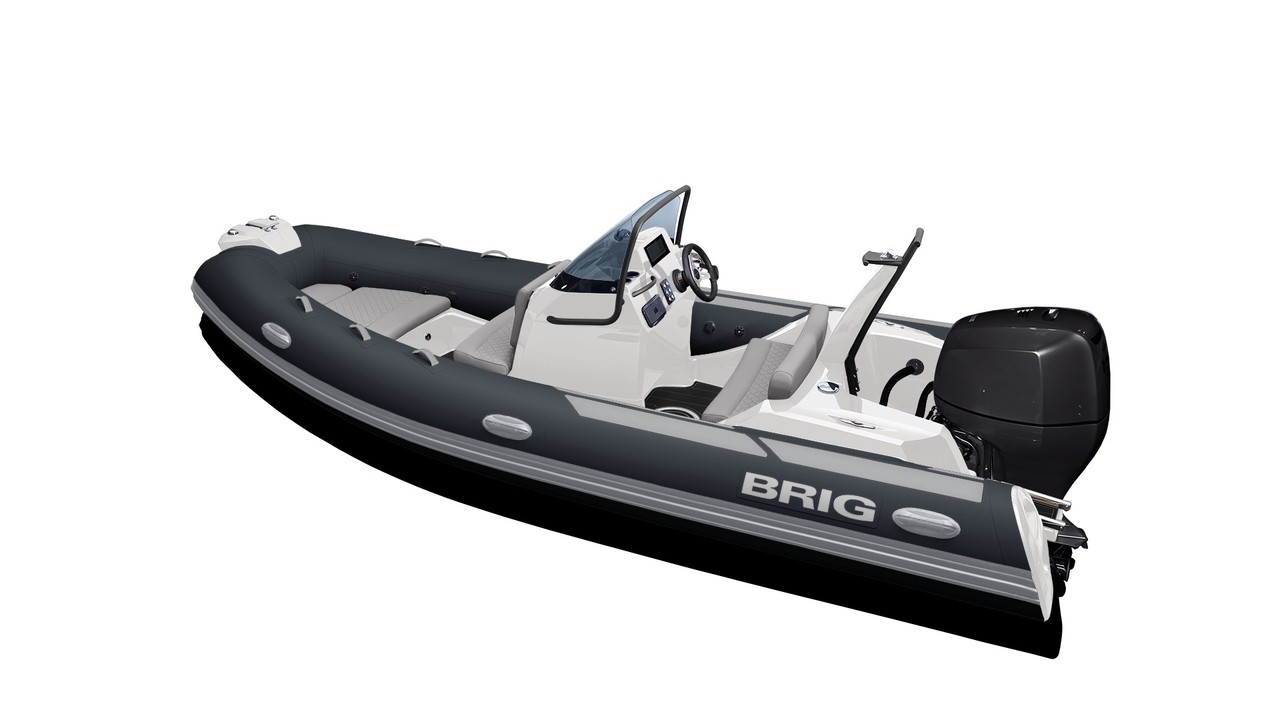
The verification of the BRIG Eagle 5 begins from the identification of the version and continues along each circuit actually installed. The manual distinguishes Eagle 5L and Eagle 5S: both measure 4.95 for 2,30 meters, bring seven people in category C, have five pneumatic chambers, fuel tank from 98 liters and single motor up to 115 hp. They change height, mass and console. This requires material verification before talking about plants. Battery, rudder, instruments, shower, ladder and sunbathing may vary; the table of the maximum set-up does not prove that each element is present. Plate, distinct, photographs of the compartments and manuals of the components form the reference of the single unit.
Initial specimen sheet
The minutes record identification number, version 5L or 5S, category, persons allowed, mass, engine and date of verification. The 5L is 1,60 meters high and weighs 415 kilograms empty; the 5S is 1.52 high and weighs 410. The equipment provided by the manufacturer is 430 and 425 kilograms respectively. The declared tolerances are three percent on size and five on the masses, but do not replace a weigh when choosing trolley, crane or flow. Each option is added to the distinct with its mass.

Table of systems to be checked
| System | Official data | Control on board |
|---|---|---|
| Outboard | 90 hp recommended, 115 hp maximum | Model, 280 kg maximum with controls and battery |
| Fuel | 98 | Bocchettone, vent, tubes, indicator, valve and prefilter |
| Tubular | 5 rooms at 0.2 bar | Pressure, valves, joints and temperature |
| Drainage | Two independent systems | Takes, diaphragms, pipes, drains and automatic pump |
| Electric | Battery, connector, protections | Fixing, polarity, fuses, switches and utilities |
| Showers | 39 l, optional | Tank, filling, pump, pipe and bellows |
The final column is compiled on the boat, not on the catalog. An unseen or untested component remains to be checked and does not automatically become supplied.
Single motor and mass limit
The outboard uses a 20-inch stem. The recommended power is 90 hp, maximum 115 hp, while the engine complex, controls and battery must not exceed 280 kilograms. The verification collects brand, model, serial, declared mass, propeller and assembly quota. They control fixings in the mirror, sealing and rotation freedom. Choosing at maximum power requires explicit caution from the manual and does not allow to deduct performance. Speed and consumption can only refer to a test documented with load, propeller and indicated conditions.
Handcuff, start and stop
On an off-motor, you can ride the entire run of the cap and see cables and leverages. The system must prevent the start with gear inserted; the emergency stop device is tested according to the instructions of the engine. Key, alarms and tools must be reachable from the driving position. An alert is not eliminated without diagnosis. After an operation on engine or controls, the test is repeated and the log is updated. Objects in the gavones must not crush cables or limit the movement of the rudder.

Mechanical or hydraulic steering
The manual includes the mechanical rudder and admits the hydraulic one as a variant; the commercial page presents the latter among the options. The verification sequence identifies the mounted system, then brings the motor to line by checking games, frictions and interference. In the mechanical circuit are controlled cable and terminals; in the hydraulic circuit pipes, fittings and seal. No maintenance is improvised without specific instructions. In water the response occurs at low speed in the two directions before expanding the testing program.
Plank and switches
The Deluxe and Sport consoles have switch plate, instrument space, protected 12 volt socket, indicator, compass and fuse box with indicators. The layout changes, but the test remains the same: to associate each user command, to apply legible labels and to check one function at a time. The manual recalls the need to store spare fuses in an accessible position; a red LED signals the fault fuse. The back of the bridge must remain accessible and free from bags that gravitate on the wiring.

Battery and disconnector
The battery is not part of the basic set indicated by the manual, but its container and the connector are part of the set. They control model, compatible capacity, fixing, poly cover, polarity, locks and absence of oxidation. The container must prevent movements; the insulation command must be identified and accessible in the poppiero compartment. When the boat is left, the manual prescribes to disconnect the batteries. Each added circuit must have cable and sizing protection, without derivations hidden from a available line.
98 litre fuel circuit
The system includes integrated tank, electric indicator, external vent, load tube, line to the motor and vent. Prefilter and valve must be installed by authorized personnel. The control follows the path with open doors, looking for folds, abrasions, uncertain locks, smells or traces. The manual prohibits improvised modifications and requires motor and electrical utilities switched off during the supply. After closing the cap, the compartments are inspected again. A suspect of loss interrupts use until repair checked.

Indicator and real autonomy
The capacity of 98 liters is not a given of autonomy. Consumption, regimen, load, propeller, conditions and reserve choice change the available distance. The indicator compares with the replenished liters and records engine hours and configuration. Planning uses accumulated measures on your unit and retains a reserve established before departure. If the indication is unstable, sensor, power and connections occur; the data is not replaced with an optimistic estimate. The fuel sheet accompanies the engine log.
Two drainage circuits
The drainage of the shaft and the engine recess is distinct from that of the hull. The first includes two sockets with caps, two drains with flexible diaphragms, two tubes and the discharge of the recess. The second includes automatic pump, tube, exit in the recess and cap of the bilge. Valves and sockets are controlled before each navigation; those of the well must remain open during use. No heavy object should be placed on the pipes, because it could bend or damage them. Debris and obstructions are removed by dry boat.

Automatic and forced bilge pump
The electric scheme includes automatic mode and forced control of the pump. The test only introduces the necessary water, observes start, unload and stop, then test the manual command. The pump should not turn dry as far as the manufacturer admits. Pipe and exit are inspected for leaks and counterpressions. Control after rain, washing or varo confirms that the compartments remain dry. Automatism is a protection, not a reason to avoid the inspection of the bilge and the causes of possible water entry.
Optional shower 39 liters
The shower kit includes 39 liters tank, external vent, pump, tube, bellows and compartment with cap. If it is not present, the voice is marked absent without attributing the volume to the boat. If installed, the water and fuel filling are clearly distinguished, the seal is tested and the path is followed to the point of use. The circuit is cleaned and emptied according to materials and climate. The documentation does not authorize drinking water: the actual use must be established by the shipowner.

Five rooms and inflating sequence
The nominal pressure is 0.2 bar, equal to 2.9 psi. The valves are prepared in an operational position, the rear chambers are first inflated, then the central units without bringing them immediately to the final value, then the prodier chamber and finally the pressure is equaled. The manual excludes unapproved compressors and requires control before each output. Pressure and temperature are noted together. Valves, caps, joints, studs and handles are visually inspected; an excess of pressure reduces the life of the tubular.
Lights, indicator and electrical schematic
The scheme connects white light on the stern support, red and green lights, alerter, fuel indicator, tools, bilge pump and shower pump. Switches include automatic protections; the 12 volt socket has dedicated fuse. The verification sequence turns on the functions individually and in the planned combinations, observing anomalous spies and falls. The lamps must be clean, firm and visible. Added tools require a schema update. Wet hands should not touch electrical components and repairs remain entrusted to competent personnel.
Support lights and use for skiing
The poppiero support brings white light and the manual indicates that it can also be used as a ski-mast. Before use, you can control fixations, scheduled function and freedom compared to engine, top and passengers. The point is not confused with lifting or bitten eyelets. Equipment, procedures and limits must be compatible with the indications applicable to the unit. The conductor manages start and stop with an observer when required. At the end, hardware and light wiring are inspected, avoiding the sport function to compromise its integrity.

Scaletta and reboarding procedure
The foldable stainless steel ladder appears in the maximum set of the manual and among the commercial optionals. His presence must be verified on the distinct. If installed, it proves opening, blocking, hooks and route from the water with the engine turned off and secure. Tubes, cables and objects should not interfere. The procedure considers assistance to a person affected and keeps the ladder accessible without emptying the gavones. After use you control hinges and fixings, then it freezes correctly in navigation position.
Gavoni and technical access
Still, luggage, under console and poppiero compartment have distinct destinations. The verification sequence opens every cover with mounted cushions, assigns the loads and photographes what must remain free. Connector, pumps, pipes and doors cannot be covered by bags. Heavy objects stop and do not burden on drainage. The anchor gavone retains access to the top and chain even with the sun mounted. The useful storage capacity is the one that allows inspection and intervention, not the one obtained by filling each volume.
Removable sockets and components
Two panels and two cushions make up the prodier set. Supports, buttons and boots occur when disassembled. The manual prescribes to open the front seat of the console, place the panels in the recesses, close and fix the cushions. The full test ensures that no component can move and that sticks and gavones remain usable. Covers and other removable elements receive the same discipline: assigned place, stop, mass and instructions. An optional without a safe rest position is not yet a completed configuration.
Static testing and testing in water
Documents, plates, engine, steering, handle, stop, battery, fuses, lights, warning, pumps, drains, fuel, water, tubular and access. Each anomaly requires correction and new proof. In water people, load, levels, propeller and conditions are recorded; sealing, cooling, alarms, grafting and low-speed government occur. Performance values are not invented. On the return, compartments are reopened and losses, load movements or signs of rubbing are sought.
check sequence before departure
The recurring control includes weather and plane, documents, people and distribution, equipment, pressure of tubulars, plugs and drains, fuel with reserve, battery and disconnector, rudder, mantle, stop, lights, alerter, pumps, motor, propeller, anchor, peaks and ladder. The technical rooms remain accessible and nothing is free to move. An untested function is not declared operational. The register notes anomaly, intervention and subsequent verification, so the verification sequence maintains technical value and does not become a simple ritual.
Register and technical delivery
The delivery closes when shipowner and technician can locate valves, sockets, fuses, connectors, pumps, vents, doors and maintenance points. The register keeps engine hours, spare parts, work on steering, electrical, fuel, water and tubular. Each change adds mass, schema, protection and photography. The BRIG Eagle 5 is compact, but its management cannot be documented: distinguishing version, basic set and optional makes every control repeatable and prevents an added component from remaining without technical responsibility.