
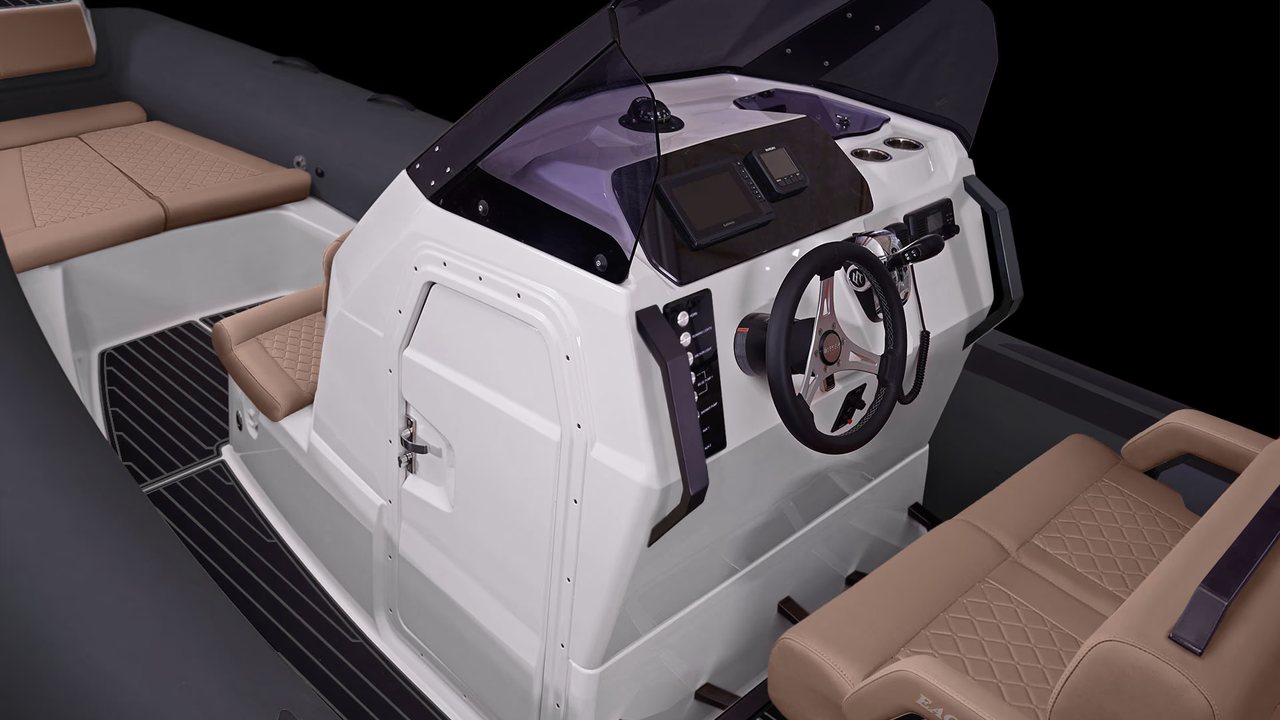
The technical configuration of the BRIG Eagle 8 includes outboard, fuel, two bilge circuits, electrical system, fresh water and, when present, toilet with black water tank. The test does not assume that the specimen coincides with the maximum configuration of the manual. First they associate plate, year, separate and boat patterns; then each system is identified, tried and recorded without inventing performance.
Identity of the specimen before the plants
Number of hulls, manufacturer's tag, applicable statement and manual must refer to the same unit. The Eagle 8 manual distinguishes categories B and C, limits of people and definitions of load. The commercial page is not enough to resolve differences on recommended power or water capacity. The verification sequence opens with year, market, configuration, engine and optional. Only after this verification it is possible to correctly attribute a command, a pump or a valve to the real equipment.
Outboard, mass and stem
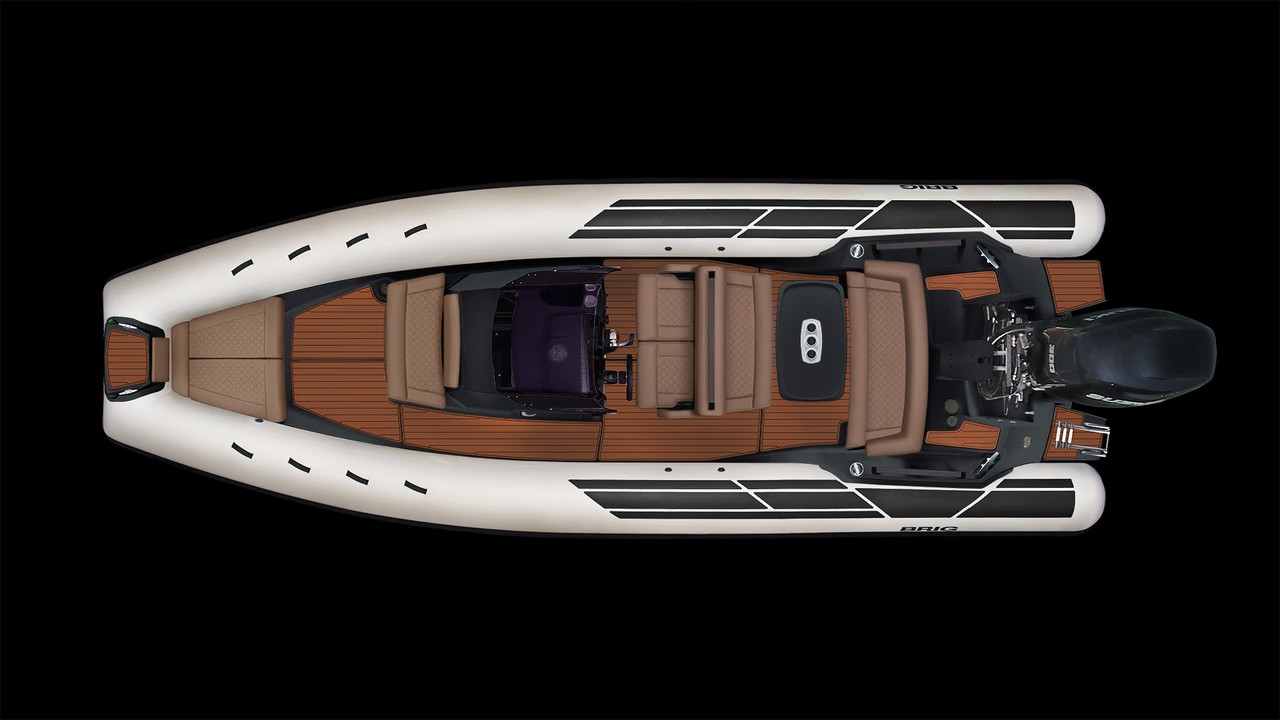
The page BRIG UK indicates 225 hp minimum, 250 recommended and 350 maximum. The manual 2022 contains 300 hp recommended, 350 maximum, maximum engine mass of 410 kilograms including commands and batteries, and 25 inch extra long stem. The specimen plate prevails. In the minutes are model, freshman, power, mass, propeller, mounting height and bolts. No speed is obtained from the single nominal power.
Engine controls before testing
The check of the outboard follows the manual of the installed manufacturer: fixings, steering, fuel line, controls, emergency stop, cooling, charging and alarms. The freedom of movement and the absence of interference with pipes or cables occurs when the engine is off. After the start, signs and losses are observed without approaching mobile parts. Each anomaly generates a tracked intervention and a new test, not a compensation with undocumented adjustments.
Data table to be confirmed
| System | Official data | Check on board |
|---|---|---|
| Dimensions | 7,98 × 2,90 m | Engine encumbrance |
| Internal | 6,00 × 1,70 m | Steps and openings |
| Tubes | 58 cm, 5 rooms, 0.2 bar | Valves and pressure |
| Persons | 11 B / 16 C | Targhetta |
| Engine | 350 hp and 410 kg maximum in the manual | Model and installation |
| Fuel | 340 l | Tank, vent and filter |
| Fresh water | 45 l page / 43 l manual | Capacity of the unit |
| Black water | 54 l in the illustrated configuration | Presence and valves |
| Path | Two pumps in the manual | Food and commands |
Fuel tank 340 liters
The manual identifies integrated tank, external vent, supply tube, vent, carbon canister, level sensor, power line and filter. During the inspection, the two accesses are located and smells, abrasions or traces are sought. The grids are not obstructed or weights are placed on the ventilation tubes. Before the supply stops motor and equipment as prescribed; the tank is not filled beyond the expected limit.
Autonomy built on measured consumption
The 340 liters are nominal capacity, not guaranteed autonomy. A register associates barbed liters, hours, regime, people, equipment, wind and sea. The first exits maintain a wide reserve and serve to know the instrument of their unit. Consumption or speed of other installations are not transferred. Planning considers deviations, unavailability of supply and fuel not usable in any order. The deviations between indicator and actual supply are investigated.
Two separate drainage systems
The manual separates drainage of the well and drainage of the bilge. The first includes drains, 51 mm tubes and aft diaphragms; the second uses two pumps, tubes, outputs, grids and cap. The inspection opens the dedicated doors, cleans residues and controls cracks, crushing or leakage. The bilge cap must be closed when the boat is in water and is only open dry according to the procedure.
Two pumps with different feeds
The pump one has automatic and manual controls on the console and does not work if the battery switches are disconnected. The pump two has a command in the main panel and, according to the manual, remains in active position also with the other switched off switches. This difference must be shown on board and labeled. Before each use both are tested manually without making them turn dry for a long time. A pump does not make a persistent water entry acceptable.
Batteries, VSR and emergency parallel
The manual normally describes a starter battery and a service, with START and HOUSE switches, voltage-sensitive relay, emergency parallel and protections. The verification sequence records technology, capacity, date, fixing, dampers and real wiring. The parallel is not an ordinary command and the procedure must be understood before an emergency. Starting voltage and charging are measured; each new user requires calculation, protection and update of the scheme.
Console panel and sockets
The illustrated panel commands trumpet, navigation lights, white light, pump one, shower, auxiliary and winch; USB sockets and 12 volts are in the glove compartment. The delivered boat can differ. Each switch is operated and associated with protection and user, while unused positions remain identified. The trumpet is tested before the exit. Takes and accessories do not authorize arbitrary loads: circuit capacity and adapters must be compatible.
Fresh water: 43 or 45 liters
The UK page declares 45 liters; the manual describes 43 tank, pump, filter, shower, vent and vent, specifying that water is not drinking. The applicable capacity is read on the separate. The pump should not work dry; leaks can be reported by continuous operation. The circuit is rinse, the filter is controlled and water and pipes are emptied if there is a risk of frost. Liquid enters the weight balance.
Electric toilet and black water tank
In the illustrated configuration the console room contains electric toilet, 54 litre tank, macerator, level indicator, vent, filter and valves. Presence and compliance of discharges must be confirmed on the unit and managed according to applicable rules. The check sequence locates sea, valves, accesses and ground suction point. There is no circuit that has not been identified. Ventilation and door of the compartment must remain free and working.
Refrigerator and cargo services
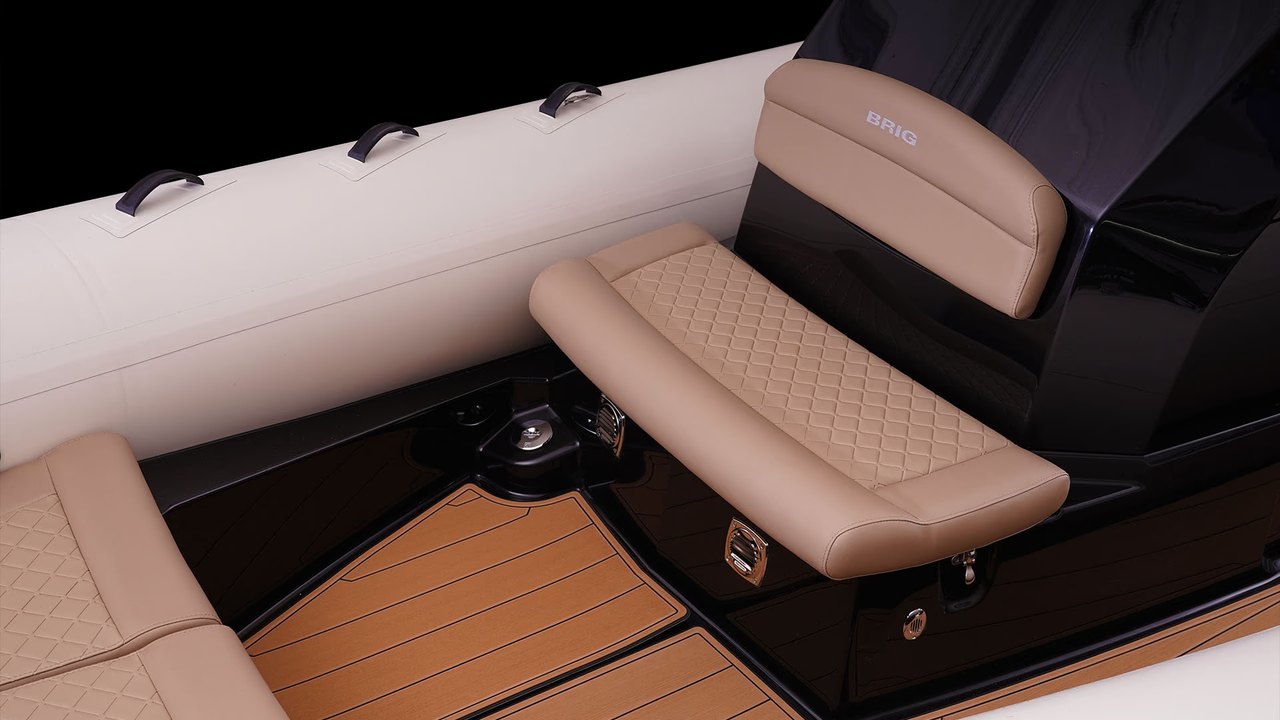
The refrigerator is shown in the sitting body and the manual recommends a separate battery for its power supply, warning that it can download the counter. If present, ventilation, fixing, switch and absorption are controlled, then consumption in the service budget is included. The openings with bags are not closed. The test checks start and maintenance without attributing unmeasured thermal performance. During inactivity the system is left in the state provided by the manufacturer.
Verricello and anchorage
The manual describes in the prodiero electric winch range, still 7.5 kilograms, 38 meter mixed line, safety pin and drainage. The commercial page treats the presence unevenly, so the separate must confirm. Before use we control protection circuit, fixings, chain, top and exhaust. The pin remains inserted when the system does not work; the automatic switch is disabled to avoid accidental start-ups.
Table and sunbathing in motion
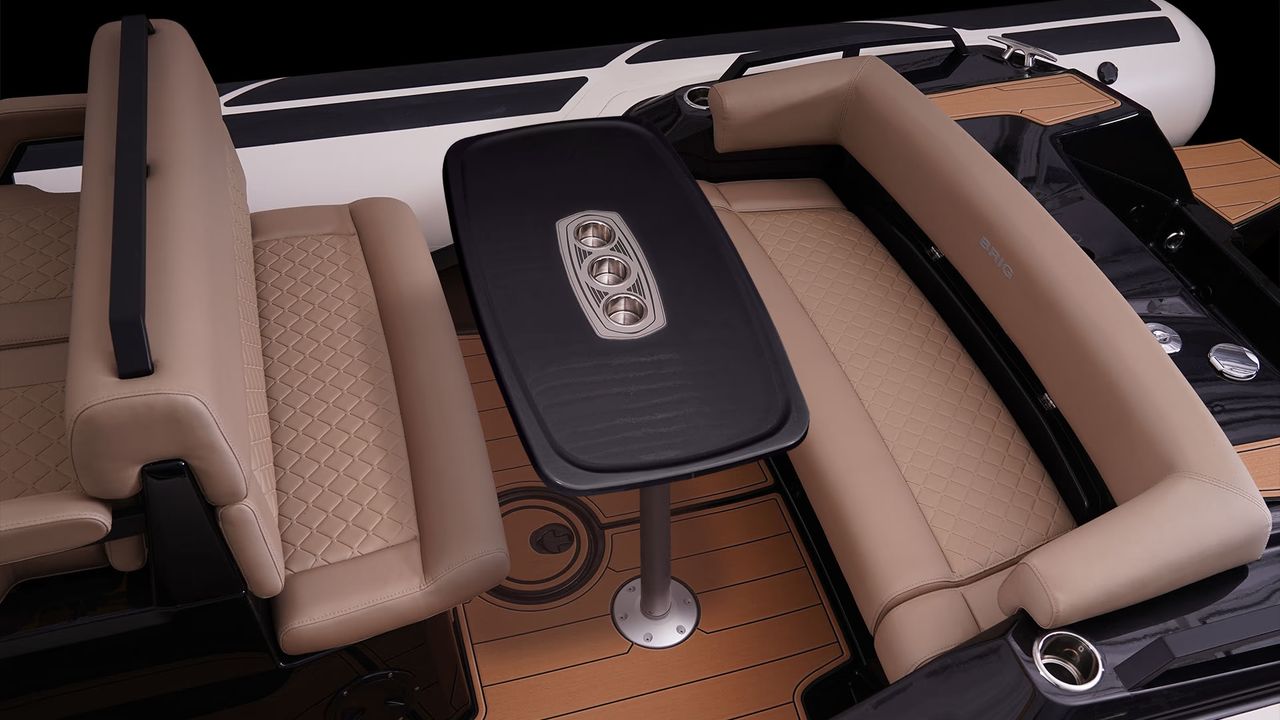
The table is disassembled and fixed in the stern compartment before navigation; it is not a hanger. The manual allows the configuration only within 7 nodes. The same limit appears for the prodier sun, which also bears up to 150 kilograms and two people. The verification sequence is not limited to remembering the limit: it checks that supports, blocks and straps exist and that each element has a safe place when placed.
Water heat and recovery
The lift ladder is located on the left platform and the manual limits the load to 150 kilograms and one person at a time. The test takes place under controlled conditions, with an engine arrested, verifying opening from the water, depth, hooks and path. No one uses outboard to get back. The man-to-sea procedure determines who stops the engine and who assists. Shower, tops and covers should not occupy the platform.
Tubular pressure before leaving
The five rooms have a nominal pressure of 0.2 bar. The manual provides a sequence of inflating and prohibits unapproved compressors or equipment. The pressure is controlled before navigation and during the day, considering the increase due to the sun. Valves and caps are inspected and a loss is not corrected by continuing to inflate without diagnosis. Pump and repair kit must be present, accessible and compatible with the delivered Hypalon fabric.
Load balance before testing
At 1,140 kilograms, motor, batteries, fuel, water, black water, T-top, anchorage, refrigerator, safety, people and luggage are added. The manual distinguishes 1.695 kilograms of total load from 1.345 of maximum load recommended on the tag; the public page 1.755. The test uses the value of the unit and records the weight position. The total alone does not describe trim, visual or accessibility.
Try in water without invented reviews
Minutes note people, tank levels, equipment, wind and sea. They control start, stop, alarms, progressive response, rudder, visual, drainage, vibration and fixing. Speed and consumption appear only if measured by declared method. After the return, technical rooms are reopened and water, odours or loosenings are sought. The anomalies are resolved and the repeated test in the same conditions as possible.
Paper and periodic verification sequence
The final file contains freshmen, schemes, protections, manuals, guarantees, initial photographs and evidence register. The periodic verification sequence separates controls before the exit, after the return and remittance. Each change updates weight and circuit. The Eagle 8 remains manageable when engine, tanks, batteries, pumps, toilets and furnishings are not treated as isolated functions but as a unique configuration, verifiable on the specific boat.