
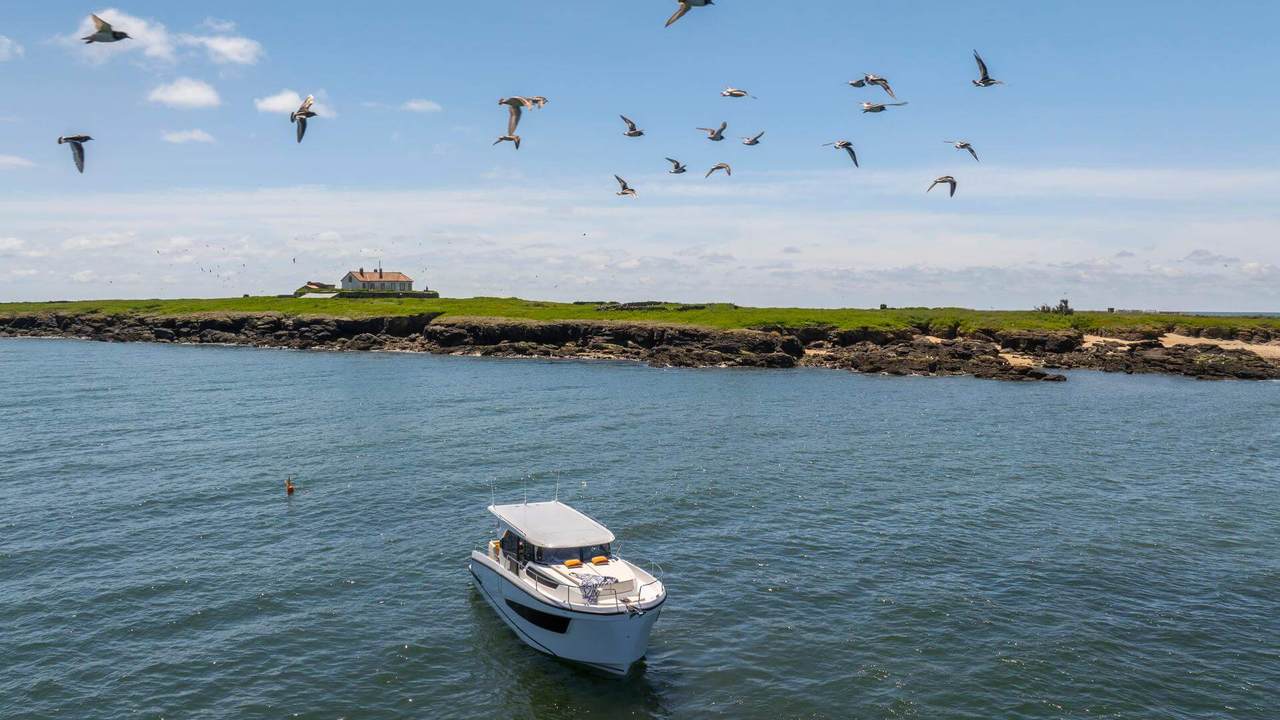
Configuring a Delphia 10 Sedan means building a cruise system around 9,78 meters long, not simply choosing a motor and a color. The 2025/2026 board offers three Yanmar diesels, two layouts, electronic packages and numerous utilities capable of changing weight and energy demand. This guide follows the correct order for specifications, testing and delivery: mission, propulsion, energy, water, navigation, comfort and maintenance. Performance numbers remain conditioned by load and conditions; they are not presented as results of a drafting test.
Data sheet to be fixed in the contract
| Voice | Date 2025/2026 | Delivery control |
|---|---|---|
| Outside all / hull | 9,78 / 8,96 m | Volumes and documentation |
| Baglio / fishing | 3,49 / 0,80 m | Boat and margin on the seabed |
| Light dislocation | 6,269 kg | Weight of the final configuration |
| Height on the float | 2.55 m | Measure with antennas and real load |
| Fuel / water | 285 / 380 l | Levels, vents and indicators |
| Black / grey water | 170 / 170 l | The grey tank is optional |
| Diesel engines | 45, 57 or 110 hp | Regime, reduction and helix |
| Category CE | C8, D10 | Single unit plate and manual |
Light displacement does not necessarily include all options and operational masses. Therefore the delivery report must record engine, packages, batteries, tank levels and equipment on board.
Step one: Define the navigation profile
Protected channels, lakes and coasts require different configurations. For internal routes count height, manoeuvrability, silence and recharge; for coastal navigation take more weight VHF, autopilot, radar, government ability with wave and power reserve. Number of people and service life determine water, waste, refrigerator and heating. Write a two-line mission before the budget avoids accumulating disconnected accessories. Each option should respond to a course, season or real procedure.

Fiberglass Carena: construction and limits
The displacement hull is made of laminated fiberglass manually with anti-osmosis barrier and sandwiches with balsa soul in the planned areas; the structural countertop is monolithic. The blanket also employs sandwiches and countertops. These details require targeted controls: moisture close to hardware and steps, sealing quality, structural component adhesion and anomalous flexions. The expertise should not be limited to the glossy surface of the gelcoat, especially the units with accessories added after delivery.
Yanmar 4JH45: essential configuration
The 45 hp 4JH45 is the standard engine, coupled to axis line. It makes sense for a consistent use with the hull and with controlled loads. The test must verify the attainment of the expected regime, temperature, pressure, vibration, smoke and reverse response. It is necessary to record invertiser, relationship and effective propeller. A contained power does not allow approximate maintenance: fuel filters, water separator, sea grip and ventilation of the compartment remain decisive.

Yanmar 4JH57 and 4JH110: what changes
The 57 and 110 hp alternatives increase the power reserve, but the comparison must include not only the price. They change available torque, load on the axis, sizing of the propeller, heat dissipated, noise and consumption at different ranges. The 110 hp does not transform the platform into a bridge: it remains a displacement hull. The correct choice is shown with curves, load conditions and operating theatre. Accessibility for coupons, spare parts and prescribed intervals should also be reported in the quote.
Speed: conditioned data, not promises
The synthetic documentation shows a maximum diesel speed in the order of 16,5 km/h, while the page describes a comfortable cruise between 7 and 9 knots. Numbers should not be added or generalized: they can refer to different engines and conditions. In delivery there are passages in opposite directions, annotating regime, speed on the bottom, load, wind and current. It is also checked that the engine reaches the correct system, because an overload propeller reduces reliability.

Axis, steering and maneuver line
Axis propulsion includes propeller, supports, seal and suspended rudder with hydraulic government. The verification sequence includes alignment, game, corrosion, fixation and seal after testing. They measure evolutionary radius, stop, effect of the propeller in reverse and control with side wind. Elica of bow and stern are useful options, but require dedicated batteries, protections and repeated tests. They must not compensate for insufficient knowledge of the natural response of the hull.
Fuel tank 285 liters
The 285 litre rotational tank feeds a single diesel through filtration and separation of water. Before delivery there is a bottle, vent, fishing, indicator, access and cleaning options. Operating autonomy requires a chosen engine consumption curve, an unusable margin and a deviation reserve. Gas heating or a generator removes fuel from the same budget, so they must appear in the daily calculation.

Cover, access and external loads
Symmetrical passers, side door to the bridge and stern door simplify movement and maneuver. Tested tientibene, gates, anti-slip, drainage of the well and fixing of the bath ladder. Bicycle carriers, pack holders, synthetic coatings and prodier lounges change usage and weight. The optional bike carrier includes a 230 V socket in the cockpit: the electrical protection in the outdoor environment must be verified. Parabords and peaks must have boots that do not block passageways.
More, winch and indoor circuit
The 1,000 W winch belongs to the expected levels or packages, it should not be taken for granted. The control includes size and marking of anchor and chain, terminal fixing, remote control, protection, drainage of the stem and free fall of the chain. The moss and bompress with ladder are options that change bulk and procedures. The battery must support the peak of the winch without excessive lowerings, while the motor on requires ventilation and clear communication on the deck.

Cambusa: standard equipment and options
The standard linear kitchen includes sink, two gas burners, 80-litre refrigerator, containers and sockets. Oven, microwave, dishwasher, alternative plate and 20 litre refrigerator drawer are available. Each addition changes consumption and storage. With the gas there are drained tanks, regulator, tap and detector; with the electrical utilities there is inverter, power of dock and voltage fall. The refrigerator must dissipate heat and stay accessible for assistance.
Lounge and conversion of bed
The U sofa with folding table is the center of the main deck; the transformation into double bed is optional. Before purchasing, the mechanism is physically tested, the residual passage is measured and where the components are stored. The sliding door with three panels must move without impurities and lock in navigation. Curtains, obscurants and caps determine the thermal comfort as much as air conditioning and heating, especially under the glazed roof or equipped with solar modules.

Plane and package Inland
The standard dashboard provides engine, compass, rudder indicator and space for a display up to 9 inches. The Inland 2026 package adds VHF Garmin 115i, GPSMAP 923xsv and transducer. Delivery must include updates, correct cartography, programmed MMSI and radio test. The side door facilitates mooring but must be tested for sealing and stopping. Reflections, visibility and wipers occur both day and low light conditions.
Coastal Package: autopilot and radar
The Coastal package adds the autopilot to the electronic base; the Fantom 18x radar with a folding tree remains a voice to be checked in the separate. Autopilot and rudder indicator must be calibrated at sea, not only on the dock. Radar requires shadow control, height, wiring and interference. The foldable tree influences the actual height on the float: the value of 2,55 meters must be confirmed on the real configuration before planning the passage under a bridge.

Water and local bathroom system
The fresh water tank is 380 liters; that of the 170 black waters. The 170 litre grey tank is optional, so the discharge management must be clarified in the capitulate. The test sequence pump test, taps, shower, toilet, indicators, valves, vents and anti-syphon. The 40-litre boiler can use engine exchanger and 230 V. After filling, the pressure system is maintained to detect slow leaks in the hidden compartments.
One or two cabins: real capacity
The bow cabin has a bed of 2,00 for 1,60 meters, storages and openings. The two-cabin layout replaces the office or service room with a guest cabin equipped with a bed from 2,00 to 1,20. The choice is not only for beds: change ventilation, load volume and area for work or maintenance. Access, height, obscuring, sockets and exit routes are proven. The transformable living room is not equivalent to a privacy and storage cabin.

Batteries, inverter and dock outlet
The base includes a 95 Ah AGM engine battery, two 95 Ah services, 40 A charger and 230 V/16 A socket. The Lounge level can add 2,000 W inverters and a service battery. These numbers require a budget: refrigerator, pumps, electronics, lights, heating and personal devices. The inverter does not create energy and should not fuel heavy utilities without verification. Protections, differential, polarity of platform, insulation and tensions are tested during the start.
Solar panels and hotel autonomy
The seven photovoltaic panels on the roof are an option indicated in the tab. The delivery must bring total power, type of regulator, tensions, fuses and cable path. A known irradiation test compares instant production and controller data. Solar energy can support light utilities and reduce dependence on the dock, but it does not replace a complete budget. Shadows of antennas and tree, temperature of the modules and state of the batteries change the daily yield.

Comfort: heating, air conditioning and generator
Options include forced air heating, total air conditioning from 20,000 BTU, fans and diesel generator from 8 kVA. Installing them together can be excessive for some missions. Catches and drains occur, ventilation, condensation, noise, access to filters and separation from the premises. The generator adds maintenance, fuel and exhaust; air conditioning requires sea water and power. The best configuration is the one that covers the season with the least number of critical systems.
Testing facilities in dock
The test starts from charged batteries and tanks at known levels. Contemporary loads are applied, the voltage is recorded and the passage between the dock and the inverter is proved. Then pressurize the water, operate bilge pumps, boiler, toilet, refrigerator and optional utilities. Electronics and VHF are configured, not only on. Alarms, labels, manuals, spare parts and access to setigation. Each anomaly is reported in the minutes with responsibility and expiry.
Testing in navigation
With documented load, cold start-up, slow maneuvers, reverse, stop and evolution. Multiple systems include speed in opposite directions, temperature, vibration and noise. The engine must reach the expected regimen without alarms; axis line and rudder should not produce strokes or drawings. They try autopilot, transducer, visibility and lateral access. On the return they inspect engine compartment, bilge, axis seal and levels before any leaks disappear.
Maintenance plan
Before each exit you control the bilge, sea grip, levels, batteries and controls. Daily, pumps, alarms, winch, VHF and emergency devices are tested. Motors and inverters follow hours and calendar; filters and separators must be inspected more often with uncertain fuel. In season live opera, anods, propeller, rudder and hull passages occur. Annually, gases, electrical protections, seals, fire extinguisers, waste and electronic diagnostics are controlled, updating the historical work.
Recommended configuration for mission
For resident channels and torque, 45 or 57 hp, a cabin, office and Inland equipment can reduce complexity. For coastal and load use, the 110 hp, two cabins, autopilot and appropriate tools offer more reserve, to be demonstrated in testing. Thruster, air conditioning and generator should be chosen only after the weight and energy balance. The Delphia 10 Sedan works well when each component supports its displacement vocation; a long list without patterns and evidence instead produces costs and fragility.