
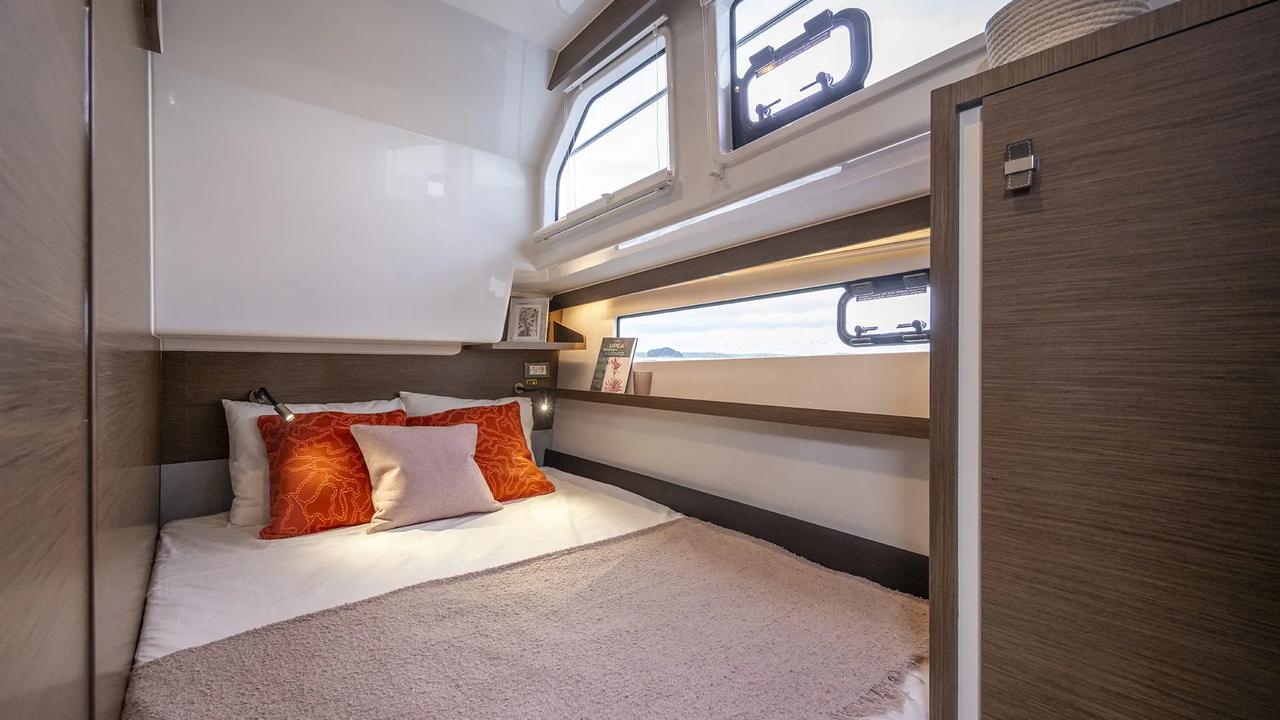
The Delphia 11 Sedan is a 10.77-metre displaced cruiser that can change substantially according to drive, number of cabins and energy package. To configure it well you must start from the mission: internal waters, coast, seasonal use or prolonged stay. The board of the yard indicates 3,85 meters of glare, 0,80 of fishing, 6,815 kg light, diesel or electric motorizations and layout from one to three cabins. They are stated data, not results of a proof of the editorial staff.
| Voice | Published | Testing on the specimen |
|---|---|---|
| Length outside everything | 10,77 m | Ingombri and place boat |
| Length hull | 9,99 m | Documents and configuration |
| Baglio | 3,85 m | Mooring and lifting |
| Fishing | 0,80 m | Load and bottom |
| Light dislocation | 6.815 kg | Final weight with options |
| Fuel / water | 400 / 380 l | Usable volumes |
| Black / grey water | 170 / 170 l | Levels, pumps and discharges |
| Diesel | 57–150 hp | Engine, report and propeller |
| Layout | 1–3 cabins | Signed plan and inventory |
The mission comes before the optional list
A compact displacement rewards consistency. Those who sail on canals and lakes will have different priorities from those facing coastal routes with current and wind. Days aboard, number of people, low bridges, availability of charging and temperatures define engine, energy, heating and services. The configuration should be born from a written scenario, not from the sum of available equipment.
In the capitulate each option must carry weight, absorption, interfaces and maintenance. A useful choice in port can reduce space or energy autonomy in radius. The comparison between alternatives is only reliable if you use the same load condition and include hotel utilities.
One, two or three cabins
The yard offers configurations from one to three cabins and up to two bathrooms. The most open version favours volume and storage; increasing environments increase receptive capacity and privacy, but decreases available passages and rooms. The chosen plan must appear in the contract with doors, beds, closets and services, then be compared with the boat during delivery.
The number of bunks is not enough to define the operational crew. Water, waste, refrigeration, ventilation and safety means must support the people expected. Each cabin is tested with open doors and drawers to verify interference, exit routes and access to the plants.
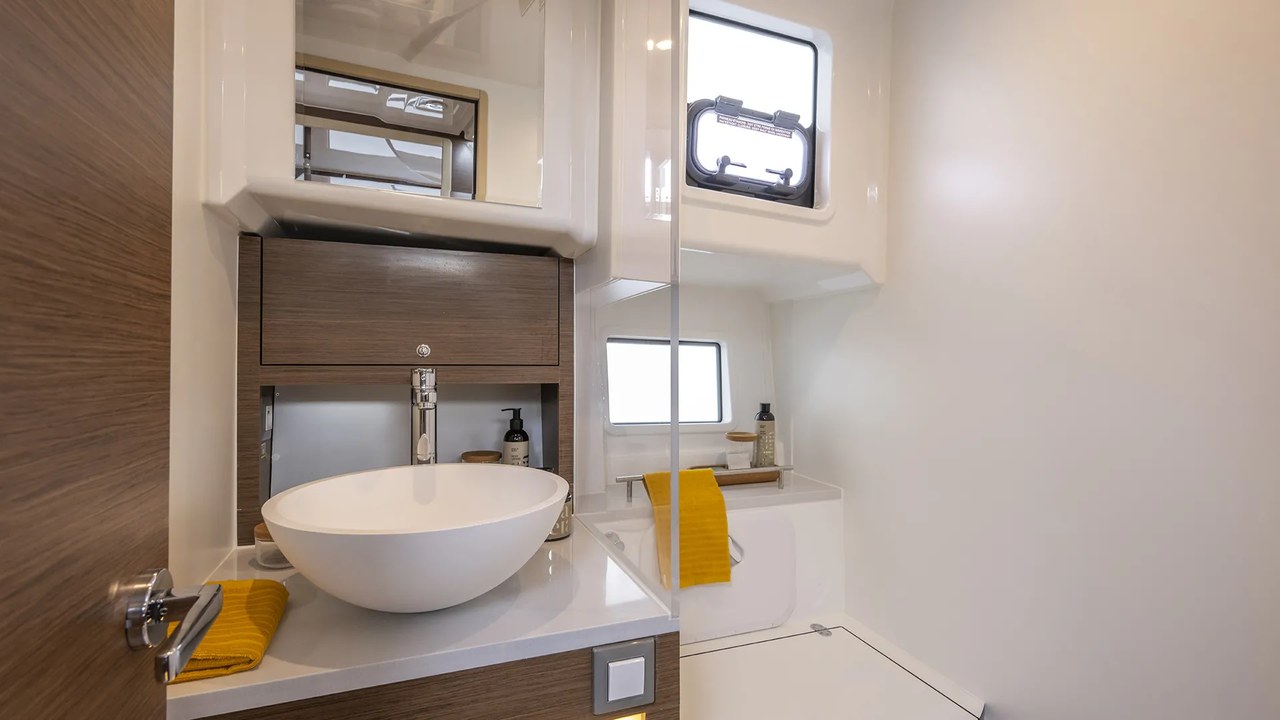
Bathrooms and water circuit
The 380 liters of fresh water must be transformed into a daily budget. Autoclave, boiler, taps and showers try together, observing pressure, temperature and discharges. Filter access, pumps and connections must remain feasible without dismantling.
Black and gray water is indicated in 170 liters each. Levels, vents, anti-siphon, valves and pumps must correspond to the scheme of the unit. The verification sequence records estimated autonomy, alarms and management procedure in compliance with local rules; smells and unstable readings become traced defects.
Light dislocation and real weight
The 6,815 kg declared describe the light condition, not the boat ready for the cruise. Liquids, batteries, kitchen, air conditioning, dinghy, bicycles, spare parts and luggage change dive and inertia. The estimate should include a distinct updated weights and an estimate of the operational condition.
People, tank levels and equipment are recorded before testing. These data allow you to interpret speed, government and consumption and become the reference for future controls. Respect for the load plan is more than just the capacity of the cranes.
Diesel from 57 to 150 hp
The released diesel range covers power from 57 to 150 hp. The choice depends on load, navigation theatre and margin required against wind and current. Increased power is not automatically equivalent to better efficiency: it increases weight, price and heat load, while the hull remains displaced.
The dossier must identify engine, rating, inverter, report, axis and propeller. During testing, start-up, maximum set, temperature, pressure, vibration and discharge are controlled. The propeller must allow the engine to work in the field established by the manufacturer in the proven configuration.
Electric propulsion and infrastructure
The electric alternative is evaluated as a complete system. Engine power, installed capacity, usable energy, loader, dock grip and service absorption must be documented. The autonomy depends strongly on speed, temperature and load, so it serves a simulation related to the mission of the shipowner.
Delivery includes battery status, diagnostics, warranty and procedure in case of alarm. Experience a realistic cycle of navigation and charging, checking time, temperature and power available. Local silence is an advantage, but does not erase the need to plan energy and ports.
Speed and consumption to be measured
For a displacement the isolated peak is less useful than stability at multiple regimes. There are passages in the two senses by announcing wind, current, depth, turns and consumption. Close to the hull limit small speed increments can require much more energy.
The final curve distinguishes liters or energy for now and for mile. From it there is an explicit reserve autonomy, without simply dividing the nominal volume for an ideal consumption. The minutes report conditions and load so that the measure can be repeated.
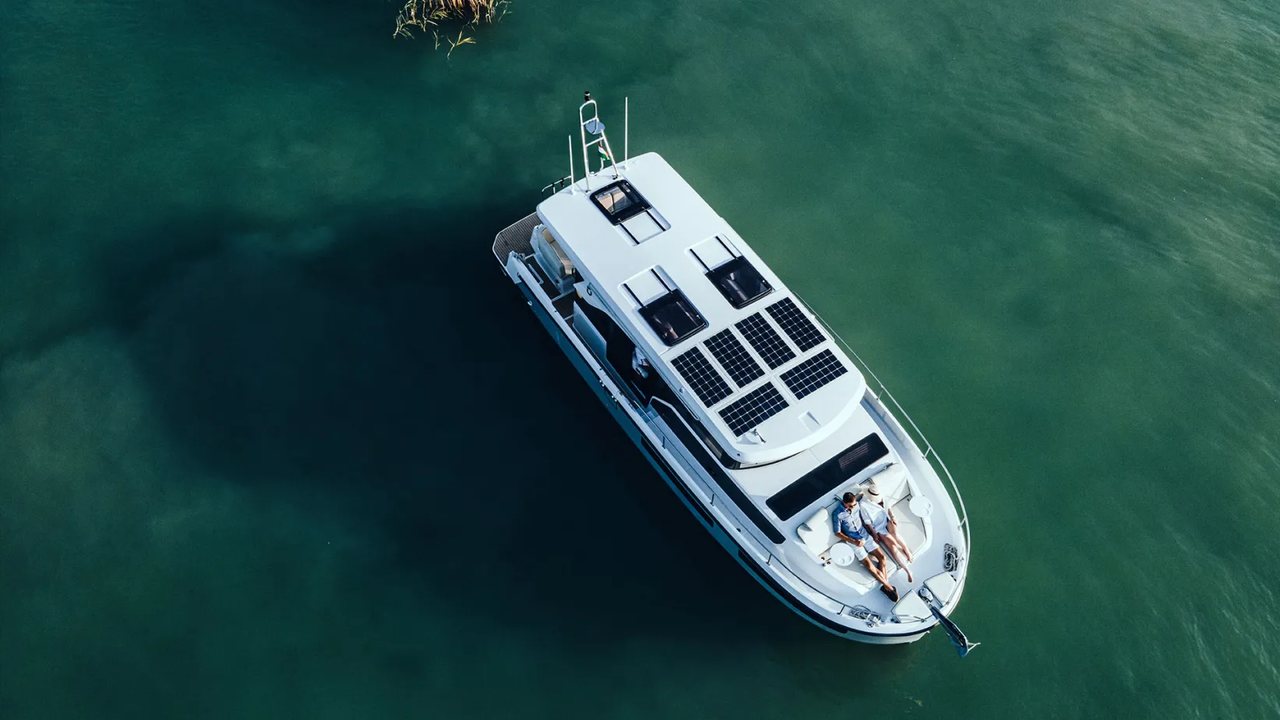
Tanks and variable trim
The 400 liters of fuel and 380 of water represent important masses for a boat of this size. Position and levels influence the setup; indicators, vents and vents must work in navigation and supply. Fixing, inspection and cleaning options are controlled.
The verification sequence compares the readings with the inboarded quantities and records any deviations. Valves must be accessible and identified. A border procedure clarifies which tanks to use and which margin to store in the different stages of the cruise.
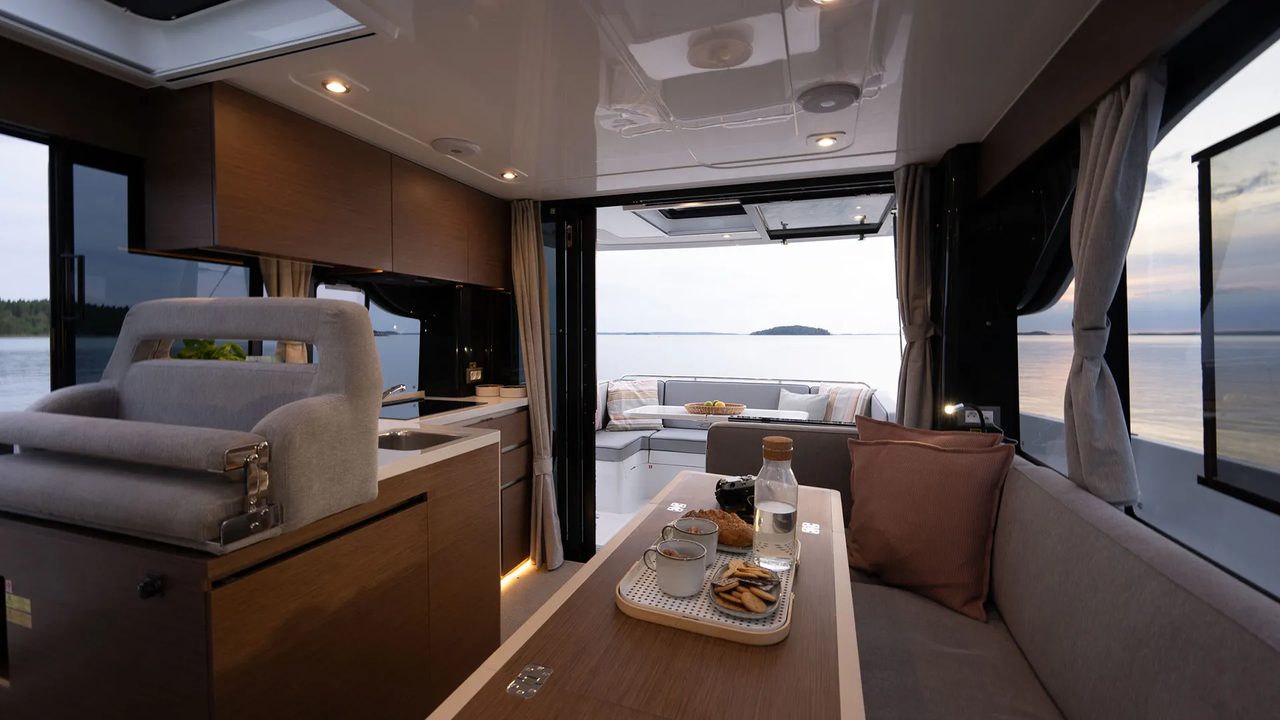
Panoramic exhibition and climate control
Vertical stained glass improves visual but increases irradiation, dispersions and surfaces to be sealed. Doors, guides and seals complete multiple cycles; drainage and drainage condensates are tested with water. Screening and natural ventilation enter the comfort assessment.
Heating or air conditioning must be those actually ordered. The test measures temperature, noise and air distribution with people and users. Filters and components require clear access: an elegant finish should not transform ordinary maintenance into an extended disassembly.
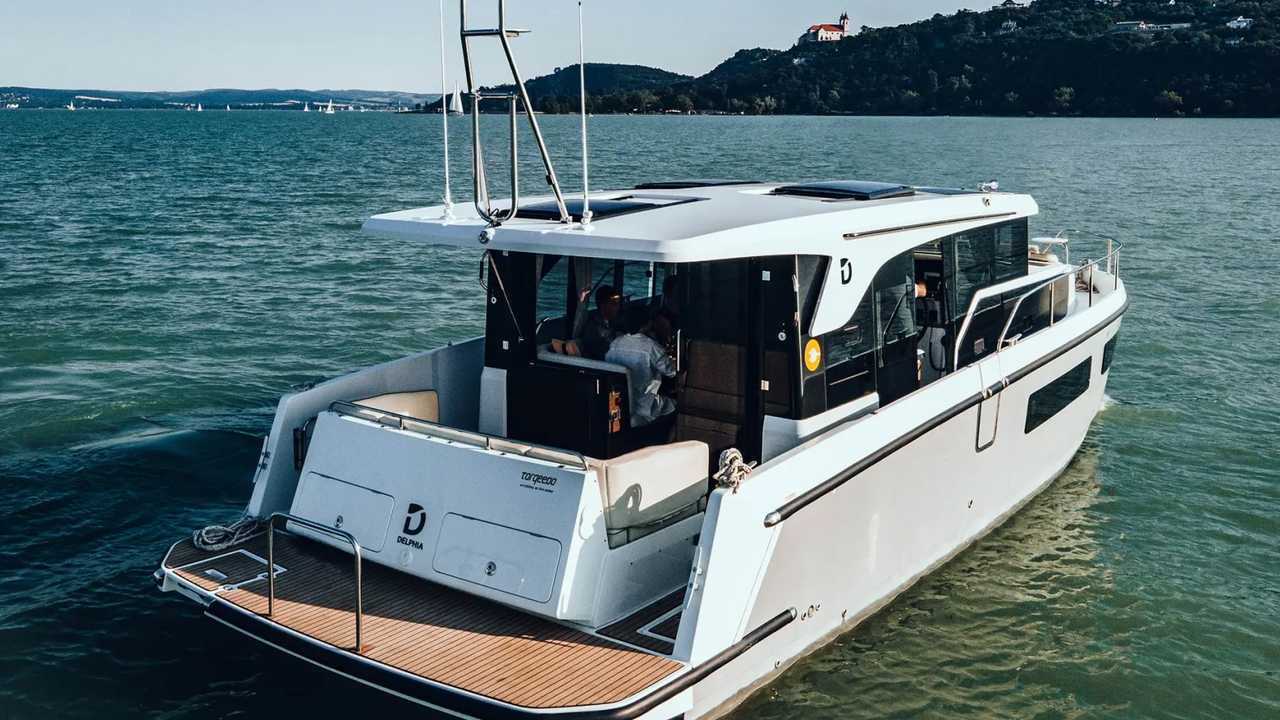
Cambusa and load balance
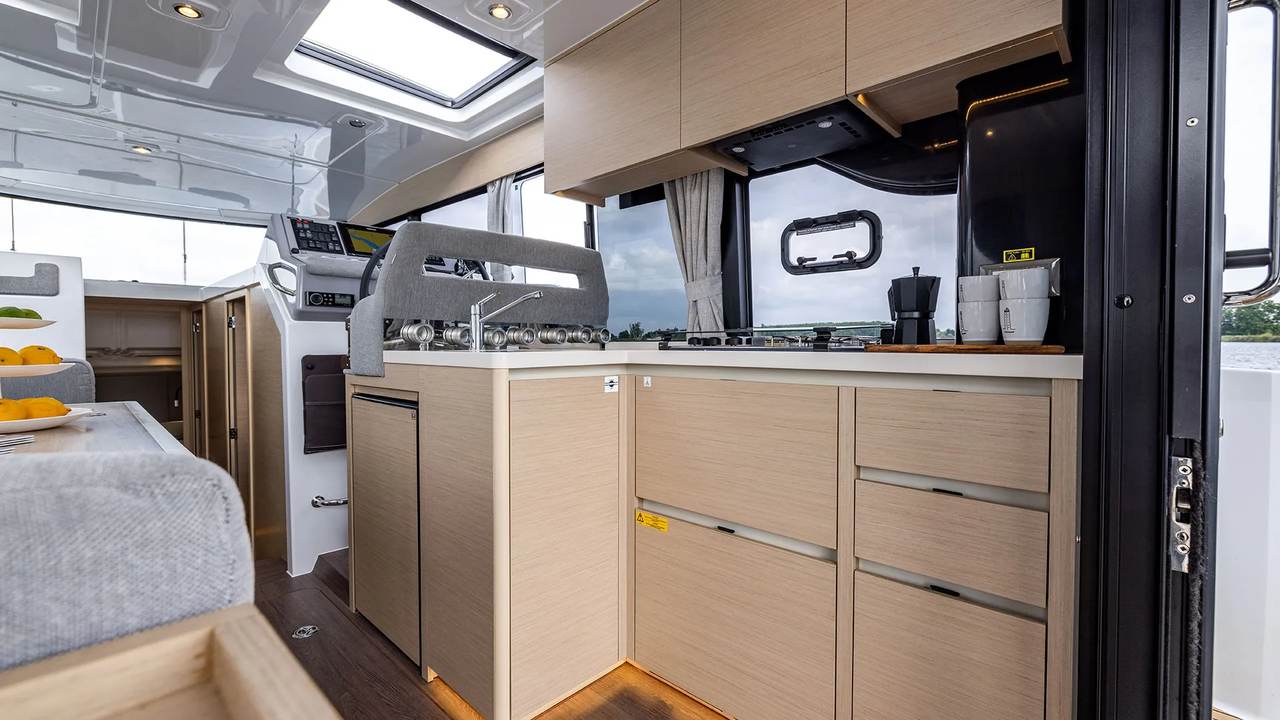
Refrigerator, stove and appliances depend on configuration. Every user must be in inventory with power, protection and ventilation. Doors, drawers and crockery require stops, while openings do not have to block the passage between bridge and well.
The contemporary test of the utilities highlights limits of dock, inverter or batteries. If the specimen uses gas, they occur vain, drainage, regulator, interception and detection. The stocks should be placed without occupying escape routes or concentrating unnecessary weight.
Electrical system and roof panels
Service and starter batteries, chargers, inverters, dock grip and panels must form a unique scheme. The nominal capacity does not always coincide with the usable capacity. The budget separates navigation, rail, night and hotel peak, including a margin for degradation and start-ups.
Documentation must indicate protection, setigation and mass points. It proves the loss of a source and it occurs that feeling, essential lights, communications and government remain available. Solar modules are evaluated by power and regulators, not only by number.
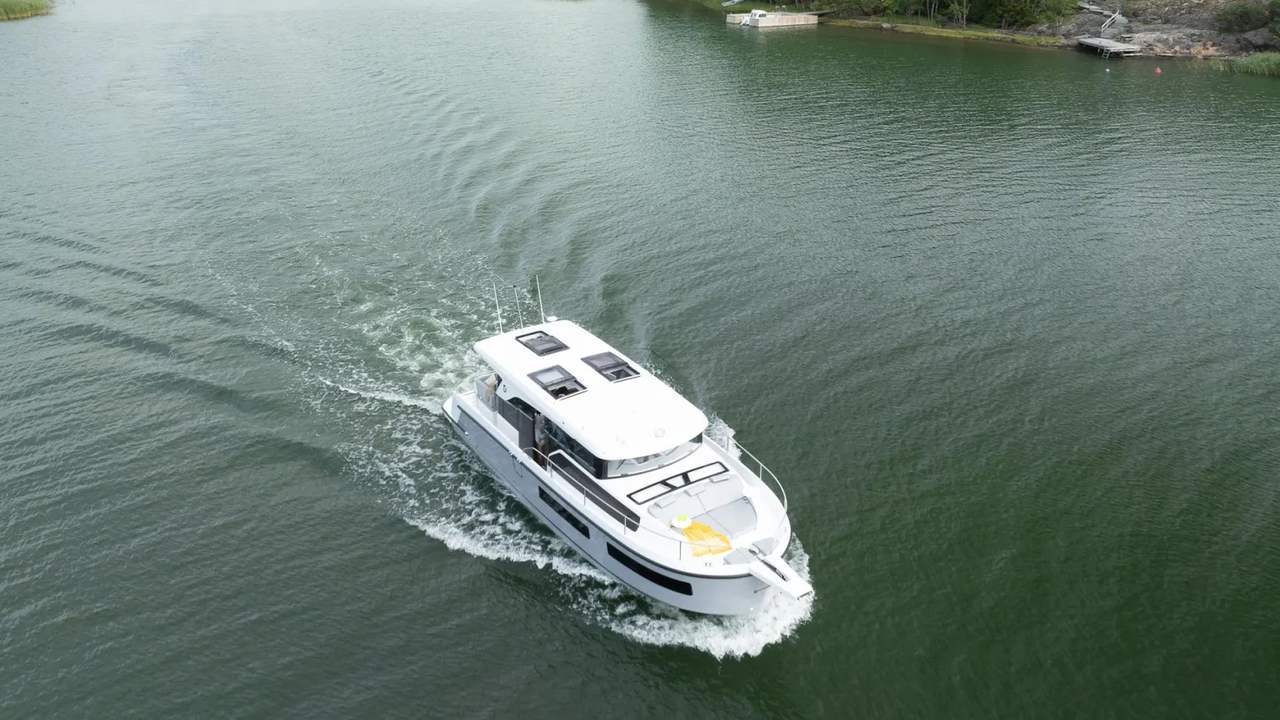
Bridge, side door and visibility
The protected internal rudder and lateral access facilitate mooring, but visibility must be verified seated and standing. They control bow, poppier sectors, reflexes and reachability of controls. Electronics and sensors should be identified by model and version.
The test includes only low and dark, as well as a maneuver on both sides. It simulates the loss of a display and occurs which data remains available. The network should not create a single fault point for essential functions.
Poppa, platform and external loads
The platform facilitates boarding and bathroom and must be controlled by flow, ladder, closures and distance from the appendices. Gavones, seats and tables should not prevent access to peaks, bits, extinguisers or commands. Drainage and seals are tested with water.
Bicycles, tenders or other loads are inserted in the plan only if provided by the specifications. Complete mass, fixing and center of gravity must be documented. The navigation configuration must leave the routes free and do not alter access to security.
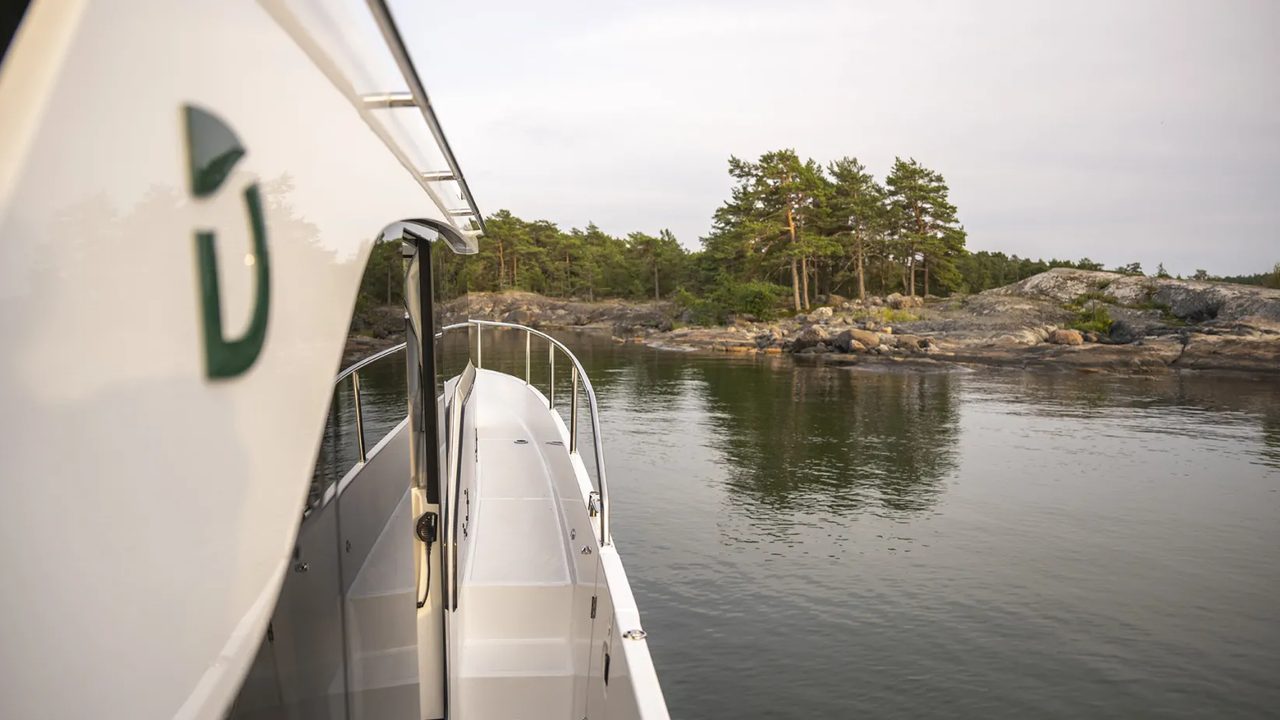
Fishing and height for indoor waters
The declared fishing of 0,80 m widens the possibilities, but the margin depends on load, bottom and precision of the cartography. Elica, axis and rudder remain appendices to protect. The test tests low speed response, stop, reverse and evolutionary effect.
For bridges and channels also counts the actual height on the float with antennas and equipment. The brochure distinguishes values according to configuration; the final measure must be taken on the specimen loaded and recorded in the dashboard with the procedure for any damaging elements.
Degraded security and mode
Flag, category and people determine means of rescue, fire and communications. Every sea grip must be identified and reached. Sentry pumps, alarms, fire extinguishers and ventilation of the engine compartment prove themselves in the real configuration.
The crew simulates loss of propulsion, energy or electronics and checks the sequence of actions. Manuals, deadlines and positions converge in a short and usable verification sequence. The presence of the equipment is not enough if no one can reach it or drive it.
Documentation and final acceptance
The file includes certificates, chosen plan, electric scheme, fluid circuits, separate weights, inventory, freshmen, guarantees and manuals. Diesel and electric must not be mixed in the description; illustrated but unordered equipment remains excluded.
The test produces a record with conditions, measures and anomalies. Each defect has responsibility, expiry and new proof. The Delphia 11 Sedan is convincing when layout, energy and weight are consistent with the expected slow cruise: the documented configuration is worth more than the number of accessories.