
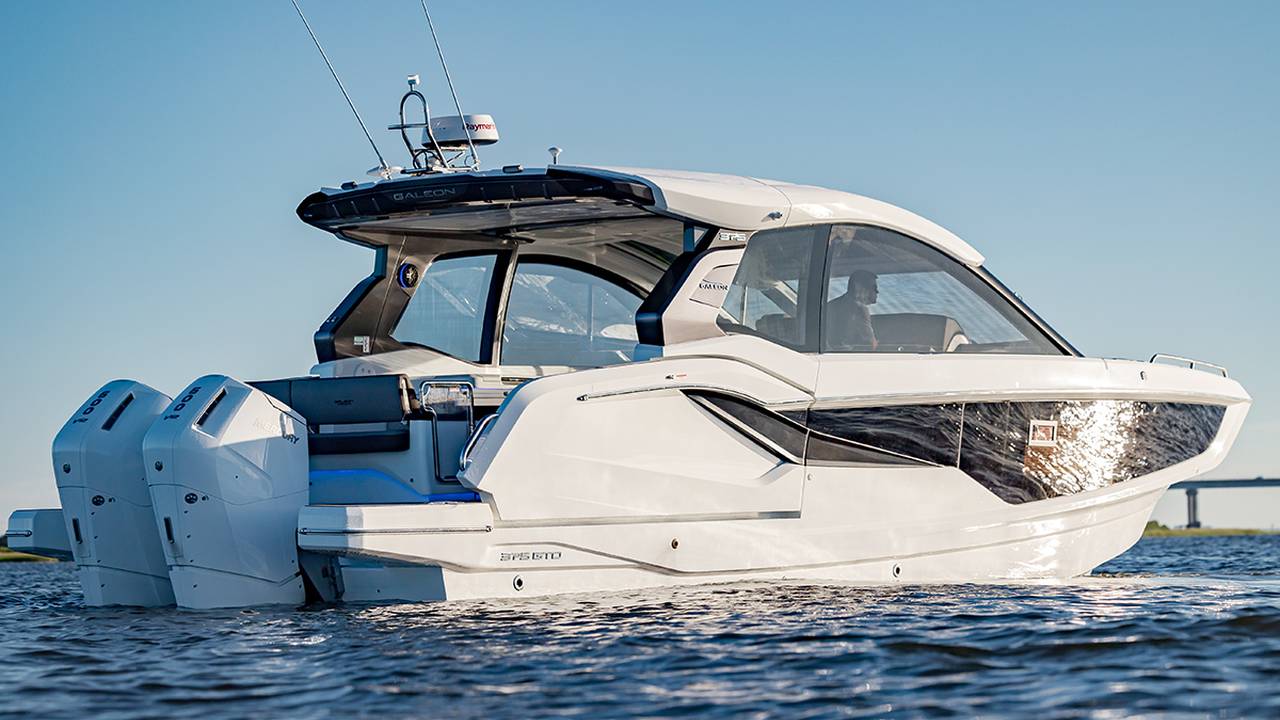
The Galeon 375 GTO is a day cruiser of 11,50 meters out, with hull of 10,66 meters, bay of 3,65 meters and declared maximum fishing of 1,11 meters. The propulsive configuration includes two Mercury Verado 600 hp. 1,500 litre petrol tank, 200 litre fresh water and 70 litre black water describe a boat designed for long days and short nights, but also a set of loads that must be known before evaluating trim, autonomy and performance.
This guide covers configuration, plants and delivery controls; it does not replace a test at sea. The values of 40 mph on the cruise and 55 mph of maximum are declared data and must be verified with load, weather, state of the famine and levels of the noted tanks. The indicated mass passes from 9,935 kg dry to 12,371 kg in the maximum condition: over 2.4 tons of difference that make decisive the discipline with which people, fluids, accessories and boots are recorded.
Data sheet and associated audits
| Element | Summary | Check in delivery |
|---|---|---|
| Length outside everything | 11,50 m | Real footprint, mooring and platforms |
| Baglio | 3,65 m | Passage, parabords and Beach Mode |
| Maximum fishing | 1,11 m | Structure, motor feet and bottoms |
| Mass | 9.935 / 12.371 kg | Actual load and distribution |
| Propulsion | 2 × Mercury Verado 600 hp | Serials, propellers, software and synchronism |
| Fuel | 1.500 l | Levels, vents, filters and useful autonomy |
| Water / black | 200 / 70 l | Pumps, discharges, sensors and seal |
| Speed | 40 / 55 mph | Cruise / maximum with registered conditions |
Configuration to be defined before order
The configuration is not resolved in a list of accessories. Each addition affects weight, absorption, accessibility and maintenance. Generator, air conditioning, kitchen appliances, electronics and movements must appear in a single document with model, position, electrical protection and weight. Before signing it is advisable to distinguish indispensable, useful and deferable equipment. A consistent choice with daily use, shave or overnight stay avoids loading a stern a project that already houses two outboards of great power.
The initial verification sequence must also contain propellers, mounting height, batteries, chargers, dock sockets and tools. The comparison between order, patterns and delivered boat allows to identify undocumented replacements or installations. The accepted configuration becomes the reference for subsequent controls.
Weight distribution and test condition
The 1,500 litres of gasoline alone represent a significant load. They add water, people, luggage, anchorage and equipment. This is why the test should be performed with measured levels and not with generic indications such as “half tank”. There are number and position of people, equipment and state of the cases. The same boat can show a different behavior from almost unloaded delivery to a day with guests and cambuses.
Static verification includes floating line, disposition, discharges and openings. In navigation you can see input time in planata, visibility, response to trim and stability in turn. If the setup requires marked corrections, weights and installations are controlled before intervention.
Two Verado 600: identification and start
For each Mercury Verado you have to register serial number, software version, propeller and hours. The inspection starts from fixings, sealings of the stern mirror, wire passages and freedom of inclination. Engines must move without interfering with platforms, seats or equipment. Cold times are compared to start times, pressure, charging and alarm messages; warm temperatures occur, minimum regimen and shutdown.
On the march the two sides must reach compatible regimes without the commander having to continually compensate. Steering, trim and handcuffs are tested in the entire useful field. Any persistent difference requires a diagnosis before delivery, not a justification based on wind or current.
Fuel supply, vents and filters
Nominal capacity and usable quantity do not coincide. Planning must leave reserve and consider the non-fishing volume. During the supply, the indicator, vents, odors and seal of the fittings are checked. Filters and valves must be identified and accessible without removing permanent furniture. The pipes cannot rub on edges or mobile elements.
The verification sequence requires a calibration of the levels on the actually loaded liters. The first period of use is to build a relationship between regime, speed and consumption. Only after several surveys can be prudent autonomy. In the gasoline, ventilation, protected cabling and absence of losses are preliminary conditions for each electrical test.
Beach Mode: opening and closing sequence
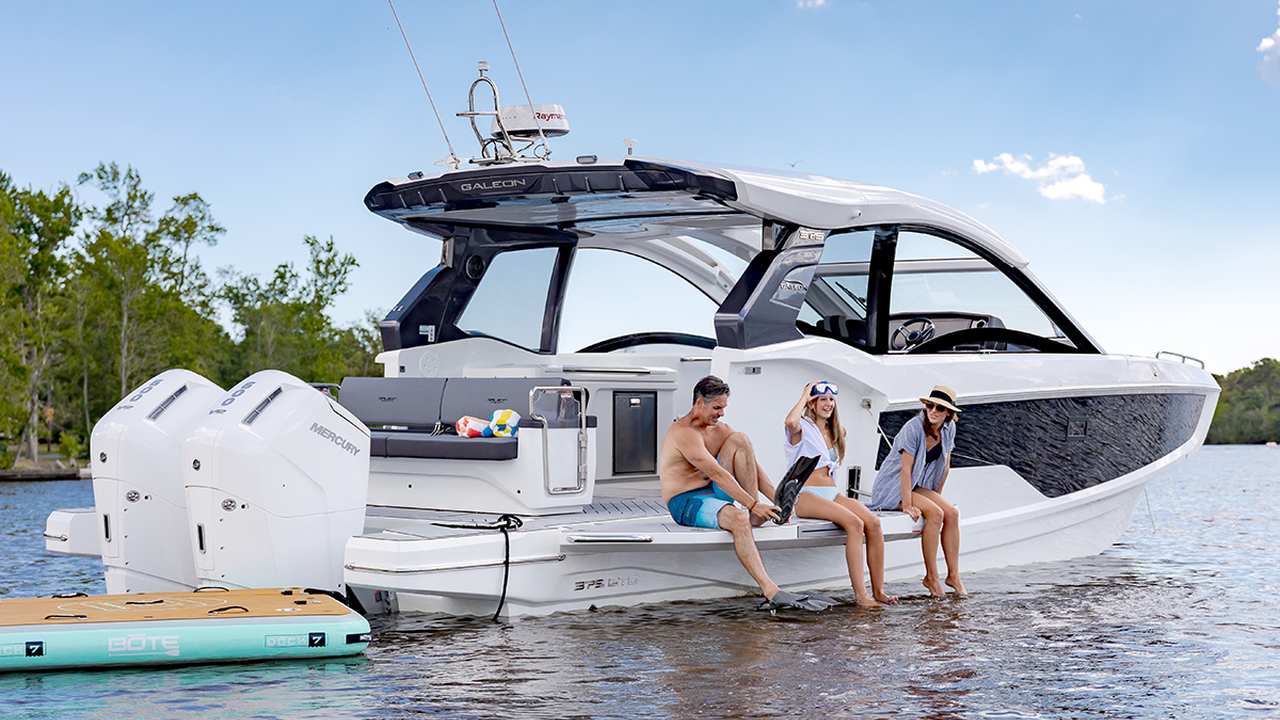
The lateral platforms expand the cockpit when the boat is still under allowed conditions. Delivery must include a simple sequence: free area, commander's consent, activation, visual control and state confirmation. Both sides, stop, sensors, hinges, actuators, battalions and drainage. The procedure provided for in the event of unavailable feeding must also be noted.
With open wings, change the operating beam. Parabords, distance from dock and near traffic require specific attention. Before departure a physical verification completes the indication on the bridge. Charges and numbers of people on platforms remain those allowed by boat documentation.
Hardtop and retractable glass roof
The mobile roof brings together guides, actuators, sensors, seals and drains. The test includes several consecutive cycles, control of the absorbed current, stop in the planned positions and water proof. Alignment, noise and uniformity of the seals are observed. Salt or sand in guides can increase the effort: cleaning and lubrication must follow the directions of the manufacturer.
The position allowed during navigation must be clear to the commander. The visibility of the instruments should also be verified when the glass generates reflections. Access to engines, sensors and drains should allow maintenance without damaging skies or finishes.
Bridge, steering and alarms
The test of the bridge starts from a list of functions: start, handcuffs, steering, trim, navigation, communications and alarms. Every indication must remain legible both sitting and standing with the raised Bolster. They control prodier visuals, side water mirrors and stern during maneuvers. Seat adjustment should not carry knees or hands against controls.
A second display does not guarantee redundancy alone: it is necessary to understand which sensors and feeds it shares. It simulates the loss of a screen and occurs that speed, route, depth and essential engine parameters remain available. Alarms are recognized and annotated, without silenced to complete the test.

Electrical system and load profiles
The boat must have a scheme that distinguishes starting, services, power from dock and eventual generator. Batteries, switches, fuses and chargers must be labeled and accessible. Voltage and connection temperature are measured during a satin profile, activating refrigerators, lights, pumps, roof and Beach Mode. A second profile includes air conditioning and kitchen appliances if installed.
The proof of loss of the source shows which utilities remain operational and how alarms intervene. Improvised extensions, uncoordinated protections or hot clamps are defects to solve. The energy plan must indicate which loads can work together and which require a sequence.
Generator and separation of fuels
When present, the generator has a diesel tank declared by 45 liters. Gasoline for propulsion and diesel for the group must be distinguished with labels, pipes and procedures without ambiguity. The test includes cold start, under load stability, cooling, exhaust, ventilation and stop. The circuit is held and there is no water flow.
The generator adds a battery, filters, maintenance and noise. With pre-set beds and closed doors it is estimated that it is compatible with the overnight stay. Hours and interventions must enter the same register of the main engines.
Fresh water, waste and black water
The 200 litres of water serve kitchen, bathroom and shower; the 70 litres of black require careful management during a weekend. The circuits are filled, bubbles are eliminated and pump, accumulation and fittings are controlled. All taps are opened individually and together, checking flow, noise and pump reboot. The discharges must also flow with the loaded boat.
Level, valves, vents and seals are tested for blacks in compliance with the applicable procedures. Odours or unstable readings are not aesthetic details. Delivery must indicate cleaning access and replacement components.
External kitchen and simultaneous loads
The kitchen in the well concentrates water, cold, possible cooking and storing near the steps. Drawers and doors must remain closed with roll and acceleration. Hot equipment requires space, ventilation and protection from guests in movement. The sink is controlled, the refrigerator is kept and the electrical arrest is reached.
A useful test active kitchen, refrigerators, lighting and air conditioning together, monitoring tension and protection interventions. The result defines the use sequence in satin and prevents overload. The furniture should not cover inspections or pumps.
Pozzetto, aft and access to the sea
The stern performs three functions: convivial area, passage to the water and technical zone of the engines. The configuration must keep free bits, tientibene and paths. Table and chairs are tested in different positions, controlling stops and edges. The outboards must be able to tilt without collisions and remain inspectable.
The bathroom procedure includes engines off, keys under control and authorization of the commander. Lighting and non-slip surfaces are verified in the dark and with wet bridge. Stairs, shower and return on board must work without crossing a dangerous area.

Interior, four beds and ventilation
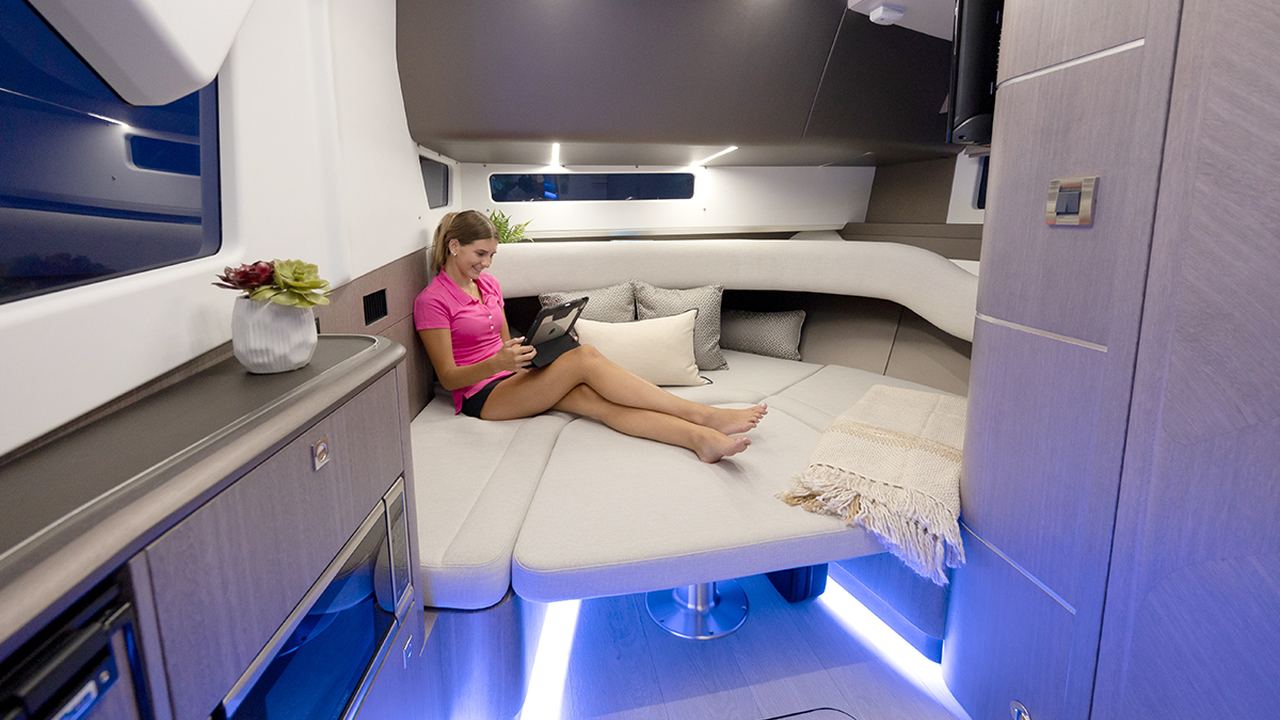
The four declared beds must be evaluated with the complete configuration, not simply counting cushions and seats. Transformation of the dinette, opening of the storages, obscuring and ventilation is carried out. Each bunk must preserve a practicable path and not block indispensable technical panels. Baggage and linen for occupants show if the available volumes are sufficient.
Noise, vibration and condensation are observed with air conditioning and pumps. Doors, hinges and skies are rechecked after navigation. Takes and lights must be protected and placed where they do not interfere with rest.
Paths, fire and emergency equipment
Each high-level bilge pump and alarm must be tested with a controlled method. The areas should not be isolated from storing or panels difficult to remove. Extinguishers, detection, valves and switches remain accessible with people on board. In the presence of gasoline and diesel generator, emergency actions must clearly distinguish the two systems.
The briefing includes man at sea, fire, loss of government, return with a motor, closure of the roof and platforms. Jackets and equipment cannot disappear behind luggage. The verification sequence records location, expiry and accessibility, not only presence.
Sea trial with replicable measurements
The program starts from maneuvers at low speed, reverse and stop. Then there are stabilized regimes, speed, consumption and thirst in both ways. They control the entrance into the plan, response to the trim, turns, ventilation of the propellers and behaviour on the wave. Sea, wind, temperature, load and levels accompany each reading.
The 40 mph of cruise and the 55 mph of maximum are not objectives to be pursued without context. The useful speed is the one that combines comfort, thermal margin and consumption per distance. A measure is accepted only if repeatable and consistent between the two engines.
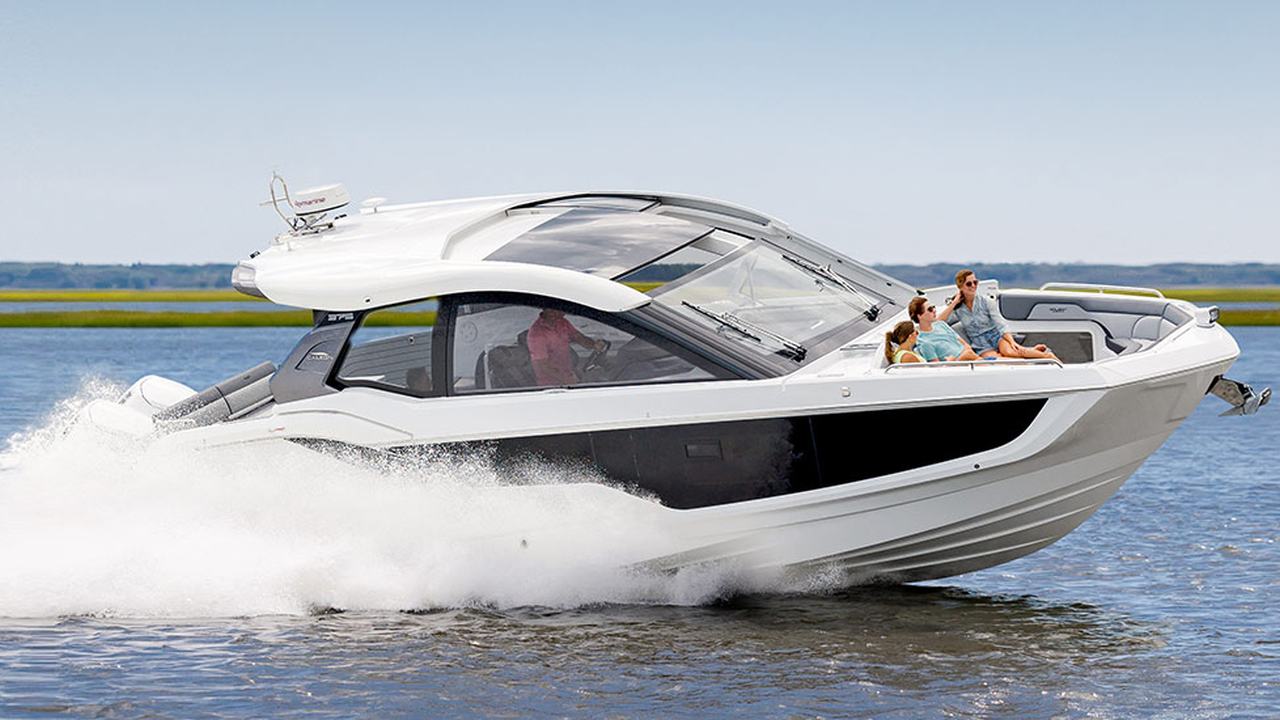
final verification sequence before acceptance
Orders, serials and installations are compared before acceptance. Up-to-date schemes, manuals, guarantees and testing reports are attached. Each anomaly is described with photos, condition and remedy agreed; after the intervention the interested test is repeated. A closing statement is not enough if the defect involved sealing, steering, alarm or security.
The last inspection checks levels, absence of losses, roof closure and Beach Mode, furniture stops, equipment and technical access. The owner must be able to isolate batteries, fuel and water, recognize alarms and put the boat safely.
Operational evaluation of the Galeon 375 GTO
The Galeon 375 GTO concentrates two Verado 600, large volumes of gasoline, mobile roof, side platforms and four beds in 11,50 meters. Versatility is only real when systems work together without compromising trim, steps and accessibility. The best configuration is not the one with multiple options, but the documented one, tested and consistent with the user profile.
Strict delivery transforms declared data into operational references. Recording load, consumption, absorption and procedures allows the commander to manage speed, autonomy and life on board with margin. This is the criterion with which to evaluate a complex boat: not the scenic effect of a single mechanism, but the repeatable quality of the entire system.