
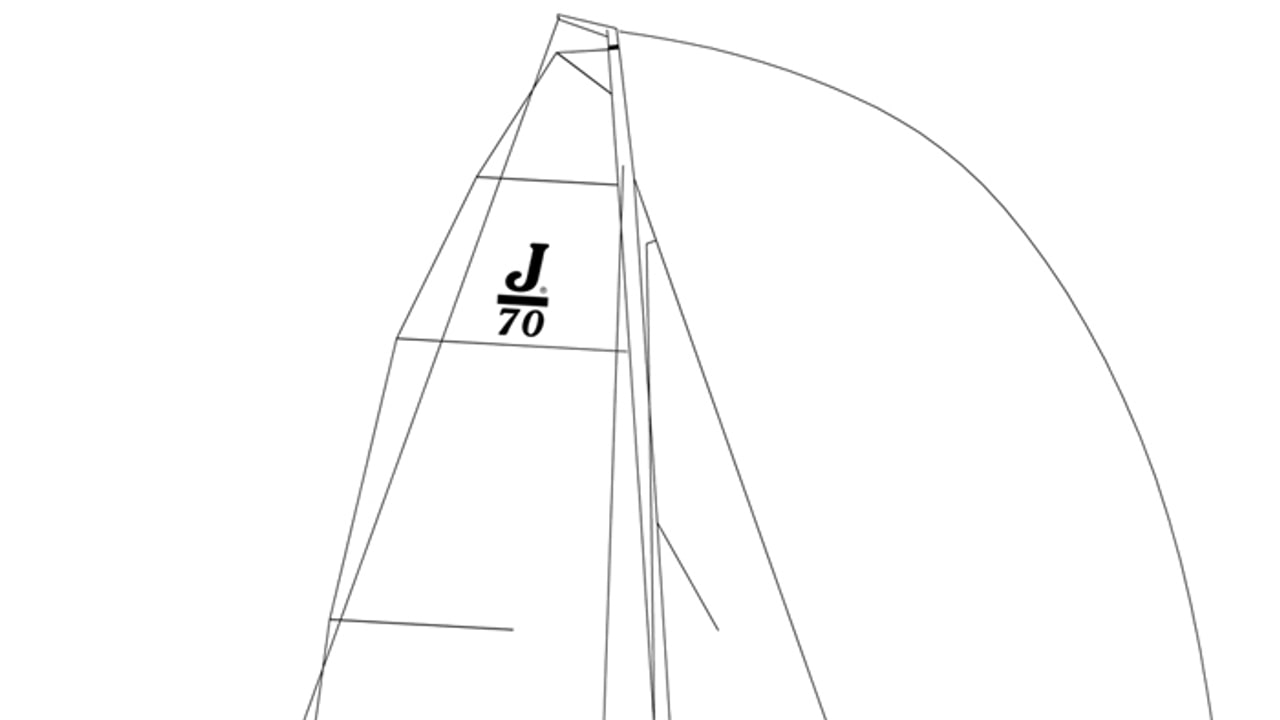
Preparing a J/70 means connecting equipment, class rules and safety, not just mounting a tree and loading three sails. The model measures 6.93 meters, weighs 794 kilograms in the stated specification and uses a lifting vertical keel. The yard describes an essential inventory made of frog, bow and asymmetrical sail in the tree head, with auxiliary outboard propulsion. However, each specimen must be compared with the documents and rules in force at the time of the event. This guide does not attribute untested performance and distinguishes the sample endowment from the actual measured configuration.
Configuration operating card
| System | Summary | Preliminary check |
|---|---|---|
| Length | 6,93 m | Identity of hull |
| Baglio | 2,25 m | Cart and mooring |
| Fishing | 1,45 m | Chiglia lowered and blocked |
| Dislocation | 794 kg | Weight Condition |
| Zavorra | 286 kg | Integrity and documents |
| 100% surface | 21,02 m2 | Veil measurements |
| Inventory | Three sails | Full identification |
| Auxiliary motor | Outboard 2.5 hp | Starting and storing |
Documents, certificates and current rules
The verification sequence starts from the identity of the hull and the version of the applicable rules, not from the registration to the race. We collect number of construction, certificate, history of the owners, any measurements and interventions on hull or appendices. The J/70 is an international class and the uniformity between boats depends on the ability to demonstrate that components and changes respect the current picture. An old seller's statement does not replace an updated verification. It is necessary to create a unique folder with photographs, serials, receipts and controls, separating spare parts, mandatory equipment and personal equipment of the crew.

Inventory of the three sails
The yard has a rank, bow and asymmetrical sail in the tree head as a basic inventory. For each sail there are sailing, identification, year, measures, repairs and status of inferior, bathing, bugs and reinforcements. Conformity is not determined by the fact that sailing enters the sack or has been used in a previous event. The measures compare with the rules and markings required. Open stitching, delaminations or extensions change both reliability and shape. The separate must clarify which sails are delivered with the boat and which remain to the owner, avoiding photographs as a contractual proof.
Carbon Tree and Armour Procedure
The carbon tree is supported on the deck, has a single tilted cross and a hinge system that facilitates feeding and tearing. Before lifting it you control pipe, foot, pin, head, rail of the frog and fittings. Sartie and drizze are stretched without crossings; the area must be free and the stable cart. The lightness of the component does not allow to manage it without coordination. Once vertical it occurs that foot and compression column work in axis. Deep scratches, crushing or reparations on carbon require a competent evaluation before putting up the live tailoring.

Sartie, arridai e paterazzo
The specific sample indicates fixed sartiame in 1×19 cable, adjustable riders on the tailors and a doubled pavement adjustment system. The preparation includes terminals, wires, threads, plugs, lande and reference points. Each adjustment is recorded in a repeatable way, without exceeding limits or altering lengths with components not allowed. Cables should not bend near the terminals or rub during transport. After the armament the tree is observed along the two floors, verifying symmetry and continuity. If a decorator turns under load or a landa moves, the priority is to solve the defect, do not pursue the tuning.
Boma, vang and tensebase
The carbon boma integrates a 4:1 tensebase, sting attack, internal pulleys and predisposition for the reduction of the frog. Vang is indicated as a double-end system. Before the exit you follow the tops, you control knots, impiombatures, pulleys and strokers and nothing is trapped in the boma. The attack of the rock must be integral and work in the planned direction. Adjustments are marked only after checking compliance. A different parchment ratio or a shifted hardware can change the system: in a monotype each variation must be compared with rules and specifications, not judged only practical.

Bompresso and asymmetric sail circuit
The carbon bompress flows into its housing and receives the wall of asymmetric sail. Its launch top comes out from the tuga, while rocks and bowls work outside. The verification sequence includes the integrity of the pipe, housing seal, fine running, wall fitting, top and strozer. Before hiring the complete circuit, avoiding passages under pulpits or safety lines. The rocks must flow without knots and without crossing abrasive zones. After the lowering, signs of contact are inspected immediately: a small repeated abrasion can become a problem before the visible breakup.
Bow, winder and rails
The constructor's card describes an undercover winder with issable spindle, line postponed to the tuga and two rails with trolleys for the bow's rocks. They control drum, spin, line, terminals and freedom of rotation before loading the sail. The trolleys have to stop and the rails remain solid on the deck. The configuration of the rocks should be repeated on the two sides and tested at low voltage. A hard winding can depend on path, tension or component: forcing the system does not identify the cause. The positions used by the crew can be noted, but remain subject to safety and compliance.

Hot frog, cart and winch
The sample equipment includes a 5:1 frog spade hoist that comes to a hamster and central swivel base, a cart with 2:1 adjustment and two primary winchs. The verification sequence checks the orientation of the drafts, the wear of the pulleys, the operation of the cliques and the sealing of the chokers. Winchs open and clean according to instructions, without exceeding with lubricants in the areas they have to take. The tops must have consistent diameter and length. Before the start, every adjustment is performed along the entire race, because a blocked end often emerges only when the crew is already under pressure.
Knife: descent, block and lifting
The lifting keel carries the fishing at 1,45 meters and contains the declared lead ballast of 286 kilograms. The sample system includes stainless steel block plate, lifting point, dedicated crane and 2:1 hoist. The procedure must specify in which order to support, move and block the appendix. They control walls of the compartment, surface of the keel, hardware, top or cable and support points. No one has to stop in the trajectory of the cargo. The blocking occurs physically: the weight of the appendix cannot be entrusted to a temporary device during navigation or transport.

Steering, bar and extension
The high-elongation rudder is mounted on the mirror and uses composite bar with adjustable extension. Before the varo you control shovel, edge, hardware, stop, bar and extension joint. The rudder must enter the seat without forcing and not be able to parade unintentionally. Once in the water, the bar’s freedom occurs on the entire race, maintaining peaks and material outside the area. Growing games, noises or hardness ask for inspection, not a compensatory adjustment of government technique. After each transport the shovel deserves a new control, because it is a light component moved separately.
Pozzetto, supports and safety lines
The well about 3.35 meters long has floor supports, padded safety lines, low candlesticks and pulpits at the corners of the stern. The preparation checks fixtures, paddings, gate on the mirror, anti-slip and drains. Lines should not present improvised cuts or terminals. The personal material is secured without obstructing the passage to the stern. The rules limit the way to protrude: crew and boat manager must know the current formulation, not rely on habits. The convenience declared by the yard does not replace footwear, coordination and procedures suitable for real conditions.

Outboard, support and power supply
For the J/70 the manufacturer indicates a light aluminum support on the mirror and reports that the class requires a 2.5 hp, petrol or electric outboard. It occurs stem, mass, clamping and compatibility of the specific engine, along with the way it is stored. Before the exit you try start, stop, march and autonomy according to the instructions. Fuel or battery must be fixed and protected, without contaminating the internal volume. Support is controlled for games and deformations. The presence on board is not enough: in case of return the engine must be reached, installable and usable safely.
Safety anchor and equipment
The official page associates the engine with the obligation to anchor and additional mandatory safety equipment. The exact list must be obtained from the class rules, the race instructions and the regulations applicable to the area. Each element must have a known position, immediate access and fastening system. Cima and still inspect and stand avoiding that they can damage the sandwich or block the well. Individual devices are assigned and tested before leaving. Deadlines, lights and means of communication are controlled by a signed list, not with a quick visual verification at the time of the launch.

Cabin, storage and weight distribution
The small cabin offers shelter, privacy and storage; it contains printed benches, rooms and inspection doors. It should not be treated as a limitless deposit. Bags, spare parts, sails and motors must have defined positions, remain fixed and leave accessible structure, compression column and technical openings. The landed mass influences thirsty and configuration compliance, so a simple distinction avoids bringing duplicate material. Any water or moisture must be removed after identifying its origin. At the end of the day the volume is aired and it happens that peaks or bags have not rubbed against wires, hardware or laminates.
Trolley, tree knocked down and check before travel
Transport is part of the intended use, but requires a sequence of autonomous checks. Trailer and vehicle suitability, tyres, lights, brakes where required, joint, winch and fixing points occur. Chiglia, rudder, tree, boma and bompress are supported in the correct points and protected by rubbing. Belts should not crush light surfaces or switch on edges. Before leaving, the real footprint is measured and the route rules are checked. After the first kilometres, tensions and temperatures are checked. Upon arrival the inventory prevents a component from remaining on the square or being exchanged with that of another boat.
Maintenance between one race and the other
The maintenance plan separates daily, periodic and seasonal controls. After each exit rinse and inspect appendices, carbon, stamps, tops and sails; dry the cabin and damage is recorded. Periodically they open winch, they control locks, outboard support, keel hardware and cart points. Tree, tailoring and laminating require competent evaluations when impacts or anomalies appear. Each replacement retains brand, size and reason, because maintenance and compliance must remain connected. A boat always ready is not the one on which the defects are hidden, but the one with a register that allows you to face them before the event.
sequence of final checks of delivery and departure
The delivery closes by comparing contract, certificates, inventory and physical presence. They control hull, keel, rudder, tree, boma, bompresso, sartiame, winch, sails, outboard, again and safety. At the launch are held, free appendices and manoeuvres with a gradual load; before the race there are rules, instructions and components that may require measurement. Every anomaly is correct and rechecked. The J/70 was born to be moved and armed with relative simplicity, but operational simplicity depends on a rigorous sequence: identity, integrity, compliance and only after sports regulation.