
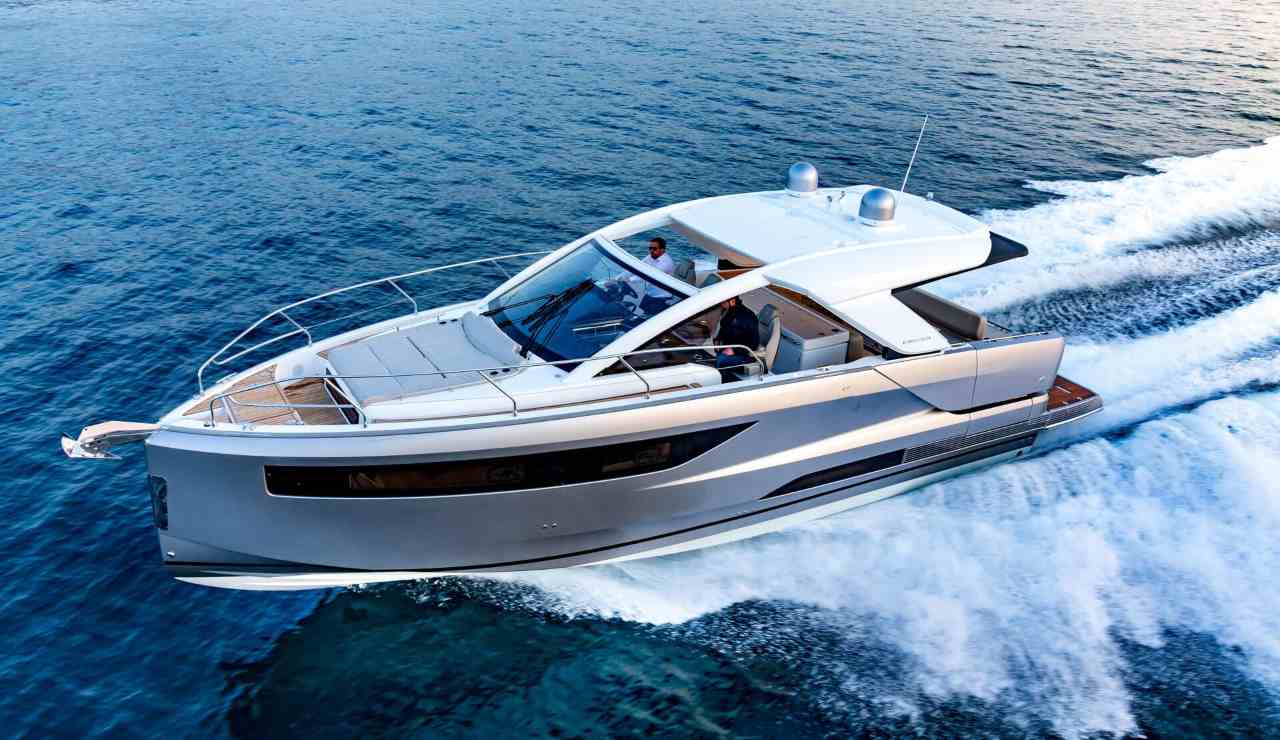
The Jeanneau DB/43 IB represents the contemporary reinterpretation of the concept of dayboat mediterranean capable of extending in the crocieristico field without sacrificing efficiency, safety and comfort. The collaboration between Garroni Design for style and layout and Michael Peters Yacht Design for the famine architecture, this 43 feet with diesel inboard engines is positioned as a “bridge” solution between the pure open for daily use and the family cruiser for extended weekends. The design signature is evident: usable volumes, simple handling thanks to electronic assistance systems, predictable behaviour on the move and livability above the average for the class.
On the functional level, the layout IB adopts poppiere transmissions with joystick and electronic control management, a package that aims to reduce fishing, ease of maintenance and at more linear operating costs than more complex alternatives. The result is a boat capable of naturally converting the “outdoor” life into an undercover habitable environment, supported by sized plants for the intensive use typical of the longer seasons.

The construction site: industrial history, construction philosophy, reputation
DNA Jeanneau
Jeanneau is a French manufacturer with an industrial path that combines important production volumes and centralized quality control. Recent history highlights a constant optimization of composite rolling processes, stable supply chain and a modular approach to product lines. In this context the family is born DB Yachts, which recovers a historical name of the brand and raises it in a contemporary way, focusing on configurable convivial spaces, ergonomic care and strong aesthetic identity.
Market performance
The positioning of Jeanneau is historically linked to value and service capillaries. With the DB range, the construction site strengthens the appeal in the segment premium dayboat thanks to improved finishes, strong personality of blanket and really inhabitable interiors, without losing sight management costs and ease of resale, two assets very considered by private owners and charter operators.
Main dimensions and naval architecture
Proportion and dimensional parameters
- Length f.t. (LOA): about 13,03 m
- Maximum garlic: about 3,82–3,86 m
- Fishing: around 0,94 m
- CE Design Category: B (offshore)
The dimensions place the DB/43 IB at the center of the dial 40–45 feet, with a glare that favors stability of undercover shape and volume. The figures may vary according to setups and equipment, but the table sizes are the reference measurement order.

Carena setting
The signed hull Michael Peters adopts a moderate V poppiera with longitudinal support skates, designed to ensure quick exit, controllable angles of incidence and a progressive planata, particularly useful when traveling with guests on board. The balance between deadrise, width and distribution of volumes maximizes the flat footprint at cruising speed, with deviated sprays effectively and acceptable comfort on the short wave typical of coastal traits.
Materials and construction processes
Scafo and superstructure in composite
DB/43 IB is laminated in GRP with layer layout designed to balance torque stiffness and weight control. Structural parameters and localized reinforcements are integrated to distribute loads of engines and plants, while the superstructures with generous stained glass surfaces favour natural light in undercover environments. The composite allows for relatively simple repairs and limited boat stop times, a useful factor for those who make long season.
Interior equipment
The interior combine veneers of light essences, technical laminates and padded in salsedine-resistant materials. The chromatic and tactile choices have a clear contemporary footprint and use metallic accents in marine steel for resistance and ease of cleaning.

Engines, propulsion and transmission
IB propulsion platform
- Engines: 2 × Volvo Penta D6-380 (diesel common rail)
- Transmission: poppie Aquamatic DPI with steer-by-wire
- Controls: joystick for mooring and precision maneuvers
The couple of D6-380 guarantees full torque to intermediate regimes, adequate silence and consumption aligned with the best class proposals. The transmission D helps to contain fishing and allows relatively simple access and maintenance compared to more complex solutions.
Auxiliary equipment
The boat tends to mount fuel tanks in the order of 800 liters and fresh water 250 liters (indicative values), with inspectable and dissected circuits to simplify maintenance. Gyroscopic stabilizers are available (e.g. Seakeeper 3) to limit the roll to anchor and low-range, in addition to compact generators and air conditioning channeled for energy autonomy and comfort in the warmest hours.
Performance: speed, cruise systems, autonomy, consumption
Performance indicators
- Maximum speed (IB configuration): around 33 knots
- Recommended cruise speed: about 25–26 knots
- Average consumption: values around 29 gph overall in comparable tests
- Typical autonomy with reserve: ~160–200 nm variables depending on sea, loads, propellers
The numbers come from independent evidence and are to be read as orders of magnitude, since they change with equipment, state of the hull, fuels, propellers and weather conditions.
Onboard systems: electronics, home automation, navigation and comfort
Plan and user interfaces
The tyrant integration MFD for cartography, eco-scandaglio and motor monitoring; instrumentation dialogues through standard bus and dedicated gateways, simplifying diagnostics and updates. The throttle-by-wire makes the commands progressive and repeatable, while the joystick with integration on the propulsive package facilitates mooring and disorption in reduced spaces.

Climate and livability
The thermal management of the interior is entrusted to air conditioning channels with distribution for cabins and living area. Variable intensity LED lighting helps reduce the load on the generator, with dedicated sockets for “sensitive” users. The sound insulation is treated with sound-absorbing panels, while the wear-resistant coatings allow easy cleaning even in the charter context.
Design, layout and space study
Cover and well: modular conviviality
The heart of the boat is the outdoor living area, set to accommodate many passengers in safety during the cruise and reconfigure, by boat, in an open space in strong contact with the water. The central kitchen of blanket (galley island) allows quick service on both sides, while reversible back seats pass from navigation to “lounge” without complex operations. The downside extensions transform the well into a beach club continuous, with fluid passages to plank and corridors.
Bow bridge and movement safety
The bow bridge is conceived as a usable area, protected by continuous battalions and generous passing. The choice facilitates the use by unexperienced guests, reducing conflicts between technical paths (mooring maneuvers, on-board management) and areas dedicated to relaxation.
Undercover: privacy and useful volume
The typical scheme provides shipowning cabin in the bow with central bed and perimeter storage rooms and one transversal guest cabin to the center of the boat. The bathroom often has a separate shower. The hull windows convey light and lighten the atmosphere, while the useful height is managed by the configuration of the tuga and lowered floors where appropriate.


Research, innovation and safety
Hydrodynamic efficiency and control of the construction
The synergy between MPYD hull and Volvo Penta drive with DPI transmission aims to preserve flat trim in the cruise range, containing resistance and improving comfort. Automatic trim and flap control systems help maintain the ideal angle according to loads and sea, with measurable benefits in consumption and fatigue at the helm.
Rolling and quality of stay
The availability of gyroscopic stabilization (Seakeeper 3) significantly reduces the most annoying transversal oscillation for sensitive guests, increasing the comfortable use window in shaves. The effect is added to the rigidity of hull and the distribution of the most concentrated weights typical of the entrobordo.
Active and passive protection
The project integrates continuous handrails, quick drains of the well, feel compartments with automatic and manual systems, fire-fighting system in the machine room and instrumentation with alarms on the net. The CE B category indicates the suitability to offshore routes in typical weather conditions of the evolved coastal navigation.
Life on board: cabins, furnishings and services
Management of hospitality
The DB/43 IB is designed to transport numerous guests seated safely during the cruise and, at the same time, offer comfortable accommodation to a family or two couples. The pantry with refrigerators, glaciers and optional cooking floors allows you to live the boat as “outdoor cottage”, minimizing the continuous undercover passage.

Ergonomics and micro-logistics of spaces
The diffused storage avoids the accumulation of objects in the path of trampling, while the seats with mobile backs allow to quickly adapt the vessel from “navigation” to “stop” mode. Localized soundproofing and stable walking on anti-slip surfaces increase the usability by non-professional crews.
Sea behaviour: tests, driving notes and NVH
Handiness and seal
The available tests converge on a progressive handling, with clean insertions and predictable trajectories also with moderate disordered sea. The boat responds well to the rudder corrections and maintains longitudinal stability over the 20 knots, with bridge transitions without “saltellations”.
Noise, vibration and dynamic comfort
The combination of immersed discharges, central mass and sound-absorbing coatings limits the rumble perceived in dinettes and cabins; guests in the outside arrive mainly the aerodynamic smooth, contained thanks to windscreen and optimized mountaineers.

Market, competition and trend
Price and placement range
DB/43 IB belongs to the segment premium 40–45 feet with vocation day-cruiser. Rich configurations (stabilization, advanced electronics, generators, design packages) can be placed in the high segment. The figures vary on a geographical basis, tax taxes and concession packages; a picture can be traced by crossing lists and evidence cited in sources.
Direct competitors
- Pardo 43: iconic open setting, strong stylistic identity and great sociality of blanket; refined interiors but with volumes slightly lower than the transversal cab of DB/43.
- Fjord 41 XL: high customization of shells and cockpit modules, brilliant performance and minimal look; marked orientation to outdoor life.
- Solaris Power 44 Open: very well-kept famine efficiency, sometimes combined with IPS; “classic yacht” taste finishes and extremely composed navigation.
The competitive advantage of DB/43 IB is not a single element but the sum of choices: really usable side extensions, central blanket galleys, predictable behaviors, simplified system management and interior usable for more consecutive days.
Market Directorates
The question in the 40–45 foot band moves towards modularity, recognizable aesthetics perceived comfort (silence, standing stability, intuitive edge flows). The DB/43 IB intercepts these carriers by focusing on the experience of use, providing heterogeneous crews and learning from the practice of premium charter, where ease of conduction and robustness of the installations are decisive.
Target of customers
Private owners with seasonal base in areas of strong daytime vocation and long weekend; operators day-charter that require transformable spaces and immediate management; representative companies that seek a scenic but manageable medium from reduced crews. In all cases, after-sales network and spare parts availability of the French brand constitute a matter of concrete choice.
Recognition, orders and fair presence
Visibility and application
The DB family has gained visibility in European and American reviews, with quotes and applications on design and usability “family friendly”. The media coverage was wide at launch, with comparative tests and technical insights on international publications.
Iconographic deepening


Synthetic framework of specifications
- Project: Garroni Design (external/interior), Michael Peters Yacht Design (carena)
- Indicative dimensions: LOA ~13,03 m; Baglio ~3,82–3,86 m; Fishing ~0,94 m
- Material: GRP for hull and superstructure; laminated structural bulkheads
- Category CE: B
- Motorization IB: 2 × Volvo Penta D6-380 with Aquamatic DPI and joystick transmissions
- Tanks (size orders): fuel ~800 L; water ~250 L
- Reference speed: Max ~33 kn; cruise ~25–26 kn
- Beds: 4 (variable according to layout and options)
- Guest capacity sitting in navigation: high for class, suitable for numerous outputs
Comparative technical evaluation and positioning
Points of merit
- Space Management specimen on deck, with central kitchen and reconfigurable seats.
- Carena balanced: progressive planing, well deviated sprays and comfort on the short wave.
- Interior designed for stays of several days with real cross-cabin in the center of the boat.
- Propulsion inboard with joystick: linear operating costs and immediate manoeuvrability.
- Support after-sales and international brand network.
Areas to weigh
- Who follows peak speed very high can be oriented on outboard versions or competitors with higher powers.
- The rich optional (stabilization, top electronics, design packages) places the price in the top dial of the segment.
Video
Technical synthesis and competitive positioning
The Jeanneau DB/43 IB is a mature and rational proposal for shipowners looking for a boat capable of “holding the scene” in shady and grinding miles with sobriety. The balance between form and function, the quality perceived in navigation and the simplicity of daily management constitute the most convincing arguments. In comparison with more sartorial cut rivals, the DB/43 responds with a consistent engineering package and real viability, elements that make the difference in real use, week after week.