
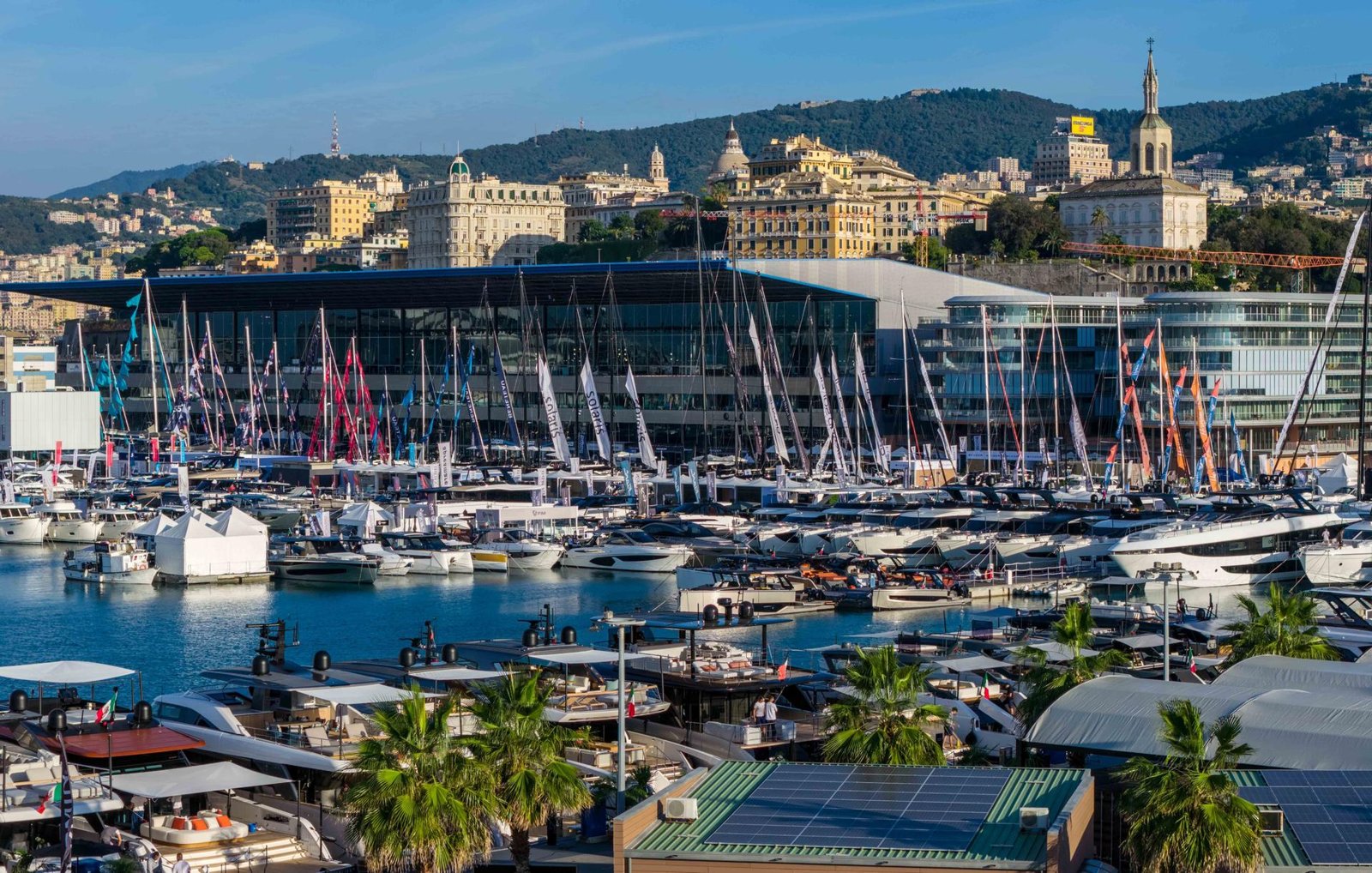
The National Conference on Costiero and Marittimo Tourism, held at the 6th International Boat Show in Genoa on 5 October 2026, saw the participation of representatives of the field of the Economy of the Sea, including Mario Zanetti, Piero Formenti, Massimo Caputi, Giovanni Acampora and Roberto Perocchio, with the conclusions of the Minister of Tourism Gianmarco Mazzi. The event highlighted the strategic importance of nautical tourism and the economy of the sea for the growth of the country, underlining the need for an integrated industrial policy and investment aimed to support the sector.
A strategic sector for economic growth
The economy of the sea represents a key supply for the growth and redistribution of value on the territories. With a value of 224,9 billion euros, equal to 11.4% of Italian GDP, the sector involves over 1,13 million direct employees and 250 thousand enterprises. The multiplier effect of the sector is significant: for each euro produced directly, another 1.8 are activated in the rest of the economy. nautical tourism, in particular, is considered a strategic lever to distribute tourist flows throughout Italy and throughout the year.
The challenge is not only to bring more tourists on the coast, but to create more value and distribute it on the territories. To achieve this, an integrated approach involving ports, enterprises and territories is necessary. The America’s Cup is seen as an invaluable opportunity for the country, a great international showcase that can help strengthen Italy’s position in the sector. Moreover, coastal tourism and crocieristica represent strategic levers: in 2026 the Italian ports will move beyond 15 million crocieristi, with almost 6.000 landings in 60 ports, generating approximately 18 billion euros of value.
Industrial policy for the sea is a key element to support this growth.
A growing sector with development potential
Nautical tourism is confirmed one of the sectors with greater ability to generate value along the supply chain, with over 13 billion euros of added value and almost 168 thousand occupied. According to the Assomarinas-Federturismo survey, the demand for yearly moorings grows on average by 2.9%, while the presence of superyachts and the transit of large international units, especially related to charters increases. They also create remittance, refitting, alge and varo, supported by the increase in the average size of boats and the liveliness of the market of the use.
For 2027 there is a stabilization of demand for stationary moorings, but a persistent liveliness of transits linked to charter and international superyachts. To consolidate this growth, it is necessary to update the special law for the tourist ports (Dpr 509/97) and the cathartic classification in E1 of the structures for the nautical. The Conference therefore relaunched the need to develop a real industrial policy of the sea, capable of building interconnections between the different sectors, to set up skills, investments and infrastructures and to make sure that the value generated by maritime activities remains on the territories.
The collaboration between institutions, enterprises and associations is fundamental to transform synergies into concrete opportunities.