
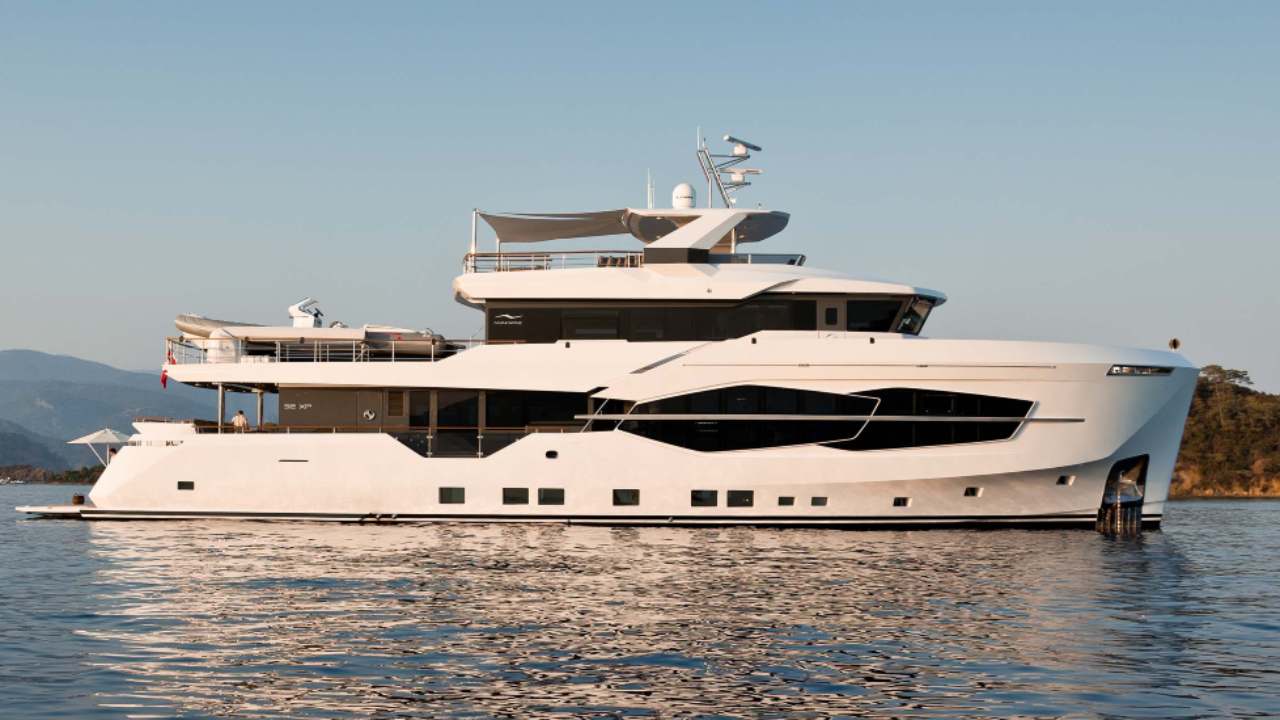
In the contemporary lexicon of the high-end nautical, the term “explorer” became abused. Yet, when you see a Numarine 32XP with technical look—proportions, structural choices, internal volumes and plant logic—it is immediately understood that here the label is substance: a boat of just over 32 meters that adopts the grammar of displacement, favouring efficiency, autonomy, comfort and robustness, without sacrificing a recognizable stylistic footprint and a superyacht finish level.
The 32XP was born for a shipowner who wishes to “go away” in real sense: not the short cruise between nearby ports, but the idea of a long season, of demanding transfers, of remote areas, of long periods to the bottom. The design equation is clear: steel hulls for solidity and damping mass, composite structures for weight control at the top, an onboard system designed to be manageable and, above all, an organization of spaces that maximizes viability without introducing unnecessary complexity.
Profile of the construction site: Numarine, Turkish engineering and “go-anywhere” philosophy
History, industrial identity and range growth
Numarine is a Turkish manufacturer who has built its reputation on a simple concept: offering contemporary-cut yachts and a solid engineering approach semi-custom capable of combining industrial standardization and real customization. The evolution of the house has been progressive: from the most “mainstream” platforms to models increasingly oriented to displacement and long journeys, to the definition of a family of explorer that today represents the most recognizable signature of the brand.
Building philosophy: integration of systems and reduction of complexity
The technical DNA of the XP series is based on three pillars: ease of use, integration e robustness. “Simplicity” does not mean poverty of content, but a reasoned plant architecture: centralized systems where it serves, redundancy where it is strategic, maintenance accesses designed by project, and a logic of edge that reduces the number of interfaces and unnecessary procedures. In a 32-metre explorer, this setting is far from a detail: true reliability often arises from avoiding excess.
Reputation on the market and public reference
The XP series, and in particular the 32XP, is aimed at a transversal audience: private shipowners looking for a “family yacht” capable of crossing and long transfers; operators luxury charter that appreciate volumes and functionality; and representative companies that want a product with strong identity but with consistent operating costs with an efficient displacement. In this perspective, the 32XP is often perceived as a “bridge” between the 30 traditional meters and the 35+ more challenging, offering an excellent balance between manageable size e ocean ambition.
Dimensions and naval architecture: 33 meters volumes, displacement behaviour
Main shares and design implications
The 32XP is located in the 32–33 meter band, with a width in the order of 8 metres and a fishing around 2.7–2,8 metres (values that may vary according to setups and loads). This combination produces two decisive effects: on one side one side considerable internal volume (in the order of 300 GT depending on the units), on the other a stable platform that works well at the typical speeds of the displacement, reducing roll and perceived bedding.
Vertical pruning and famine form: why it works
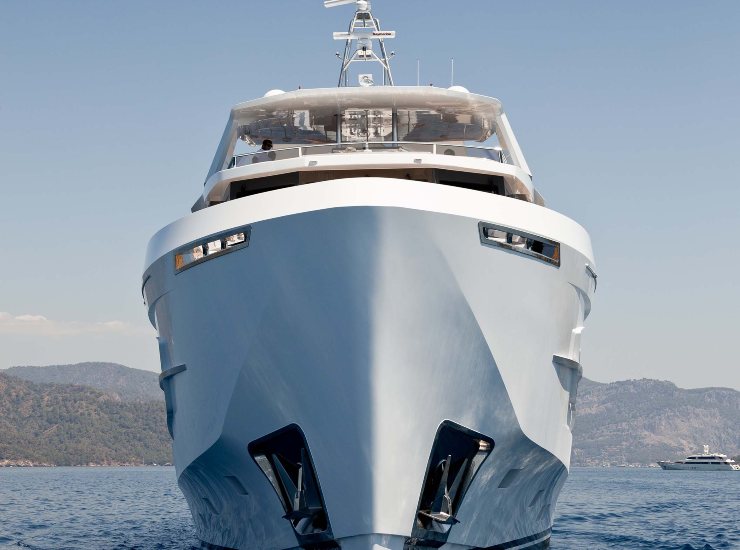
The vertical bow it is not an aesthetic vezzo: it increases the length to the useful float, favoring efficiency and containment of consumption to the economic trends. In parallel, the displacement famine favours a soft shift on the wave and a high directional stability. Translated for those who are not technical: the 32XP is designed for “walking” long without tired crew and guests, with a more “naval” answer than “sporty”.
Construction materials: steel, composite and weight logic
Steel hull: solidity, comfort and operating margin
The choice of steel hull is consistent with the mission explorer. The steel allows a robust structure, better tolerates shocks and stresses typical of long navigation, and offers a often underestimated advantage: mass. A “heavy” displacement works as a great natural dampener, reducing vibration and perceived noise, with direct benefits on comfort.
Composite superstructure: baricentro control and freedom of design
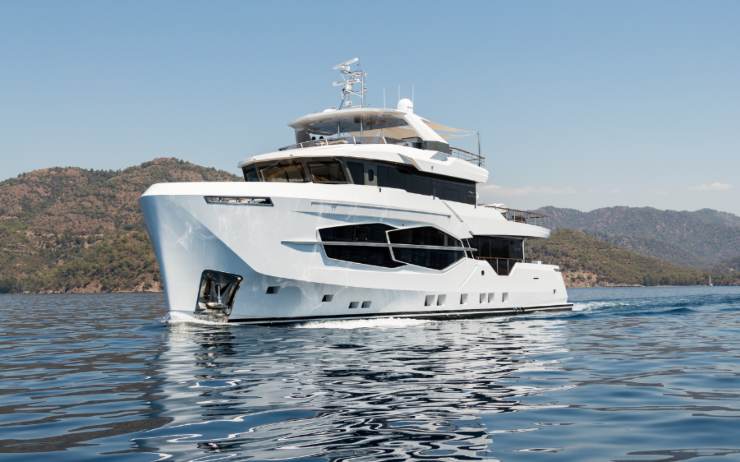
The superstructure in GRP/composito allows you to contain high weights, improving dynamic behavior and stability. Moreover, it allows large glazed surfaces and more articulated geometries (such as the typical windows of the XP series), maintaining good thermoacoustic insulation levels with targeted stratifications.
Interiors: finishing engineering and durability
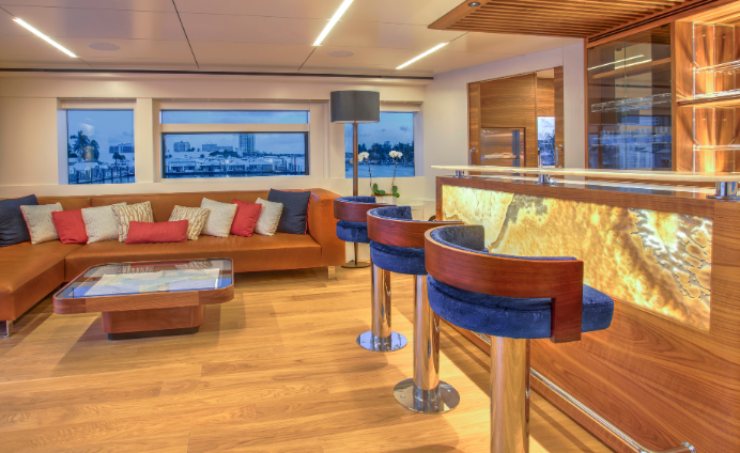
On an explorer of this class, the real challenge is not only “make beautiful”, but do it last: glues, joints, clamps and materials must tolerate thermal cycles, humidity, vibrations and intensive use. For this reason, the most credible approach is that which combines fine textures and surfaces with stable structural supports, with attention to ventilation, steam barriers and accessibility to the plants behind the panelling.
Engines, propulsion and transmission: diesel “low-stress” for reliability and autonomy
The concept: sufficient power, not excessive
The 32XP is not born to pursue the 20+ knots. The philosophy is opposite: engines working in an efficient system, with low loads, maximizing reliability and minimizing specific consumption. Depending on the units and markets, the boat can be proposed with different diesel engines (in some cases MAN:, in others Caterpillar), with typical powers in the order of ~700–800 hp per side.
Axis-line transmission: easy maintenance and performance
The most consistent solution with the displacement is axis line: reduces complexity compared to more “performing” systems but less suitable for long cycles, maintains excellent performance at project speeds and simplifies inspections and maintenance. In practical terms: less critical components, more predictability, greater robustness over time.
IMO Tier III and SCR: what really means
On some units configured for commercial compliance, the drive may include engines IMO Tier III with sCR systems (Selective Catalytic Reduction). It is a technical issue that deserves clarity: the SCR reduces NOx emissions through exhaust gas treatment, requiring additional components, thermal management and dedicated spaces. The result is a more “clean” boat and more suitable for strict regulatory requirements, but also a plant that must be designed with criterion from the origin—and here the displacement platform helps, because it offers more generous technical volumes.
Performance: speed, cruise, autonomy and consumption
Speed: the right data is the cruise
In typical configuration, a 32XP works with a cruise around 12 knots and a maximum speed in order of 14 knots (depending on loads, hull, propeller set-ups and conditions). It is a performance window consistent with the mission: not to “stay” from one bay to another, but to move regularly on important distances, with high comfort and controlled consumption.
Autonomy: the real competitive advantage
The parameter that qualifies an explorer is the ability to transform fuel into miles efficiently. In economic trends (approximately 8 knots), the 32XP is designed for autonomy of the order ~4,000 nautical miles (variable indicative value per unit and set). For the shipowner it means being able to plan long transfers with real margins, reducing dependence on frequent supplies and expanding the range of possible routes.
Consumption: how to read them without being deceived
In the displacement, consumption grows rapidly if you force the gait over the efficiency threshold. The correct approach is not to ask “how much does it eat in handcuffs”, but to analyze the curve: 8–10 knots are typically the “sweet spot” for range and comfort, while the 12 knots represent a more sustained cruise, useful when needed, but to manage with awareness. The advantage of the 32XP is that the platform was conceived precisely to make “natural” economic trends, without perception of slowness thanks to stability and silence.
Onboard systems: electronics, home automation and navigation
Plane: ergonomics and reduction of cognitive load
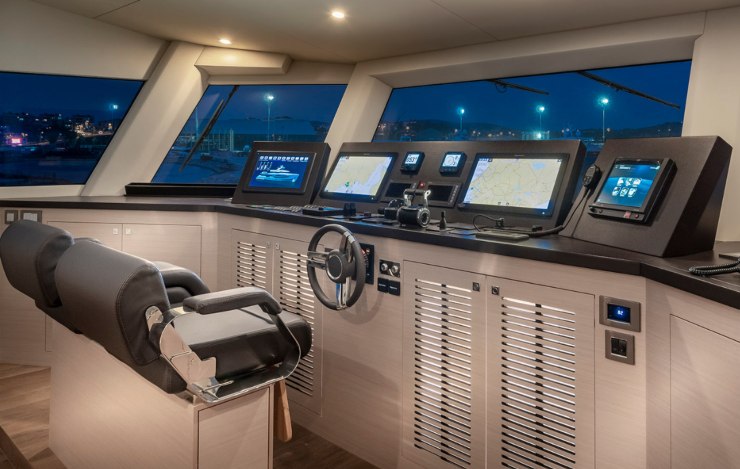
A well-designed explorer should not only “go”, it must be easy to lead for many hours. This involves a clear logic dashboard: optimized visibility, seating and console with correct visual triangulation, radar/plotter/instrumentation integration and a layout that reduces the number of steps between screens and procedures. In this regard, the XP series favours the idea of an intuitive and rational command, suitable for both the professional commander and the experienced shipowner.
Domotics and plant management: the value of integration
Domotics is not a gadget if it is used to make legible the status of the boat: energy balances, generators, air conditioning, pumps, alarms and tank levels. On a 32 meters, the difference between “luxury” and “quality” is often in the ability to diagnose and intervene quickly, avoiding that a banal anomaly becomes an operating problem.
Design and architecture of spaces: stylistic signatures and modular layout
External language: “rugged” controlled, not aggressive end to itself
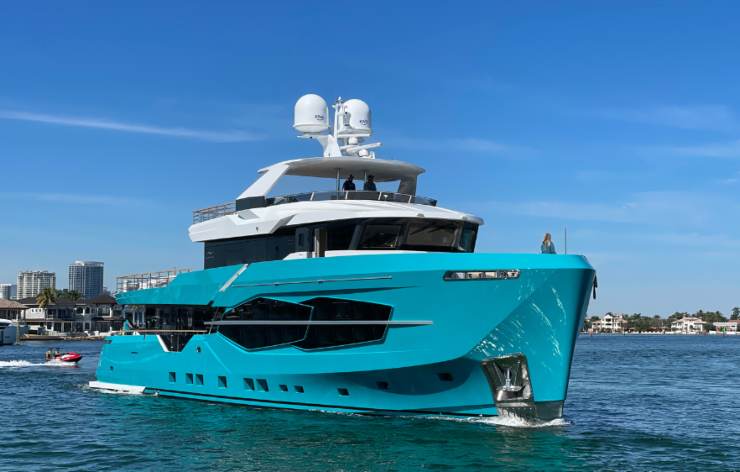
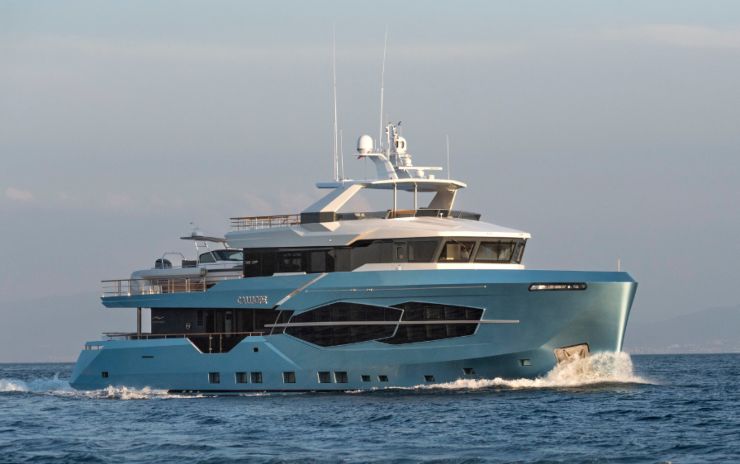
The XP series is recognizable for a decisive part: high walls, stretched lines, angled windows and a profile that communicates protection and solidity. On the 32XP this language is balanced: the boat appears powerful, but not “military”; it is an explorer who also speaks the language of luxury, thanks to clean proportions and measured use of the glass surfaces.
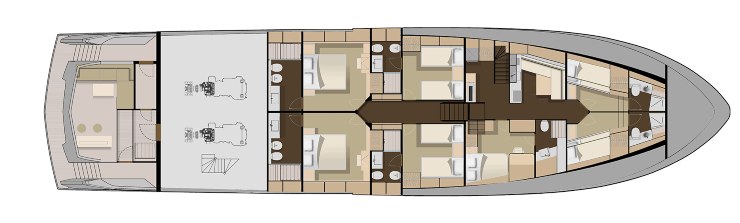
Layout: 5 or 6 cabins, depending on the mission
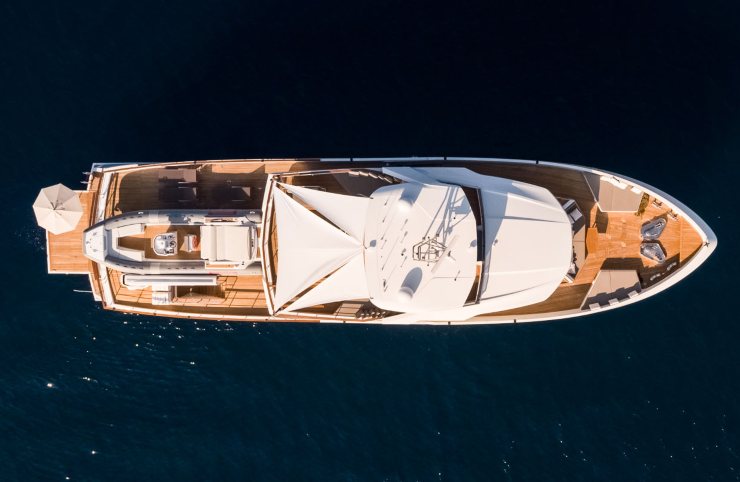
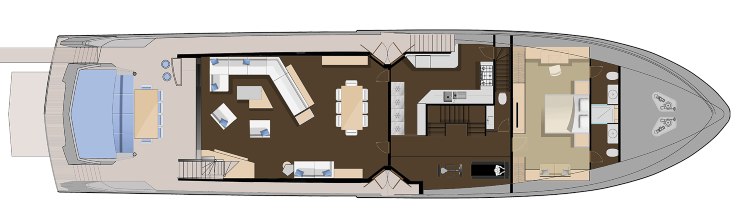
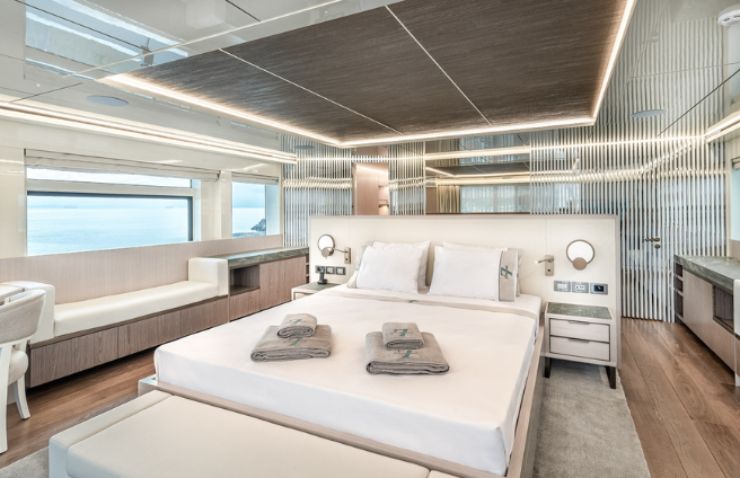
One of the strong points is distribution flexibility. In classic configuration, the 32XP offers 5 cabins for about 10 guests, with a shipowning suite on the main bridge and four cabins on the lower deck. In more privacy-oriented alternatives, you can move the owner to a higher level, creating a “private deck” and thus changing the organization of skylounge and common spaces. This modularity is typical of the well-made semi-custom: the platform remains consistent, but the experience really changes.
Life on board and comfort: cabins, social spaces and functionality “from long season”
Main bridge: lounge, dining and galley with operational logic
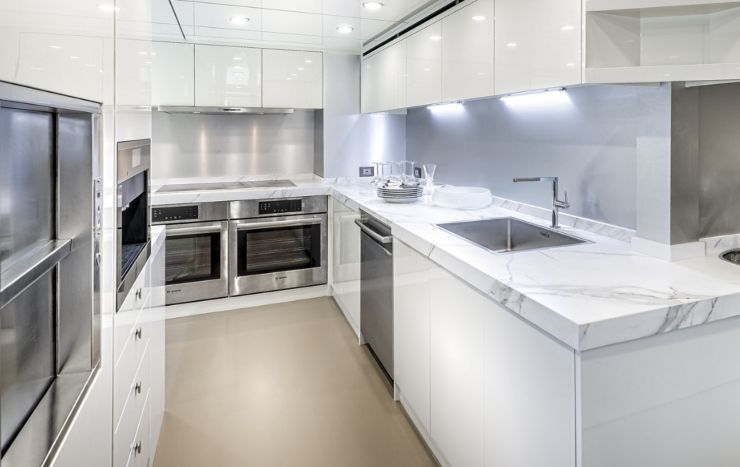
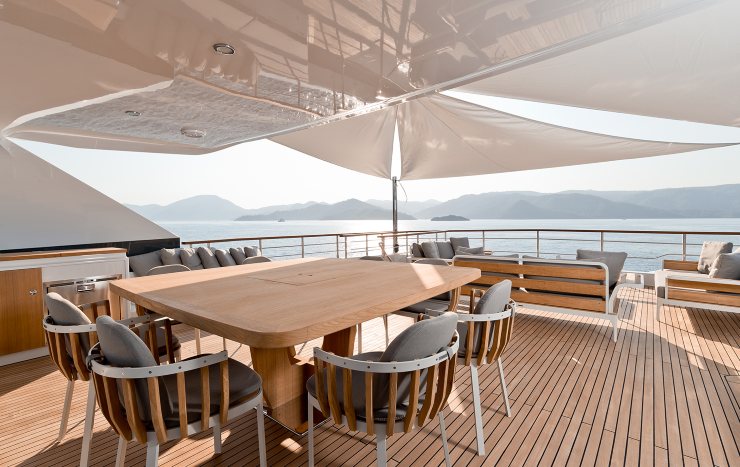
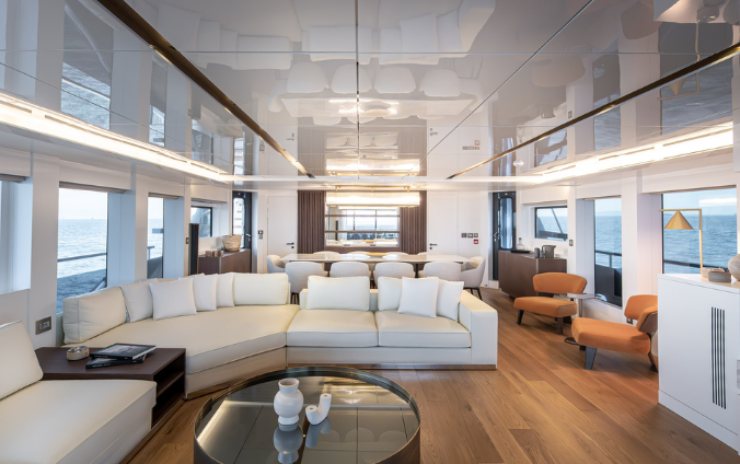
The main bridge is designed as a large continuous space: relaxation area, dining area and fluid connection with the outside areas. Natural light, amplified by generous windows, is not only aesthetic: it reduces fatigue, improves viability and makes the environment more “residential”. The kitchen, depending on the layout, can be more “crew-oriented” or more integrated into the sociality of board—a crucial choice for those who live the yacht in the family.
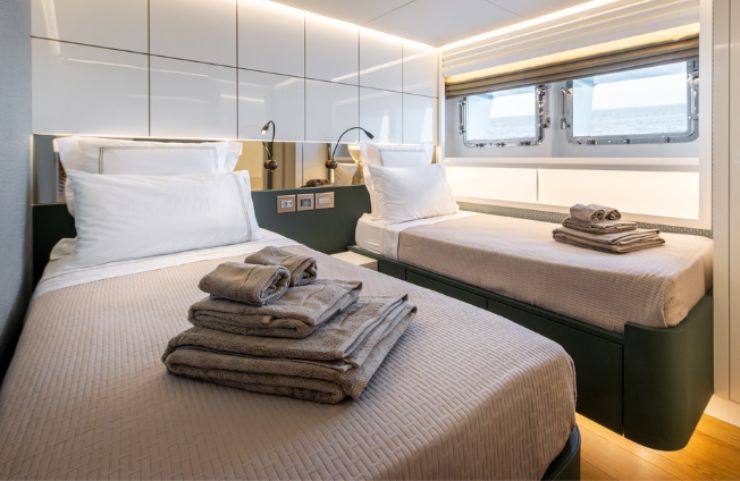
Guest cabins: smart proportions and real privacy
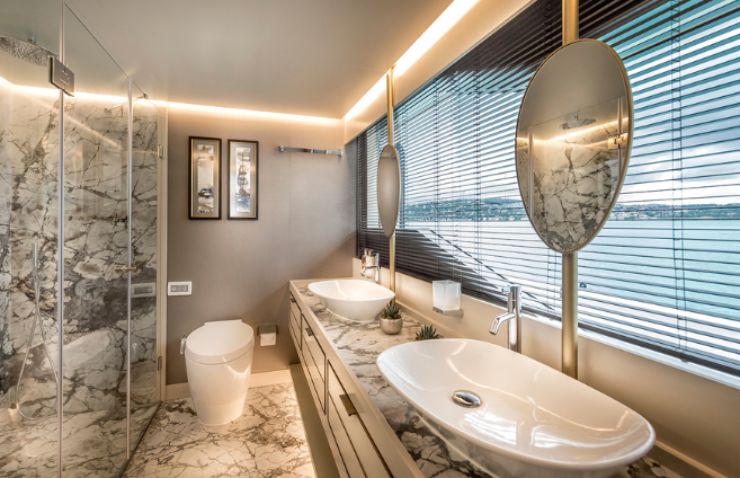
In the lower deck, cabins tend to favour useful widths and comfy circulations, avoiding unnecessarily narrow corridors. The difference between a 32 meters “tirate” and a 32 meters well designed is right here: in the possibility to move naturally, in having real boots, in not sacrificing the bathrooms in favor of scenographic volumes but not functional.
Spazi crew: efficiency, not invisible
For a credible explorer, the crew must work well: crew cabins with dignified dimensions, separate routes when possible, quick technical access and an organization that reduces interference with guests. A well configured 32XP can accommodate a crew in the order 5–7 people (variable per unit), ensuring operational autonomy also in long routes.
Innovation and research: not only hybrid, but systemic efficiency
Reduced consumption and emissions: efficiency is born from the hull
Hybrid/electric drive is a central theme in the industry, but it is not the only vector of innovation. On 32XP, true innovation is systemic: efficient displacement famine, managed weights with consistency, optimized systems, insulation and damping to contain noise and vibration. It is a “mechanical” way of making technology: less slogans, more perceived results during hours and hours of navigation.
Stabilization and safety: technology that improves the quality of life
The stabilizers (in navigation and, if expected, at zero speed) transform the experience on board, especially for those who spend a lot of time at the bottom. In parallel, safety on an explorer is played on compartments, firefighting, pumps, alarms and redundant plant choices. In a 32 meters, the qualitative leap does not do the object “wow”, but the continuity of comfort and reliability.
Sailing performance: what to expect at the helm and what really matters
At sea, a well-designed displacement must offer three qualities: comfort, predictability e control. The high and vertical bow helps maintain a dry passage and reduce the impact on short waves; the important width contributes to stability; the steel hull mass damps vibrations and noise. The feeling, for commander and guests, is that of a boat that “works” calmly, without nervous reactions, and that invites to maintain the correct gait instead of forcing the medium.
When it comes to professional feedback, the most frequent request is not “faster”, but “more liveable”: less perceived noise in the living volumes, less vibrations to the main bridge and in the ship cabin, and plants that do not require continuous micro-management. This is where the 32XP plays its best cards: in quality of time spent on board, more than in the isolated event of the maximum speed.
Summary
- Type: Explorer / expedition yacht to displacement
- Length outside everything: about 32–33 m (depending on units)
- Width: about 8 m
- Fishing: about 2,7–2,8 m
- Construction: steel hull, composite superstructure (GRP), covered in teak (depending on setups)
- Naval architecture: displacement platform, vertical bow
- Engines: twin diesel (variable configurations per unit/market)
- Speed: cruise ~12 kn; maximum ~14 kn (variable)
- Autonomy: order of magnitude ~4.000 nm at economic speed (variable)
- Guests: typically 10–12 in 5–6 cabins (variablelayouts)
- Equipment: typically 5–7 (variable)
Market and competition: the positioning of 32XP in the “hot zone” 30–35 meters
Segment and price logic
The 32XP is located in the “compact” high volume explorer segment, where the price is not determined only by meters and materials, but by the combination between GT available, plant content and level of customization. In terms of market, we talk about a product that competes with new and recent units in the 30–35 m range, often with double-digit values (in millions of euros) depending on year, specifications, compliance and equipment.
Direct Competitor: who plays the same game
Real competitors are not the “25 knots” planners, but the displaced and semi-dislocants with long vocation: models of explorer inspiration and “crossover” looking for volumes and autonomy. In this constellation, the 32XP stands out for sharply cutting expedition combined with a very generous internal viability. Where some competitors point to the scenic beach club or the Mediterranean design, Numarine insists on robustness, rationality and an external form that communicates ability before even luxury.
Industry trend: autonomy, acoustic comfort and compliance
The market is rewarding three directions: credible range, silence e regulatory adjustment. The modern shipowner wants to move freely and reduce the environmental footprint without turning the yacht into a complicated workshop. In this sense, the 32XP interprets the present well: it is an efficient displacement that can be configured with advanced solutions (also in commercial optics), maintaining a basically pragmatic approach.
Image gallery
Results, awards and international visibility
The XP family has established a strong reputation over the years, also thanks to presence in international fairs and circuits and industry awards. For the 32XP, credibility is mainly measured by two factors: real diffusion of units in navigation and the seal of the model on the market of the used and the new, where the appeal derives from a successful balance between “explorer true” and comfort from superyacht.
Future perspectives: 32XP as platform and as poster
Industry management is clear: energy efficiency, emissions reduction, greater automation and superior acoustic comfort. In this scenario, the 32XP represents a “mature” platform: it shows that an explorer can be at the same time functional e refined, and that innovation is not necessarily synonymous with complexity. The experience gained on steel hull, technical volumes and integration plants becomes a design capital that the yard can project on future models, even with hybrid or diesel-electric solutions, without losing the XP identity.
Video
Conclusions: a 32 meters changing priorities (and finally makes them concrete)
The Numarine 32XP is a convincing answer to a very current question: how to have autonomy and mariality without going to too demanding sizes in terms of crew, management and costs? The recipe works because it is engineering before aesthetics: steel hull, displacement famine, consistent weights, legible plants, really viable spaces. The result is not a yacht that promises “adventure” in words, but a platform that makes adventure practical, comfortable and—especially—repeatable over time. In a often noisy market, the 32XP stands out with a simple and credible message: go far, well.