
The configuration of an Oceanis 41.1 must start from keel, layout, engine and inventory, not from the list of accessories. BENETEAU declares 12.43 meters in length, 4.20 of glare, two fishing, 200 liters of fuel, 240 of water and maximum power of 45 hp. These values build the base of testing, but do not experience speed, consumption or autonomy. Each result must refer to the specimen, load and conditions actually observed.
Open a unique configuration
The first page of the dossier contains number of hulls, year, keel, tree, sails, motor, transmission, cabins, bathrooms and main equipment. Each element has a contractual reference and, when available, a serial number. The optionals are added after the basic structure. This order prevents you from comparing different versions as if they were identical and makes delivery verifiable. A verbal promise does not replace a distinct voice.

Associated specifications and testing
| Element | Summary | Test |
|---|---|---|
| Length / glare | 12,43 / 4,20 m | Ingombri and place boat |
| Dry weight | 7.836 kg | Configuration and load |
| Fishing | 1,68 or 2,19 m | Chille Identification |
| Declared height | 18,86 m | Tree, antennas and margin |
| Fuel | 200 L | Indicator and useful volume |
| Fresh water | 240 L | Pumps, vents and levels |
| Maximum power | 45 hp | Plate, regime and alarms |
| CE certification | A8 / B9 / C12 | Plate of the specimen |
Each line produces a result: conforms, to correct or to try again. The table does not replace manuals and declaration of conformity.
Identify the keel before planning the route
The fishing can be 1.68 or 2.19 meters. We compare documents, measurements and geometry, then inspect surface, joint and impact marks. The correct value is given in the documentation of board and instruments. The data adds a margin by tide, wave and error of the seabed. Even invasive and travel lifts must be compatible; the keel is not a simple aesthetic voice.
Tree, antennas and real height
The 18,86 meters published require confirmation on the boat. Antennas, sensors and changes can increase the footprint. The test identifies tree, tailoring, lande, terminals and cable passages. For a raised obstacle, an updated measurement is used with margin, not the brochure number. The sails must correspond to inferiors, winders and installed equipment.

Veils and maneuvers in a repeatable test
Issata, regulation, reduction and recovery are tested according to manual and compatible conditions. We observe friction, wear, alignment of the reinforcements and effort at the controls. The crew defines roles and procedures for a coiler or a straightened straight. The minutes record wind, sea, load and sail configuration. A positive impression does not become a declared performance of the model.
Twin steering and emergency mode
Both wheels must offer consistent response. You control games, end-of-the-race, referrals, instrument position and access to the engine command. The emergency rudder is identified and tested according to procedure, without materials that prevent its use. In maneuver there are wind and current along with regime and response. Communication with bow is also part of the testing.
Engine: plate, circuits and test under load
The board indicates 45 hp as maximum power. Engine, ratio, transmission and propeller of the unit are identified punctually. Cold levels, losses, supports, cooling, unloading, power supply and wiring occur. After heating, there are regimen, temperature, voltage, vibration and alarms. A new check on reentry seeks exudation. Speed and consumption are test data, not deductions from power.
Fuel: 200 liters nominal, measured autonomy
Tape, vent, pipes, interception, filter and indicator must be accessible and identified. It compares reading with known quantities and controls smells or losses. The autonomy plan uses usable fuel, measured consumption and a default reserve. Wave, wind, hull and load change the result; the estimate is then updated during navigation.

Fresh water: 240 litre circuit declared
The test opens every point of use while observing pump, accumulator, pipes and discharges. Bocchettone and vent are controlled and the indicator compared to known levels. The nominal capacity is not all necessarily usable in each trim. The daily budget depends on people, kitchens and showers and must keep a reservation. Odours or frequent pump cycles require diagnosis.
Electric panel and battery counters
The electrical configuration varies with the devices. Technology, capacity, age and protection of the benches are noted, distinguishing starting and services. With significant active utilities, voltage is measured to loads and charging behaviour. Labels and patterns must match. Cables added without fuse, abrasive passages or hot connections are abnormalities to be corrected before acceptance.
Feelings, draining and taking to the sea
The compartments are inspected dry, then the pumps are tested with controlled water. Floating, alarms, discharges and feedings must work. Sea sockets are located, operated and displayed on a scheme. Pozzetto, gavones and platform must drain without stagnations. Photos and legends allow the crew to intervene quickly without looking for a valve during an emergency.

Six porthole: light, seals and ventilation
BENETEAU declares six large portholes to illuminate the interior. Control does not stop at brightness: opening, closing, obscuring, sealing and draining. Water signs or alonies require search for the cause. Ventilation is evaluated with closed doors and occupied cabins. The portholes must remain accessible and the closing procedures known before facing sea format.
Armoured cabin and double door
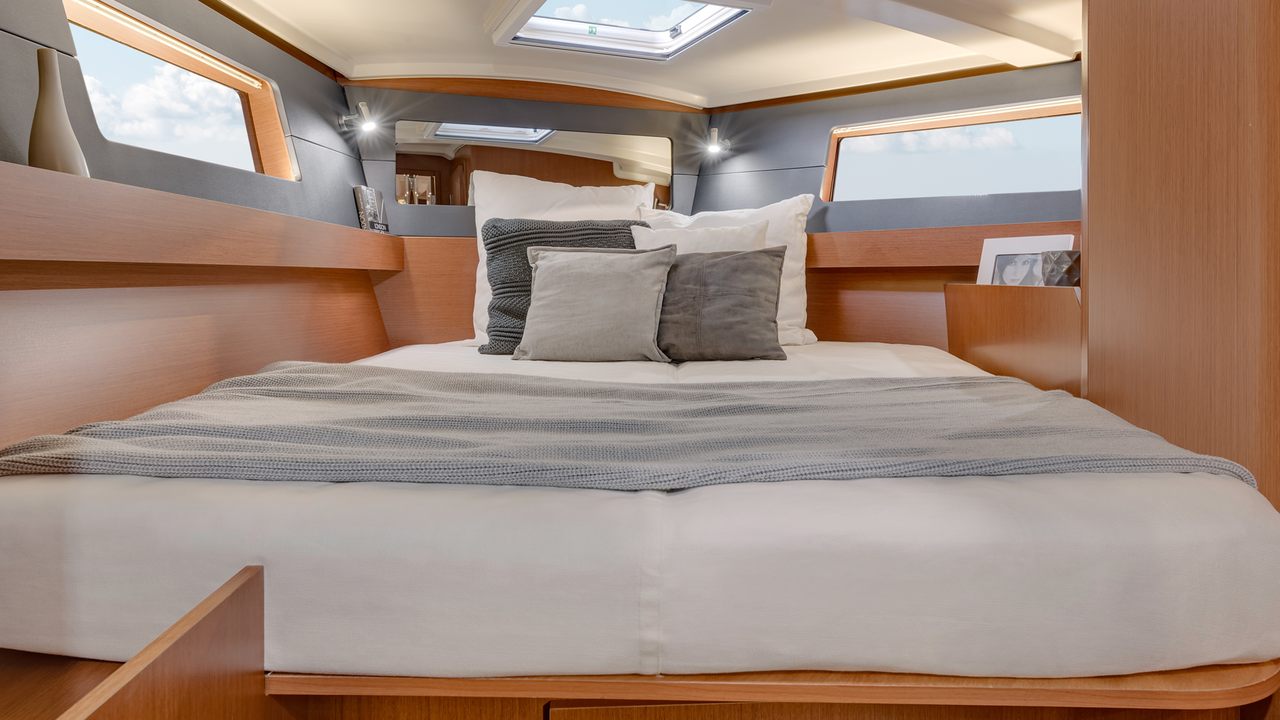
The official page describes the prodier cabin with bed facing bow, double door, generous height and private bathroom in the relevant version. There are dimensions, passages, ventilation, exit and access to the gavones. Doors and drawers are also tested for stops. A description of a layout should not be transferred automatically to the others: the layout of the unit remains the reference.

Three different layouts and networks
The published versions are two cabins and a bathroom, three cabins and a bathroom, or two cabins and two bathrooms. They change pipes, boots and accessibility. The chosen floor plan accompanies the contract and is compared with each compartment. Technical panels and valves must be reached. More beds increase load and water consumption; they do not automatically increase prudent capacity for a given route.
Kitchen: water, fixtures and stops
Every user is tested according to the manual. Fittings of the sink, exhaust, ventilation, interception and fixing of the luminaires are observed. Doors, refrigerators and dishes must be kept in the navigation. The work surfaces are evaluated together with the hooks. Access to pumps and wiring should not require permanent removal of the furniture.

Square with sitting U and boots
The construction site highlights a sitting in U and organized storages. Table, chairs and furniture are open and closed. Heavy objects receive effective low and steady placements. You control edges, hooks and night lighting. The free space in port is reassessed with bags and cruise equipment; passageways and accesses to systems must remain free.
Electronics, sensors and calibration
The distinguishing features the brand, model, version and network of the installed devices. Depth, wind, position and alarms are compared with reliable references. The legibility of the two rudders and behavior after shutdown and reboot occurs. A display on does not show that sensor and calibration are correct. Essential functions must have an alternative procedure.

Certification and operational number of persons
The declared categories are A8, B9 and C12. Plate and specimen statement must confirm configuration and limits. The maximum authorized is not the number to be always boarded: weather, experience, safe seats, load and equipment direct the commander. Each person knows outputs, devices and tasks. Certification does not replace maintenance and planning.
delivery controls and closure of defects
The sequence includes documents, dry inspection, docking facilities, motor maneuver, sails and reentry control. The minutes record conditions, people, levels, regimes and results. Each defect receives a verifiable description, a manager and an expiry; the closure takes place after new test. In this way the delivery does not depend on undocumented assurances.

Pre-partition control for the unit
The operating list was born from the real distinction. Before springing includes levels, losses, load of benches, pumps, valve position, instruments, lights, rudder, motor and sail equipment. They follow closing of doors and gavones, fixing of objects, control of the platform and distribution of tasks. The entries change after each technical modification and the document brings a revision date. A newly repaired device is tried in the full function, not simply turned on. This discipline reduces memory dependence and makes a change visible before it becomes a problem in navigation.
Documents and crew training
Manuals, schemes, certificates, invoices and minutes must also be available without network connection. The crew locates batteries, pumps, sockets, fuel shutdown, emergency steering and communications. Each person tries operations that are compatible with their role. The training includes degraded conditions: unavailable display, automatic pump excluded or sailing that does not envelop. Acceptance is complete when those who use the boat recognize an anomaly and apply a procedure, not when the screens are only lit in the dock.
Maintenance and spare parts of the real configuration
Manuals and serial numbers feed the calendar for keel, rudder, tailoring, sails, motor, transmission, batteries, pumps, sea sockets and equipment. Consumables and critical spare parts are identified by code. The crew places arrests, valves and emergency modes. The Oceanis 41.1 is managed correctly when configuration, procedures and maintenance remain aligned over time.