
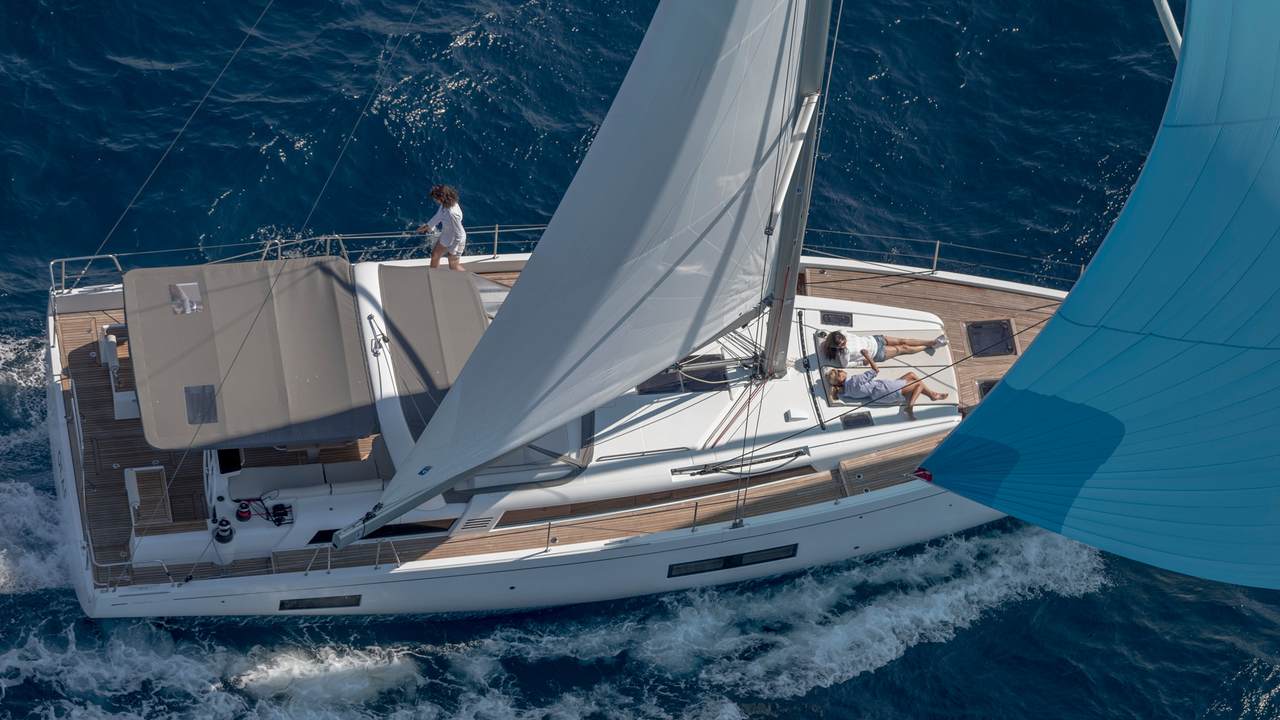
Configuring a BENETEAU Oceanis Yacht 54 means choosing a precise combination of keel, tree, plane, propulsion, layout and support systems. The general board declares 17,12 meters outside everything, 5 meters of glare, 16,600 kilograms of light displacement, 400 liters of fuel and 720 of water. This data does not describe the specimen alone. The technical verification must start from the order and close with a traceable test: each optional present, each circuit and every added mass must have documentation, access and maintenance procedure.
First rule: identify configuration
The name of the model is not enough. The initial verification sequence records number of hulls, year, certification, keel, tree, sails, motor, transmission, internal distribution and equipment. Order, general inventory, declaration and plates are compared. The differences are classified as a documented variant, subsequent modification or anomaly to be clarified. This step prevents all units from attributing the same equipment. It is particularly important on a model that offers two fishing, two trees, two powers and more layout. The test is built on the real boat, not on the brochure.

Data matrix to be tested
| System | Official data | Required statement |
|---|---|---|
| Length and glare | 17,12 × 5,00 m | Confirmed encumbrance |
| Light dislocation | 16.600 kg | Recorded test load |
| Cheese | 2,50 m or 2,00 m | Version identified |
| Height on water | 24,00 or 25,80 m | Measurement with antennas |
| Propulsion | 80 or 110 hp | Plate and transmission |
| Fuel | 400 standard | Circuit and useful volume |
| Water | 720 L standard | Production and indicators |
| Layout | 3 cabins, 2 or 3 bathrooms | Planimetria correspondent |
| EC | A10 / B12 / C14 | Specific plate |
The matrix becomes part of the record. Each line has reference document, method, responsible and result. A declared value is not a test result, while a check without recorded conditions is not repeatable.
Standard keel or reduced fishing
The standard T-bar is indicated with a 2,50-metre fishing and a 4,500-kilograms published ballast. The reduced variant drops to 2,00 meters and the documentation indicates a different ballast. The control identifies the installed geometry, inspects accessible joints and fixes, searches for shock signs and compares the intruder with instructions. Fishing enters the navigation plan with margin under keel, tide and wave. If the unit is used, any repairs or modifications must be documented and evaluated by a competent technician.
Wrapshaft or Performance
The standard aluminum shaft integrates the winding of the frog; the Performance package uses a higher classic tree. The published surfaces change together with the configuration. The verification sequence records type of tree, height, sails, year, terminals, winders and enclosures. The real footprint is measured including antennas: the standard 24 meters or 25,80 meters Performance are general references. During the testing, we can see an installation, reduction, turning and lowering without turning the output into a performance test. Each command must have an alternative procedure in case of failure.

Organize manoeuvres in the poppiera area
The yard concentrates the manoeuvres at the two helms to facilitate the conduction with reduced crew. The verification physically follows each top and every reference, identifies stoppers and winches, controls angles, wear and interference. From both wheels, visuals, supports, accessibility and communication are evaluated with those who work in the bow. The promise of simplification is worth only if the crew understands the system and can react to a blocked top or an unavailable command. In the minutes there are also certain positions for those who do not participate in the manoeuvre.
Ship Control: perimeter and test
Ship Control is standard and has data interface for batteries, tanks, motorization and lighting. The test builds the list of functions really connected, compares values with independent readings and verification alarms, users and recovery modes. An on display does not show that sensors and actuators are correct. Management is also proven in the absence of a part of the network and identifies which functions remain available locally. Software, manuals and configuration are stored in the technical file of the unit.
Harken AST and sail automation
The official page presents Harken AST as an aid capable of adjusting sails with respect to the apparent wind and assisting the bow in virata, with monitors in the cockpit. Its presence should not be presumed: it must be in order and exemplary. If installed, sensors occur, commands logic, limits, stop and switch to manual control. The test takes place with technicians and crews prepared, under adequate conditions. Automation can reduce some workloads, but it adds components, power supplies and maintenance that need to enter the onboard program.

80 hp motor with saildrive
The declared standard configuration associates 80 hp to a saildrive. The control identifies brand, model, serial number, hours, reports and specific foot. Filters, levels, cooling, unloading, supports, membrane and corrosion protection are inspected according to documentation. Starting, charging, temperatures, vibrations, alarms and response to controls are shown. Regime and speed are noted with sea and load. There is no performance promised by the nominal power, nor is it estimated autonomy without measured consumption.
110 hp option with axis line
The published alternative brings the power to 110 hp and uses an axis line. It is not only a more powerful engine: it changes transmission, alignment, sealing, supports and parts to maintain. The verification sequence follows the entire chain to the propeller, observes vibrations and checks the documentation of the components. Comparison with the standard version must consider mass, accessibility, navigation program and service network. The correct choice is that defined in the contract and tested on the unit, not that considered better in abstract.

400 litre fuel circuit
The standard capacity is 400 liters. They control vent, stopper, vent, reservoir, lines, filters, interceptions and pass protection. The indicator is compared with known levels and the presence of odours or odors is excluded. The autonomy arises from a table of consumption measured to repeatable regimes, annotating sea, wind, famine and propeller. The plan retains a reserve and does not use the entire nominal capacity as available quantity. Each operation on the circuit is recorded, including pipes, clamps and replacement date of the elements subject to aging.
Fresh water, pumps and 720 liters nominal
The declared 720 liters require a map of tanks and circuits. The test fills, pressurizes and tests utilities, indicators, pumps and drains, checking access for cleaning and maintenance. We observe losses and pressure falls, we identify the capacity really usable and we define a sanitization procedure. Daily consumption is measured with the expected crew. If there are any equipment not included in the specific standard, it should be documented and tested separately. The availability of water does not replace a reserve plan for prolonged navigation.

Garage and dinghy 2,40 meters
The garage under the cockpit is declared for a 2,40-metre inflated tender. The verbal identifies model, mass, recovery system, stops, ventilation and drainage. A complete cycle is carried out under controlled conditions and the platform and closures do not interfere. Nominal length and compatibility are not synonymous: width, height and outlet points must match. Tender, engine and equipment enter the weight plan. The crew must know both the normal and scheduled procedure when a command does not work.
Layout, bathrooms and sanitary circuits
The floor plans include three cabins with two bathrooms or three cabins with three bathrooms and a skipper cabin. Before delivery we compare doors, bulkheads, furnishings and accesses with the contractual design. Each bathroom adds valves, pumps, lines and maintenance points; for this privacy and receptive capacity are balanced with technical complexity. Adduction, exhausts, ventilation, closures and access to sea sockets according to configuration. No optional installation is given by present if it does not appear in documents and physical verification.

Kitchen, square and safety in movement
The interiors offer a large square table declared for six people, table, kitchen and many openings. The sequence of verifications test firm of doors and drawers, power supplies, ventilation, drainage, lighting and storage. Objects must be kept with the inclined boat. Take the descent and reach cabins and exits with reduced light. Clear oak and walnut are proposed finishes, but look does not deduce undocumented materials or stratigraphies. Technical access must remain viable without demolishing permanent elements.
Electric network, batteries and loads
Since Ship Control includes information about batteries, the verification connects interface and real system. There are benches, protections, seats, chargers and utilities, recording tensions and behavior under load. Any additional apparatus must have consistent protection and documentation. The goal is not to invent capacity that the general board does not declare, but to build a budget from the delivered boat. Alarms and shutdowns are felt, circuits are labeled and access to essential devices is also possible in uncomfortable conditions.
Certification and mandatory safety equipment
The page indicates CE A10, B12 and C14. The specimen certificate must confirm category and number in relation to its configuration. The verification sequence compares planned people, usable places, devices, motion routes and storage of equipment. The maximum standard is not automatically prudent for a route. Weather, experience, load and organization lead the commander. The accessibility of equipment is proved and a role is assigned to each member. The certification does not replace maintenance, briefing and operational decision.
Final and verbal testing of delivery
The test closes the initial matrix. There are circuits, pumps, drains, digital systems, openings, garages and platform. At sea there are conditions, load, sail configuration, regimes, speed, trim, temperatures and alarms. Automatic functions are tested together with manual alternatives. Each relief receives photography, responsible, expiry and subsequent verification. Oceanis Yacht 54 is accepted only when keel, tree, propulsion, layout and plants correspond to documents and the crew can also use degraded modes.

Maintenance plan after purchase
The file generates deadlines for motor, transmission, keel, tailoring, sails, batteries, tanks, pumps, garage, platform and control systems. Manuals, spare parts and service contacts are associated with each identified component. Photographs and readings of delivery form the basis to recognize changes. Valves and accesses are exercised before they serve in emergency. A rich configuration is useful only if it remains understandable and maintainable: the owner must know not only what is installed, but also who can intervene and in what times.