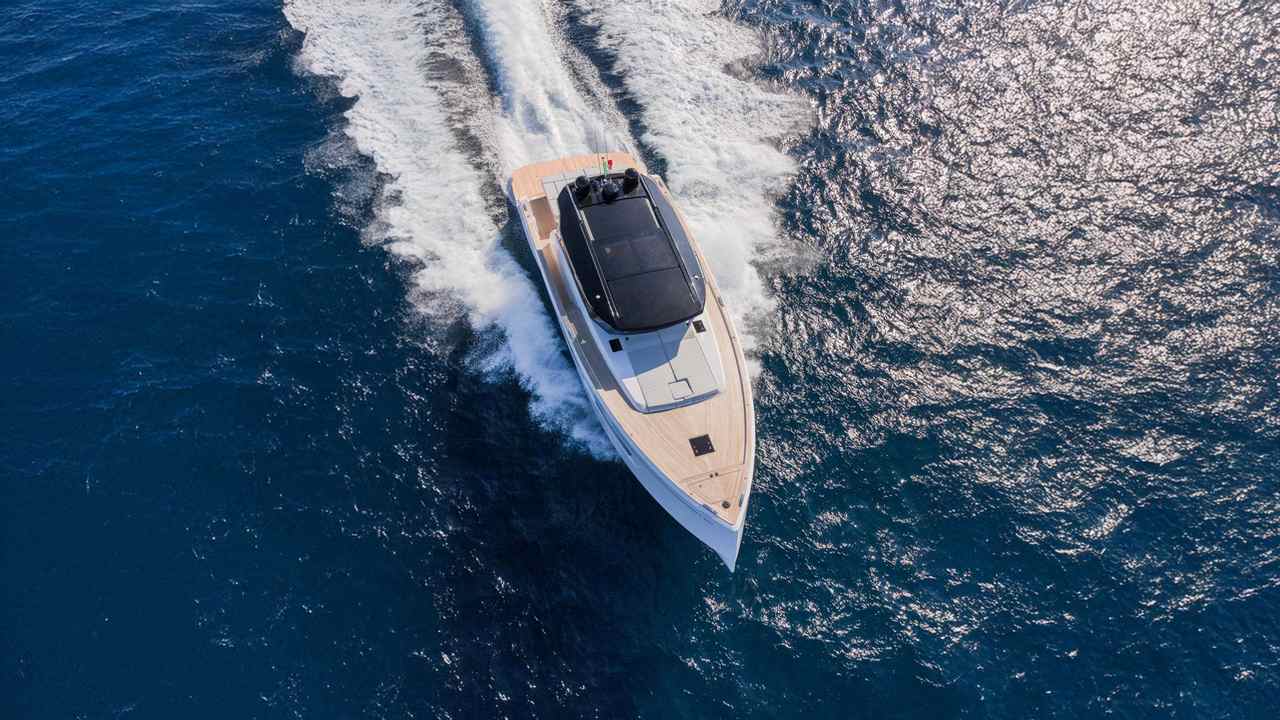
Configuring the Pardo GT52 means choosing between three internal floors, three declared drive packages and a set of services that must remain consistent with people, route and stay on board. The standard version is Galley Up with two cabins and two bathrooms; the alternatives are Galley Down with two cabins and two bathrooms or Galley Up with three cabins and two bathrooms. The standard engines are two Volvo Penta IPS650 480 hp each, replaceable with two IPS700 550 hp or two 600 hp IPS800. The correct comparison does not start from the highest number: part from weights, loads, accesses and tests of the specimen.
| Choice | Declared configuration | Question to close |
|---|---|---|
| High kitchen | Galley Up, two or three cabins | Flows, ventilation, refrigerators and passages |
| Low kitchen | Galley Down, two cabins | Light, extraction, waste and storage |
| Bathrooms | Two in all layouts | Tanks, pumps, ventilation and insulation |
| Sleeps | Six plus two crews | Signed floor and crew cabin equipment |
| Standard Propulsion | 2 × IPS650, 480 hp | Charge, propellers, regime and network assistance |
| Optional extension | 2 × IPS700 or 2 × IPS800 | Measured benefit, weight and total cost |
| Fuel | 2.000 l | Useful volume, consumption and reserve |
| Water | 600 l | Guests, production, waste and autonomy |
| Persons | 16 in B, 20 in C | Certification and equipment of the unit |
| Hybrid | Provision declared | Real package, weights, safety and warranty |
The mission comes before the optional list
The profile of use must describe how many people will really sleep on board, how many weeks, with which crew and in which ports. A pair alternating shade and transfers requires storage, water production and maintenance other than a family with six guests. The plan must include seasons, climate, dinghy, sports equipment, kitchen and need to work on board.
From this matrix there are layouts, engines, refrigeration, batteries, air conditioning and electronics. Each option must have weight, position, absorption, interfaces and maintenance plan. The contractual distinction separates standard, site option, installation of the dealer and predisposition. Only in this way is it avoided that photographs of a richly equipped unit are exchanged for the purchased configuration.
Galley Up with two cabins: standard reference
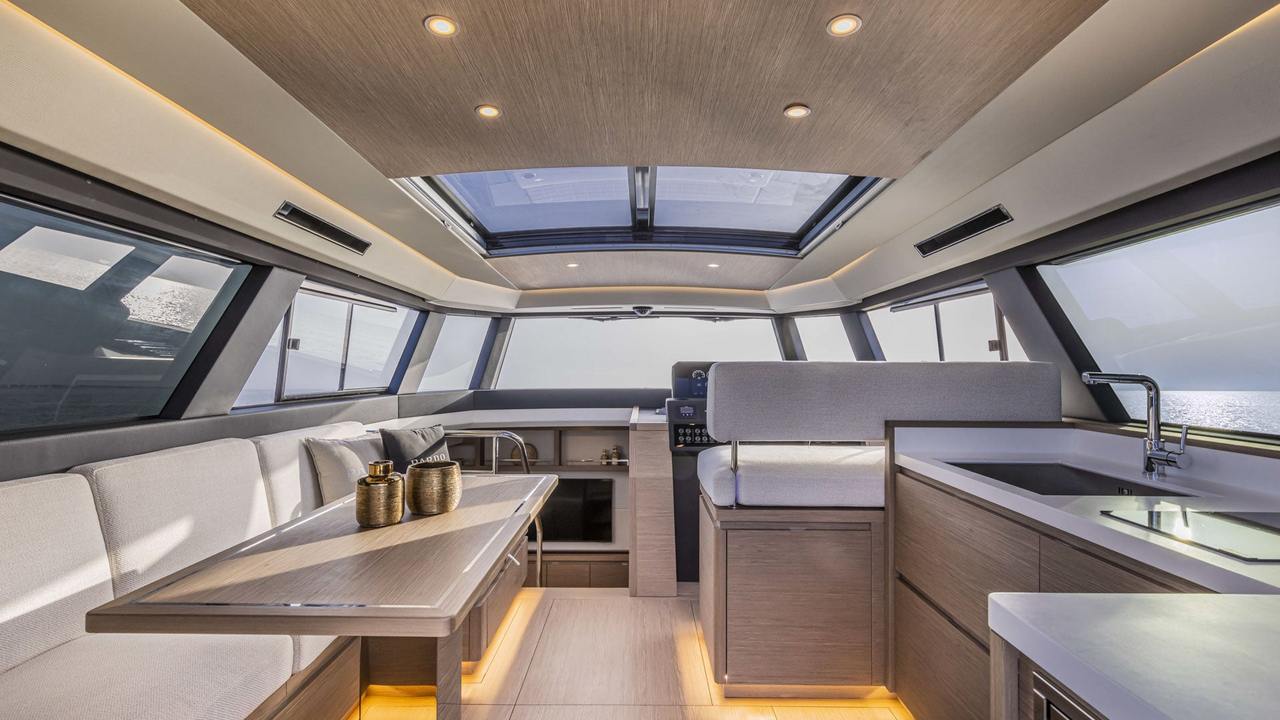
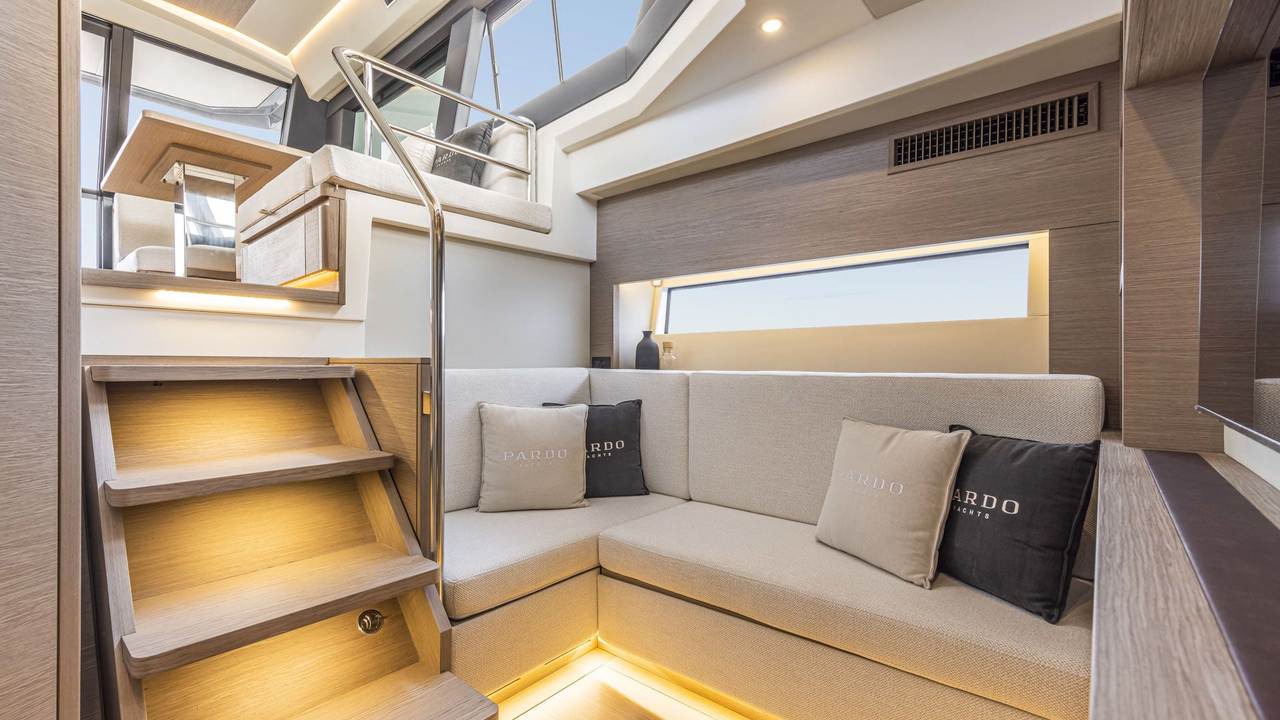
The standard configuration keeps the kitchen on the main deck and two cabins under deck. The functional advantage is the proximity between preparation, living room and table of the well. To evaluate it you must simulate a complete service: opening of refrigerators and drawers, passage of people, availability of supports and management of waste. Doors must not block the exit or interfere with the seats.
Cooking, washing, refrigeration and small appliances concentrate electrical loads and heat. Water, drains and ventilation must be accessible behind the furniture. The opening parts between salon and cockpit require a safe position in navigation. For two cabins, the space subtracted to the third can be used more generously, but signed plan and inventory must show where storing and technical rooms are located.
Galley Up with three cabins: more beds, more services
The third cabin increases flexibility for family and guests, but does not create capacity without consequences. More people require linen, cabinets, suitcases, ventilation, water, refrigeration and waste management. The two bathrooms remain unchanged: turns, privacy and brought during simultaneous use are required. Escape routes, openings and corridors must remain compliant and usable.
The comparison must highlight which volumes change compared to the two cabins: not only the surface of the bed, but also access to tanks, pumps, cabling and air conditioning. A technical compartment hidden behind a bunk must remain inspectable. Before choosing, it is useful to simulate a day with all busy places, from luggage boarding to breakfast, to understand if the nominal number corresponds to the desired comfort.
Galley Down: separate kitchen and new undercover streams
Bring the kitchen under deck frees a different organization of the living room, but moves heat, smells, water and electric loads into a more internal environment. Ventilation and extraction must be dimensioned and tested. Natural and artificial lighting, useful height, stability during preparation and access to refrigerators affect use. The path to the outside table must avoid stairs and congested doors.
Discharges, siphons, valves, pumps and sockets must be reached. The furniture must contain dishes and supplies in navigation. In case of loss, water should not reach pictures or batteries. The Galley Down can be suitable for those who want a more free salon or a separate service, but should be judged with real crews and habits, not as a simple aesthetic variant.
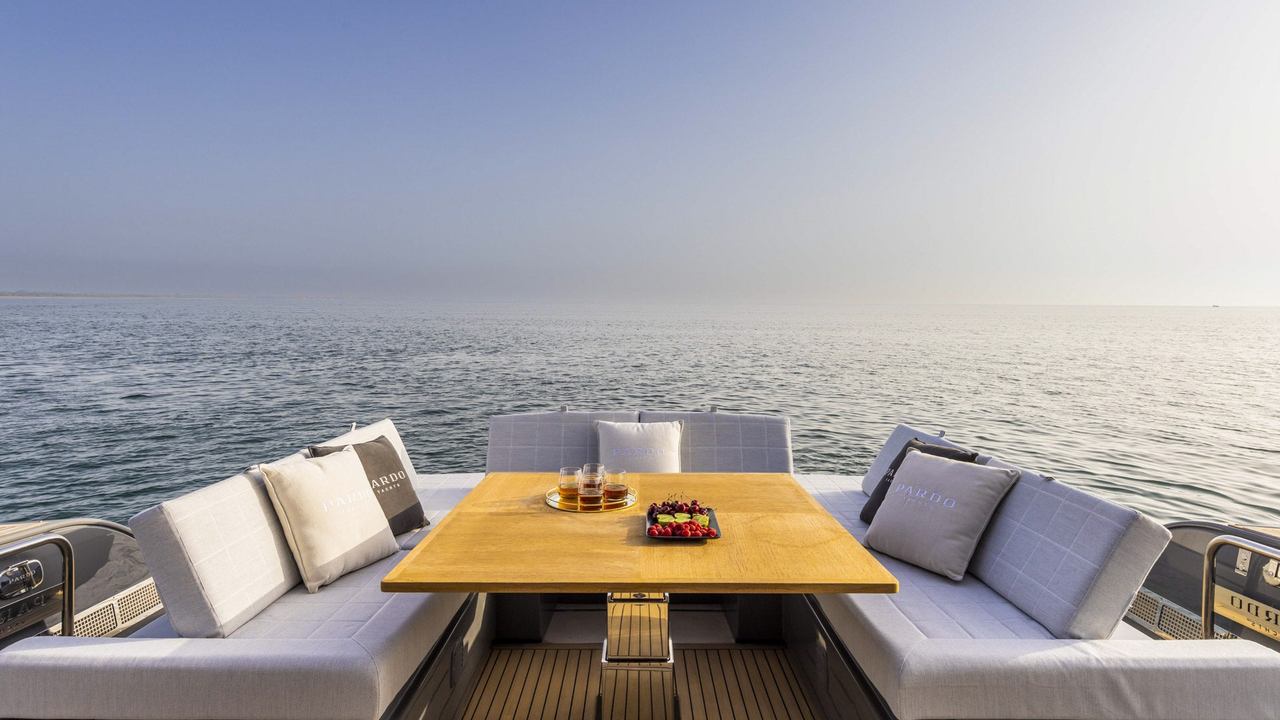
Pozzetto for eight: check the service, not only places
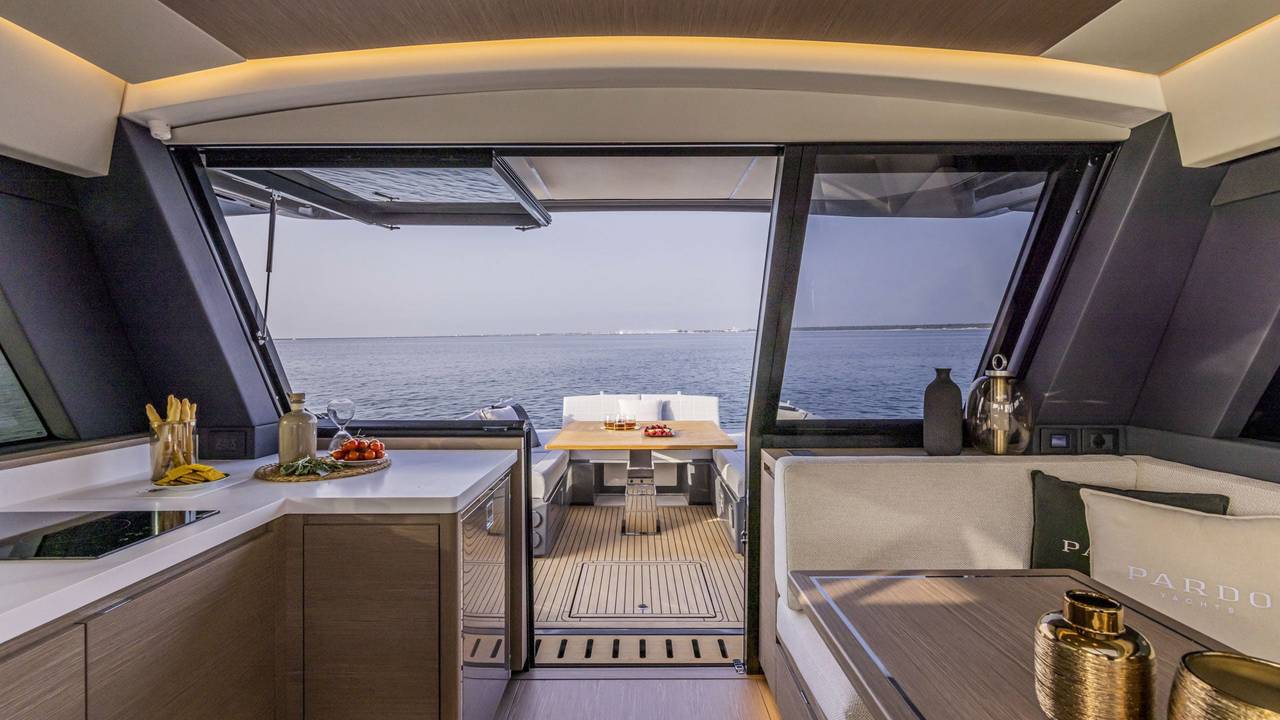
The table of the well is declared for eight commensali. With all the seats occupied you must remain accessible steps towards platform and salon, essential gavones and safety devices. The chosen kitchen changes the path of dishes and drinks. Shading, wind, light and ventilation determine whether the area can be used in the hottest hours.
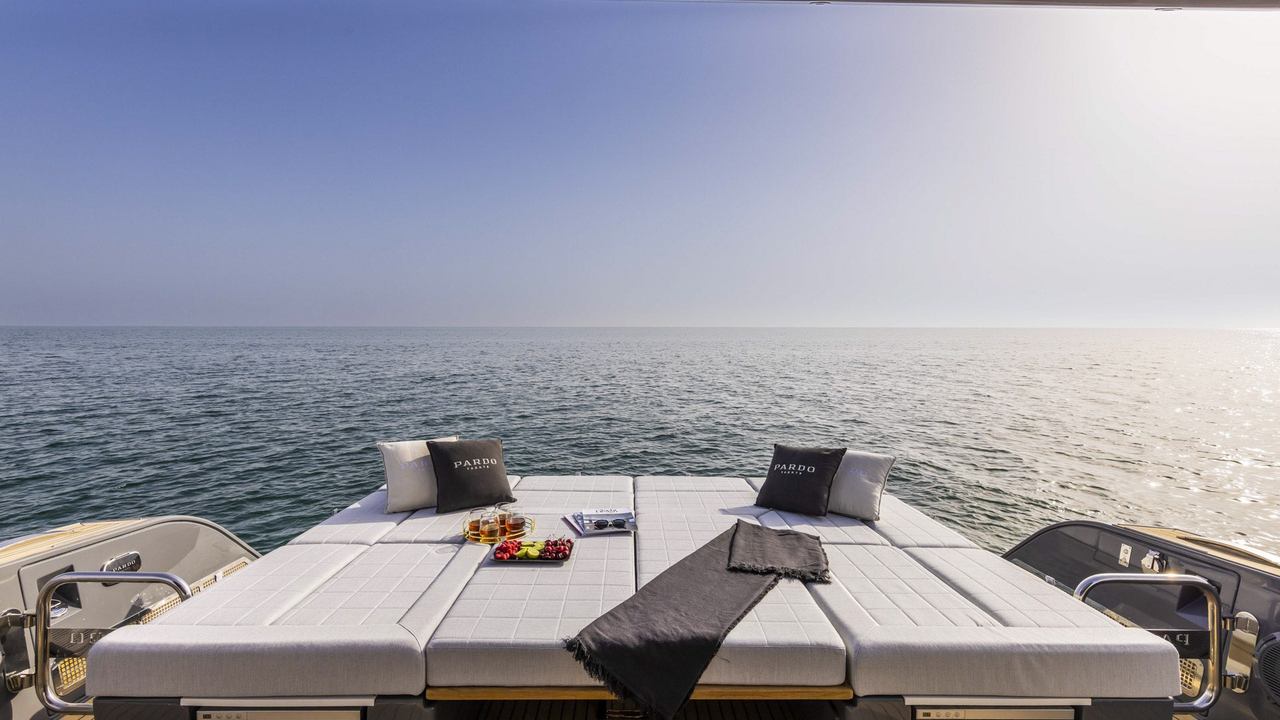
Table and chairs participate in the transformation into sunbathing. Hardware, supports, cushions and stops must be intuitive and resistant; each element needs a navigation boot. The delivery test includes more complete transformations, performed by the crew who will use the boat. They control the weight of the parts, grips, interference and stability both in the lunch function and in the lounge function.
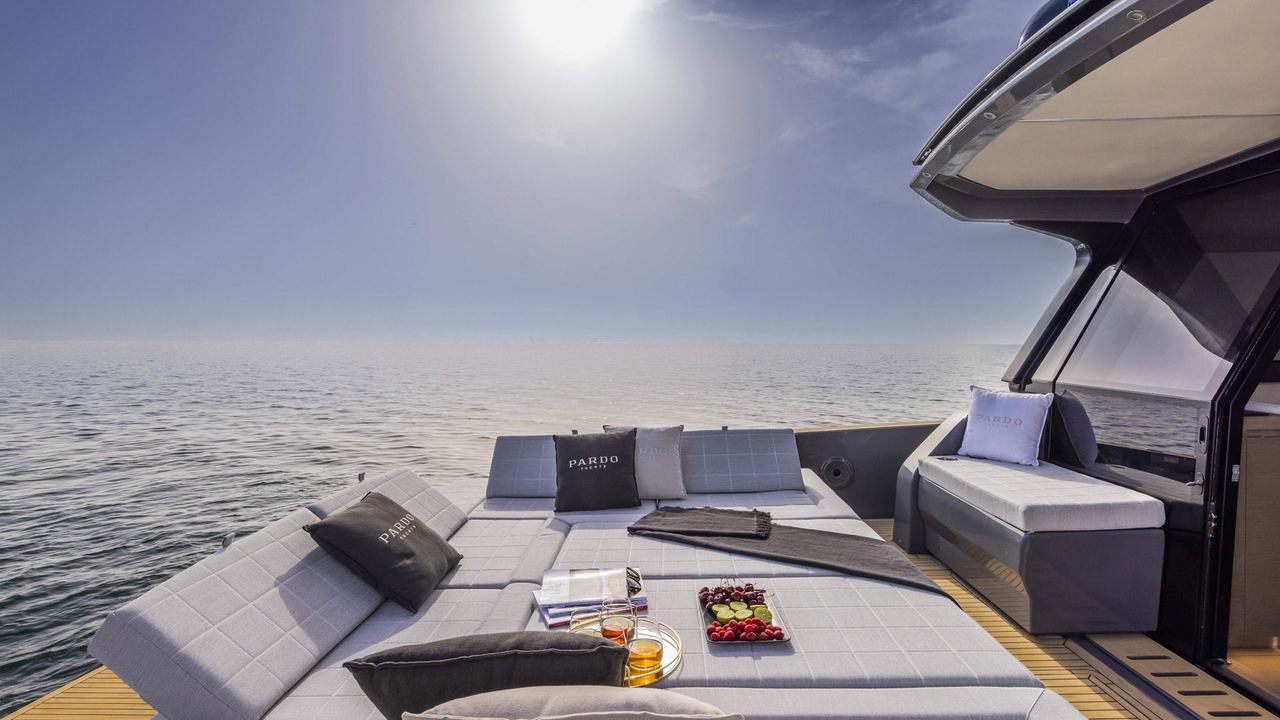
Sunbeds and outdoor areas: mobile components under control
The stern area becomes a great relaxation plan, while at the bow the yard indicates space for three people. The two areas multiply housing, covers and mobile parts. The capitulate must specify fabrics, drainage, fixings, protection from solar rays and place of shelter. A wet or uninsured pillow can turn from comfort to operational problem.
Passers, hooks and non-slip surfaces must stay free with both lounges. At the bow you should not prevent access to the anchor; at the stern you should not block platform, ladder or peaks. The closing procedures before departure must be included in the crew verification. The organization is effective when the boat quickly switches from stop mode to navigation.
Opening room: air conditioning, gaskets and condensation
Openable windows and doors allow to combine protected environment and well. This flexibility requires reliable seals, guides, closures and drainage. In test they operate several times, you control the locking in the planned positions and it occurs that no vibration appears in navigation. The water conveyed by the canals should not reach furniture or plants.
With the closed lounge, windows and people increase the thermal load; with openings in use, air conditioning can work unnecessarily. The system must provide an understandable management. Curtains and shields reduce irradiation, but fan-coils, pumps and condensate discharges must be dimensioned, accessible and tried to load. Odours and condensates near the kitchen are signals to be evaluated during a realistic use.
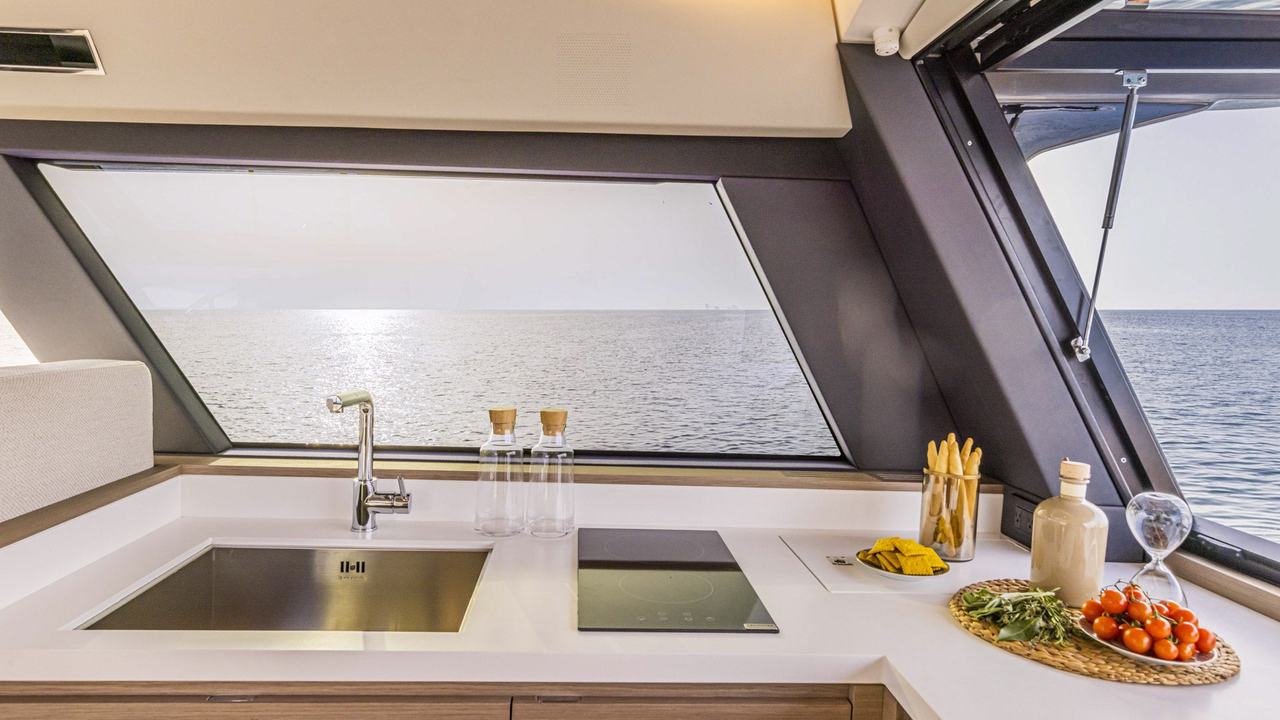
Kitchen: water, refrigeration and energy in one node
The kitchen concentrates fresh water, drains, refrigeration, cooking and sockets. The device must identify each device with voltage, power and protection. Compressors, filters, taps and connections must be achieved without removing structural parts of the furniture. Doors and drawers require nautical stops; dishes and bottles must contain.
The electric budget considers the contemporary use of refrigerators, cooking, washing, boiler and air conditioning. The water balance considers pressure with more utilities and discharge capacity. The best proof is to prepare a meal, not to light each appliance individually. There will be interference, insufficient ventilation, lack of plans and noise of compressors that a static visit does not show.
IPS650, IPS700 or IPS800: choose through a matrix
The standard pair IPS650 delivers 480 hp per side; IPS700 and IPS800 bring value to 550 and 600 hp per side. The current card does not publish a comparative performance curve, so you should not assign speed or autonomy to the three options without an identified test. The yard must provide load conditions, propellers, regime, consumption and tolerances for the chosen package.
The matrix includes initial cost, maintenance, service network, mass, noise, desired cruise regimen and real load margin. The system includes pod, government, joystick, software and diagnostics. The correct choice is not necessarily the most powerful: it is the one that satisfies the mission with temperatures, loads and consumption by mile verified on the specimen.
IPS management: maintenance, spare parts and degraded modes
Each motor, pod, propeller and control unit must appear in the inventory with serial number. The maintenance program includes pod fluids, seals, anods, propellers, steering and updates. The base port must offer alaggio and compatible assistance; critical spare parts and times of supply enter the plan of cruise.
Dry controls shocks, games, corrosion and galvanic protection. In the water they try to march back and forth, rotation, translation and arrests. The crew must know how to behave with joystick loss, display, engine or electric source. Assisted manoeuvrability reduces the workload, but does not eliminate inertia, wind, peaks and need for an alternative route.
Fuel and autonomy: 2,000 litres are not enough for calculation
The nominal tank must be translated into usable volume. We need fishing patterns, returns, vents, valves, filters and indicators. Water or contamination must be identified and managed. The calibration of the levels should be verified during the supply; the position of the tanks and the consumption sequence can change trim and behavior.
The autonomy is calculated with measured consumption, conditions, reserve and margin for services or deviations. In the absence of an official current curve, the test records several stabilized systems with documented load. Liters per hour without speed do not indicate efficiency; liters per mile without reserve do not define the route. The final plan must be conservative and up-to-date after load changes or famine status.
Freshwater and waste water: design for six people
The 600 liters declared must support kitchen, bathrooms, showers and washing. Real consumption depends on habits and duration of rest. Eventually dissalator, autoclaves, boiler and filters should be sized and included in the electrical budget. Spare parts, membranes and sanitization products must have a definite hold.
Two bathrooms mean pumps, ventilation, drains and sensors to be tested simultaneously. Ability and disposition of black and gray water must be in the specification of the unit. Valves and points subject to clogging must remain accessible. Redundancy is concrete if a pump or bath can be isolated maintaining at least one service, not if there are two components without separation.
Energy: build load scenarios
The final configuration must list docks, batteries, chargers, inverters, eventual generator and all the main utilities. The budget distinguishes sailing, shaving, night, kitchen and avary of a source. Refrigeration, air conditioning, boiler, electronics and actuators can overlap; point currents and duration are as important as the nominal power.
Testing test results loss of the dock, switching, charging and maintenance of essential services. Squares, fuses and switches must be labeled; batteries and power appliances require ventilation and access. An energy monitor is only useful if sensors and thresholds are calibrated. The crew must know which loads to disable and how to restore the system safely.
Electronics and connectivity: inventory before integration
Display, radar, GNSS, AIS, autopilot, VHF, echo sounder, cameras and onboard network must be identified by brand, model, version and license. The scheme shows power supplies, backbones, switches and antennas. Integration on a single interface should not hide dependence on a single screen or sensor.
Testing simulates loss of display, reboot and lack of a data source. Alarms of engines, feel, batteries and levels must be readable and recorded. Backup configurations, credentials, cards and manuals belong to the boat. Connectivity for guests must be separated from control networks; remote access and updates need permissions and tracking.
Liftable platform and stern accessories
The platform is a machine with actuators, sensors and load limits. Tender, water bike or equipment cannot be chosen only according to space. Mass, centre of gravity, cradle, fuel and batteries must be approved and included in separate weights. Step and ladder should not interfere during cycles.
The test includes more climbs and descents, synchronism control, arrests, sealing and manual procedure. Control units, valves and maintenance points must be accessible. The crew must know conditions of use with sea and position of people. Aft accessories also require compatible charging or supply points, ventilation and storage of equipment.
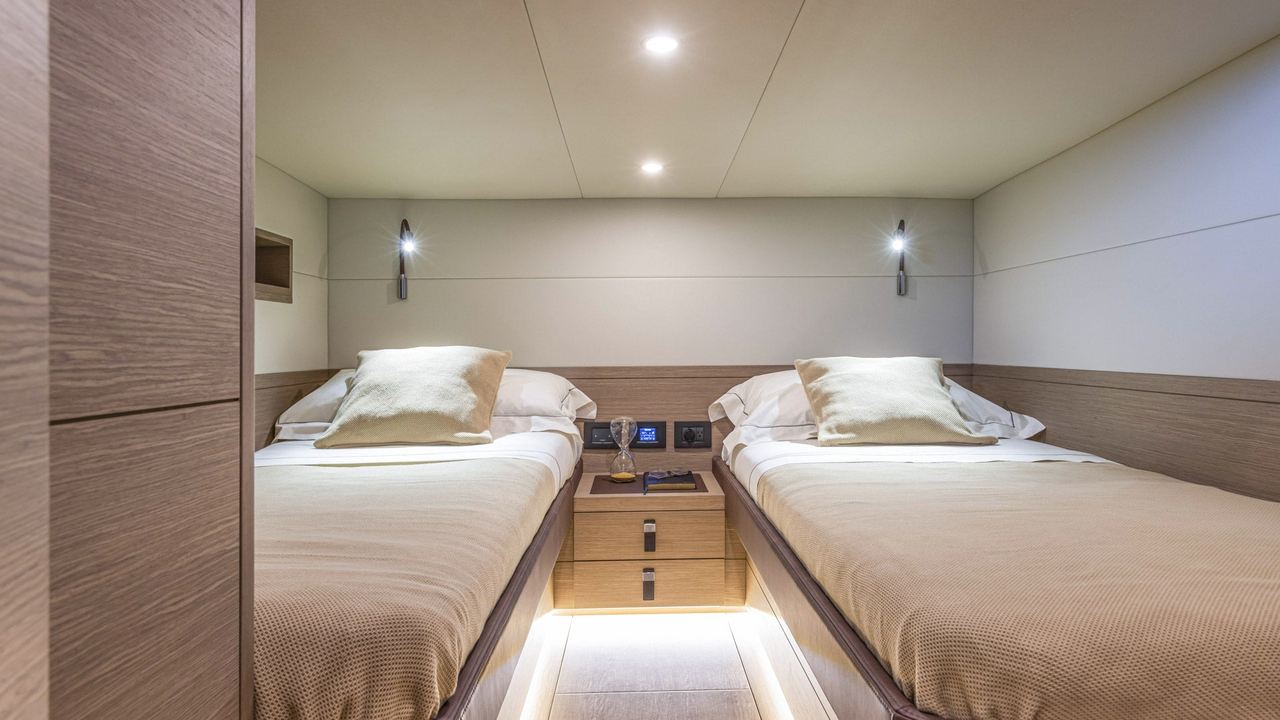
Cabins: ventilation, storage and hidden access
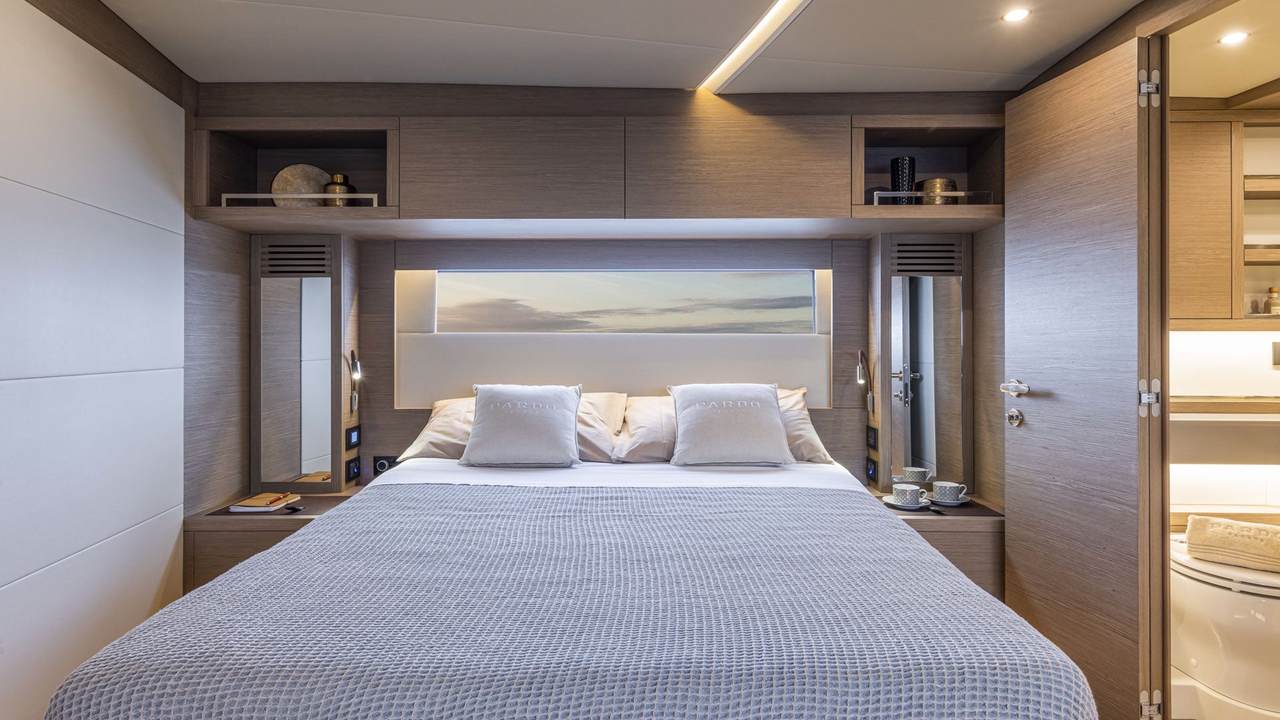
The yard declares six beds, as well as two possible crew places. The signed plan must specify which beds belong to the chosen configuration and how they are served. Each cabin requires ventilation, obscuring, emergency lighting, sockets and cabinets. Mattresses and fabrics should not cover openings or technical panels.
We try the circulation with open doors, luggage and people. Escape routes and access to the bathrooms must remain practicable at night. Fan-coil, filters, valves and sensors placed behind furniture need removable panels without damage. The crew cabin is optional: size, input, services and impact on the stern compartments must be verified in the real specification.
Hybrid predisposition: do not confuse it with an installed system
The model is described as prepared for a hybrid solution. This does not automatically attribute electric gear, autonomy, charging times or consumption reductions. A real package must indicate electric motors, batteries, usable energy, voltages, inverters, cooling, weights and operating modes. It must also have certifications, warranty and service network defined.
The verification sequence includes insulation, ventilation, detection, fire protection, emergency stop and management after water entry. Charging in the dock and interaction with generation of board must enter the budget. As long as these data are not contractual, the provision remains a design possibility and not a performance benefit available.
acceptance verification sequence: normal and degraded tests
Delivery requires general plan, separate weights, inventory, electrical and hydraulic schemes, tanks, engines, pods, electronics, optional, certificates, manuals and serial numbers. Dry controls hull, pods, propellers, anodes, sea sockets, drains and platform. In water the curve is measured to the regimes agreed with load and recorded conditions.
Try joystick, government, opening of the salon, transformation of the well, anchorage, pumps, bathrooms, air conditioning, kitchen, batteries, alarms and actuators. Degraded modes include bank loss, display, pump and data source. Each defect is documented and tested after correction. Acceptance does not coincide with ignition: it shows that boat, crew and documents form a manageable system.
Configuration judgment: flexibility should be governed
The Pardo GT52 offers an authentic choice between high or low kitchen, two or three cabins and three IPS packages. The transformable outdoor areas and the opening room expand use, while 2,000 litres of fuel and 600 water require a consistent technical plan. The maximum capacity depends on the design category and does not replace the evaluation of comfort.
The best configuration is the one where each option keeps weight margin, access and redundancy. A richer layout should not hide pumps; more power should not replace a measured curve; more electronics should not eliminate essential commands. With tight specifications, inventory and testing, the GT52 can adapt to different missions without becoming matte to handle.