
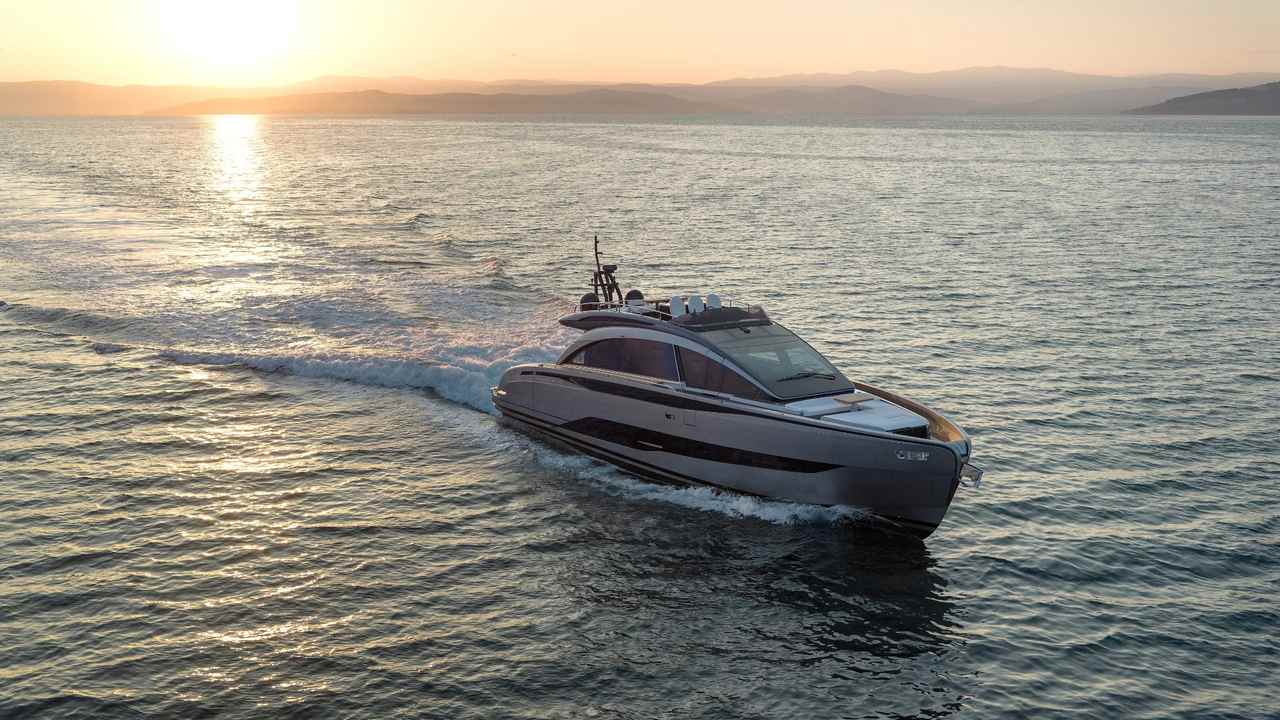
The Pershing GTX70 brings the Sport Utility Yacht logic under 22 meters with a very different technical configuration from the X range: three Volvo Penta D13 IPS1200 900 hp each, 45 tons vacuum, 52 full load and a stern platform that changes altitude to serve dinghy, water toy and beach area. The card updated in February 2026 declares 36 maximum knots, 30 cruises and 300 miles to that regime.
To choose this model you don't need to order an optional list. Each decision involves weight, energy, cooling, storage, autonomy and maintenance. This guide uses the stated data as a starting point and translates them into a configuration guide and testing. It does not attribute to the draft tests ever carried out and does not invent performance for installations other than that described.
Define the mission before the capitulate
The GTX70 can serve daily exits with many guests, family cruises in three cabins or crewed navigation. These scenarios ask for different equipment. The day use prefers shade, refrigerators, access to water and speed of maneuvers; the cruise requires energy autonomy, water, storage and spare parts; the professional service adds privacy and operational paths. Before discussing electronics or fabrics it is advisable to fix people, days without dock, dinghy, areas of navigation and level of assistance available. The rest of the project comes from these answers.
Technical data and practical consequences
| Voice | Summary | Configuration decision |
|---|---|---|
| Length outside everything | 21,76 m | Check boat seat, hop and tariff limits |
| Length hull / float | 21,04 / 18,70 m | Distinguish bulk, hull and load condition |
| Maximum | 5,42 m | Check compatibility with moorings and movements |
| Fishing | 2,04 m | Plan foundations and protection of pods |
| Dislocation | 45.000 / 52.000 kg | Store margin for tender and optional |
| Fuel / water | 4.200 / 1,000 l | Dimension mission and production of services |
| Engines | 3 × D13 IPS1200, 900 hp | Manage three propulsive lines and related spare parts |
| Benefits | 36 kn max; 30 kn cruise; 300 nm | Check on the single unit with known load |
| Hospitality | 3 cabins + 1 crew; 16 people | Distinguish day capacity and beds |
The available weight is a resource to assign
Seven tons separate exhaust displacement and full load declared. Fluids, people, cambuses and equipment absorb a consistent part of it; tender, stabilization, batteries, dissalator and sports equipment consume the remaining margin. A weight list must indicate mass and position of each customization. Concentrate it on the sportbridge or the extreme stern changes center and thirst. The test should compare the actual condition with the one used for performance, avoiding judging a very load specimen through numbers obtained on a lighter boat.
Three IPS1200: why the third line changes management
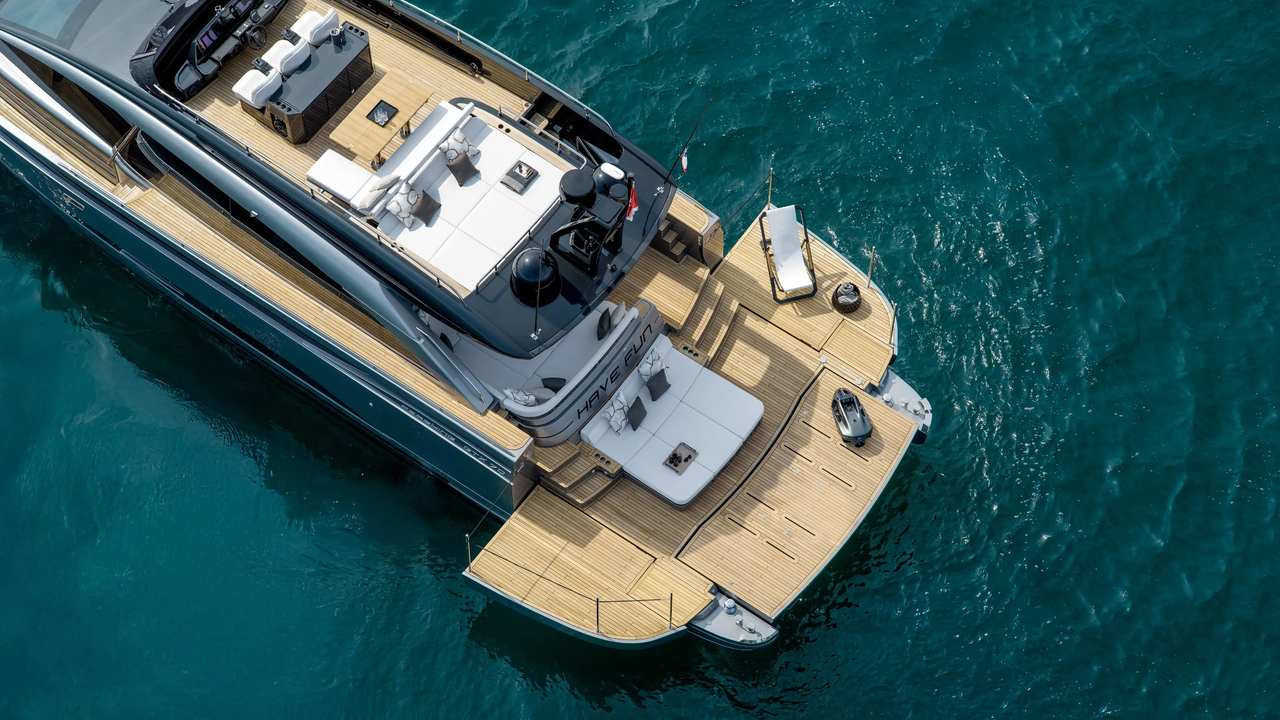
Three 900 hp engines bring the installed power to 2,700 hp and distribute the thrust on three adjustable pods. The system can offer precision and response, but triple numerous components: filters, circuits, seals, propellers, anods, oils and diagnostics. First-need spare parts must be dimensioned for three units and the maintenance plan must avoid differences of hours or interventions between the sides. During the test we compare temperatures, pressures, turns and loads of the three engines, seeking divergences that an average value could hide.
IPS facing forward: backdrops, bumps and maintenance
IPS pods integrate steering, exhaust and propulsion with propellers facing the bow. The declared fishing of 2,04 meters should also be read in relation to the immersed organs. Coastal routes, ups and moorings require up-to-date data and margin under keel. After a contact you do not only evaluate the shovel: you need control of units, seals, games, alignments and diagnostics. Anods and galvanic protection must be consistent with water and permanence in port; incompatible coatings or scattered currents can accelerate expensive damage.
Declared performance: three numbers not to be separated
The 36 maximum knots, 30 cruise and 300 miles per cruise belong to the same declared configuration. To verify them, fluids, people, dinghy, sea, wind, temperature and cleaning of the hull are documented. The speed on the bottom is correct mentally by current; consumption is read both in liters per hour and by mile. The three engines must reach the expected regime without abnormal differences. The test does not end at peak: it maintains a stable stretch to observe temperatures, vibrations, noise and control response.
Autonomy: from 4,200 liters to 300 scheduled miles
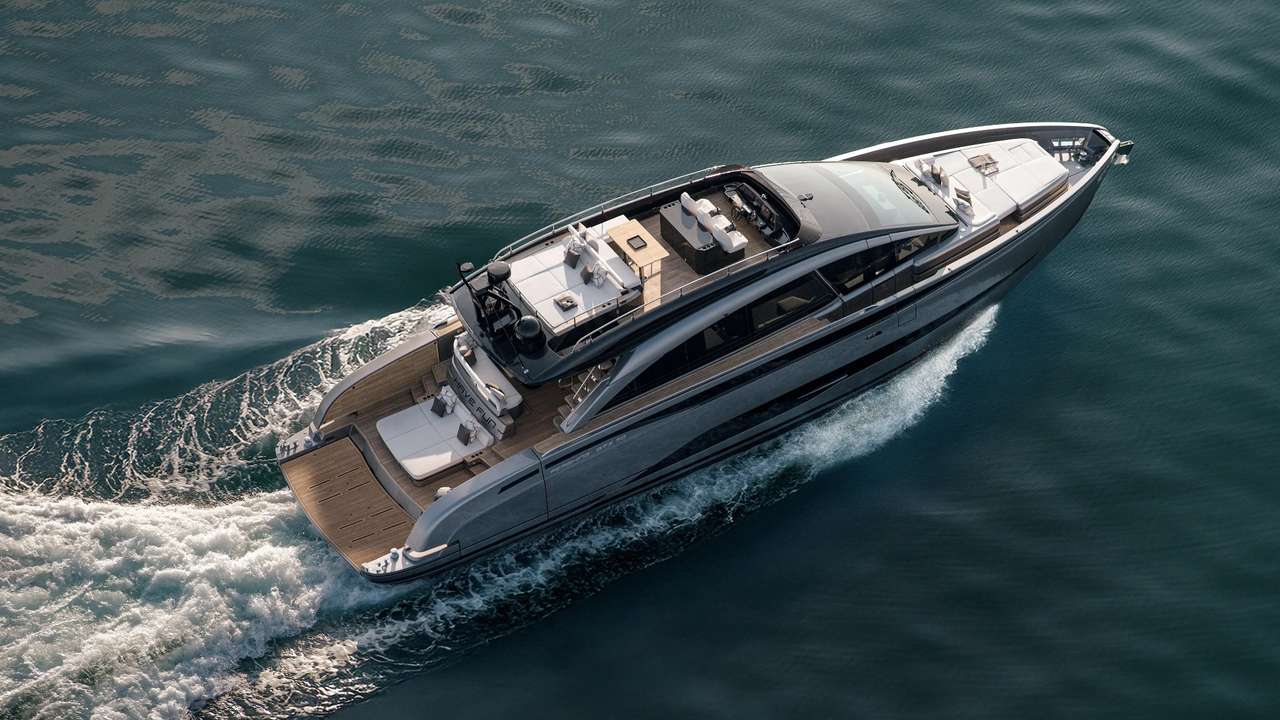
The nominal tank is not all usable and a reserve remains necessary. To plan the route starts from the actual consumption by mile, you subtract non-fishing fund and margin, then you consider wind, sea, deviations and alternative port. The 300 miles declared are a reference, not an authorization to use all the fuel. A well calibrated monitoring system is to be compared with really boarded liters. Recording supplies and travel creates over time a more useful curve than any generic estimate.
Beach area: configure a mobile machine
The side walls of the well open up forming terraces and increase the surface in contact with the water. This transformation requires hinges, actuators, sensors, seals, closures and drainage. The test must repeat several cycles, control alignment, arrests, signals in the dashboard and manual procedure. In navigation the closed elements return to be part of the lateral enclosure; games or infiltrations deserve investigation. Furniture and kitchens must not obstruct commands, ombry or emergency means when the area passes from navigation order to shady order.
Dual linear lift platform: dinghy or surface
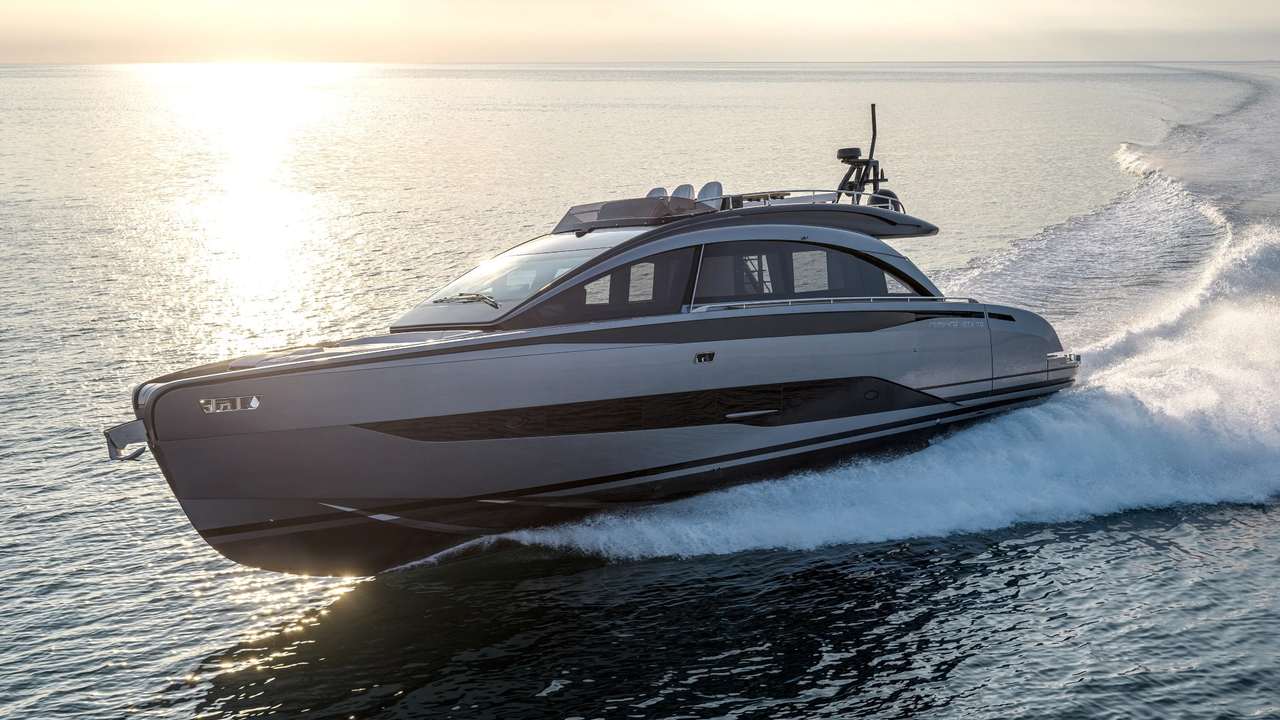
The platform can lower to launch a jet ski or a Williams 325 dinghy and can align to the beach area to expand the space. Before choosing the medium you will experience full weight, shape, support points, fixings and load allowed in each position. A nominally compatible tender can become excessive with fuel, equipment and accessories. Sensors and interlocks must prevent dangerous movements; drainage, anti-slip and lift scale must be tested wet. The recovery procedure must also be performed with moderate wave and wind.
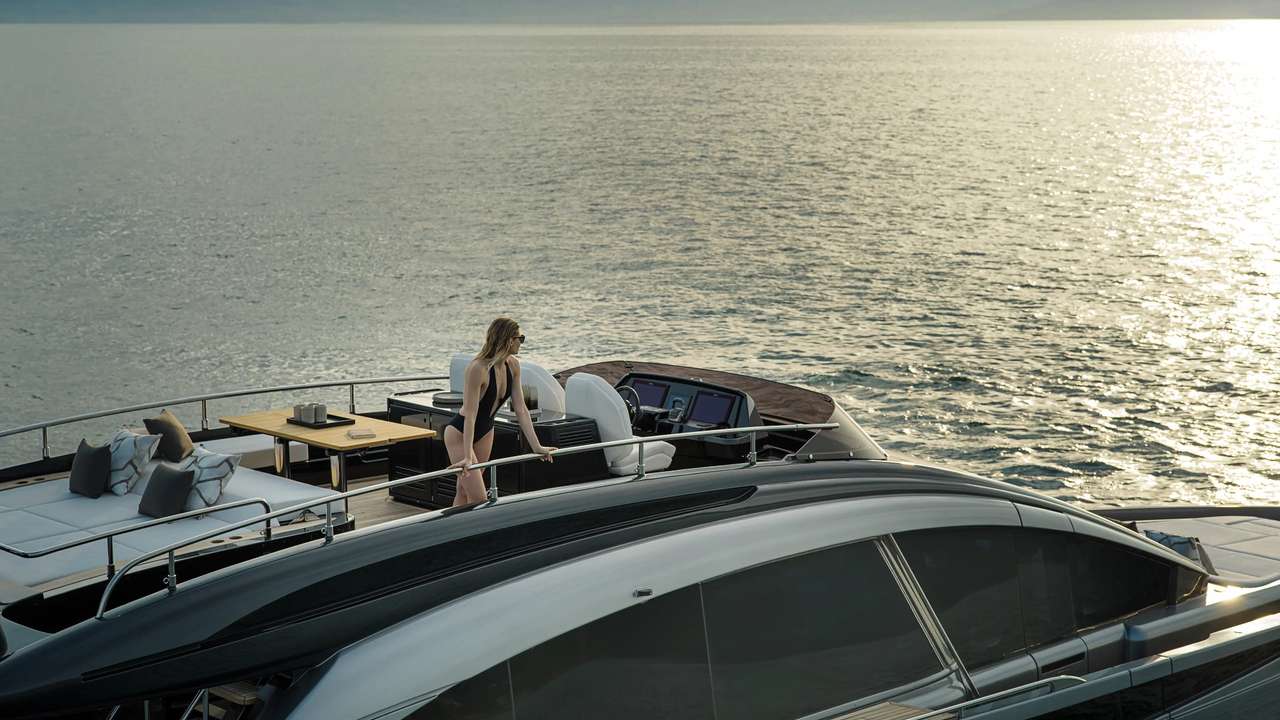
Sportbridge from 16 square meters: three areas to protect
The upper deck is organized in sunbathing area, dining area and place of government. The declared area of 16 square meters is important on 21,76 meters, but every equipment placed on the top affects the center. Refrigerators, audio, furnishings, antennas and panels must fall into the distinct weights. Optional protection uses an electric bimini with pre-impregnated carbon poles: mechanism, drainage and wind behaviour require clear operating limits. The government station must replicate alarms and indicate without ambiguity which bridge has the command.
Two driving positions: consistent data and procedures
With an internal bridge and one on the sportbridge, the electronic configuration must avoid discordant information. Cartography, depth, radar, AIS, pilot, motors, levels and alarms must be available according to priority in both. The transfer of the command must be tried, including arrests and restoration. Stern and side cameras help, but do not replace direct visuals and communication with those who assist the mooring. A redundant network only has value if critical power supplies are separated and if the crew knows which component is really dead.
Joystick and integrated control: ease with discipline
The adjustable pods and advanced control make manoeuvres intuitive, especially with wind and limited spaces. Intuition does not eliminate inertia and exposed surface of 52 tons full load. Before operating use, there are translations, rotations, arrests and response to colds in free water. The latency must be predictable and the passage to the traditional immediate commands. If there are position or service maintenance functions, they must be included as temporary supports, with active viewer and sufficient space to stop without contact.
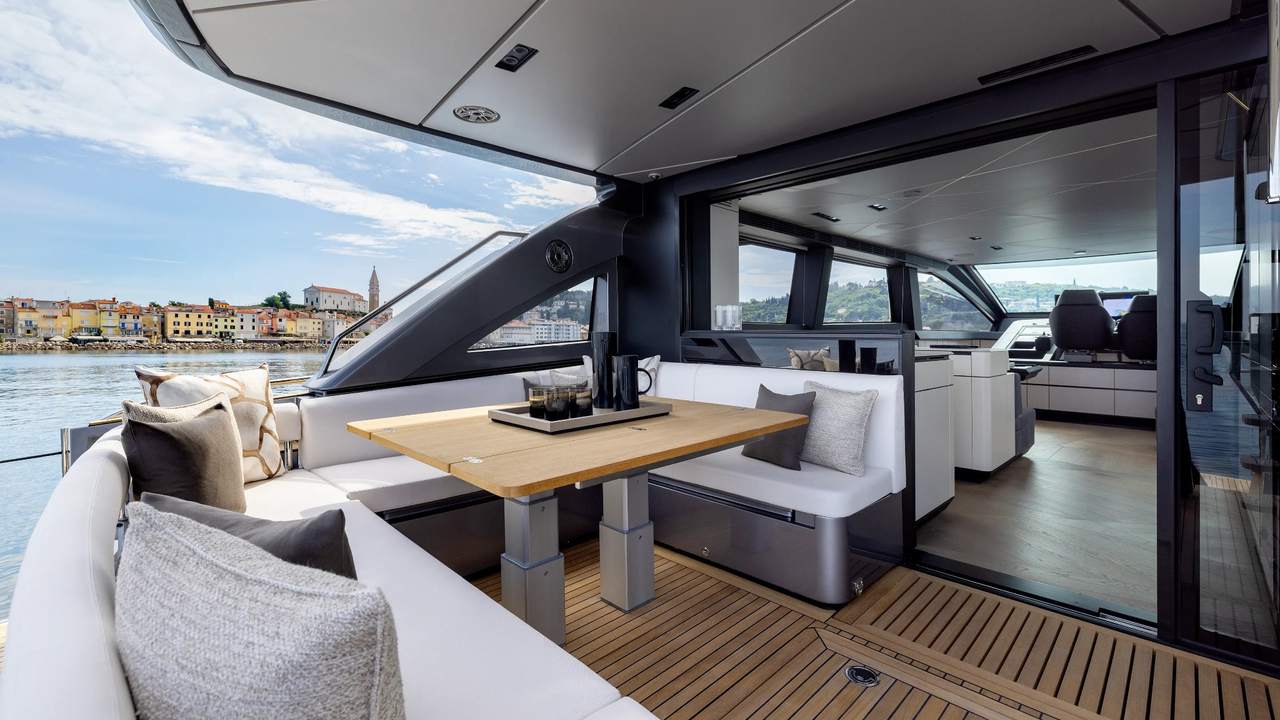
Door and window: a transformable main deck
The combination between door and window separates or joins cockpit and salon. It is a central solution in the promise of continuity, but it adds guides, engines, seals and discharges. The verification includes complete cycles, safety stops, noises, alignment and proof with water. In summer the large opening reduces the border; closed doors the windows increase the solar gain and the load of the air conditioning. Curtains, obscurements and air flows must be chosen on the climate of use, not only on aesthetics.
Pozzetto: integrated sofa or large sunbed
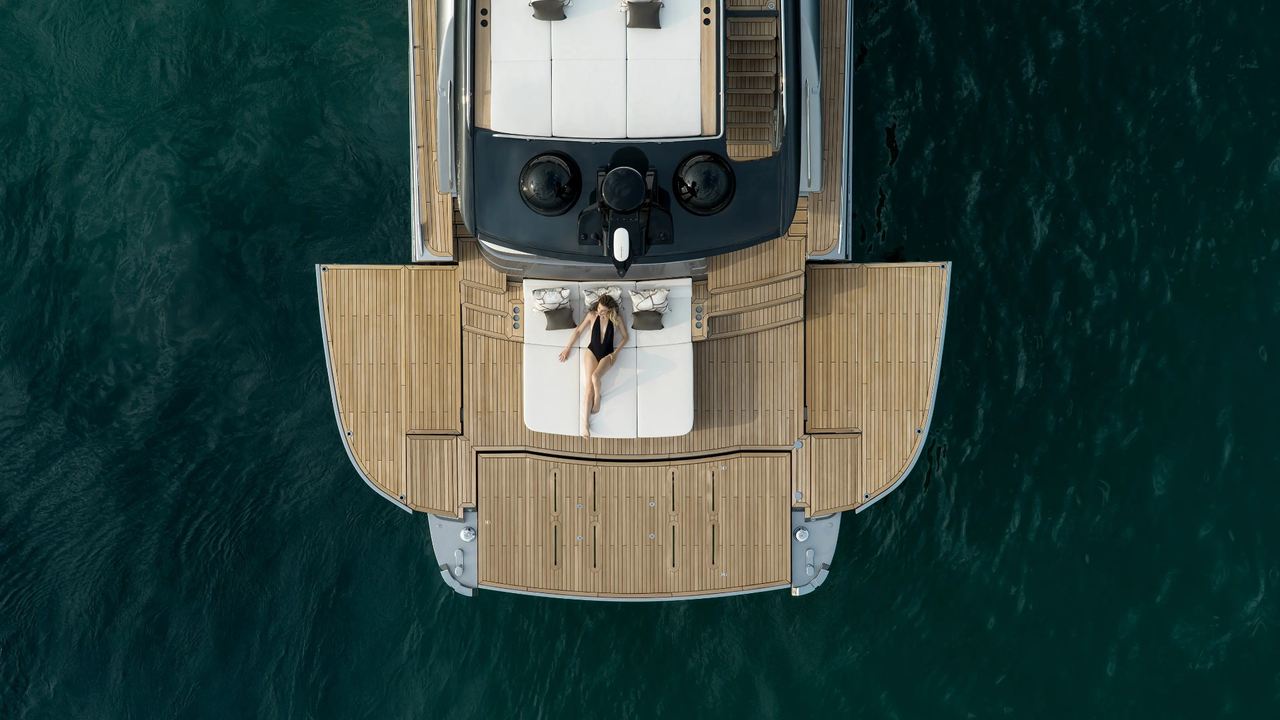
A stern is provided with a built-in sofa that can be replaced by a sunbathing. The choice changes conviviality, circulation and way to use the platform. A family that often eats outdoors can prefer sittings and shelters; those who live the rade prefers lying area. Steps with people, towels, parabords and equipment are simulated before ordering. Both configurations must leave free controls of terraces, technical access, drainage and escape routes. Bearings and backs must be fitted to the declared speeds.
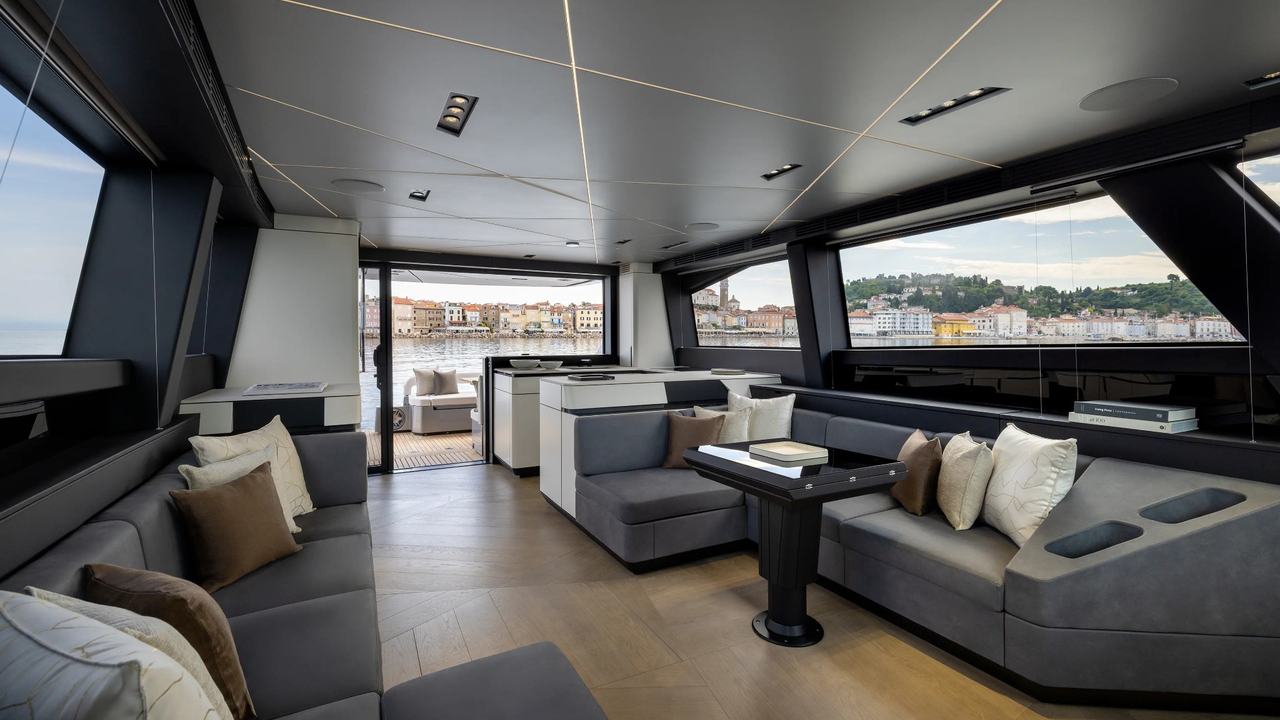
Salon with two parallel sofas: choose flow
Two sofas along the walls create a central corridor and a symmetrical environment. This organization facilitates conversation and passage to the bridge, but the capitulate must check tables, supports, screens and storages. In navigation, guests need safe and sustainablely oriented seats compared to accelerations. The furniture must be blocked. Removable panels and vents should not be covered by customizations. The distribution of the air is tested with the living room exposed to the sun and the closed door, in the most demanding condition.
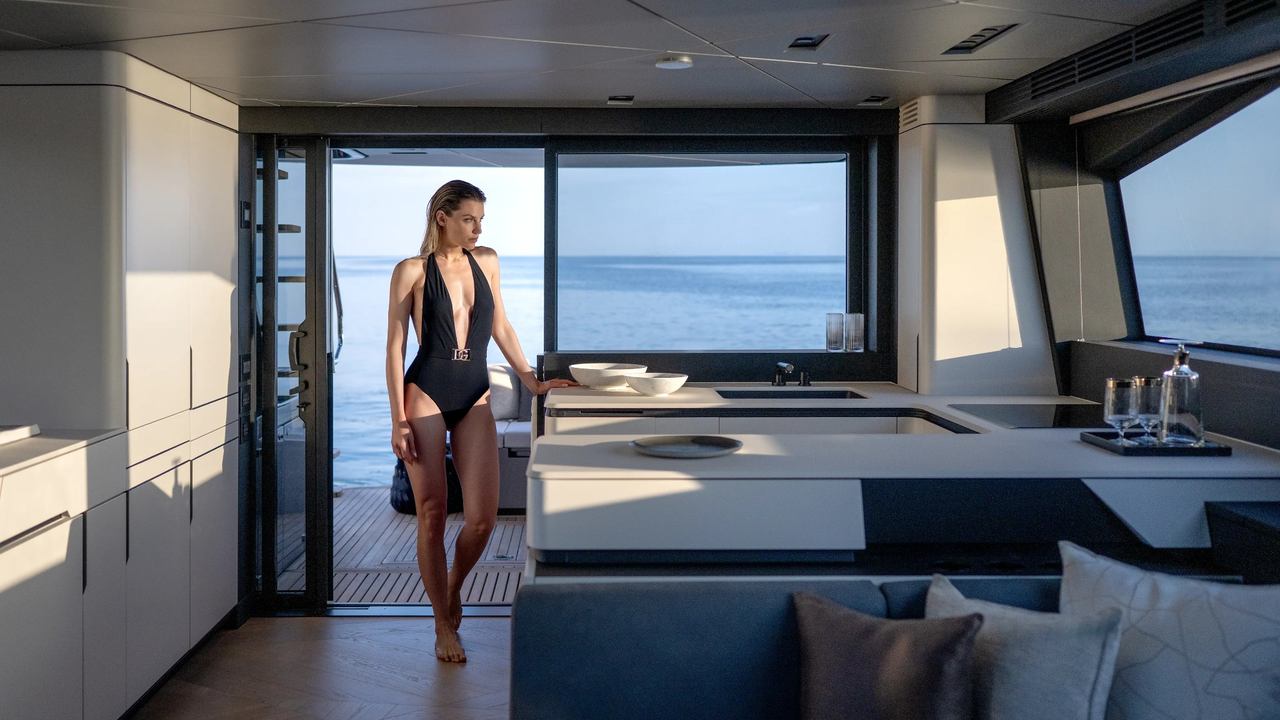
Kitchen: energy, ventilation and relationship with the well
The kitchen must be configured on the number of people and on the duration of the cruises. Additional refrigerators, induction top, oven, dishwasher and ice maker affect the generator, power peaks and heat dissipation. It is necessary to distinguish simultaneous utilities and define priorities. Drawers and luminaires must be blocked; planes and tientibenes must allow work with movement. The proximity to the outside area is an advantage if the service path remains free and if the smells are not recirculated by the air conditioning.
Three cabins and three bathrooms: check daily life
The standard lower deck accommodates up to six people in three cabins, with three en suite bathrooms. However, the number does not describe storing, ventilation, privacy and ease of movement. All doors open, you control access to the bed, heights, obscurements and exit routes. In the bathrooms there is pressure, temperature, drainage of the showers, ventilation and accessibility of the valves. With the inclined boat, doors and drawers must remain firm. Customizations should not close indispensable panels for pumps, sensors or connections.
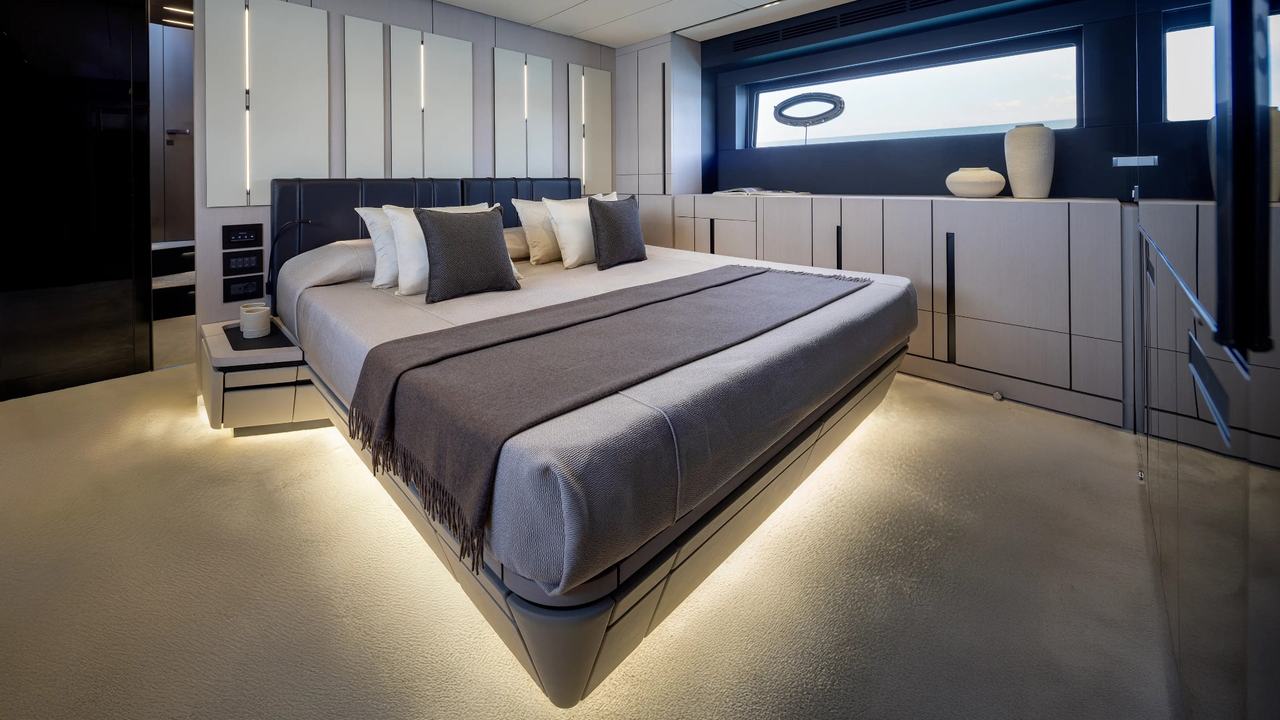
Armoury Suite: comfort measured with light systems
The main cabin takes advantage of the glare of 5.42 meters and large lateral surfaces. The static visit shows volumes and finishes; the night test reveals noise of generators, climate, pumps and movements on the bridge. Condensation is controlled on the windows, temperature uniformity, panel vibrations and air spare parts. Mattress and furniture should not prevent inspections. Effective insulation combines elastic supports, masses, sealing and correct pipe installation: a soft coating alone does not correct structural transmissions.
Cabin crew: decide the operating model
The cabin for the crew allows professional service, but it must be evaluated as a living space: access, height, bunk, bathroom, ventilation, storage and exit. If the owner personally leads, he can become a flexible place, but without turning into a disordered warehouse near plants or emergency routes. The presence of a sailor changes shifts, privacy and tender management; the capitulate should provide consistent communications, commands and boots. A neglected accommodation makes it difficult to retain competent staff during long cruises.
Electric balance: satin, night and navigation
Three different profiles are built. In navigation they work electronics, pumps, ventilation and essential services; in satin they grow air conditioning, kitchen, audio and handling; at night they count silence and autonomy. Generators, batteries and inverters must support peaks without working chronically outside the efficient belt. If you consider lithium, you need management, thermal control, seduction and compatibility with alternators and chargers. Radar, communications and government must retain priority power independent of hotel users.
Fresh water: 1,000 liters and onboard production
A thousand liters are a significant base, but six guests, crews, showers and washing can quickly reduce it. A dissalator must be chosen on the net production, not on the theoretical value: temperature, salinity and state of the filters change the yield. Prefilters, washing, storage and spare parts must be easily accessible. Tank indicators must be calibrated. Lines must be isolated by sector, so a loss does not impose general shutdown. Boiler and recirculation influence both comfort and energy consumption.
Air conditioning: high loads behind the windows
Open hall, large windows and more bridges create very different conditions. The sizing must consider full sun, closed doors, busy cabins and active kitchen. Containers, returns and discharges of condensation must remain free; water pumps and filters need access. The test checks temperature difference, cycles, noise and condensation for each environment. Adding units does not always solve an incorrect distribution and can overload the generator. External shading and suitable glasses reduce the load before it becomes electricity.
Stabilization: choose the desired result
For intense use in shaving, a stabilizer can change the experience on board. The configuration should be evaluated for effectiveness at zero speed and navigation, available volume, weight, absorption and maintenance. Giroscopes and fins are not interchangeable and introduce different stresses. The manufacturer must confirm compatibility and reinforcements. Starting times, noise, alarms and behavior are observed during testing. Stabilization does not eliminate the need to choose a safe anchor or reduce exposed surface to the wind.
Tender and water toy: a structural decision
The platform can serve a Williams 325 or a jet ski, but the complete package also includes cradles, fixings, fuel, covers and equipment. Weight and center of gravity must enter the distinct. The vehicle must be launched and recovered during delivery, verifying interference, visibility, time, stability and possibility of operating with reduced crew. Toy batteries and fuel require ventilation and procedures. If the priority is to always extend the beach area, a light and simple tender can be more consistent than a maximum solution.
Electronics: useful redundancy, not random duplication
A height configuration should protect location, route, depth, communications and traffic detection from a single fault. This does not mean filling the dashboard of screens connected to the same power supply and the same network. Independent GPS, VHF with protected power supply, updated cartography and manual procedures count more than the light surface. Radar and AIS require installation and calibration; cameras must remain readable with sprays and backlight. Backups and software versions must be recorded before any important update.
Security: category A and sixteen people are not the same thing
The model is presented with CE certification in category A and a declared capacity of 16 people. The category describes design criteria, does not cancel weather limits, crew capacity or local obligations. 16 people do not equal six guests in the cabins. Zattere, giubbotti, communications, medicine and procedures must correspond to the actual navigation. Steps, extinguishers, fuel closures and exit routes must remain free even with open terraces, enlivened dinghy and installed kitchens.
Maintenance of three lines
The plan combines deadlines for hours and calendar. Oils, filters, impellers and diagnostics follow the use; anodes, seals, sleeves, batteries and firefighting age even at the port. The three engines must receive coordinated interventions, while pods require traceability of lubricants, seals, propellers and possible shocks. Platform, terraces, fireplaces, air conditioning, generators and stabilization are added. Pictures at each feed, fluid samples and alarm logs allow you to identify differences before they become stationary machine.
delivery controls: try interactions
Delivery starts with distinct weights, serial numbers, manuals and patterns. Dry tests are carried out hulls, pods, propellers, sea sockets and stern mechanisms. In water, cold engines, generators, batteries, climate, water and discharges are tested. Navigation records multiple regimes and all government modes. Then you open terraces, move the platform, go the tender, transfer the command and activate together the main utilities. Interactions reveal problems that isolated tests do not show.
Recommended setup for Mediterranean cruise
For a family that alternates port and rail, the priority is a balanced package: essential redundant electronics, useful cameras, effective shading, dissalator accessible, stabilization confirmed by the yard, tender compatible without saturating the load and electrical autonomy dimensioned on the night. Refrigerators and kitchens must be calibrated on people; satellite communication depends on routes. It is best to store weight and power instead of filling each predisposition. A simple installation to inspect and documented tends to produce more days of navigation.
Final evaluation: value comes from consistency
The GTX70 offers 21,76 meters, three cabins, 16 square meters sportbridge, expandable beach area and a triple propulsion capable of 36 declared knots. Its advantage is to combine space and performance without assuming the proportions of a much larger yacht. The complexity is concentrated in pods, controls, aft mechanisms and hotel budget. For this reason the best configuration is not the richest, but the one in which weight, energy, tender and mission remain consistent. Testing and maintenance complete the project.