
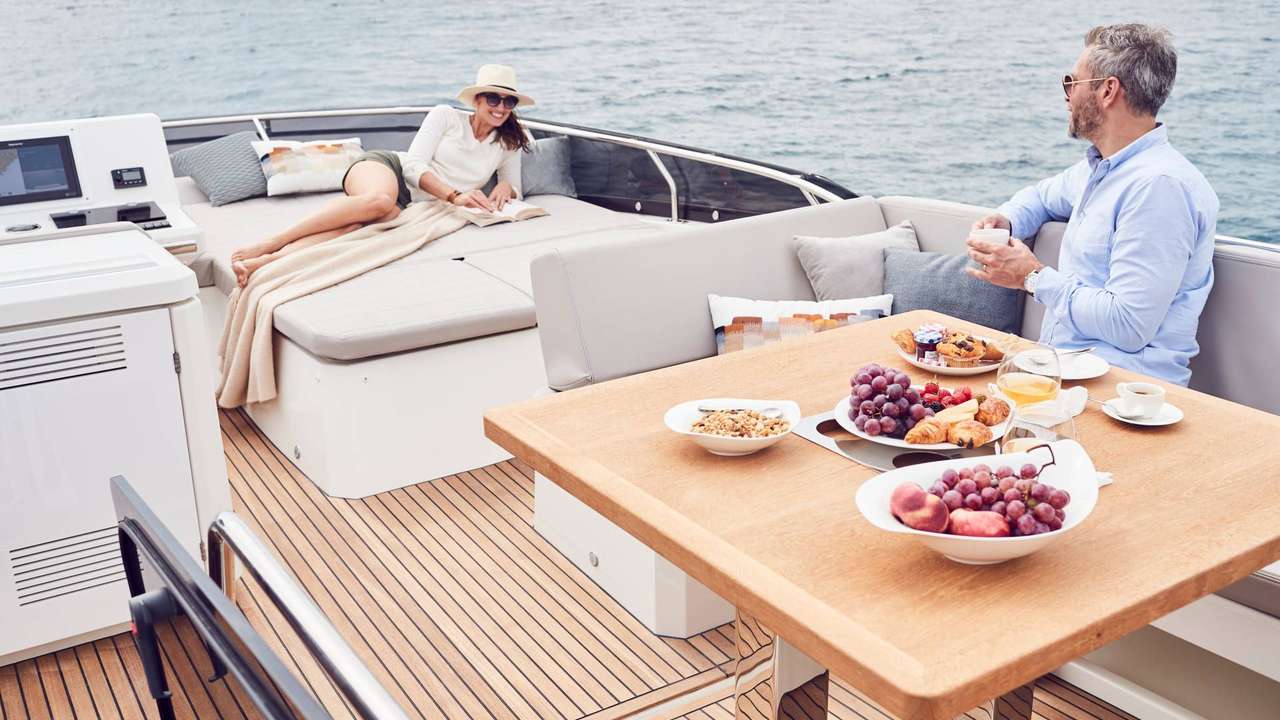
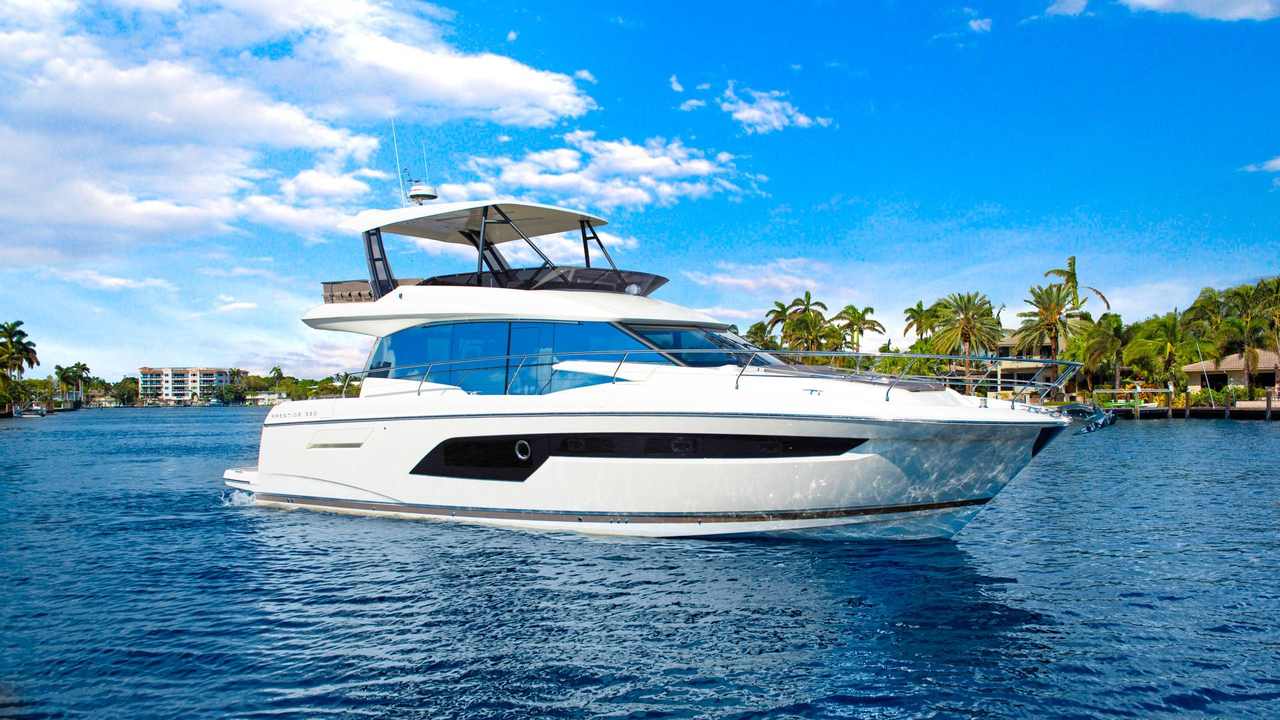
The Prestige 520 measures 16,11 meters out of everything, 4,49 meters of glare and passes from 15,579 kg light to 22.449 kg full load. The range includes two Volvo Penta D6 with IPS600 440 hp or IPS650 480 hp, 1,300 liters of fuel, 636 liters of water and three cabins. The configuration should be read as a system, not as an optional list.
This guide covers plants, equipment and delivery, it is not a test at sea. The 26 maximum nodes and 22 cruises are data declared to be checked on the specimen with load and recorded conditions. The verification sequence is used to transform automations, pods and habitable volumes into procedures comprehensible to the shipowner.
Data to be fixed in the configuration
| Voice | Summary | Control |
|---|---|---|
| Length / glare | 16,11 / 4,49 m | Layout and appendices |
| Fishing / height | 1,05 / 5,60 m | Condition and steps |
| Weight | 15.579 / 22.449 kg | Light and full load |
| Engines | 2 × D6 440 or 480 hp | News & Events |
| Transmissions | IPS600 or IPS650 | Pod, propeller and steering |
| Fuel / water | 1.300 / 636 l | Usable volumes |
| Speed | 26 / 22 kn | Maximum and declared cruise |
| Sleeps | 6 + 1 | Layout and services |
Choice of IPS600 and IPS650
The decision is not only about forty horses per motor. Real weight, cruise profile, tender and equipment determine the necessary margin. Engines, pods, EVCs, propellers, cooling and discharges must belong to the same documented configuration.
Freshmen, software versions and codes of propellers enter the minutes. The test compares the two sides to stabilized systems, recording turns, load, temperatures, pressure and consumption. A persistent difference requires diagnosis, non-compensation with trim or joystick.

Pod, propeller and steering wheel
The dry boat controls oils, seals, games, anods, counter-rotating propellers and protections. Traces of water or particles in oil require deepening. The appendices are photographed to create a baseline useful to the later alges.
In water, try steering, synchronization, joystick and degraded mode. The transfer of commands between the two bridges must be clear. The loss of a screen or sensor should not make the pod response unpredictable.
Seven tons of variable load
The difference between light and full weight includes fluids, people, stocks, dinghy and optional. Position and share of each mass affect the layout and entry into the plan. Batteries and equipment concentrated on aft change the flow towards the pods.
The delivery includes weight reports and reading of fishing with known levels. Setting automatisms should not hide a static imbalance. Any future addition must be compared with this reference condition.

Fuel, probes and reserve
The 1,300 liters are not all available for the route. Bottom, trim, reserve and generator reduce usable volume. Tanks, interconnections, vents, returns and interceptions must be accessible and labeled as in the schemes.
The probes are compared with quantities known during the supply. Engine hours, hours generator and liters landed build the exemplar curve. Planning must declare the margin and not rely only on an estimate of the display.
Energy in dock, rail and navigation
The budget separates the different operating conditions. Air conditioning, kitchen, boiler, refrigerators, sockets and entertainment are tested in the planned combinations. We control voltage, frequency, temperature of the pictures and selectivity of the protections.
Generators, batteries, chargers and inverters must support the indicated utilities. The controlled loss of a source checks priority and reboot. The black-start procedure must be executable even without consulting an unavailable screen.
Fresh water, boiler and flow
The 636 liters of water and the 60 litre boiler must be translated into people and days. More showers, kitchen and sinks are used together, annotating pressure, temperature and recovery times. Autoclaves and pumps must be isolated.
Filters, fittings and drains remain accessible. A loss is located by separating the branches, not accepting frequent start-ups of the pump. The spare parts package must match the actually installed versions.
Reflui, sentine and alarms
The 170-litre waste tank requires calibrated probes, correct vents and consistent valves with navigation areas. High-level alarms are activated directly and associated with clear action on the bridge.
Sentry pumps and manual controls prove compartment for compartment. Non-return vacuums and valves remain inspectable. The record distinguishes the correct automatism from the ability of the crew to intervene in case of failure.
Double dashboard and electronic network
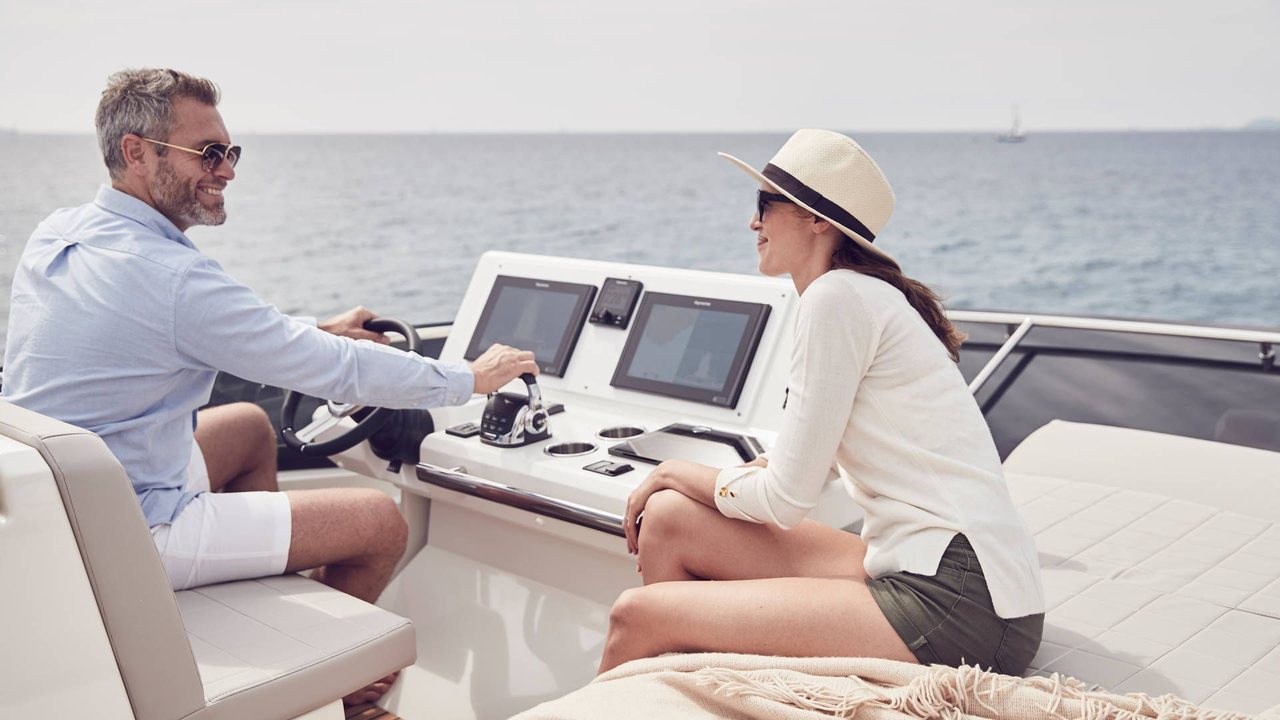
The two stations must present the same alarms and transfer the command without ambiguity. Engines, pods, winch, navigation and cameras are tested by both. Software and configuration versions are stored before delivery.
The test includes loss of a display, unavailable joystick and interruption of a data line. Cameras and sensors help, but visuals and communications remain essential. Each function must have a well-known degraded procedure.
Flybridge, high mass and wind
Plank, kitchen, chairs, hard tops and accessories focus mass and wind grip. Each element has a navigational position and considered appropriate. Total height and centre must reflect the configuration delivered.
Parapets, drains, stairs and surfaces are tested with wet bridge. Tents and cushions cannot hinder the visual or passages. The harbour maneuver considers the measured wind and the real side surface.

Kitchen and cockpit on a continuous floor
The connection without steps facilitates flows but brings together sliding door, drainage, kitchen and steps. It simulates a meal at full employment, checking nautical closures, ventilation and exit routes.
Plates, oven, refrigerators and air conditioning work together during the test. Voltage drops, heat and slow discharges become reliefs. The technical panels should not be occupied by crockery or furnishings.
Air conditioning and glass surfaces
Salon and cabins have different solar loads. With people, active lights and electronics, temperature, humidity, condensates, absorption and noise per zone are recorded. Filters and shoots must remain accessible.
Towels, glues, doors and drainages receive water proof before and after navigation. Condense and persistent differences between premises require correction. Removable panels allow maintenance without damaging the finishes.
Three cabins and central suites
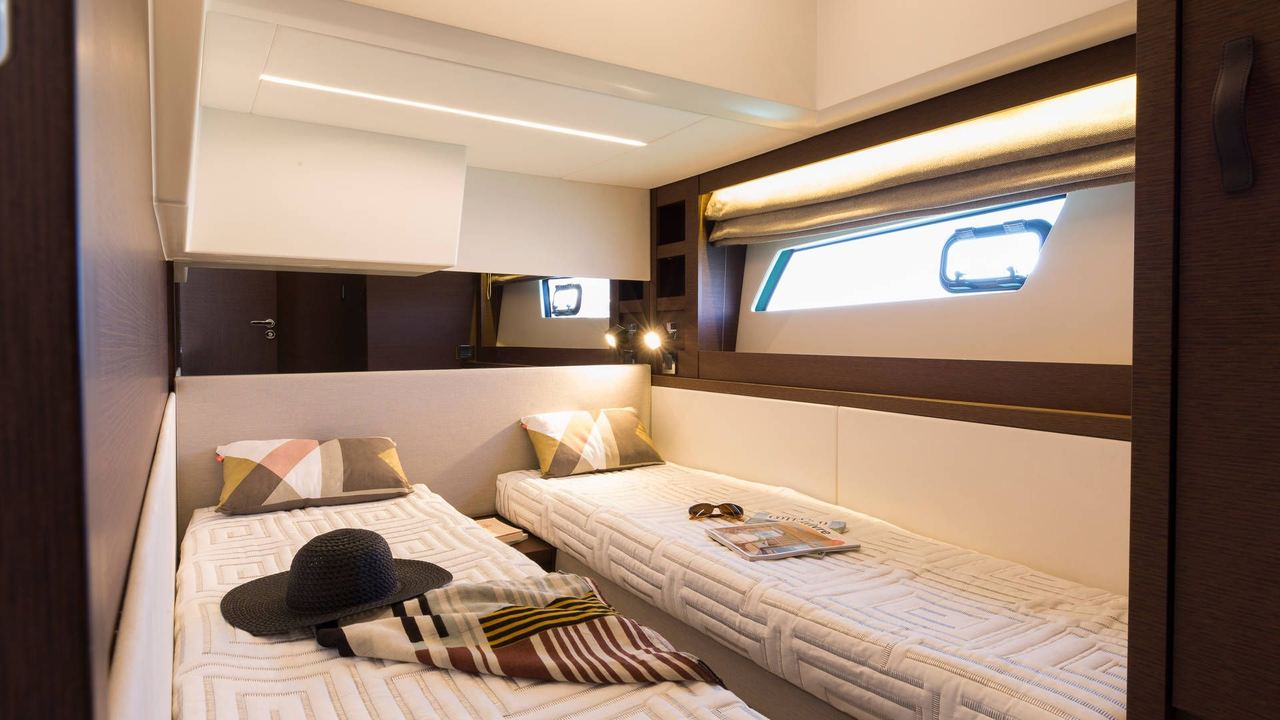
The cabins are compared with the approved layout. Lighting, sockets, obscuring, climate, portholes and escape routes are felt in every room. Bags and linen must not cover pictures or equipment.
The whole glare suite is close to propulsion and hydrodynamic flows. Noise and vibration are measured with engines, generator, pumps and climate in repeatable combinations, creating a maintenance baseline.
Poppa, tender and platform
The choice between garage and sailor cabin changes weights, accesses and facilities. Tender, cradle, winch and platform must be compatible for size and mass. Varo and recovery are repeated with the crew in the planned positions.
Sensors, drains, arrests and manual procedures receive more cycles. Water toy batteries require ventilation and deemed. Boots cannot hide pumps, valves or mandatory safety equipment.

Mooring and anchoring
Verricello, counters, anchor, chain, bits and screws are controlled as a system. Discess, recovery, brake and washing receive a complete test. The gavone must drain and the procedure includes the unavailable command.
Joystick and pod simplify the port, but it also proves the loss of an aid. Visuals from the two bridges change with people and tents present. Communications between helmsman, bow and stern are really exercised.
Fire, flood and escape routes
Revelation, fire extinguishers, ventilation arrests and fuel interceptions must correspond to the patterns. Each alarm identifies a zone. The pumps are activated individually and the escape routes travelled with furnishings and luggage in the real configuration.
The briefing includes fire, water entrance, blackout, government loss and man at sea. Shipowner and crew must be able to isolate batteries, fuel and machinery without depending exclusively on automatism.
Try at sea and check after return
The program records load, levels, sea, wind and temperature. Multiple stabilized systems include speed, consumption, load, pressure, temperature, trim, noise and vibration. Reciprocal impacts reduce environmental effects.
The 26 and 22 nodes remain declared until they are verified in the relevant configuration. After testing, oils, seals, bilge, supports and alarms are checked. Each correction requires repeated proof.
Documentation, spare parts and operational judgment
The delivery includes up-to-date patterns, valve list, fresheners, software licenses, configurations and distinct spare parts. Filters, impellers, anodes, fuses and critical materials have code, quantity and location. Calendar deadlines and hours remain separate.
The file also includes photographs of appendices, samples of oil analysis and copy of the alarms that emerged during testing. Each software modification shows date, previous version and update reason. In this way a technician can reconstruct the status of the boat without relying on the memory of those who followed the delivery.
Before the first cruise you simulate a complete day: departure from the dock, transfer of controls, navigation, kitchen, air conditioning, anchorage and return. The exercise reveals interference between users and steps that a testing for individual components may not show. Consumptions, levels and anomalies are noted in the same format that will use the shipowner.
The maintenance plan distinguishes daily, seasonal and motorcycle-related checks. For pods it includes oils, anods, seals, propellers and control after a shock or winding. For hotel facilities it indicates filters, sanitization, drains and winter protection, avoiding that little-used components remain outside the program.
The Prestige 520 concentrates cruise, flybridge and pod in 16 meters. The valid configuration is the one where weight, energy, fluids and accesses remain legible. Repeatable procedures and a complete baseline make automation a concrete help, not a difficult addiction to diagnose.