When the hair dryer starts and the protection of dock intervenes, increasing the input limit is the quickest and often the wrong answer. The problem can be load sum, limited socket, fall, PowerAssist configured badly, battery discharge or unstable transfer. MultiPlus-II, MultiPlus-II GX and Quattro coordinate network, charge and inverter according to the variant, but work on the values set. the procedure records AC input, output, DC current and bench status before changing parameters, then verify each transition until you get a repeatable behavior.
Free status and configuration
There are active source, set limit, loads, voltage and AC current, charging status, DC current, temperature and alarms. Shields are purchased before switching off or resetting. The defect is associated with a precise event: insertion of the hair dryer, start of the compressor, switch to inverter or increase of the charge. It occurs if the generator or a second source are available. This photo prevents you from erasing the cause and allows you to repeat the same scenario after correction.
Identifying template, inputs and outputs
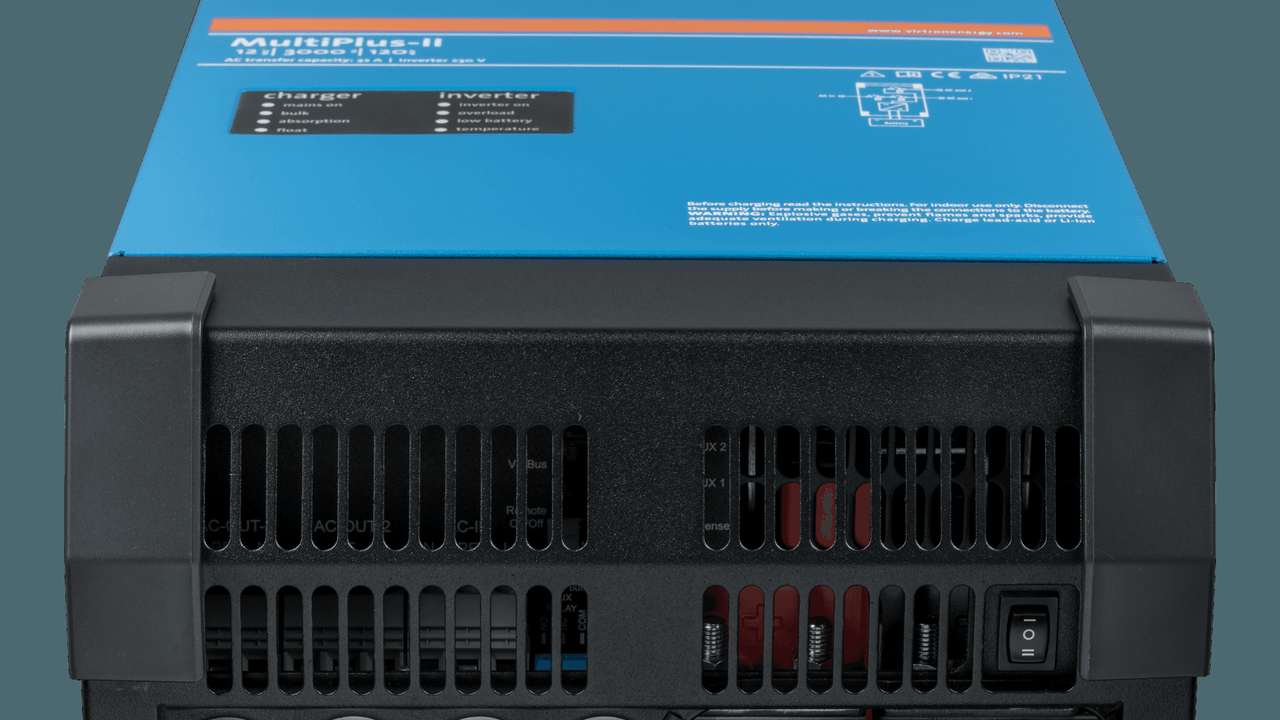
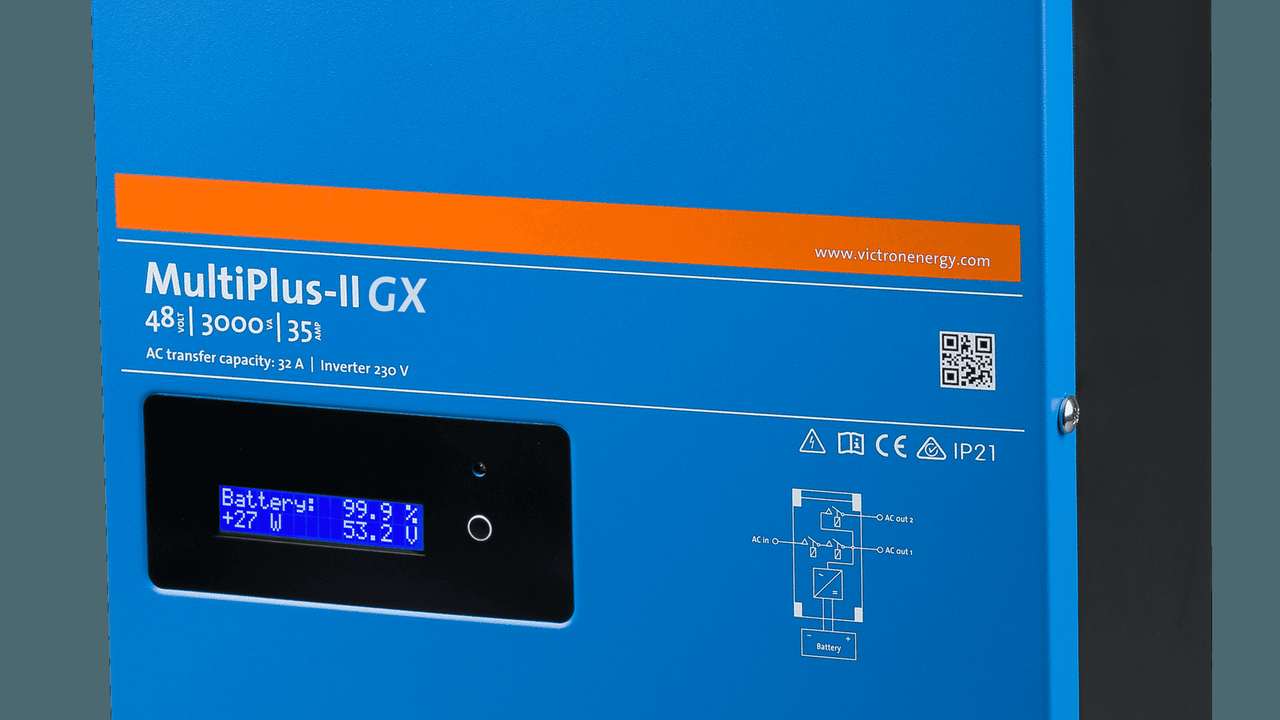
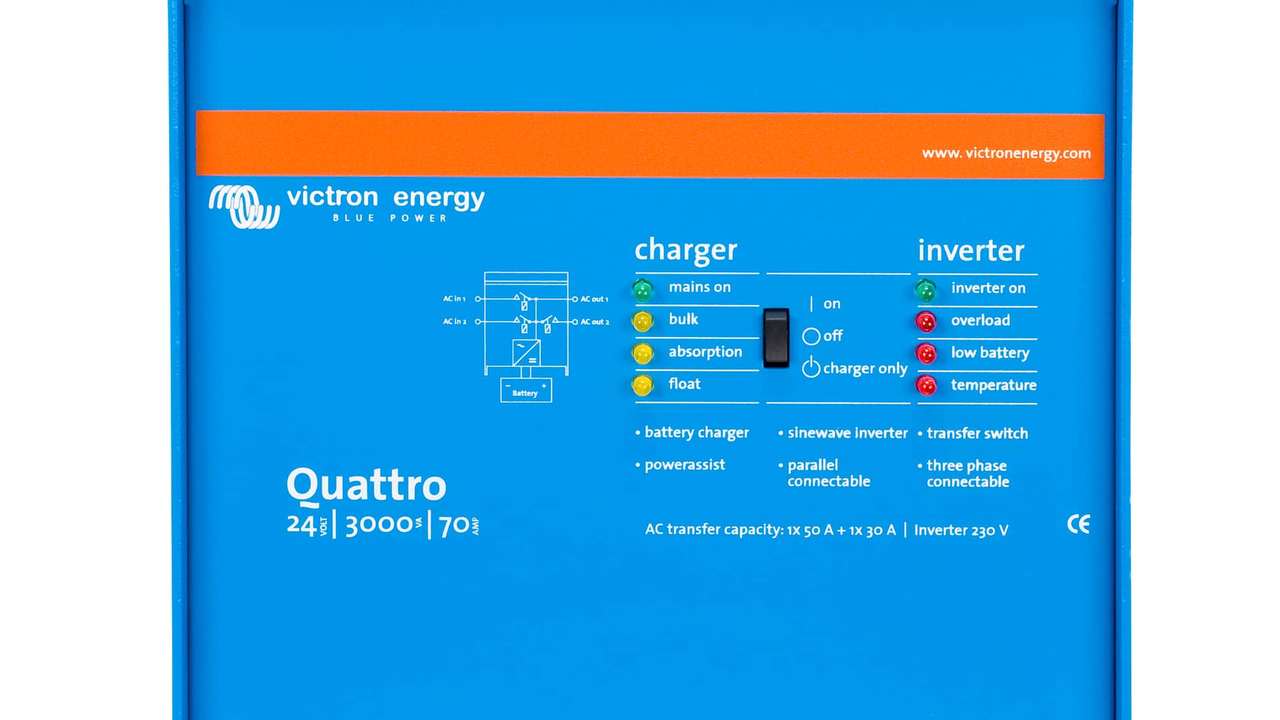
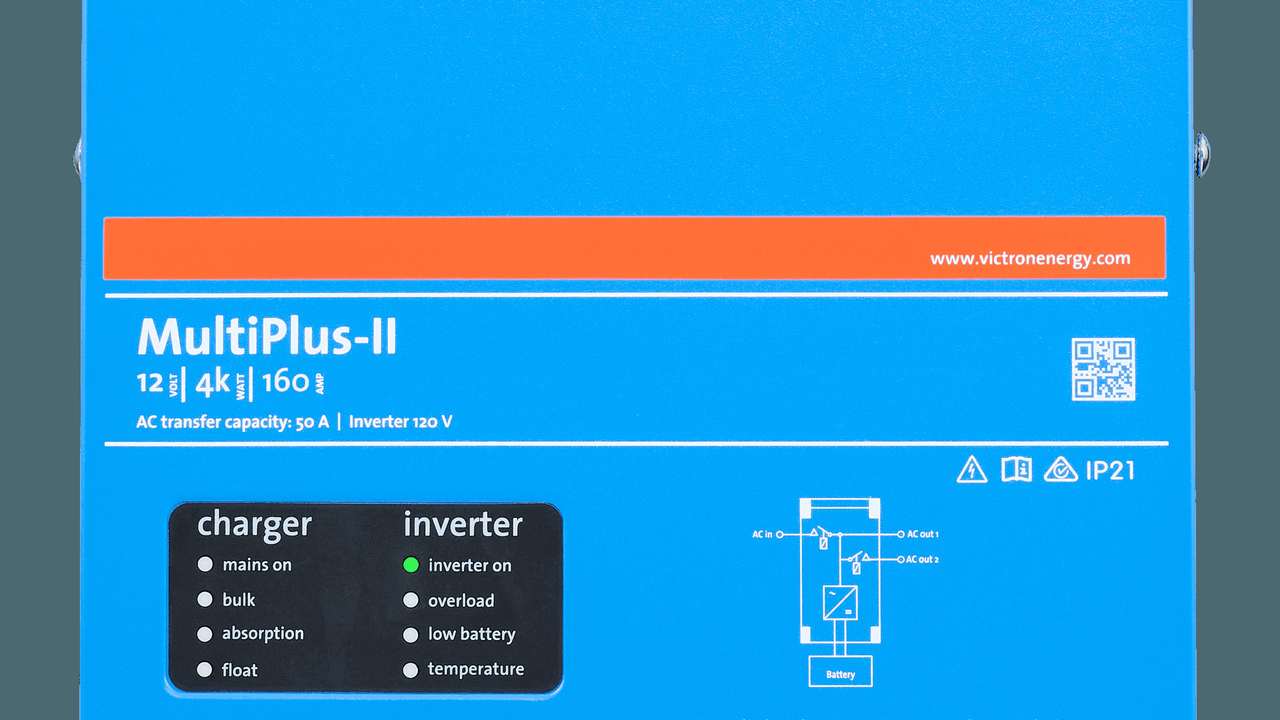
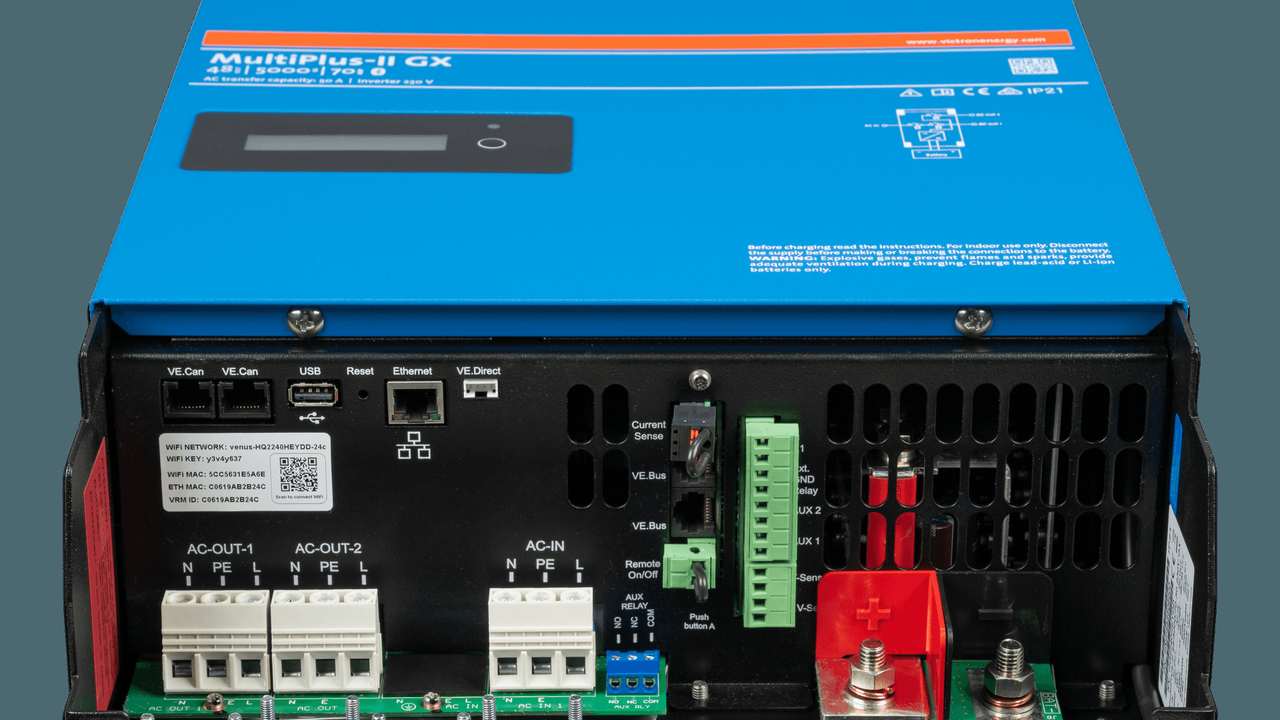
You read the full code and rebuild dock, generator, entrance, essential exit, eventual auxiliary exit, counter and communications. MultiPlus-II GX is not treated as any MultiPlus-II; Four has a different topology second variant. DC voltage, power, charger current and protections are noted. A circuit powered only with network can turn off correctly in inverter. Without this map, diagnosis confuses predicted behavior with a transfer failure.
Check the dock grip
The protection value, cable, adapters and under load voltage are controlled. A nominally available socket may have lower limit or high fall. You do not increase the setting beyond the weakest component. It is measured before and during loading. Hot plugs, oxide or discoloration require insulation and repair. The colonine remains the responsibility of the manager when necessary. Restoration must work with a consistent limit and secure connection, not only with added amperes.
Rapid table of interventions
| Symptom | Priority control | Closure |
|---|---|---|
| Go now | Sum loads and point | Combination within limit |
| Casting voltage | Cable, socket and contacts | Correct fall under load |
| PowerAssist absent | Configuration and bench | Measured contribution |
| Switch to inverter | Entry and threshold quality | Network accepted permanently |
| It stops hot | Ventilation and power | Stable repeated session |
Summon the really active loads
Phon, boiler, kitchen, charger, air conditioning and sockets are measured together. The charger current can be reduced by PowerControl, but the other loads remain. There are hints and contemporaneity. A nominal display does not replace an adequate clamp. Turns out one user at a time to locate the contribution, without bypassing protections. The solution can be an operational priority or automatic load control. The final value keeps margin for changes and tension of dock.
Check the entry limit
The setting is compared with actual socket and generator. Too high value makes protection intervene; too low reduces unnecessarily charge or comfort. It occurs that remote panel and configuration display the same limit. Any profiles for different sources are identified. The change takes place once and is recorded. Then repeat the load by observing current in and charge. The limit is not used to compensate for a deteriorated grip or an insufficient section cable.
Verify PowerControl
When AC loads increase, the charge current should be reduced according to function and configuration. Input, output and DC current are observed during the insertion. If the charge is not reduced, you control setting, measurements and variant. If it is reduced but the protection snaps, the sum of the loads can remain excessive. PowerControl does not automatically turn off every user. The test starts from counter in known state, because an already low charge current can hide the behavior you want to check.
Verify PowerAssist
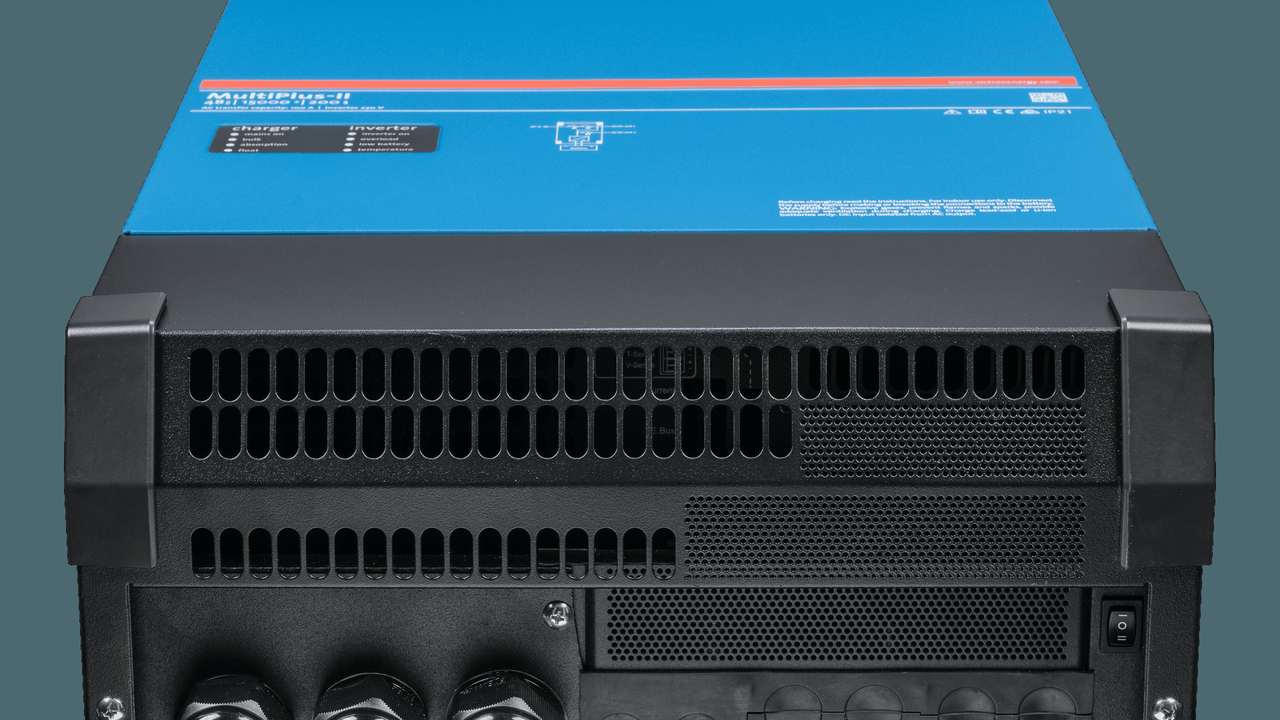
PowerAssist temporarily integrates the source with energy of the bench when expected. The DC current is measured during peak. If the bench is unloaded, small or limited by the BMS, the contribution may not be available. You do not interpret the absence as a failure before checking state and limits. After loading, the energy must be recovered. A long session can download the counter while remaining connected. the procedure confirms start, duration, alarms and exit from the contribution without unstable cycles.
Check the peak battery
It measures tension to the poles and the inverter along with the current. Excessive fall can end PowerAssist or turn off the inverter. They control charge status, capacity, BMS and temperature. A high percentage does not show power available. AGM and GEL can have increased resistance; lithium can impose a limit. The counter is tested with known load and without dock according to safe procedure. The cause remains distinct between accumulation, wiring and configuration.
Measuring the DC side
Fuse, switch, positive and negative are measured under current. A resistive fuse holder can produce fall and heat without opening. Terminals and couples occur on an isolated circuit. The fuse cannot be bridged nor is it under tension. The cables must be short and suitable for power. After correction, the same peak is repeated and tension and temperature are compared. A low battery alarm can be caused by the path, not by the counter.
Check AC quality and acceptance
The device accepts the network under conditions. Voltage or unstable frequency can cause repeated transfers. It measures the source and stands out as a generator. The thresholds are not enlarged to accept dangerous or out-specific energy. An overload generator can change frequency just when the load starts. After maintenance the acceptance with progressive application of the users is proved. The network must remain stable without continuous steps between inverter and input.
Check transfer and outputs
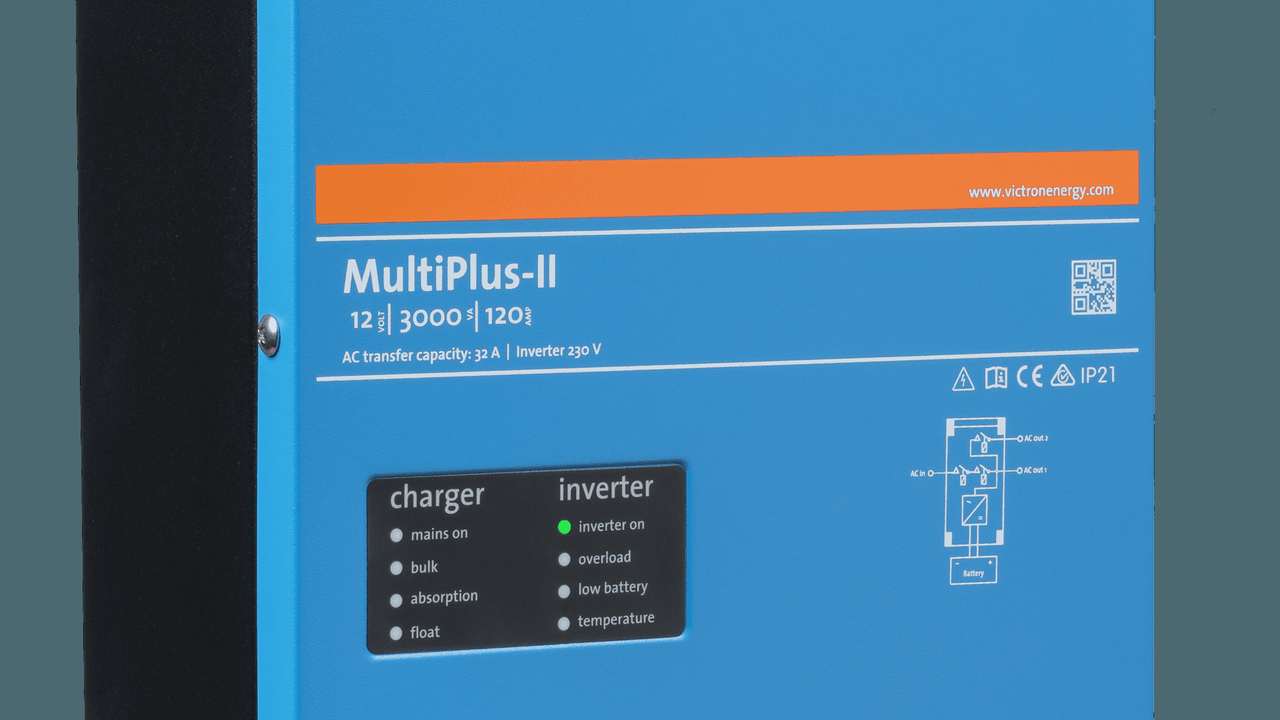
It controls which circuits are fed in the presence of network and which remain on the inverter output. An auxiliary output may have different predicted behavior. Loss and return of the source with controlled loads, observing sensitive utilities. There are no AC paintings without competence and isolation. Polarity, earth, differentials and protections are verified with suitable tools. A circuit switched off only in inverters is not moved to the essential output without new balance of power and safety.
Examine neutral, earth and differential
Contact protection depends on the consistent management of references in different ways. An incorrect connection can make the differential intervene or make it ineffective. It compares the scheme with the installation and tests are carried out provided by competent personnel. You do not delete a bridge or an attempt protection. The diagnosis distinguishes overcurrent from differential, because causes and risks are different. Restoration is verified with dock, generator and inverter in the configurations actually used.
Temperature and power reduction
If the problem appears after minutes, room, body, current and ventilation are recorded. A closed or hot compartment can reduce power or charge. They control orientation, distances, dust and objects. It does not cool artificially to pass the test. A hot terminal requires fall measurement; a uniform heating requires comparison with load and conditions. After correction, a session of the same duration is repeated with a compartment in the normal configuration.
Check configuration and firmware
You save the configuration before you change. Tensions, charging current, AC limit, modes and assistance are compared with project and bench. Parallel variations require consistency. An update is performed only with procedure, stable power supply and recovery plan. You change one variable at a time, repeating the scenario. The problem is not dealt by uploading a generic file from another boat. Version and final values remain in the technical register along with the test results.
Separate generator problem
If the defect appears only on the generator, voltage, frequency, current and machine temperature are measured. The limit is adapted to the available continuous power. Large loads are gradually inserted. PowerAssist does not replace regulation and maintenance. On four or systems with separate inputs, each source is configured and correctly identified. The test ends with stable charge and utilities, without hunting the regimen or repeated transfers when the compressor starts.
Safe degraded mode
If the inverter-charger is isolated, the scheme establishes which utilities can be fed and how. They do not combine entry and exit with flying cables. Communications, lights and essential pumps preserve a planned path. The crew reduces loads, verifies tension and follows the drive procedure. A permanent bypass requires project and interlocking, not improvisation. Degraded mode is tested in delivery and maintains minimum safety even if hairdryer, boiler and kitchen remain unavailable.
Restoration and repeatable test
Covers, protections and configuration are restored. With a well-known counter connects the dock, progressive loads are applied and PowerControl and PowerAssist are observed. It measures AC and DC, then stops and restores the source. The test is repeated with generator if present and after heating. No protection must be oversized to achieve the result. Success requires current within limit, stable transfer, protected batteries and lack of hot points.
Operational prevention
A table on board shows limits of the sources and allowed load combinations. The crew knows that connection to the dock does not mean unlimited power. Cable, plug, ventilation, fuses and alarms are checked periodically. New utilities reopen the budget. Configuration and testing measures remain available. In this way a hair dryer does not become the random test of the system: it is used only when source, bench and inverter have the proven margin.
Procedure verdict
When the dock jumps, the correct sequence is taken, loads, limit, PowerControl, PowerAssist, counter, cables and transfer. MultiPlus-II and Quattro should not be forced by increasing the amperes without proof. The valid recovery keeps the current within the protection, integrates the peak within the limits of the counter and returns to the charge without instability. With AC and DC measures, the cause becomes apparent and comfort remains available without sacrificing a colon, batteries or system security.