
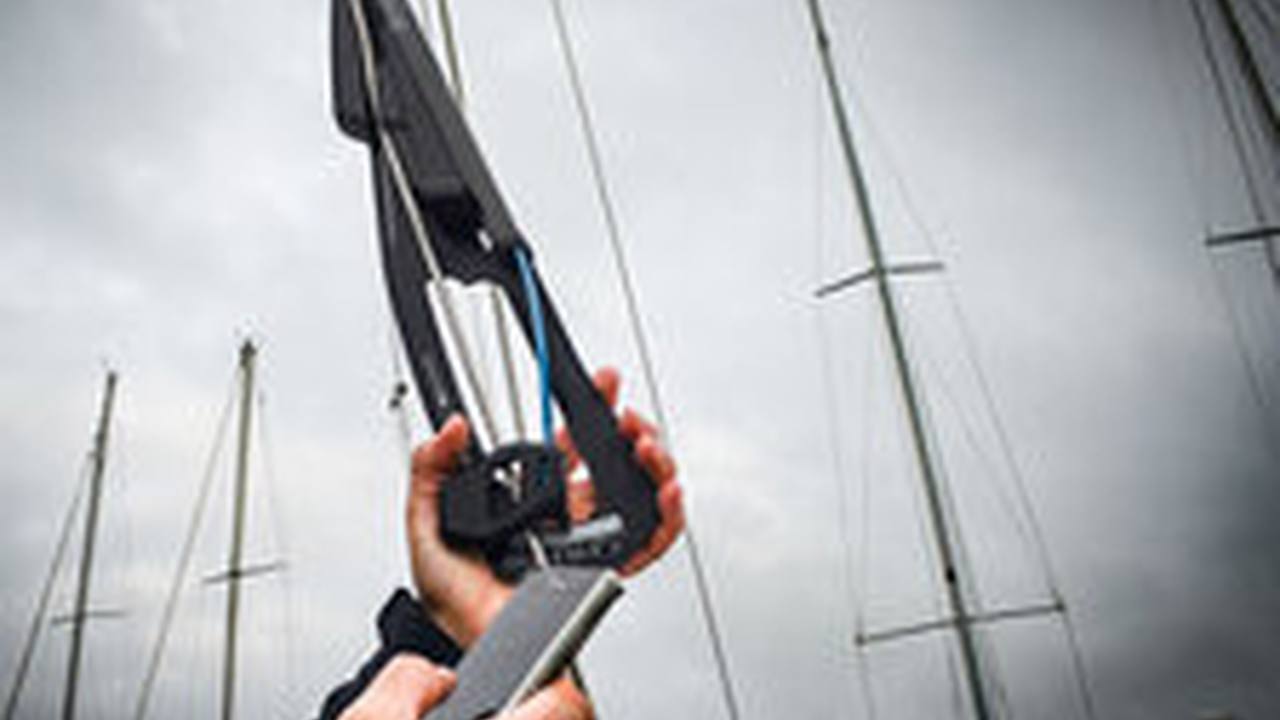
Two different readings on the same tailoring do not automatically prove that a sartia has loosened. They can change the application point, the Rig-Sense model, the inserted diameter, the position of the body, the selected drive or the sequence with which the arrids were adjusted. Also a well-functioning Load-Sense cell returns a useless data if it is connected in a different path. This analysis starts from safety, identifies the tool and makes measures comparable before authorizing any correction.
Lock the adjustment and photograph the initial setup
Before turning a blinder you register the condition found. Terminals, markings, side of the boat and point for measurement are photographed. The sails and manoeuvres are set in the established configuration, avoiding actions that load the tree differently. If the boat cannot be maintained under the conditions of the previous session, the difference is noted. Changing the setup immediately eliminates the necessary evidence to distinguish a real variation from an inconsistent reading.
Identify tool, model and serial number
the procedure does not accept the generic item “tensiometer”. Rig-Sense standard exists as RGS/0205 and RGS/0508; Rig Sense Pro is RGS-PRO/0520; Load-Sense includes different size cells with dedicated rings. The actual model is recorded and, when available, the instrument identifier. Using different tools in the two campaigns can be corrected, but the comparison must declare it. Without this information, the difference is not attributed to theft.
Measure the diameter in the real contact point
RGS/0205 is declared for cable or fiber from 2 to 5 mm; RGS/0508 for 5-8 mm. The diameter is verified in the section where they will postpone contacts, not only obtained from the invoice. We observe crushing, trefoli, coatings, corrosion and deformations. The border value requires special attention to the model procedure. If the cable is not in the field, the measurement is suspended and you choose a compatible equipment.
| Control | Rig-Sense standard | Rig Sense Pro | Load-Sense |
|---|---|---|---|
| Element | cable or fiber | cable or rod | point loaded between two attacks |
| Field declared | 2-5 or 5-8 mm | cable 5-20 mm; rod -6/-60 | cell and loop size |
| Reading | kg, direct scale | displays and multiple units | wireless, current, peak and trend |
| Check key | location and contacts | selector, deflector and handle | route and accessories |
Clean contacts without altering surfaces
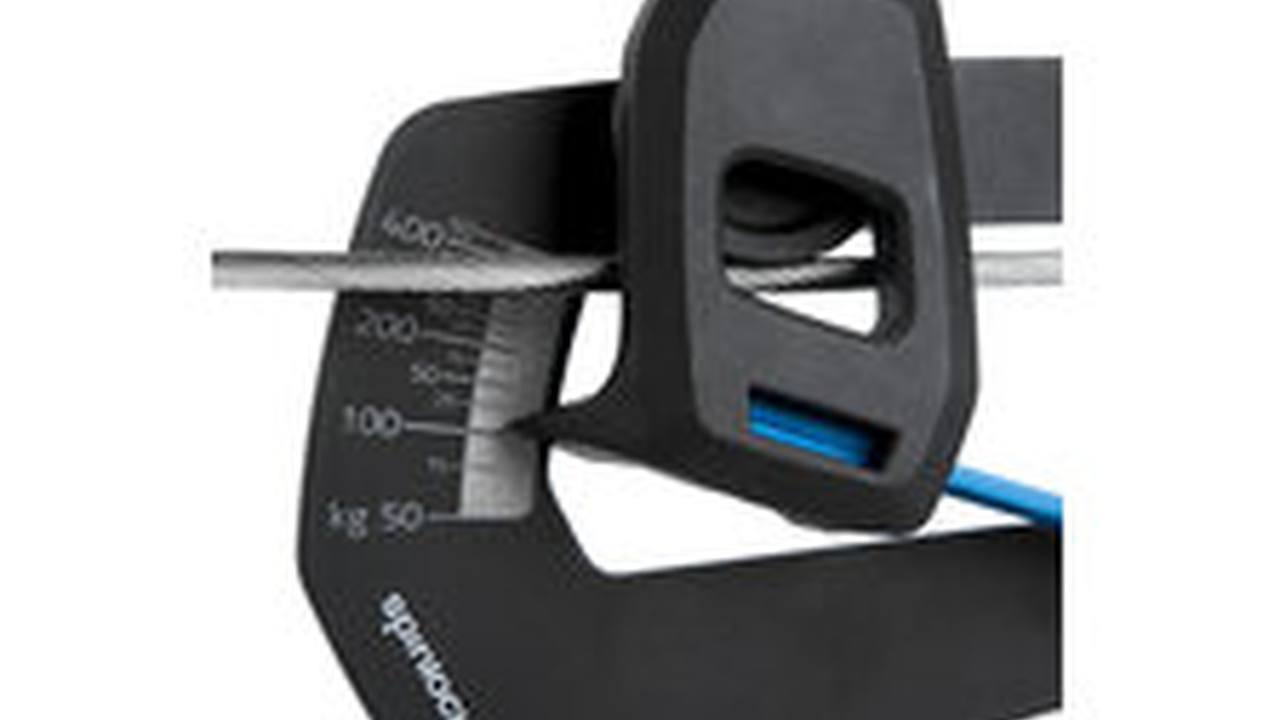
Rig-Sense uses stainless steel contact points and a calibrated composite crossbow. Salt, residues or particles between the tool and cable can change the position or make the reading unstable. It cleans according to the applicable indications and avoids adding unforeseen substances. We control cracks, deformations and irregular supports. The case provided protects the instrument between the sessions; a shock is not ignored only because the scale is visible.
Repeat exactly height and orientation
It establishes a distance from a permanent reference and reports it on both homologue tailors. The body is applied in the same direction, without twist and without external supports. Rig-Sense’s ability to support itself on the cable and work with a hand helps repetition, but the operator should not push it to get the expected number. A side photograph of the position is worth more than a vague note as “ shoulder height”.
Read the scale only after the body is stable
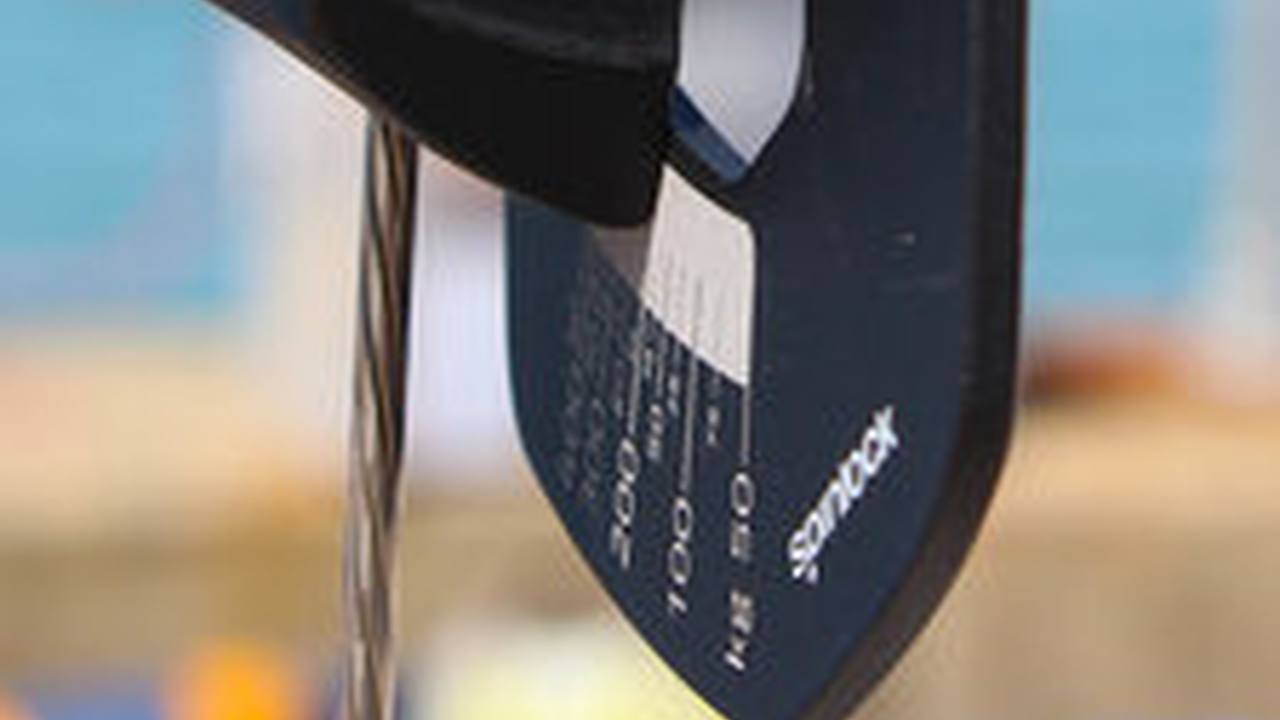
Direct scale in kilograms reduces conversion errors. The accuracy stated for the standard tool is about five percent, but practical control requires more readings. It applies, reads, removes and repeats according to a constant sequence. A non-set value is not deleted: a new inspection remains in the register. If the dispersion continues, do not adjust the sartiame until the method becomes stable.
Compare repetitions first, then the two sides
Three nearby numbers on the same point are more useful than a single value perfectly equal to the opposite side. the procedure checks first the local repeatability and only after compares babordo and tribordo. If one side varies a lot, you look for an application or surface problem. If both are stable but different, the difference is subject to the defined adjustment procedure for the boat. They do not automatically tie values without considering the required arrangement.
Record units, side, point and conditions
Each row contains internal date, instrument, model, diameter, element, side, reading height, value and unit. There are also conditions that can change the comparison and name of the operator. The Rig-Sense app allows you to create models, add images, share and export data. These functions must be configured before the campaign: a free field compiled each time differently makes it difficult to filter historians and recognize a trend.
Check that the app has not changed the terminology
An update or new phone should not turn names and units. It is checked that the same element maintains code, side and description; the photographs remain associated with the correct session. The original data is not overwritten when a note is corrected. Export creates a readable copy outside the app, so the rigger can check the sequence without depending on the device of the shipowner. Synchronization is a help, not the only available archive.
Use Rig Sense Pro only with consistent selection
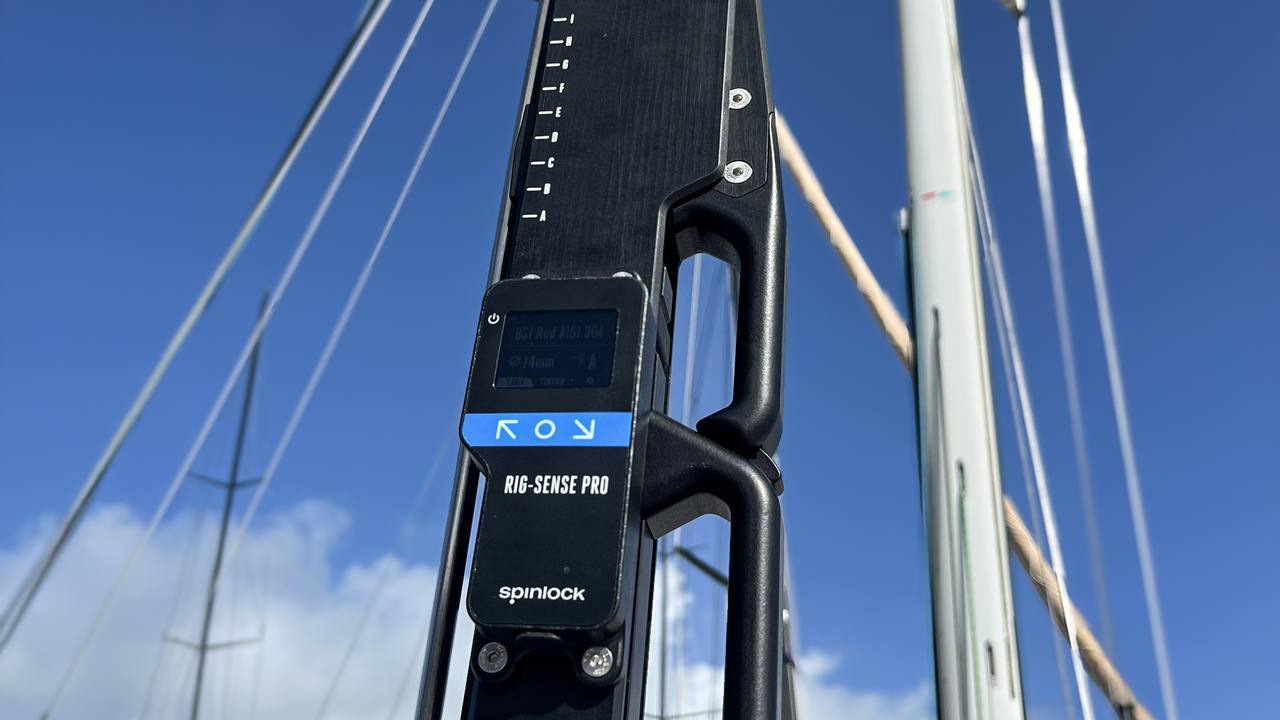
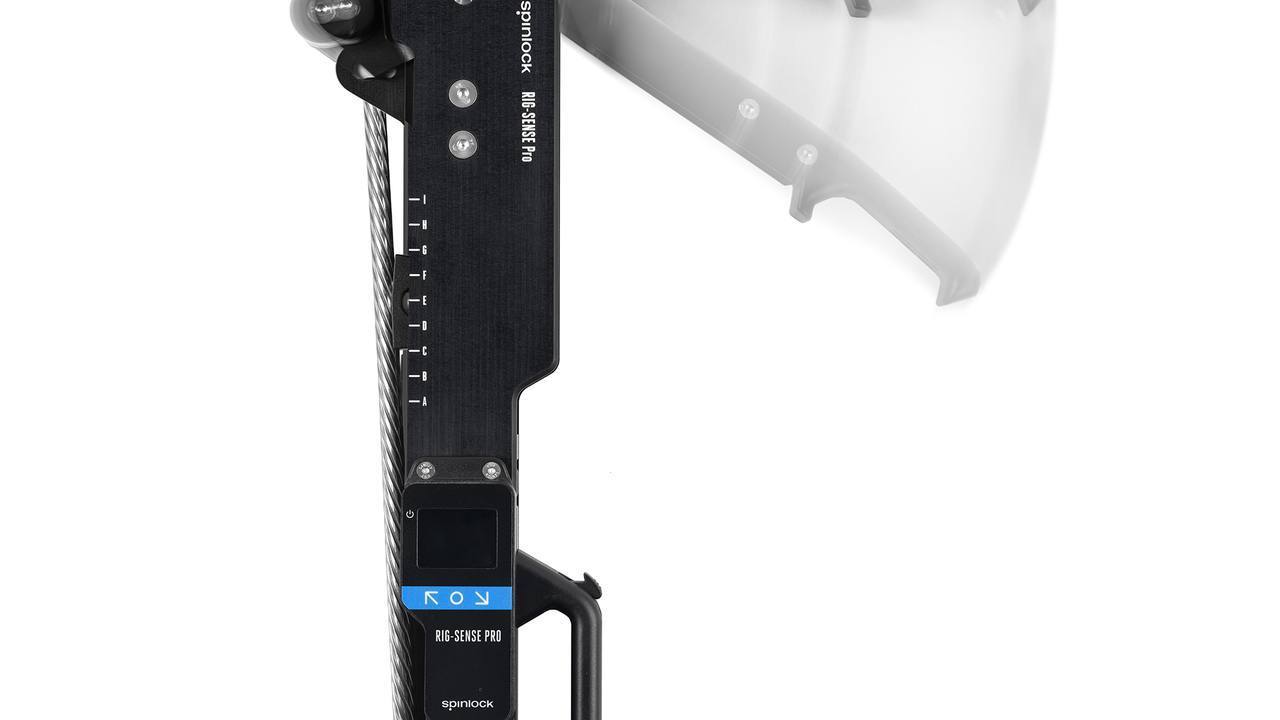
The Pro is suitable for cables from 5 to 20 mm and rod from -6 to -60. Before hooking it you select the cable type on the display, adjust the sliding deflector, unlock and lift the handle, then connect the pulleys and closes according to the expected sequence. The model can store multiple calibrations and display various units. If the selected material does not match the actual element, the reading is not accepted.
Check automatic closing, cord and handle lock
The automatic locking is designed to hold the device even when the cable loses voltage. The board also includes an additional cord and a lock of the handle controlled from the bottom. Before the measurement, these elements function and the safety point does not interfere with the display. The operator establishes in advance how to support and remove the tool; it does not improvise a grip with a hand on an item still loaded.
Do not solve the divergence on the Pro limit
The product presentation page contains 6,000 kilograms of maximum voltage, while the connected technical sheet indicates 8,000. The weight is also reported as 2.65 kilograms in table and 2.5 in the summary. the procedure records the divergence and requires confirmation of the applicable revision before setting the job. It adopts an identified document for the specific device; you do not choose the greater value and do not use the measurement as a test of sartiame capacity.
Distinguish a Load-Sense cell from a meter on the cable
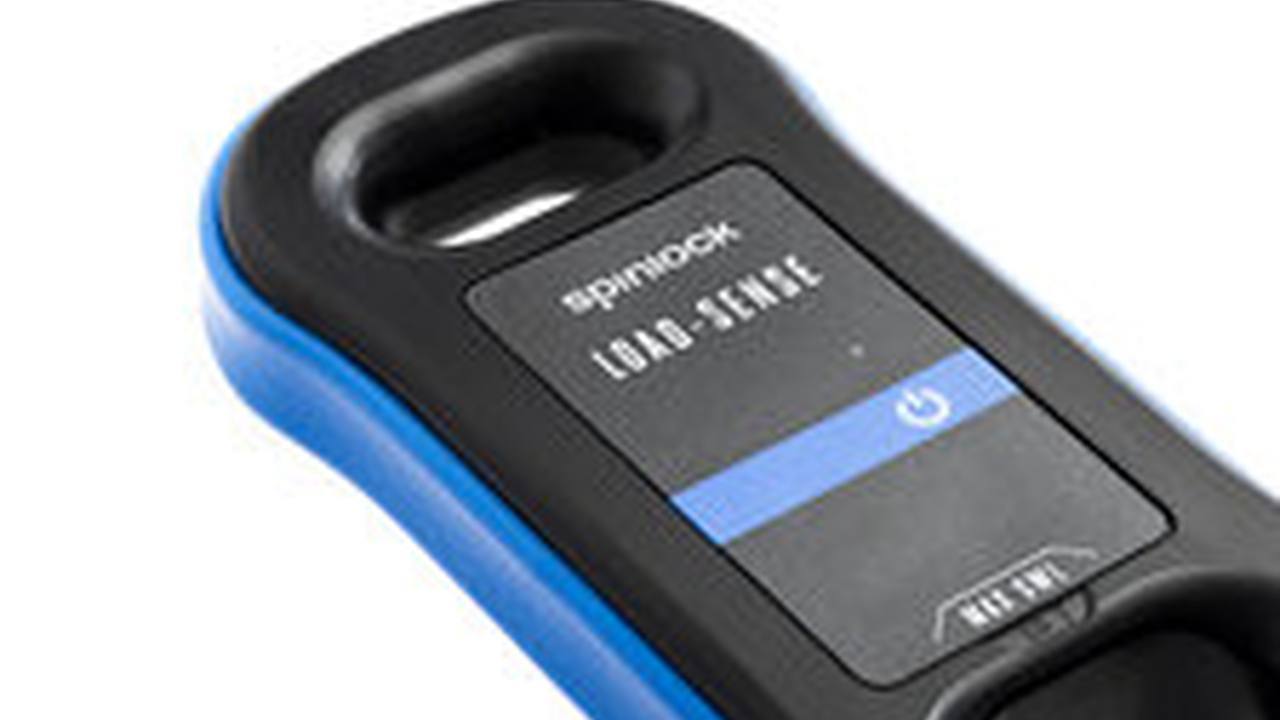
Load-Sense is not laterally supported by Sartia as Rig-Sense. The cell connects between two loaded points with a compatible ring and measures the load that crosses that path. Wireless transmission shows current value, peak and trend, with customizable alarms. The declared accuracy is 0.5 per cent of the scale fund and IP67 protection concerns short immersion. This data does not authorize an unforeseen link or a random size.
Match cell and ring without improvised replacements
The cells from 5 and 10 tons are associated with the ZS-LOOP/5 and ZS-LOOP/10 rings. The range is described up to 20,000 kilograms and a 20-ton cell appears among the compatibility: availability and set-up should therefore be verified for the specific case. Loops, attacks, rays and alignment are inspected. A ring that “enter” is not automatically an equivalent component; the whole path must belong to the approved configuration.
Check the bottom scale before judging the number
Accuracy expressed as a percentage of the bottom scale binds the choice of size to the practical quality of reading. A very large cell can protect from saturation but offer a different detail from a closer to the expected load. The decision is for the technical procedure, considering margins and configuration. the procedure records model, bottom scale and unit next to the value, preventing measurements from coming from different cells being compared as if they were equivalent.
Examine apps, connection and alarms before loading
Wireless connection and display are tested before loading the system. It occurs that the app shows the correct cell, that the unit is the one expected and that the alarm corresponds to the test plan. The peak is not confused with the current value; the chart is saved together with the conditions. If the connection falls or the device shows an unexpected identity, the session stops. Continue without registration vanifies the purpose of the cell.
Separate variation of the tailoring by measurement error
After obtaining repeatable readings, terminals, ovens, pins, plugs, wires, rods and accessible structural points are inspected. New signs, corrosion, movement or deformation require competent evaluation. A stable measure does not certify the integrity of each component; an unstable measure does not alone prove a failure. the procedure connects visual and numerical observation, keeping separate the two results. Any adjustment follows the values and sequence defined for that specific boat.
Repeat the campaign after each intervention
After adjustment you return to the same points, with the same instrument and the same unit. You record the number of laps or the intervention performed and add a new session without canceling the previous one. The final readings are compared with each other and with the target set. If the value changes again after set-up, you plan a control instead of correcting it repeatedly at each output. The documented trend helps to decide when to involve the rigger.
Close the relationship only with reconstructable data
the procedure is complete when another person can repeat the campaign: he knows which tool to use, on which element, to which height, with which verse, unity and sequence. Rig-Sense standard covers two ranges between 2 and 8 mm; the Pro faces larger cable and rod; Load-Sense measures a loaded path. If the numbers are stable, document divergences have been clarified and inspection does not show anomalies, the report can support a technical decision instead of feeding new adjustments to attempts.