
The Schaefer 600 must be configured starting from the real mission, not only from the impression of space. In 18.08 meters of maximum length it concentrates flybridge, retractable side balcony, dimmable poppiera platform and a declared night accommodation for six guests plus two people. The complexity is therefore not in the number of environments, but in coordinating propulsion, weights, energy and procedures of use. This analysis translates the data of the manufacturer in a sequence of concrete checks to ship and commander, distinguishing what is declared, what depends on the set up and what must be verified on the single unit.
Technical identity and mission of Schaefer 600
The model is a flying bridge designed by Marcio Schaefer. The declared dimensions are 18.08 meters out of everything, including pulpit and platform, and 4.96 meters of maximum glare, including battalions. The maximum fishing is 1,45 meters, the declared light mass is 25,270 kilograms and the angle of deadrise is 14,1 degrees. These are numbers to read together: the available volume is important, but loads, dinghy, water, fuel and people change trim and response. The correct configuration must therefore start from an updated weight balance.
Data sheet declared
| Parameter | Value declared | Operational verification |
|---|---|---|
| Maximum length | 18,08 m | Effective footprint at mooring |
| Maximum | 4,96 m | Space with closed and open balcony |
| Maximum fishing | 1,45 m | Loading and frequented waters |
| Light weight | 25.270 kg | Dislocation of single unit |
| Fuel | 2.100 l | Indicator calibration and reserve |
| Fresh water | 540 l | Autonomy based on guests |
| Installed generator | 1 × 17 kW | Simultaneous load balance |
| Guests | 18 day; 6+2 night | Equipment and limits of unity |
IPS 800 and IPS 950: choose without overlaying packages
The manufacturer has two Volvo Penta IPS families. The IPS 800 combines the diesel D8 common rail from 7.7 liters, six cylinders in line, to the IPS15 foot with counter-rotating propellers and EVC control. The IPS 950 instead uses the D13 common rail from 12.8 liters, always six cylinders in line, associated with its IPS drive group and EVC management. They are different architectures: power, masses, maintenance and behavior are not confused. Before the contract you need to identify exactly engines, feet, relationships, propellers, software and support coverage of the proposed configuration.
Performance: how to read 29 and 24 knots
The board declares 29 maximum knots and 24 cruising knots for a test carried out with two Volvo Diesel IPS 800, indicated as D6 by 625 hp, in flat water and without excessive wind, with clean and antivigetative propane and applied. It also declares 182 liters per hour on the cruise and 189 nautical miles of autonomy. These values belong to those conditions and to that package; they do not automatically describe each unit or IPS 950. The manufacturer reports that load, temperature, pressure, fuel, sea, current, hull status and engine can produce variations up to seven percent.
Proof of delivery and data registration
The test should not be limited to reaching a number on the display. It should be noted estimated displacement, percentage of tanks, number of people, wind, wave, temperature, two engine regime, GPS speed and instant consumption. The symmetry between the sides must be controlled, the absence of alarms and the ability to reach the system provided by the engine manufacturer. A second cruise speed reading allows you to build the comparison base for future checks. Without these conditions, comparing consumption and autonomy produces fragile conclusions.
Joystick, EVC and maneuver: a chain to test
The IPS system integrates motors, feet and electronic controls through EVC. The joystick and dynamic positioning are indicated as integrable functions, so their presence should be verified on the separate boat. In delivery it is necessary to try translation, rotation and response to small commands, first in free water and then in a assisted maneuver. You also need to know the procedure of passing to the upper station, the behavior in case of sensor not available and the operating modes provided in emergency. Electronics simplify use only when the crew and maintainer know the limits.
Glass Cockpit and plank organization
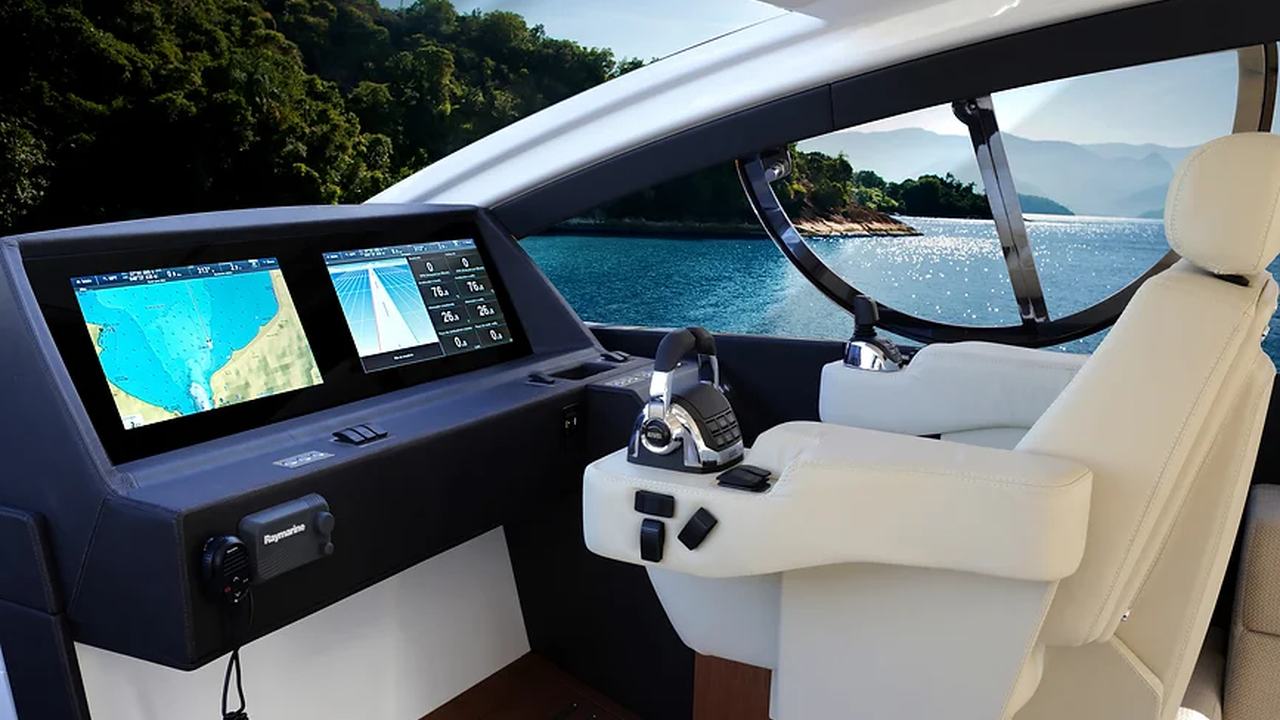
Glass Cockpit collects navigation and propulsion information on one or more screens. An orderly configuration must show alarms, regime, temperatures, levels and essential data without forcing the commander to change page in critical moments. It is useful to arrange separate views for transfer, maneuver and control systems, checking day and night brightness. Delivery must include software versions, manuals, settings backups and a list of connected devices. It is not about adding screens, but to make the boat readable.
Fuel, autonomy and practical reserve
With 2,100 litres declared and 182 litres per hour at the cruise speed of the test, fuel management requires a defined reserve before departure. The figure of 189 miles is consistent with a manufacturer's calculation in specific conditions, it is not a universal promise. The shipowner should verify really usable capabilities, precision of indicators, any differences between tanks and transfer procedure. The onboard newspaper must record hours, liters boarded and conditions: after several exits you get a useful curve for that boat, with that load and that maintenance.
17 kW generator and load balance
The installed electrogen group is declared by 17 kW. The number alone does not show that every user can work at the same time. In the configuration phase you need to list air conditioning, kitchen, water heaters, chargers and other absorbents, distinguishing nominal power and snacks. The delivery test must check cold start, stability under load, ventilation, exhaust, alarms and access to maintenance points. It is useful to define a load priority and a simple procedure to avoid overloads when more people use the boat.
Dimmable platform: capacity and procedures
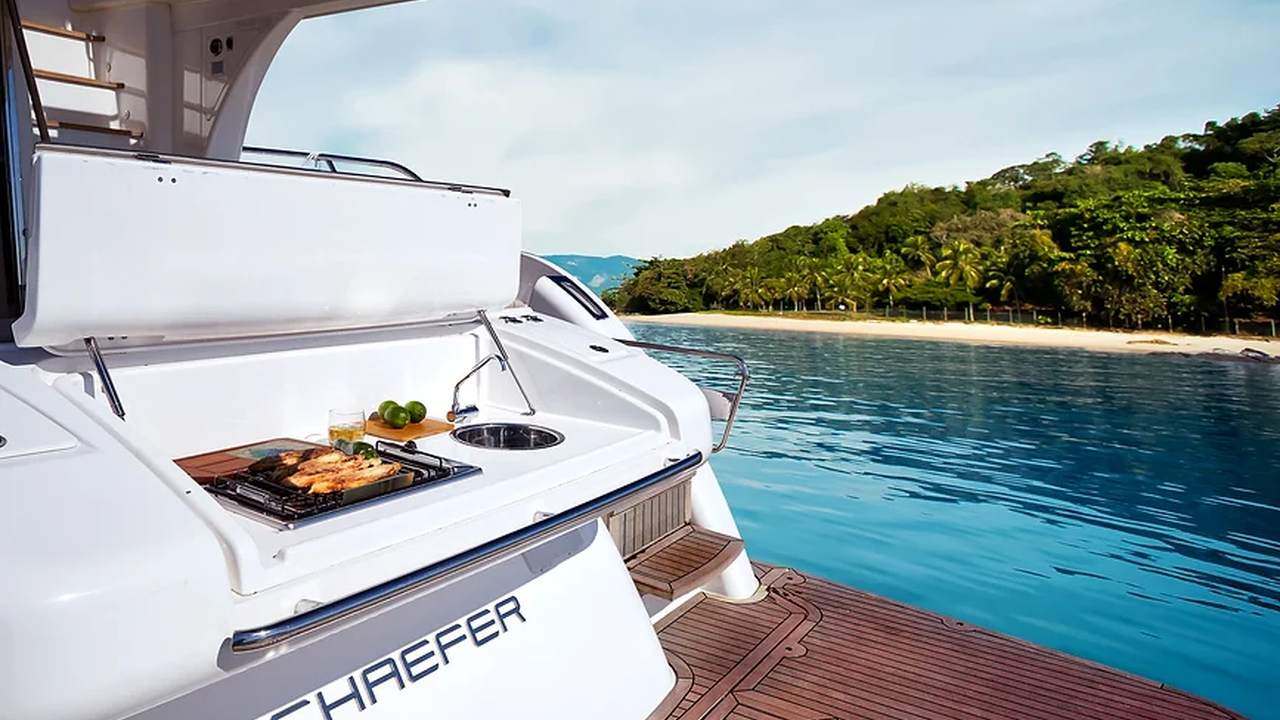
The platform is designed internally by the yard, drops 30 cm below the floating line and bears a declared load up to 800 kilograms. Integrates a scale that emerges to facilitate return on board. However, the capacity does not allow to choose tenders or water bikes, considering only the dry weight: fuel, equipment, invasive and fastening systems are included. It is necessary to try end of stroke, commands, blocks, drainage and manual recovery, as well as to determine who controls the area before each movement.
Retractable side balcony and safety of use
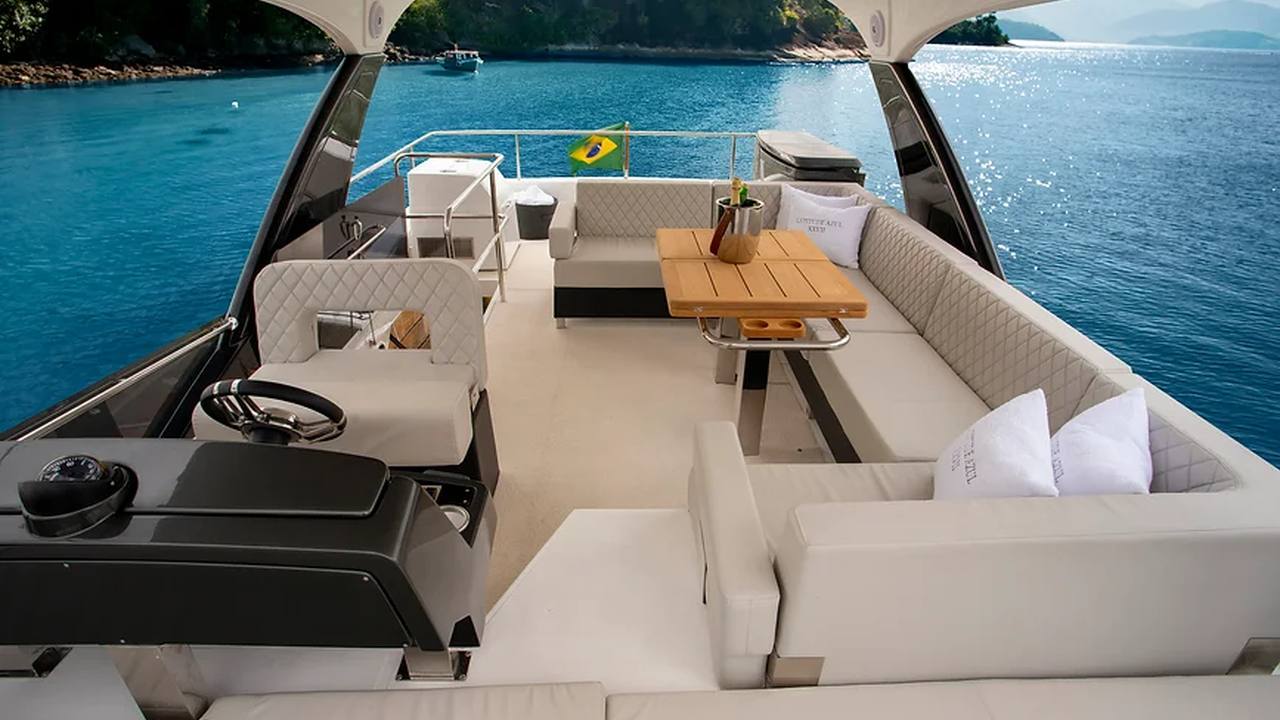
The side balcony extends the covered area and can accommodate seats, table or leave a more free passage. It is a function of dwelling, but requires discipline. Opening, closing, sensors and seals must be proven in delivery; the crew must know when the system can be moved and how to verify that the area is clear. The accommodation with an open balcony is not to be confused with the navigation or mooring. Tables and chairs must be drawn up or fixed according to the conditions of use provided, without relying on the sole apparent stability.
Fresh water and life on board
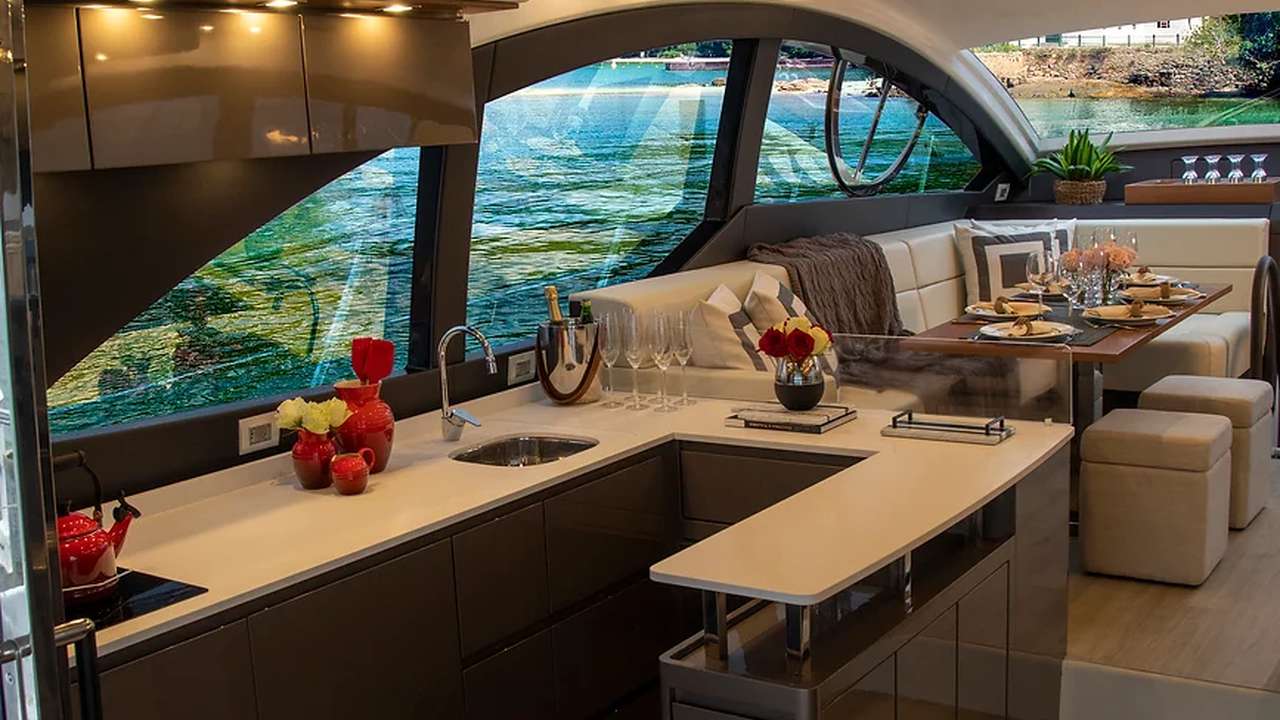
The 540 liters declared must serve up to six guests plus two people during the night. The real autonomy depends on showers, kitchen, washing and duration of stay. Before delivery, you should check level, pumps, autoclaves, filters, accesses and line insulation possibilities. Practical verification is to use multiple points simultaneously, observing pressure and noise. The crew should know the sanitization procedure and record consumption in the first cruises, so as to transform a nominal capacity into a credible planning.
Cabins and night capacity 6+2
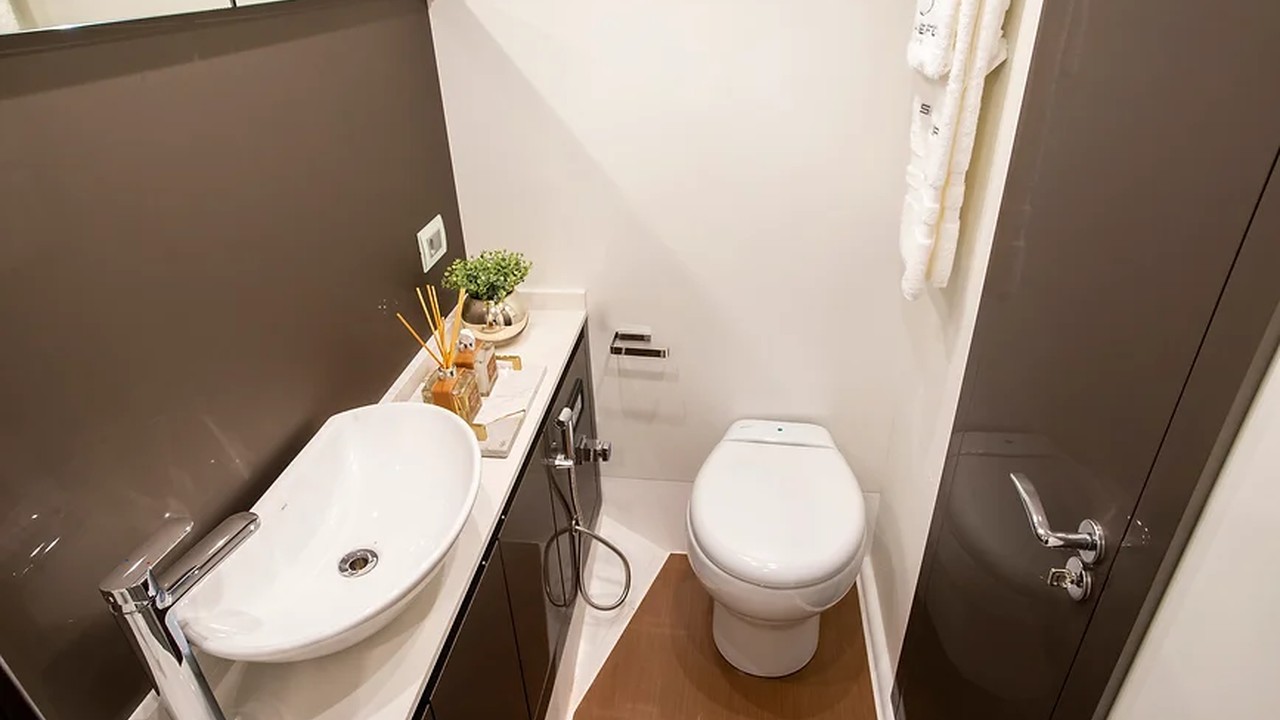
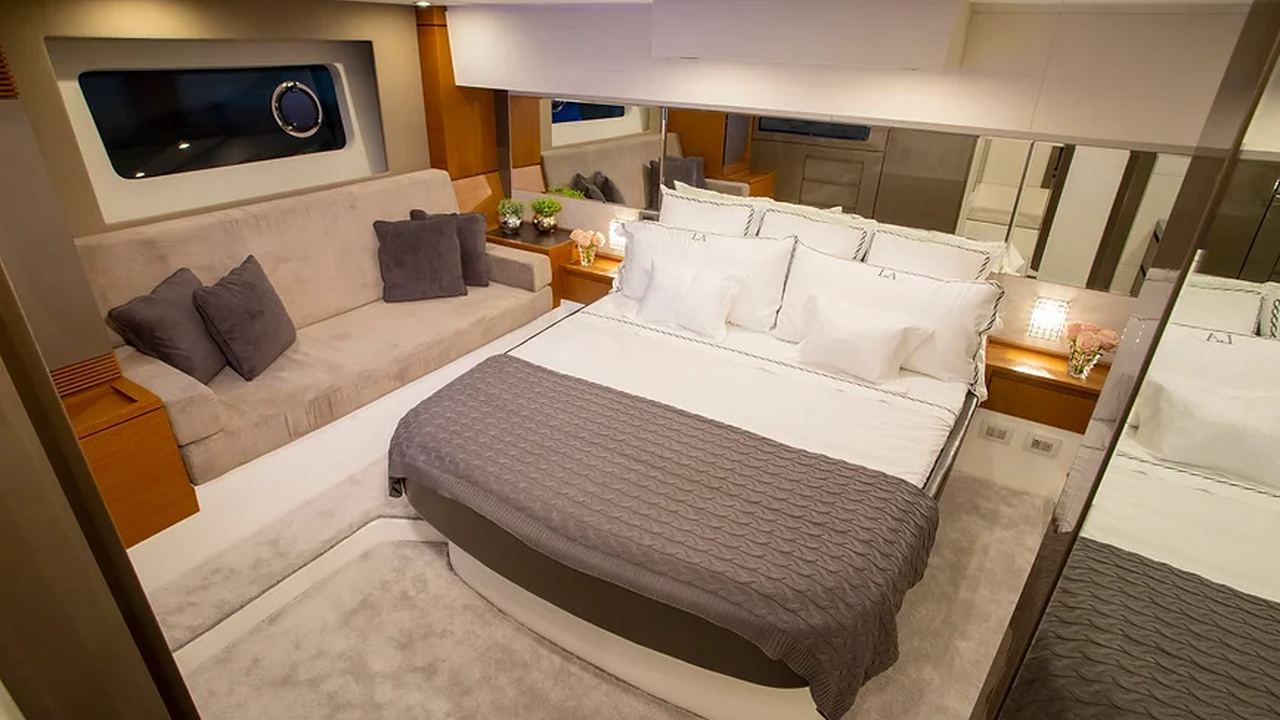
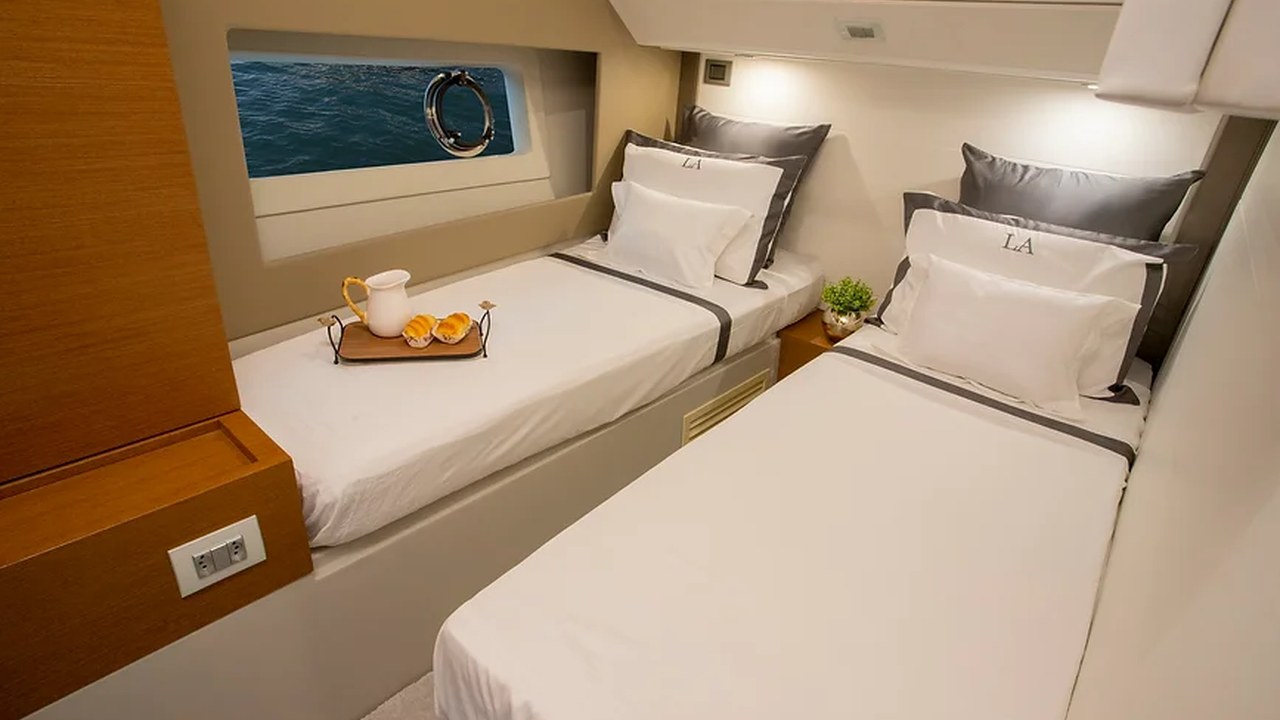
The declared night capacity is six plus two, while the daily capacity reaches eighteen people. These are two different conditions and should not be added. Verification of the installation must include actual beds, ventilation, storage, obscuring, passageways and equipment provided for by the authorized number. It is important to check the transformation of any additional places and residual space when they are in use. On a flybridge of this size, comfort and safety depend on the management of personal objects at least as to the volumes drawn.
Boots: accessibility before capacity
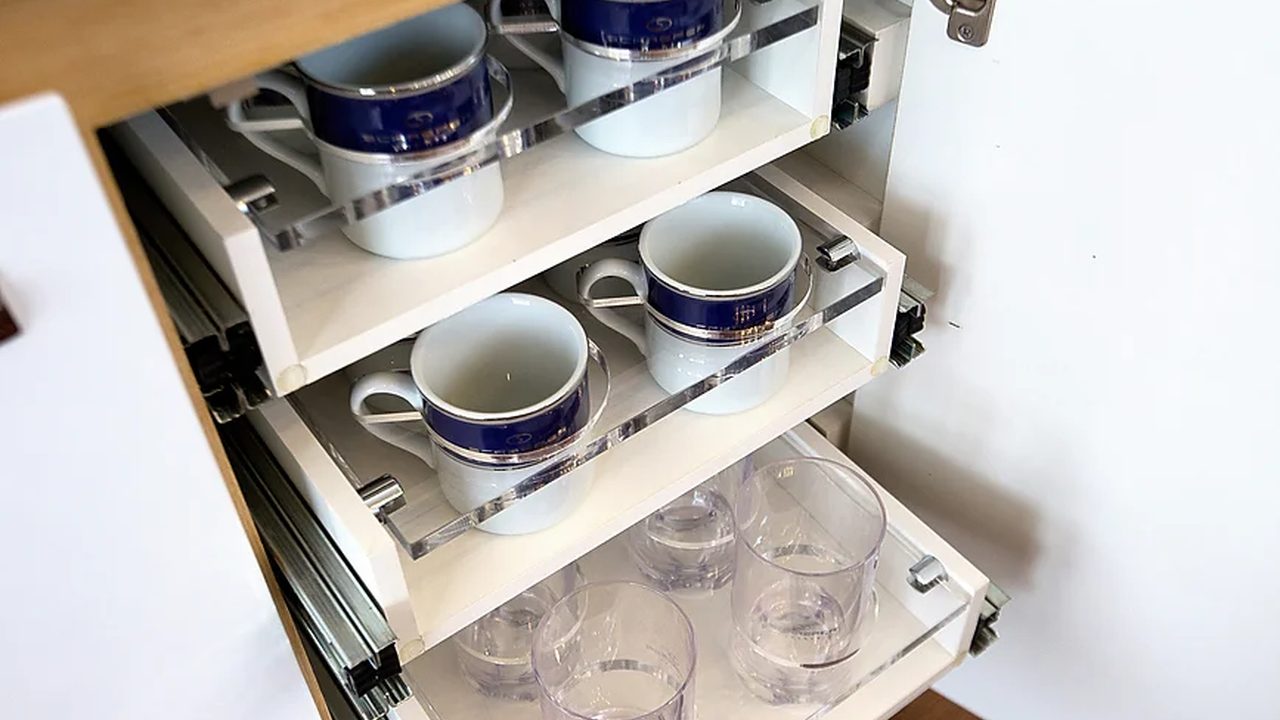
A compartment is useful if it can be reached without dismantling half a cabin and if the content remains still in navigation. During inspection it is advisable to open drawers, doors and gavones, check arrests, hinges, drains and edges. Tableware and heavy equipment should be placed below and retained. It is appropriate to reserve distinct spaces for spare parts, safety, tools and wet materials. This organization reduces intervention times and noise, avoiding the generous inhabitability to be compensated by a random distribution of the masses.
Construction: CNC and infusion under control
Schaefer declares a five-axis CNC capable of working moulds up to 75 feet in one piece and the use of vacuum infusion for the 30 to 83-foot fiberglass parts. These processes aim at precision and repeatability, but the buyer must nevertheless examine his unit. The verification sequence includes surfaces, joints, fixings, sealings, technical doors and accesses. The industrial value lies in the consistency of the process; the final acceptance requires that finishing, assembly and documentation correspond to the delivered boat.
Air track and route planning
The declared air tie is 6.87 meters. The builder invites to consider another five feet of margin when passing under the bridges. For the owner this means recording the actual height of the unit, including antennas and equipment added. It is not enough to copy the number in an app: tide, wave, water course level and signal accuracy change the margin. A dash label with normal height and reduced configuration, if required, avoids improvised decisions.
final verification sequence before acceptance
The delivery should close only after having verified IPS engine and feet identification, test system and consumption, joystick and possible dynamic positioning, bridge settings, tank levels, generator under load, platform, balcony, pumps and cabin utilities. Manuals, serial numbers, schematics, software versions, deadlines and service contacts are collected. Each anomaly must be described with a reproduction condition and a assigned responsibility. A signed list is worth more than a frantic demonstration.
Operating verdict
The Schaefer 600 combines an 18.08-metre platform with solutions that expand ray use and simplify maneuvering, but this integration requires a rigorous configuration. Speed and consumption numbers are useful if they remain linked to the test declared with IPS 800; the choice between packages should be defined on the separate single. 800 kilogram platform, balcony, 17 kW generator and EVC management become advantages when weights, loads and procedures are documented. It is therefore a yacht to choose with method: first mission and plants, then accessories and finishes.