
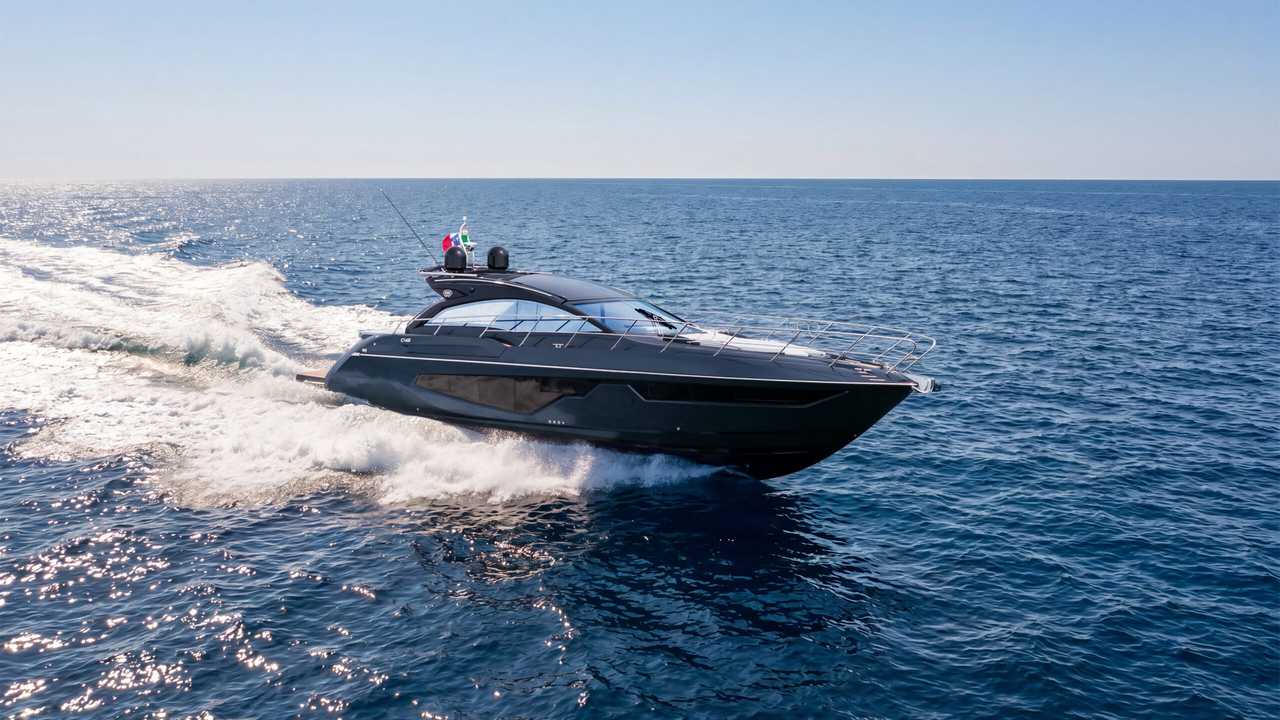
The Sessa C48 is a coupé of 15.72 meters that combines two IPS 650, hydraulic platform and garage for a tender up to 2.85 meters. To evaluate it, it is not enough to observe the profile or opening of the roof: it is necessary to check how propulsion, tanks, batteries and services work in the different configurations. This analysis follows a test sequence, distinguishing the data declared by the performance that must be measured. No speed or autonomy is taken without a single unit test.
Data sheet for testing
| Voice | Summary | Priority control |
|---|---|---|
| Length out all / EC | 15,72 / 14,36 m | Documents, boat seat and equipment |
| Baglio / fishing | 4,28 / 1,10 m | Areas of manoeuvre and seabeds |
| Weight with engines | 13 t | Configuration and added loads |
| Propulsion | 2 × IPS 650, 960 hp total | Diagnostic, pod and government |
| Fuel | 2 × 636 l | Levels, balance and filtration |
| Water / Black Water | 530 / 165 l | Autonomy and waste management |
| Cabins / beds | 2 / 4+2 | Ventilation and technical access |
| Persons / category | 12 / B | Safety load and equipment required |
Identify the real configuration
The first control compares distinct, serial numbers and physical boat. The weight of 13 tons is indicated with engines, but accessories, liquids and equipment can change it. Generator, air conditioning, batteries, tender, electronics and equipment are recorded. The list becomes the reference for sea proof and maintenance. Without this initial photo, consumption and trim are not comparable and a later addition can go unnoticed.

Two IPS 650: check before start
The total declared power is 960 hp, equal to 706 kW. Before ignition, levels, dedicated batteries, filters, sea sockets, cooling circuits and absence of leaks occur. Diagnostics must be read by competent personnel, keeping codes and historian. Pods require control of propellers, anods, seals and anti-corrosive protection. Joystick and electronic steering belong to the same ecosystem and should not be tested separately.
Proof procedure for propulsion
After heating there are regimen, speed, consumption, temperature and pressure at stabilized intervals. Each point is repeated in opposite directions, annotating wind, wave, people and tank levels. They try to accelerate, turn, reverse and stop. Vibrations or differences between engines require investigation. The model documentation does not impose a speed value here: the valid result is the repeatable one on the examined boat.

Asset, trim and dynamic visibility
With 13 tons declared and masses concentrated on stern, tender and liquid influence the answer. During acceleration, there is an angle of bow, sieving time and visibility. Flap and automatic functions must react without brusche corrections. The test is repeated with realistic load trims. A velocistic data obtained with almost empty tanks does not describe the behaviour on the cruise, while an incorrect distribution can increase consumption and stress.
Fuel tanks and EVC
The two 636 litre tanks reach 1,272 litres. The specification contains EVC probes and balancing system: readings, alarms, valves and connections are controlled. Separator and access filters must allow inspection and replacement without extensive disassembly. The boarding path, the vent and the protection against contamination occurs. The consumption recorded by the instruments must be compared periodically with the really supplied liters.

Autonomy with operational reserve
Autonomy arises from the measured consumption curve, not from the capacity alone. From the usable fuel a reserve consistent with route and availability of landings. They add generator, opposite sea, dirty hull and meteorological margin. The commander maintains a table with hours and residual miles to the usual regimes. A second supply-based estimate checks the accuracy of probes. Persistent differences can indicate abnormal reading errors or consumption.
Category B and twelve persons
The declared category and capacity of twelve persons do not eliminate the need to assess conditions and load. Zattera, vests, fire extinguishers and means of signaling must correspond to the planned navigation. The position of people affects the layout and paths. Seats and hooks are tested in motion, while escape routes remain free. The shipowner must know limits, procedures and documentation of the specific unit.

Openable roof and ventilation of the lounge
The roof transforms the coupe from an open space protected environment. Try the complete cycle, checking guides, seals, drains, sensors and stop. The position must be evident in the bridge and compatible with allowed speed and conditions. Closed roof control infiltration, noise and condensation; open, turbulence and protection of the inner area are observed. Manual recovery in case of avary must be explained and feasible.
Electrical system: five benches to distinguish
The published equipment includes four 100/110 Ah engine batteries, four 100 Ah services and a 100 Ah generator battery. Technology, date, fixing, ventilation and separation occur. Tensions at rest and under load reveal imbalances. Alternators, chargers and converter/inverters must follow compatible profiles. The labels on the pictures must be compared with the patterns, avoiding undocumented bridges or changes.

Shipowner's cabin: measurable comfort
The cabin is controlled with active air conditioning, closed doors and operating utilities. Noise, vibration, air, condensation and obscuring are evaluated. Cabinets, drawers and panels must have stops and leave valves or joints accessible. Takes and lights should not create cables in the steps. The inspection under the bed checks cleaning of the hair dryers, plant passages and lack of moisture.
530 liters water system
The fresh water tank feeds autoclave, utilities and boiler from 60 liters. The test opens multiple taps simultaneously, controlling flow, pressure and pump reboot. Bocchettone, vent, indicator and possibility of sanification are inspected. The direct connection to the water of dock requires reducer and procedure against overpressure. A failure should not empty the unnoticed tank, so pumps and sentiments are guarded during the test.

Baths, anti-siphon and black water
Every healthcare user is operated repeatedly. Valves, anti-siphon, clamps, pumps and ventilation of the 165 litre tank must be accessible. Test the level indicator and identify the path to suction from the ground or discharge where allowed. Persistent odours often report permeation of pipes or inadequate ventilation. Showers and condensates conflute in inspectable wells with pumps and working alarms.
Paths and fire protection
The specification includes bilge pumps and automatic/manual fire system in the machine room. The test tests switches, sensors, alarms and power supplies without compromising the extinguishing device. Suctions and drains must be free, the felt clean and dry. Portable extinguishers, fuel and ventilation closures are located. Equipment and shipowner must be able to intervene without improperly opening the compartment and feeding the fire.

Lower bridge and technical accessibility
The hallway connects cabins, bathroom and technical rooms. Flooring and removable panels must be opened without damaging furnishings. Valves, pumps, fuses and fittings are identified, placing legible labels. The escape routes must not depend on the movement of luggage. In a night check the courtesy lighting and the possibility to reach the essential switches even in the absence of the hotel network.
Second cabin and four plus two beds
The declared capacity is four fixed places plus two in the living area. The layout testing is carried out by really turning the beds, verifying cushion storage and reconfiguration times. In the second cabin you will experience ventilation, readings, sockets and opening of the cabinets. With all places occupied, water consumption, condensation production and sanitary load increase: the night configuration must be connected to a concrete autonomy plan.

Network 230 V, dock and generator
The input from dock to 230 V, the generator and the inverter/converter must switch without inverse power or falls on critical utilities. Differential protection, polarity, grounding and cable status occurs. With air conditioning, boiler and active kitchen, tension and temperature are measured. The generator is tested at increasing loads, observing unloading and cooling. Non-essential utilities must be isolated quickly.
Equipment of deck and anchorage
The published configuration still includes 20 kg and 70 meters of chain of 10 mm. Markings, joints, brakes, water supply and emergency control are controlled. The gavone must drain and allow the chain to react without heaps. The prodier teak is examined for bonding and sealing. The two electric wipers, washing and disapproving are tested with water: they are visibility systems, not simple accessories.

3.70 × 1,66 meters hydraulic platform
The platform serves bathroom, boarding and handling. The test includes complete stroke, arrests, interlocks, stability, drainage and manual recovery. Scope and conditions of use must be included in the manual of the single boat. With people or tender the load changes; no one has to stop in the crushing areas. Hinges, cylinders and pipes are controlled for play and losses. The surface must maintain adherence even wet.
Garage and dinghy up to 2,85 meters
The garage accepts a tender within 2.85 meters and can accommodate a compatible jet tender. Nominal dimensions are not enough: weight, shape, fixing points and complete procedure of varo occurs. The medium must be insured against longitudinal and lateral movements. Ventilation, detection, drainage and fuel management or batteries require specific instructions. The tender modifies the poppiero centre and must appear in the test configuration.
Hydraulic flaps and route stability
Hydraulic flaps are controlled with symmetrical stroke and loss absence, then at sea with progressive variations. The indication on the bridge must correspond to the real position. Excessive corrections can increase resistance or mask incorrect distribution. The response, visibility and behaviour of the pods are observed. The goal is not to get a photo frame, but a repeatable and secure adjustment to the different loads.
Accessories and compatibility matrix
Extended air conditioning, stabilizer, dissalator, electronics, audio and connectivity must be evaluated for absorption, weight, cooling and maintenance. Each option receives a row in the matrix: function, power supply, protection, sea grip, spare and access. The budget avoids overloading services or generator. Changes must enter the schematics. An accessory that does not have diagnosis and isolation procedure can complicate a simple start.
final verification sequence before delivery
The minutes include dry proof, water proof, inventory, photographs and anomalies. CE documents, manuals, warranties, serials and keys occur. Each relief is responsible and expiry, then it is checked again. Esthetic page and technical page remain separate: a imperfect finish is not equivalent to a fault, but an inaccessible valve is not a detail. Delivery only closes when configuration and schemes match the boat.
Frequency maintenance plan
Before the exit: feel, levels, filters, batteries, government and closures. Every month: pumps, alarms, roof, platform, chargers and winch. Season: pods, propellers, anodes, sea sockets, fire-fighting, air conditioning and sanitary facilities. The hours regulate engines and generator; the calendar governs pipes, sealants and batteries. Recording values and interventions allows you to recognize deviations before they become avarian.
Technical evaluation
The Sessa C48 concentrates complex functions in a 13-ton coupe: IPS, openable roof, platform and garage. The quality of use depends on integration between these systems and testing discipline. The useful numbers are 1,272 liters of fuel, 530 of water and 165 of black water; speed and autonomy are measured instead. A documented configuration and rigorous verification sequence transform the charm of the project into operational reliability.