
Configuring a Swan 55 requires precise decisions before choosing colors and fabrics. The model offers four keel solutions, an interior floor with three cabins and variants, a 110 hp Yanmar 4JH and tanks sized for the cruise. The Nautor Swan page also publishes the basic data of the electrical system, but does not define a single universal package for electronics and optionals. This guide organises verifications for systems and delivery: what is stated is reported as such; what depends on the order must appear in the separate. Measured performance or installations are not attributed by the photographs.
Swan 55: Configuration matrix
| Area | Declared configuration | Operating control |
|---|---|---|
| Scafo / outside everything | 16,60 / 17,75 m | Encumbrance and documents |
| Baglio | 5,00 m | Mooring, invaded and travel lift |
| Standard eyelashes | 2,50 m | Identity and joint |
| Alternative haircuts | 2,10; 3,40; 2,00/2,85 m | One option, dedicated plan |
| Engine | Yanmar 4JH, 110 hp | Serials, hours and testing |
| Diesel / water | 800 / 600 l | Flutes, levels and valves |
| Hot water / collection | 60 / 100 l | Pumps, drains and accesses |
| Services | AGM 24 V, 340 Ah / 20 h | Energy budget |
| Starting point | AGM 12 V, 50 Ah / 20 h | Separation and test under load |
| Bench / charger | 230 V, 32 A, 50 Hz / 80 A | Protections and configuration |
First choice: the keel
The standard fishing of 2.50 meters is not the only proposal. Nautor indicates a reduced keel of 2,10, a performance of 3,40 and a telescopic that varies from 2,00 to 2,85 meters. The decision must start from ports, seabeds, sailing program and availability of assistance. The published zavorra value, 7.530 kilograms, refers to the standard keel and should not be copied to alternatives. Contract, design and identification of the unit are compared to delivery. Manual, drive, alarms, blocks, emergency procedure and full cycle testing are also required for the telescopic.
Second choice: sails and certificates
The rig is described by IG measures 23.22 meters, J 6.73, P 22.20, E 7,00 and TPS 8.30. The official surfaces are 95,11 square meters for the frog, 80,15 for the bow and 275 for the gennaker; the bow triangle measures 78,14. The distinction must specify actual sails, materials, grammatures, reductions, winders and carrier equipment. If the boat is used in ORC or IRC, real configuration and certificate must remain aligned. The test includes installation, winding, reduction and recovery without looking for extreme conditions, annotating frictions, end of race and crew capacity to perform maneuvers.
Layout: three cabins and variants
The reference disposition includes a forward ship cabin, three total cabins and two bathrooms with two separate showers. The board signals an optional third bathroom and alternatives for ship cabin, table and left aft cabin. It is not enough to write “three cabins” in the contract: planimetry, revision and options codes are needed. Technical access, escape routes and ventilation must remain valid after each variant. At delivery, every door, obscuring, light, grip, gavones and closure is tried; removable mattresses and panels are lifted to observe the hidden surfaces.

Shipowner's cabin in the bow
The prodier placement offers separation from the stern cabins, but exposes the environment to different movements and noises according to sea and gait. The evaluation is functional: access to the bunk, hooks, ventilation, obscuring and containment of objects. Private bathroom and shower are tested with pumps, drains and hot water in operation. Seals, visible fittings, odours and abnormal cycles of the autoclave are controlled. Textiles, panels and carpentry must correspond to the samples of the order; the range photographs are not distinct. Any plant passage behind the coatings must remain accessible without demolitions.
Stern cabins and second bathroom
The two rear cabins share the second service core in the basic configuration. The verification sequence considers accesses, real dimensions of the bunks, ventilation, openings, lighting, sockets and storages. There is also separation from engine compartment and plants, observing panels, closures and inspection possibilities. In the bathroom there are taps, showers, drains and ventilation, without just sliding the water for a few seconds. If the third bathroom has been ordered, the collection system and the water balance should be updated. The number of declaring places remains that of the specimen, not a deduction from the number of beds.

Kitchen: inventory of utilities
The kitchen is part of the long-term program on board. Each device must have brand, model, serial, power supply, absorption, protection and manual. The test involves refrigeration, cooking, water, drains, ventilation and closures, but only for what is actually installed. Electric loads enter the service and dock budget; thermal loads require dedicated procedures. A simulated inclined boat, pots, dishes and supplies must be retained. Accessible pipes should not rub or prevent the opening of panels. A complete set-up shown by the yard can be a different option or specification.
Salone, Cartoon and Boots
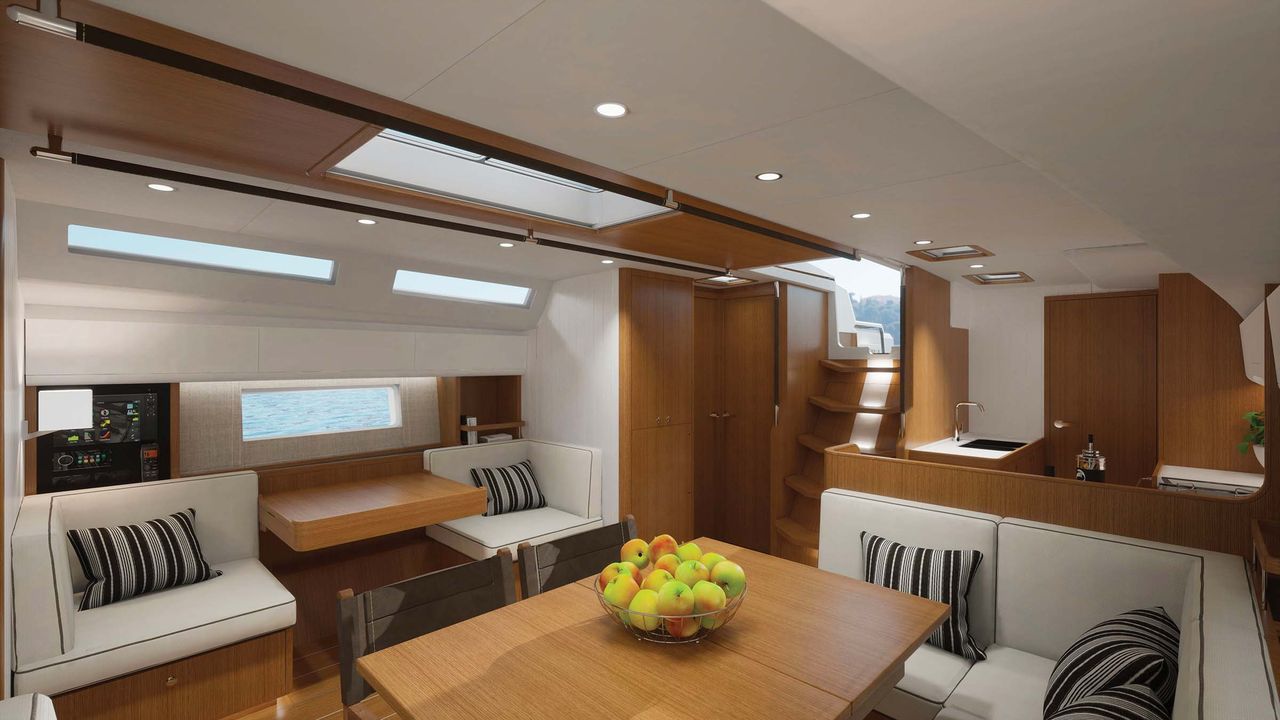
Salon and carding area can change according to the chosen configuration. Before delivery overlapping approved planimetry and real layout: table, chairs, sockets, lighting, tools and panels must be in the expected position. The tables are open and closed; doors and drawers must have positive stops. The hooks must accompany the route from the plug to the cabins. They control mouthpieces, seals and obscurants with a controlled water proof. Boots are also noted for the weight plan, avoiding concentrating spare parts or heavy supplies where they alter the arrangement.

Diesel: fuel capacity and path
The 800 nominal liters describe the reservoir, not the feasible distance. The test reconstructs vent, vent, indicator, interception, filters and engine power. The level known during the supply is compared with the instruments; accessible fittings and pipes are controlled by threading and rubbing. Autonomy is born of consumption measured by defined regimes, noted conditions and prudent reserve. Any additional utilities powered by diesel must appear in the scheme. Procedures include contamination, purge and spare parts available, without improvising fuel transfers in navigation.
Yanmar 4JH: start and test
The published power is 110 hp for a Yanmar of the 4JH family. The delivery identifies a complete, serial, transmission, propeller and hours; the configuration is not presumed by a synthetic description. The first start is cold, recording voltage, alarms, pressure, charging, cooling, unloading and vibration. After heating you try to insert gear, controls and stop. Filters, impellers, levels and service points must be reached. Speed and consumption are not invented: they are measured with load, sea, wind and regime reported in the minutes, then used for the real plan of autonomy.

Fresh water: 600 litres to be tested
The official water capacity is 600 liters. The verification follows the flow from the vent to the utilities: vent, tank, indicator, pump, autoclave, collectors, taps and showers. You look for a stable pressure and you listen if the pump starts without request, possible clue of loss. The visible fittings and areas under the furniture remain dry during prolonged testing. The number of days available depends on the crew and habits. A dissalator, if ordered, is a distinct system to identify and test for production, water quality, filters and conservation; it is not considered present only because it is suitable for the program.
Boiler and hot water 60 liters
The declared boiler contains 60 liters. Test time, temperature, safety valve, mixing and losslessness through the heating modes actually installed. The capacity does not guarantee the same availability to each user, because it depends on the initial temperature and mixing. The manual must clarify emptying, protection from frost and maintenance. If the circuit receives heat from the engine in addition to the power supply, diagram and valves must be identified on the boat. Hot pipes must be protected and not interfere with cables or sensitive materials. Each anomaly is repeated after surgery.

Collection of 100 liters
The collection tanks have declared total capacity of 100 liters. The selected internal configuration can change the number of users and pipe path, especially with the optional third bathroom. The minutes must indicate tanks, vents, indicators, pumps, valves and suction points. Odours, drawings, clamps and accessibility are controlled. The valves are managed according to regulations and navigation area; the crew must clearly know the modes allowed. Incompatible cleaning products can damage seals and sensors. The test does not end with a single discharge: filling, indication and emptying procedures are occurring.
AGM services at 24 V
The published service desk is AGM, 24 V and 340 Ah at the download of twenty hours. The nominal capacity is not all usable and changes with age, temperature and discharge intensity. Before the order, a balance sheet is built with navigation, communications, lights, pumps, refrigeration and equipment really selected. Upon delivery, batteries, dates, connections, fuses, switches, ventilation and monitors are recorded. A reading of rest voltage does not replace a test under load. If you change technology, re-examine the charging profile, protections, mass and installation; it is not enough that the new batteries enter the compartment.

AGM start at 12 V
The starting battery is AGM from 12 V and 50 Ah at the discharge of twenty hours. The different voltage compared to services requires a clear reading of the separation and charging scheme. Start-up, sectioning, protection and possible parallel procedure are tested, without creating unauthorized bridges. Terminals and cables must be protected, identified and fixed. The control also considers voltage drop during the next startup and recovery. Any circuit added to the starting system must be in the updated drawings, because an invisible modification can compromise the availability of the engine or correct reading of the instruments.
Bench 230 V, 32 A
The official entrance is 230 V, 32 A and 50 Hz. The control concerns on board, cable, connectors, differential protections, switches and continuity of the protection conductor. It is tested with the authorized column and there are voltage, polarity and simultaneous loads. Adaptors and extensions must respect the expected system, avoiding temporary connections. The internal sockets are tested for environment, including those close to water with the required protections. Interventions on the alternating network are reserved for qualified technicians. The minutes must report instruments and result, not only the phrase “works in port”.

Charger from 80 A
Nautor indicates a 80 A. Marca battery charger, model and available curves, however, must be those of the distinct. The test follows the charging phases by observing current, voltage, temperature and communication with the monitor. The profile must match the installed AGM; any future changes require a new configuration. It occurs that the system does not exceed the limits of the dock when working also kitchen, boiler or other utilities. Access for ventilation and maintenance must remain free. A high nominal value does not demonstrate by itself times of recharge or autonomy: it serves initial status of the counter and repeatable measures.
Electronics and optional: no deduction
The technical card does not set for all specimens a unique package of tools, radar, AIS, pilot, communications or entertainment. These devices should be noted with serials, software, data network, power supply, manuals and licenses. The same discipline applies to layout and blanket options. Testing is not limited to ignition: simulates loss of a sensor, alarms, switch to degraded modes and configuration recovery. Passwords and accounts are transferred to the owner, while a copy of the settings is stored. What appears in a promotional photo remains an image until contract and boat confirm their presence.
double rudder verification
The two blades are central to the behaviour of the wide aft hull. Dry profiles, edges, alignment and game are compared; axes, seals, bearings and accessible connections are observed on board. The emergency system is identified in manuals and tried within the limits allowed. The two walls are compared in water, the response to different speeds and motor behaviour. The verbal distinguishes friction, play and asymmetry without masking them with a provisional adjustment. After any shock or misfortune, professional verification is required that includes structures and links, not only the outer surface of the blades.
Delivery in six steps
First: freeze distinct, revisions of plans and serials. Second: inspect dry hull, keel, thymoni, propeller and sea sockets. Third: try in alternating network platform, batteries, water, drains, motor and appliances. Fourth: Test maneuver, sails and navigation systems with recorded conditions. Fifth: classify each relief for responsibility and expiry. Sixth: repeat the test after correction and archive the evidence. No non-compliance is closed by verbal promise. The result is a file describing that Swan 55, not a generic version imagined from the catalog.
Maintenance and logs of the Swan 55
The plan combines construction manuals, Yanmar, rig, batteries and selected equipment. Before leaving with the boat, you can control bilge, valves, levels, energy, government, visible tailoring, locks and safety means. The programmed ranges cover engine, cooling, unloading, pumps, boilers, tanks, sea sockets, blanket, sails and maneuvers. Chiglia and two thymoni are observed at each feed. For the telescopic version the specific program of the system is added. Every intervention records date, hours, spare, technical and final test: without the latter, maintenance remains an activity performed but not verified.
Consistent configuration, not list of accessories
The Swan 55 offers many choices, but the goal is not to install them all. Chiglia, sails, layout, energy and equipment must respond to the same program and the real number of people who will manage the boat. The capacity of 800 liters diesel and 600 water acquires meaning only along with consumption and procedures; the 340 Ah to 24 V require a budget; the 110 hp require measures, not suppositions. A well conducted delivery transforms catalog data into identification, evidence and responsibility. It is the most concrete way to preserve technical accessibility, reliability and clarity of the setup over time.