
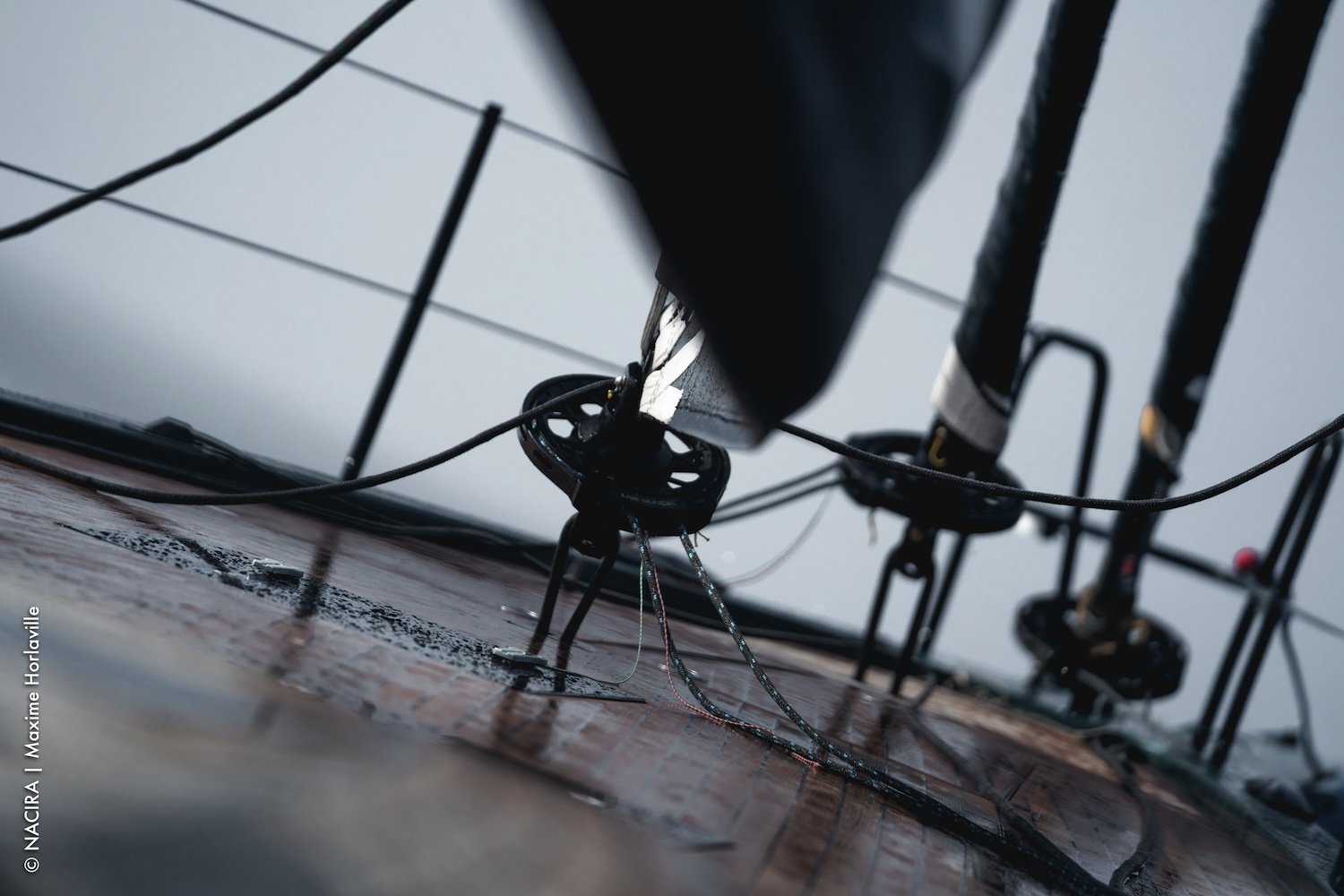

Sailing is experiencing a technological breakthrough thanks to the evolution of the ravines and winding systems for the bow sails, in particular for Code Zero and gennakers. These systems, once reserved for extreme racing boats, are now accessible to all, thanks to innovations that have made the maneuver more fluid, precise and efficient. With the use of modern blends and technologies such as top-down systems, the modern crocierista can make the most of the light wind conditions, without having to depend on the engine.
The revolution of whips and cable-less systems
The Doyle sails started a breakthrough with the introduction of “cable-less” technology, experimented on the Maxi 72. The structural cables, once heavy and difficult to handle, have been replaced by rigid laminates, engineered with fibers such as carbon. This allowed to lighten weights, reduce chainring and obtain a precise and immediate winding. The rigidity of the inflorescence of the sail replaces the anti twist cable, allowing the smooth to work smoothly and without interruption.
Cable-less technology has made it easier and more reliable, eliminating heavy cable problems and difficult to handle. The modern blends, with drums made of aeronautical or titanium aluminium alloys, reduce the vertical dimensions and approach the wall point to the blanket or the dolphin. This made it possible to obtain a precise winding from the first laps of the drum, without having to tension the cables to the inverosimile.
The top-down system for gennakers
For the gennakers, the deep asymmetrical sails designed for the bearing ranges from lasco, the real turning point came with the top-down systems. These systems allow to avoid the problems of traditional winding, in which the central part of the sail (the “peace”) closes incorrectly, creating a dangerous caramel. The top-down system reverses the winding kinematics: the torsion starts directly from the tree head, starting from a point where the sail is triangular and less round, then continue towards the central zone of the broader balumina, properly absorbed by the winder.
The top-down system made the use of gennakers easier and safer, even for reduced crews or even in solitary. The sail closes compact around its axis, ready to rest protected or directly inferior on the bompress. The result is a smoother navigation experience, with greater control and greater speed even in light wind conditions. With a wide and transverse code zero sail, you can approach the speed of the wind and, in some cases, overcome it with sports hulls. This has made sailing more accessible, reducing motor dependence and increasing the efficiency of cruise boats. Technology, once reserved for extreme competitions, today is within reach of everyone, thanks to an evolution that made the maneuver easier, more precise and faster.