
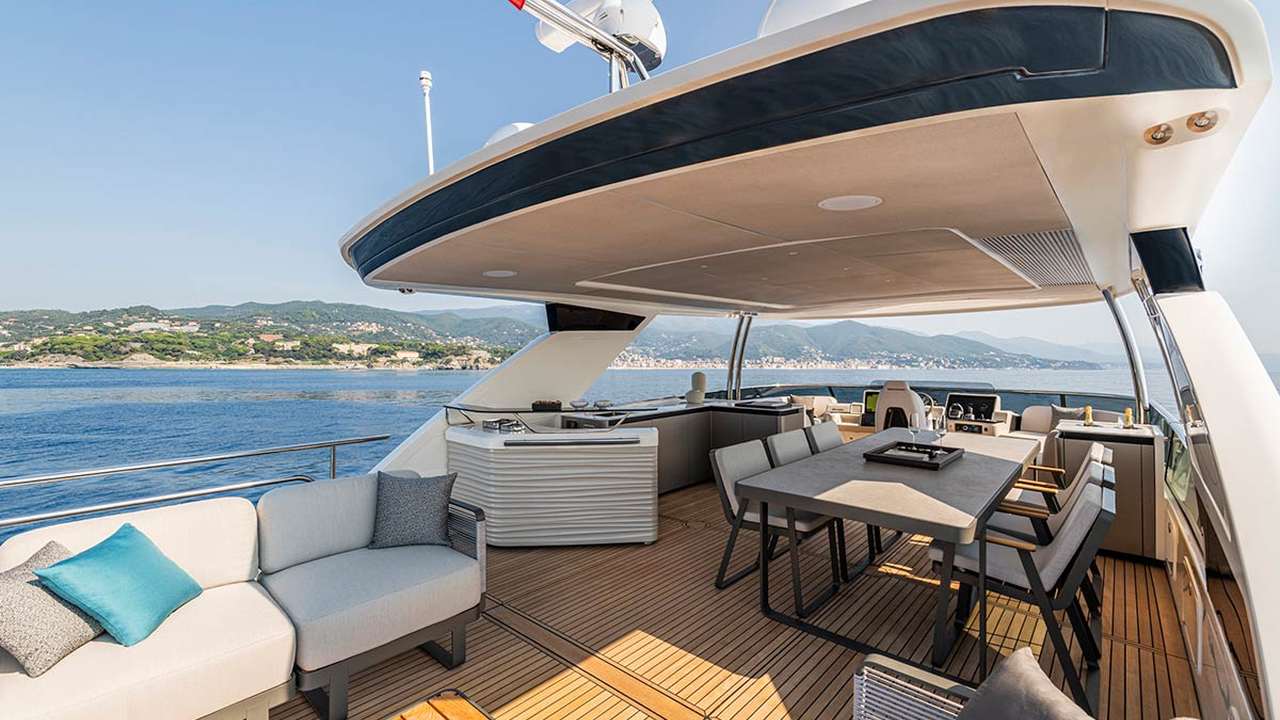
Configurare l’Absolute Navetta 70 significa coordinare due layout di flybridge, un salone panoramico, cucina ampliata, cinque cabine indicate in una pubblicazione ospitata dal cantiere e alloggi equipaggio separati con due letti e cucina privata. La base tecnica corrente comprende 21,27 metri, 5,63 di baglio, 3.500 litri di carburante, 910 d’acqua con boiler incluso e due Volvo Penta D13 IPS1350. Portata massima sedici persone e capacità di crociera non sono la stessa cosa: piano, certificazione e bilanci devono definire l’uso reale.
| Decisione | Dato disponibile | Controllo di configurazione |
|---|---|---|
| Flybridge | Layout A oppure B | Arredi, peso, ombra, bar e stivaggio |
| Ospitalità | 5 cabine; 8+2 letti indicati | Piano, certificazione, bagni e fuga |
| Equipaggio | 2 letti e cucina privata | Accesso, servizi, rumore e privacy |
| Propulsione | 2 × D13-IPS1350, 735 kW | Pod, joystick, software e assistenza |
| Carburante | 3.500 l | Utilizzabile, riserva e livelli |
| Acqua | 910 l, boiler incluso | Serbatoi netti, produzione e reflui |
| Persone | Massimo 16 | Dotazioni, carico e missione |
| Fotovoltaico | Integrato nel tetto | Potenza, regolatori e produzione |
| Test ospitato | 27,5 kn massimi | Condizioni specifiche, non garanzia |
| Categoria | B | Fa fede il certificato dell’unità |
Scegliere il flybridge dalla missione
Le configurazioni A e B devono essere confrontate con persone, pasti, conduzione e stivaggio. Ogni seduta, tavolo o bar aggiunge massa e utenze in alto. Il piano firmato indica fermi e posizione da navigazione. Ombre e coperture hanno limiti al vento.
Si simula una giornata completa: colazione, navigazione, rada e chiusura. Scala, corrimani e drenaggi devono rimanere liberi. Refrigerazione, lavello e audio entrano nei bilanci. L’allestimento migliore è quello che l’equipaggio può mettere in sicurezza rapidamente.
Salone panoramico e carico termico
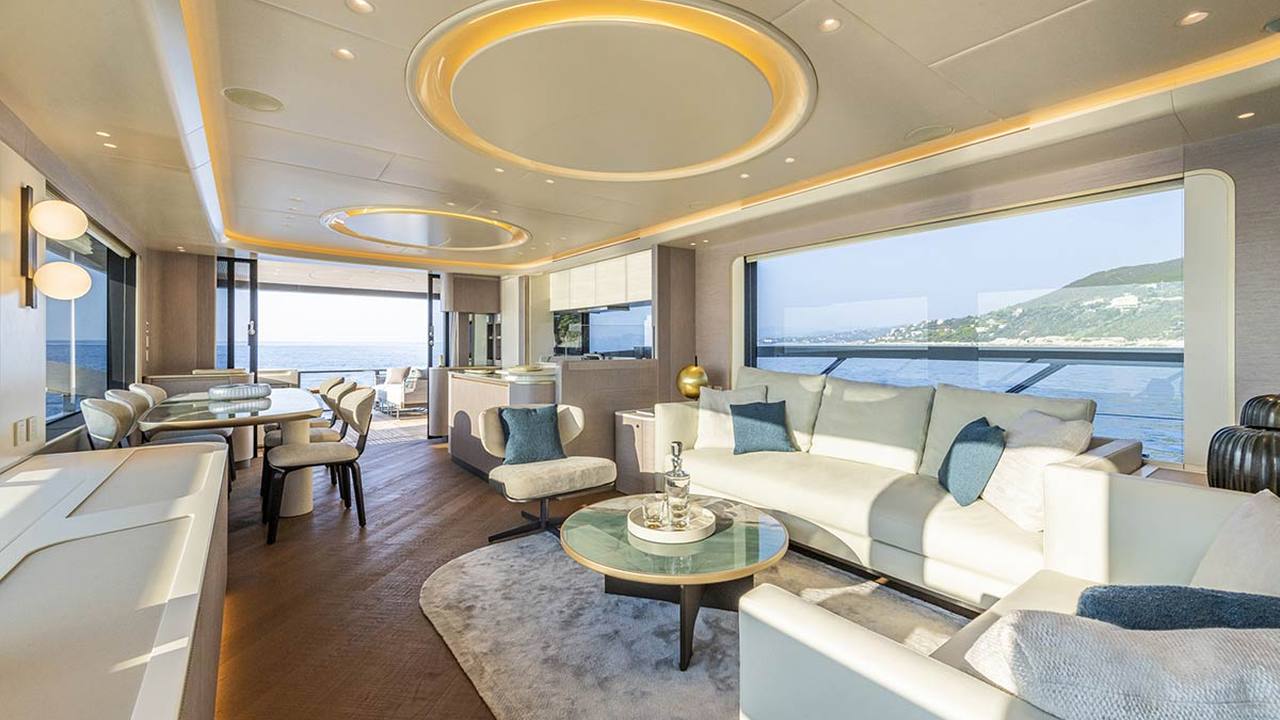
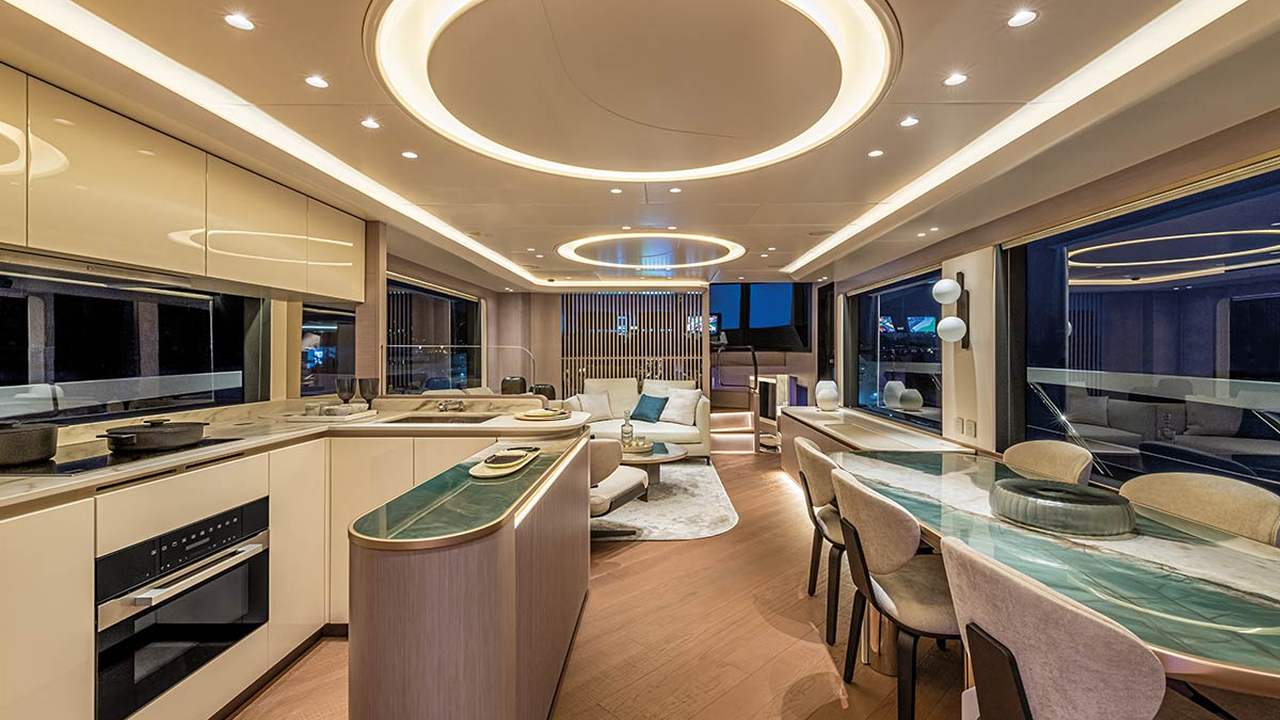
Le grandi vetrate aumentano luce e vista, ma anche sole, riflessi e condensa. La climatizzazione va provata con persone, porte chiuse e schermature reali. Temperatura e umidità si misurano in più punti. Tende e arredi non devono coprire fan-coil o uscite.
Porte scorrevoli e pavimento continuo facilitano i passaggi. Guide, fermi e guarnizioni devono funzionare con barca in movimento. Mobili liberi richiedono ritenute. Di notte l’illuminazione non deve riflettersi nella plancia interna.
Pozzetto a terrazza: più di un salotto
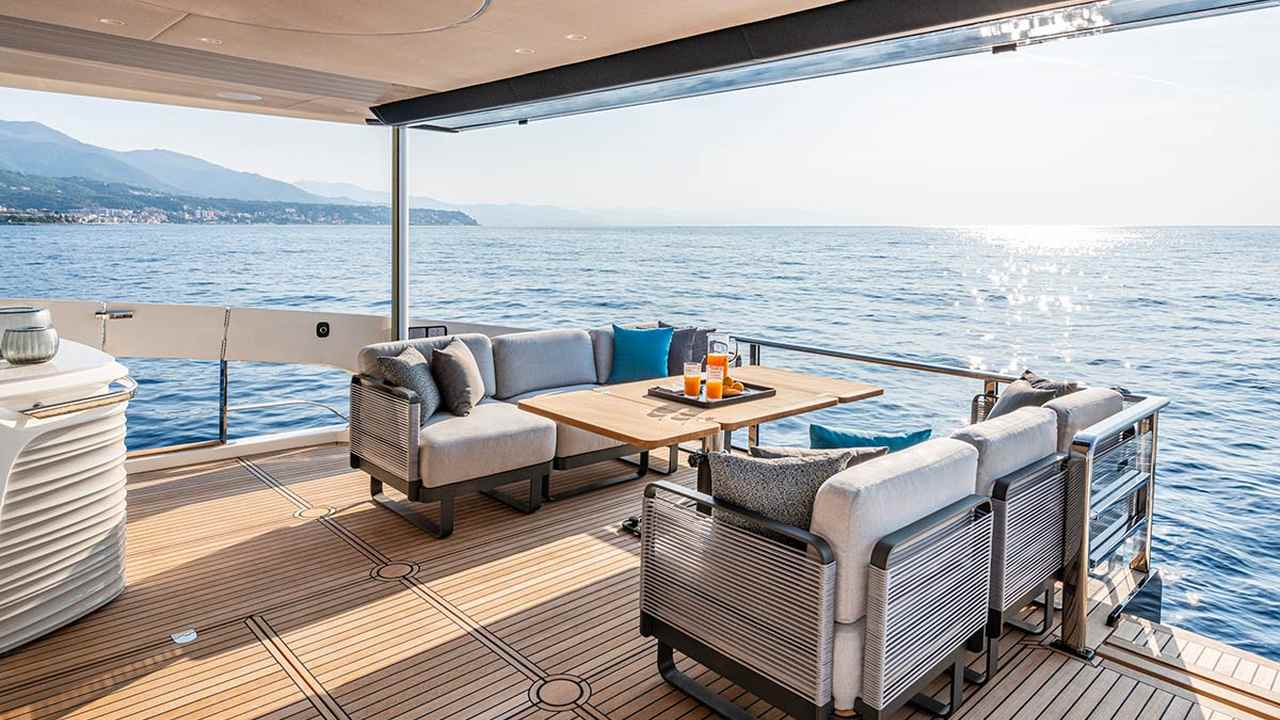
L’area di poppa serve pasti, bagno, accesso al tender e ormeggio. Con tutti gli arredi in uso devono restare disponibili cime, gavoni ed estintori. Parapetti trasparenti, appigli e antisdrucciolo si controllano con ponte bagnato.
Si prova la trasformazione verso la configurazione da manovra. Cuscini e tavoli hanno stivaggi dedicati. Drenaggi e soglie non devono convogliare acqua nel salone. La terza stazione di comando deve essere raggiungibile senza conflitti.
Cucina ampliata: testare un pasto completo
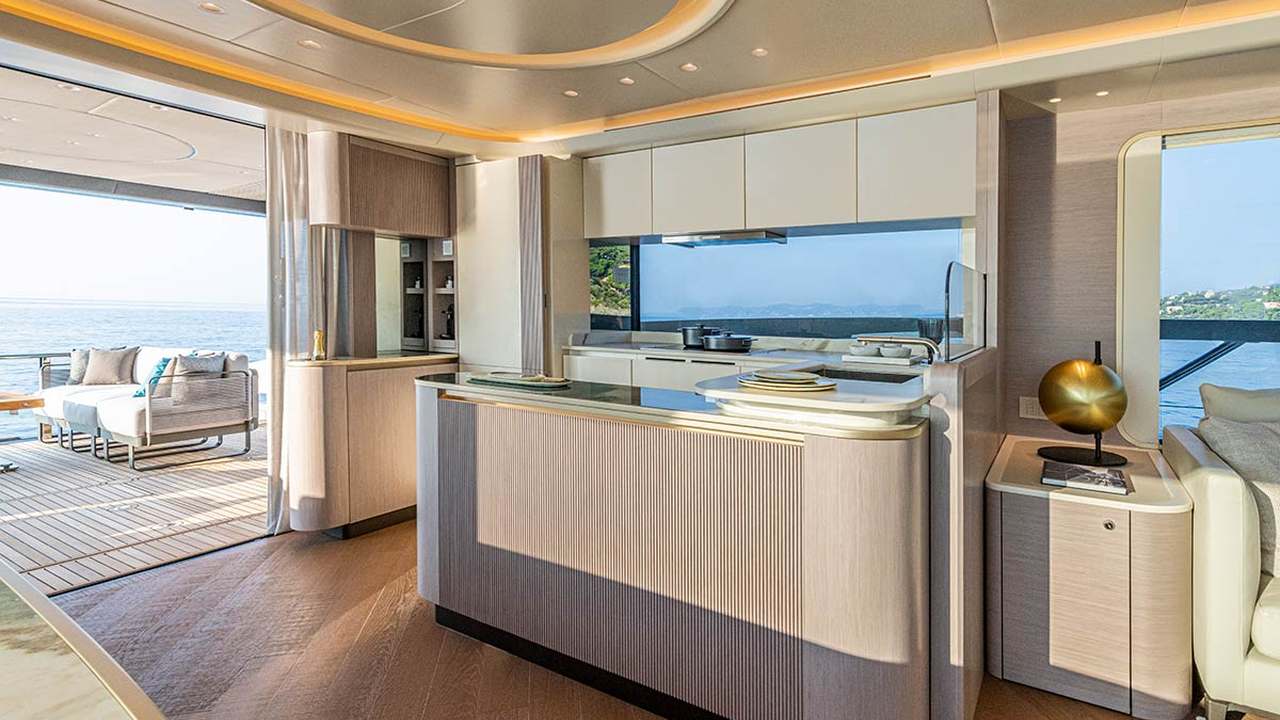
Cottura, refrigerazione, lavaggio e acqua calda lavorano insieme. Il collaudo misura tensione, assorbimenti, pressione, ventilazione e scarichi. Ante, cassetti e stoviglie necessitano di fermi. I compressori devono disperdere calore e restare accessibili.
Preparare un pasto rivela interferenze con il pranzo e il passaggio al pozzetto. Valvole e protezioni non devono richiedere lo svuotamento dei mobili. Cambusa e rifiuti necessitano di volumi separati. Il piano manutentivo include filtri e condensatori.
Pranzo, circolazione e porte scorrevoli
Il tavolo occupato riduce spazio e cambia il percorso dalla cucina. Si prova con tutte le sedie previste. Porte e cassetti non devono sovrapporsi. Le uscite rimangono libere e gli arredi hanno punti di presa.
L’assenza di gradini aiuta il movimento, ma soglie e pendenze devono gestire l’acqua. Persone con mobilità ridotta richiedono verifiche dedicate. Una soluzione salvaspazio è efficace solo se resta bloccata in navigazione e accessibile per manutenzione.
Cinque cabine e otto più due letti
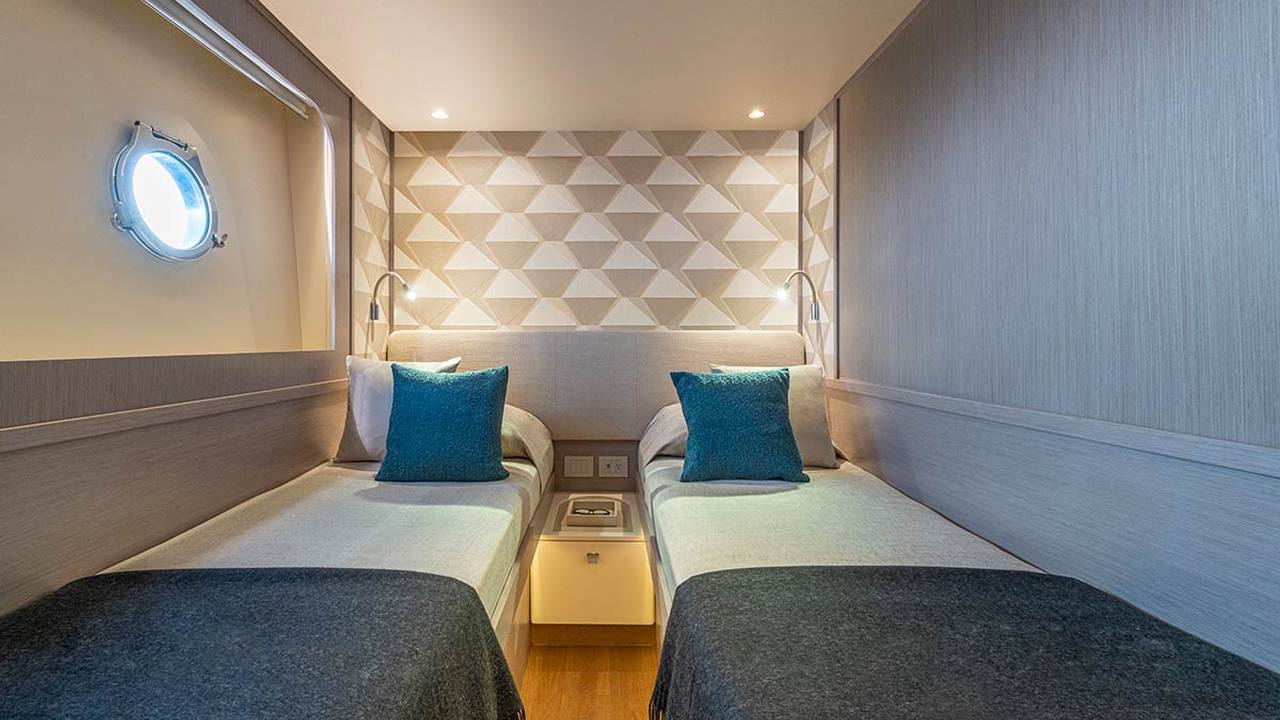
Questi numeri compaiono in una pubblicazione tecnica ospitata dal costruttore, mentre la pagina sintetica non elenca le cabine. Il piano dell’esemplare deve quindi essere il riferimento. Letti, bagni, vie di fuga, stivaggi e certificazione vanno controllati stanza per stanza.
La portata massima di sedici persone include un contesto operativo più ampio delle cuccette. Acqua, reflui, climatizzazione, cambusa e mezzi di salvataggio devono seguire l’uso reale. Non si progetta una lunga crociera sul solo numero massimo.
Cabina armatoriale: prova acustica e climatica
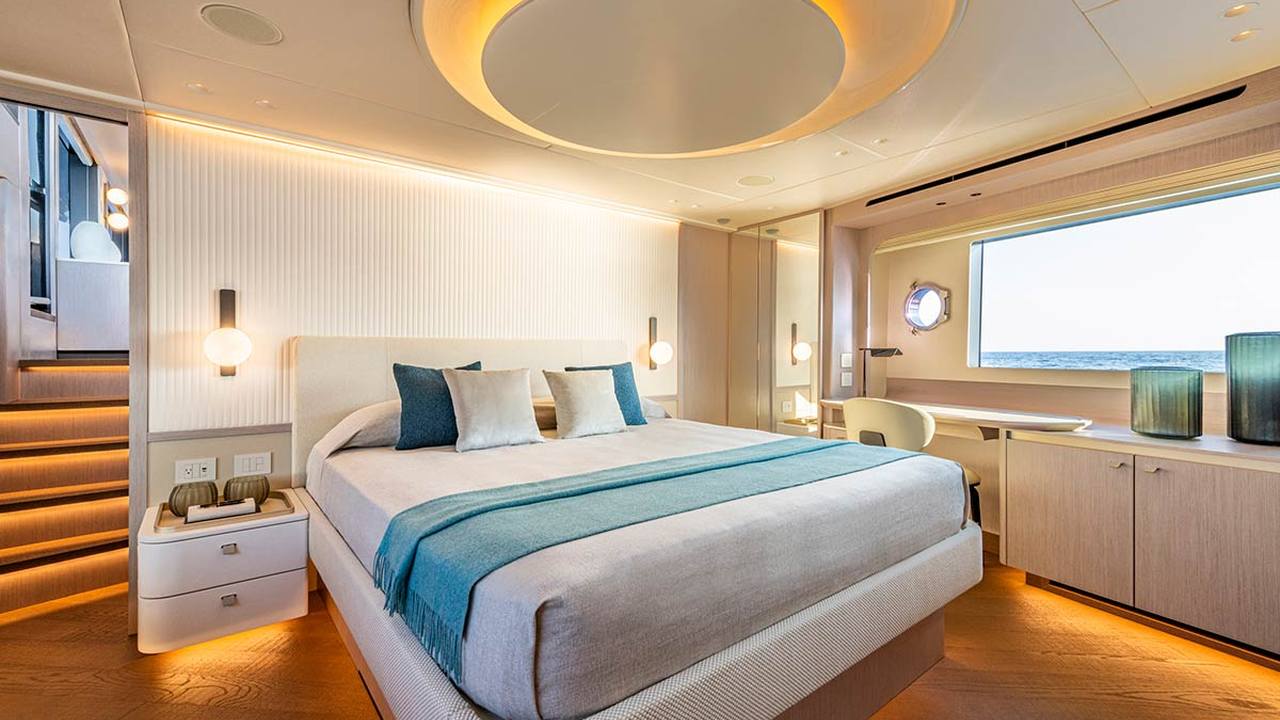
Si misura rumore con motori, pod, generatori e clima in funzione. Ventilazione del materasso, condensa, oscuramento e prese vengono controllati. Porte e armadi non invadono i passaggi. L’accesso ai fan-coil deve restare praticabile.
Finiture e pannelli devono essere rimovibili senza danni. Codici e ricambi vanno consegnati. La cabina è riuscita quando comfort e manutenzione coesistono. Una misura durante una visita silenziosa in porto non è rappresentativa.
Plancia interna e rete IPS
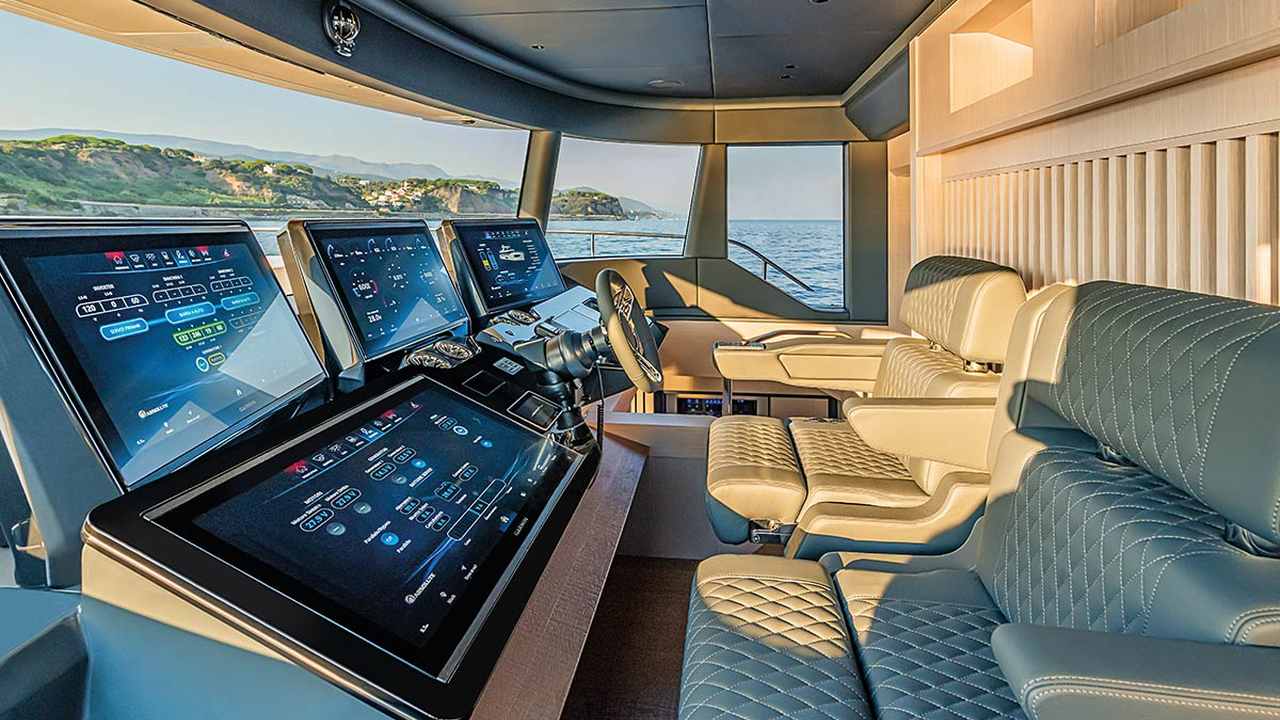
Display, joystick, pilota, radar, comunicazioni e allarmi vanno inventariati per modello e versione. Il sistema IPS integra motori, pod, sterzo e posizionamento. Ogni funzione assistita deve essere indicata come presente, abilitata o solo predisposta.
Si prova trasferimento dei comandi fra postazioni, perdita di un display e riavvio della rete. Backup, licenze e credenziali fanno parte della consegna. L’equipaggio deve sapere governare senza una funzione assistita.
Assisted Docking e optional elettronici
Absolute ha reso disponibile la tecnologia di assistenza all’ormeggio sulla gamma IPS, ma la presenza sull’esemplare va verificata. Antenna, software, joystick e licenze devono coincidere. Il sistema compensa vento e corrente entro limiti; non elimina responsabilità o inerzia.
Il collaudo include vento, perdita del segnale e disattivazione. Si definisce chi sorveglia lati e poppa. Telecamere e sensori richiedono pulizia e alimentazione. Le modalità manuali restano parte dell’addestramento.
Novecentodieci litri: il boiler è compreso
La capacità pubblicata include il boiler, quindi il volume dei serbatoi freddi può essere inferiore. Il capitolato deve separare serbatoi, boiler e quantità utilizzabile. Un bilancio giornaliero considera docce, cucina, lavaggi e persone.
Si provano autoclavi, accumulatori, livelli e acqua calda con più utenze. Un dissalatore eventuale richiede energia e manutenzione. Capacità di grigie e nere, non pubblicate nella scheda, devono essere definite perché possono limitare la permanenza.
Bagni: pressione e reflui simultanei
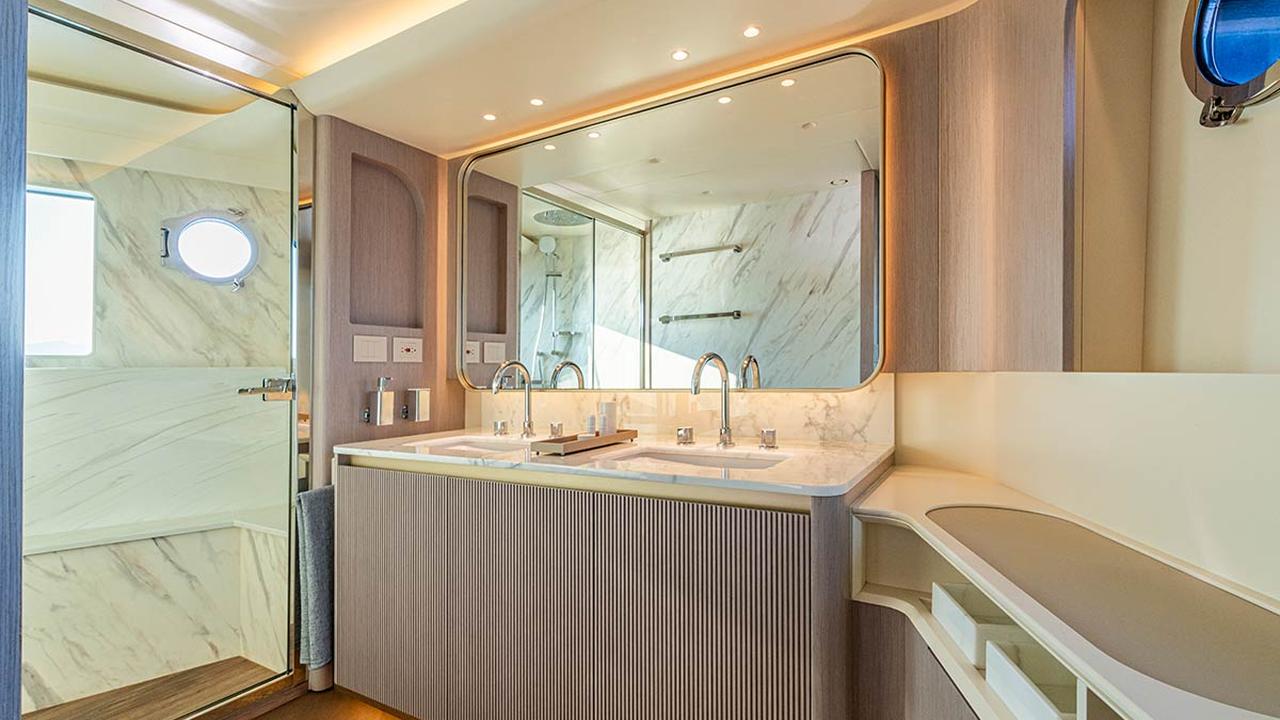
Docce e WC vengono usati insieme per verificare pressione, drenaggio e allarmi. I piatti doccia devono scaricare con assetto variabile. Ventilazione e sfiati evitano odori. Valvole e filtri restano raggiungibili.
L’equipaggio necessita di procedure per blocco, pompa guasta o serbatoio pieno. Ricambi e prodotti devono essere compatibili. Guarnizioni e mobili vicini all’acqua si controllano dopo il test, non soltanto a secco.
Cabine ospiti e stivaggio
Una cabina a letti separati richiede spazio per porte, bagagli e accesso ai letti. Si prova con armadi pieni. Prese, luci notturne, ventilazione e fuga vengono controllate. Materassi non devono coprire pannelli.
Il clima si misura a porta chiusa. Rumore di pompe e impianti può variare fra locali. Ogni cabina riceve una scheda con difetti e correzioni. Un controllo generale del salone non basta.
Alloggi equipaggio separati
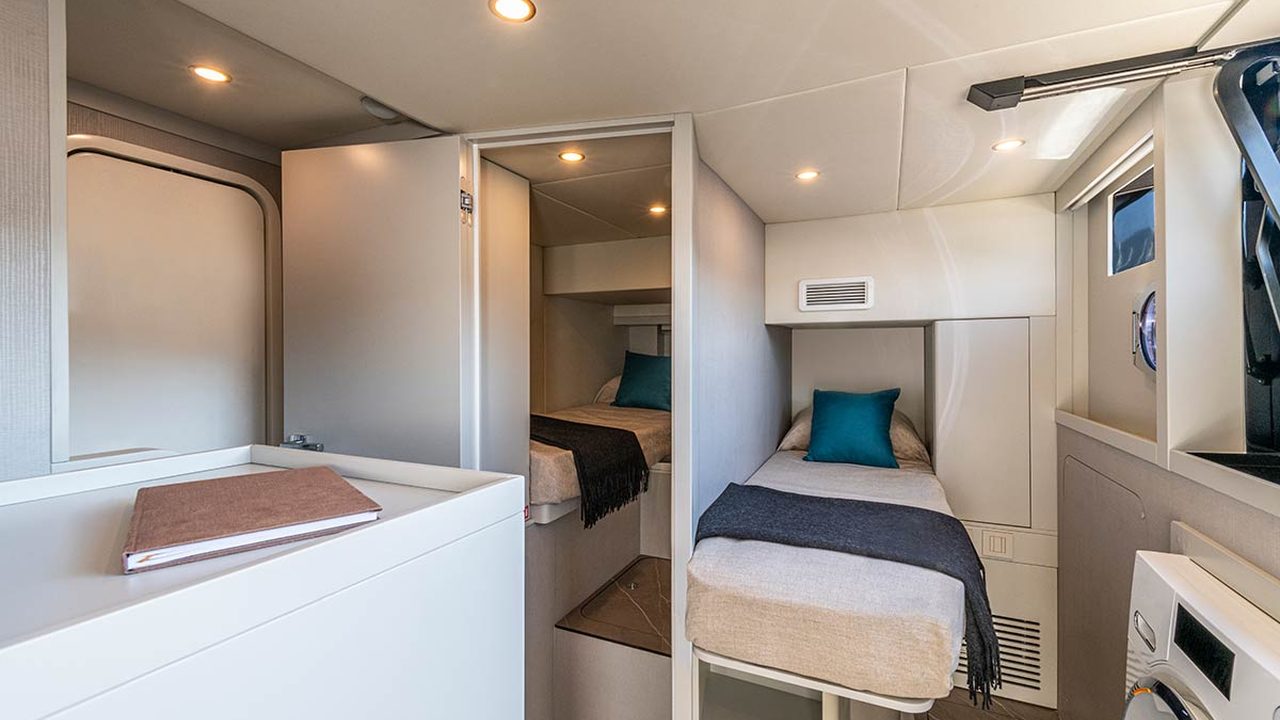
Due letti e cucina privata migliorano autonomia e privacy. Il piano deve chiarire accesso, bagno, ventilazione, stivaggio e via di fuga. Rumore di sala macchine e pozzetto si misura durante navigazione e servizi.
L’equipaggio deve raggiungere plance e ormeggi senza attraversare inutilmente le aree ospiti. La cucina privata aggiunge refrigerazione, acqua e scarichi. Turni e riposo richiedono una configurazione realmente abitabile.
Fotovoltaico: chiedere potenza e schema
La pagina descrive pannelli integrati nel tetto, resistenti all’ambiente marino, ma non fornisce una potenza. Il contratto deve indicare moduli, regolatori, tensione, protezioni e accumulo. Senza questi dati non si promettono ore di autonomia.
La prova misura produzione con irraggiamento annotato. Ombre, temperatura e sporco influenzano il risultato. Cavi e penetrations devono essere protetti. L’equipaggio controlla allarmi e sezionamento.
Bilancio elettrico per quattro scenari
Navigazione, rada, notte ed emergenza hanno carichi diversi. Per ogni utenza si registra potenza, spunto, durata e priorità. Banchina, generatori, inverter, batterie e alternatori devono chiudere con margine. Il fotovoltaico è un contributo variabile.
Il collaudo accende combinazioni realistiche: cucina, clima, boiler e refrigerazione. Si osservano tensione, frequenza e temperature. I carichi essenziali devono sopravvivere al guasto previsto. Schemi ed etichette fanno parte della consegna.
Due D13 IPS1350 e manutenzione
Il piano include motori, pod, eliche, sterzo, diagnostica e software. Si identificano numeri di serie e campagne tecniche. Filtri, cinghie, fluidi e tenute devono essere accessibili. Il porto base necessita di assistenza e capacità di alaggio adeguate.
Il test confronta carichi e temperature. Si prova marcia indietro, traslazione e arresto. A secco si controllano eliche, anodi e giochi. I ricambi devono coprire propulsione e governo, non soltanto i motori.
Dati del test: usarli come riferimento, non garanzia
Il rapporto ospitato indica 27,5 nodi, 15,5 nodi con 189 l/h e 8 nodi con 39 l/h. Condizioni: tredici persone, metà carburante e due terzi d’acqua. La prova dell’esemplare deve registrare gli stessi parametri prima di confrontare.
Carena, mare, temperatura e optional cambiano i risultati. L’autonomia usa carburante utilizzabile e riserva. Una differenza non è automaticamente un difetto; deve però essere spiegata con dati e documentazione.
sequenza di verifiche in porto
Si verificano inventario, certificati, schemi, livelli, sentine, batterie e allarmi. Cabine, bagni, cucine e clima lavorano insieme. Porte, drenaggi, piattaforma e arredi completano cicli. Ogni predisposizione viene identificata.
Le anomalie ricevono fotografia, posizione, responsabile e scadenza. Dopo la correzione si ripete il test. Documenti e unità devono coincidere prima della promozione finale.
sequenza di verifiche in mare
Si annotano persone, liquidi, vento, mare e carena. Giri, velocità, consumi, temperature, assetto, rumore e vibrazioni vengono misurati a regimi stabilizzati. Si provano virate, arresto e manovra.
Secondo procedure approvate si verifica una modalità degradata. Al rientro si ispezionano vani, sentine e tenute. Il rapporto separa dati misurati e dichiarati.
Manutenzione e configurazione consigliata
Ogni uscita inizia con sentine, livelli, filtri, governo e sicurezza. Settimanalmente si controllano pompe, drenaggi e batterie. Ore e calendario regolano motori e pod. Trimestralmente si provano allarmi; annualmente si aggiornano software e certificazioni.
La configurazione migliore evita optional senza bilancio, definisce chiaramente flybridge e posti letto e mantiene accessi tecnici. Acqua, reflui, clima ed energia devono avere margine. La Navetta 70 offre una base versatile, ma il valore nasce dalla coerenza del singolo esemplare.