
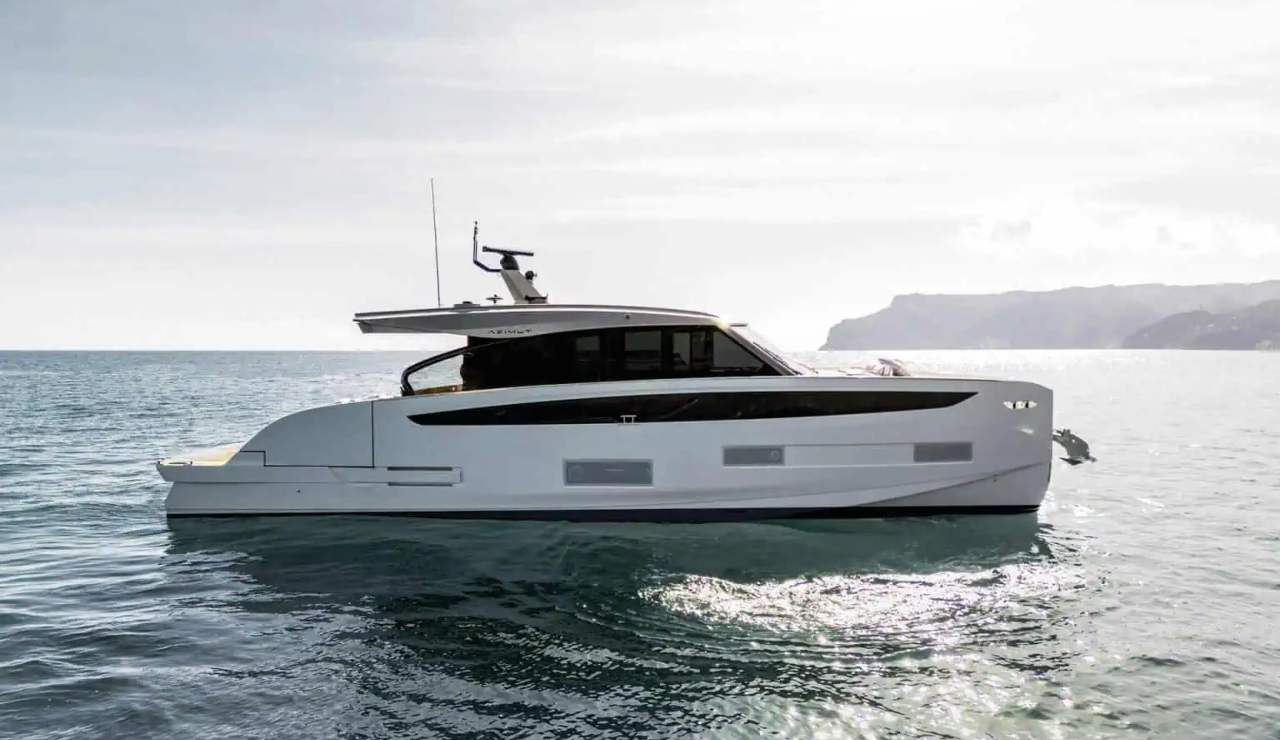
L’Azimut Seadeck 6 inaugura una famiglia di cruiser sportivi “low-emission” in cui la ricerca ingegneristica incontra la cultura del progetto italiana. Scafo planante in composito, sovrastrutture alleggerite, sistemi energetici mild-hybrid per la vita a bordo e un’architettura degli spazi – la celebre Fun Island – che abbatte la soglia tra cockpit e mare: questo è il perimetro tecnico entro cui leggere il Seadeck 6. La barca nasce dalla collaborazione fra Azimut R&D e lo studio NAMES per l’architettura navale, Alberto Mancini per gli esterni e Matteo Thun & Antonio Rodriguez per gli interni, con un obiettivo netto: ridurre consumi ed emissioni senza sacrificare prestazioni, comfort e valore percepito.
Il debutto in acqua è avvenuto al Salone Nautico di Venezia 2024, con un messaggio chiaro: riportare la fruizione del mare al centro dell’esperienza, integrando materiali riciclati/riciclabili e una gestione dell’energia più consapevole rispetto ai motoryacht plananti tradizionali. Sul piano dimensionale il Seadeck 6 presidia la fascia 17–18 metri, quella in cui convivono esigenze di weekend crociere rapide e permanenza di medio periodo, mantenendo spazi e volumi da “piccolo superyacht” e una manovrabilità molto accessibile anche per armatori senza equipaggio fisso.
Profilo del cantiere navale
Storia, filosofia costruttiva, reputazione
Azimut Yachts, fondato nel 1969 e parte di Azimut|Benetti Group, è tra i marchi più premiati e riconosciuti del diporto mondiale per stile, qualità esecutiva e innovazione nei compositi avanzati. Negli ultimi anni il cantiere ha accelerato su:
- Efficienza energetica: carene ottimizzate, alleggerimenti in carbonio/sandwich, impianti elettrici evoluti.
- Sostenibilità: materiali riciclati e riciclabili (Econyl, PET), sostituzione del teak con superfici alternative come il sughero, processi di produzione più puliti.
- Quality by design: controllo vibro-acustico, luminotecnica naturale, ergonomia degli spazi per un comfort “quiet luxury”.
Analisi tecnica approfondita
Dimensioni e architettura navale
Il Seadeck 6 adotta uno scafo planante in GRP (vetroresina) con deadrise ottimizzato e opere vive attentamente raccordate per mitigare spruzzi e resistenze parassite. La linea di carena è stata disegnata per un ingresso in planata progressivo, stabilità trasversale in crociera e angoli di virata prevedibili, con spray-rails e chiglie laterali calibrate per comfort dinamico. I numeri chiave:
- Lunghezza f.t.: ~57’5” / 17,5 m (incluso pulpito).
- Baglio massimo: ~16’7” / 5,05 m.
- Pescaggio a pieno carico: ~1,35–1,40 m.
- Dislocamento full-load: ~27–31 t a seconda dell’allestimento.
Le lunghezze e i pesi variano in funzione di versione (coupé/sundeck), opzioni, dotazioni di stabilizzazione e configurazioni di impianto. La stabilità a fermo è affidata a baglio generoso, distribuzione pesi ponderata e – in opzione – a un giroscopio Seakeeper.
Materiali di costruzione: scafo, sovrastruttura, interni
- Scafo: laminato GRP con aree strutturali rinforzate; geometria ottimizzata per ridurre la resistenza residua nella zona di transizione dislocamento/planata.
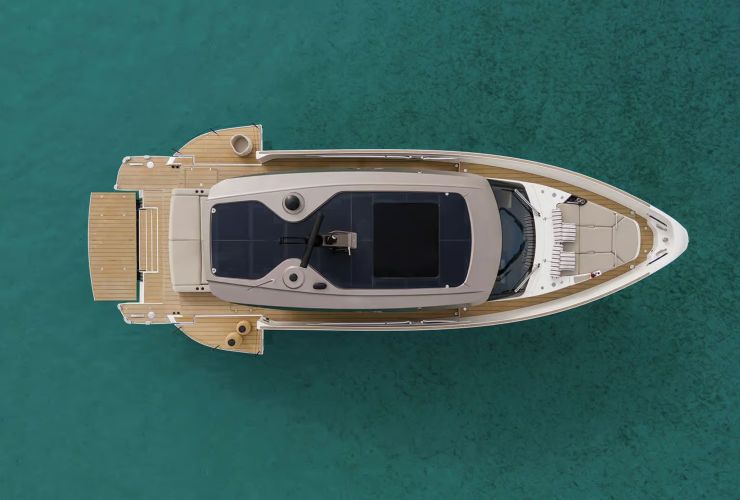
- Sovrastruttura: impiego mirato di carbonio su tettucci, hard-top e componenti ad alto baricentro per contenere masse e inerzie, a beneficio di rollio e consumi.
- Coperta e camminamenti: rivestimenti in sughero tecnico in luogo del teak tradizionale; minore peso, temperatura superficiale più bassa al sole, manutenzione semplificata.
- Interni: tessili e moquette in Econyl (nylon rigenerato) e PET riciclato; pannellature e legni chiari per esaltare la luce naturale.
Motorizzazioni, propulsione e trasmissione
La piattaforma meccanica si affida a propulsione Volvo Penta IPS a pod controrotanti: soluzione che integra eliche “traenti”, scarico allo specchio e timoni dedicati nel piede, con vantaggi in efficienza, rumorosità e manovrabilità (joystick) rispetto a linee d’asse classiche. Configurazioni:
- Standard: 3 × IPS500 (D6 380 hp ciascuno).
- Opzionale: 3 × IPS650 (D6 480 hp ciascuno) per prestazioni più pronte e migliori riserve di spinta.
Il sistema “mild-hybrid” di bordo non aziona la propulsione elettrica, ma copre il fabbisogno “hotel” (clima, luci, utenze) con un pacchetto batterie Li-ion (≈ 40–42 kWh), alternatori di potenza, generatore a regime variabile e pannelli fotovoltaici in tuga (~1,4 kWp). In alcune configurazioni, il volume destinato alla cabina marinaio può ospitare componenti del pacco batterie.
Prestazioni, autonomia e consumi
Dati raccolti e verificati su prove stampa indipendenti e dichiarazioni tecniche convergono su un profilo prestazionale coerente con il disegno di carena e la tripla IPS:
- Velocità massima: ~31–33 kn (con IPS650, carico medio, assetto ottimizzato).
- Crociera “fast”: ~24–28 kn, con range tipico ~270–310 nm in funzione di carico e trimming.
- Crociera “slow”: ~18–20 kn, consumi ~8–9 l/nm, autonomia fino a ~300+ nm.
- Andature economiche (~10 kn): autonomie fino a ~450–480 nm segnalate in test dedicati.
- Rumore in crociera: ~60–67 dB(A) in dinette/cabine alle andature tipiche; comfort acustico di riferimento per la classe.
| Regime | Velocità [kn] | Portata carburante stimata* | Consumi [l/nm] | Autonomia [nm] |
|---|---|---|---|---|
| Eco 1.000–1.500 rpm | 6–9 | ~12–32 l/h | ~2–4 | ~650–1.200 |
| Crociera 3.000 rpm | ~21 | ~170–180 l/h | ~8 | ~280 |
| Fast 3.500 rpm | ~28 | ~240–250 l/h | ~9 | ~270 |
| Top 3.700 rpm | ~31–33 | ~280–300 l/h | ~10+ | ~240 |
*Valori indicativi aggregati da prove su unità IPS650; le prestazioni reali dipendono da carichi, mare/vento, antivegetativa, set-up eliche e tarature IPS.
Sistemi di bordo: elettronica, domotica, navigazione
- Conduzione: doppio MFD in plancia, integrazione Volvo Penta Glass Cockpit, autopilota, joystick IPS, ausili di ormeggio; trim assist e interceptors per il controllo dell’assetto longitudinale.
- Stabilizzazione: Seakeeper (opzionale) per ridurre il rollio a fermo e in marcia, particolarmente apprezzabile in rada e con ospiti.
- Energia di bordo: banchi Li-ion, DC-DC e power management per modalità “hotel” silenziosa; pannelli FV in tuga; generatore a regime variabile per ricarica ottimizzata.
- Domotica: gestione luci/clima/ombreggiamenti, monitoraggio batterie e serbatoi, scenari preimpostati per ormeggio/notte/porto.
Design e architettura degli spazi
Firme stilistiche e principi
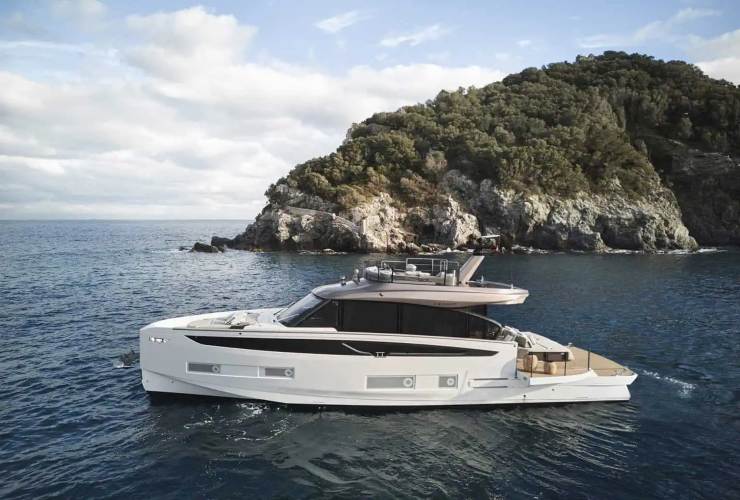
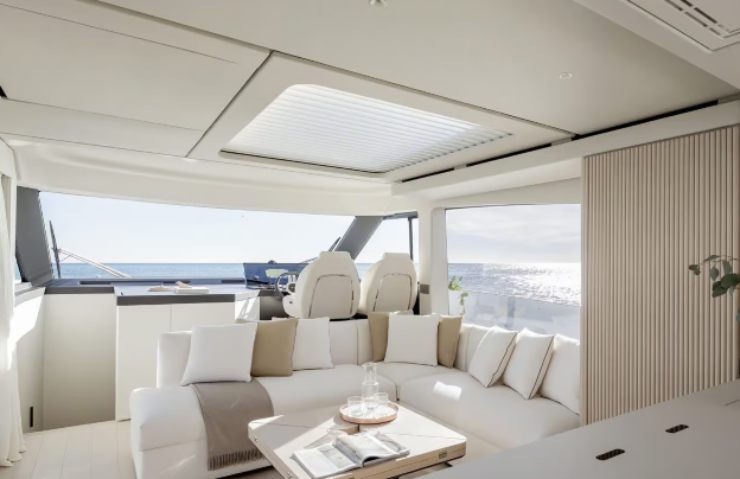
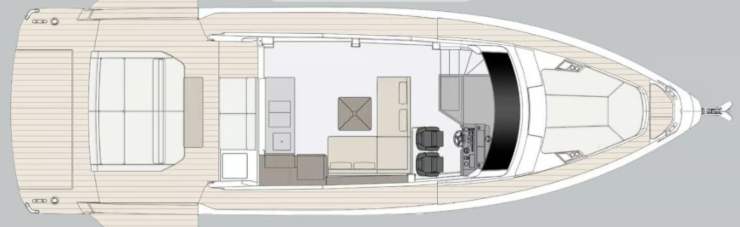
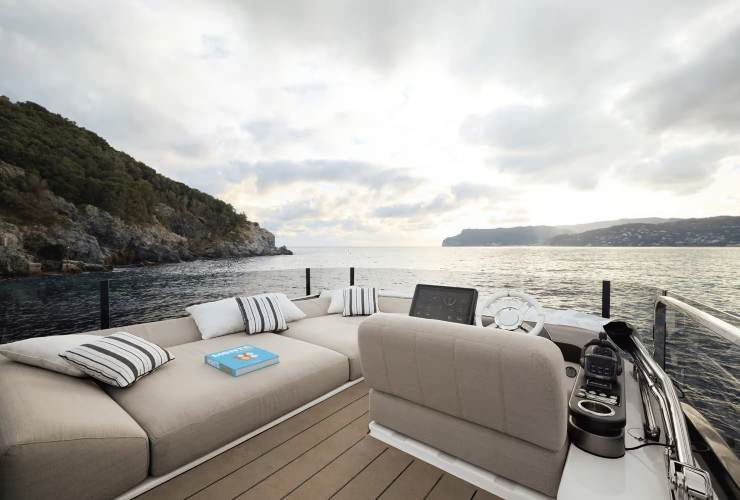
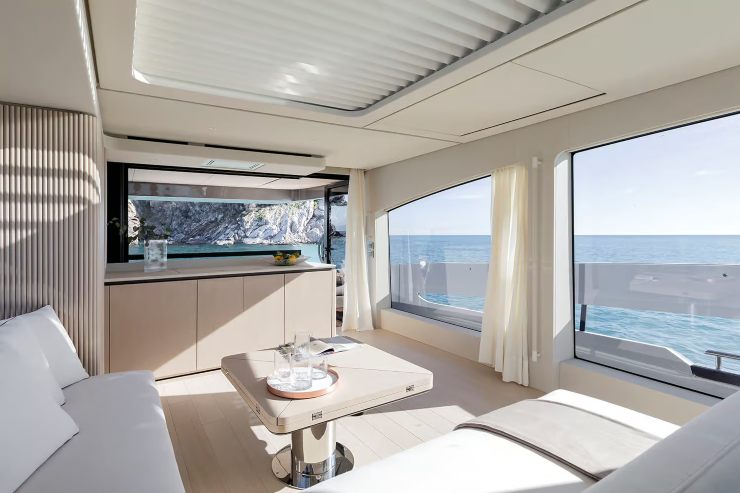
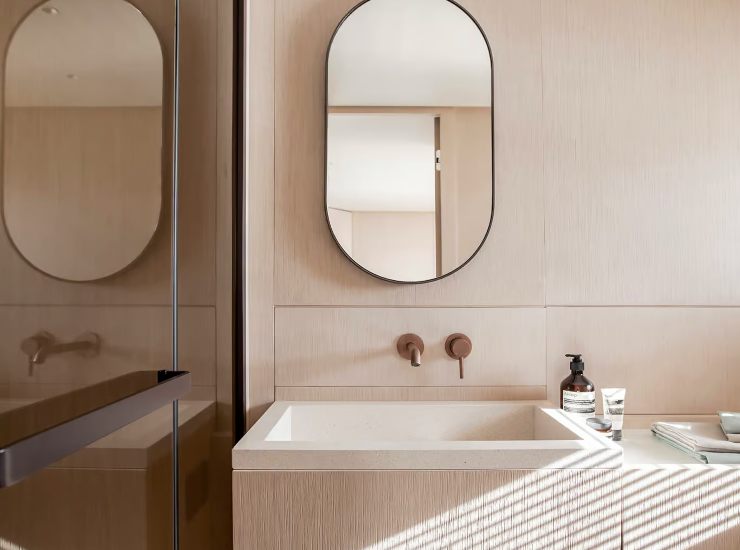
Gli esterni di Alberto Mancini privilegiano la continuità visiva con l’acqua: finestrature verticali, shoulder line pulita, prua filante e poppa “aperta” fanno da cornice alla Fun Island, un salone en-plein-air a livello acqua con terrazze abbattibili e piattaforma bagno idraulica. Gli interni di Matteo Thun & Antonio Rodriguez interpretano un’idea di quiet luxury fatta di luce naturale, palette tenue, materiali tattili e dettagli funzionali privi di ostentazione.
Layout
- Main deck: salone con cucina “social” verso poppa per continuità con il cockpit; grandi vetrate apribili; zone pranzo/lounge modulabili.
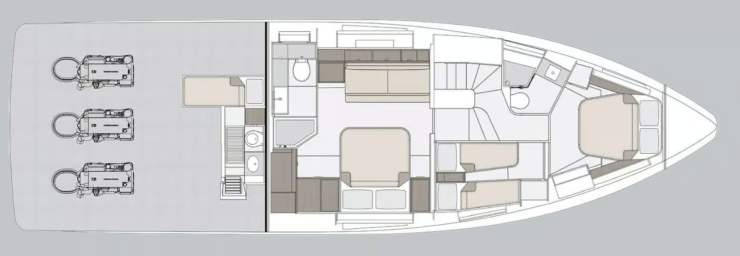
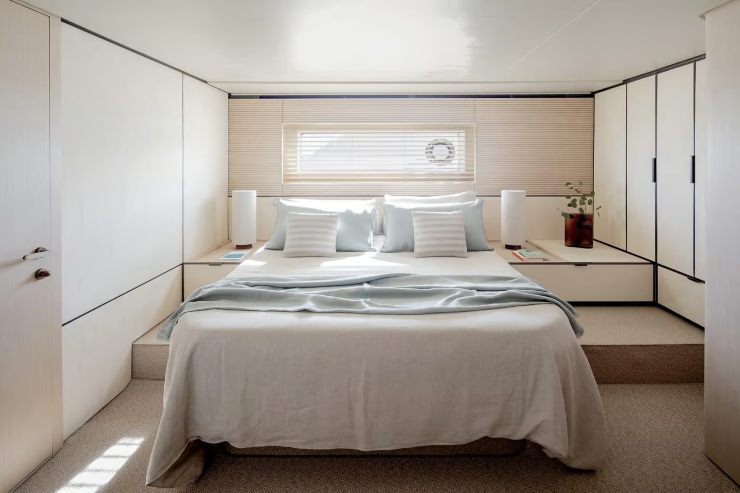
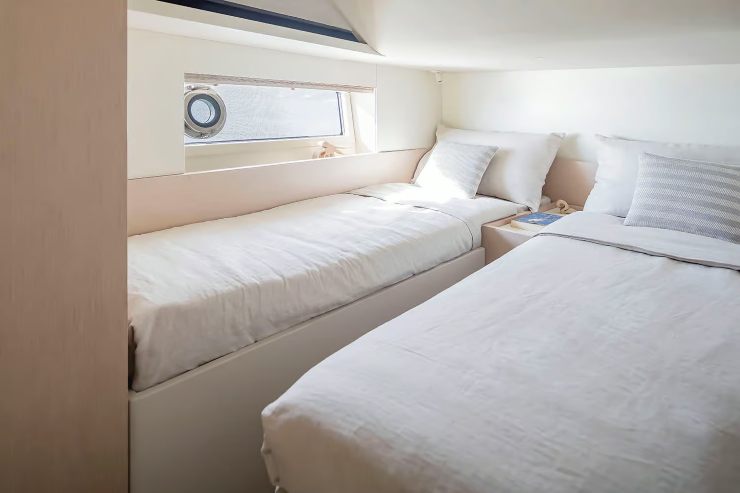
- Lower deck: 3 cabine (armatoriale full-beam a centro barca, VIP a prua, ospiti twin), 2 bagni. Locale equipaggio opzionale (o spazio tecnico per il pacco batterie nella configurazione mild-hybrid estesa).
- Versione Sundeck: ponte superiore con seconda postazione di guida, prendisole e dinette, studiato per massimizzare la vita all’aperto.
Innovazione e ricerca
- Low-Emission Platform: riduzione fino a ~40% delle emissioni stimate in scenari d’uso tipici grazie a efficienza idrodinamica, alleggerimenti e gestione energetica evoluta.
- Materiali sostenibili: Econyl, PET, sughero tecnico; facilità di manutenzione e minore carbon footprint lungo il ciclo di vita.
- Comfort vibro-acustico: isolamento sala macchine e disaccoppiamenti mirati per contenere rumore/rumori strutturali; target di 60–67 dB(A) in crociera.
- Stabilizzazione: giroscopio a richiesta; carena con spray-rail e chine studiate per attenuare impatti e spruzzi.
Vita a bordo e comfort
Abitabilità e funzionalità
Il comfort percepito nasce da ergonomia (altezze interne generose, passavanti ampi, logiche di stivaggio) e luminotecnica (finestre a tutta altezza, tagli di luce indiretta). Il cockpit è una “piazza sul mare” trasformabile in lounge, pranzo o area giochi. In cabina armatoriale, letto centrale, armadiature su misura, bagno con box doccia separato; VIP e ospiti beneficiano di volumetrie non scontate per la classe.
Clima e acustica
- HVAC a zone con regolazione fine e strumenti di ottimizzazione energetica in modalità “hotel”.
- Rumorosità contenuta in marcia: conversazioni normali senza alzare la voce in dinette a 20–25 kn.
- Vibrazioni attenuate grazie a supporti elastici e layout impiantistico ordinato.
Prestazioni in navigazione: test e feedback professionali
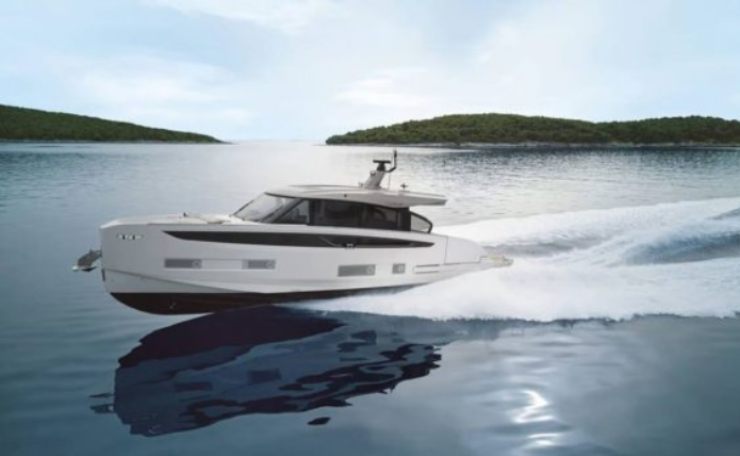
Le prove mare confermano una transizione in planata morbida, priva di “hump” marcato, e un comportamento prevedibile nelle virate medie. In onda di prua moderata lo scafo tende a tagliare pulito, con spruzzi contenuti grazie ai spray-rails; l’assetto si stabilizza intorno ai 3.000–3.200 rpm per una crociera veloce confortevole. Le andature oltre 30 kn richiedono trimming attento, ma restano accessibili.
Capitani e periti segnalano ottima visibilità sul traverso e in avanti, con qualche cono d’ombra strutturale a poppa (tipico dei cruiser con grandi vetrate). Il joystick IPS e il possibile bow-thruster semplificano le manovre in spazi ridotti. L’insieme restituisce la sensazione di una barca che non insegue la sportività estrema, ma un balance raffinato tra facilità d’uso, silenzio e fruizione degli spazi.
Mercato e concorrenza
Posizionamento prezzi/segmento
- Fascia 17–18 m (sport-cruiser premium, 3 cabine), con prezzo d’attacco tipicamente superiore a €2M ex-VAT a seconda dei mercati e della dotazione (valori indicativi pubblici da dealer e stampa).
- Clientela target: armatori privati (famiglie) alla ricerca di comfort “verde” senza rinunciare a performance; charter boutique che valorizzano la Fun Island come selling point esperienziale; società di rappresentanza e hospitality di alto profilo.
Analisi dei competitor diretti
- Princess V55 (Gen 2) – Dinamica raffinata e finiture britanniche eccellenti; minore enfasi su materiali eco e piattaforme “beach club” a livello acqua.
- Sunseeker Predator 55/60 – Look aggressivo e prestazioni brillanti; meno vocazione “nature-oriented”, spazi poppieri spesso meno integrati col mare rispetto alla Fun Island.
- Pardo Endurance 60 – Filosofia endurance a velocità più moderate, grande vivibilità; velocità top inferiore, identità meno sportiva.
- Riviera 505/5400 – Solidità e qualità costruttiva notevoli; approccio “green” meno sofisticato, design interno più classico.
Trend del settore
- Low-emission come differenziale reale (non solo marketing): materiali, alleggerimenti, gestione energetica, carene più “facili”.
- Beach club e “finestre sul mare”: terrazze abbattibili e piattaforme bagno diventano hub sociali imprescindibili.
- Comfort acustico: la percezione di lusso passa da silenziosità e assenza di vibrazioni oltre che da materiali e finiture.
Approfondimento iconografico
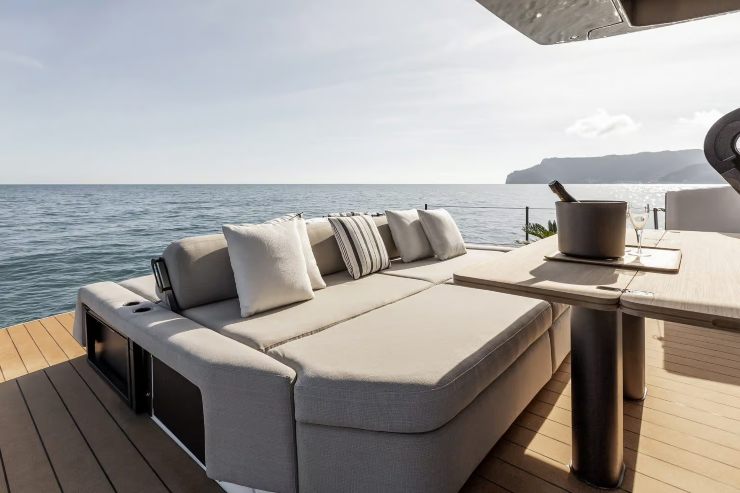
Risultati e riconoscimenti
- Debutto e forte attenzione mediatica al Salone di Venezia 2024; comunicazione ufficiale Azimut incentrata su “Gentle Era” e “Fun Island”.
- Copertura estesa su test indipendenti con valutazioni positive per comfort e coerenza progettuale.
- Certificazioni ambientali e best practice costruttive segnalate nelle comunicazioni corporate.
Prospettive future
Come primo tassello della gamma, il Seadeck 6 anticipa evoluzioni già in roadmap (Seadeck 7, 8/9) con ulteriori margini su elettrificazione di bordo, riduzioni di peso e integrazione di fonti rinnovabili. La traiettoria normativa su emissioni/rumore e la sensibilità del pubblico premium verso scelte responsabili suggeriscono un posizionamento competitivo di lungo periodo per l’intera famiglia Seadeck.
Video ufficiale e walkthrough
Conclusioni sul posizionamento
L’Azimut Seadeck 6 non è solo un cruiser elegante: è la dimostrazione che nella fascia 55–60 piedi l’equazione prestazioni + comfort + sostenibilità è praticabile con coerenza ingegneristica. I punti di forza cardine:
- Carena efficiente e assetti prevedibili: ingressi in planata progressivi, comfort di marcia, consumi competitivi alle andature d’uso.
- Energia “mild-hybrid” e materiali sostenibili: vantaggi concreti nella vita a bordo e nella manutenzione.
- Fun Island: integrazione unica tra living e acqua, plus di valore per famiglie e charter di classe.
- Comfort vibro-acustico di riferimento per la categoria.
I compromessi restano fisiologici: costi operativi in fast cruise e top non trascurabili, manutenzione accurata per sistemi evoluti e compositi, e una filosofia più orientata al well-being che alla pura sportività estrema. Nel complesso, il Seadeck 6 presidia la parte alta del segmento con una personalità tecnica e stilistica che lo rende un benchmark contemporaneo.