
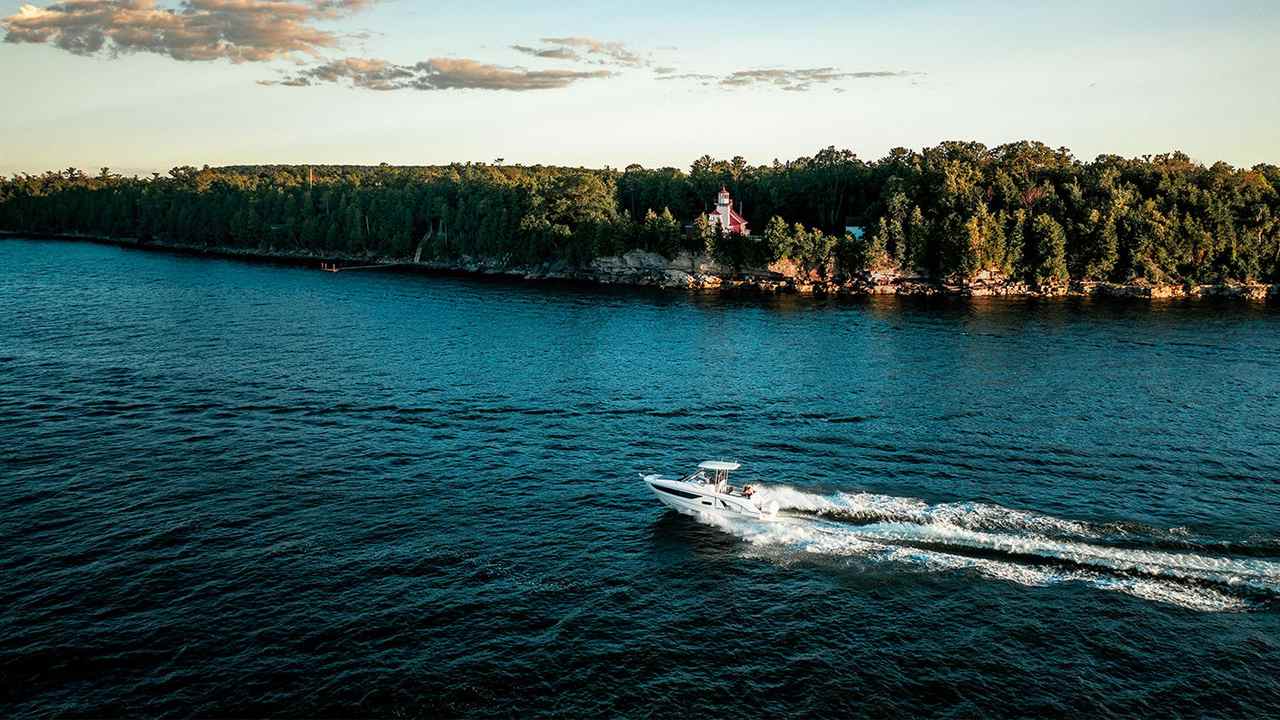
Il BENETEAU Flyer 9 SUNdeck è un day boat fuoribordo di 9,10 metri con baglio di 2,99, organizzato attorno a un passavanti Smart Walkaround sul lato sinistro, una piattaforma laterale abbattibile e una cabina con quattro posti letto. Il progetto promette convivialità senza rinunciare alla possibilità di pernottare, ma il valore tecnico dipende dalla configurazione scelta: motori, batterie, cucina esterna, T-top, frigorifero e dotazioni cambiano pesi, consumi e accessi. Questa analisi legge quindi la barca come sistema e propone controlli concreti per allestimento, impianti e manutenzione.
Scheda tecnica e punti da verificare
La lunghezza fuori tutto è 9,10 metri, il baglio 2,99 e il dislocamento leggero dichiarato 3.350 chilogrammi. Il pescaggio varia da 0,50 a 0,90 metri e l’altezza massima è 2,68. I due serbatoi carburante contengono nominalmente 288 litri ciascuno, per 576 complessivi; l’acqua dolce è 100 litri. La certificazione pubblicata indica categoria B per sei persone e C per dieci. Questi dati non definiscono da soli il peso pronto alla navigazione: motori, liquidi, ancora, equipaggio, cuscineria e optional devono essere registrati nella configurazione reale.
| Voce | Dato dichiarato | Controllo a bordo |
|---|---|---|
| Lunghezza fuori tutto | 9,10 m | Ingombri e posto barca |
| Baglio | 2,99 m | Ormeggio e movimentazione |
| Dislocamento leggero | 3.350 kg | Peso con motori e optional |
| Altezza massima | 2,68 m | T-top, antenne e rimessaggio |
| Pescaggio | 0,50–0,90 m | Assetto e posizione dei motori |
| Carburante | 2 × 288 l | Volume utilizzabile e indicatori |
| Acqua dolce | 100 l | Pompa, igiene e autonomia |
| Certificazione CE | B6 / C10 | Documento dell’esemplare |
Carena e distribuzione del carico
La carena deve sostenere un programma che va dall’uscita giornaliera al breve pernottamento. Il dato di 3.350 chilogrammi è leggero e non va usato come peso di esercizio. Due serbatoi pieni aggiungono una massa significativa a cui si sommano acqua, motori, batterie, persone e attrezzature. Una configurazione accurata assegna posizione e massa a ogni optional, evitando concentrazioni a poppa. In prova si osservano tempo di ingresso in planata, assetto laterale, risposta al trim e visibilità, sempre annotando carico e stato del mare. Senza queste condizioni, una velocità isolata non descrive la barca.

Smart Walkaround sul lato sinistro
Il passavanti asimmetrico concentra sul lato sinistro un percorso ampio fra pozzetto e prua. La soluzione libera spazio e riduce i cambi di livello, ma la sicurezza dipende da tientibene, antiscivolo e protezioni realmente utilizzabili. Si percorre la barca con cuscineria, tavolo e borse in posizione, verificando che nessun bordo interrompa il passo. Di notte servono illuminazione senza abbagliamento e punti di appoggio continui. Il lato opposto non deve diventare un passaggio informale privo di protezioni. Ogni ospite deve conoscere il percorso previsto prima della partenza.
Prua attrezzata come zona di sosta
La spiaggetta prodiera e il prendisole di serie trasformano la prua in ambiente abitabile. Cuscini e schienali devono avere fissaggi, drenaggi e stivaggio asciutto. Il verricello, il gavone catena e la ferramenta d’ormeggio non possono essere coperti durante una manovra. Si controllano accesso alla catena, scarico del gavone, blocco dell’ancora e possibilità di intervenire manualmente. Persone distese a prua spostano il baricentro e non devono rimanere lì nelle condizioni non compatibili. La zona conviviale funziona bene solo se resta separata dalla zona di lavoro dell’ormeggio.

Piattaforma laterale abbattibile
La murata sinistra può aprirsi creando una terrazza sull’acqua e un accesso agevole per il bagno. Cerniere, attuatori, sensori e blocchi meccanici sono elementi strutturali da ispezionare. La portata ammessa deve provenire dai documenti, non da una stima visiva. Si prova la chiusura verificando allineamento e tenuta, poi la procedura d’emergenza in assenza di alimentazione. In navigazione l’elemento deve essere bloccato e segnalato. Parabordi e cime non devono interferire con il movimento. La scaletta deve risultare raggiungibile dall’acqua anche da una persona sola.

Pozzetto modulare e circolazione
Il pozzetto utilizza una seduta a L, un tavolo e moduli che permettono di passare dalla conversazione al prendisole. La modularità aumenta l’uso dello spazio, ma ogni trasformazione deve avere una posizione di navigazione sicura. Tavolo, gambe, cuscini e schienali necessitano di fermi; portelli e gavoni devono aprirsi senza intrappolare mani o bloccare uscite. Si verifica la circolazione con dieci persone solo nel contesto previsto dalla categoria C, senza confondere il limite documentale con il comfort reale. Drenaggi, appigli e superfici bagnate sono più importanti del numero di sedute.
Cucina esterna sotto il parabrezza
La cucina esterna è integrata nella rientranza del parabrezza, protetta ma vicina alla zona di passaggio. Lavello, piano di lavoro e apparecchi effettivamente ordinati vanno inseriti nel bilancio di acqua ed energia. Se è presente un sistema di cottura, si controllano alimentazione, isolamento, ventilazione e procedure di spegnimento. Cassetti e frigorifero devono restare chiusi in accelerazione. Gli scarichi non possono riversare acqua su componenti elettrici. Prima di usare la cucina si stabilisce una condizione di barca ferma e ventilata, con materiali infiammabili e cuscineria a distanza.

T-top e protezione della zona di guida
Il T-top opzionale protegge timoneria e parte del pozzetto, ma aggiunge altezza, superficie al vento e punti di carico. Gli attacchi devono essere controllati dentro e fuori, cercando movimenti o infiltrazioni. Antenne, luci e cablaggi richiedono passaggi protetti e gocciolatoi. L’altezza massima dichiarata di 2,68 metri va confermata nella configurazione installata, specialmente per rimessaggio e ponti. Il telo non deve limitare la visuale né interferire con porte e piattaforma. Un pannello solare eventuale richiede verifica di struttura, ombre, regolatore e protezioni, non soltanto spazio libero.
Timoneria, ergonomia e visuale
Alla console si valutano seduta, poggiapiedi, volante, manette, strumenti e visibilità con persone sedute a prua e a poppa. In accelerazione il pilota deve mantenere presa e controllo del trim. Parabrezza e montanti non devono creare zone cieche decisive; le gocce devono essere gestibili. I display vanno leggibili al sole e di notte senza abbagliare. Interruttori, stacco d’emergenza e comandi delle pompe devono essere identificati. La prova comprende manovra lenta, retromarcia, accosto e arresto, annotando eventuali differenze di risposta fra i due fuoribordo.

Architettura a due fuoribordo
La piattaforma è predisposta per una motorizzazione gemellare. Potenza, marca e allestimento vanno verificati sul certificato e nel contratto, senza trasferire automaticamente dati da un esemplare fotografato. Due motori offrono controllo in manovra e ridondanza parziale, ma raddoppiano vari componenti: filtri, eliche, giranti, circuiti e manutenzioni. Si controllano altezza di montaggio, serraggi, tubi, cablaggi e libertà di brandeggio. I comandi devono essere sincronizzati e le eliche coerenti con carico e regime. Un singolo motore operativo non garantisce sempre planata o piena governabilità.
Due serbatoi da 288 litri
La capacità carburante complessiva è 576 litri. L’autonomia va calcolata su consumi misurati nella configurazione reale, includendo una riserva e il volume non utilizzabile. I due serbatoi richiedono conoscenza di valvole, pescanti, sfiati e logica degli indicatori. Si controllano odore, fascette, tubi, bocchettoni e separazione da sorgenti elettriche. Un rifornimento asimmetrico può alterare l’assetto. Il diario di bordo dovrebbe registrare ore, litri e condizioni per costruire una curva affidabile. Una cifra di velocità senza consumo, carico e mare non è utile alla pianificazione.
Cabina con quattro posti letto
Sottocoperta il quadrato può trasformarsi in letto doppio e una cuccetta trasversale occupa la zona centrale, per quattro posti dichiarati. La trasformazione richiede supporti rigidi, cuscini ben accoppiati e stivaggio dei componenti quando si torna alla configurazione giorno. Si verificano altezza, accesso, ventilazione e vie di uscita. Sotto materassi e cuscini si cercano condensa, infiltrazioni e cablaggi. Quattro persone consumano rapidamente i 100 litri d’acqua e producono umidità: oblò e ventilazione devono funzionare, mentre borse e scarpe non possono occupare gradini o uscita.

Bagno con doccia separata
Il locale bagno è dotato di WC e doccia separata. La compartimentazione limita l’acqua sulle superfici, ma pompe, scarichi e ventilazione restano decisivi. Si prova il riempimento del piatto doccia, verificando che la pompa evacui senza riflusso. Valvole e fascette devono essere raggiungibili; il WC richiede istruzioni chiare per ospiti e possibilità di isolamento. Gli oblò non devono perdere e le superfici devono asciugare. Il serbatoio delle acque nere e il suo sistema effettivo vanno identificati sull’esemplare, senza presumere capacità o modalità non pubblicate.

Blocco interno con lavello e optional
Il blocco interno prevede lavello e vani; frigorifero e microonde sono indicati come opzioni. La loro presenza cambia radicalmente il bilancio elettrico di una notte. Si controllano tensione, inverter se necessario, protezioni e ventilazione del frigorifero. Il microonde non dovrebbe condividere circuiti improvvisati. Il lavello richiede pompa, scarico e valvole ispezionabili. Cassetti e sportelli devono avere chiusure positive. Prima di ordinare ogni apparecchio è utile stimare ore di funzionamento, capacità della batteria servizi e ricarica disponibile, separando sempre l’avviamento dei motori dai consumi alberghieri.

Impianto elettrico e batterie
Il quadro deve distinguere avviamento, servizi e utenze ad alto assorbimento. Verricello, frigoriferi, pompe, strumenti, illuminazione e audio non possono essere sommati senza progetto. Si misurano tensioni sotto carico, corrente di ricarica dei fuoribordo e cadute sui collegamenti. Batterie, staccabatteria e fusibili devono essere fissati, ventilati e accessibili. L’aggiunta di litio richiede caricabatterie e protezioni compatibili, non una semplice sostituzione. In banchina si verificano cavo, interruttore differenziale e isolamento. Schemi e etichette aggiornati riducono tempi di diagnosi e rischio di manovre errate.
Acqua dolce e gestione dei servizi
I 100 litri d’acqua sono adeguati a un uso disciplinato, non a consumi domestici senza controllo. Occorre conoscere volume realmente pescabile, posizione del serbatoio, pompa, filtro e scarichi. Un indicatore va confrontato con il riempimento. Dopo periodi di fermo, serbatoio e tubi necessitano di sanificazione secondo le istruzioni dei componenti. Doccia, lavelli e risciacqui possono esaurire rapidamente la riserva. Per il pernottamento si definiscono priorità e scorta separata potabile. Le perdite non sono solo uno spreco: possono raggiungere cablaggi, arredi e sentina.

Elettronica e accessori di navigazione
Chartplotter, ecoscandaglio, VHF, AIS e pilota automatico devono essere scelti per il programma reale e integrati con alimentazioni protette. Il trasduttore va controllato a secco e confrontato con la posizione dichiarata. Gli aggiornamenti software non sostituiscono carte e procedure. Per uscite costiere sono importanti comunicazione, posizione, profondità e allarmi leggibili; per tratte più lunghe crescono le esigenze di ridondanza. Impianto audio, luci decorative e ricariche USB restano utenze secondarie. La console deve poter isolare un guasto senza spegnere tutti i servizi essenziali.
Sicurezza per categorie B6 e C10
La certificazione B per sei persone e C per dieci definisce limiti documentali che devono essere confermati sul certificato della singola barca. Dotazioni, giubbotti, zattera quando richiesta e mezzi antincendio vanno dimensionati per persone e navigazione previste. Dieci occupanti cambiano movimento, assetto e tempi di reazione: la posizione dei pesi deve essere stabilita dal comandante. La piattaforma laterale e le zone prendisole richiedono regole chiare prima della partenza. Un briefing comprende stacco motore, radio, giubbotti, estintori, recupero uomo a mare e uso del bagno.
controlli di consegna e prova in mare
Prima della consegna si confrontano numero di scafo, certificato, motori, eliche e lista optional. A secco si osservano carena, trasduttori, drenaggi e fissaggi; in coperta piattaforma, T-top, verricello, tientibene e portelli. Sottocoperta si provano bagno, acqua, batterie, frigorifero e allarmi. In mare si registrano carico, vento, onde, regime, velocità, consumi e assetto a diversi trim, testando virate, arresto e manovra a un solo motore. Ogni difetto va documentato e chiuso con una nuova prova. La consegna non è il momento per accettare promesse non scritte.
Valutazione tecnica del Flyer 9 SUNdeck
Il Flyer 9 SUNdeck combina un ponte realmente articolato con quattro posti letto e volumi da weekender. Smart Walkaround, piattaforma laterale e cucina esterna sono soluzioni utili, ma richiedono disciplina su percorsi, blocchi e impianti. I 576 litri di carburante danno potenziale operativo da calcolare sulla motorizzazione reale; i 100 litri d’acqua impongono invece consumi consapevoli. Il modello è interessante per chi vuole alternare uscita giornaliera e brevi crociere, purché l’allestimento resti equilibrato e ogni optional sia verificato come parte del sistema.