
Configurare un BRIG Navigator 24 significa coordinare motore, batterie, impianti, sedute e carico entro limiti precisi. La piattaforma misura 7,30 metri senza fuoribordo, accetta fino a 250 hp e può portare nove o dieci persone secondo la categoria di progettazione. La scheda corrente e il manuale non coincidono su tutti i volumi dei serbatoi: è quindi essenziale controllare targhette e distinta del singolo esemplare. La guida seguente organizza la verifica come una sequenza di consegna, uso e manutenzione, senza trasformare dati di catalogo in prestazioni mai misurate.
Identificare la barca prima di configurarla
Il primo controllo riguarda numero di scafo, targhetta del costruttore, anno, categoria e manuale riferibile all’unità. Il Navigator 24 sostituisce il precedente Navigator 730 nella gamma e non va confuso con quest’ultimo soltanto perché lunghezza e programma d’uso sono vicini. Il materiale del tubolare può essere Hypalon oppure PVC; motore singolo e doppio richiedono lunghezze d’albero diverse. Una distinta attendibile elenca propulsore, batterie, timoneria, elettronica, T-top, doccia, scaletta e altri accessori. Fotografie promozionali e denominazione commerciale non sostituiscono questa identificazione.
Dati da riportare nella scheda di consegna
| Voce | Dato da verificare |
|---|---|
| Lunghezza | 7,30 m senza motore; circa 8,00 m con motore |
| Baglio / pozzetto | 2,80 m / 5,60 × 1,60 m |
| Altezza | 2,07 m con consolle; 2,72 m con T-top |
| Carena | 22° allo specchio; 23° a centro barca |
| Tubolare | 0,58 m; 5 camere; pressione 0,2 bar |
| Portata persone | 9 categoria B; 10 categoria C |
| Motore | 200 hp raccomandati; 250 hp massimi |
| Massa massima motore/i | 560 kg con comandi e batterie |
| Massa vuota / LCC | 1.070 kg / 1.660 kg |
| Carico totale / LDC | 1.200 kg / 2.860 kg |
| Carburante | 340 l dichiarati; rifornimento consigliato max 300 l |
| Acqua doccia | 39 l sul web; 43 l nel manuale |
Scegliere una configurazione coerente
La coperta a consolle centrale può servire famiglia, pesca o sport acquatici, ma non è prudente sommare ogni accessorio. La versione familiare privilegia sedute, appigli, ombra e stivaggio; quella da pesca richiede superfici di lavoro libere e porta canne posizionati senza intralciare; l’impiego sportivo deve lasciare accessibile il gancio dedicato e organizzare cime e attrezzature. Prima dell’ordine conviene disegnare persone, bagagli e aperture sulla pianta. L’allestimento è valido se ogni portello si apre, i passaggi restano praticabili e la massa complessiva conserva un margine documentato.

Motore singolo o doppio: controlli obbligatori
La configurazione singola usa un albero da 25 pollici; la doppia prevede due alberi da 20 pollici. La potenza consigliata è 200 hp e il limite è 250 hp complessivi. Motore, comandi e batterie non devono superare 560 kg. Prima dell’installazione vanno confermati foratura, altezza, timoneria, cablaggi, posizione delle batterie e compatibilità delle eliche. Dopo il montaggio si prova lo sterzo da battuta a battuta e si controllano tubi e raccordi. Consumo, autonomia e velocità restano dati da rilevare sulla barca finita, con carburante, equipaggio e condizioni annotati.
Distribuire correttamente masse e persone
Il manuale distingue 1.070 kg di barca vuota, 1.155 kg con il massimo equipaggiamento del costruttore senza motore e 1.660 kg in condizione leggera. Il carico totale massimo è 1.200 kg e il dislocamento carico 2.860 kg. Questi valori hanno definizioni diverse e non si sommano liberamente. Persone, liquidi, bagagli, dotazioni di sicurezza e optional devono entrare in un foglio di carico. La capacità è dieci persone in categoria C e nove in B; la distribuzione indicata dal costruttore cambia con la categoria. Oggetti pesanti vanno tenuti bassi e fissati.

Circuito carburante: cosa ispezionare
Il sistema comprende bocchettone, sfiato, serbatoio integrato, sensore, indicatore, filtro e linea verso il fuoribordo. Il filtro non è fornito dal costruttore secondo il manuale e deve essere adatto all’uso marino. Durante la consegna si segue ogni tubo, verificando diametro, protezione da sfregamento, fascette, supporti e accessibilità. Il vano deve ventilare senza ostruzioni. A motore spento si esaminano odori e trafilamenti; dopo il rifornimento si ricontrollano giunti e tappo. Non si installano serbatoi portatili in vani chiusi e nessuna modifica viene eseguita senza personale qualificato.
Capacità carburante: interpretare 340, 300 e 250
La pagina e lo schema del manuale dichiarano 340 litri. Lo stesso manuale sconsiglia il pieno al cento per cento e raccomanda un massimo di 300 litri al rifornimento, per lasciare volume all’espansione. Nel foglio delle masse il combustibile alla capacità massima è invece contabilizzato in 250 kg. I tre numeri descrivono aspetti diversi e non autorizzano scorciatoie. La capacità fisica va letta sulla targhetta del serbatoio; la quantità operativa segue le istruzioni; il calcolo della massa usa il dato applicabile alla configurazione. L’autonomia deriva soltanto da consumi misurati e da una riserva prudente.

Doccia e acqua dolce: risolvere la discrepanza
La pagina ufficiale attribuisce 39 litri al serbatoio doccia, mentre il manuale descrive un serbatoio da 43 litri. Alla consegna si controllano etichetta, capacità e posizione del componente installato. Il circuito include staffa, pompa automatica, filtro, bocchettone, sfiato, tubo e doccetta. L’acqua non è destinata al consumo umano e manca un sensore di livello. Dopo il riempimento la pompa deve raggiungere pressione e fermarsi; un funzionamento continuo a utenze chiuse segnala perdita o aspirazione d’aria. A fine uso il sistema viene risciacquato e, in presenza di gelo, completamente drenato.
Drenaggio del pozzetto e sentina sono separati
Il Navigator 24 usa due percorsi indipendenti. Il pozzetto scarica attraverso bocchette, tubi e uscite poppiere con diaframma. La sentina dispone di due pompe, due linee di scarico, griglie, portelli di ispezione e tappo di fondo. Ogni tubo deve restare libero da pesi e strozzature. Prima della partenza si azionano entrambe le pompe in manuale e si lascia disponibile l’automatico durante la navigazione. Il tappo resta chiuso in acqua e si apre soltanto a secco. Una pompa automatica non sostituisce il dispositivo manuale di esaurimento da tenere accessibile.

Batterie e alimentazione delle pompe
Il manuale precisa che le pompe di sentina rimangono attive anche quando i sezionatori principali sono disattivati. Questa logica protegge la barca, ma può scaricare le batterie durante una lunga sosta. Occorre quindi mappare circuiti permanenti, fusibili e punti di massa, verificando che nessun accessorio aggiunto bypassi le protezioni. Le batterie fanno parte del limite di 560 kg attribuito alla propulsione con comandi. Terminali, fissaggi, ventilazione e cavi devono resistere a vibrazione e umidità. Prima della consegna si misura la tensione a riposo e sotto carico, senza assumere che un display acceso dimostri la salute dell’impianto.
Plancia, timoneria ed elettronica
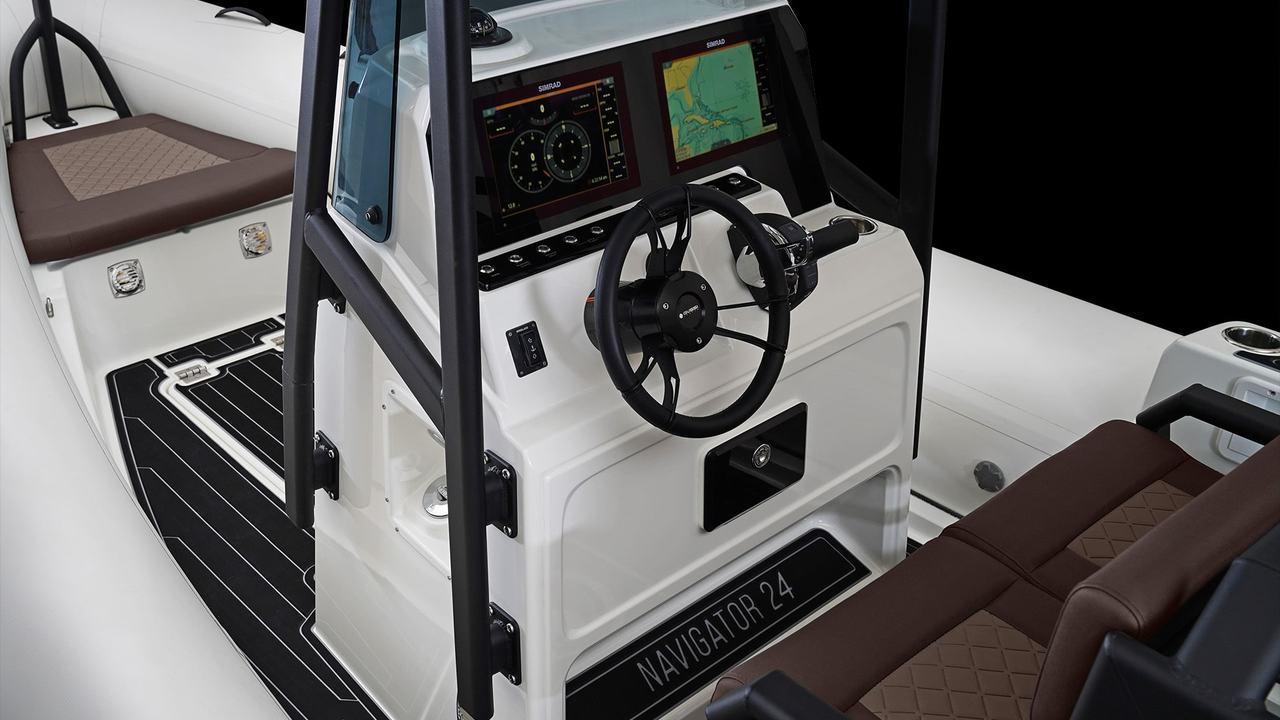
Volante, leva e pannello interruttori occupano la consolle; lo spazio superiore può accogliere strumenti e schermi. Le immagini mostrano un possibile allestimento, non una dotazione garantita. Per ogni apparato si annotano produttore, modello, numero seriale, trasduttore, versione software e circuito di alimentazione. La visuale deve restare libera sia seduti sia in piedi. La leva non deve urtare corrimano o accessori; lo sterzo deve muoversi senza punti duri. Dietro il pannello, connettori e cavi devono essere sostenuti, protetti e raggiungibili. Una prova in acqua completa la verifica di strumenti e sensori.

Pressione e manutenzione delle cinque camere
Il tubolare ha cinque compartimenti indipendenti e pressione nominale di 0,2 bar. Si gonfia per gradi, distribuendo la pressione tra le camere, e si usa la pompa approvata invece di compressori non previsti. Il sole può aumentare la pressione, mentre il raffreddamento la riduce; la lettura va quindi collegata alla temperatura. Ogni valvola viene provata e chiusa con il tappo. Tessuto, giunzioni e fasce di sfregamento si osservano da vicino. Benzina, oli, cloro e solventi devono essere rimossi subito con acqua dolce e detergenti compatibili. A bordo resta un kit di riparazione appropriato.
Gavoni, sedute e accessi tecnici
Le sedute poppiere celano gavoni e accessi a parti degli impianti. Durante l’audit si rimuovono i contenitori previsti, si aprono i portelli e si verifica che pompe, tubazioni e staffe siano raggiungibili senza smontaggi impropri. Cerniere e chiusure devono bloccare le sedute, perché un fermo aperto può causare danni o lesioni. Gli stivaggi non vanno riempiti fino a comprimere linee di drenaggio o ventilazione. Prua, consolle e poppa devono offrire una collocazione sicura per ancora, cime, parabordi e dotazioni personali, senza occupare i percorsi usati dai passeggeri.
Categoria B e C: cambiano anche le posizioni
Nove persone sono ammesse in categoria B e dieci in C. In categoria B nessuno può sedere sul tubolare; in C una posizione sul tubolare è prevista soltanto usando contemporaneamente due appigli. Il manuale indica dove collocare l’equipaggio e ricorda di ridurre la velocità quando qualcuno occupa una posizione più esposta. Al momento della consegna si prova ogni seduta con il T-top e gli accessori già montati. Il conteggio nominale non sostituisce la distribuzione del peso e non garantisce comfort. La configurazione più prudente è quella che mantiene appigli, visibilità e vie di movimento.

T-top, arco, scaletta e coperture
T-top, arco poppiero, doccia, scaletta con piattaforma, imbragature e coperture sono elementi da confermare nella distinta. Il T-top porta l’altezza a 2,72 metri e aggiunge massa e superficie al vento; fissaggi e cablaggi devono essere documentati. L’arco non va confuso con un punto universale di traino. La scaletta deve aprirsi dall’acqua, avere snodi integri e non interferire con motore o timoneria. Le coperture non devono ostacolare ventilazione o accumulare acqua. Ogni optional introduce nuove manutenzioni e deve lasciare accessibili i sistemi che si trovano sotto o dietro di esso.
Sollevamento e trasporto su carrello
I punti di sollevamento integrati vanno controllati insieme al laminato circostante. La gru e le imbragature devono essere dimensionate sulla massa effettiva della barca, non sui soli 1.070 kg del guscio allestito senza motore e carburante. Prima di alzare si chiudono gavoni, si rimuovono oggetti mobili e si verifica che le cinghie non tocchino tubolare, consolle o T-top. Per il carrello si misurano appoggi, carico sul gancio e ingombro con motore. Una pesata certificata della configurazione pronta consente di verificare portata del rimorchio e margine del veicolo trainante.
Traino e sci nautico: funzioni da non confondere
Il gancio a molla sull’arco è destinato a una sola persona sugli sci e non deve trainare giochi gonfiabili, altre unità o moto d’acqua. Gli occhielli prodieri sono invece dedicati al traino della barca; il manuale attribuisce al punto principale un carico orizzontale massimo di 18 kN. Le bitte di ormeggio sono indicate per 12 kN. Durante la verifica si controllano dadi, contropiastre, corrosione e segni di movimento. Cime e accessori non devono sfregare sul tubolare. La funzione corretta di ogni punto va spiegata all’equipaggio e riportata nella sequenza di verifiche di bordo.

sequenza di verifiche di accettazione prima della consegna
La prova inizia a secco: documenti, targhetta, materiale del tubolare, motore, batterie, timoneria, cablaggi, serbatoi, pompe, scarichi, sedute e optional. Si misurano ingombri e massa reale; si apre ogni vano con la barca già arredata. Poi si riforniscono soltanto quantità controllate e si cercano perdite. In acqua si provano sterzo, strumenti, drenaggi e pompe, registrando carico, elica, meteo e condizioni. Nessuna affermazione su velocità, consumo o assetto viene accettata senza misura. Anomalie, numeri discordanti e componenti non identificati devono essere risolti per iscritto prima del saldo.
Piano di manutenzione per il Navigator 24
Prima di ogni uscita: pressione camere, tappo di fondo, pompe, sterzo, carburante e fissaggi. Dopo l’uso: risciacquo di tubolare, coperta, ferramenta, scaletta e fuoribordo. Periodicamente: tubi carburante, sfiati, filtro, sentine, autoclave, batterie e chiusure. A fine stagione: drenaggio dell’acqua, pulizia dei filtri, protezione del circuito carburante secondo le indicazioni del motore e ispezione dei punti di sollevamento. Gli interventi vengono registrati con data, ore e ricambi. Una cronologia ordinata rende verificabile lo stato dell’esemplare e riduce il rischio di confondere manutenzione eseguita con semplice dichiarazione.
Valutazione finale della configurazione
Il Navigator 24 offre spazio, doppia possibilità di propulsione e impianti adatti a un uso giornaliero articolato. La sua versatilità funziona quando l’allestimento resta leggibile: masse calcolate, passaggi liberi, circuiti accessibili e funzioni di traino separate. Le divergenze documentali sui volumi di carburante e acqua non sono dettagli da ignorare, ma verifiche da chiudere sull’unità. Un buon acquisto non si riconosce dal numero di accessori. Si riconosce dalla coerenza tra targhetta, distinta, installazioni, prova e piano di manutenzione, con ogni prestazione documentata sulla barca reale.