
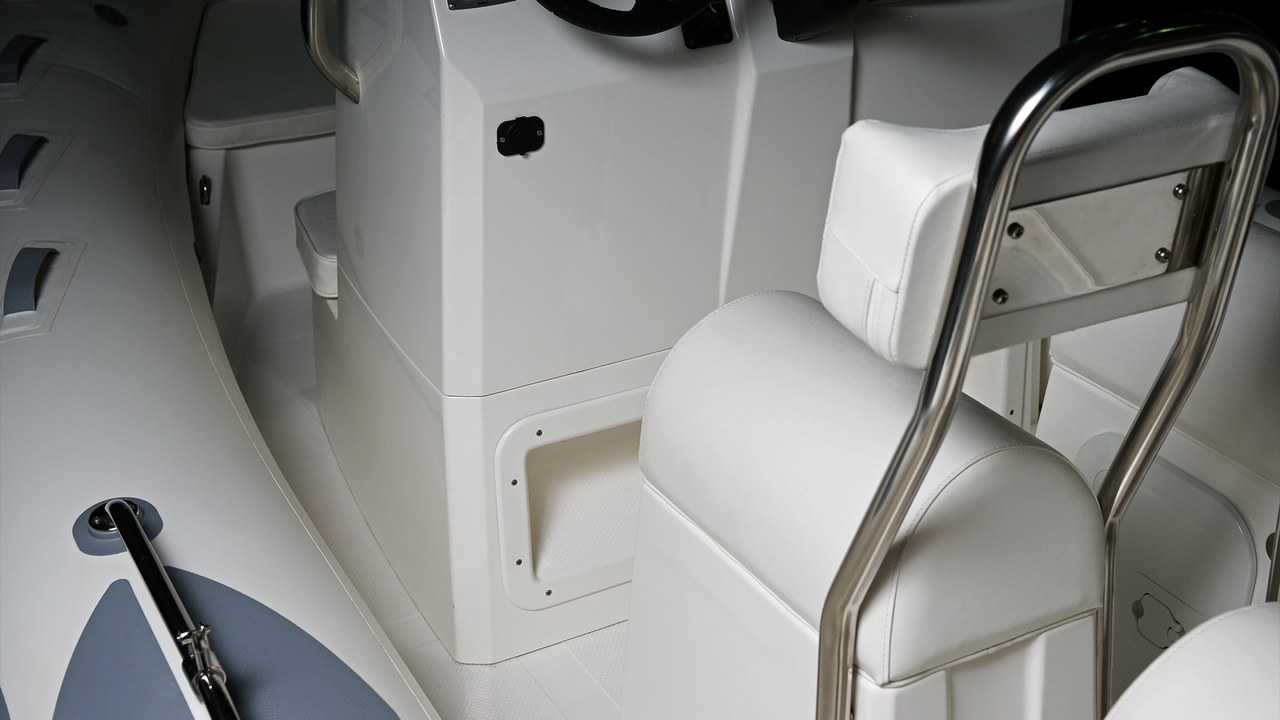
Il BRIG Navigator 610 non è più in produzione, ma la documentazione tecnica del 2020 consente di impostare controlli concreti su configurazione e impianti. La pagina del costruttore riassume 6,10 metri di lunghezza, 2,30 di larghezza, 570 kg e dieci persone; il manuale precisa potenze, masse, cinque camere pneumatiche, serbatoio da 121 litri, circuiti di drenaggio e dotazioni di consolle. Per chi esamina un usato, il punto non è ricostruire un listino storico: occorre verificare che ogni componente ancora a bordo sia coerente, accessibile e funzionante.
Prima regola: identificare l’esemplare
La targhetta del costruttore e il numero dello scafo devono combaciare con dichiarazione di conformità, assicurazione e passaggi di proprietà. Il Navigator 610 è dichiarato dismesso, quindi allestimenti e interventi possono essersi stratificati. Si annotano anno, motore, numero di serie, batteria, timoneria, strumenti, pompe e accessori. Le fotografie commerciali aiutano a riconoscere l’impostazione, ma non provano ciò che fosse standard su una specifica unità. Ogni modifica rilevante richiede documentazione e compatibilità tecnica.

Riferimenti dimensionali per i controlli
Lo scafo misura 6,10 metri senza fuoribordo, 2,30 metri di baglio e 1,85 metri di altezza. Lo spazio interno dichiarato è 4,40 per 1,30 metri; il tubolare arriva a 0,50 metri. Questi valori servono per confrontare ingombri, coperture, posto barca e carrello. Il costruttore ammette una tolleranza del tre per cento sulle dimensioni principali e avverte che motore e inclinazione modificano la lunghezza totale. La misura fisica dell’unità evita incompatibilità con rimessaggio o trasporto.
Configurazione propulsiva ammessa
La potenza raccomandata è 90 hp e quella massima 150 hp. Il fuoribordo richiede gambo lungo da 20 pollici su uno specchio alto 500 mm. Motore, controlli e batteria possono pesare complessivamente al massimo 282 kg. Prima del refitting si sommano le masse reali di ciascun elemento: restare sotto i 150 hp non basta. Si controllano foratura dello specchio, piastre, sigillante, coppie di serraggio, altezza di montaggio, cavi e raggio di sterzata, confrontandoli con le istruzioni del motore.
Timoneria meccanica o idraulica
Il manuale contempla timoneria meccanica e, come variante, sistema idraulico. La verifica cambia con l’impianto presente. Sul cavo si cercano curve strette, guaina lesionata, corrosione e scorrimento irregolare; sull’idraulica si ispezionano cilindro, raccordi, tubi, livello e tracce d’olio. In entrambi i casi il volante deve muovere il motore senza impuntamenti o gioco anomalo e raggiungere gli arresti senza mettere in tensione cablaggi e mandata carburante.

Numeri essenziali in una sola tabella
| Controllo | Dato dichiarato | Riscontro operativo |
|---|---|---|
| Dimensioni | 6,10 x 2,30 m | Misurare ingombro con motore |
| Pozzetto | 4,40 x 1,30 m | Passaggi e aperture liberi |
| Tubolare | 5 camere, 0,15 bar | Tenuta a temperatura annotata |
| Persone | 10 | Confrontare targhetta e carico |
| Motore | 90 hp raccomandati, 150 hp massimi | Potenza e massa compatibili |
| Massa gruppo propulsivo | 282 kg massimi | Includere comandi e batteria |
| Gambo | 20 pollici | Verificare installazione |
| Carburante | 121 l | Tenuta, sfiato e indicatore |
| Massa equipaggiata | 570 kg senza motore e carburante | Pesare configurazione completa |
| LCC / carico totale massimo | 860 / 860 kg | Preparare bilancio delle masse |
| Dislocamento carico | 1.720 kg | Non confondere con peso stradale |
Pressione e tenuta del tubolare
Le cinque camere indipendenti hanno pressione nominale di 0,15 bar, pari a 2,2 psi. Si misura con manometro affidabile dopo aver stabilizzato temperatura e ombreggiamento, registrando ciascun compartimento separatamente. Valvole, tappi, giunti, bottazzo e maniglie vengono bagnati con un metodo idoneo per cercare bolle, senza prodotti aggressivi. Differenze rapide impongono riparazione; differenze lente vanno confermate in condizioni confrontabili. La pressione corretta influenza appoggi, spruzzi e comportamento, ma non corregge un tessuto degradato.

Serbatoio: percorso dal bocchettone al motore
La capacità integrata è 121 litri. L’impianto comprende bocchettone esterno, tubo di carico, serbatoio, sfiato, indicatore e linea verso il fuoribordo. L’ispezione segue fisicamente il percorso: tenuta del tappo, flessibilità dei tubi, doppio serraggio dove previsto, distanza da spigoli e assenza di odore nei vani. Lo sfiato non deve essere ostruito né orientato in modo da imbarcare acqua. Prefiltro e valvola sono elementi da installare con competenza e devono restare raggiungibili per manutenzione.
Messa a massa e rischio carburante
Quando il serbatoio è montato dal cantiere, il manuale prevede un collegamento alla treccia di massa della barca e richiede che l’installazione del motore venga collegata allo stesso sistema. Una connessione assente o deteriorata può favorire la perforazione del serbatoio e una perdita. Il controllo verifica continuità, serraggio e corrosione senza improvvisare ponticelli. Prima del rifornimento si spengono motore e apparecchi elettrici; fiamme, fumo e sorgenti di calore restano lontani dall’area.

Indicatore carburante: calibrazione pratica
La presenza di un indicatore elettrico non garantisce una lettura lineare o precisa, soprattutto dopo anni. Si osservano connettori, galleggiante, cablaggio e risposta dello strumento, quindi si confrontano livelli visualizzati con quantità note introdotte in sicurezza. L’autonomia non si calcola affidandosi soltanto alla lancetta: consumi dipendono da motore, elica, carico, mare e regime. Una riserva operativa va conservata e il comandante annota ore e rifornimenti per individuare deviazioni o perdite.
Batteria, contenitore e staccabatteria
La batteria deve essere alloggiata in un contenitore ventilato, accessibile e separato da carburante e prodotti infiammabili. Si verificano fissaggio, morsetti, copripoli, sezione dei cavi e protezione contro sfregamento. Lo staccabatteria deve poter essere raggiunto senza svuotare un gavone in emergenza. L’ossido verde, l’isolante indurito o un capocorda caldo indicano resistenza e richiedono intervento. Gli accessori aggiunti vanno ricondotti a circuiti protetti, evitando collegamenti diretti non identificati.

Quadro e strumenti della consolle
La configurazione descritta comprende volante, bussola, indicatore del livello, interruttori e presa a 12 volt con fusibile, oltre allo spazio per contagiri, trim, voltmetro o strumenti multifunzione. Si prova ogni comando singolarmente e si misura la tensione sotto carico. Le etichette devono corrispondere alle utenze reali. Dietro la consolle, cavi e tubazioni devono essere sostenuti, asciutti e lontani dalla timoneria. Sigillature dei display e scarico dell’acqua proteggono connessioni e struttura.
Pompa automatica e sentina
Il circuito di sentina usa una pompa automatica con scarico dedicato. Non basta azionare l’interruttore: si introduce acqua controllata, si osservano avvio, portata, spegnimento e riflusso. La griglia di aspirazione deve essere pulita e il galleggiante libero da cavi o oggetti. Si ispezionano fascette e passascafo, poi si ripete il test con batteria al livello operativo. Tracce salmastre, acqua oleosa o umidità ricorrente richiedono di localizzare l’ingresso prima di asciugare il vano.

Scarichi di coperta e recesso motore
Il Navigator 610 separa drenaggio di pozzetto e recesso motore dal circuito di sentina. Gli scarichi devono restare liberi e le valvole nella posizione prevista per la condizione d’uso. Con la barca ferma si versa acqua lontano dai componenti elettrici e si verifica che raggiunga l’uscita senza ristagnare sotto sedute o consolle. Un tubo schiacciato, una pendenza modificata o un passascafo deteriorato possono trasformare un semplice lavaggio in ingresso d’acqua o umidità persistente.
Consolle, sedute e gavoni come accesso tecnico
La coperta non si valuta solo per il numero di posti. Coperchi, cerniere e schienali devono aprirsi senza interferire con volante, cavi o appigli; i gavoni non possono nascondere le utenze indispensabili. Si cercano crepe attorno a viti e bulloni, rondelle insufficienti, sigillante separato e pannelli che flettono. La zona prodiera trasformabile in prendisole deve essere montata secondo configurazione e riposta senza bloccare passaggi. In navigazione, sedute e appigli si usano in relazione alle condizioni reali.

Bilancio dei pesi prima di partire
La massa equipaggiata dichiarata di 570 kg esclude fuoribordo e carburante; quella nuda è 420 kg. Il manuale riporta 860 kg in Light Craft Condition e altrettanti come carico totale massimo. Il carico massimo raccomandato di 1.057 kg comprende motore massimo, persone e bagagli ma non il pieno del serbatoio fisso; il dislocamento carico è 1.720 kg. Le grandezze non si sommano. Si elencano motore, batteria, carburante, persone, ancora e dotazioni con masse credibili e distribuzione longitudinale.
Prova al pontile prima dell’uscita
A barca ormeggiata si controllano ventilazione dei vani, odori, livello di sentina, staccabatteria, pompa, luci, strumenti e movimento completo del motore. Si avvia il fuoribordo secondo le sue istruzioni, osservando raffreddamento, allarmi e carica. La retromarcia deve innestarsi senza mettere in tensione cavi o urtare strutture. Si prova il flusso degli scarichi e si annotano eventuali variazioni del livello in sentina. Solo dopo questi riscontri si esce dall’ormeggio.
Prova dinamica con parametri registrati
Non esiste nella documentazione una prestazione garantita per tutte le configurazioni. Il test registra modello del motore, elica, carburante, equipaggio, vento e stato del mare. Si verifica accelerazione progressiva, regime massimo entro il campo previsto dal fuoribordo, risposta al trim, stabilità in virata e arresto. Vibrazioni o ventilazione richiedono diagnosi di montaggio, elica e carico. Dopo il rientro si riaprono consolle e sentina per cercare perdite, parti calde o fissaggi che si siano mossi.
Controlli stagionali su un modello dismesso
All’inizio della stagione si provano pressione delle camere, timoneria, serbatoio, tubazioni, batterie, pompe e ferramenta. Dopo acqua salata si risciacqua rispettando componenti elettrici e si asciugano i vani. Nel ricovero il tubolare non deve sfregare su sostegni o coperture; la carena rigida va appoggiata correttamente. Ricambi e materiali di riparazione si identificano tramite documenti dell’unità. Poiché il modello non è più prodotto, acquistare in anticipo componenti generici senza compatibilità verificata può creare nuovi problemi.
sequenza di verifiche finale per il Navigator 610
Prima dell’acquisto o del varo devono risultare chiari: identità dello scafo, potenza e massa del motore, gambo da 20 pollici, tenuta delle cinque camere, stato dello specchio, bilancio dei pesi, integrità del serbatoio da 121 litri, messa a massa, timoneria, batteria, quadro, pompa e scarichi. Si aggiungono prova al pontile, test dinamico e ricontrollo al rientro. Il Navigator 610 offre un’impostazione documentata; la sua affidabilità attuale dipende dalla qualità misurabile dell’esemplare, non dalla reputazione astratta del modello.