
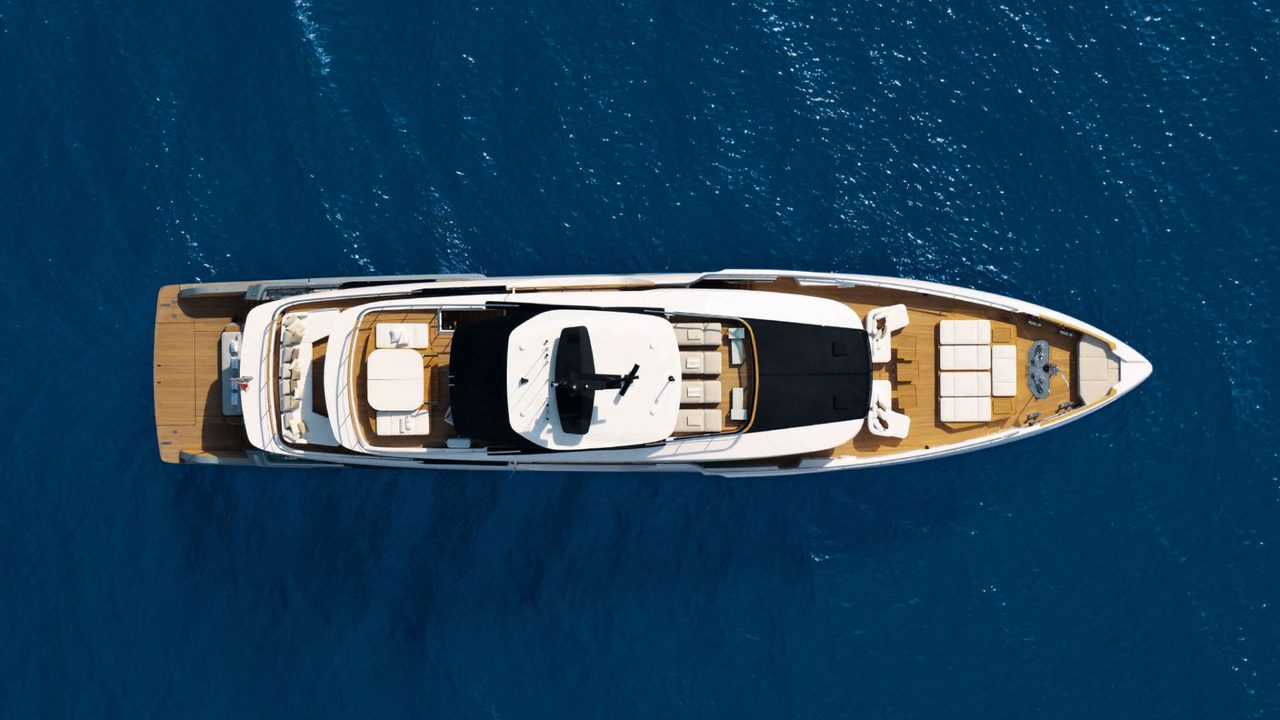
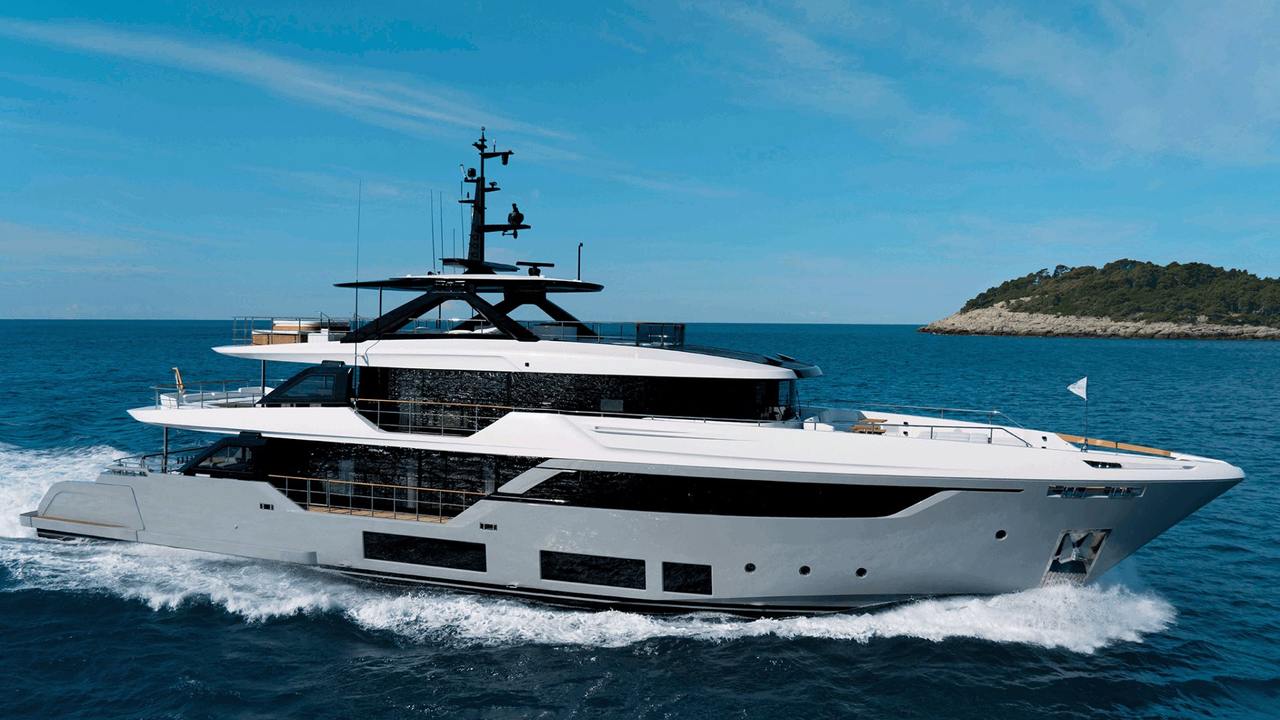
Il Custom Line Navetta 38 è un dislocante di 38,76 metri e 299 GT, con baglio di 8 metri, 243 tonnellate a pieno carico e due MAN V12 1400 CR da 1.400 hp. Dichiara 15 nodi di punta e circa 2.800 miglia a 10 nodi, dispone di 32.500 litri di gasolio e combina pinne Naiad con tre giroscopi Seakeeper.
Qui l’obiettivo non è descrivere il lusso, ma configurare la nave. I dati prestazionali restano dichiarati finché il singolo esemplare non viene collaudato. Propulsione, stabilizzazione, climatizzazione, plancia, beach club e carichi alberghieri devono funzionare come un sistema controllabile da un equipaggio di sei persone, con dodici ospiti e quattro ponti operativi.
Configurazione di riferimento
| Sistema | Dato dichiarato | Gate di consegna |
|---|---|---|
| Dimensioni | 38,76 × 8,00 × 2,27 m | Assetto e porti |
| Pesi | 202 / 243 t | Weight report finale |
| Stazza | 299 GT | Certificato e layout |
| Propulsione | 2 × MAN V12 1400 CR | Curve e matricole |
| Velocità | 15 / 12 / 10 kn | Massima, crociera, economica |
| Carburante / acqua | 32.500 / 4.000 l | Utilizzabile e riserva |
| Autonomia | 2.800 nm a 10 kn | Curva dell’esemplare |
| Stabilizzazione | Pinne + 2 NG18 + 1 NG9 | Logiche e assorbimenti |
| Cabine | 5 ospiti + 4 equipaggio | Servizi e vie di fuga |
Prima decisione: fissare la missione
Una configurazione mediterranea stagionale, una crociera oceanica e un programma charter hanno scorte, ricambi, connettività e ridondanze differenti. Prima di scegliere gli optional si definiscono giorni senza porto, numero reale di ospiti, tender, profilo di velocità, clima esterno e assistenza disponibile nelle aree previste.
Da questa matrice discendono bilancio elettrico, produzione d’acqua, capacità dei freddi, parti di rispetto e turni dell’equipaggio. Gli optional che non sostengono la missione aggiungono massa e complessità senza aumentare l’affidabilità.
Weight report: quarantuno tonnellate da governare
Fra 202 e 243 tonnellate ci sono fluidi, persone, tender, dotazioni e margini. Ogni variante deve avere peso, quota e posizione longitudinale. La combinazione di giroscopi, Jacuzzi, hard top, arredi e apparecchi sui ponti alti merita attenzione specifica, perché l’effetto non è uguale a quello di una massa collocata in sentina.
Al collaudo si leggono pescaggi con serbatoi noti, tender a bordo e dotazioni definitive. Il piano di carico indica combinazioni ammesse e consente di controllare refit futuri. Correttori e pinne non devono mascherare uno sbilanciamento statico.
Due MAN da 1.400 hp: impostazione della prova
La linea propulsiva comprende motori, riduttori, assi, eliche, raffreddamento, scarichi e alimentazione. Rapporti, diametri, versioni elettroniche e matricole vengono congelati nel fascicolo. La prova acquisisce giri, velocità, consumo, carico, pressioni e temperature su punti stabilizzati e rotte reciproche.
Quindici nodi sono il massimo dichiarato, dodici la crociera e dieci il riferimento economico. Non vanno confusi: il gate riguarda regimi sostenibili, margine termico e comfort. Dopo il rientro si ispezionano oli, tenute, supporti, filtri e sentine, ripetendo il controllo che aveva evidenziato eventuali anomalie.
Trentaduemilacinquecento litri: costruire la curva reale
Il volume nominale non è interamente utilizzabile. Fondo, riserva, assetto e generatori riducono il gasolio disponibile per la rotta. Serbatoi, travasi, ritorni, valvole, sfiati e separatori devono essere rappresentati in uno schema semplice da usare durante un’avaria.
Le 2.800 miglia dichiarate a 10 nodi vengono trasformate in piano solo dopo aver definito consumo dei motori, carico alberghiero, margine meteo e riserva. Rifornimenti misurati e ore dei generatori costruiscono la baseline; la stima deve essere aggiornata quando cambiano carena, eliche o peso.
Tripla stabilizzazione: pinne e giroscopi non sono equivalenti
Pinne Naiad, due Seakeeper NG18 e un NG9 coprono condizioni operative diverse. La configurazione richiede una matrice per navigazione, rada, ingresso in porto, manutenzione e guasto. Assorbimenti, raffreddamento, tempi di avvio e limiti devono essere leggibili dalla plancia e conosciuti dall’equipaggio.
Il collaudo confronta risposta dei sistemi separati e combinati in condizioni ripetibili. Si verificano esclusione manuale, perdita di un sensore, allarmi e commutazione delle alimentazioni. Ridurre il rollio non significa correggere un assetto o una distribuzione pesi errati.
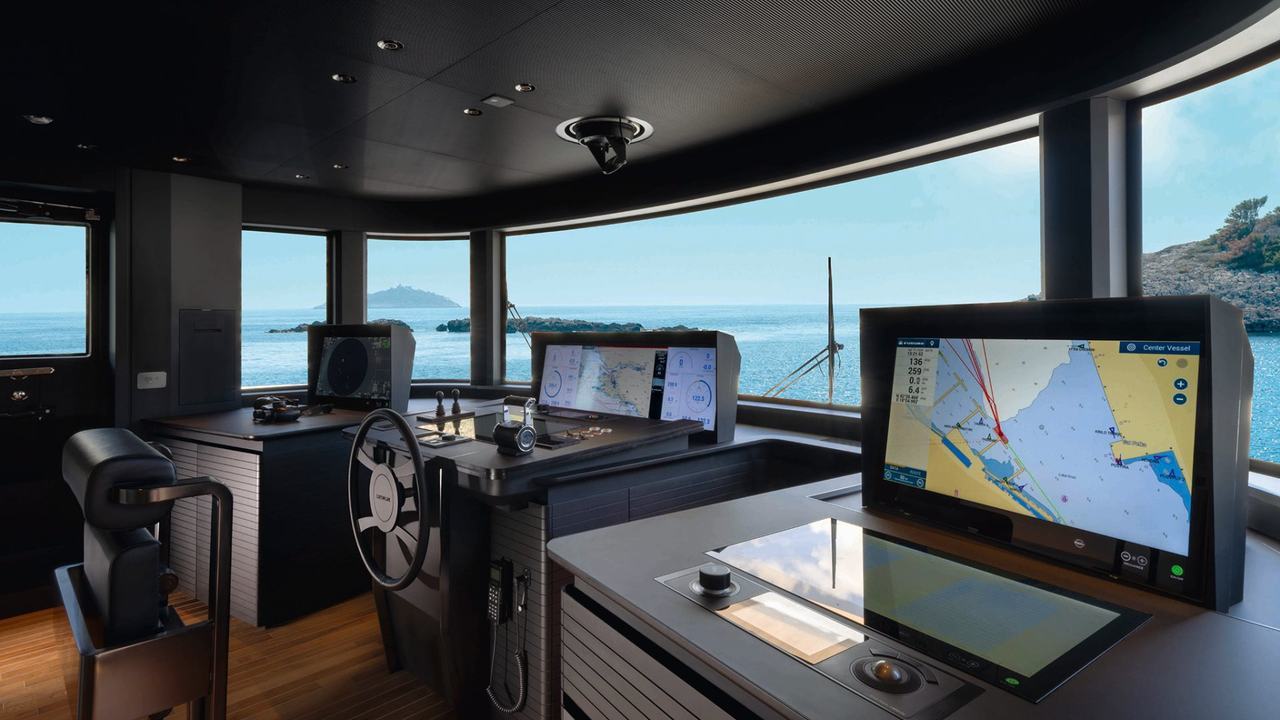
Plancia Team Italia: sette display, una sola logica
La plancia integra un display frontale da 44 pollici, due laterali da 27, due touch da 24 e due controller con schermo da 7. La quantità di interfacce non garantisce ridondanza: occorre mappare processori, reti, alimentazioni, sensori e funzioni che restano disponibili dopo un guasto.
La prova include perdita di un display, di un nodo dati e di una linea di alimentazione, oltre al passaggio ai comandi locali. Allarmi, priorità e registrazione eventi devono essere coerenti. I vetri con filtraggio infrarosso dichiarato fino al 65% vengono valutati insieme a visibilità notturna, riflessi e sbrinamento.
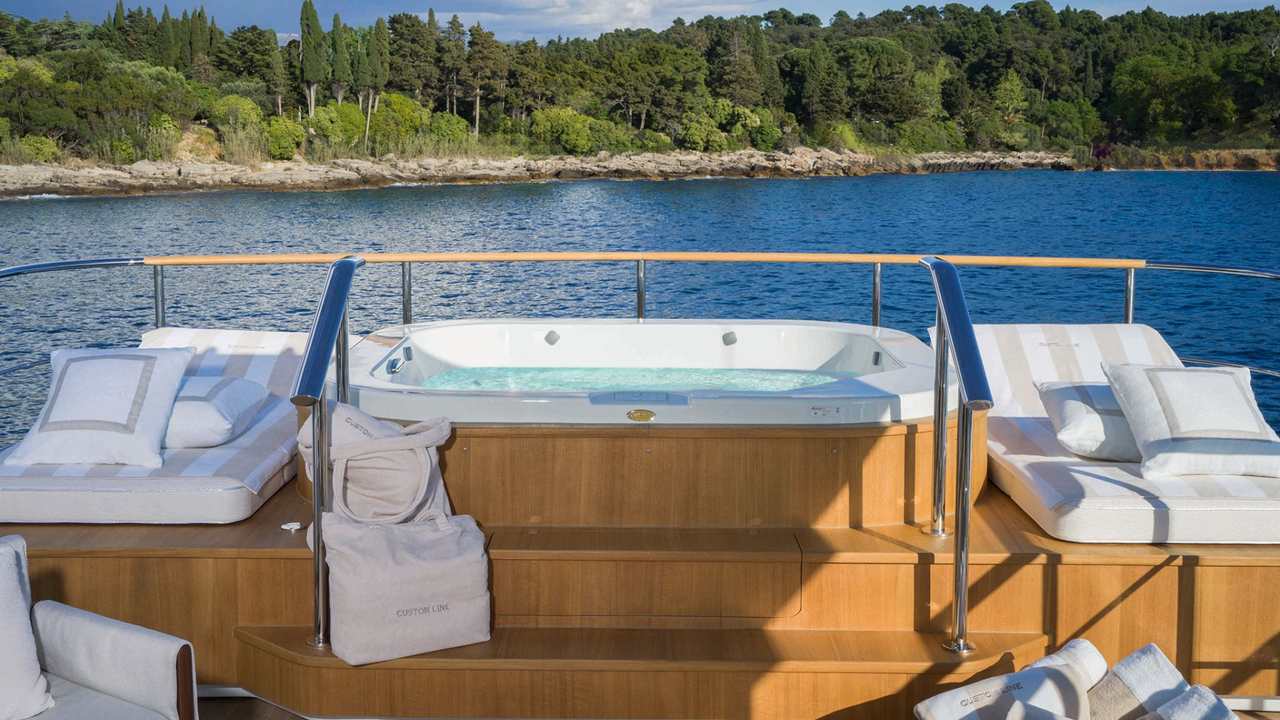
Ponte sole: Jacuzzi, bar e barbecue sotto carico
La superficie di circa 65 metri quadrati concentra una vasca, cucina esterna, bar, arredi e illuminazione. Riempimento, riscaldamento, scarico e trattamento della Jacuzzi generano picchi idraulici ed elettrici. Il bilancio considera anche climatizzazione, cucina e produzione d’acqua attive nello stesso momento.
Drenaggi, sovraccarichi locali, ritenute e configurazione di navigazione devono essere documentati. Il vento agisce su hard top e arredi; parapetti vetrati e camminamenti vengono provati bagnati. La procedura stabilisce quando svuotare la vasca e come mettere in sicurezza ogni elemento.
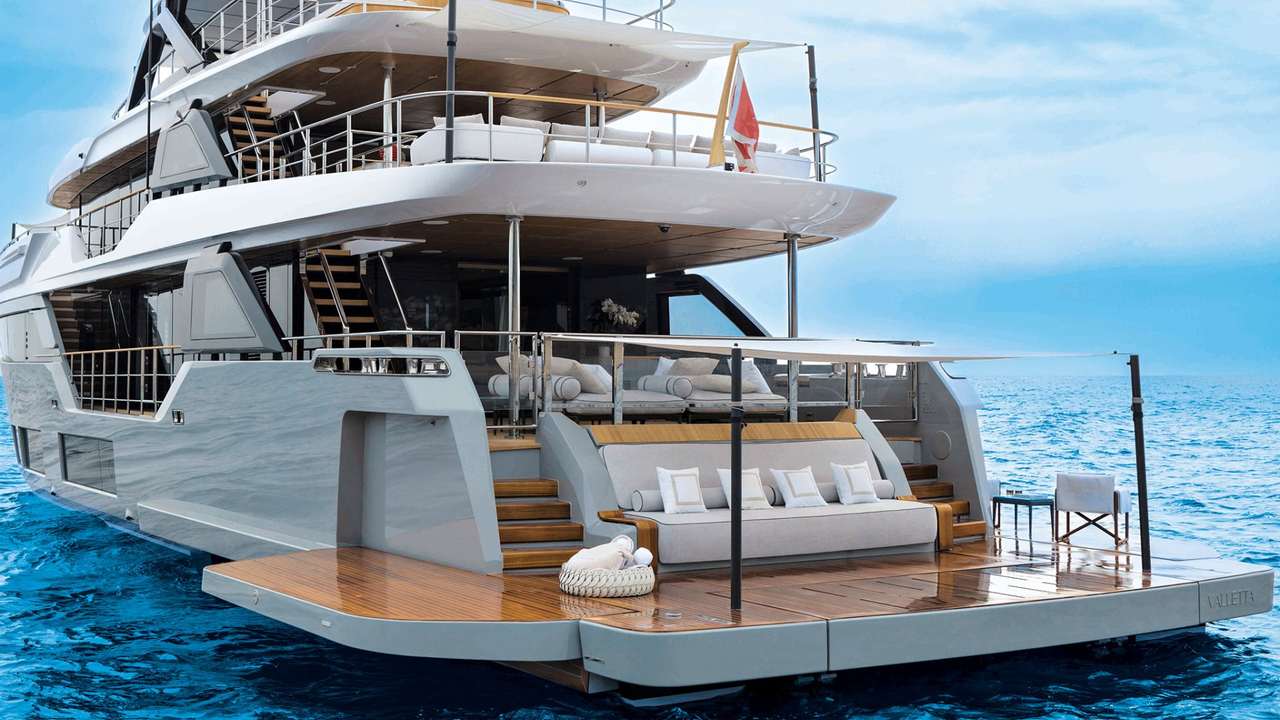
Beach club e movimentazioni di poppa
Beach club e cockpit superano insieme i 70 metri quadrati, con falchette apribili e piattaforma mobile. Attuatori, sensori, interblocchi, portelloni e parapetti sono un unico sistema. Ogni movimento viene provato per cicli, inclusa la procedura manuale e il blocco nella posizione di navigazione.
La tenuta si controlla dopo il collaudo, non soltanto in banchina. Drenaggi, arresti d’emergenza e comunicazioni con la plancia devono funzionare anche con ospiti e tender in operazione. L’accesso al mare non può ridurre la separazione fra acqua e locali tecnici.
Garage e tender da 5,65 metri
Il garage principale è progettato per un Williams diesel jet di 5,65 metri e altri water toy; a prua può trovare posto un mezzo di 2,85 metri o una moto d’acqua. Pesi, batterie, carburanti, culle e punti di ritenuta entrano nella distinta dell’esemplare.
Il gate comprende varo, recupero, lavaggio, ricarica e ripristino della tenuta. Ventilazione e rilevazione incendi devono considerare chimiche delle batterie e carburanti presenti. Le vie di accesso per manutenzione restano libere con tutti i mezzi stivati.
Prestazioni: registrare condizioni, non impressioni
La carena dislocante viene provata con mare, vento, profondità, temperatura e carico annotati. Velocità e consumo si misurano a regime stabilizzato; due passaggi opposti riducono l’effetto di corrente e vento. Si osservano anche risposta al timone, arresto, vibrazioni e comportamento sulle onde.
Il risultato non è un racconto di sensazioni. È una tabella che l’armatore potrà ripetere dopo carenaggio, cambio eliche o aggiunta di dotazioni. Scostamenti futuri diventano così un segnale diagnostico.
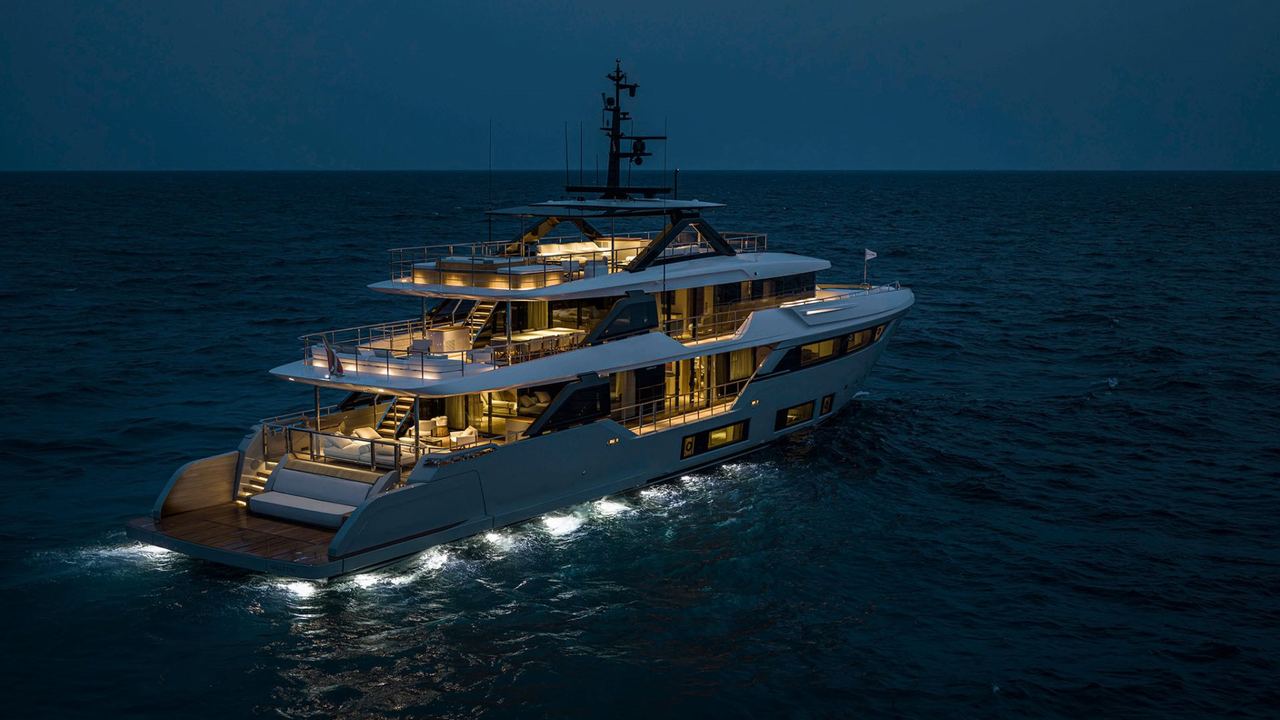
Bilancio notturno e continuità energetica
Di notte lavorano stabilizzazione, climatizzazione, refrigerazione, illuminazione, connettività, pompe e servizi delle cabine. I generatori vengono provati su più carichi e durante il trasferimento fra unità. Batterie, inverter e UPS devono sostenere le funzioni definite senza creare un punto comune di guasto.
Il test di black-start parte da una condizione controllata e verifica priorità, sequenza di riavvio e allarmi. Versioni software, selettività e autonomia delle utenze essenziali entrano nel verbale. Il silenzio in rada non deve essere ottenuto riducendo il margine di sicurezza.
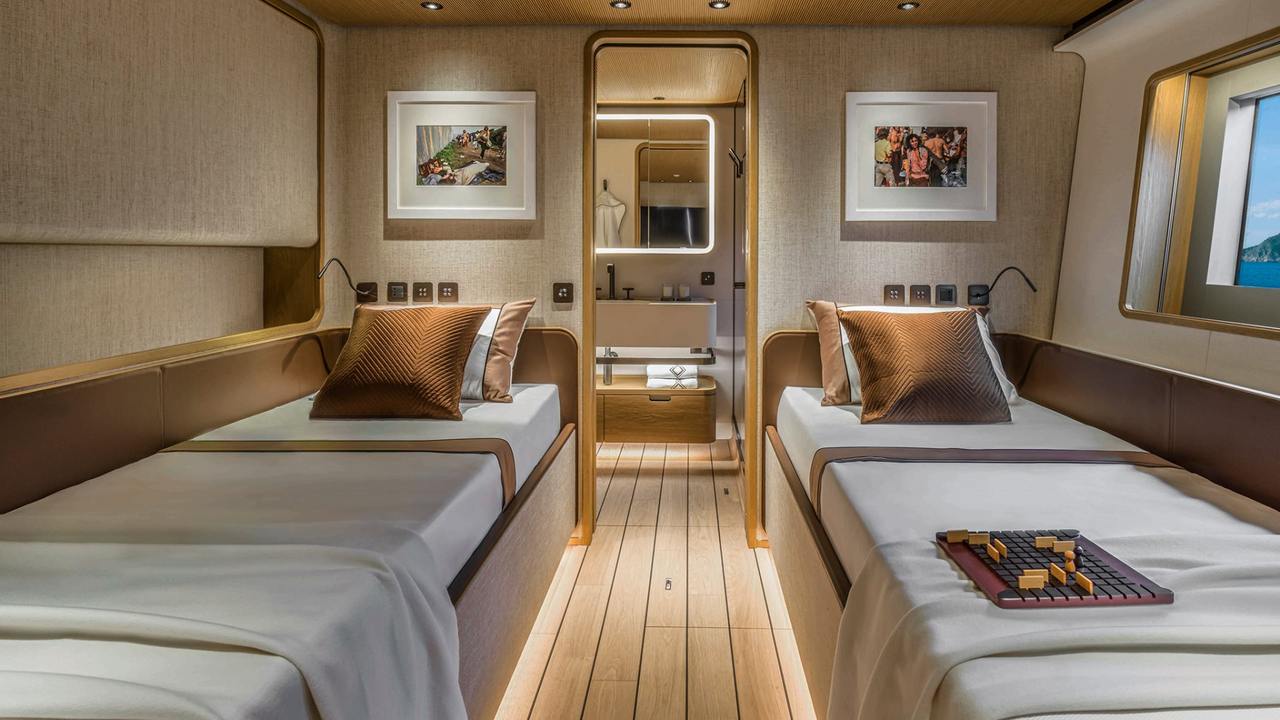
Cabine ospiti: servizi per dodici persone
La configurazione prevede cinque cabine e può ospitare dodici persone con due Pullman. La capacità deve essere sostenuta da aria, acqua, acque reflue, prese, illuminazione e vie di fuga. Ogni cabina viene provata con porte, armadi e letti nella posizione d’uso.
Pannelli tecnici devono aprirsi senza smontare arredi. Oblò, oscuranti e scarichi ricevono prove dedicate. La disposizione simmetrica non elimina differenze acustiche o termiche: i valori vengono rilevati stanza per stanza.
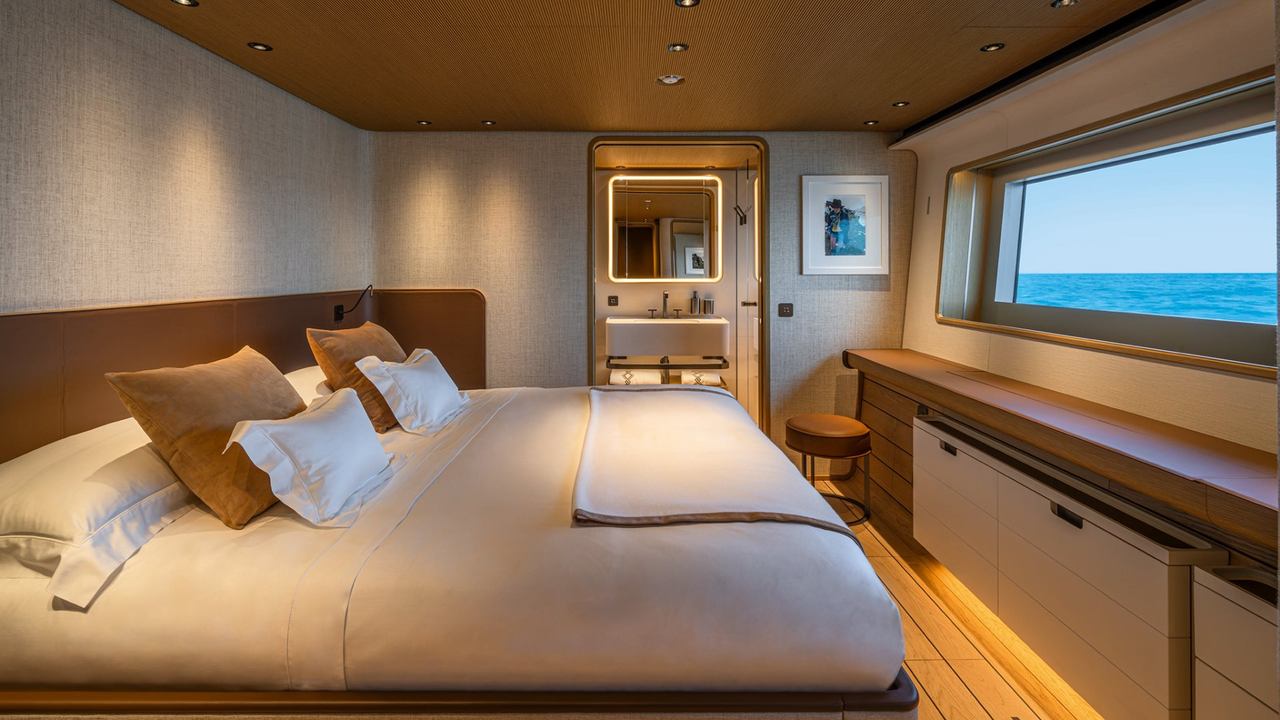
Suite armatoriale: quaranta metri quadrati misurabili
La suite sul main deck integra due guardaroba e un bagno diviso in due zone con doccia centrale utilizzabile come bagno di vapore. Vapore, ventilazione, impermeabilizzazione e condensati vanno provati insieme, perché il guasto di un componente può coinvolgere finiture e locali adiacenti.
La baseline acustica separa motori, generatori, clima, pompe e rumore idrodinamico. Temperatura, umidità, illuminazione e oscuramento vengono registrati. Il comfort deve restare ripetibile nelle diverse condizioni operative, non soltanto durante una visita in porto.
Cucina, pantry e flussi dell’equipaggio
La cucina e i pantry sono collegati da percorsi riservati, così l’equipaggio non attraversa le aree ospiti. La configurazione va simulata con servizio per dodici, riassetto cabine e movimentazione sul ponte. Porte, montacarichi, stivaggi e passaggi devono evitare incroci e conservare le vie di fuga.
Estrazione, compensazione dell’aria, apparecchi, refrigerazione e lavaggio vengono attivati simultaneamente. Si misurano calore, odori, assorbimenti e scarichi. Stoviglie e cassetti richiedono ritenute adatte al moto della nave.
Sky lounge apribile su tre lati
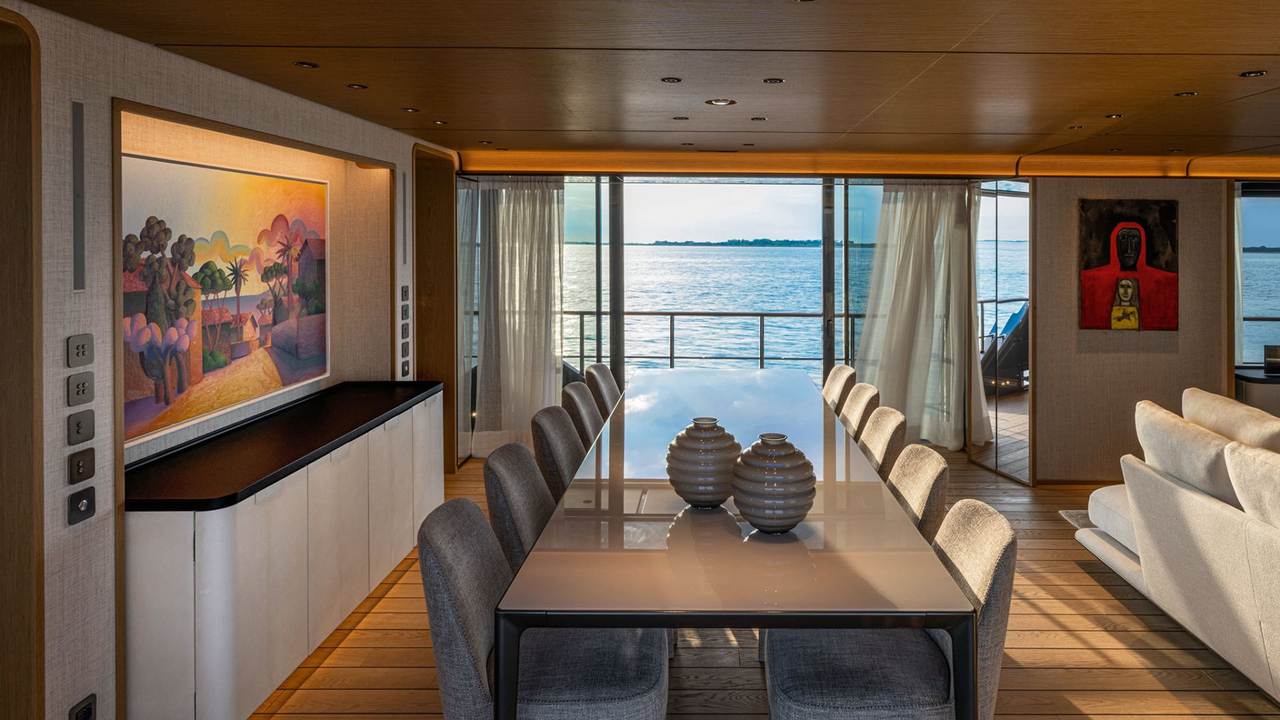
Il ponte superiore supera 90 metri quadrati e il salone può aprirsi su tre lati. Telai, vetrate, sensori e movimentazioni devono conservare tenuta e allineamento dopo la navigazione. La climatizzazione cambia radicalmente fra spazio chiuso e aperto: le automazioni non devono tentare di compensare dispersioni incontrollate.
Il test verifica interblocchi, drenaggi, rilevazione pioggia se presente e chiusura manuale. Arredi e apparecchi audio-video non devono impedire l’accesso ai meccanismi. Le grandi aperture fanno parte sia dell’architettura sia della sicurezza.
Climatizzazione ad alta efficienza
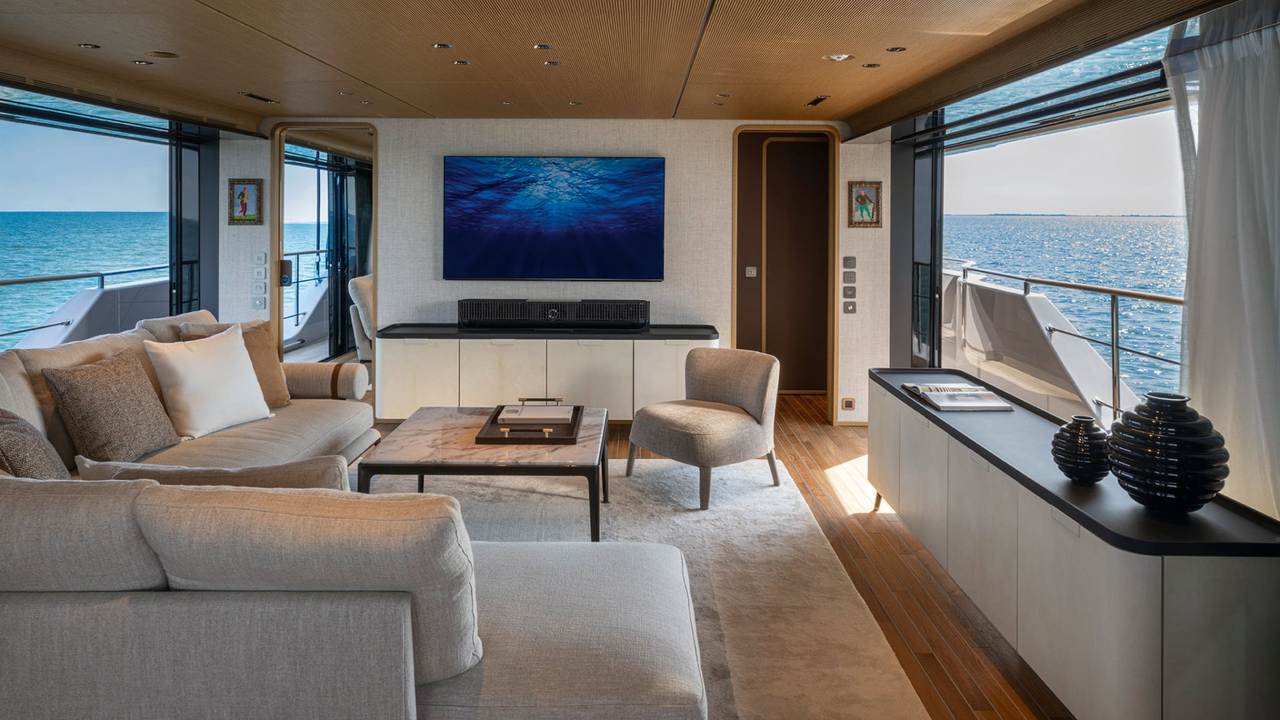
Cabine, saloni, cucina, plancia e locali tecnici hanno carichi diversi. La prova estiva usa piena occupazione, sole e apparecchi attivi; registra mandata, ripresa, umidità, condensati e assorbimenti. Le zone lontane non devono essere compensate raffreddando eccessivamente quelle vicine.
Filtri, pompe, scambiatori e valvole devono essere accessibili. In sala macchine si misura il ricambio d’aria sotto carico: una temperatura elevata riduce margine e durata di motori, generatori ed elettronica.
SCR ready e scelta IMO Tier III
La predisposizione SCR permette di configurare la riduzione degli ossidi di azoto compatibile con IMO Tier III. La decisione coinvolge spazio, massa, reagente, serbatoi, dosaggio, sensori, scarichi e manutenzione. Deve essere presa prima che personalizzazioni occupino i volumi necessari.
Il collaudo verifica allarmi, qualità del reagente, temperature operative e modalità degradate. L’equipaggio deve conoscere rifornimento, conservazione e diagnosi; una tecnologia ambientale non può diventare un sistema opaco affidato soltanto all’assistenza esterna.
Audio-video e connettività come impianto
Home automation, sistema audio, rete ospiti, controllo luci e connessione satellitare condividono alimentazioni e cablaggi con funzioni di bordo. Segmentazione, accessi, backup delle configurazioni e aggiornamenti devono essere governati. La rete di intrattenimento non deve interferire con navigazione o monitoraggio.
Si provano ripristino, perdita di un access point e funzionamento locale senza collegamento esterno. Armadi, ventilazione e UPS sono dimensionati per il calore reale. Manuali e credenziali amministrative vengono consegnati in modo sicuro all’armatore.
Acqua, reflui e autonomia alberghiera
I 4.000 litri d’acqua sono una riserva, non l’intera autonomia. Dissalatore, pompe, boiler e trattamento devono sostenere dodici ospiti, sei membri d’equipaggio, cucina e lavanderia. Portata, qualità, pressione e assorbimenti vengono verificati con più utenze contemporanee.
Nere e grigie richiedono capacità, sfiati, allarmi e procedure coerenti con la rotta. La pianificazione integra rifiuti, ricambi e manutenzione: le 2.800 miglia propulsive servono soltanto se gli impianti alberghieri possono accompagnarle.
Prevenzione incendi e gestione dell’emergenza
Rivelazione, estinzione fissa, serrande, ventilazione e intercettazioni carburante vengono confrontate con i disegni. Ogni sensore deve comparire sulla centrale con un nome non ambiguo. Le vie di fuga sono percorse con arredi e bagagli nella configurazione reale.
L’equipaggio prova isolamento del guasto, arresti remoti e comunicazioni. Tender, batterie e cucina richiedono scenari specifici. Un sistema certificato resta incompleto se chi è a bordo non sa riconoscere e gestire la modalità degradata.
sequenza di verifiche di accettazione
La consegna procede per documenti, pesi, ispezione a secco, prove in porto, collaudo in mare e ricontrollo dopo il rientro. Matricole, schemi as-built, software, analisi dei fluidi, allarmi memorizzati e ricambi vengono confrontati con l’installato. Ogni rilievo ha responsabile e criterio di chiusura.
Il Navetta 38 offre un’impostazione tecnica rara: 299 GT, grande autonomia, volumi estesi e stabilizzazione multilivello. La configurazione migliore non è quella con più accessori, ma quella in cui peso, energia, raffreddamento, manutenzione e procedure restano leggibili. È questo che trasforma un superyacht complesso in una nave realmente governabile.