
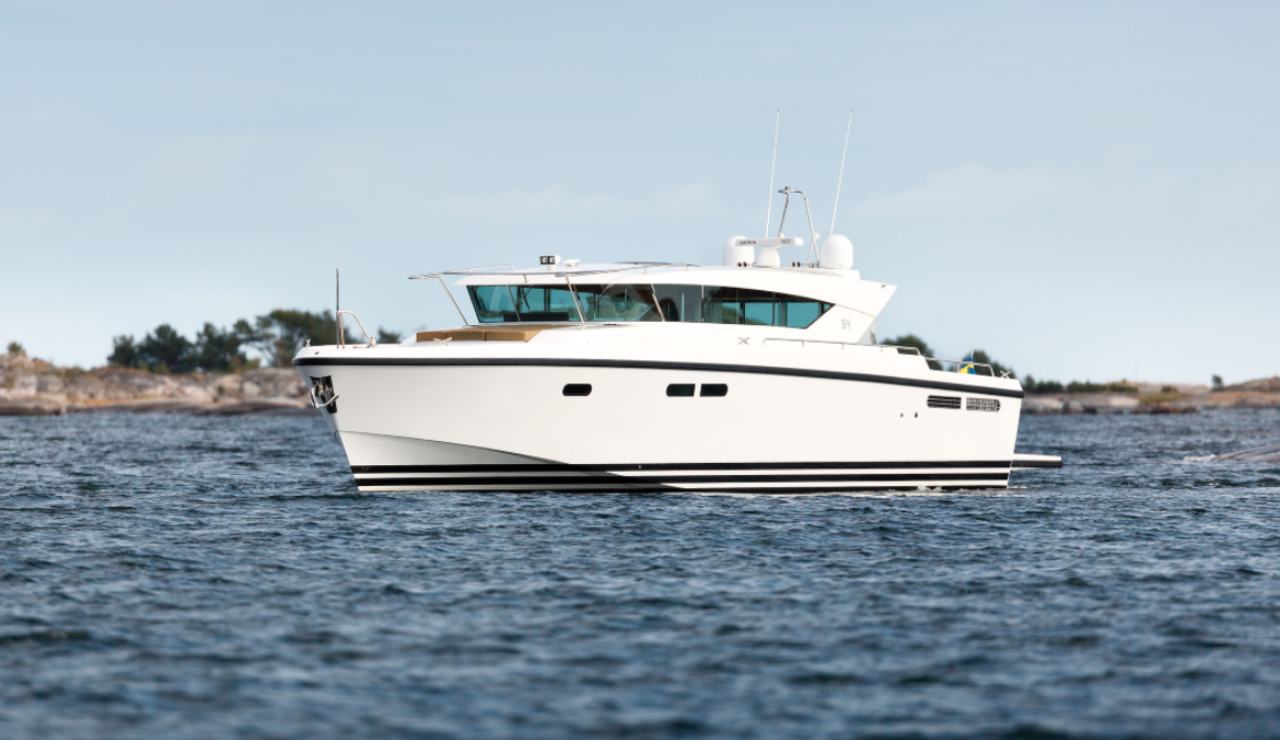
Delta 54 IPS è uno di quei progetti nautici che segnano un punto di svolta nella categoria degli sport cruiser di media dimensione. Nasce in Svezia, in un contesto dove l’ingegneria navale si intreccia con la filosofia del design scandinavo, fatta di essenzialità, precisione e rispetto per l’efficienza. Ciò che distingue il Delta 54 IPS non è soltanto la sua linea pulita e contemporanea, ma soprattutto la sua struttura in fibra di carbonio — una scelta radicale che riduce il peso complessivo, aumenta la rigidità e migliora la resa dinamica in mare. Ogni dettaglio, dalla carena a V profonda alla distribuzione dei pesi, è stato concepito per tradurre potenza in fluidità e controllo, ottimizzando le prestazioni senza compromettere comfort o sicurezza.
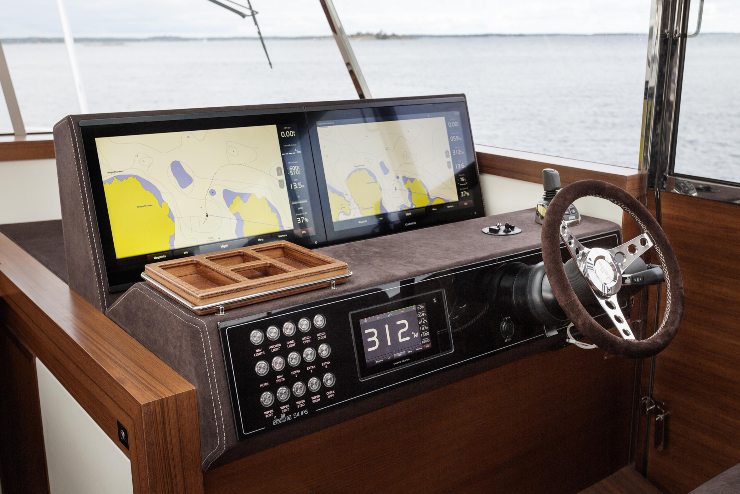
Il risultato è un’imbarcazione capace di combinare alte velocità di crociera con consumi contenuti, offrendo un’esperienza di conduzione intuitiva anche per equipaggi ridotti. I sistemi Volvo Penta IPS con joystick integrato e la plancia “glass cockpit” trasformano la manovrabilità in un gesto naturale, mentre la rumorosità minima e la stabilità anche su mare formato assicurano un comfort paragonabile a yacht di dimensioni superiori. Il Delta 54 IPS rappresenta così un equilibrio raro: un’imbarcazione sportiva dalle prestazioni brillanti, ma capace di navigare con eleganza e serenità, incarnando perfettamente lo spirito della nautica nordica più avanzata — dove ogni chilogrammo e ogni nodo servono a esaltare l’arte dell’efficienza.
Identità del cantiere e filosofia progettuale
Radici culturali e metriche di qualità
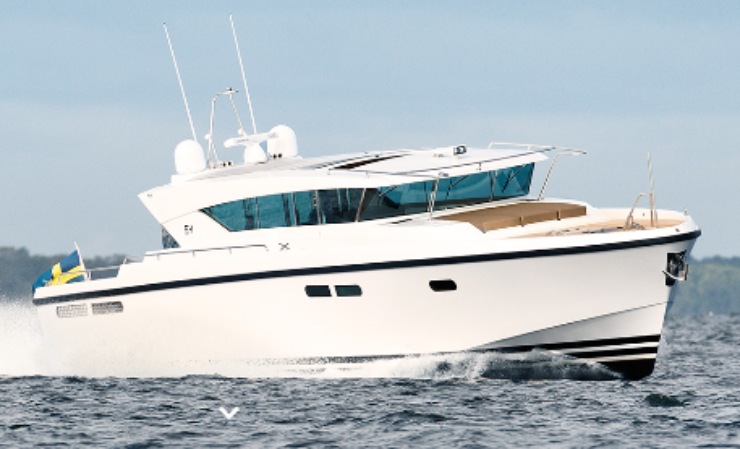
Il cantiere che firma il Delta 54 IPS appartiene a un contesto dove funzione e efficienza prevalgono sulla mera estetica. La qualità è misurata attraverso ripetibilità costruttiva, tolleranze strette e controllo dei pesi. Questa impostazione porta a scelte minimaliste ma razionali, che si traducono in comportamenti prevedibili e in un costo energetico per miglio competitivo.
Processi e controllo
La produzione utilizza infusione in composito e core a sandwich nelle aree estese, con irrigidimenti locali orientati secondo le linee di flusso degli sforzi. I passaggi chiave sono monitorati per contenere scostamenti di massa tra scafi gemelli. Il risultato è una piattaforma rigida, con frequenze proprie favorevoli e minori risonanze in navigazione.
Reputazione e utenza
La comunità degli armatori individua nel brand due valori: precisione dinamica e efficienza reale. Il primo si riconosce nella risposta pulita ai comandi e nella manovrabilità con equipaggi ridotti; il secondo nella capacità di macinare miglia con consumi razionali, riducendo l’ansia da rifornimento tipica delle crociere veloci.
Architettura navale: geometrie, volumi e distribuzione delle masse
Proporzioni funzionali
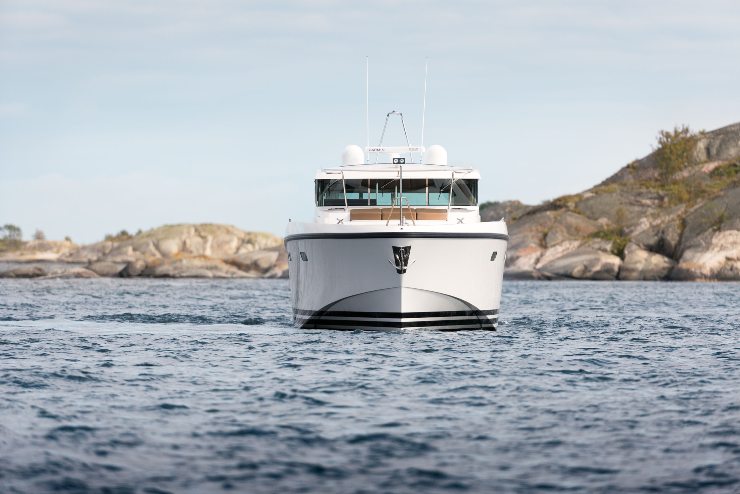
Il Delta 54 IPS opera nel range 50–60 piedi con una carena a V profonda, prua affilata e raccordi a poppa calibrati per alimentare i pod con un flusso regolare. Il baglio è dimensionato per garantire stabilità trasversale e un layout notte completo, senza penalizzare la penetrazione sull’onda corta.
Fondo carena e flussi
Angoli di deadrise generosi in sezione centrale e spigoli ben definiti contribuiscono a diminuire lo slamming e a mantenere assetti stabili nelle accelerazioni. La geometria del fondo è disegnata per servire i Volvo Penta IPS con acqua “pulita”, riducendo cavitazione e perdite indotte.
Baricentro e inerzie
La concentrazione dei pesi in prossimità del baricentro longitudinale riduce i momenti polari. Meno masse alle estremità vuol dire beccheggio più controllato, rollio meno faticoso e prontezza ai comandi. In pratica, lo scafo richiede meno energia per mantenere la planata e restituisce sensazioni “leggere” al timone.
Materiali e costruzione: composito avanzato, rigidezza e comfort
Full-carbon come leva di sistema
L’impiego esteso di fibra di carbonio in scafo e sovrastruttura è una scelta che lavora su tre fronti: peso complessivo, rigidezza e smorzamento. Meno massa equivale a minori potenze richieste per una data velocità; maggiore rigidezza porta a frequenze proprie più alte e a una riduzione delle deformazioni; lo smorzamento intrinseco del sistema limita rumori e vibrazioni.
Stratigrafie e core
Le stratigrafie impiegano tessuti unidirezionali e multiasse, con sovrapposizioni mirate in corrispondenza di aperture, angoli e zone di carico. I core a cellule chiuse nel sandwich mantengono rigidezza flessionale con pesi contenuti, mentre la resina a bassa viscosità consente un’infusione uniforme.
Allestimenti interni alleggeriti
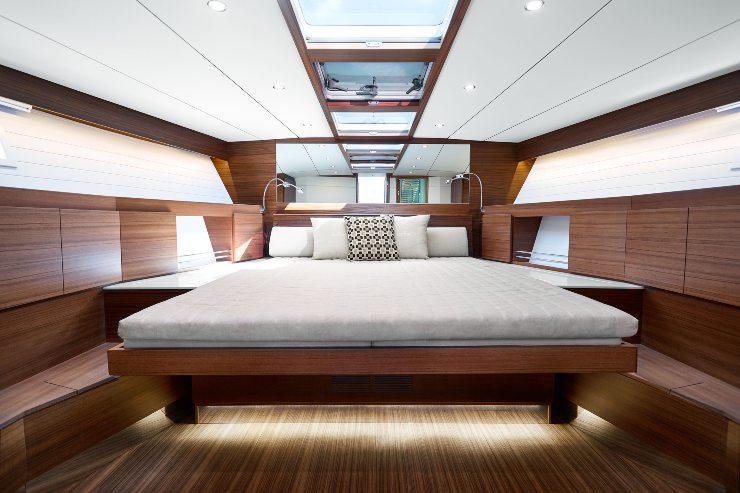
Il mobilio adotta pannelli lightweight con accoppiamenti elastici per isolare vibrazioni e rumore strutturale. Le finiture privilegiano toni chiari e scelte materiche coerenti con l’idea di comfort termico e luminosità, migliorando la vivibilità durante permanenze prolungate.
Propulsione e governo: piattaforma IPS, ergonomia e ridondanze
Pod-drive con eliche “a prua”
Il sistema IPS utilizza pod orientabili con eliche controrotanti rivolte a prua: questa impostazione, abbinata alla carena, aumenta la resa propulsiva a parità di cavalli, ottimizzando l’angolo di impatto del flusso e limitando perdite e turbolenze.
Joystick e automazioni
In ambito portuale, il joystick consente traslazioni e rotazioni sul punto con estrema precisione, riducendo la dipendenza da equipaggi numerosi. La curva di apprendimento è rapida e l’imbarcazione rimane gestibile anche con vento trasversale.
Affidabilità e percorsi critici
La progettazione dei circuiti carburante e dell’elettrico prevede ridondanze mirate: filtrazioni doppie, allarmi su temperatura/pressione, priorità carichi per i servizi essenziali. La diagnostica aiuta a intercettare le anomalie prima che diventino fermo barca.
Prestazioni e comportamento: velocità, consumi, comfort dinamico
Crociera veloce “sostenibile”
Il Delta 54 IPS è progettato per mantenere medie orarie elevate senza trasformare ogni tratta in un esercizio di consumo. La carena assorbe bene l’onda corta, l’assetto richiede poche correzioni e la rigidezza del full-carbon contribuisce a ridurre vibrazioni e rumorosità.
Consumi e pianificazione
La curva d’efficienza favorisce velocità di crociera veloce con fuel burn allineato. Per l’armatore significa poter pianificare tratte mediterranee con rifornimenti razionali, evitando soste non programmate e preservando la regolarità del viaggio.
Stabilità e traiettorie
In virata, il lavoro congiunto di V profonda e pod orientabili genera raggi contenuti e uscite pulite di manovra; l’“effetto presa” delle eliche a prua riduce i “vuoti” di spinta. La timoneria comunica linearità e progressione nella risposta.
Sistemi di bordo: elettronica, domotica e gestione energetica
Plancia “glass” e integrazione dati
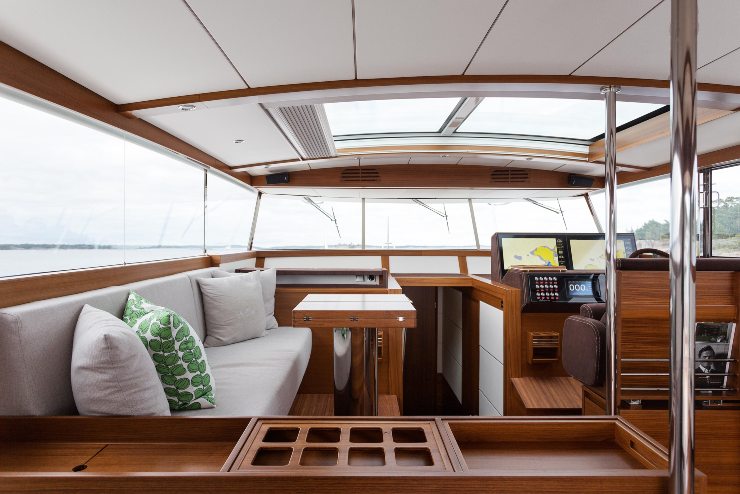
La plancia integra navigazione, motori e impianti in un ecosistema coerente. Avere tutte le informazioni in chiave situational awareness riduce i tempi di reazione e limita i passaggi di contesto durante tratte impegnative o navigazioni notturne.
HVAC e priorità carichi
L’HVAC a zone, l’illuminazione a scenari e la logica di priorità energetiche consentono di contenere i picchi, mantenendo comfort anche all’ancora. L’obiettivo è proteggere i carichi sensibili ed evitare spegnimenti indesiderati.
Telemetria e manutenzione
Log di funzionamento, monitoraggio da remoto e notifiche preventive agevolano la transizione verso una manutenzione predittiva, migliorando la disponibilità effettiva dell’unità e il costo totale di proprietà nel tempo.
Design e organizzazione degli spazi
Main deck e continuità pozzetto–salone
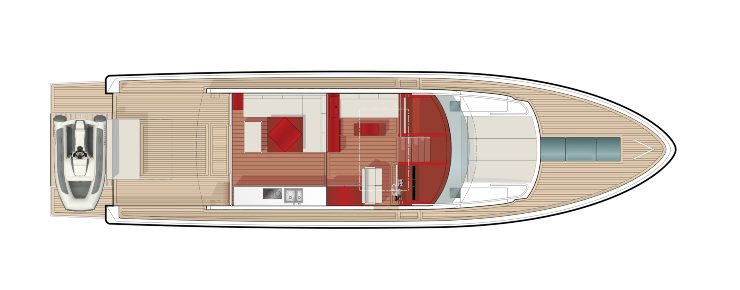
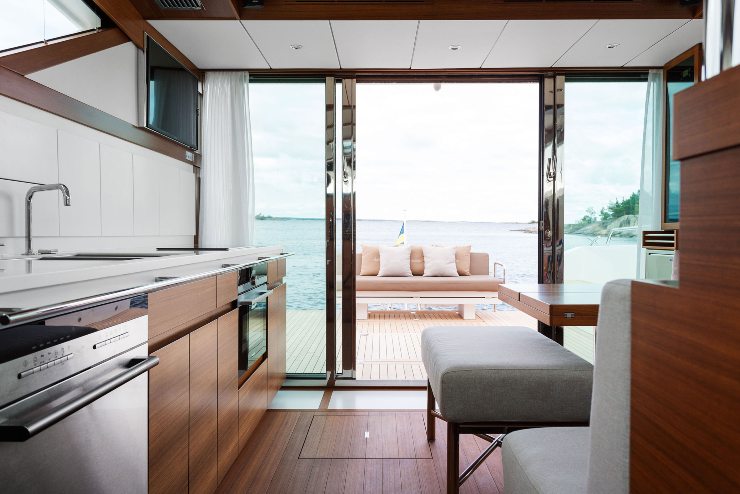
Il main deck si sviluppa come ambiente continuo tra pozzetto e salone, con passaggi sgombri e aperture ampiamente vetrate. L’aria circola con facilità e la percezione di luminosità supporta il comfort nelle ore calde.
Layout sottocoperta
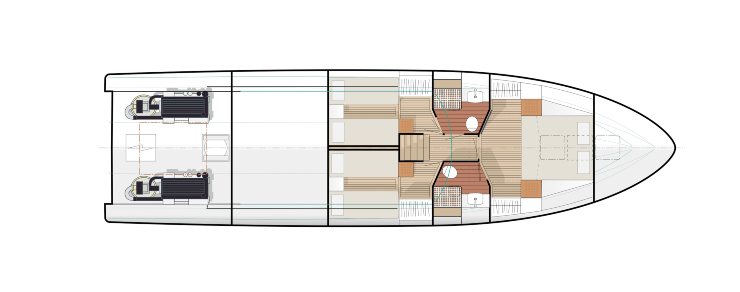
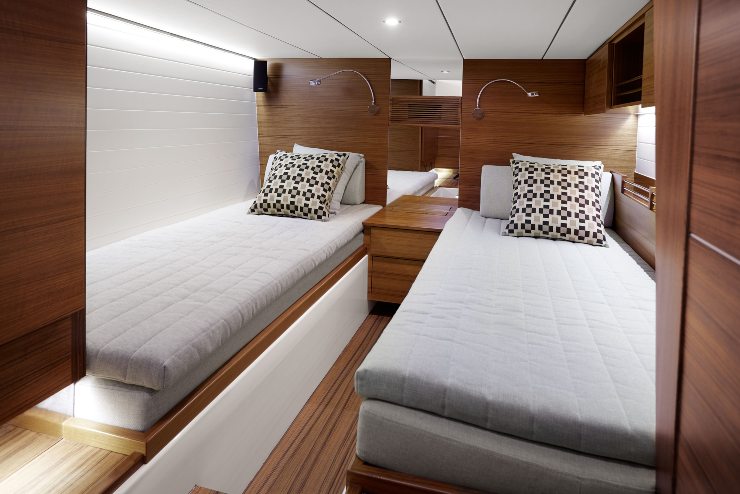
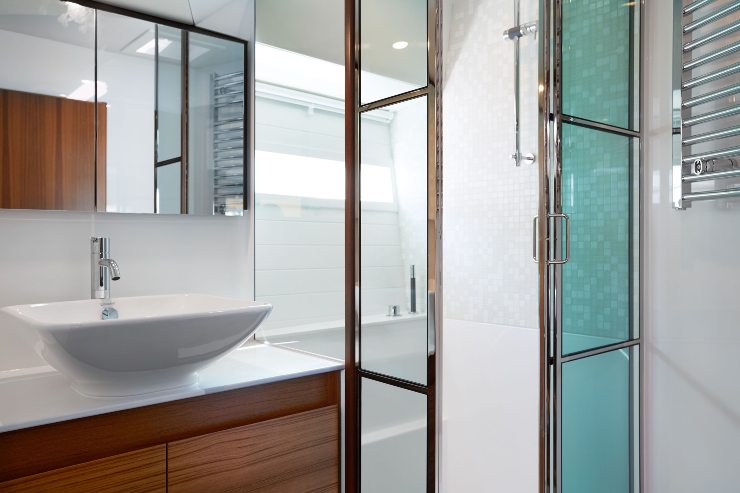
La zona notte tipica è a tre cabine e due servizi. L’armatoriale a tutto baglio sfrutta la zona più stabile, la VIP a prua garantisce volumi generosi, mentre la terza cabina aggiunge flessibilità d’uso per famiglia o ospiti. Gli stivaggi sono studiati per crociere di più settimane.
Ergonomia e percorsi
La timoneria offre sedute con supporti lombari e regolazioni utili sulle lunghe distanze. Fuori, passavanti protetti e tientibene frequenti favoriscono spostamenti sicuri. La piattaforma poppiera, se movimentata, semplifica tender e giochi d’acqua.
Innovazione mirata: peso, stabilità, sicurezza
Ingegneria del peso
La riduzione delle masse è la prima tecnologia di efficienza: ogni chilogrammo in meno si traduce in cavalli risparmiati per la stessa velocità. Il carbonio, gestito con processi rigorosi, permette di conservare robustezza e qualità percepita.
Stabilizzazione
Dove installata, la stabilizzazione giroscopica attenua il rollio in rada e a bassa andatura, migliorando benessere e riducendo la fatica dell’equipaggio. Il beneficio è particolarmente evidente per chi vive molto all’ancora.
Sicurezza integrata
Sensori diffusi (sentina, gas, fumo), percorsi cablati ridondanti e allarmi a soglia costruiscono una protezione proattiva. Prevenire resta più efficace che correggere in emergenza.
Prove dinamiche e feedback operativi
Spunto e gestione dell’assetto
La salita in planata avviene con progressione regolare e senza continue correzioni di trim. La prua tende a rimanere “dentro” l’onda frammentata, contribuendo a una sensazione di controllo costante.
Virate e trazione
Le virate si chiudono con raggi contenuti, mentre in uscita non si percepiscono vuoti di spinta. Il dialogo fra carena e pod orientabili genera una risposta omogenea e intuitiva.
Comfort acustico
Rumore e vibrazioni restano contenuti per la taglia: la conversazione in salone è possibile anche a velocità sostenute, segno di una coerenza tra struttura, impianti e arredi alleggeriti.
Vita a bordo: climatizzazione, stivaggi e autonomia “hotel”
Clima e qualità dell’aria
La climatizzazione a zone, la disposizione dei diffusori e la gestione della portata limitano correnti fastidiose e garantiscono tempi rapidi di raffrescamento/riscaldamento. La qualità dell’aria incide direttamente sulla resa percepita del comfort.
Stivaggi e funzionalità
La cambusa è pensata per l’uso reale: piani continui, contenimenti anti-urto, spazi dedicati a provviste e stoviglie. I gavoni tecnici sono accessibili per manutenzioni veloci, mentre i volumi “hotel” sostengono permanenze di più settimane.
Consumo elettrico all’ancora
La gestione dei carichi privilegiati, l’eventuale banco batterie potenziato e l’uso razionale dei servizi riducono rumore e ore generatore, elevando la qualità della sosta.
Mercato, concorrenza e pubblico di riferimento
Posizionamento
Il Delta 54 IPS presidia la fascia sport cruiser premium con un elemento distintivo: efficienza intelligente. Non è una barca che rincorre numeri di targa, ma un progetto che lavora “a monte” su peso, rigidezza e flussi, trasformando la cavalleria in miglia e serenità d’uso.
Confronto con i competitor
Nello scenario europeo, i concorrenti propongono VTR avanzata e talvolta pod. Il vantaggio del 54 è il rapporto rigidezza/peso: meno massa da accelerare, assetto più stabile e risposta pronta. Sul piano abitativo, la cabina armatoriale a tutto baglio e il main deck continuo mantengono la competitività.
Cliente ideale
Il target è un armatore che naviga spesso, mira a medie elevate con consumi sotto controllo e desidera una barca semplice da gestire con equipaggi contenuti. Il prodotto si presta anche a charter boutique focalizzati sull’esperienza di bordo.
Gestione nel tempo: manutenzione, affidabilità, valore residuo
Manutenzione “per sottosistemi”
Un piano efficiente segue i sottosistemi: propulsione e trasmissione, impianto elettrico, HVAC, idrauliche e scafi. Interventi regolari ma non ridondanti tengono alte le prestazioni e contengono i costi nel ciclo di vita.
Affidabilità operativa
La combinazione di materiali stabili, diagnostica diffusa e controllo pesi produce un comportamento prevedibile in scenari diversi. L’affidabilità percepita incoraggia l’uso frequente, vero moltiplicatore del valore dell’acquisto.
Tenuta del valore
Il mercato riconosce strutture in carbonio ben eseguite, maneggevolezza e consumi razionali come fattori che sostengono le quotazioni. La qualità costruttiva e la coerenza ingegneristica agevolano la rivendibilità.
Immagini extra
Prospettive: evoluzione dei compositi, integrazione digitale, gestione energetica
Compositi e processi
È plausibile un ulteriore affinamento di infusione e consolidamenti localizzati, con verifiche digitali più pervasive in cantiere. L’obiettivo è spingere ancora sulla ripetibilità dei pesi reali e sulla stabilità dimensionale.
Digitale e manutenzione predittiva
La piena adozione di log avanzati, analisi predittive e aggiornamenti software renderà più efficiente l’assistenza e ridurrà i tempi di fermo. Per l’armatore, significa più giorni di mare e minore incertezza.
Energia di bordo
L’ibridazione “hotel” con banchi batterie più capienti e inverter evoluti, insieme a una logica dei carichi più intelligente, abbassa rumore ed emissioni durante la sosta, senza intaccare la fruibilità.
Specifiche di impostazione (quadro sintetico)
- Tipologia: sport cruiser 50–60 piedi con forte integrazione meccatronica.
- Architettura navale: carena a V profonda, raccordi ottimizzati verso i pod.
- Materiali: largo impiego di fibra di carbonio, sandwich con core a cellule chiuse; arredi alleggeriti.
- Propulsione: pod-drive orientabili con eliche controrotanti rivolte a prua; joystick e automazioni.
- Profilo d’uso: crociera veloce con consumi contenuti, facilità di manovra in porto.
- Layout: tre cabine, due servizi, main deck continuo tra salone e pozzetto.
- Comfort: vibrazioni e rumore contenuti; opzioni di stabilizzazione.
- Sicurezza: sensori diffusi, ridondanze impiantistiche, diagnostica preventiva.
Video
Conclusione valutativa
Il Delta 54 IPS interpreta la performance come equilibrio di fattori, non come corsa alla potenza. La massa contenuta, la rigidezza della struttura in composito e l’idrodinamica al servizio dei pod trasformano la cavalleria in velocità utile, precisione di traiettoria e comfort d’ambiente. La plancia integrata e la domotica permettono di governare con consapevolezza i sistemi, mentre il layout offre un vivere di bordo vero, pensato per chi al mare chiede continuità e non solo scenografia.
Nel confronto competitivo, la differenza la fa la coerenza ingegneristica: meno peso dove serve, più rigidezza dove conta, flussi puliti verso la propulsione, automazioni al servizio del comandante e non viceversa. Per un armatore che cerca medie elevate, costi d’esercizio razionali e maneggevolezza con equipaggi ridotti, il 54 rappresenta una scelta tecnicamente solida e con valore residuo credibile nel tempo. In sintesi: una barca che invita a navigare spesso e che, proprio perché ben progettata, rende semplice ciò che in mare è spesso complesso.