
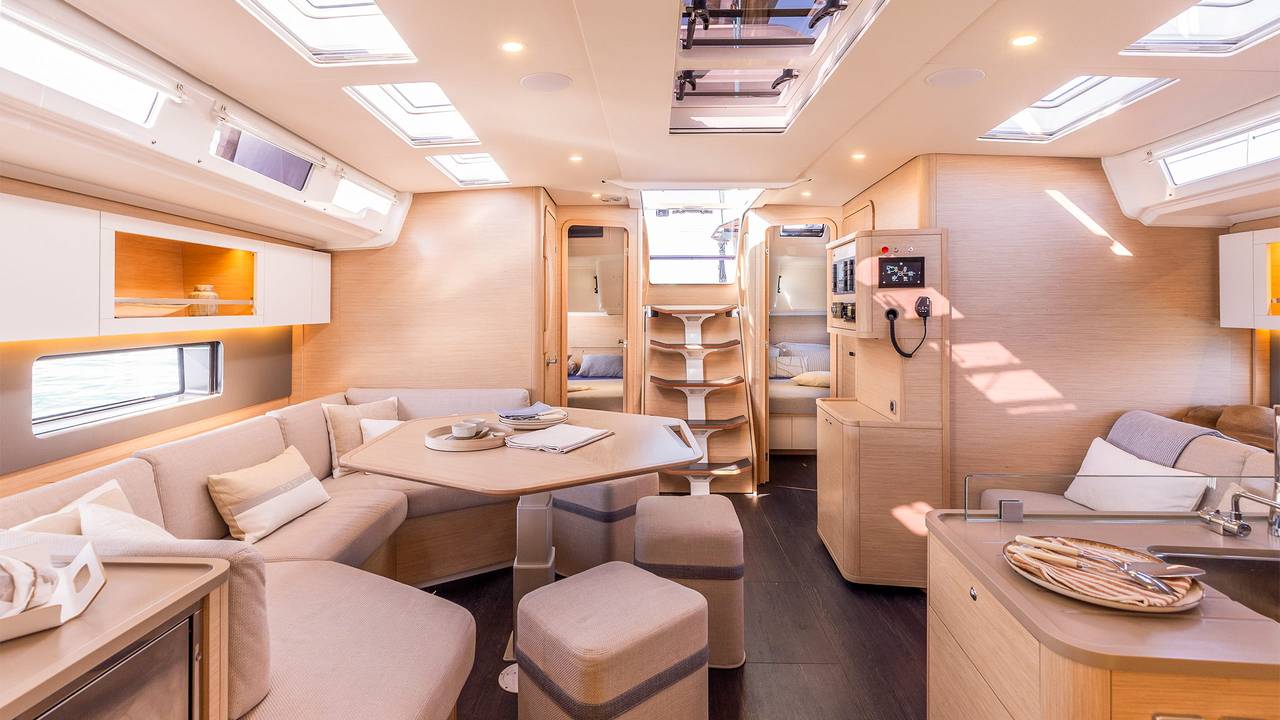
Il Dufour 48 è proposto con tre o quattro cabine, cucina anteriore oppure longitudinale, motore standard da 57 cavalli e opzione da 80 cavalli. La pagina ufficiale dichiara 530 litri d’acqua e 250 litri di carburante, mentre il programma ODSea+ aggiunge una possibile architettura ibrida. Questa guida legge il modello dal punto di vista di configurazione, impianti e consegna. Tutti i dati provengono da Dufour; prestazioni, consumi e dotazioni non pubblicate non vengono ipotizzati e devono essere misurati o confermati sull’esemplare acquistato.
Prima scelta: tre o quattro cabine
La configurazione del Dufour 48 comincia dal numero di cabine. La versione a tre cabine concentra più spazio nel programma armatoriale; quella a quattro distribuisce maggiormente i posti letto. Il cantiere indica una capacità fino a dodici persone considerando l’insieme dei layout disponibili, ma questo massimo non coincide automaticamente con il comfort desiderato né con il numero di persone opportuno in ogni navigazione. La sequenza di verifiche iniziale deve registrare equipaggio tipico, ospiti occasionali, necessità di privacy, stivaggio e numero di servizi, quindi confrontare queste esigenze con la planimetria contrattuale.

La versione a tre cabine con cucina anteriore
Dufour descrive una configurazione a tre cabine e cucina anteriore composta da suite armatoriale con bagno e doccia separata, due cabine doppie, un secondo bagno e aree di stivaggio personalizzabili. Prima dell’ordine bisogna controllare la tavola specifica, perché la descrizione generale non sostituisce quote, aperture e dotazioni dell’esemplare. Durante l’ispezione si provano porte, ventilazione, illuminazione, materassi, accessi tecnici e fermi degli arredi. Gli stivaggi personalizzati devono avere disegno, materiale, peso e modalità di chiusura definiti per iscritto.
La versione a quattro cabine
La variante a quattro cabine permette di separare un numero maggiore di ambienti notte. Per valutarla correttamente non basta contare le cuccette: bisogna verificare quali bagni, gavoni, passaggi e vani tecnici corrispondono alla planimetria scelta. Con più occupanti aumentano anche domanda d’acqua, produzione di rifiuti, carico elettrico e necessità di ventilazione. La prova deve simulare l’uso reale degli spazi, incluse porte aperte, borse e biancheria, accertando che vie di movimento e accessi agli impianti restino liberi.

Cucina anteriore o longitudinale
Il Dufour 48 può essere impostato con cucina anteriore o longitudinale. La prima concentra la preparazione verso la parte prodiera del salone; la seconda sviluppa il servizio lungo una murata. La scelta influenza triangolo di lavoro, passaggi, stivaggio e relazione con il quadrato. Occorre verificare superfici, fermi, ventilazione, alimentazioni e accesso a valvole e connessioni. Gli elettrodomestici mostrati nelle immagini ufficiali non vanno considerati automaticamente compresi: marca, modello, tensione e assorbimento devono comparire nella distinta dell’unità.
Dati tecnici da riportare nel verbale
| Elemento | Dichiarazione Dufour | Controllo alla consegna |
|---|---|---|
| Lunghezza fuori tutto | 15,29 m | Confermare ingombro e documenti |
| Baglio massimo | 4,85 m | Verificare compatibilità portuale |
| Pescaggio | 2,35 m | Registrare riferimento dell’esemplare |
| Dislocamento leggero | 13.900 kg | Distinguere dal peso pronto a partire |
| Motore standard | 57 CV | Identificare motore e trasmissione |
| Motore opzionale | 80 CV | Confermare componenti associati |
| Acqua dolce | 530 L | Provare serbatoi, pompe e indicatori |
| Carburante | 250 L | Verificare circuito e accessi |
| Cabine | 3 o 4 | Confrontare ordine e planimetria |
Dislocamento e distinta dei pesi
Il dislocamento leggero pubblicato nella pagina corrente è 13.900 chilogrammi. Acqua, carburante, persone, provviste, tender, batterie e optional aumentano la massa reale. La sequenza di verifiche deve quindi includere una distinta dei pesi installati e la loro posizione, soprattutto per apparati energetici o strutture aggiuntive. Questo documento aiuta a interpretare il collaudo e a pianificare lo stivaggio senza concentrazioni casuali. Se una brochure precedente riporta valori differenti, per l’esemplare ordinato prevalgono contratto, documenti aggiornati e dati di costruzione consegnati dal cantiere.

Motore standard e accessibilità
La motorizzazione standard dichiarata è 57 cavalli. La verifica non deve fermarsi all’avviamento: si identificano numero di serie, trasmissione, elica, filtri, prese a mare, scarico, raffreddamento, alternatore e pannello. Ogni componente di manutenzione ordinaria deve essere raggiungibile con gli strumenti necessari. La pagina del modello non promette una velocità o un consumo, quindi tali valori vanno rilevati durante prove descritte con carico, condizioni, regime e strumentazione. Manuale, intervalli di manutenzione e rete di assistenza completano la consegna.
Opzione motore da 80 cavalli
Dufour indica un motore opzionale da 80 cavalli. Prima di selezionarlo è necessario chiedere quali parti della configurazione cambiano: trasmissione, elica, raffreddamento, alternatore, cablaggi, supporti e pesi. La potenza nominale, da sola, non consente di calcolare velocità o autonomia. Il confronto deve considerare programma, manutenzione, reperibilità dei ricambi e integrazione con gli altri impianti. Il verbale di prova deve riportare esattamente quale motore è installato, evitando di applicare risultati ottenuti con una versione differente.

Serbatoio carburante da 250 litri
La capacità nominale di carburante è 250 litri. La sequenza di verifiche identifica bocchettone, sfiato, serbatoio, valvole, indicatore, prefiltri e punti di ispezione. Occorre distinguere il volume totale da quello effettivamente utilizzabile e stabilire una riserva. Nei primi rifornimenti, quantità note e letture dello strumento possono essere confrontate per costruire una tabella dell’esemplare. L’autonomia nasce da questa misura e dal consumo rilevato, non da una moltiplicazione teorica priva di condizioni. Eventuali utenze che prelevano dallo stesso circuito devono essere documentate.
Acqua dolce da 530 litri
Dufour dichiara 530 litri d’acqua dolce. Durante la consegna si provano riempimento, sfiati, indicatori, pompe, autoclave, rubinetti, scarichi e possibilità di isolare un tratto. La distribuzione dei serbatoi e il volume realmente utilizzabile devono risultare dai documenti dell’unità. Con più persone a bordo è utile calcolare un budget giornaliero e mantenere un margine. Se viene ordinato un dissalatore, capacità, prefiltri, assorbimento, conservazione e manutenzione devono provenire dal manuale specifico, perché la pagina generale del Dufour 48 non ne definisce le caratteristiche.

Impianto elettrico: inventario prima dei calcoli
Per l’impianto elettrico serve un inventario degli apparati effettivamente installati: batterie, caricabatterie, alternatore, prese da banchina, protezioni, convertitori ed eventuale produzione rinnovabile. Non è corretto dedurre capacità o autonomia dalle fotografie. Ogni utenza deve avere potenza, tensione, protezione e posizione note. La sequenza di verifiche comprende etichettatura dei quadri, prova degli interruttori, verifica degli allarmi e consegna degli schemi. Un bilancio energetico affidabile parte dai dati di targa e da misure reali, distinguendo consumi continui, intermittenti e picchi.
ODSea+ come configurazione opzionale
Dufour presenta per il Dufour 48 il programma ibrido ODSea+ con valori dichiarati di 57 kW per la propulsione, batterie al litio da 27 kWh, generatore da 14 kW e idrogenerazione fino a 1,5 kW. Sono caratteristiche di una configurazione specifica, non della barca standard. Prima dell’ordine occorre ottenere schema funzionale, pesi, volumi, responsabilità di integrazione, modalità operative e condizioni di assistenza. La verifica deve essere svolta sulla distinta dell’esemplare, evitando di mescolare dati promozionali di versioni o aggiornamenti differenti.

verifica della configurazione ibrida
Se viene scelto ODSea+, la consegna deve includere procedure per avviamento, arresto, ricarica, isolamento, emergenza e rimessaggio. Batterie, raffreddamento, ventilazione, protezioni e cablaggi richiedono identificazione fisica e documentale. Si provano allarmi, interfacce e transizioni tra le modalità previste, registrando stato di carica e condizioni. Il generatore da 14 kW e l’idrogenerazione dichiarata fino a 1,5 kW non garantiscono da soli un bilancio positivo: produzione e consumi dipendono dall’uso. Formazione dell’equipaggio e recapiti di assistenza sono parte integrante del sistema.
Pozzetto, tavolo diviso e passaggi
Il tavolo del pozzetto è diviso in due sezioni. Durante la prova si verificano apertura, chiusura, fermi, stabilità e libertà dei passaggi in tutte le configurazioni. Le sedute non devono impedire accesso a timonerie, scalette, gavoni o discesa sottocoperta. Drenaggi e superfici di calpestio vengono controllati con attenzione, così come la posizione degli oggetti mobili. La simulazione con l’equipaggio tipico è più utile di un’ispezione a pozzetto vuoto, perché mostra le interferenze tra convivialità e operazioni.

Piattaforma di poppa e accessi all’acqua
La piattaforma ampliata dispone, secondo Dufour, di due accessi diretti all’acqua. La sequenza di verifiche comprende movimentazione completa, blocchi, fine corsa, comandi, drenaggio, illuminazione e scaletta. Bisogna ricevere limiti e istruzioni del costruttore, senza dedurre portate dalle immagini. Quando la barca è in navigazione, ogni elemento deve essere nella posizione prescritta e verificabile. Se il progetto d’uso comprende tender o attrezzature acquatiche, pesi, fissaggi e modalità di movimentazione devono essere approvati e descritti nella configurazione consegnata.
Passavanti, cime e attrezzatura di coperta
Dufour sottolinea passavanti protetti e manovre rinviate sulla tuga. Alla consegna si percorre la coperta in condizioni controllate, verificando appigli, ostacoli e punti di lavoro. Ogni cima viene seguita dal punto di origine allo stopper o al winch, controllando etichette, attriti, interferenze e possibilità di sostituzione. Issata, riduzione e ammainata devono essere provate secondo le istruzioni ricevute. Superfici veliche e prestazioni non vanno ricostruite per analogia: contano piano velico e manuali della specifica barca.

Hardtop opzionale: controlli dedicati
L’hardtop è presentato come optional. Se ordinato, la distinta deve descrivere struttura, finiture, accessori integrati e responsabilità di installazione. La prova verifica drenaggio, fissaggi, visibilità, accesso alle manovre e compatibilità con eventuali teli o pannelli. Devono inoltre essere documentati i pesi aggiunti e ogni collegamento elettrico. Se non compare nell’ordine, non va considerato incluso soltanto perché presente nelle fotografie o sull’unità dimostrativa. Questa distinzione evita contestazioni e mantiene coerente il bilancio energetico e di massa.
Interni, tessuti e finiture 2026
Gli interni sono firmati Ardizio Design. Dufour dichiara inoltre che i tessuti selezionati per il millesimo 2026 sono realizzati con materiali riciclati. La dichiarazione non deve essere estesa a ogni componente dell’arredo: codici, colori, composizioni e applicazioni vanno confermati nella selezione contrattuale. La sequenza di verifiche controlla ante, cerniere, fermi, bordi, ventilazione dei vani e accessibilità tecnica. Campioni approvati e istruzioni di pulizia vengono conservati nel fascicolo, così da rendere identificabili anche le future sostituzioni.

Collaudo di porte, valvole e utenze
Un collaudo efficace segue i sistemi anziché l’aspetto generale. Si aprono tutte le porte, si azionano chiusure e pompe, si identificano valvole, si provano prese e luci e si controllano pannelli d’ispezione. Ogni utenza ordinata viene verificata attraverso marca, modello e numero di serie. Le anomalie sono registrate con fotografia e condizione di prova. Dopo la correzione, il punto viene ripetuto e chiuso soltanto con evidenza. Questo metodo evita che dettagli apparentemente minori diventino problemi durante la prima crociera.
Documenti da ricevere
Il fascicolo deve includere dichiarazioni, manuali, schemi, certificati, numeri di serie, garanzie e verbali. La planimetria deve corrispondere alla versione a tre o quattro cabine e alla cucina scelta. Motore, eventuale ODSea+, hardtop, elettronica e apparati di comfort richiedono documentazione specifica. È utile avere una copia digitale organizzata per sistemi e una copia accessibile a bordo. Ogni modifica successiva deve essere aggiunta con data, esecutore e componenti impiegati, mantenendo la configurazione tracciabile.
sequenza di verifiche finale prima dell’accettazione
Prima della firma si confrontano ordine e distinta installata, si controllano layout e finiture, si provano motore e impianti, si verifica la piattaforma, si percorre la coperta e si riceve la documentazione completa. Pesi, capacità e numeri di serie vengono registrati. Le prestazioni non dichiarate dal cantiere restano fuori dal giudizio finché non sono misurate con condizioni note. Il Dufour 48 offre molte possibilità di configurazione; una consegna strutturata serve a trasformare queste opzioni in un sistema coerente, comprensibile e manutenibile dall’equipaggio.