
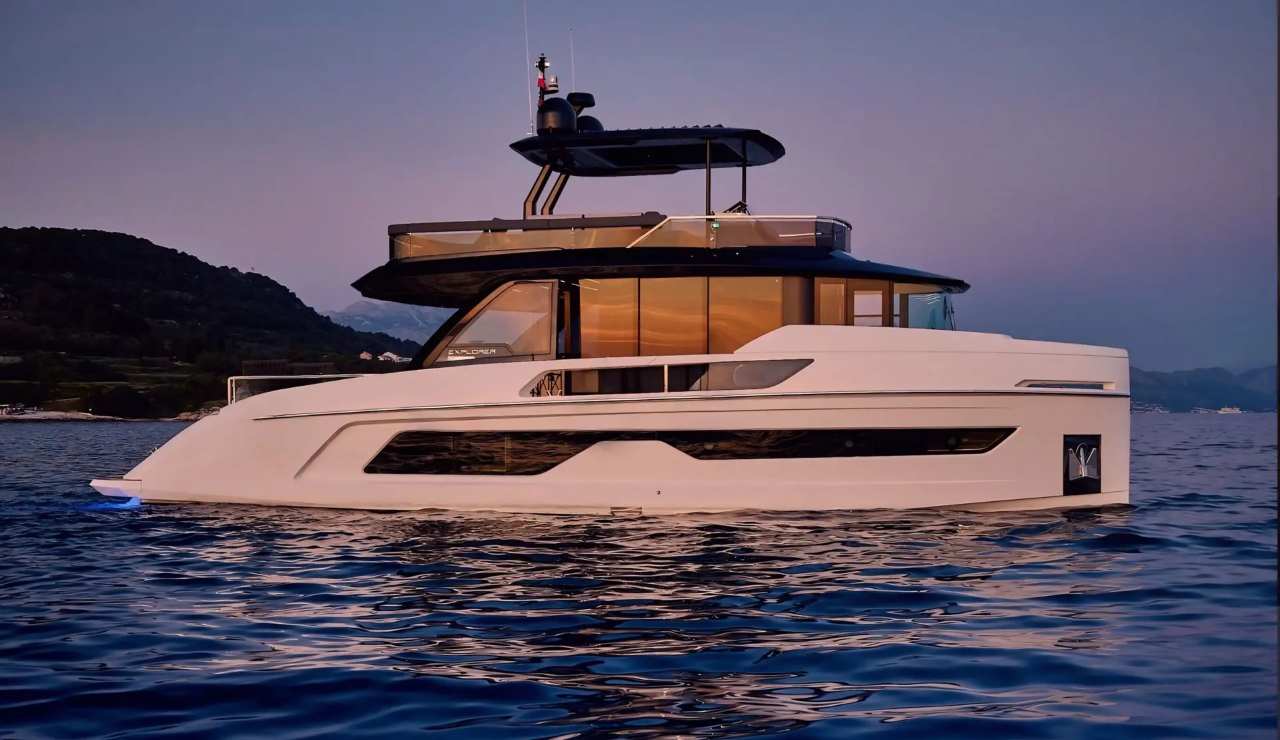
L’Explorer 62 è un expedition yacht di circa 18,5 metri di lunghezza fuori tutto, con un baglio che si colloca poco sopra i cinque metri, un pescaggio attorno al metro e quaranta e un dislocamento che, a seconda degli allestimenti, si attesta fra le trenta e le trentaquattro tonnellate. La motorizzazione tipica prevede due Volvo Penta D8 con trasmissioni a pod IPS 800, per una potenza di seicento cavalli ciascuno. In assetto corretto raggiunge velocità massime intorno ai ventuno–ventiquattro nodi, mentre la crociera efficace si attesta sui sedici nodi; l’autonomia, in regime economico a dieci nodi, si aggira sulle seicento miglia nautiche. I serbatoi carburante oscillano fra i 2.400 e i 2.800 litri, con riserve d’acqua dolce prossime ai novecento litri più servizi; la categoria di progettazione è CE A.
Introduzione tecnica al modello
L’Explorer 62 nasce per coniugare l’anima protettiva e sostanziale del mondo “explorer” con l’operatività quotidiana di una barca pensata per il Mediterraneo. L’impostazione di prua alta, la timoneria avanzata e la carena a volumi generosi mirano a garantire asciuttezza e prevedibilità sulle onde corte tipiche di molti bacini europei.
La fruibilità degli spazi è uno dei temi guida: passavanti ampi e protetti, murate solide, interni illuminati da superfici vetrate estese e un main deck configurato come ambiente continuo che si apre verso poppa. L’armatore può optare per diversi allestimenti sottocoperta, in genere con tre cabine più equipaggio, così da coprire lo spettro che va dalla crociera familiare al charter premium con equipaggio ridotto.
Profilo del cantiere navale
Origine, filosofia costruttiva e organizzazione
Explorer Yacht è un marchio italiano che valorizza progettazione e manifattura locali con una filiera selezionata di partner tecnici. La filosofia aziendale si concentra su quattro capisaldi: volumi abitabili generosi, autonomia adeguata alle lunghe permanenze a bordo, protezione degli ambienti esterni e personalizzazione industrializzata. Ogni scafo viene rifinito secondo le esigenze dell’armatore, con particolare cura verso insonorizzazione, qualità percettiva di giunzioni e accoppiamenti, e soprattutto accessibilità e manutentibilità degli impianti, aspetti che incidono concretamente sul costo di possesso e sulla tenuta del valore nel tempo.
Reputazione e presenza sul mercato
Con il 62, il marchio si colloca in un segmento estremamente competitivo fra i 60 e i 64 piedi, popolato da trawler moderni, fast trawler e explorer mediterranei. La strategia commerciale fa leva su presenze mirate nei principali saloni europei e su una rete di broker specializzati in Europa e negli Stati Uniti. Le imbarcazioni demo e le stock boats contribuiscono a consolidare la percezione di qualità e ad accelerare i cicli di prova in mare per gli armatori interessati.
Analisi tecnica approfondita
Dimensioni e architettura navale
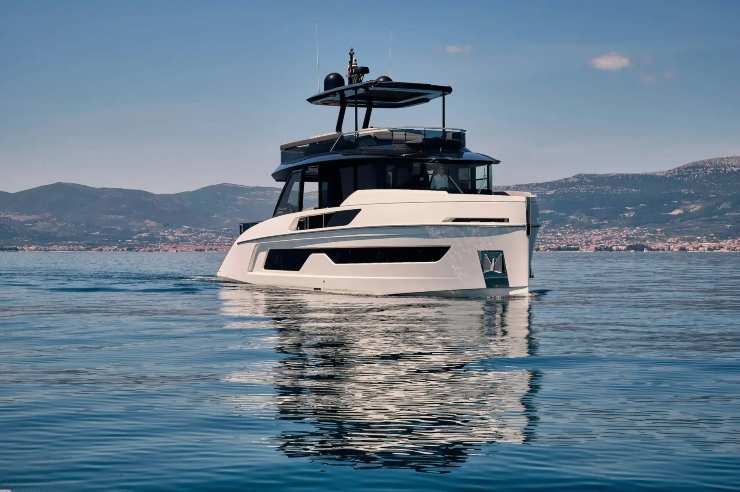
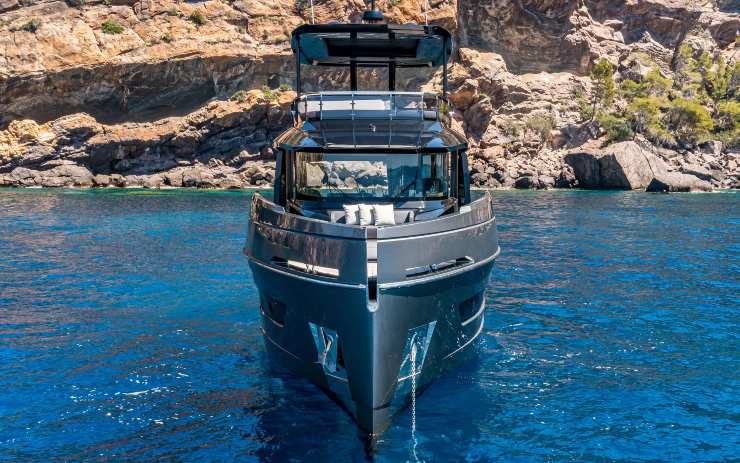
Le proporzioni dell’Explorer 62 riflettono una scelta precisa: massimizzare la stabilità di forma e l’abitabilità senza penalizzare la capacità di tagliare l’onda con morbidezza. Con una lunghezza fuori tutto di circa diciotto metri e mezzo e un baglio nell’ordine dei cinque e venti, lo scafo presenta una prua piena, o “full bow”, che riduce gli impatti frontali (slamming) sulla breve, mentre la sezione poppiera, larga e portante, agevola alimentazione regolare dei pod IPS, con benefici sul rendimento propulsivo e sulla tenuta direzionale alle andature di trasferimento. Il pescaggio vicino al metro e quaranta contiene i limiti operativi in acque poco profonde, ampliando il ventaglio di baie e marine accessibili senza rinunciare a una leva sufficiente sulla chiglia per limitare il rollio all’ancora, eventualmente coadiuvato da stabilizzatori.
Materiali di costruzione
La struttura è realizzata in GRP con stratifiche mirate a garantire rigidità torsionale e resistenza, prevedendo rinforzi localizzati in corrispondenza di basi impiantistiche, madieri e collegamenti tra paratie. La sovrastruttura, anch’essa in composito, si caratterizza per ampie superfici vetrate che apportano luce naturale e continuità visiva, valorizzando il salone principale. Gli interni impiegano pannellature alleggerite in sandwich, con finiture che spaziano dai legni naturali alle impiallacciature pregiate, mentre i piani di lavoro possono adottare compositi ad alta resistenza o pietre sinterizzate.
Motorizzazioni, propulsione e trasmissione
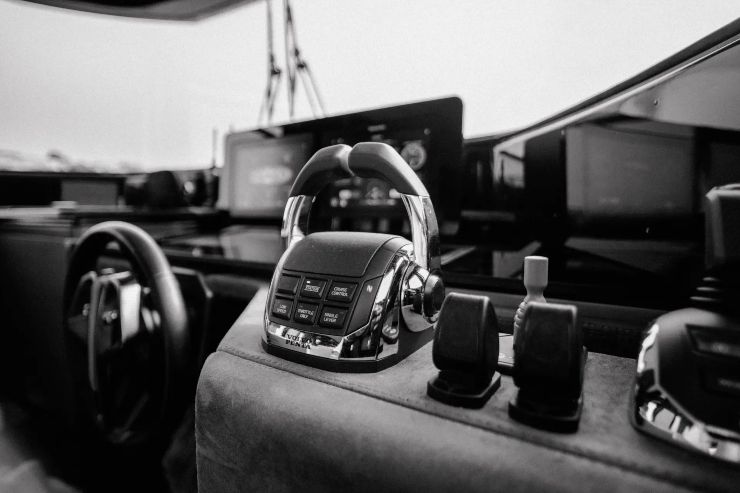
La combinazione più diffusa prevede due Volvo Penta D8 abbinati a pod IPS 800 con joystick. La scelta dei pod risponde a tre esigenze chiave. La prima è l’efficienza, poiché le eliche “pulling” lavorano su flusso relativamente pulito e garantiscono conversione efficace della potenza in spinta utile nelle velocità tipiche di crociera. La seconda riguarda la manovrabilità: le unità orientabili, integrate con sistemi come lo Skyhook, semplificano ormeggi e movimenti in spazi ristretti, riducendo la dipendenza da thruster e la fatica del timoniere in condizioni ventose. La terza è il comfort, grazie a minori vibrazioni e livelli sonori contenuti rispetto alle linee d’asse tradizionali, con un ritorno immediato nella vivibilità del salone sul ponte principale.
Il rovescio della medaglia è che i pod, avendo immersione differente rispetto a eliche su asse, richiedono maggior finezza nella gestione dell’assetto con mare molto corto e vento teso, adottando prudenze sull’angolo d’attacco al frangente e sull’uscita dall’onda. Nel contesto di impiego prevalente — trasferimenti mediterranei, rade protette, coste articolate — il bilanciamento resta comunque favorevole.
Prestazioni: velocità, crociera, autonomia e consumi
In configurazione standard e a carichi realistici, l’Explorer 62 raggiunge velocità massime che si collocano approssimativamente fra 21 e 24 nodi. La velocità di crociera più sfruttata si attesta attorno ai sedici nodi, dove la barca esprime un buon compromesso tra tempo di percorrenza, rumorosità e consumi. Se l’obiettivo è massimizzare l’autonomia, conviene impostare trasferimenti in economia tra nove e dieci nodi, regime nel quale la curva di consumo per miglio migliora sensibilmente: in questo quadro, l’autonomia intorno alle seicento miglia nautiche diventa perseguibile con margini di sicurezza adeguati. Su crociera intermedia, intorno ai quattordici–sedici nodi, si può contare su percorrenze intorno alle quattrocentocinquanta miglia, variabili in funzione di carico, eliche, stato del mare e calibrazione dell’assetto.
Sistemi di bordo: elettronica, energia e domotica
L’elettronica di navigazione si appoggia, tipicamente, a integrazioni complete Garmin o Raymarine, con doppi schermi di plancia, radar, autopilota e interfacce NMEA per la rete sensori. L’energia di bordo viene gestita da generatori dimensionati per sostenere la climatizzazione a pieno carico, con banchi batterie AGM o, su richiesta, LiFePO₄ per incrementare la capacità e abilitare logiche di quiet ship prolungate. Caricabatterie, inverter e ripartitori sono coordinati da centraline che modulano i carichi, privilegiando i servizi essenziali e limitando i picchi. La domotica copre illuminazione dimmerabile, gestione degli scenari, intrattenimento e connettività, con telecamere di manovra e monitoraggio remoto a beneficio della sicurezza in porto e della diagnostica preventiva.
Design e architettura degli spazi
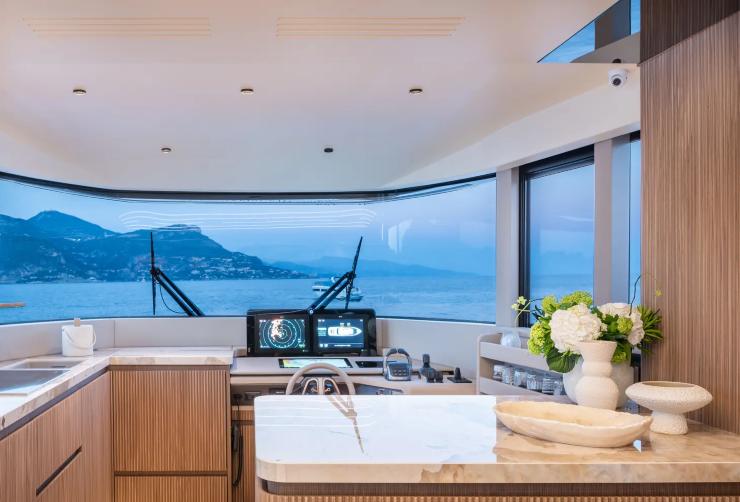
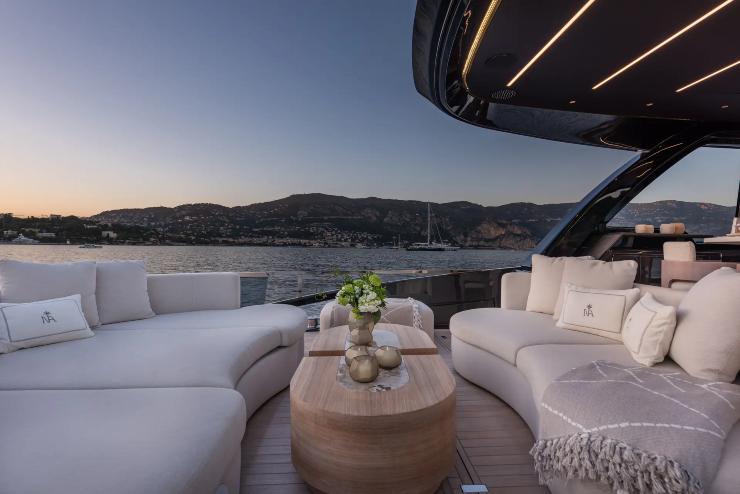
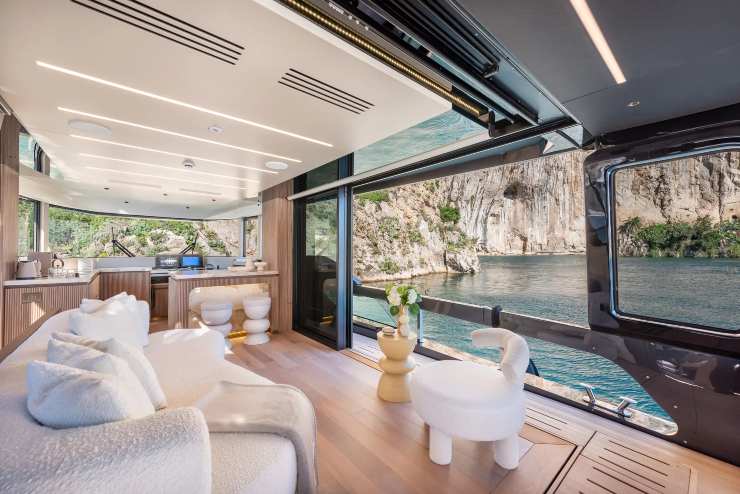
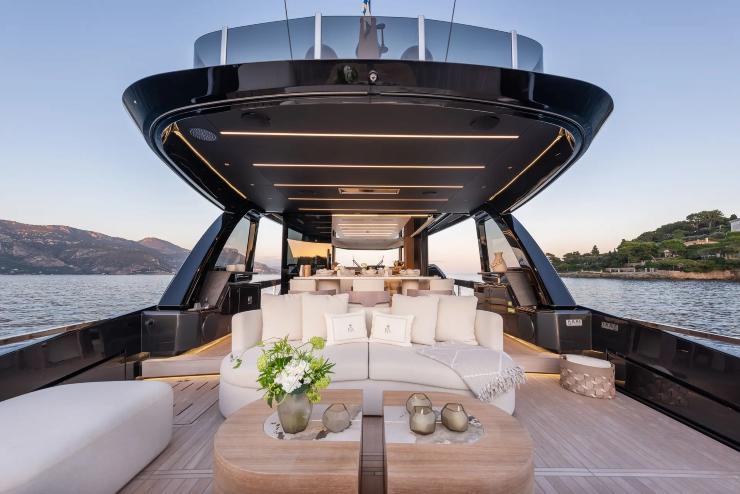
Lo stile dell’Explorer 62 abbraccia un linguaggio volutamente “essential explorer”: linee tese, vetrate verticali, sovrastruttura scolpita e parabrezza con inclinazione protettiva. L’ergonomia dei passavanti, ampi e riparati, facilita la circolazione anche con mare formato, mentre la porta scorrevole a tutta apertura consente un’integrazione naturale tra salone e pozzetto. Il galley-up, posto come cerniera fra interno ed esterno, è pensato per un uso quotidiano della barca, dalla colazione veloce alle cene informali a bordo.
Interni: layout, finiture e acustica
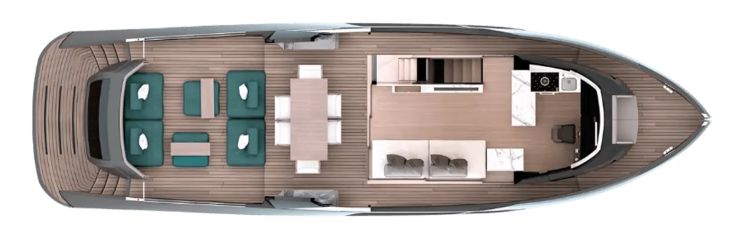
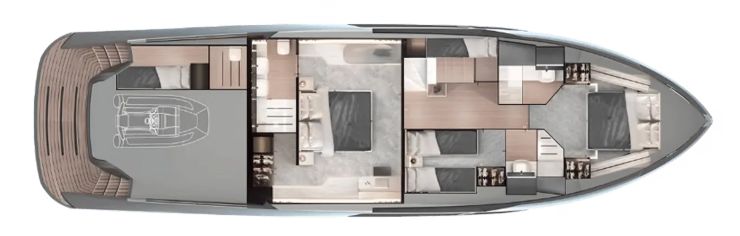
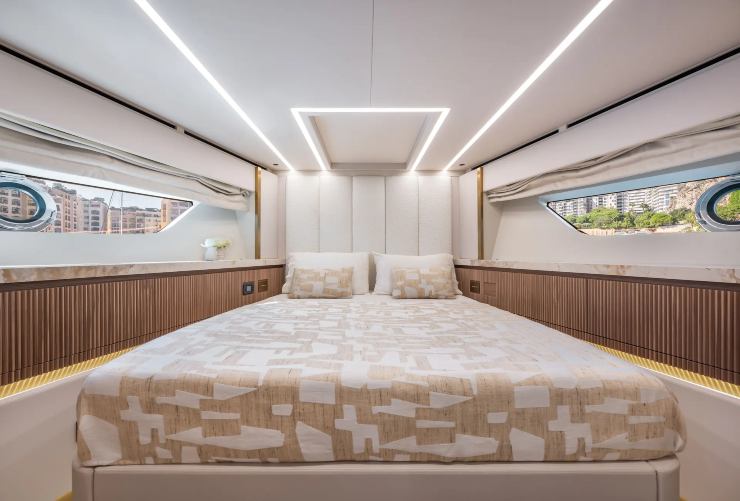
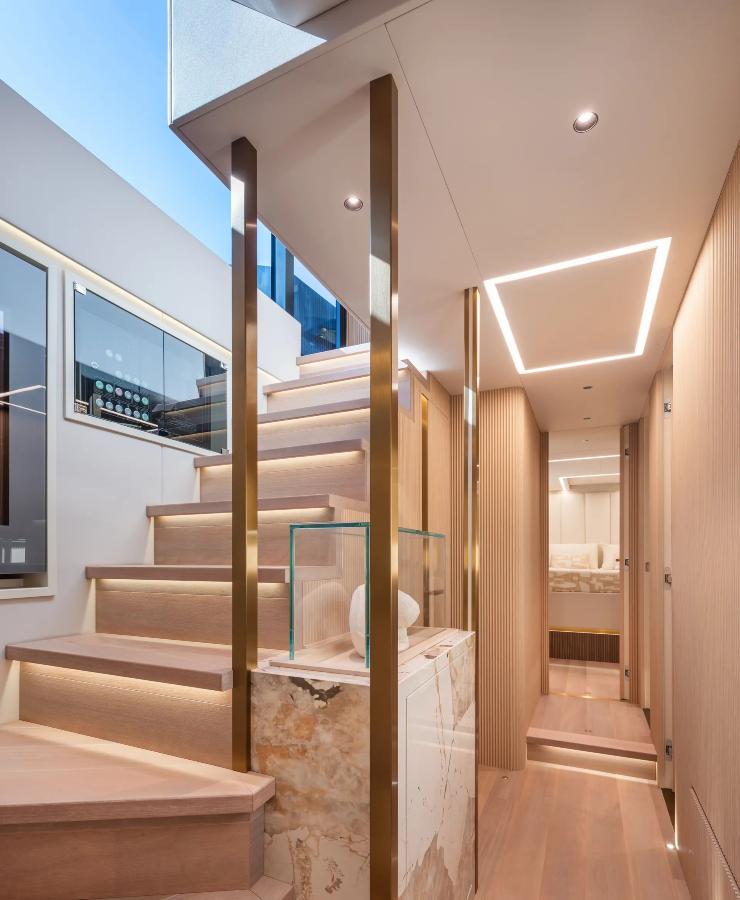
La timoneria avanzata libera superficie utile per il salone principale, che ospita divani contrapposti, un’area pranzo per sei–otto persone e la cucina a vista. L’armatore può scegliere fra essenze chiare o scure, con top resistenti a graffi e temperature, ferramenta soft-close e un’impostazione di arredo che predilige funzionalità e manutentibilità. La cabina armatoriale, collocata a mezzanave e sviluppata a tutto baglio, beneficia del punto di minima accelerazione verticale, risultando più stabile e silenziosa durante la navigazione. La VIP di prua e la cabina ospiti completano l’area notte, mentre la cabina equipaggio, accessibile in sicurezza dalla zona tecnica, permette gestione professionale o semi–professionale dell’imbarcazione senza interferire con la privacy degli ospiti.
Innovazione e ricerca applicata
Tre sono gli elementi che qualificano l’approccio progettuale. Il primo è il layout forward helm, che migliora la visibilità e riduce i tempi di reazione in manovra, consentendo, in abbinamento ai pod e al joystick, un governo più intuitivo per equipaggi ridotti. Il secondo è l’impiego esteso di pod IPS, non solo per l’agilità ma anche per la razionalizzazione della sala macchine, che guadagna volume utile e accessibilità ai punti di service. Il terzo è la predisposizione a un’elettrificazione “soft” dei servizi: pacchi batteria maggiorati, bus in corrente continua per la distribuzione, pannelli solari dedicati ai carichi ausiliari e logiche di ricarica intelligente, così da estendere i tempi in rada riducendo il ricorso al generatore.
Vita a bordo e comfort
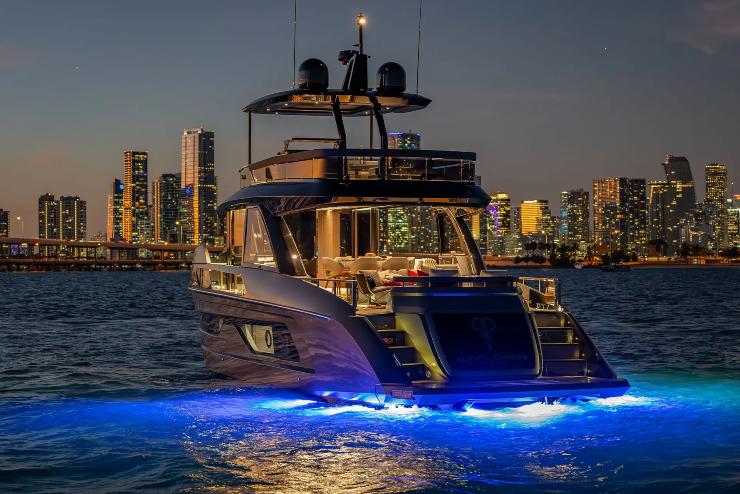
L’Explorer 62 è pensato per lunghe permanenze, con tre ambienti esterni principali — pozzetto, prua e coperta superiore — e un salone che funge da cerniera climatica fra interno ed esterno. Il pozzetto diventa una vera lounge centrale in rada, supportata, a richiesta, da wet-bar, macchina del ghiaccio e grill; la piattaforma bagno facilita il varo del tender e le attività in acqua. La climatizzazione multizona mantiene il comfort anche in climi caldi e umidi, mentre coibentazione e guarnizioni di qualità riducono dispersioni termiche e rumori in navigazione. L’impiantistica, infine, è impostata in modo da essere ispezionabile, con passaggi utili per i controlli giornalieri e per gli interventi di manutenzione programmata.
Prestazioni in navigazione: riscontri sul campo
Le prove in mare e i walkthrough pubblici confermano un comportamento coerente con la missione: prua asciutta, assetto equilibrato tra quattordici e diciotto nodi e risposta progressiva al timone. Pur non essendo un trawler oceanico puro concepito per attraversate transoceaniche a otto–nove nodi e tre mila miglia d’autonomia, l’Explorer 62 offre quel profilo “mediterraneo” che tanti armatori ricercano: trasferimenti rapidi quando servono, comfort elevato nelle rade protette e sfruttamento intelligente dei volumi interni.
Mercato, concorrenza e posizionamento
In termini di prezzo, le fonti di mercato collocano l’Explorer 62 in un intervallo che, a seconda di optional e dotazioni, può spingersi da poco sotto i tre milioni di euro a poco oltre i tre e mezzo. In questo perimetro competitivo convivono imbarcazioni come Azimut Magellano 60, Sirena 58, Absolute Navetta 64 e, su un piano filosofico diverso, Nordhavn 60. L’Azimut punta su velocità e finiture d’impronta yacht-like, con un’estetica meno “explorer” e volumi interni molto ben orchestrati; Sirena propone un “fast trawler” estremamente versatile, capace di picchi velocistici superiori e di gamme analoghe in economia; Absolute, nella taglia 64, offre un gradino ulteriore per volumi e potenze disponibili, con un posizionamento prezzi tipicamente superiore; Nordhavn incarna invece il trawler oceanico per eccellenza, con linee d’asse pesanti, pescaggi più impegnativi e autonomie di ordine ben maggiore, ma con velocità massime attestate su valori a una cifra.
Rispetto a questi riferimenti, l’Explorer 62 si configura come un ibrido virtuoso: più protettivo e “marino” di molti fly plananti, meno estremo di un trawler puro per autonomia e andature. È la barca di chi vive intensamente il mare — rada, trasferimenti, convivialità — e desidera un’architettura navale rassicurante senza rinunciare alla flessibilità d’uso e a costi d’esercizio prevedibili.
Allestimenti, dotazioni e pacchetti tipici
Gli allestimenti più richiesti si aggregano spesso in tre famiglie. Il pacchetto orientato alla crociera concentra generatori con potenze adeguate all’aria condizionata a pieno carico, un’electronics suite integrata con radar e pilotaggio automatico e una serie di accessori per la vita in rada come wet-bar, icemaker e grill. Il pacchetto comfort punta su coperture complete per prua e pozzetto, arredi modulari e tessuti tecnici anti-UV, con combinazioni di colori e texture personalizzate. Il pacchetto tecnologico arricchisce la plancia con array radar a lunga portata, visione perimetrale, termocamere night vision, domotica remota e funzioni di diagnostica predittiva dei motori, utili a prevenire fermi imprevisti e a pianificare la manutenzione.
Manutenzione e accessibilità impianti
L’impostazione con pod libera spazio nella sala macchine, che risulta ordinata e percorribile per i controlli giornalieri. Filtri gasolio posizionati in alto, separatori acqua e circuiti di travaso facilitano le ispezioni; le unità del condizionamento, i dissalatori e i gruppi elettrogeni sono collocati per minimizzare gli smontaggi nelle operazioni programmate. Dietro arredi ispezionabili, passano dorsali elettriche e idrauliche con cablaggi numerati, così da semplificare la diagnostica e i retrofit nel ciclo di vita, riducendo tempi di cantiere e costi.
Sicurezza e ridondanza
La sicurezza passiva deriva da murate alte, tientibene continui e percorsi protetti. Quella attiva si fonda sulla ridondanza dei sistemi critici: pompe di sentina distribuite su più comparti con alimentazioni separate, quadri a 24 V e 230 V con bypass, impianto carburante con doppia filtrazione e indicatori di contaminazione. La stabilizzazione, offerta con giroscopio o pinne a seconda del profilo d’uso, incrementa comfort e margine di sicurezza in rada e a basse velocità, quando il rollio diventa più percepibile.
Esperienze d’uso: tre scenari rappresentativi
Crociera familiare estiva
Su rotte a tappe di venticinque–sessanta miglia, la barca lavora bene a quattordici–sedici nodi, con cambusa direttamente connessa al pozzetto e swim platform utile al varo del tender. L’aria condizionata multizona mantiene il comfort anche nelle rade più calde.
Stagioni di spalla con mare formato
Riducendo le andature in progresso fra nove e dodici nodi, la timoneria avanzata e i passavanti protetti aiutano a mantenere controllo e sicurezza. In rada, l’adozione di stabilizzazione giroscopica o a pinne rende le notti più confortevoli.
Charter premium con equipaggio ridotto
La disposizione tre cabine più equipaggio e la completa integrazione elettronica consentono un’operatività efficiente. La gestione domotica e il controllo remoto offrono strumenti utili alla conduzione professionale e alla tutela dell’esperienza ospite.
Riscontri, risultati e riconoscimenti
La maturità del progetto si coglie anche nel riscontro commerciale su mercati ad alta sensibilità per l’estetica “explorer” e per la sostanza tecnica: Costa Azzurra, Baleari e Florida sono scenari naturali per un prodotto che privilegia protezione, autonomia e modularità. La presenza ai saloni internazionali ha contribuito a consolidare immagine e rete relazionale; l’interesse registrato presso broker specializzati conferma un posizionamento competitivo per chi cerca un “pocket explorer” sotto i venti metri con soluzioni da yacht più grandi.
Prospettive del modello e del cantiere
L’Explorer 62 intercetta un trend ormai strutturale: barche sotto i venti metri con volumi interni superiori alla media, predisposizione a permanenze prolungate e capacità di gestire sia le giornate di trasferimento veloce sia la vita lenta in rada. Le prospettive evolutive più credibili riguardano l’ulteriore ottimizzazione energetica dei servizi — batterie maggiorate, fotovoltaico integrato, gestione intelligente dei carichi — e, in prospettiva, pacchetti “mild-hybrid” dedicati all’hotel load per ridurre cicli del generatore. Il cantiere, puntando su qualità percepita, processi di allestimento ripetibili e rete di assistenza selettiva, ha margini per consolidare la presenza in Mediterraneo e ampliare quella in aree a forte cultura del day-boating evoluto.
Scheda tecnica Explorer 62
- Modello: Explorer 62
- Cantiere / Paese: Explorer Yacht — Italia
- Categoria di progettazione: CE A (oceanica)
- Architettura navale: carena a volumi generosi con prua “full bow” e poppa portante; timoneria avanzata
- Materiali: scafo e sovrastruttura in GRP (vetroresina) con rinforzi locali; interni in sandwich alleggerito
- Lunghezza fuori tutto (LOA): ~18,50–18,54 m
- Baglio massimo: ~5,20–5,24 m
- Pescaggio: ~1,40 m
- Dislocamento a pieno carico: ~30–34 t (in funzione degli allestimenti)
- Motorizzazione tipica: 2 × Volvo Penta D8 IPS 800 (600 hp ciascuno)
- Trasmissione: pod IPS orientabili con joystick (ormeggio assistito / station-keeping)
- Velocità massima: ~21–24 kn (variabile per carico, eliche e stato del mare)
- Velocità di crociera: ~16 kn (comfort/consumi)
- Autonomia indicativa: ~600 NM @ 10 kn; ~450 NM @ 16 kn
- Carburante: ~2.400–2.800 l (a seconda del layout serbatoi)
- Stabilizzazione (opz.): giroscopico o pinne stabilizzatrici
- Layout tipico cabine: 3 cabine + 1 cabina equipaggio
- Posti letto: 6 ospiti + 1–2 crew
- Spazi esterni: pozzetto modulare, prendisole/prua, upper deck con seconda timoneria (se previsto)
Galleria immagini
Sintesi ragionata del posizionamento
L’Explorer 62 è indicato per armatori privati e famiglie che vivono la barca molte settimane all’anno, nonché per operatori di charter premium che desiderano un prodotto capace di conciliare comfort, autonomia e facilità di gestione. La scelta dei pod IPS offre manovrabilità e comfort acustico, mentre l’architettura navale — prua piena, sezione poppiera portante, passavanti protetti — aggiunge sicurezza percepita e reale. Il rovescio della medaglia è un’autonomia inferiore rispetto ai trawler oceanici puri e una sensibilità da gestire, con mare molto corto, tramite un uso accorto di trim e manetta. In cambio, l’armatore ottiene volumi e fruibilità difficili da eguagliare su questa taglia, con costi di esercizio prevedibili e una manutenzione semplificata.