
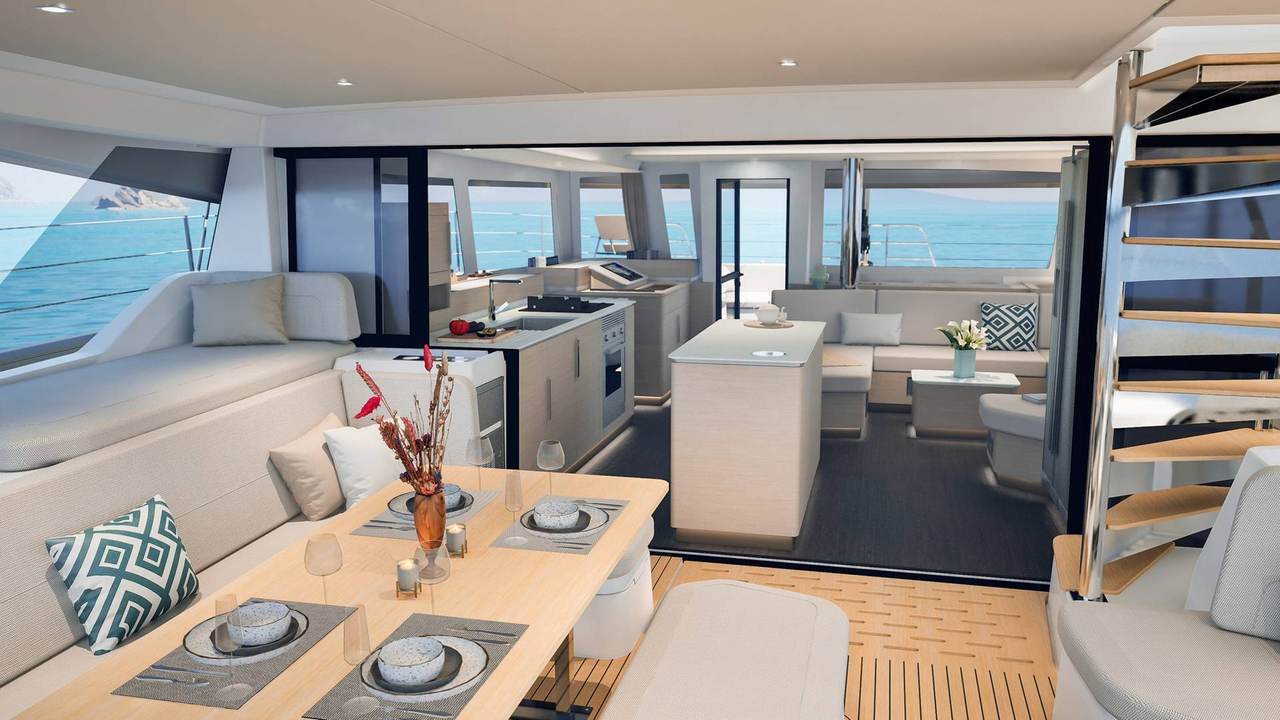
Configurare il Fountaine Pajot FP55 significa coordinare layout, impianti e procedure su un catamarano da 16,98 metri con flybridge, tre distribuzioni abitative e due architetture di propulsione. La scheda ufficiale consente di costruire una sequenza di verifiche precisa: motori diesel o ODSea+, 6.300 W di solare, serbatoi separati e fino a sei cabine doppie, oltre a due quartieri equipaggio indipendenti.
Scheda di configurazione del FP55
| Voce | Configurazione dichiarata | Controllo di consegna |
|---|---|---|
| Dimensioni | 16,98 × 8,80 m | Documenti e posto barca |
| Pescaggio | 1,85 m | Quota dell’unità e fondali |
| Diesel | 2 × 80 cv; opzione 2 × 110 cv | Targhe e distinta |
| ODSea+ | 2 × 50 kW; generatore 38 kW | Schema e versioni apparati |
| Batteria / inverter | 38 kWh / 6 kW | Capacità, protezioni e prova |
| Solare | 6.300 W integrati | Pannelli e regolatori installati |
| Acqua / gasolio | 800 / 1.220 l nominali | Valvole, sensori e circuiti |
| Layout | Maestro, Double Maestro, Charter | Tavola revisionata definitiva |

La distinta deve precedere l’installazione
La prima regola è trasformare il nome commerciale della versione in una distinta identificabile. Modello di ogni apparato, quantità, potenza, seriale previsto e interfaccia devono essere fissati prima che arredi e pannelli rendano difficili le verifiche. La scheda di gamma descrive possibilità; il contratto deve indicare ciò che sarà realmente presente.
Ogni variante incide su massa, assorbimenti, raffreddamento e manutenzione. Una modifica tardiva non riguarda mai un solo componente: può richiedere cavi, protezioni, supporti, ventilazione o aggiornamenti software. Il controllo di configurazione evita che l’esemplare finale diventi un insieme di opzioni non riconciliate.
Maestro: mappa di cinque bagni
Maestro comprende una suite armatoriale con bagno e quattro cabine doppie, ciascuna con bagno. Il conteggio porta a cinque zone notte per gli ospiti e cinque bagni. In consegna bisogna verificare che le tavole coincidano con porte, arredi, prese, illuminazione, ventilazione e accessi tecnici installati.
La mappa idraulica deve identificare alimentazione, scarichi, pompe e valvole di ciascun locale. Etichette e manuali riducono gli errori quando un circuito va isolato. Il numero elevato di utenze rende particolarmente importante provare contemporaneità, pressioni e funzionamento degli allarmi senza dedurre prestazioni non pubblicate.
Double Maestro: controllo della simmetria
Double Maestro dispone due suite armatoriali con due bagni e due cabine doppie con altri due bagni. La promessa funzionale è offrire due spazi privati maggiori, uno per scafo. La sequenza di verifiche deve però misurare passaggi, stivaggi, aperture e accessi, perché equivalenza nominale e identità pratica non sono la stessa cosa.
Gli impianti nascosti dietro gli arredi vanno mappati per entrambi i lati. Si controllano pannelli removibili, valvole, pompe, sensori e percorsi dei cavi. Una documentazione speculare dove l’installazione è speculare accelera diagnosi e manutenzione; eventuali differenze devono essere descritte chiaramente.

Charter: sei cabine più due per l’equipaggio
La versione Charter dichiara sei cabine doppie con sei bagni. Il costruttore indica inoltre due cabine equipaggio indipendenti, ognuna con bagno privato. La capacità operativa non si ricava sommando i letti: certificazione, mezzi di salvataggio e regole applicabili restano separati dalla disposizione commerciale.
La densità richiede una verifica specifica di acqua, ventilazione, refrigerazione, biancheria, rifiuti e stivaggi. Anche i percorsi dell’equipaggio devono essere provati con porte e spazi occupati. Un layout efficace consente di lavorare senza attraversare inutilmente le zone private e mantiene accessibili i principali punti di servizio.
Due motori diesel da identificare
La dotazione diesel standard è 2 × 80 cv, con alternativa 2 × 110 cv. Alla consegna le targhe devono corrispondere all’ordine e ai manuali. Si registrano modello, seriale, trasmissione, elica, capacità dei circuiti e ricambi iniziali. Nessuna velocità o autonomia viene dedotta dalla sola potenza.
La prova in macchina comprende avviamento, arresto, allarmi, ricarica, comando, raffreddamento, scarico e ventilazione del vano. Perdite, vibrazioni e temperature vanno osservate nelle condizioni dichiarate. Filtri, giranti, livelli e punti di spurgo devono essere raggiungibili senza rimuovere parti strutturali o arredi complessi.
ODSea+: verifica dell’intera catena
Il pacchetto ODSea+ elenca due motori elettrici da 50 kW, un generatore da 38 kW, un banco batterie da 38 kWh, idrogenerazione inclusa e un inverter da 6 kW. Queste grandezze nominali descrivono i componenti principali, non l’autonomia né le prestazioni dell’unità.
La sequenza di verifiche richiede schema unifilare, protezioni, messa a terra, isolamento, raffreddamento e logiche di emergenza. Si registrano versioni firmware e interfacce di controllo. L’esclusione di un sensore o la perdita di comunicazione devono produrre comportamenti documentati, non sorprese scoperte durante la navigazione.

Batteria da 38 kWh e capacità utilizzabile
Il dato pubblicato del banco è 38 kWh. La consegna deve distinguere capacità nominale e finestra effettivamente utilizzabile, oltre a limiti di carica, scarica e temperatura. Non si attribuiscono chimica o prestazioni che la pagina ufficiale non specifica: questi elementi vanno ricavati dai documenti dell’apparato installato.
Si prova il sistema di gestione, la lettura dello stato di carica, la registrazione degli eventi e il comportamento degli allarmi. Ubicazione, ventilazione, protezione meccanica e accesso per assistenza devono essere verificati. La procedura di isolamento va conosciuta dall’equipaggio e riportata nella documentazione di bordo.
Generatore da 38 kW e logiche di avvio
Il generatore ODSea+ ha potenza dichiarata di 38 kW. La verifica non si limita all’avviamento: comprende alimentazione, raffreddamento, scarico, ventilazione, protezioni e risposta ai carichi. Occorre sapere quando il sistema ne richiede l’intervento e quali priorità vengono applicate alle utenze.
Si simula un ciclo coerente con le istruzioni del costruttore, registrando tensioni, potenze, temperature e messaggi. I valori non vengono trasformati in una promessa di autonomia. È invece indispensabile che manuale, pannello e comportamento reale usino la stessa terminologia e che l’arresto di emergenza sia accessibile.
Inverter da 6 kW e quadro alternato
L’inverter dichiarato è uno da 6 kW. Il controllo deve ricostruire quali carichi può alimentare, come vengono gestiti i picchi e quali utenze restano escluse. La potenza nominale non implica che ogni apparecchio possa funzionare contemporaneamente; il quadro deve rendere comprensibili priorità e limitazioni.
Si provano prese rappresentative, commutazioni, protezioni differenziali e allarmi secondo le procedure previste. Etichette e schema devono coincidere. Eventuali sorgenti esterne o altre modalità di alimentazione vanno documentate nell’esemplare, senza attribuire al modello dotazioni che la fonte consultata non conferma.

Solare integrato: verificare 6.300 W installati
La pagina ufficiale dichiara 6.300 W di solare integrato. In consegna si contano pannelli e regolatori, si leggono targhe e si riconcilia la somma delle potenze nominali. Il valore di picco non equivale all’energia prodotta ogni giorno, perché ombre, temperatura e irraggiamento cambiano continuamente.
Una prova utile confronta letture dei regolatori e del sistema centrale nelle stesse condizioni. Si controllano passaggi dei cavi, protezioni, connettori, fissaggi e accessibilità. Il manuale deve spiegare come isolare una sezione senza disattivare inutilmente il resto del campo fotovoltaico.
Idrogenerazione: prova e limiti dichiarati
L’idrogenerazione è indicata come inclusa nel pacchetto ODSea+. La fonte non pubblica una curva di produzione riferita a velocità e condizioni specifiche, quindi non si inventano rese. La consegna deve chiarire come si abilita la funzione, quali parametri la limitano e quali indicazioni appaiono al timoniere.
La prova va eseguita soltanto nelle condizioni e con le procedure autorizzate. Si verificano transizione, allarmi, registrazione dell’energia e possibilità di esclusione. L’equipaggio deve sapere distinguere propulsione, rigenerazione e ricarica da generatore per interpretare correttamente il bilancio energetico.
Ottocento litri d’acqua dolce
Due serbatoi da 400 litri portano la capacità nominale a 800 litri. La sequenza di verifiche identifica bocchettoni, sfiati, valvole, pompe, filtri, indicatori e punti di ispezione. La quantità utilizzabile può essere inferiore alla nominale; non viene calcolata un’autonomia senza un profilo reale di persone e consumi.
Ogni serbatoio deve poter essere riconosciuto e, dove previsto, isolato. Si prova la lettura dei livelli su intervalli significativi e si verifica che il circuito non crei travasi indesiderati. Le procedure di sanificazione e rimessaggio devono essere associate ai materiali effettivamente installati.

Gasolio: due serbatoi da 610 litri
La capacità dichiarata è 2 × 610 litri, per 1.220 litri nominali. Si mappano riempimento, sfiati, prelievi, ritorni, valvole, filtri e indicatori. La configurazione può avere implicazioni diverse con motori diesel o con generatore ODSea+, che devono risultare dagli schemi dell’esemplare.
Non si deduce autonomia perché mancano consumi misurati in condizioni definite. Si controllano invece tenuta, accessibilità e precisione delle letture. Ogni valvola riceve un’etichetta univoca e le posizioni normali ed emergenziali vengono riportate nella procedura di bordo.
Randa e genoa nella sequenza di verifiche di coperta
La randa dichiarata misura 110 m² e il genoa 66 m². La consegna deve identificare vele, materiali effettivi, punti di mura e scotta, sistemi di riduzione e carichi di lavoro ammessi. La superficie complessiva di 176 m² non sostituisce l’ispezione di cuciture, rinforzi e ferramenta.
Si prova il percorso delle manovre dal flybridge, controllando attriti, rinvii, stopper e comunicazione con l’equipaggio. Le procedure di riduzione devono essere comprese prima di uscire. Nessuna facilità d’uso può essere presunta senza considerare esperienza, condizioni e configurazione reale.
Porta verso il pozzetto prodiero
Il FP55 introduce un accesso diretto dal salone al pozzetto di prua. La sequenza di verifiche prova apertura, chiusura, bloccaggio e tenuta, poi osserva soglia, drenaggio e possibilità di uso con mare formato. La ventilazione offerta all’ancora non deve compromettere la capacità di mettere in sicurezza il salone.
Si verificano percorsi con persone e oggetti, corrimano e interferenze con gli arredi. La procedura deve indicare quando la porta resta chiusa e come controllarla prima della partenza. Questa è una funzione spaziale importante, ma diventa un vantaggio soltanto se governata con regole semplici.

Flybridge: postazione e zona ospiti
Il flybridge riunisce conduzione, manovre e area sociale. Durante l’audit si controllano visuale, strumenti, comandi, sedute, corrimano, illuminazione e percorsi. Le persone non impegnate nella manovra devono avere posizioni che non interferiscano con cime e attrezzature sotto carico.
Si provano comunicazioni con prua e poppa, accesso in condizioni differenti e chiusura delle apparecchiature. Display e comandi devono corrispondere ai manuali. L’ergonomia viene valutata con l’equipaggio previsto, perché altezza, postura e visibilità non si ricavano dalle sole fotografie.
Collaudo finale e dossier di bordo
Il collaudo riconcilia tavola del layout, distinta apparati, seriali, schema elettrico, schema fluidi e configurazione software. Si eseguono test per propulsione, energia, acqua, allarmi, chiusure e manovre, registrando condizioni e risultati. Ogni anomalia resta aperta fino a soluzione verificata.
Il dossier finale comprende manuali, garanzie, contatti di assistenza, ricambi iniziali e procedure di emergenza. Il FP55 può essere configurato in modi molto diversi: solo una documentazione aderente all’esemplare rende gestibili questa flessibilità e la sua complessità. La consegna si conclude quando impianti e documenti raccontano la stessa barca.
