
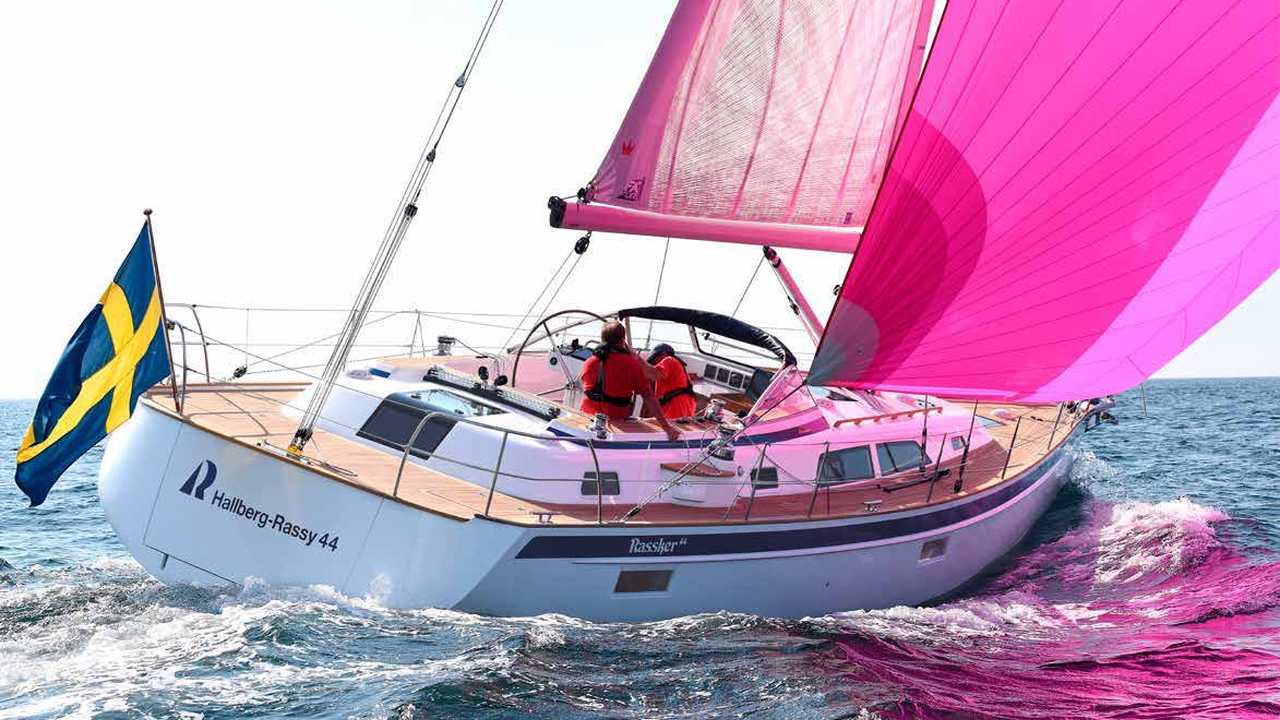
L’Hallberg-Rassy 44 è un cruiser a pozzetto centrale di 13,68 metri progettato da Germán Frers. Disloca 13,3 tonnellate a vuoto nella configurazione standard, usa una chiglia in piombo da 5,3 tonnellate e dispone di 745 litri d’acqua e 420 di gasolio. Il motore è un Volvo Penta D2-75 con asse e invertitore idraulico. Numeri così importanti costruiscono autonomia e comfort, ma impongono una gestione sistematica: serbatoi, batterie, pompe, timoneria, appendici e accessi tecnici devono essere verificati come parti di un’unica piattaforma da altura.
Misure e capacità dell’Hallberg-Rassy 44
Lo scafo misura 13,68 metri, mentre la lunghezza massima raggiunge 14,45. Il galleggiamento è 12,88 metri, il baglio 4,20 e il pescaggio a vuoto 2,10. L’albero arriva a 21,6 metri sopra l’acqua senza Windex. Questi dati devono entrare nella scelta del posto barca, del travel lift e delle rotte con bassi fondali o ponti. Una versione a pescaggio ridotto è disponibile su richiesta e va identificata nei documenti della singola unità.
| Voce | Dato dichiarato | Verifica operativa |
|---|---|---|
| Lunghezza scafo | 13,68 m | Distinguere dallo sviluppo massimo |
| Lunghezza massima | 14,45 m | Ormeggio e ingombri reali |
| Baglio | 4,20 m | Posto barca e sollevamento |
| Pescaggio a vuoto | 2,10 m | Fondali e invaso |
| Dislocamento a vuoto | 13,3 t | Aggiungere liquidi e optional |
| Chiglia in piombo | 5,3 t | Giunzione e strutture da ispezionare |
| Superficie con fiocco da lavoro | 109,6 m² | Piano velico e carichi |
| Acqua dolce | circa 745 l | Tre serbatoi separati |
| Gasolio | circa 420 l | Due serbatoi e due bocchettoni |
| Categoria CE | A | Limiti del manuale della barca |
Dislocamento e carico reale
Le 13,3 tonnellate si riferiscono alla barca standard a vuoto. Acqua e gasolio pieni aggiungono una massa rilevante, prima di considerare equipaggio, ancora, catena, tender, vele e ricambi. Per alaggio e assetto serve un inventario aggiornato. Gli optional mostrati nelle fotografie non sono necessariamente compresi: generatore, avvolgimenti e diverse configurazioni interne possono cambiare peso e distribuzione.

Chiglia in piombo da 5,3 tonnellate
La zavorra concentra circa 5,3 tonnellate sotto lo scafo. In sede di perizia vanno esaminati giunzione, sigillature, madieri e segni di incaglio. Il pescaggio standard di 2,10 metri richiede una pianificazione prudente; la variante ridotta deve essere valutata sulla documentazione specifica, non assumendo che abbia gli stessi dati della versione standard. L’invaso deve sostenere la carena nei punti previsti senza trasferire carichi impropri.
Piano velico da 109,6 metri quadrati
La superficie dichiarata con fiocco da lavoro è 109,6 metri quadrati. Il bompresso integrato è predisposto per vele portanti, mentre la configurazione di avvolgimento può variare. L’equipaggio deve conoscere carichi, limiti e sequenza delle riduzioni. Drizze, scotte, bozzelli e attacchi non si controllano soltanto per l’usura visibile: allineamento, corrosione e giochi sotto carico richiedono ispezioni regolari.

Albero a 21,6 metri sull’acqua
La misura esclude il Windex e può non comprendere altre appendici installate. Per un passaggio sotto ponte serve misurare la barca realmente armata e conservare un margine per onda e variazioni di livello. Sartiame, lande, crocette e piede d’albero formano una catena strutturale. Dopo una navigazione impegnativa si cercano deformazioni, trafilaggi, coppiglie mancanti e differenze di tensione.
Pozzetto centrale e parabrezza fisso
Il pozzetto centrale protetto distingue il programma di crociera. Parabrezza, capote e tientibene riducono l’esposizione, ma non eliminano la necessità di agganci e percorsi sicuri verso prua. Scarichi, gavoni e chiusure devono funzionare con acqua in coperta. Prima della partenza si prova l’accesso a winch, riduzioni e strumenti con capote aperta e chiusa, verificando che l’equipaggio possa operare senza scavalcare manovre cariche.

Timoneria meccanica con aste cardaniche
La ruota comanda una timoneria progressiva mediante rinvii cardanici e aste. Il sistema offre un collegamento meccanico diretto, ma dipende da giunti, supporti, lubrificazione e assenza di giochi. La verifica comprende movimento completo da banda a banda, risposta del timone e ispezione dei collegamenti. Il governo di emergenza fornito deve essere montato realmente in porto: scoprirne l’accesso durante un’avaria è troppo tardi.
Doppio timone e controllo con sbandamento
La configurazione a due pale mantiene una superficie efficace quando la barca si inclina. Gli assi devono restare allineati e le boccole prive di gioco anomalo. Un urto può interessare una sola pala senza produrre subito un sintomo evidente alla ruota. Durante l’alaggio si confrontano profili, angoli e superfici, e all’interno si cercano trafilaggi o deformazioni nei punti di supporto.

Piattaforma di poppa integrata
La sezione centrale dello specchio si apre come piattaforma per accesso all’acqua e al tender. Cerniere, fermi, drenaggi e meccanismo devono reggere uso e ambiente salino. Prima di salpare la chiusura va verificata fisicamente. In rada la piattaforma non è un’area sicura se il motore è in funzione o il mare solleva la poppa; scaletta e recupero di una persona richiedono una procedura condivisa.

Volvo Penta D2-75 e trasmissione ad asse
Il quattro cilindri da 2,2 litri sviluppa 55 kW, equivalenti a 75 hp, con coppia massima dichiarata di 213 Nm a 1.800 giri. È montato su quattro supporti elastici e collegato a invertitore idraulico e asse. La sequenza di verifiche comprende supporti, allineamento, tenuta, flangia, boccola, elica fissa a tre pale, scarico e circuito acqua. Vibrazioni nuove non vanno compensate aumentando il regime.
Accessibilità del vano motore
Il vano prevede ventilazione elettrica separata, filtro acqua di mare di grande capacità e spazio per un generatore. L’accesso deve permettere di chiudere combustibile e presa a mare, pulire il filtro e raggiungere la pompa di sentina anche in condizioni difficili. Un estintore automatico protegge il locale; data, pressione e sistema di arresto devono essere controllati insieme alla rilevazione di fumo nel salone.

Quattrocentoventi litri di gasolio in due serbatoi
Il serbatoio inferiore contiene 230 litri e quello di sinistra 190, con due bocchettoni in coperta. Ogni serbatoio ha indicazione di livello e il circuito include un separatore di acqua e impurità prima del filtro motore. L’autonomia si calcola sul consumo misurato e sulla quantità effettivamente utilizzabile, sottraendo una riserva. Tappi, sfiati e tubi di riempimento devono essere identificati per evitare errori.
Gestione della contaminazione del carburante
Due serbatoi aumentano flessibilità ma richiedono una mappa chiara di valvole, mandata e ritorno. Prima di un lungo trasferimento si prelevano campioni dai punti più bassi, si controllano filtri e si portano ricambi compatibili. In caso di acqua o sedimenti non basta sostituire la cartuccia: bisogna individuare origine, serbatoio interessato e percorso. Ogni membro competente deve saper isolare il circuito senza introdurre aria.

Settecentoquarantacinque litri d’acqua in tre serbatoi
La capacità complessiva comprende un serbatoio inferiore da 185 litri e due laterali da 270 e 250. Valvole collegano i superiori a quello basso, e ogni unità dispone di indicatore. Questa architettura consente di gestire riserve, ma un errore di valvole può rendere indisponibile parte dell’acqua. Riempimento, sfiati, ispezioni e trattamento devono essere documentati; il filtro al carbone non sostituisce la sanificazione periodica.
Autoclave, accumulo e collettore
L’acqua passa dalla pompa a un vaso di espansione da 8 litri, poi a un collettore che distribuisce caldo e freddo. Una pompa che parte frequentemente può indicare perdita, membrana scarica o valvola difettosa. Il collettore deve permettere di isolare un ramo senza perdere l’intera riserva. Prima della partenza si controllano pressione, raccordi e presenza di acqua nelle sentine dopo aver azionato ogni utenza.
Boiler da 40 litri a doppio riscaldamento
Il boiler isolato da 40 litri viene scaldato dal circuito del motore e dalla rete a 230 volt. I due sistemi richiedono controlli distinti: manichette e liquido refrigerante da un lato, resistenza, protezioni e terra dall’altro. Valvola di sicurezza, miscelazione e drenaggio devono essere raggiungibili. Dopo molte ore il contenuto può restare caldo, quindi l’intervento non si esegue senza depressurizzare e verificare la temperatura.

Banco servizi da 460 Ah e avviamento separato
L’impianto standard usa una batteria da 95 Ah per l’avviamento e quattro batterie servizi per 460 Ah a 12 volt. L’alternatore dichiarato è da 115 A. Capacità nominale e capacità realmente utilizzabile non coincidono: tecnologia, temperatura, età e profondità di scarica contano. Il bilancio deve includere frigorifero, luci, strumenti, pompe e autopilota, mantenendo separata la riserva necessaria ad avviare il motore.
Pannello, cablaggi e schema individuale
Il quadro con interruttori è vicino al carteggio e ogni barca riceve uno schema elettrico individuale. Questa documentazione va aggiornata dopo ogni modifica. I cavi sono protetti in condotti dove possibile e raccolti lontano dallo scafo altrove. Fusibili, sezioni, capicorda e passaggi devono corrispondere ai carichi. Una nuova utenza non si collega a un circuito libero senza verificare caduta di tensione e protezione.
Frigorifero a compressore raffreddato ad acqua
Il sistema Isotherm SP usa un compressore Danfoss e raffreddamento ad acqua. Il costruttore indica che, con batterie in buono stato, la refrigerazione può continuare per più giorni senza ricarica; è una condizione dichiarata, non una garanzia per ogni profilo. Temperatura ambiente, aperture e carico cambiano l’assorbimento. La presa, il circuito e il condensatore devono restare puliti e ispezionabili.

Ventilazione e abitabilità
Sei boccaporti, otto oblò apribili e sette ventilatori automatici servono salone, cabine e bagno di prua. La ventilazione riduce condensa, ma ogni apertura è anche un elemento di tenuta. Guarnizioni, chiusure e drenaggi vanno provati con acqua. In navigazione gli oblò esposti devono essere chiusi e le tavole del tambuccio assicurate. Il vano motore conserva un circuito di ventilazione dedicato.
Tre pompe di sentina e prese a mare
La dotazione comprende una pompa manuale, una elettrica e una elettrica d’emergenza ad alta capacità dichiarata sommergibile. Le pompe non compensano una presa a mare deteriorata. Valvole a sfera, doppi morsetti sotto la linea di galleggiamento e tubi dei WC richiedono controllo ravvicinato. Ogni allarme si prova con acqua reale, verificando portata, scarico esterno e capacità di raggiungere il punto più basso.
Cabine, pesi e configurazioni
La cabina di poppa standard ha due cuccette separate e può essere ordinata con letto matrimoniale centrale. La scelta modifica passaggi e stivaggio, non soltanto l’aspetto. Bagni, cucina e falegnameria devono consentire accesso agli impianti senza smontaggi distruttivi. Il salone e i gavoni non vanno riempiti fino a sottrarre accesso a valvole, filtri, quadro o timoneria.
sequenza di verifiche prima di una crociera lunga
Si registrano peso, pescaggio e altezza effettivi; si provano governo principale ed emergenza. Albero, sartiame, appendici, chiglia e piattaforma vengono ispezionati. Motore, filtri, raffreddamento, scarico e tenuta d’asse lavorano fino a temperatura. Ogni serbatoio viene identificato e gli indicatori confrontati con quantità note. Batterie e alternatore devono sostenere una simulazione notturna completa.
L’Hallberg-Rassy 44 offre capacità e ridondanze coerenti con l’altura, ma la categoria CE A non rende illimitata la barca né sostituisce il manuale della singola unità. Non abbiamo effettuato una prova indipendente e non attribuiamo prestazioni non documentate. La configurazione migliore è quella nella quale equipaggio, pesi e impianti restano leggibili, ispezionabili e riparabili anche lontano dal porto.