
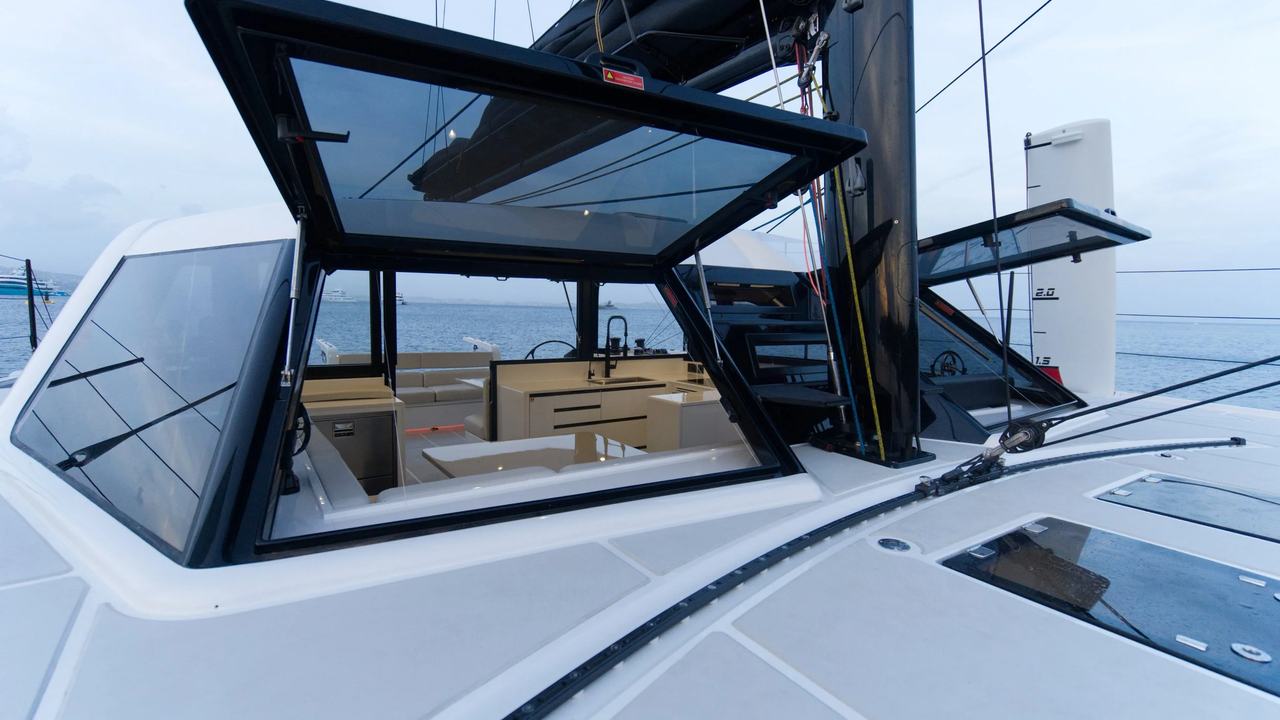
L’HH44-SC concentra in 13,43 metri di scafo un impianto energetico che mette in relazione due diesel, trazione elettrica, rigenerazione sotto vela, quasi quattro kilowatt di solare e una batteria al litio da 46,8 kWh. Configurarlo correttamente significa evitare due errori opposti: considerare l’ibrido una funzione automatica che non richiede gestione, oppure giudicarlo soltanto dal dato di autonomia. La consegna deve invece ricostruire architettura, priorità dei carichi, protezioni, modalità degradate e manutenzione. Questa sequenza di verifiche separa valori ufficiali, dotazioni dichiarate e controlli da eseguire sulla singola unità.
Identificare versione, schema e numeri di serie
La sigla SC identifica la configurazione con motori Yanmar 3JH40 e trasmissioni ibride parallele. Il costruttore offre anche una versione con diesel e linea d’asse tradizionale: non è corretto trasferire caratteristiche o procedure dall’una all’altra. Il verbale iniziale deve elencare motori termici, macchine elettriche, inverter, batteria, regolatori solari, caricabatterie e sistemi di controllo con modello e seriale. Va allegato lo schema unifilare aggiornato, distinguendo rete di propulsione, servizi a 48 volt, bassa tensione e corrente alternata.

La logica dell’ibrido parallelo
Nel sistema parallelo il diesel e la macchina elettrica agiscono sulla stessa linea meccanica. L’elettrico può fornire trazione; sotto vela il moto dell’elica può essere convertito in energia; il diesel resta disponibile per la propulsione e, secondo la configurazione descritta, le unità EcoDrive possono operare anche come generatori. La prova deve mostrare passaggio fra modalità, consensi e risposta degli indicatori, senza inventare prestazioni. Ogni stato deve essere riconoscibile dall’operatore e ogni anomalia deve avere una procedura documentata.
Valori da registrare prima del collaudo
| Voce | Dato ufficiale | Controllo di consegna |
|---|---|---|
| Motori termici | 2 × Yanmar 3JH40 | Seriali, ore, livelli, filtri e allarmi |
| Accumulo | Litio, 46,8 kWh | Moduli, BMS, soglie e certificazione installata |
| Solare | 3.938 W nominali | Moduli, stringhe, regolatori e produzione istantanea |
| Velocità a motore | Circa 8,7 nodi | Annotare carico, mare e modalità della prova |
| Autonomia dichiarata | 720 M a 7 nodi | Richiedere condizioni e riserva considerate |
| Modalità elettrica | Fino a 7 nodi dichiarati | Non confondere il limite indicato con autonomia garantita |
| Dislocamento CE | 10.750 / 14.500 kg | Registrare peso e carico della barca provata |
Batteria al litio e BMS
I 46,8 kWh dichiarati esprimono energia nominale, non necessariamente capacità tutta utilizzabile. Il sistema di gestione della batteria deve controllare tensioni, temperature e correnti dei moduli, governando limiti di carica e scarica. In consegna si verifica lo stato di carica visualizzato, la corrispondenza fra strumenti, la ventilazione o climatizzazione prevista e l’accesso alle protezioni. Il manuale deve descrivere isolamento, arresto di emergenza e comportamento dopo l’intervento del BMS. Nessuna prova deve aggirare i consensi di sicurezza.

Solare integrato: potenza nominale e rendimento reale
La superficie sul tetto porta la potenza nominale dichiarata a 3.938 watt. Il collaudo identifica ciascuna stringa, verifica tensione e corrente in condizioni annotate e confronta la somma con l’indicazione dei regolatori. Ombra dell’albero, temperatura e irraggiamento impediscono di attendersi sempre la targa completa. Sono importanti anche passaggi stagni, fissaggi, possibilità di sezionare l’impianto e accessibilità dei connettori. Una foto dei valori istantanei ha senso soltanto insieme a ora, meteo e stato dei carichi.
Rigenerazione sotto vela
La rigenerazione sfrutta le eliche trascinate dall’acqua per muovere le macchine elettriche come generatori. Il risultato dipende da velocità, assetto delle eliche, stato di carica e limiti del sistema; non va dedotto un rendimento universale. Durante una prova autorizzata si registra la potenza indicata a più andature, verificando che temperatura e allarmi restino normali. Si controlla inoltre la procedura per escludere la funzione. Il dato utile non è un picco isolato, ma la stabilità e la coerenza della lettura con le condizioni.

Diesel Yanmar: backup e manutenzione ordinaria
I due Yanmar 3JH40 rimangono componenti essenziali anche su una barca presentata come ibrida. Vanno controllati seriali, livelli, filtri, prese a mare, scarichi, ventilazione e accesso per le operazioni ordinarie. L’avviamento deve riuscire secondo la procedura prevista anche quando la parte elettrica non è disponibile nella modalità normale. Il verbale riporta ore, tensioni, pressioni e temperature mostrate, oltre agli eventuali allarmi. La ridondanza ha valore soltanto se l’equipaggio sa attivarla e se i circuiti comuni sono identificati.
Linea d’asse e passaggio fra le sorgenti
Poiché diesel ed elettrico condividono la trasmissione, giunti, supporti, tenute e allineamento meritano un controllo dedicato. Si osservano vibrazioni e rumorosità nelle modalità ammesse, senza effettuare manovre non previste. La documentazione deve chiarire quali componenti continuino a ruotare, quando sia consentita la rigenerazione e come isolare una linea. La presenza di due lati non implica che ogni guasto sia indipendente: comandi, raffreddamento o rete dati possono introdurre elementi comuni da riconoscere prima della navigazione.

Carichi alberghieri e priorità energetiche
Climatizzazione, refrigerazione, cucina, dissalatore e servizi quotidiani competono con la propulsione per l’energia disponibile. Il cantiere presenta la capacità di alimentare la climatizzazione notturna e descrive durate estese per la cabina armatoriale; tali affermazioni dipendono però da allestimento, temperatura e soglie operative. La sequenza di verifiche costruisce un bilancio reale: potenza di ogni utenza, ore previste, contemporaneità e riserva minima. Gli optional non ordinati non devono comparire nel calcolo come se fossero presenti.
Servizi a 48 volt e protezioni
Verricelli e dissalatore sono indicati fra i sistemi che sfruttano la rete a 48 volt. Una tensione superiore riduce la corrente a parità di potenza, ma impone componenti, sezionamento e procedure coerenti. Si identificano quadri, convertitori e utenze, si controllano etichette e protezioni e si verifica che l’equipaggio possa togliere alimentazione in modo selettivo. Non bisogna confondere la batteria di propulsione con una sorgente indistinta: ogni ramo deve avere limiti e responsabilità chiaramente documentati.

Comandi di timoneria e pagine di controllo
Le due postazioni basculanti devono mostrare informazioni coerenti su stato energetico e propulsione. Il collaudo prova selezione del posto di comando, ruote, arresti, display, allarmi acustici e visivi. Il movimento della postazione non deve tendere cablaggi o creare punti di schiacciamento. Prima di lasciare il molo si verifica che l’operatore riconosca almeno stato dei diesel, potenza elettrica, carica della batteria, produzione solare e avvisi del sistema. Le schermate devono essere consegnate nella lingua e nelle unità concordate.
Finestre frontali e confine stagno
Le due finestre del salone si aprono completamente e offrono una ventilazione naturale molto efficace. Proprio perché interrompono il fronte della tuga, vanno trattate come componenti tecnici: si provano blocchi, guarnizioni, drenaggi e sensazione di chiusura; si acquisiscono i limiti d’uso dichiarati dal costruttore. Una sequenza di verifiche separata indica la posizione richiesta prima della navigazione. L’apertura può ridurre la domanda di climatizzazione, ma non deve essere trasformata in una stima energetica senza condizioni misurate.

Specchi di poppa: ciclo di apertura e sicurezza
Gli specchi in carbonio si abbassano tramite una cima portata al verricello, dopo lo sblocco. Il test viene eseguito più volte su entrambi i lati, tenendo libera l’area. Si controllano cerniere, punti di presa, fermi, drenaggi e simmetria; la posizione chiusa deve risultare inequivocabile. Poiché la lunghezza fuori tutto dichiarata passa da 14,02 a 15,31 metri, la posizione interessa posto barca e manovra oltre all’accesso all’acqua. La pagina informativa cita anche 14,26 metri fra delfiniera e gruette: il dato applicabile va confermato.
Gruette, tender e alimentazioni
Le gruette in carbonio usano due avvolgitori comandati a pulsante. Il cantiere suggerisce tender da 10 o 11 piedi e segnala che un 12 piedi entra con spazio limitato. Sul verbale si riportano portata ammessa, peso del tender completo, posizione dei punti di sollevamento e prova di arresto. Si controllano protezioni elettriche, comandi e procedura manuale prevista. Il tender non deve interferire con luci, specchi o accessi, né introdurre a poppa una massa che non compaia nella distinta dei pesi.

Acqua, cucina e optional da separare
La configurazione può comprendere dissalatore, climatizzazione, lavatrice, barbecue e altri servizi, ma la loro presenza deve derivare dall’ordine della specifica unità. Gli elettrodomestici elettrici Bosch sono descritti nella presentazione generale; modelli e assorbimenti vanno comunque verificati. Per l’acqua si provano serbatoi, pompe, livelli, scarichi e dissalatore se installato. Per la cucina si registra ogni utenza e la sua protezione. La precisione impedisce che il bilancio energetico includa apparecchi diversi da quelli effettivamente consegnati.
Climatizzazione: prova controllata, non promessa
La prova notturna della climatizzazione deve riportare temperatura esterna e interna, cabine attive, set point, stato iniziale e finale della batteria, produzione solare e intervento dei diesel. Solo così l’armatore comprende il consumo della propria barca. Le durate descritte dal cantiere restano indicazioni del produttore, non risultati automaticamente ripetibili. Si controllano inoltre condensa, scarichi, prese a mare, pompe e rumorosità. La gestione deve prevedere una soglia di riserva che non comprometta propulsione o servizi essenziali.
Prova di propulsione elettrica
Il costruttore dichiara modalità elettrica silenziosa e senza fumi fino a 7 nodi. Il collaudo registra stato del mare, carico, velocità, potenza, stato di carica e tempo, senza estrapolare un’autonomia da pochi minuti di prova. Si verifica la risposta avanti e indietro, il passaggio al neutro e l’arresto di emergenza previsto. Qualunque limite termico o di batteria deve produrre un avviso comprensibile. La prova termina con un controllo dei vani per escludere odori, perdite e temperature anomale.
Prova con i diesel e valore dell’autonomia
La scheda riporta circa 8,7 nodi a motore e 720 miglia a 7 nodi. Questi numeri richiedono condizioni, carburante utilizzabile, riserva e contributo delle altre sorgenti per essere applicati a una traversata. Il test di consegna non deve inseguire il valore massimo: deve confermare avviamento, sincronizzazione, risposta, temperature e ricarica nelle modalità previste. Si annotano carico e mare, poi si richiedono al cantiere le assunzioni dell’autonomia dichiarata. La pianificazione resterà sempre più conservativa del dato promozionale.
Chiusura del verbale e modalità degradate
Il verbale finale distingue funzioni provate, regolazioni pendenti e anomalie che impediscono l’accettazione. Deve includere fotografie dei quadri, versioni software, seriali, letture iniziali e finali e una copia degli schemi. L’equipaggio prova almeno isolamento della batteria, arresti, avvio dei diesel, governo con un lato indisponibile secondo manuale e ripristino dopo un allarme simulabile senza rischi. Non si forzano protezioni e non si improvvisano bypass. Un HH44-SC è consegnato correttamente quando l’armatore conosce non soltanto il funzionamento nominale, ma anche i confini del sistema e le azioni ammesse se una parte viene meno.
La sequenza di verifiche deve diventare routine operativa
Dopo la consegna, controlli energetici e meccanici vanno trasformati in una sequenza breve: stato delle batterie e dei diesel prima della partenza, configurazione delle sorgenti, verifica delle prese a mare, posizione di finestre e specchi, produzione solare, allarmi e riserva prevista. Al rientro si registrano consumi, rigenerazione e anomalie, mantenendo lo storico della barca. Questa disciplina consente di confrontare stagioni e aggiornamenti senza affidarsi alla memoria. L’ibrido parallelo offre più modalità operative; il suo vantaggio emerge quando ogni modalità ha dati, limiti e procedure leggibili dall’equipaggio.