
Highfield Patrol 700 richiede una configurazione precisa perché la stessa piattaforma può cambiare propulsione, consolle, sedute e attrezzature. Le misure dichiarate sono 6,99 per 2,81 metri; il serbatoio integrato contiene 285 litri e la carena in alluminio ha un deadrise di 26 gradi. Il limite propulsivo è 250 hp con un singolo fuoribordo oppure due unità da 150 hp. Tubolari, pacchetti elettrici e ponte autodrenante fanno parte della base, mentre T-top, portabombole e lavaggio coperta sono optional. La sequenza di verifiche seguente distingue ogni elemento e concentra la consegna su documenti, accessi e prove verificabili.
Aprire l’ordine con una scheda di missione
Prima di selezionare il motore occorre indicare persone abituali, attrezzature, durata delle uscite, necessità di lavorare a poppa e condizioni previste. Un Patrol 700 per immersioni non usa la coperta come un mezzo di supporto fotografico o un gommone privato. La scheda di missione definisce posti protetti, superfici libere, stivaggio e percorsi. Su questa base si scelgono consolle, sedute jockey o bolster e panca. Senza un requisito scritto, accessori singolarmente utili possono produrre interferenze e un peso distribuito male.

Congelare il layout sul disegno generale
La lunghezza interna è 5,23 metri e la larghezza utile 1,67 metri. Ogni seduta, gavone e struttura deve comparire sul disegno approvato con distanze e aperture. La sequenza di verifiche misura passaggi laterali, spazio davanti ai comandi, raggiungibilità dei tientibene e possibilità di muoversi con il materiale imbarcato. Si simula l’apertura dei vani senza rimuovere componenti non previsti. Anche la zona prodiera, dotata di grande gavone e cuscino standard, deve mantenere accesso all’ormeggio e una superficie sicura.
Configurazione monomotore fino a 250 hp
Il motore singolo può arrivare a 250 hp, deve usare gambo XL e non superare il peso dichiarato di 300 chilogrammi. Il capitolato identifica modello, versione, elica, comandi, strumenti e quota di montaggio autorizzata. Durante la consegna si controllano fissaggi, libertà di sterzata, inclinazione, arresto di emergenza e allarmi. Il limite di potenza non garantisce una velocità né prescrive la scelta massima. Il collaudo registra carico, condizioni e parametri dell’esemplare, senza importare risultati da barche con motore o layout differenti.
Configurazione bimotore fino a 2 × 150 hp
La soluzione doppia ammette due fuoribordo da 150 hp con gambo L. Rispetto al singolo cambiano massa a poppa, ingombro, manutenzione, alimentazioni e comandi. La sequenza di verifiche identifica ogni circuito e verifica sterzata e inclinazione simultanee senza contatti. Si controllano accesso ai fissaggi, filtri, cablaggi e possibilità di isolare un componente secondo lo schema installato. Una coppia può offrire una diversa gestione operativa, ma aggiunge complessità; la decisione deve essere documentata attraverso missione e compatibilità, non motivata soltanto dal totale di potenza.

Postazione di guida e strumenti effettivi
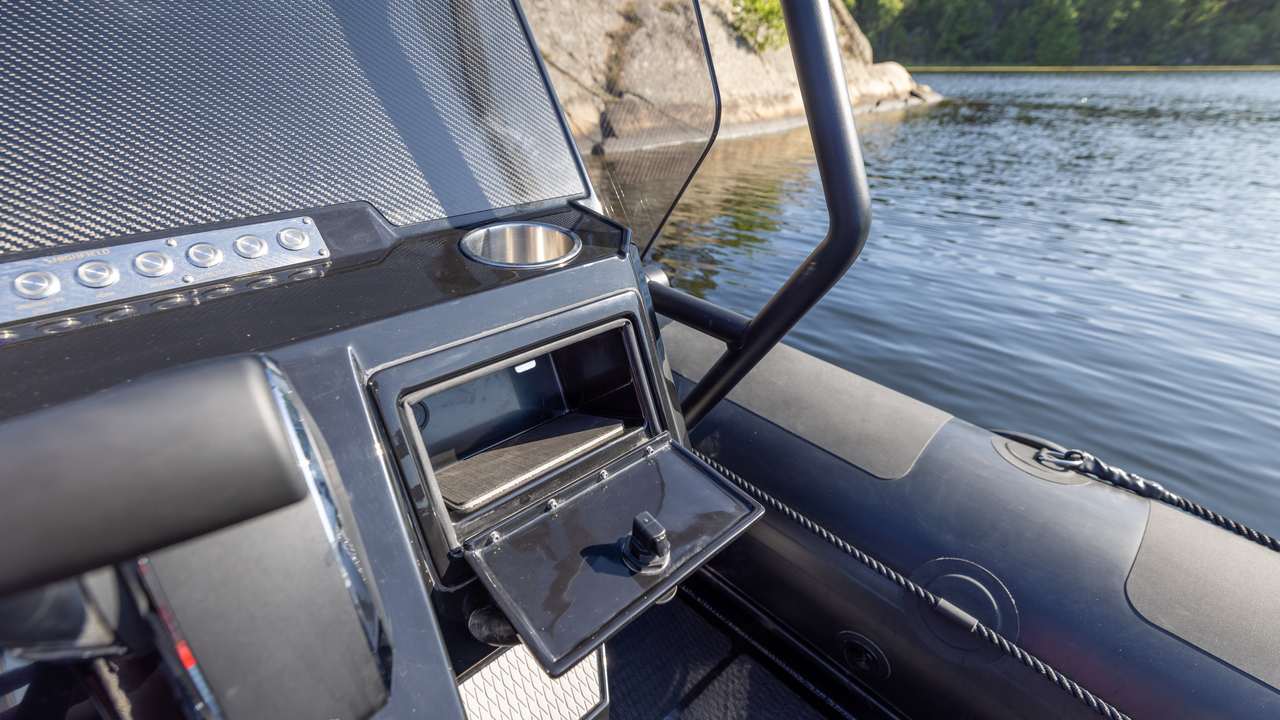
Volante, plancia in finitura carbonio e pacchetto elettrico per consolle sono standard. Display, radio e sensori non sono specificati universalmente. La distinta deve indicare ogni apparecchio, posizione, protezione e collegamento. Pilota seduto e in piedi devono conservare visuale e raggiungere comando gas, arresto e interruttori. Il collaudo prova sterzata completa, giochi, ritorno dei comandi e leggibilità. Dietro la plancia, cablaggi e fusibili devono essere ordinati, sostenuti e accessibili senza dover rimuovere strutture permanenti.
Sedute jockey, bolster e versione ammortizzata
Il costruttore offre più combinazioni di consolle e sedute; il sedile ammortizzato è un optional specifico. Per ogni posto la sequenza di verifiche registra fissaggio, appoggio dei piedi, tientibene e distanza dal posto precedente. Le file jockey possono proteggere individualmente ma occupano lunghezza; i bolster possono liberare altra superficie. La prova va fatta con abbigliamento e materiale realistici. Nessuna seduta deve impedire l’apertura di un gavone, nascondere un punto d’ispezione o creare un bordo pericoloso lungo il percorso abituale.
Panca posteriore e accesso ai motori
La grande panca di poppa aumenta i posti e lo stivaggio, ma deve convivere con il motore singolo o con la coppia. Si controllano cerniere, chiusure, drenaggi e distanza dalle calandre in tutte le posizioni. Se la missione richiede area aperta, il layout deve prevedere fissaggi per il materiale e protezione dei passeggeri. La sequenza di verifiche verifica il percorso dalla coperta alla scaletta e l’accesso tecnico allo specchio. Una poppa utile resta tale solo se non obbliga a spostare attrezzature per ogni controllo.

Carburante: 285 litri e nessuna autonomia presunta
Il serbatoio sottocoperta da 285 litri è standard. In preconsegna si identificano bocchettone, sfiato, tubazioni, filtri e punti di ispezione. Il pieno incide sulla massa e sull’assetto, quindi il verbale riporta quantità imbarcata durante la prova. L’autonomia si determina soltanto dopo misure sulla configurazione reale, registrando motori, eliche, regime, mare e carico. La capacità da sola non autorizza miglia teoriche. Una riserva coerente con la tratta va mantenuta separata dal consumo osservato.
Impianto elettrico: chiedere schema e protezioni
Sono standard un pacchetto elettrico per la barca e uno per la consolle, ma batterie e utenze finali dipendono dall’allestimento. La consegna deve includere schema aggiornato, posizione di staccabatteria e protezioni, identificazione dei cavi e assorbimenti principali. Ogni circuito viene provato singolarmente e in combinazione. Si osservano cadute di tensione, allarmi e possibili surriscaldamenti. Passaggi sotto coperta devono essere protetti dall’acqua e dall’abrasione, mantenendo accessibili connessioni e fusibili per diagnosi e manutenzione.
Tabella per il capitolato del Patrol 700
| Elemento | Dato o scelta dichiarata |
|---|---|
| Lunghezza esterna / interna | 6,99 / 5,23 m |
| Larghezza esterna / interna | 2,81 / 1,67 m |
| Carena | alluminio, deadrise 26° |
| Tubolari | Hypalon o PVC, 54 cm, 6 camere |
| Massa base | 975 kg* |
| Carico massimo | 1.280 kg** |
| Persone riportate | 10 in B; 16 in C |
| Carburante | 285 l |
| Singolo | massimo 250 hp, gambo XL |
| Doppio | massimo 2 × 150 hp, gambo L |
| Categoria nel campo dedicato | C |
*Barca, consolle e sedute standard. **Equipaggio e materiale, esclusi motori, carburante e acqua.
Calcolare la massa pronta al varo
I 975 chilogrammi pubblicati coprono barca, consolle e sedute standard. Vanno aggiunti propulsione, carburante, batterie, strumenti, strutture e dotazioni. Il carico massimo di 1.280 chilogrammi comprende persone e materiale ma esclude motori, carburante e acqua. La sequenza di verifiche raccoglie i pesi documentati e la posizione degli elementi permanenti; per trasporto e sollevamento si usa il totale reale. I punti di sollevamento standard devono essere impiegati secondo lo schema associato alla variante, senza dedurre portate o angoli da fotografie.

Verificare categoria e capienza sulla singola unità
La scheda mostra dieci persone nella voce categoria B e sedici in C, mentre il campo della categoria riporta C. Questa combinazione richiede conferma sulla targhetta e sui documenti dell’esemplare. Il verbale di consegna registra categoria, numero massimo e carico ammesso senza mescolare righe diverse. La capienza non coincide con sedute protette né con un impiego ordinario consigliabile. Distribuzione delle persone, materiale e condizioni devono restare compatibili con la configurazione scelta e con le responsabilità del comandante.
Tubolari e valvole: identificare il materiale
Il Patrol 700 è dichiarato con tubolari ORCA Hypalon oppure PVC, sei camere e diametro di 54 centimetri. Per il PVC sono previste giunzioni saldate. In consegna si annota il materiale reale e si ispezionano giunzioni, valvole a filo, bottazzo e zone rinforzate. Ogni camera viene controllata secondo pressione e procedura indicate nel manuale della barca; non si applica un valore universale non presente nella scheda. Pompa e kit di riparazione standard vengono inventariati e spiegati all’utilizzatore.
Ponte autodrenante, gavoni e scaletta
Ponte autodrenante, antiscivolo e scaletta di poppa sono standard. La prova verifica scarichi liberi, chiusura dei gavoni e assenza di ristagni nelle condizioni previste, senza improvvisare quantità d’acqua incompatibili con il sistema. Il materiale stivato non deve bloccare drenaggi o accessi tecnici. La scaletta va aperta e richiusa controllando impugnature, interferenze con motori e percorso di risalita. Cuscino e gavone di prua devono lasciare disponibili i punti dedicati all’ormeggio e al traino.

T-top e roll bar sono strutture, non decorazioni
Roll bar con scaletta e T-top compaiono fra gli optional. Se ordinati, devono avere materiali, fissaggi, cablaggi e altezza complessiva riportati in distinta. La sequenza di verifiche controlla serraggi, bordi, passaggi dei cavi e possibili interferenze durante trasporto o rimessaggio. Non si attribuiscono luci o apparecchi non identificati. Dopo il primo periodo di utilizzo si programma un controllo dei fissaggi secondo le indicazioni applicabili, perché una struttura superiore influenza carichi e manutenzione anche quando la sua funzione principale è offrire supporto o copertura.
Portabombole e lavaggio coperta
Portabombole e lavaggio coperta sono optional distinti. Il primo richiede numero, dimensioni, massa e sistemi di ritenuta definiti; il secondo aggiunge pompa, presa, tubazioni e assorbimento elettrico. In consegna si prova il fissaggio del materiale senza lasciare bombole libere e si verifica che il percorso verso la scaletta resti praticabile. Il lavaggio viene azionato controllando portata, perdite e protezione del circuito. Entrambi devono rientrare nel bilancio dei pesi e nello schema manutentivo.

Dotazione standard da inventariare
La base dichiarata comprende tubolari, cuscino prodiero, valvole, scafo trattato, supporti integrati, ponte autodrenante, volante, serbatoio, punti di sollevamento e traino, antiscivolo, plancia, pacchetti elettrici, scaletta, borsa, pompa, remi e kit di riparazione. Ogni voce va riscontrata fisicamente. Motori, batterie, elettronica e sicurezza restano separati quando non esplicitamente inclusi. L’inventario firmato evita che componenti installati dall’allestitore siano confusi con lo standard del modello.

Collaudo e chiusura documentale
La prova in acqua registra motori, eliche, carburante, persone, materiale e condizioni. Si verificano avviamento, allarmi, sterzata, risposta dei comandi, visuale, stabilità delle sedute e drenaggio. Non esiste nella scheda una velocità universale da trasferire a ogni barca. La consegna si chiude con targhetta, matricole, manuali, schema elettrico, distinta, pesi e verbale coerenti. Il proprietario riceve istruzioni su tubolari, carburante, batterie, sollevamento e manutenzione: il Patrol 700 diventa così una configurazione documentata, non un insieme di opzioni.