
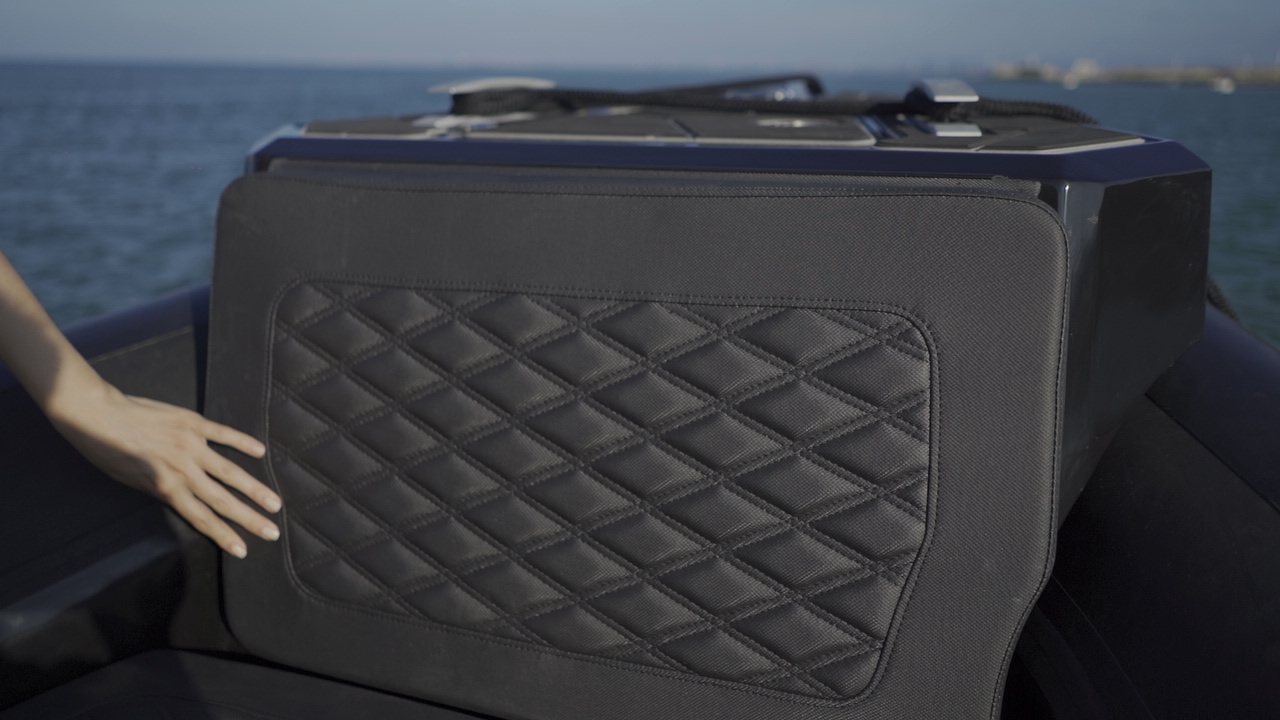
Il Highfield Sport 700 concentra in 6,99 metri un fuoribordo singolo, un serbatoio da 285 litri, una coperta attrezzata e impianti che devono restare raggiungibili. La scheda ufficiale fissa 250 hp e 300 chilogrammi come limiti per il motore, quattordici persone, categoria C e tubolari ORCA Hypalon. La consegna tecnica non consiste nel riconoscere questi numeri: deve identificare la configurazione installata, provare circuiti e accessi e consegnare al proprietario una base documentale ripetibile.
Identificare l’unità prima della sequenza di verifiche
Modello, matricola, targhetta, documenti, motore e distinta devono riferirsi alla stessa barca. Si registrano versione, colori, sedute, consolle, optional e componenti montati dal concessionario. Le fotografie sono utili, ma non sostituiscono codici, quantità e responsabilità d’installazione. Questa ricognizione impedisce che un accessorio venga considerato standard solo perché appare in materiale promozionale. Crea inoltre il confine fra configurazione originale e modifiche future, fondamentale quando si cerca la causa di un problema o si richiede assistenza.
Misure operative e aperture reali
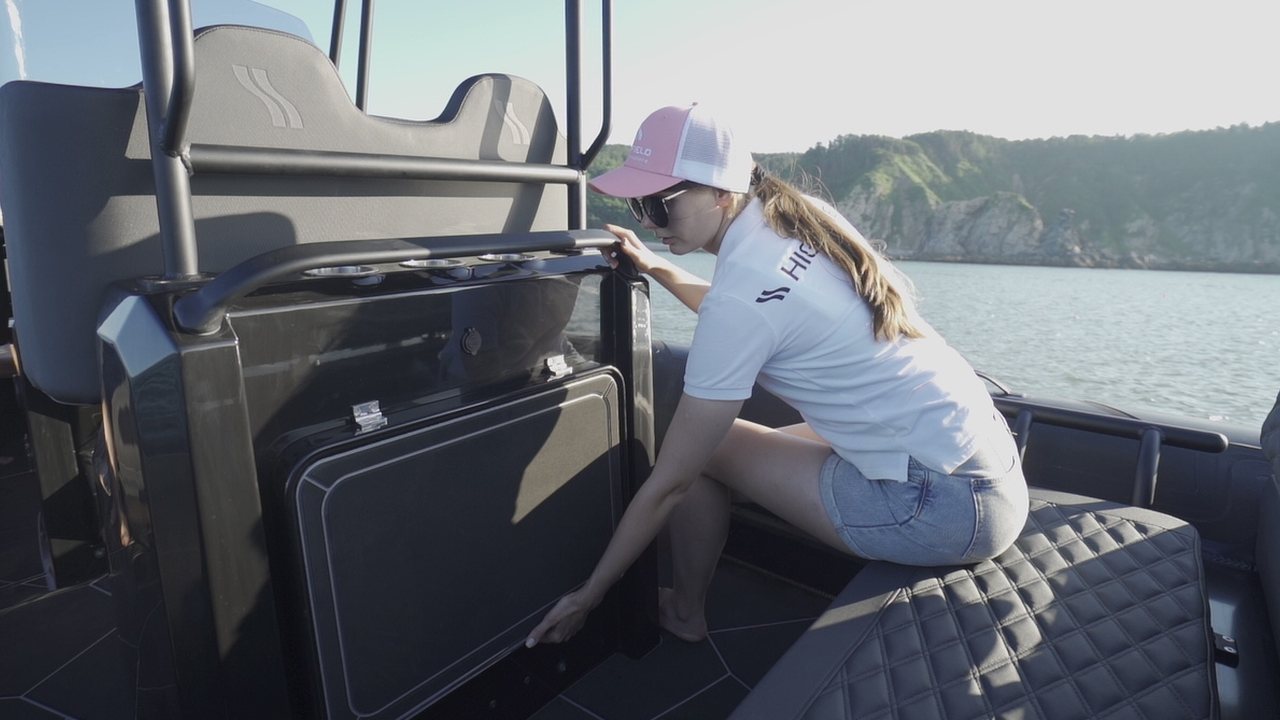
La lunghezza interna dichiarata è 4,78 metri entro 6,99 complessivi; la larghezza interna è 1,70 metri rispetto ai 2,93 esterni. Le quote guidano una verifica pratica: con cuscini montati si aprono gavoni, si raggiungono i pannelli e si percorrono entrambi i lati della consolle. Borse, dotazioni e materiali non devono coprire scarichi o impedire la manutenzione. La sequenza di verifiche riporta le misure critiche della versione consegnata, perché arredi e optional possono modificare lo spazio che resta effettivamente disponibile.
Scafo, rivestimento e fissaggi aggiunti
Highfield dichiara una carena in alluminio ad alta resistenza, cromatata e verniciata a polvere, con supporti integrati dello specchio e protezione della chiglia. Si osservano finitura, saldature accessibili, bordi, occhielli e aree interessate da lavorazioni successive. Staffe, viti e passaggi devono rispettare materiali e protezioni. Un controllo visivo non equivale a una perizia strutturale, ma stabilisce lo stato iniziale e rende evidenti urti, abrasioni o forature che richiedono chiarimento prima dell’accettazione.
Tubolari, camere e valvole
I tubolari sono dichiarati in ORCA Hypalon, con diametro di 58 centimetri e sei camere. La verifica identifica ciascuna valvola di non ritorno a filo, controlla giunzioni, rinforzi, bottazzo e punti di sfregamento. Pressione e temperatura si annotano secondo le indicazioni applicabili, evitando confronti privi delle stesse condizioni. Pompa e kit di riparazione sono compresi fra gli standard. L’equipaggio deve conoscere posizione e uso delle dotazioni, ma un intervento provvisorio non sostituisce una riparazione eseguita con metodo e materiali compatibili.
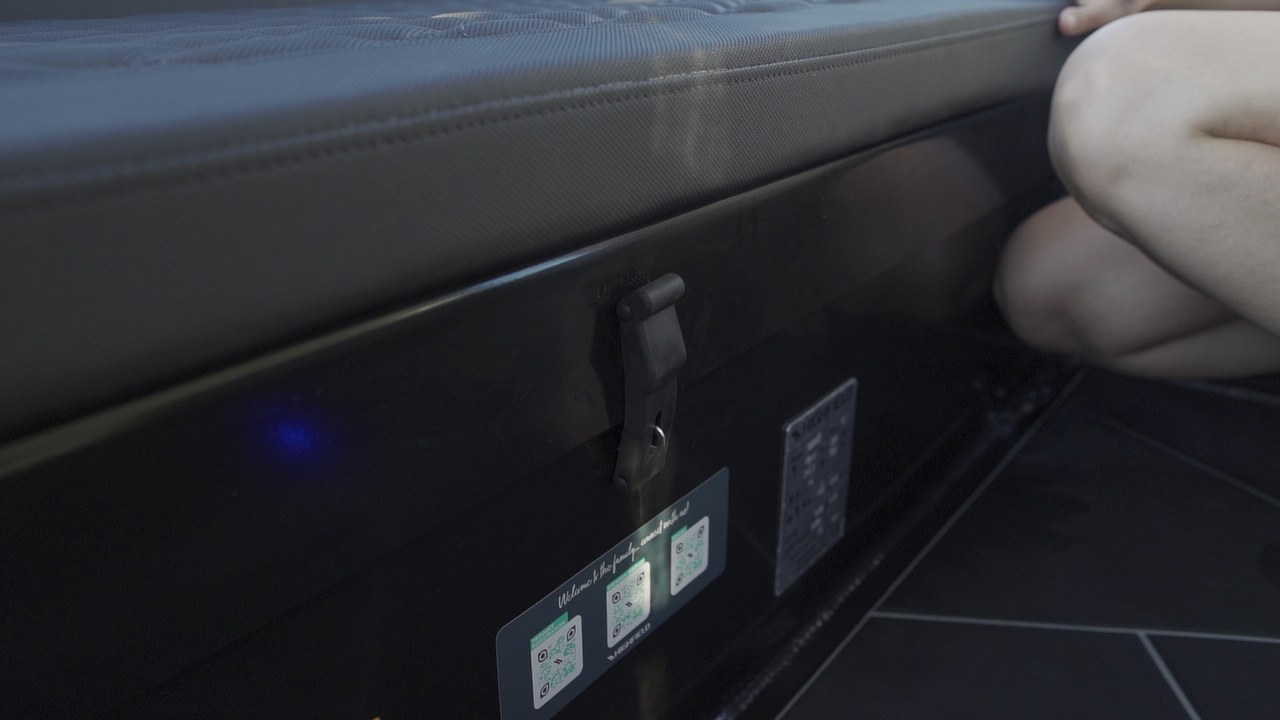
Tabella di riferimento per lo Sport 700
| Controllo | Dato ufficiale |
|---|---|
| Lunghezza esterna / interna | 6,99 / 4,78 m |
| Larghezza esterna / interna | 2,93 / 1,70 m |
| Deadrise | 26° |
| Tubolari | ORCA Hypalon, 58 cm, 6 camere |
| Massa barca | 1.024 kg* |
| Carico massimo | 1.120 kg** |
| Persone massime | 14 |
| Carburante | 285 l |
| Potenza massima | 250 hp |
| Peso massimo motore | 300 kg |
| Gambo / categoria | XL singolo / C |
*Il dato ufficiale include consolle e seduta. **Equipaggio e materiale; motore, carburante e acqua sono esclusi secondo la nota ufficiale.
Bilancio dei pesi della barca consegnata
I 1.024 chilogrammi dichiarati non rappresentano la condizione pronta all’uso. La scheda di collaudo aggiunge fuoribordo, carburante, batteria, elettronica, acqua, ancora, sicurezza, attrezzatura e optional, indicando dove ogni massa è collocata. Il risultato serve a spiegare assetto, trasporto e sollevamento. La portata di 1.120 chilogrammi e il limite di quattordici persone restano vincoli distinti da rispettare insieme. Quando occorre un dato certo, la configurazione completa si pesa invece di sommare stime generiche.
Motore singolo: potenza, massa e gambo
Il fuoribordo ammesso è singolo, con gambo XL, fino a 250 hp e 300 chilogrammi. Il verbale deve riportare marca, modello, numero di serie, massa, elica, altezza d’installazione, comandi e strumenti. Si controllano fissaggi documentati, libertà di sterzata e passaggi di cavi e tubazioni. Il limite massimo non equivale a una raccomandazione automatica. La compatibilità emerge dall’intero pacchetto e dal programma d’impiego, mentre risultati di altre barche non dimostrano quelli dell’esemplare consegnato.
Sterzo idraulico e comandi
Sterzo idraulico e volante figurano fra gli standard. A terra si porta il motore da un fine corsa all’altro, osservando uniformità, gioco, perdite e interferenze. Cavi e tubazioni non devono tendersi né piegarsi in modo anomalo. In acqua la prova inizia al minimo, inserisce avanti e indietro e cresce progressivamente, mantenendo libera l’area. Arresto d’emergenza e allarmi devono essere riconosciuti dal conducente. Ogni anomalia richiede diagnosi e nuova verifica; non si compensa con impressioni soggettive.
Circuito carburante da 285 litri
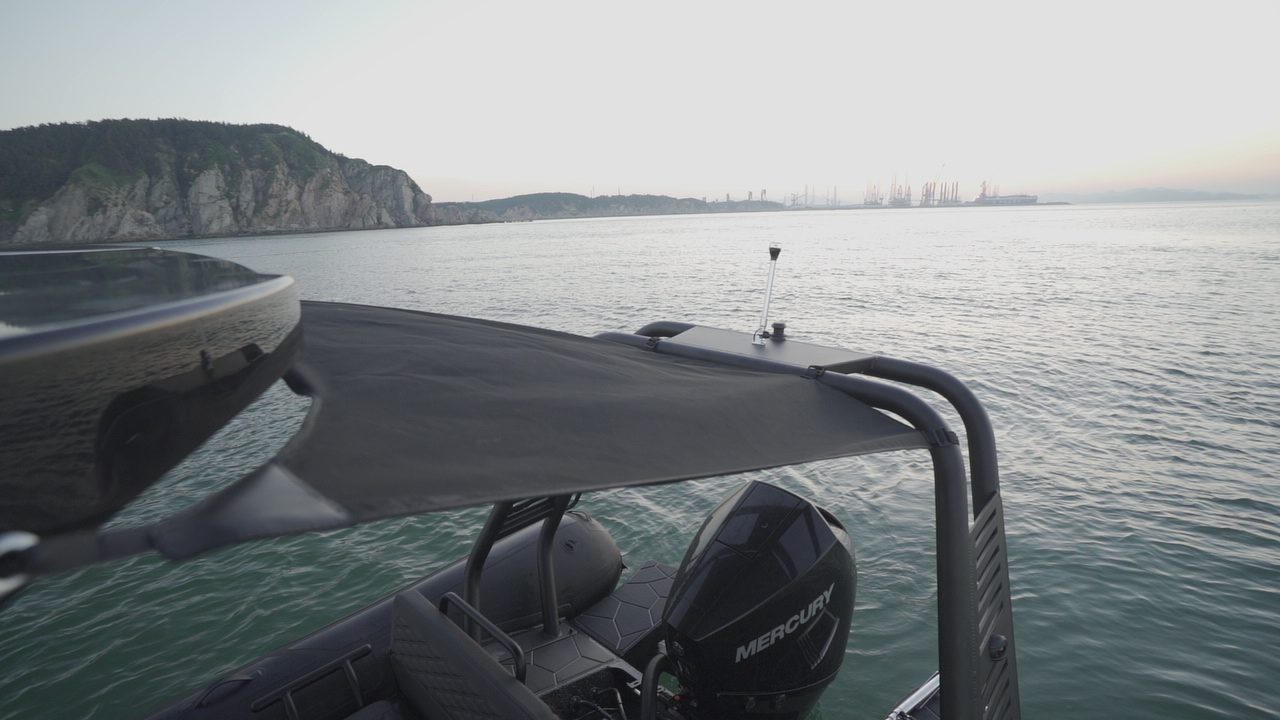
La capacità ufficiale è 285 litri. La sequenza di verifiche localizza bocchettone, sfiato, alimentazione, filtro e accessi, controllando sostegno delle tubazioni, raccordi, odori e trafilamenti. Il livello presente durante la prova viene annotato perché influisce su massa e assetto. La capacità non definisce autonomia o consumo. Le prime uscite producono dati soltanto se registrano regime, carico e condizioni; fino ad allora si lavora con stime prudenti. Nessun valore prestazionale è trasferito da un altro motore o da una configurazione diversa.
Distribuzione elettrica e protezioni
La dotazione parla di pacchetto elettrico della barca e della consolle, ma l’inventario dell’esemplare deve elencare batteria, staccabatteria, fusibili, interruttori, luci, prese, pompe e accessori. Si verificano serraggio, trattenuta, protezione da acqua e abrasione, etichette e possibilità di intervenire senza smontaggi irragionevoli. Le utenze vengono provate singolarmente e insieme, a motore spento e acceso. Un circuito aggiunto dopo la consegna deve avere protezione propria e comparire nello schema aggiornato.
Consolle, plancia e posizione di guida
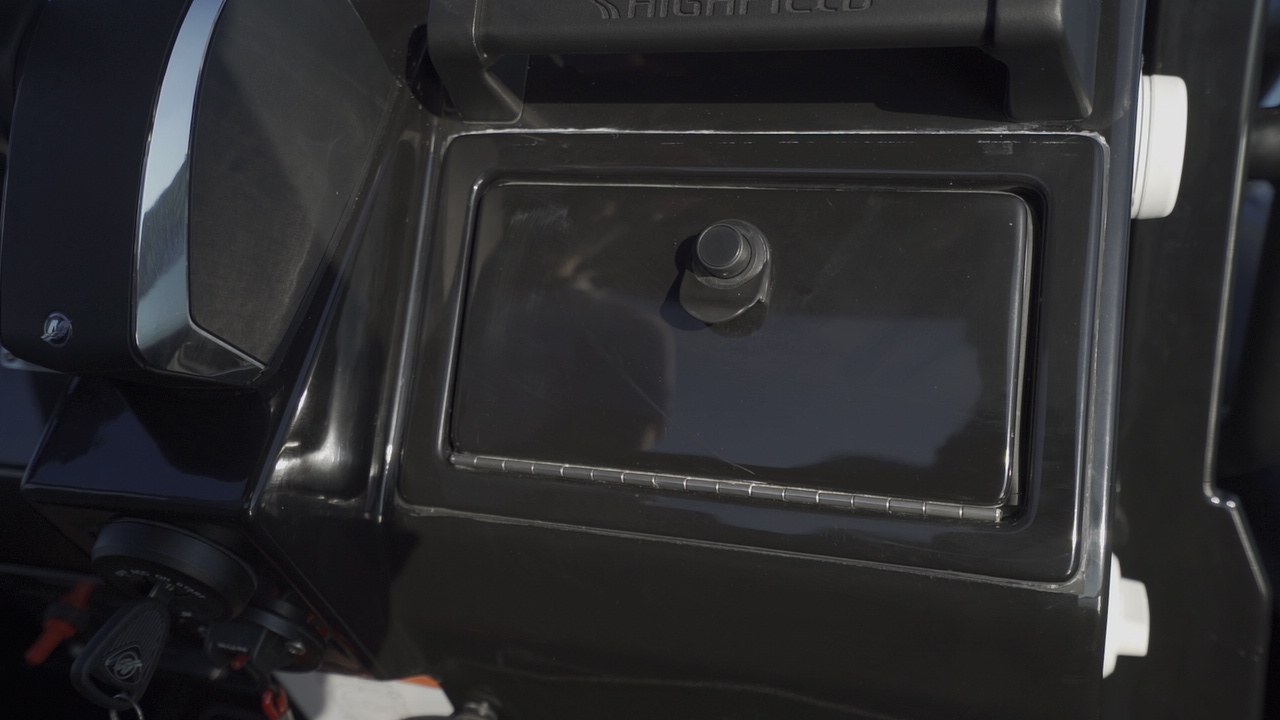
La plancia con finitura carbonio è dichiarata, mentre elettronica e strumenti specifici devono essere confermati nella distinta. Il pilota prova visibilità, appigli, seduta, comando, volante e accesso agli interruttori. Dietro la consolle si localizzano connessioni e protezioni senza tirare i cablaggi. Ogni display o radio richiede modello, manuale e linea identificabile. La presenza in fotografia non prova l’inclusione. Un buon allestimento mantiene leggibili sia l’interfaccia del conducente sia la parte tecnica che la alimenta.
Doccia e circuito acqua
Il kit doccia compare fra gli standard ufficiali. Il collaudo ne verifica componenti effettivi, riempimento, comando, portata funzionale, perdite e scarico, senza inventare capacità non pubblicate. Tubazioni e connessioni devono restare accessibili e protette. Dopo la prova si asciugano i vani e si osserva se rimane acqua in punti nascosti. Se l’unità riceve elementi diversi o aggiuntivi, questi entrano nella distinta. La manutenzione segue i manuali della configurazione, soprattutto durante lunghi periodi di inattività.
Drenaggio della coperta e vani
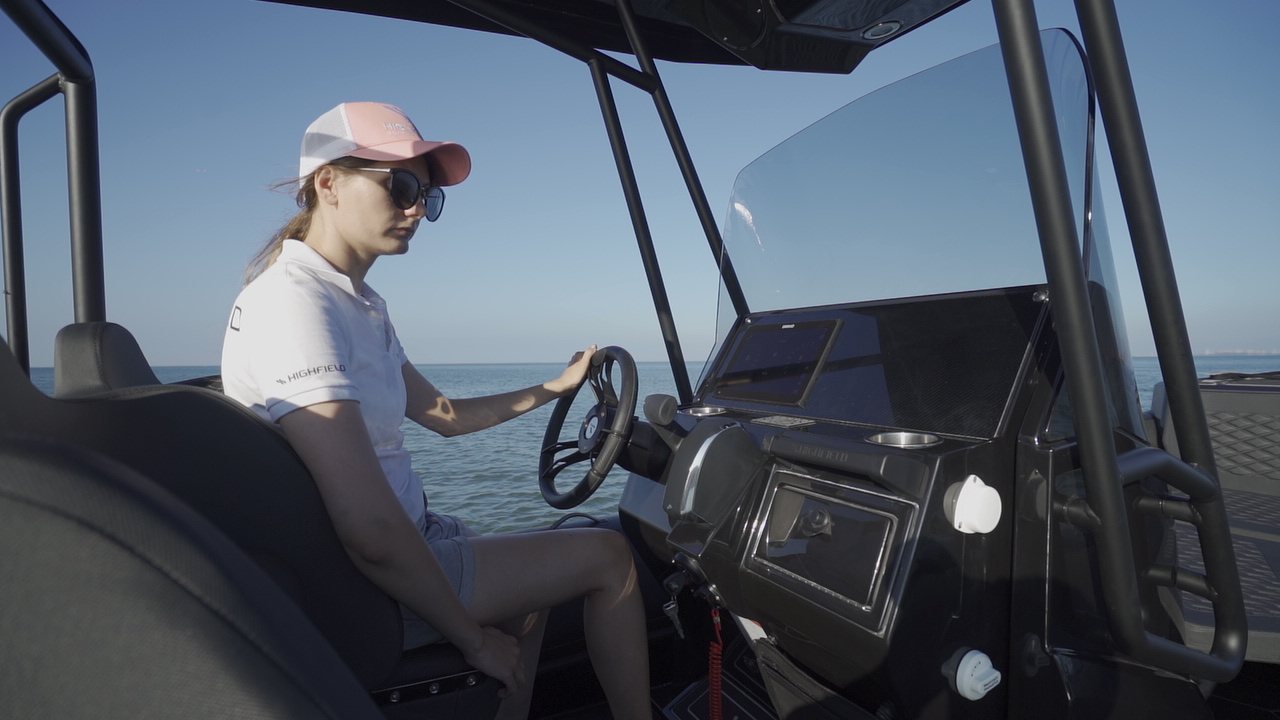
Il ponte autodrenante e la superficie in schiuma spazzolata con effetto teak sono standard dichiarati. Gli scarichi devono rimanere liberi con cuscini, borse e dotazioni nelle posizioni normali. Si segue il percorso dell’acqua e si osservano valvole e vani dopo la navigazione. Persone, carburante e materiali vengono annotati perché l’assetto influisce sul comportamento del drenaggio. Un oggetto che copre uno scarico è un errore di stivaggio da correggere, non una condizione da accettare.
Piattaforme e scaletta di poppa
Le piattaforme con scaletta fanno parte della dotazione. Il controllo deve dimostrare che la scaletta si apre senza interferire con il fuoribordo arrestato e può essere raggiunta dall’acqua. Cerniere, chiusure, superficie d’appoggio e appigli vengono provati. Cime o borse non devono occupare il percorso. Nell’area di poppa si distinguono punti destinati a traino, ormeggio o sollevamento: la presenza di un attacco non ne autorizza un uso diverso da quello documentato dal costruttore.
Sedute, prendisole e materiale mobile
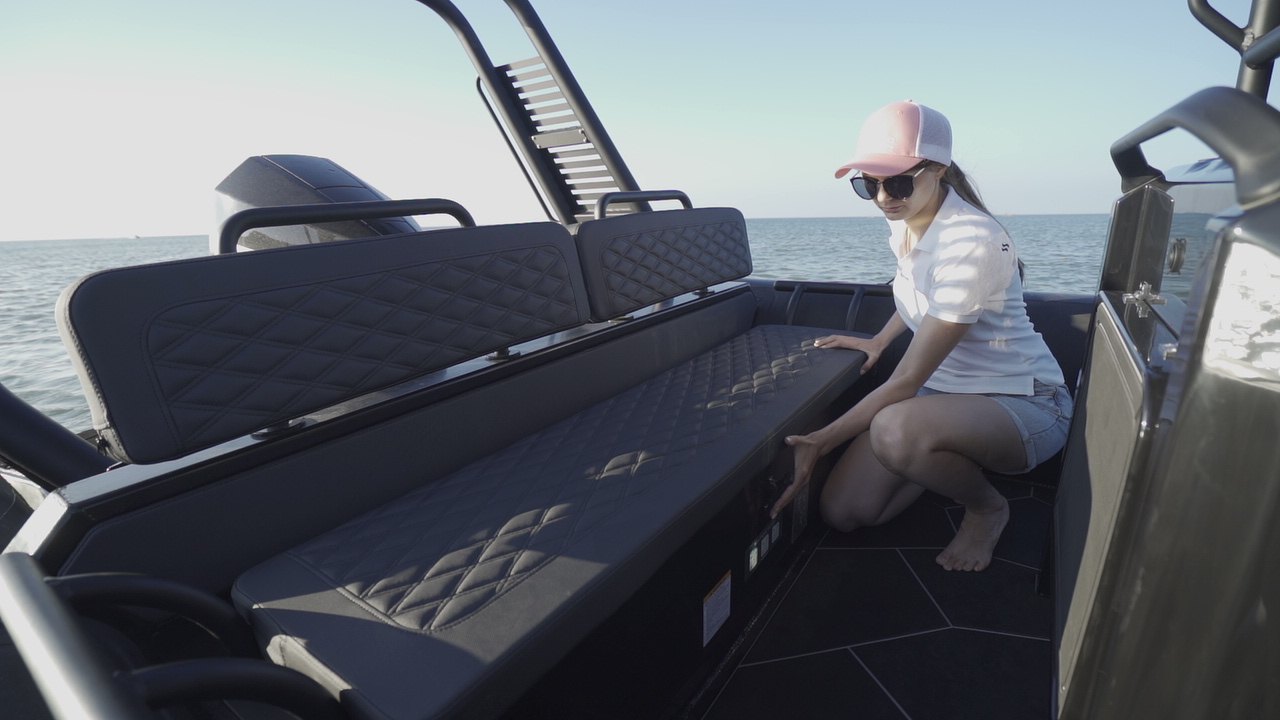
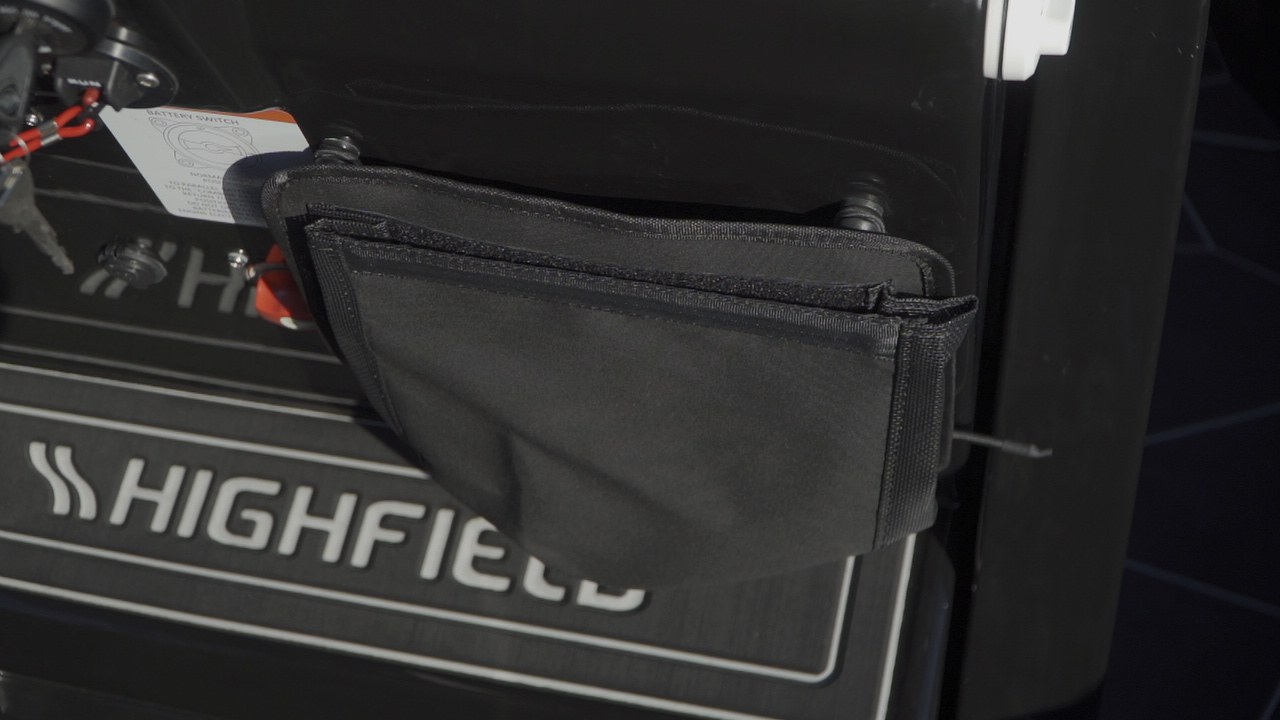
Seduta posteriore integrata, cuscineria e prendisole richiedono una prova in tutte le configurazioni previste. Si controllano chiusure, fissaggi, trasformazioni, accesso ai gavoni e passaggi verso prua. La borsa refrigerante e quella stagna, entrambe indicate nella dotazione, devono avere uno stivaggio stabile. Il limite di quattordici persone non descrive automaticamente quattordici posti uguali per ogni fase della navigazione. Il comandante assegna sedute e appigli considerando equipaggio reale, attrezzatura e condizioni.
Optional: T-top, sunshade e verricello
Le opzioni ufficiali includono T-top, tendalino e verricello. Per ciascuna si registrano modello, installatore, massa, fissaggi, alimentazione e manuale. Il T-top interessa altezza e carichi; il tendalino richiede una procedura di apertura e stivaggio; il verricello coinvolge linea elettrica, protezioni, ancora e accesso al gavone. Ogni componente viene provato senza presumere che sia presente. Se un optional limita un pannello o uno scarico, la configurazione deve essere corretta o accompagnata da una procedura realmente praticabile.
Prova in acqua senza numeri promozionali
Data, luogo, mare, vento, persone, attrezzatura e carburante accompagnano il verbale. Si provano avviamento, minimo, marce, arresto, sterzo, allarmi, drenaggio, stabilità degli oggetti e risposta ai comandi. Velocità, regime e consumo, se rilevati, appartengono alla specifica combinazione di barca, motore, elica e carico. La documentazione ufficiale consultata non fornisce una prestazione unica, quindi non si inventano soglie. Un problema viene descritto, corretto e sottoposto a una seconda prova comparabile.
Fascicolo tecnico e manutenzione programmata
Il fascicolo finale raccoglie documenti della barca, matricole, distinta, schemi disponibili, motore, elica, batterie, elettronica, optional, manuali, garanzie e fotografie iniziali. Il registro successivo annota ore, interventi, ricambi e variazioni osservate. Prima di ogni uscita si controllano tubolari, valvole, carburante, elettrico, sterzo, scarichi, scaletta e materiale mobile. Agli intervalli previsti si verificano fissaggi, filtri, finiture e connessioni. Informazioni precise rendono la diagnosi più rapida e proteggono la continuità della manutenzione.
Una consegna che diventa metodo d’uso
Lo Sport 700 resta gestibile quando impianti e accessi sono documentati fin dall’inizio. Ogni nuova utenza modifica assorbimenti e protezioni; ogni optional cambia almeno massa, passaggio o manutenzione. La sequenza di verifiche non sostituisce i tecnici e non promette prestazioni: fornisce dati ripetibili per dialogare con loro. Dopo le prime uscite il proprietario aggiorna consumi osservati, disposizione dei carichi e note sui sistemi. In questo modo il collaudo non rimane un episodio, ma diventa la prima versione verificata della storia tecnica della barca.