
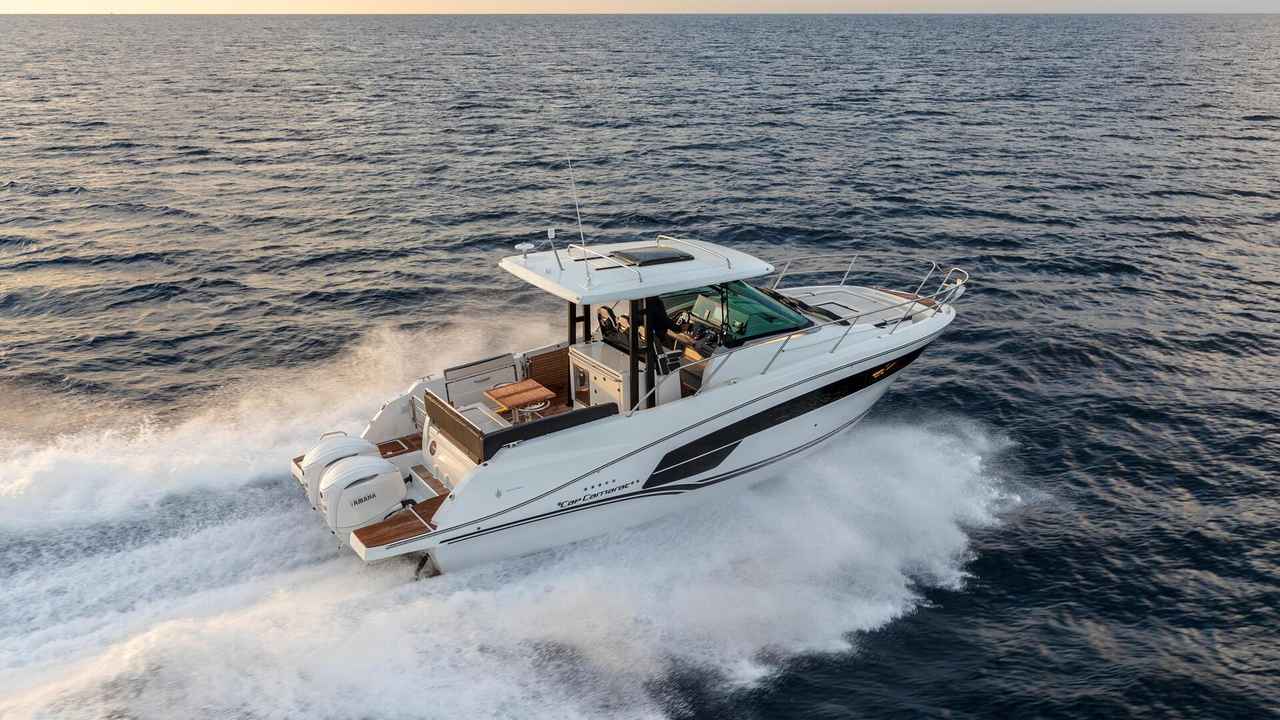
Il Jeanneau Cap Camarat 10.5 WA Series 2 è un day cruiser fuoribordo di 9,95 metri con due serbatoi carburante da 400 litri, peso dichiarato senza motori di 4.280 chilogrammi e capacità di pernottamento per quattro persone. La coperta riunisce prua conviviale, pozzetto trasformabile, cucina esterna e terrazza laterale; sottocoperta trovano posto dinette convertibile, cabina poppiera e bagno. Proprio questa densità di funzioni impone una verifica sistematica di masse, energia, carburante, acqua e accessi, distinta dalle impressioni di una visita in salone.
Scheda tecnica e configurazione da verificare
La lunghezza di scafo dichiarata è 9,32 metri e il pescaggio 0,73. La documentazione di gamma indica 3,25 metri di baglio massimo, 10,93 metri fuori tutto con piattaforme o opzioni e un’altezza minima sulla linea di galleggiamento di 2,32 metri, che sale a 3,00 con T-top. Queste misure vanno confrontate con l’unità ordinata. Fuoribordo sollevati, antenne, parabordi e terrazza incidono sull’ingombro operativo, mentre carrello, gru e posto barca richiedono il peso completo.
| Voce | Dato dichiarato | Controllo pratico |
|---|---|---|
| Lunghezza fuori tutto | 9,95 m | 10,93 m con opzioni dichiarate |
| Lunghezza scafo | 9,32 m | Numero e documenti dell’unità |
| Baglio massimo | 3,25 m | Posto barca e trasporto |
| Pescaggio scafo | 0,73 m | Motori abbassati e carico |
| Peso senza motori | 4.280 kg | Massa pronta all’uso |
| Carburante | 2 × 400 l | Calibrazione e volume utilizzabile |
| Acqua dolce | 160 l | Pompa, serbatoio e drenaggi |
| Categoria CE | B8 / C10 | Targhetta dell’esemplare |
Carena a V e progetto Michael Peters
La carena a V è associata a Michael Peters Yacht Design, con contributi Jeanneau e Sarrazin per architettura e stile. Non basta il nome del progettista per prevedere il comportamento. In ispezione si osservano pattini, simmetria, specchio, prese e posizione dei trasduttori. In mare si misurano assetto, accelerazione, angolo di trim e risposta in virata con carico noto. Fouling, eliche, altezza dei motori e distribuzione delle persone possono modificare sensibilmente il risultato.

Due fuoribordo fino a 425 hp ciascuno
La scheda di gamma 2023 indica una potenza massima bimotore di due unità da 425 hp con gambale da 30 pollici. La configurazione effettiva deve rispettare targhetta, mercato e documenti dell’esemplare. Due motori offrono manovrabilità e una forma di ridondanza, ma raddoppiano rigging, manutenzione e punti di possibile infiltrazione. Si controllano bulloni, piastre, sigillante, sterzo, tubi e libertà di rotazione. Eliche e altezze devono essere coerenti, senza presumere che una potenza maggiore garantisca efficienza.
Velocità dichiarate e metodo di prova
Jeanneau associa il modello a una crociera di 20 nodi e a punte superiori a 40. Sono dati del costruttore, non una prova indipendente. Una verifica corretta registra motori, eliche, carburante, acqua, persone, vento, mare, giri, velocità GPS e consumo istantaneo. Si eseguono passaggi nei due sensi e si controllano temperature e pressioni. Il valore utile non è la punta isolata, ma la zona di funzionamento in cui assetto, rumore, autonomia e margine meccanico restano coerenti.

Ottocento litri di carburante divisi in due serbatoi
La capacità complessiva dichiarata è 800 litri, ripartita in due serbatoi da 400. Bocchettoni, sfiati, pescanti, ritorni, filtri e valvole devono essere identificati. I livelli vanno calibrati separatamente e confrontati con i rifornimenti. Un trasferimento involontario o un consumo sbilanciato può cambiare assetto e rendere ingannevole l’autonomia mostrata. Il piano di navigazione usa consumi misurati, quantità non pescabile, condizioni e riserva. Odore o trafilamenti impongono arresto e diagnosi immediata.
Distribuzione delle masse e carico reale
Ai 4.280 chilogrammi senza motori si aggiungono propulsori, quasi 600 chilogrammi di carburante a pieno, acqua, batterie, T-top, cucina e dotazioni. La massa pronta all’uso può quindi essere molto diversa dal valore base. Persone concentrate a prua o sulla terrazza spostano il baricentro. Prima della consegna è utile ottenere una distinta pesi e verificare le immersioni. La categoria CE B8/C10 definisce limiti di progetto, ma non autorizza a ignorare la distribuzione del carico.

Prua con tre chaise longue e passavanti
La prua integra tre chaise longue, pensate per l’uso in rada e la convivialità. In navigazione posti e modalità di utilizzo devono seguire targhetta e manuale. Cuscini, schienali e tavoli richiedono fermi; i passavanti devono rimanere liberi. Pulpiti, tientibene e superfici antiscivolo vanno provati con barca bagnata. Gavoni e verricello non possono essere bloccati dagli arredi. L’ancora si manovra solo con area sgombra, protezione elettrica attiva e comunicazione chiara con il timoniere.

Pozzetto trasformabile e tavolo rimovibile
Il pozzetto poppiero può cambiare configurazione mediante sedute e tavolo rimovibile. La versatilità è utile, ma moltiplica cerniere, supporti e componenti da trattenere. Ogni trasformazione si esegue a barca ferma. Vie di passaggio, gavoni, estintori e accesso agli impianti devono restare liberi. I drenaggi vanno provati con l’assetto di pieno carico. Cuscineria e tavolo devono avere un posto di stivaggio sicuro, perché un oggetto non fissato diventa pericoloso durante un’accelerazione o una virata.
Terrazza laterale a sinistra e scaletta
La murata abbattibile sul lato sinistro crea una piattaforma aggiuntiva con scaletta. Il sistema richiede cerniere, attuatori, sensori e blocchi meccanici verificabili. Non si naviga con la terrazza aperta salvo espressa procedura del costruttore. Prima dell’apertura si controllano spazio, onde e presenza di persone; prima della chiusura si libera la zona. Guarnizioni e drenaggi devono impedire infiltrazioni. Il rientro dall’acqua va provato, assicurandosi che la scaletta sia azionabile senza assistenza dall’interno.
Cucina esterna e scelta delle utenze
La cucina alle spalle della postazione di governo può comprendere frigorifero, grill elettrico, fornello a gas, stivaggio oppure vasca del vivo. Non sono elementi equivalenti: cambiano alimentazione, ventilazione, scarichi e manutenzione. Il capitolato deve indicare cosa è realmente installato. Un grill richiede potenza e protezioni; il gas necessita vano ventilato, elettrovalvola e rilevazione; la vasca del vivo aggiunge pompa e presa a mare. Ogni circuito deve poter essere isolato senza smontare il mobile.

T-top, parabrezza integrale e protezione del timoniere
Il modello viene proposto anche con parabrezza integrale alto e avvolgente, dotato di ventilazione nella parte superiore. Il T-top può sostenere un tendalino poppiero. Questi elementi migliorano il riparo ma aumentano altezza, superficie al vento e carichi sulle basi. Si controllano fissaggi, sigillature, tergicristalli, visibilità e riflessi. Antenne, radar e pannelli aggiunti devono rispettare portata e campi di visuale. Con coperture montate, scarichi e vie di uscita non devono essere limitati.
Postazione di governo ed elettronica
Volante, manette, strumenti e schermi devono essere leggibili da seduti e in piedi. La visuale a prua e sui lati si verifica con persone e tendalini nella configurazione reale. Plotter, VHF, AIS, ecoscandaglio e pilota richiedono alimentazioni protette e rete documentata. L’eventuale connettività di bordo non sostituisce allarmi locali e strumenti primari. Si prova il governo da battuta a battuta con motori alzati e abbassati, controllando interferenze tra tubi, cablaggi e strutture.
Dinette prodiera convertibile in cuccetta
Sottocoperta la dinette prodiera si trasforma in cuccetta a V e può essere separata da una tenda. Tavolo, prolunghe e cuscini devono avere fissaggi e stivaggio dedicato. Durante la navigazione il passaggio verso il ponte non può essere ostruito. Oblò e osteriggi assicurano luce e ventilazione, ma richiedono guarnizioni e chiusure efficienti. La trasformazione non deve coprire batterie, valvole o pompe. Una cuccetta comoda in porto deve restare utilizzabile senza condensa e con una via di uscita praticabile.

Cucina interna, frigorifero e bilancio elettrico
La zona interna può aggiungere frigorifero e apparecchi di preparazione al carico già presente in pozzetto. Il bilancio va diviso per navigazione, rada e notte. Batterie servizi, alternatori, caricabatterie e banchina devono sostenere utenze continue e picchi senza compromettere l’avviamento. Sezionatori e fusibili devono essere etichettati. Ventilazione del frigorifero e accesso ai collegamenti non sono dettagli. Ogni modifica successiva richiede schema aggiornato, sezione dei cavi e protezione coerente.

Cabina poppiera e accessi tecnici
Una seconda cabina separata è collocata verso poppa, sotto parte della coperta. Altezza, ventilazione e accessi dipendono dal layout. Materassi e pannelli si sollevano per individuare cablaggi, tubazioni e possibili ristagni. Il vano non deve diventare deposito davanti a valvole o filtri. La vicinanza a serbatoi e motori rende importanti isolamento acustico e controllo degli odori. Le uscite devono restare praticabili anche con bagagli e con la dinette configurata per la notte.

Bagno, doccia e circuito da 160 litri
Il serbatoio acqua dolce dichiarato contiene 160 litri. Autoclave, boiler, rubinetti, doccia e scarichi devono essere provati uno per uno. Il bagno richiede ventilazione, superfici sigillate e accesso alle pompe. L’acqua non va considerata tutta utilizzabile senza verificare pescante e indicatore. Per soste prolungate servono gestione dei consumi e sanificazione. Il circuito delle acque nere, se presente nella configurazione, deve avere valvole, sfiato e procedura di svuotamento chiaramente documentati.

Climatizzazione e permanenza notturna
La climatizzazione è indicata come possibilità per l’interno. Prima dell’ordine si verificano potenza, presa a mare, pompa, filtri, scarico condensa e disponibilità energetica. In rada può richiedere generatore o un sistema batterie dimensionato; in banchina dipende dalla corrente disponibile. Un impianto sovradimensionato può avere cicli brevi e deumidificazione inefficace. La ventilazione naturale resta necessaria. Allarmi, manutenzione e accesso alla presa a mare devono essere inclusi nella consegna e non lasciati alla scoperta dell’utilizzatore.
sequenza di verifiche prima della prova in mare
La verifica comprende documenti, targhetta, carena, specchio, motori, eliche, sterzo, carburante, batterie, pompe, terrazza e drenaggi. Tutte le trasformazioni di coperta vengono provate a fermo. In mare si parte con carico noto, si controllano manovre lente, accelerazione progressiva, virate e arresto. Si annotano giri, velocità, consumo, assetto, vibrazioni e allarmi. La prova si interrompe davanti a odori di carburante, sterzo irregolare o temperature anomale. Ogni risultato resta riferito a quella configurazione.
Giudizio tecnico sul Cap Camarat 10.5 WA
Il Cap Camarat 10.5 WA Series 2 concentra in meno di dieci metri di lunghezza dichiarata funzioni da day boat e piccola crociera: 800 litri di carburante, quattro cuccette, cucina doppia, terrazza e bimotore. Il punto di forza è la versatilità, che diventa però il principale tema tecnico. Pesi, energia, drenaggi e accessi devono rimanere coerenti quando si sommano gli optional. Senza una prova indipendente non attribuiamo prestazioni; valutiamo configurazione, installazione e possibilità di manutenere ogni sistema.