
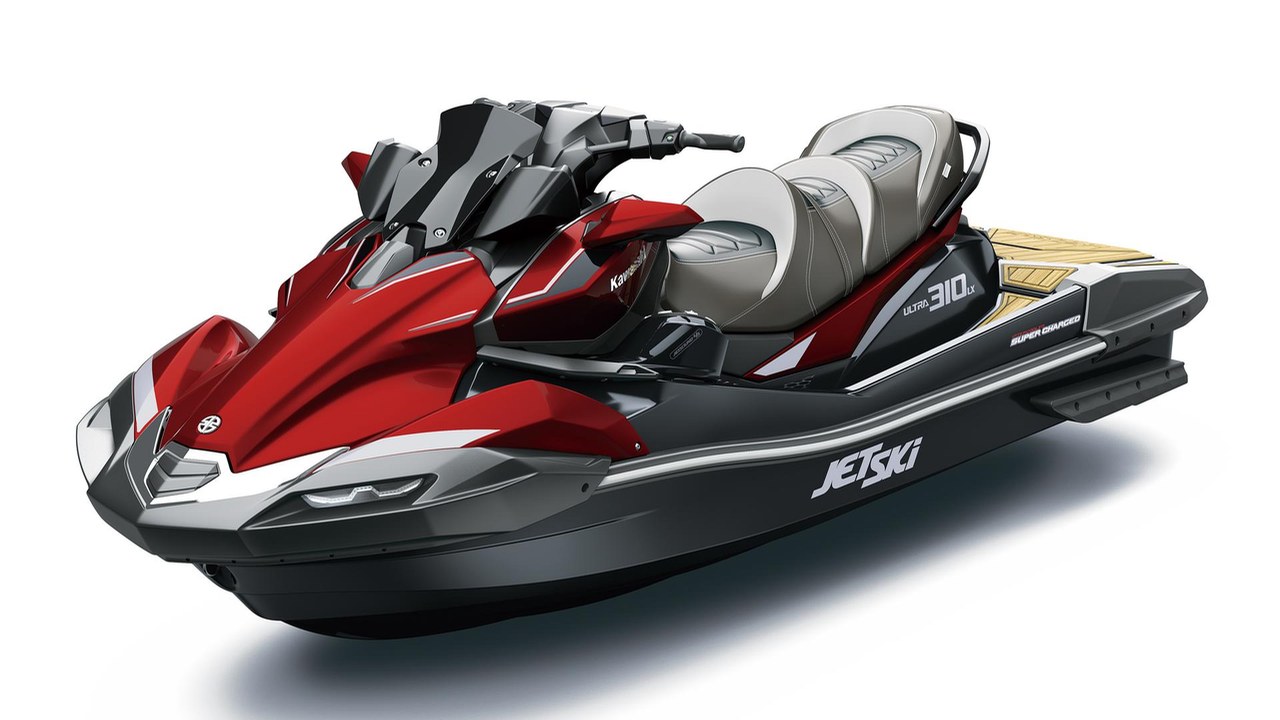
Kawasaki Ultra 310LX 2026 è la versione più accessoriata della piattaforma Ultra 310: tre posti, motore quattro cilindri sovralimentato da 1.498 cm³, grande capacità di stivaggio e una dotazione che comprende sella ERGO-FIT LXury regolabile, telecamera posteriore, display TFT da sette pollici e JETSOUND 4s. La scheda europea dichiara 221 kW a 8.000 giri e 277 N·m a 6.000 giri. Per scegliere bene, tuttavia, occorre verificare come ogni impianto è installato, comandato e mantenuto, non limitarsi all’elenco degli accessori.
Configurazione generale della Ultra 310LX
La piattaforma misura 3.580 millimetri di lunghezza, 1.195 di larghezza e 1.195 di altezza. La massa in ordine di marcia dichiarata è 516 chilogrammi, comprensiva dei materiali e dei fluidi necessari e di oltre il novanta per cento del carburante. Il serbatoio contiene 80 litri. Sono numeri importanti per carrello, varo e ricovero: una volta aggiunti accessori e attrezzature, il complesso da trainare supera ampiamente la sola massa indicata per la moto d’acqua.
Scheda tecnica e verifiche immediate
I dati ufficiali costituiscono il punto di partenza del collaudo. Potenza e coppia sono valori massimi a regimi definiti, non promesse di velocità in qualsiasi condizione. Capacità e dotazioni vanno confrontate con mercato di destinazione, numero di telaio e distinta dell’esemplare.
| Voce | Dato dichiarato | Verifica richiesta |
|---|---|---|
| Motore | 4 cilindri, 1.498 cm³, sovralimentato | Ore, diagnosi, compressore |
| Potenza | 221 kW a 8.000 giri | Regime e allarmi sotto carico |
| Coppia | 277 N·m a 6.000 giri | Progressione e vibrazioni |
| Dimensioni | 3.580 × 1.195 × 1.195 mm | Carrello e ricovero |
| Massa | 516 kg in ordine di marcia | Peso completo con accessori |
| Carburante | 80 l | Sfiato, livello, perdite |
| Stivaggio | 168,5 l complessivi | Tenuta e distribuzione del carico |
Quattro cilindri sovralimentato
Il motore marino a quattro tempi è raffreddato a liquido, con quattro cilindri in linea, compressore e intercooler. Questa architettura eroga molta coppia ma aggiunge componenti da ispezionare: aspirazione, tubazioni, fascette e circuito di raffreddamento devono essere integri. L’avviamento a freddo permette di osservare rumorosità, stabilità del minimo e messaggi sul TFT. Su un usato si richiedono diagnostica e storico, senza dedurre lo stato del motore dalla sola pulizia esterna.

Potenza europea e differenze di mercato
La pagina Kawasaki Europe indica 221 kW, equivalenti a 300 PS, mentre la denominazione commerciale resta Ultra 310LX e altre comunicazioni globali possono riportare valori differenti. Non si deve mescolare una scheda statunitense con una macchina europea. Omologazione, centralina, potenza registrata e garanzia si verificano sui documenti del singolo esemplare. Anche eventuali modifiche elettroniche devono essere dichiarate: possono incidere su affidabilità, emissioni, assicurazione e conformità.
Alimentazione e carburante
Gli 80 litri dichiarati consentono un impiego turistico, ma l’autonomia reale dipende fortemente da regime, mare, carico e modalità di potenza. Si registra il consumo rifornendo fino a un riferimento ripetibile e confrontando litri, distanza GPS e ore. Bocchettone e sfiato non devono emanare odore persistente né mostrare trafilamenti. Il carburante prescritto e la sua conservazione sono essenziali su un propulsore sovralimentato; prodotti o ottani diversi non si scelgono per tentativi.
Pompa a getto e presa d’acqua
Il rendimento della trasmissione dipende da griglia, condotto, girante e gioco con l’anello. Urti o detriti producono cavitazione, vibrazioni e perdita di spinta anche quando il motore sale regolarmente di giri. A terra si ispeziona senza avviare; in acqua si aumenta il carico gradualmente e si ascoltano variazioni anomale. Cime, sacchetti e alghe possono essere aspirati, quindi le manovre vicino a banchine e fondali bassi richiedono spazio e velocità minima.

KSRD: decelerazione e retromarcia
Kawasaki Smart Reverse with Deceleration controlla il deflettore del getto per fornire spinta inversa e aiutare la decelerazione. Non è un freno automobilistico e non garantisce una distanza fissa. Prima dell’uscita si prova avanti, neutro e indietro in acqua libera, verificando concordanza fra comando, risposta e indicazione sul display. In manovra si conserva sempre un margine, perché vento, corrente e carico possono spostare il mezzo mentre il getto cambia direzione.
Deep-V e regolazione dell’assetto
La carena Deep-V è progettata per coniugare passaggio sull’onda e stabilità. Il comportamento va comunque verificato con trim, passeggeri e serbatoio nelle condizioni dichiarate. Si parte da un’impostazione neutra, poi si modifica un parametro alla volta osservando beccheggio, presa in curva e tendenza a porpoising. Un assetto elettronico non compensa bagagli liberi o persone mal posizionate. Fondo, spigoli e sigillature si controllano per urti e riparazioni.
Power Mode e comando elettronico
Le modalità di potenza permettono di scegliere erogazioni diverse; quelle ridotte limitano la risposta rispetto alla modalità piena. Sono utili per apprendimento, passeggeri o acqua congestionata, ma non eliminano il rischio. Il comando elettronico della farfalla rende possibili anche cruise control e altre assistenze, perciò batteria, sensori e cablaggi devono essere efficienti. Nel collaudo si prova ogni modalità separatamente e si conferma che la selezione rimanga visibile sul quadro.

Launch Control senza scorciatoie
Launch Control gestisce la fase di accelerazione secondo la logica prevista dal costruttore. La prova richiede acqua libera, visibilità, equipaggiamento e un pilota già abituato alla risposta standard. Non si usa in porto, con passeggeri inesperti o su fondale incerto. Prima si confermano sterzo, KSRD, trim e temperature; solo dopo si valuta la funzione, registrando condizioni e comportamento. Ripetere partenze ravvicinate senza controllo termico non dimostra la qualità dell’esemplare.
Cruise control per i trasferimenti
Il controllo elettronico della velocità riduce la necessità di mantenere pressione continua sulla leva e può diminuire l’affaticamento della mano destra. Non solleva il pilota dalla sorveglianza: onda, traffico e limiti richiedono regolazioni immediate. Si prova a velocità moderata, verificando attivazione, variazione e disinnesto. Un comportamento intermittente può dipendere da comando, sensore o alimentazione e deve essere diagnosticato, non accettato come normale usura.
Display TFT da sette pollici
Il TFT a colori offre più modalità di visualizzazione, comando tramite jog dial, Bluetooth e funzioni di infotainment. Alla consegna si controllano luminosità, leggibilità, assenza di condensa e correttezza di carburante, regime, modalità e allarmi. L’associazione dello smartphone si esegue da fermo e viene poi cancellata se il mezzo cambia proprietario. Le funzioni secondarie non devono nascondere gli avvisi tecnici né distrarre dalla rotta.

JETSOUND 4s e impianto audio
JETSOUND 4s utilizza quattro altoparlanti, jog dial e connessione Bluetooth. Si provano tutti i diffusori a volume moderato, cercando distorsioni, vibrazioni e infiltrazioni. Il sistema deve spegnersi senza assorbimenti anomali. La qualità audio non ha priorità su allarmi, comunicazioni e rumori meccanici: durante la prova tecnica conviene disattivarlo. Casse o cablaggi sostituiti vanno confrontati con la distinta e protetti correttamente dall’ambiente marino.
Telecamera posteriore
La telecamera è montata dietro la seduta e integra la vista verso poppa, utile in ormeggio o durante attività di traino. Non sostituisce il controllo diretto né, quando richiesto, l’osservatore. Si verificano immagine, latenza, pulizia della lente e funzionamento con luce diversa. La visuale può essere coperta da spruzzi, persone o attrezzature. In contratto si annota se telecamera, cablaggio e immagine sul TFT sono pienamente operativi.
Sella ERGO-FIT LXury a tre posizioni
La seduta a due elementi ospita tre persone e offre tre posizioni lungo un campo dichiarato di 70 millimetri. La regolazione consente di adattare sostegno e distanza dal manubrio, ma deve bloccarsi senza gioco. Pilota e passeggeri provano appoggi e libertà di movimento indossando i giubbotti. Una posizione comoda da fermo può diventare insufficiente in accelerazione; per questo la verifica include partenza, curva e decelerazione progressive.

Ultra Deck e Multi-Mount Rail
La piattaforma posteriore ampliata crea uno spazio di preparazione per attività in acqua. Il Multi-Mount Rail accetta supporti scorrevoli e punti di fissaggio compatibili. Prima dell’uso si controllano serraggio, limiti e destinazione di ogni accessorio: una slitta per il carico non diventa automaticamente un punto di traino. La coperta deve restare antisdrucciolo, libera da cime vicino alla presa e bilanciata rispetto al peso sistemato nei vani.
Stivaggio totale da 168,5 litri
Kawasaki ripartisce il volume dichiarato fra vano anteriore sigillato da 124 litri, Easy-Access Storage da 40 litri, comparto impermeabile da 1,7 litri e tasca posteriore da 2,8 litri. La somma è utile, ma ogni vano ha accesso e funzione diversi. Si provano chiusure, guarnizioni e drenaggi, quindi si distribuiscono gli oggetti senza superare portata o intralciare lo sterzo. Telefono e documenti restano protetti anche se un comparto è descritto come impermeabile.
Tre persone e carico operativo
La sella tripla non rende identico il comportamento a pieno carico. I passeggeri devono mantenere piedi sugli appoggi, usare le maniglie e seguire le indicazioni del pilota. Prima di partire si verifica la portata nella documentazione dell’esemplare, insieme a giubbotti e laccio di sicurezza. La prova con tre persone viene dopo quella con il solo conducente. Bagagli pesanti si collocano secondo le istruzioni e si bloccano contro accelerazioni e salti.

Impianto elettrico e stato della batteria
Compressore a parte, molti sistemi della LX dipendono direttamente dall’elettronica: KSRD, modalità, TFT, telecamera, audio e cruise control. La batteria si misura a riposo, durante l’avviamento e con motore in funzione. Morsetti, fusibili e masse devono essere asciutti e protetti. Accessori aggiunti richiedono schema, protezione e assorbimento compatibile. Un calo di tensione può generare sintomi diversi in più impianti, quindi la diagnosi parte dall’alimentazione prima di sostituire moduli.
Raffreddamento e lavaggio
Motore, intercooler e scarico richiedono un flusso corretto e tubazioni integre. Dopo l’acqua salata si applica la sequenza di lavaggio prescritta, rispettando tempi di avviamento e alimentazione. Si cercano fascette allentate, sale, gocce e odori nella sentina. Il tappo di drenaggio entra nella sequenza di verifiche di varo e recupero. Una procedura scritta evita due errori frequenti: dimenticarlo a terra oppure avviare il mezzo fuori dall’acqua senza la preparazione corretta.
Carrello e alaggio per 516 chilogrammi
La massa in ordine di marcia non include carrello, cinghie e bagagli. La portata utile va calcolata con margine, controllando pneumatici, mozzi, verricello e punti di sostegno. La forma Deep-V richiede appoggi regolati senza concentrare pressioni. In rampa si evita di aspirare sabbia e si mantiene la macchina vincolata finché galleggiamento e motore sono pronti. Dopo il recupero si risciacquano anche carrello e freni se sono entrati in acqua salata.
Collaudo pre-consegna
La verifica comincia a motore freddo con matricole, livelli e diagnosi. In acqua si controllano minimo, raffreddamento, sterzo, KSRD e telecamera. Seguono passaggi a regime crescente, sempre annotando temperatura, vibrazioni e messaggi. Power Mode, Launch Control, cruise control e trim si provano uno alla volta. TFT, audio e Bluetooth vengono verificati da fermo. Al rientro si riapre la sentina per cercare acqua, carburante o olio che prima non erano visibili.
verifiche per un esemplare usato
Ore, tagliandi e richiami si confrontano con fatture e diagnosi. Si ispezionano scafo, presa, girante, anello, supporti motore, compressore, intercooler e manicotti. Ogni vano viene aperto; ogni impianto viene acceso. Riparazioni e accessori devono essere documentati. Il contratto indica numero di telaio, carrello, chiavi, manuali e dotazioni comprese. Una prova breve già calda o un display senza errori non bastano a escludere problemi intermittenti.
Giudizio sulla configurazione LX
Ultra 310LX combina prestazioni elevate con una dotazione realmente ampia: 168,5 litri di stivaggio, piattaforma estesa, seduta regolabile, telecamera e audio ne ampliano l’impiego oltre la sola accelerazione. Questa complessità chiede però una sequenza di verifiche più lunga e una manutenzione coerente. È adatta a chi userà davvero comfort e capacità, non a chi cerca soltanto la sigla 310. Il miglior esemplare è quello in cui motore, getto, elettronica e accessori funzionano insieme e sono sostenuti da documenti verificabili.
