
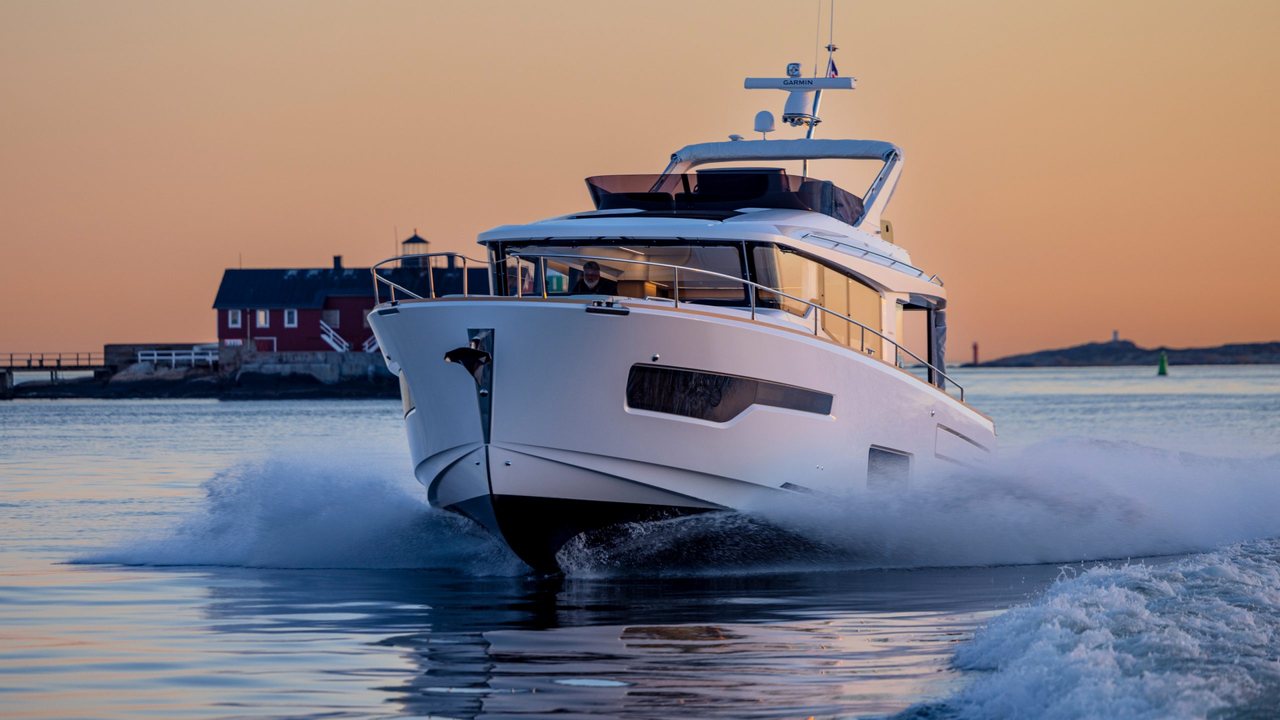
Il Nimbus 495 Flybridge è un cruiser di circa 15 metri e 19,1 tonnellate costruito intorno alla permanenza prolungata: 1.700 litri di gasolio, 520 di acqua, batterie ausiliarie al litio da 400 Ah, 400 watt solari e generatore fanno parte della dotazione dichiarata. Due Volvo Penta IPS650 forniscono propulsione e manovra, mentre il Dynamic Positioning System può mantenere temporaneamente posizione e prua. Per valutarlo correttamente occorre leggere impianti, serbatoi e configurazioni come un sistema, non come una somma di accessori.
Misure e capacità del Nimbus 495 Flybridge
La lunghezza complessiva è indicata tra 14,9 e 15 metri, lo scafo misura 13,7, il baglio 4,60 e il pescaggio 1,20. La massa normale di 19.100 chilogrammi richiede travel lift, invaso e posto barca adeguati. La documentazione dell’unità deve chiarire quale configurazione determina la lunghezza finale, includendo piattaforma, ancora e sporgenze.
| Voce | Dato dichiarato | Controllo operativo |
|---|---|---|
| Lunghezza complessiva | 14,9–15,0 m | Misurare la configurazione finita |
| Lunghezza scafo | 13,7 m | Dato distinto dagli ingombri |
| Baglio massimo | 4,60 m | Posto barca e sollevamento |
| Pescaggio | 1,20 m | Fondali, piedi e prese a mare |
| Dislocamento normale | 19.100 kg | Peso da aggiornare con optional |
| Gasolio | 1.700 l | Autonomia e gestione contaminazione |
| Acqua dolce | 520 l | Permanenza con più ospiti |
| Acque grigie / nere | 340 / 170 l | Indicatori e svuotamento |
| Motori | 2 × Volvo Penta IPS650 | D6 da 480 hp ciascuno |
| Categoria CE | B14 / C16 | Numero massimo legato alle condizioni |
Due Volvo Penta D6 da 480 hp con IPS650
La motorizzazione dichiarata usa due D6 da 480 hp collegati a pod IPS650. I propulsori orientabili integrano spinta e governo, permettendo joystick e funzioni automatiche. Piedi, tenute, olio e protezione galvanica diventano elementi critici. Il piano di manutenzione deve seguire ore, calendario e qualità dell’acqua, includendo ispezione dopo urti anche quando non compaiono vibrazioni immediate.

Velocità dichiarata e condizioni di misura
Nimbus indica 20–24 nodi di crociera e 30 nodi di massima con dislocamento normale. Sono valori del costruttore, non il risultato di una nostra prova. Carico pieno, carena, mare, vento e optional possono cambiarli. Alla consegna vanno registrati giri, consumo, velocità sui due sensi e assetto, distinguendo la condizione normale da quella a pieno dislocamento.
Dynamic Positioning System
Il DPS usa pod, sensori e posizionamento per mantenere temporaneamente rotta e posizione mentre l’equipaggio prepara cime o attende un ponte. È un ausilio, non un ormeggio automatico permanente. Segnale satellitare, vento, corrente e stato dei propulsori condizionano la precisione. L’operatore deve sapere come disinserirlo immediatamente con leve o comando dedicato.

Glass Cockpit e tre display
La dotazione standard comprende due MFD Volvo Penta da 12 pollici nella plancia interna e uno da 12 sul flybridge. La duplicazione delle postazioni richiede sincronizzazione di carte, allarmi e impostazioni. Luminosità, polarizzazione degli occhiali e visibilità al sole vanno provate. Un guasto della rete non dovrebbe privare entrambe le plance delle informazioni essenziali.
Intercettori con trim e correzione automatica
Gli intercettori regolano assetto longitudinale e sbandamento. In automatico possono compensare carichi e condizioni, ma devono partire da sensori calibrati. L’armatore deve conoscere posizione neutra, modalità manuale e procedura di pulizia. Un attuatore bloccato o una superficie incrostata può produrre un comportamento asimmetrico che non va corretto semplicemente aggiungendo comando.

Elica di prua proporzionale a 24 volt
Il thruster SEP170 proporzionale assiste la manovra e lavora insieme ai pod. La modulazione evita comandi tutto-o-niente, ma introduce elettronica, batterie e protezioni termiche. Tensione, cavi e ventilazione devono sostenere l’uso reale. Un’elica di poppa proporzionale è proposta tra gli optional: prima di aggiungerla conviene verificare se la missione e il posto barca la rendono davvero necessaria.
Litio da 400 Ah e banco ausiliario
La dotazione dichiara un pacco al litio da 400 Ah per i servizi, affiancato da batterie di avviamento e circuiti ausiliari. La capacità nominale non basta: servono chimica, tensione, limiti del BMS e potenza continua degli inverter. Ventilazione, protezione e spegnimento di emergenza devono essere accessibili. Un ulteriore pacco da 330 Ah è opzionale e va giustificato da un bilancio.

Quattrocento watt solari
I pannelli da 400 watt possono sostenere carichi di base e ridurre ore del generatore, ma la resa varia con ombra, orientamento, temperatura e regolatore. Non alimentano da soli climatizzazione e grandi utenze. Il monitoraggio dovrebbe separare produzione solare, consumo e stato batteria, così l’equipaggio può distinguere un giorno poco soleggiato da un guasto del circuito.
Generatore da 10,8 kW
Il Fisher Panda 15000i da 10,8 kW è indicato nella configurazione. Deve sostenere cucina, climatizzazione, carica e utenze senza lavorare costantemente al limite o a carico troppo basso. Prese a mare, scarico, ventilazione e accesso ai filtri sono punti di controllo. L’isolamento galvanico e il comportamento con alimentazione di banchina devono essere verificati nella specifica versione elettrica.

Climatizzazione ad acqua refrigerata
La potenza totale dichiarata è 49.000 BTU per salone, cabina armatoriale, cabina di prua, ambiente di dritta e bagno. Pompe, collettori e scarichi condensa devono essere ispezionabili. Filtri sporchi o portata ridotta causano inefficienza e allarmi. La prova deve includere tutte le zone contemporaneamente e misurare assorbimento, rumore e capacità del generatore.
Gasolio: 1.700 litri da tenere puliti
La grande capacità sostiene il programma di viaggio, ma aumenta il tempo di permanenza del carburante. Serbatoi, travasi, sfiati e ritorni devono essere documentati. Prefiltri commutabili e punti di drenaggio consentono di isolare acqua o sedimenti. L’autonomia va calcolata sul consumo misurato, sottraendo quantità non utilizzabile e una riserva per deviazioni e mare contrario.

Acqua dolce, boiler e dissalatore
I 520 litri d’acqua e il boiler da 80 sostengono docce e cucina. Il dissalatore è opzionale e richiede prefiltri, conservazione e lavaggi. Aggiungerlo non elimina il bisogno di monitorare i serbatoi. Autoclavi, accumulo e circuiti caldo-freddo devono poter essere isolati, mentre una perdita non dovrebbe svuotare tutta la riserva senza allarme.
Tre circuiti per grigie e nere
Il serbatoio delle acque grigie è 340 litri e quello delle nere 170. Indicatori affidabili, sfiati e accesso alle pompe sono indispensabili per lunghe soste. I due WC elettrici standard devono avere protezioni e procedure manuali. La sequenza di verifiche comprende odori, ritorni, valvole e conformità allo scarico nelle aree frequentate.

Flybridge e seconda postazione di governo
Il ponte superiore offre plancia, sedute e tavolo, aumentando spazio sociale e visibilità. Porta però persone e attrezzatura in alto. Limiti di carico, bimini elettrico e oggetti mobili devono essere gestiti con mare formato. La comunicazione tra le due plance deve essere inequivocabile: prima di cambiare postazione si confermano governo, motori e allarmi attivi.
Salone, cucina e aperture verso poppa
Il salone integra plancia, pranzo e cucina. Finestra e vetrata poppiere retrattili aprono lo spazio al pozzetto, ma aggiungono motori, guide e guarnizioni. Ogni apertura deve avere blocco e drenaggio. Piano a induzione, frigorifero da 130 litri e aspirazione sono carichi da includere nel profilo energetico, soprattutto senza banchina.

Cabine e terzo ambiente configurabile
La sistemazione comprende due cabine principali e un terzo ambiente che può diventare cuccette, ufficio o locale di servizio. La scelta influenza stivaggio, ventilazione e impianti. Lavatrice opzionale, watermaker e ricambi possono competere per lo stesso volume. Prima dell’ordine conviene disegnare l’inventario reale di una crociera lunga e assegnare ogni attrezzatura a un accesso manutentivo.
Stabilizzatore giroscopico e piattaforma idraulica
Tra gli optional figurano Quick MC2 X16 e piattaforma bagno idraulica. Il giroscopio richiede fondazione, raffreddamento ed energia; la piattaforma deve rispettare limiti di peso per tender e persone. Nessuno dei due è gratuito in termini di massa e manutenzione. L’armatore deve ricevere schemi, procedure di emergenza e criteri di blocco durante la navigazione.

Connettività, Starlink e rete di bordo
Wi-Fi o Starlink sono disponibili. La rete deve separare navigazione, automazione e uso degli ospiti, con credenziali e aggiornamenti gestiti. Un collegamento esterno non sostituisce comunicazioni marine e strumenti autonomi. Consumo elettrico, posizione dell’antenna e ombre del flybridge vanno considerati prima dell’installazione.
La continuità informatica richiede anche un inventario delle versioni software e una procedura per gli aggiornamenti. Installare un firmware alla vigilia di una partenza può introdurre incompatibilità tra display, autopilota e interfacce motore. È più prudente programmare l’intervento in porto, salvare le configurazioni e verificare tutte le funzioni prima di affidarsi nuovamente alla rete durante una traversata.
controlli di consegna degli impianti
Si provano pod e DPS, joystick, thruster, intercettori e passaggio tra le plance. Si registrano tensioni e assorbimenti con climatizzazione, cucina e caricabatterie. Serbatoi vengono riempiti per confrontare indicatori, mentre generatori e prese di banchina lavorano sotto carico. Ogni valvola, fusibile e bypass deve apparire nello schema consegnato.
La prova di navigazione registra carico, mare, vento, giri, consumo e velocità, evitando di confondere i dati dichiarati con una certificazione indipendente. Si controllano vibrazioni, temperature e risposta dell’assetto. Una simulazione di perdita della rete dati o del DPS verifica che l’equipaggio sappia riprendere controllo convenzionale.
Il fascicolo finale dovrebbe comprendere numeri di serie, intervalli di servizio, ricambi critici e contatti autorizzati per ciascun sottosistema. Occorre inoltre fotografare prese a mare, quadri e valvole in posizione normale. Queste immagini aiutano un equipaggio ridotto a riconoscere rapidamente una deviazione e permettono a un tecnico remoto di comprendere l’installazione senza affidarsi a descrizioni incomplete.
A chi serve davvero il Nimbus 495 Flybridge
Il 495 è rivolto a chi usa la barca come base di viaggio e accetta di gestire un impianto complesso. Serbatoi, energia e ridondanza sostengono la permanenza; flybridge e aperture migliorano la vita sociale. Il rischio è ordinare tutti gli optional senza una missione, aumentando peso e carichi. Una configurazione coerente parte da giorni di autonomia, persone e aree di navigazione.
La qualità del progetto emerge quando dati e procedure restano leggibili. Due IPS, DPS, litio, solare e generatore possono ridurre fatica e dipendenza dalla banchina, ma soltanto con manutenzione integrata. Il Nimbus 495 Flybridge non va trattato come una casa galleggiante priva di vincoli: è una macchina da 19 tonnellate i cui sistemi devono continuare a funzionare anche quando l’equipaggio è ridotto.