
Configurare un Prestige 420 significa tenere insieme due motorizzazioni Cummins V-Drive, due postazioni di governo, un flybridge esteso e un impianto fluidi dimensionato per la crociera. La scheda dichiara 13,06 metri fuori tutto, 4,10 di baglio, 1,10 di pescaggio e 4,90 di tirante d’aria.
Le alternative propulsive sono due Cummins 6.7 da 380 cavalli oppure due unità della stessa famiglia da 425 cavalli. La crociera indicata è 25 nodi, la massima 31 e i serbatoi contengono 1.170 litri di carburante, 425 d’acqua e 120 di acque nere. Questa guida trasforma i dati del costruttore in una sequenza di verifiche, senza presentare prove mai eseguite.
Identificare la configurazione prima di tutto
Il nome del modello non basta a descrivere l’esemplare. Motori, apparecchi, moduli e arredi devono coincidere con distinta, disegni e numeri di serie. Ogni controllo successivo dipende da questa identificazione iniziale.
La sequenza di verifiche parte quindi da versione, data, pesi dichiarati e manuali consegnati. Fotografie e verbali fissano lo stato iniziale. Un’opzione visibile in un’immagine di presentazione non viene attribuita automaticamente alla barca.

Scegliere fra 380 e 425 cavalli
La prima alternativa utilizza due Cummins 6.7 da 380 cavalli; la seconda porta ogni motore a 425. Entrambe impiegano V-Drive. La pagina di prodotto non separa velocità e consumi per ciascuna versione, quindi il confronto non può basarsi su valori inventati.
Programma di navigazione, capitolato e dati applicabili all’unità guidano la scelta. Accessibilità, pesi e piano di manutenzione vanno valutati insieme alla potenza. Il verbale deve identificare esattamente l’installazione provata.
Controllare l’installazione V-Drive
Il V-Drive fa parte della piattaforma propulsiva e richiede un’ispezione dedicata. Modelli, supporti, collegamenti e punti previsti dai manuali vengono riconosciuti prima dell’uscita. Non si attribuiscono caratteristiche quantitative che il costruttore non pubblica.
Durante la prova si registrano regime, temperatura, vibrazioni osservate e condizioni di carico. Ogni anomalia viene ripetuta nello stesso assetto. L’accesso per le operazioni ordinarie deve restare possibile senza rimuovere elementi non previsti.
Verificare la doppia timoneria
Il 420 dispone di comando interno e postazione superiore sul flybridge. Apparati e comandi effettivi dipendono dalla configurazione, ma le due stazioni devono comunicare in modo coerente. Avviamento, arresto e selezione vengono provati secondo procedura.
La sequenza di verifiche registra allarmi, indicatori e risposta dei comandi disponibili in ciascuna posizione. La commutazione non deve lasciare dubbi su quale timoneria sia attiva. Manuali e consegna devono spiegare chiaramente l’uso.

Flybridge: percorsi prima degli arredi
Il cantiere descrive un flybridge vasto per la taglia. Le fotografie mostrano differenti zone di seduta, pranzo e governo, ma l’allestimento preciso resta quello della distinta. Il primo controllo riguarda scala, appigli, passaggi e spazio attorno alla consolle.
Tavolo, sedute e moduli vengono portati nelle posizioni operative. Le persone sedute non devono invadere il comando o l’arrivo della scala. Protezioni e illuminazione si controllano nelle condizioni previste.
La postazione superiore
Visuale, ergonomia e leggibilità degli apparati determinano la qualità della timoneria sul flybridge. Il collaudo si svolge seduti, con gli elementi mobili nella configurazione reale e con un osservatore che controlla i percorsi.
Riflessi, ostacoli e comunicazione con il ponte principale vengono annotati. La pagina non specifica ogni dispositivo, quindi la verifica si limita agli apparati installati e documentati. Ogni comando deve ricevere un riscontro comprensibile.
La postazione interna a 360 gradi
Prestige descrive una wheelhouse con visuale panoramica a 360 gradi. La promessa va tradotta in settori osservabili dalla posizione di guida: prua, lati e poppa vengono esaminati considerando montanti e arredi.
La prova include luce diversa, riflessi e apparecchi accesi. La seduta viene regolata nelle posizioni disponibili. Schermi e comandi non devono occultare le informazioni necessarie o creare conflitti con il passaggio nel salone.

Pozzetto e accesso dal mare
Il pozzetto è descritto come confortevole e collega imbarco, salone e scala del flybridge. La sequenza di verifiche ricostruisce questi movimenti con ospiti e arredi in uso. Il percorso deve restare riconoscibile anche quando il tavolo è preparato.
Gradini, appigli, soglie e drenaggi vengono ispezionati. Gli elementi mobili presenti nella distinta si provano uno alla volta e insieme. Accessi tecnici e comandi non devono risultare nascosti dalla configurazione conviviale.
Salone e cucina nella pratica
Le immagini mostrano un ambiente luminoso con cucina e sedute sul ponte principale. NauticMag non trasforma ciò che appare in una dotazione standard: apparecchi e materiali devono coincidere con il capitolato firmato.
Ante, cassetti e piani vengono provati mentre una persona attraversa il salone. Chiusure e ritenute devono funzionare. Gli apparecchi installati vengono identificati nei manuali e collegati ai relativi comandi e protezioni.
Cabine e configurazione notte
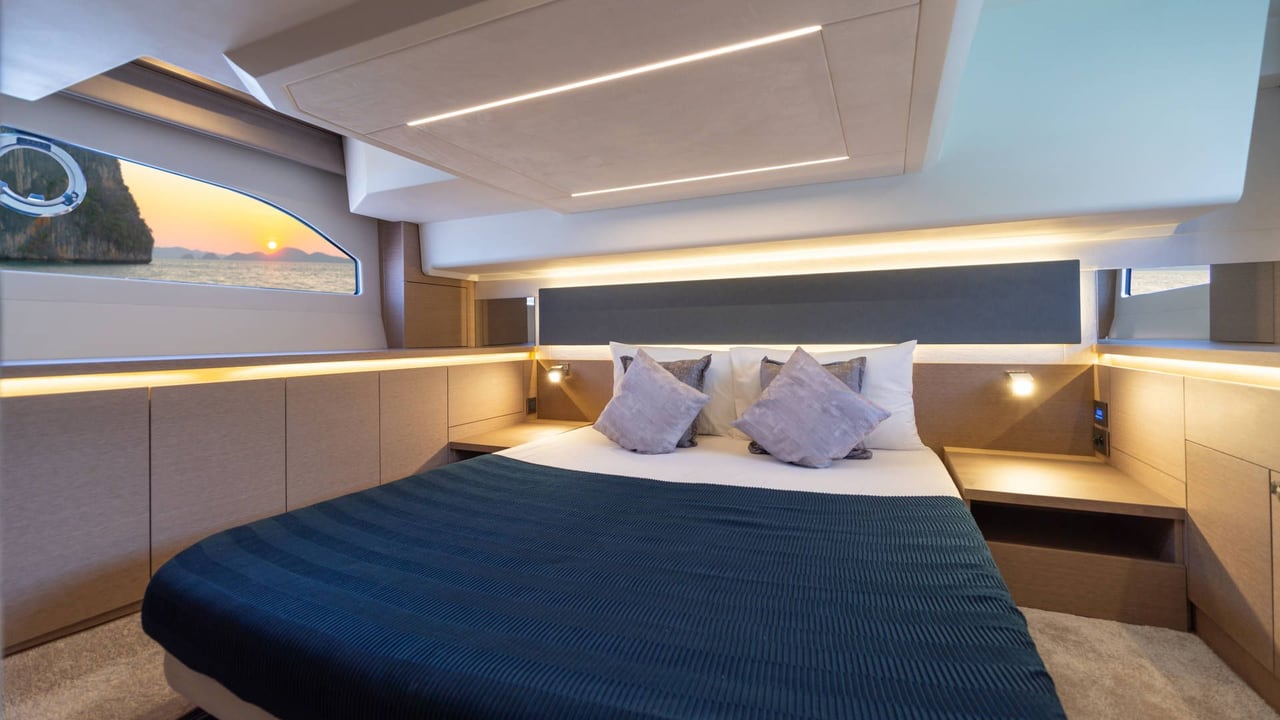
La scheda sintetizza in quattro il dato della sistemazione abitabile. Il numero non sostituisce i disegni della versione né la certificazione B-10 e C-12. Letti e trasformazioni devono risultare dalla documentazione consegnata.
La prova notte comprende porte, stivaggi, illuminazione e passaggi. Bagagli e biancheria devono trovare posto senza occupare le vie di movimento. La privacy si valuta con gli ambienti realmente utilizzati.

Stivaggi e chiusure
Un flybridge di questa taglia deve gestire corredo, cucina e oggetti personali senza lasciare elementi liberi. La sequenza di verifiche registra ogni vano, la sua apertura e l’eventuale interferenza con porte o sedute. Le fotografie servono a confrontare lo stato di consegna.
Cerniere, ritenute e bordi vengono osservati con la barca ferma e poi durante l’uscita, quando consentito. Un vano è utile soltanto se rimane accessibile. Il contenuto previsto non deve impedire ispezioni tecniche.
Il bilancio fra leggero e pieno carico
Il Prestige 420 dichiara 10.400 chilogrammi leggero e 14.837 a pieno carico. La differenza è 4.437 chilogrammi. Liquidi, persone, dotazioni e opzioni devono quindi essere registrati con attenzione durante ogni confronto.
La sequenza di verifiche associa il peso dichiarato alla configurazione. Un apparecchio aggiunto aggiorna distinta e bilancio pertinente. Posizione e accessibilità contano quanto la massa complessiva, perché incidono sull’assetto operativo.
Millecentosettanta litri di carburante
La capacità carburante è 1.170 litri. Il dato non equivale all’autonomia: occorrono consumo verificato, condizioni e riserva. Indicatori, bocchettoni, sfiati e accessi vengono identificati prima della prova.
Quando possibile, le indicazioni degli strumenti si confrontano con quantità note. Perdite e odori anomali richiedono un rilievo immediato. Schemi e procedure devono essere disponibili nel fascicolo.

Quattrocentoventicinque litri d’acqua
Il serbatoio dell’acqua contiene 425 litri. La durata dipende dalle persone e dall’uso, non da una stima generica. Pompa, indicatori, rubinetti e scarichi vengono provati in sequenza e simultaneamente.
La sequenza di verifiche osserva rumori, portata e stabilità del funzionamento senza inventare valori. Gli accessi di ispezione devono restare raggiungibili. Eventuali apparecchi aggiunti vengono verificati separatamente.
Boiler da quaranta litri
La capacità dichiarata del boiler è 40 litri e va tenuta distinta dall’acqua nel serbatoio. Comandi, protezioni e modalità di riscaldamento devono corrispondere alla versione. Il manuale resta il riferimento per uso e manutenzione.
La prova controlla erogazione, stabilità e assenza di perdite osservabili. Temperature e tempi non vengono attribuiti senza specifica. Valvole e accessi devono essere riconoscibili da chi gestirà la barca.
Centoventi litri di acque nere
Il serbatoio delle acque nere è da 120 litri. La capacità entra nella pianificazione della permanenza insieme alle persone e alle procedure consentite. Indicatore, sfiato e accessi meritano un controllo dedicato.
Valvole e comandi vengono spiegati e identificati sullo schema. L’operatore ripete la procedura prevista durante la consegna. Ogni dubbio viene chiuso prima della partenza.

Venticinque nodi senza scorciatoie
La crociera dichiarata è 25 nodi. Per trasformarla in riferimento operativo servono motorizzazione, regime, caricazione e condizioni. Senza una curva completa non si ricavano consumi o autonomia attendibili.
Il verbale registra livelli, persone, meteo e stato della barca. Comfort e parametri disponibili vengono osservati per punti progressivi. La crociera dell’esemplare nasce da misure ripetibili.
Trentuno nodi e metà carico
La massima dichiarata è 31 nodi e la nota la riferisce a metà carico, oltre che alle condizioni applicabili. Il collaudo concorda quindi carico e tolleranze prima dell’uscita. Il valore non viene presentato come una misura redazionale.
Uno scostamento apre una verifica di carena, eliche, parametri e condizioni. La prova viene ripetuta se necessario. Ogni conclusione rimane legata all’esemplare e alla sua configurazione.
Quote per porto e trasferimenti
Lunghezza di 13,06 metri, baglio di 4,10, pescaggio di 1,10 e tirante d’aria di 4,90 devono essere confrontati con posto barca, fondali e passaggi. Nessuna misura opera da sola.
I documenti dell’unità e le verifiche locali prevalgono su una lettura generica. Dotazioni e carico possono influire. La sequenza di verifiche conserva le quote insieme alle note operative dei porti utilizzati.

Certificazione e persone a bordo
La scheda riporta B-10 e C-12. Sono indicazioni distinte dalla sistemazione abitabile per quattro e devono essere lette nei certificati dell’esemplare. La sequenza di verifiche evita di confondere posti letto e persone ammesse.
Marcature, manuale e certificati vengono confrontati con la configurazione. Eventuali modifiche devono aggiornare i documenti pertinenti. La consegna include una copia ordinata del fascicolo.
Tabella di configurazione del Prestige 420
| Area | Dato dichiarato | Verifica |
|---|---|---|
| Dimensioni | 13,06 × 4,10 m | Posto barca e percorsi |
| Pescaggio | 1,10 m | Documenti e carico |
| Tirante d’aria | 4,90 m | Passaggi superiori |
| Masse | 10.400 / 14.837 kg | Leggero / pieno carico |
| Motori | 2 × Cummins 6.7 380 o 425 hp | Numeri di serie e manuali |
| Trasmissione | V-Drive | Accessi e manutenzione |
| Velocità | 25 / 31 nodi | Crociera / massima dichiarate |
| Carburante | 1.170 l | Indicatori, sfiati e accessi |
| Acqua | 425 l | Pompe e utenze |
| Boiler | 40 l | Comandi e protezioni |
| Acque nere | 120 l | Indicatore e schema |
| Certificazione | B-10 / C-12 | Da non confondere con i posti letto |
Sequenza della prova di consegna
La prova comincia a barca ferma con documenti, motori e impianti. Prosegue con manovra, passaggio fra timonerie e punti progressivi di regime. Ogni rilievo contiene ora, carico e condizione.
Al rientro si ripetono controlli visivi e si confrontano i dati. Le osservazioni vengono classificate e chiuse con una verifica. La firma arriva soltanto quando configurazione e fascicolo coincidono.
Verdetto operativo
Il Prestige 420 richiede una configurazione disciplinata perché combina flybridge, doppia timoneria, due potenze Cummins e masse molto diverse fra leggero e pieno carico. Serbatoi e certificazione devono restare separati dalle stime di autonomia o abitabilità.
La sequenza di verifiche efficace non aggiunge promesse: identifica ciò che è installato, prova ciò che è documentato e registra le condizioni. È il modo più affidabile per trasformare il progetto in una barca comprensibile, manutenibile e coerente con il programma dell’armatore.