
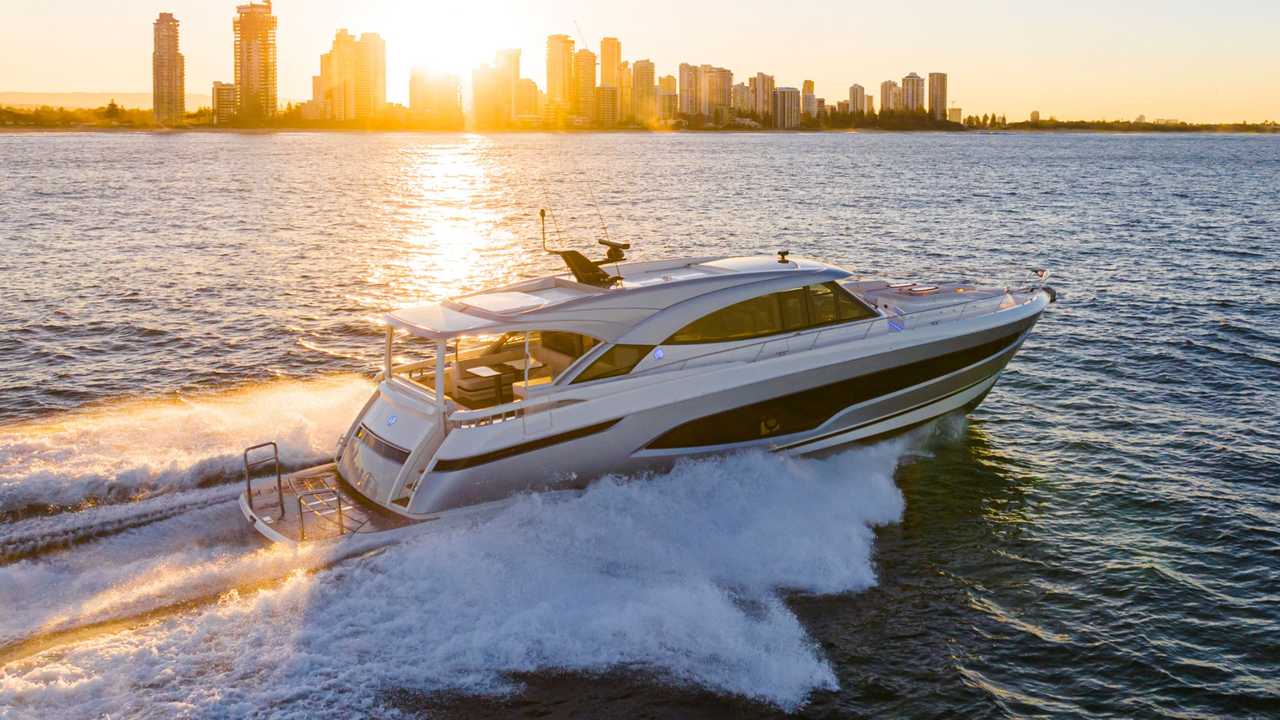
Il Riviera 6800 Sport Yacht Platinum Edition misura 22,18 metri fuori tutto, con scafo di 19,88 metri, baglio di 5,56 metri e pescaggio di 1,65 metri compresi i propulsori. La configurazione dichiarata abbina due Volvo Penta D13 IPS1350 da 1.000 hp ciascuno a 4.500 litri di carburante, 800 litri d’acqua dolce e 500 litri per le acque nere.
Questa guida riguarda il capitolato, gli impianti e l’accettazione dell’esemplare, non una prova in mare. Il peso a secco dichiarato è 36.944 kg e l’altezza complessiva 5,90 metri. Il progetto può essere organizzato con tre o quattro cabine; lounge inferiore, locale di servizio o cabina equipaggio sono soluzioni alternative da identificare nei disegni contrattuali. Velocità, consumi e autonomia non vengono stimati: devono essere misurati sulla barca consegnata.
Scheda tecnica per ordine e consegna
| Voce | Dato dichiarato | Verifica operativa |
|---|---|---|
| Lunghezza fuori tutto | 22,18 m | Posto barca, cime e spazi di manovra |
| Lunghezza scafo / baglio | 19,88 / 5,56 m | Alaggio, travel lift e invaso |
| Pescaggio | 1,65 m, propulsori compresi | Fondali, pod e procedure di sollevamento |
| Peso a secco | 36.944 kg | Condizione reale e distinta pesi |
| Propulsione | 2 × Volvo Penta D13 IPS1350, 1.000 hp | Seriali, software, eliche e comandi |
| Carburante / acqua | 4.500 / 800 l | Calibrazione, riserva e quantità utilizzabile |
| Acque nere | 500 l | Livelli, sfiati e procedura di scarico |
| Altezza complessiva | 5,90 m | Ponti, gru, rimessaggio e trasporto |
Congelare layout e dotazioni prima della costruzione
Il primo controllo consiste nel collegare contratto, specifica, disegni e distinta degli optional a una stessa revisione. Tre o quattro cabine comportano porte, bagni, stivaggi, ventilazione e percorsi differenti. Anche l’area inferiore opzionale cambia funzione secondo la scelta fra lounge, locale di servizio o cabina equipaggio. Ogni variante deve quindi apparire nello schema generale e negli elaborati impiantistici.
Una matrice di consegna elenca apparecchi, marca, modello, seriale, alimentazione e posizione. Eventuali sostituzioni vengono approvate per iscritto verificando massa, assorbimento, dissipazione termica e accesso manutentivo. La corrispondenza documentale evita che una modifica apparentemente minima produca incompatibilità con quadri, ventilazione o ricambi.
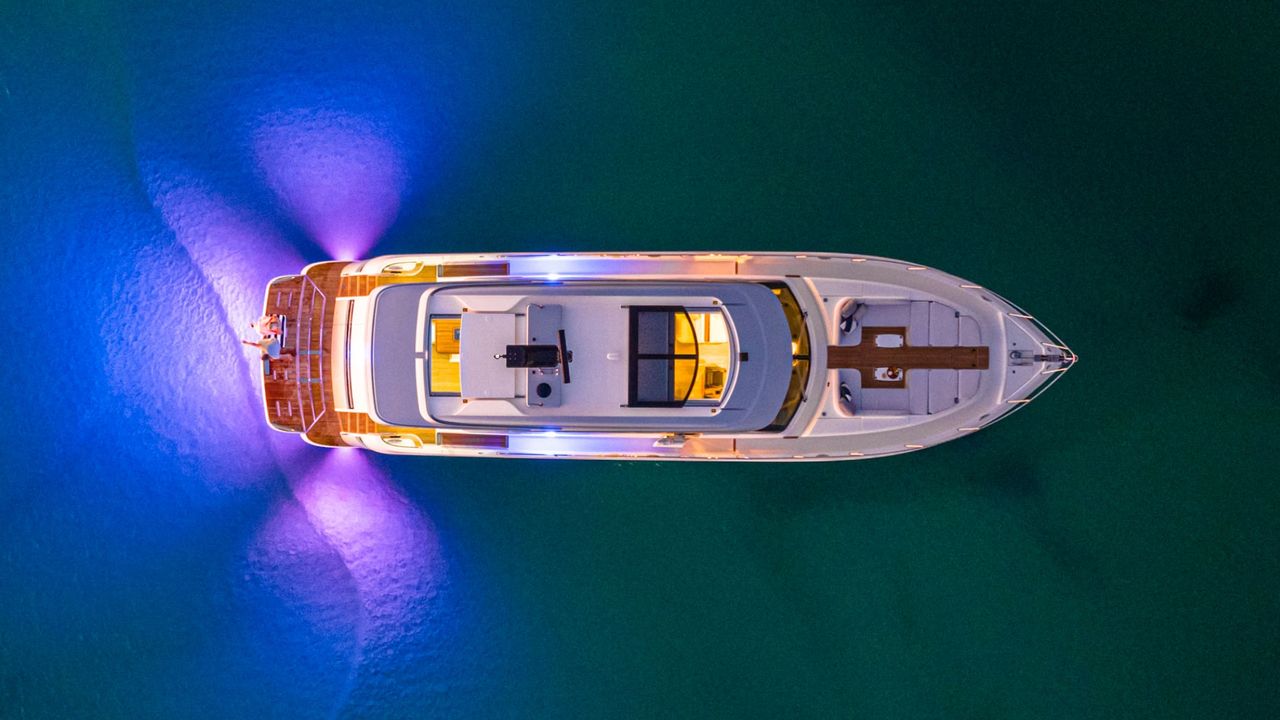
Peso a secco e condizione reale di prova
I 36.944 kg sono un peso a secco dichiarato, non la massa operativa con liquidi, persone, tender, dotazioni e provviste. Per interpretare assetto e prestazioni occorre registrare livelli dei serbatoi, numero di persone, attrezzature e carichi mobili presenti durante ogni verifica. La distinta pesi dell’esemplare deve indicare anche gli optional installati dopo l’ordine.
Prima della prova si osservano immersione, sbandamento e distribuzione degli stivaggi. Correzioni ottenute spostando materiali non devono nascondere un’installazione sbilanciata. La condizione documentata diventa la baseline per confrontare gli interventi futuri e per evitare che un aumento progressivo dei carichi riduca il margine operativo.
IPS1350: controlli su motori, pod ed eliche
I due Volvo Penta D13 IPS1350 da 1.000 hp formano un sistema integrato con trasmissioni, pod, eliche, sterzo e controllo elettronico. La presa in consegna parte da seriali, rapporti, release software, ore motore e codici delle eliche. Nel locale macchine si verificano fissaggi, tubazioni, filtri, tenute, cablaggi e libertà di ispezione.
A regimi stabilizzati si confrontano lato destro e sinistro per giri, carico, temperature, pressioni e consumi indicati dagli strumenti. Scostamenti persistenti richiedono diagnosi; non vanno liquidati come normale tolleranza. Dopo la navigazione si ripete il controllo visivo di sentine, raccordi, livelli e superfici calde.
Joystick, governo e manovra a bassa velocità
La manovra viene provata in un’area sicura con vento e corrente annotati. Avanzamento, retromarcia, rotazione e traslazione devono risultare progressive, senza ritardi anomali fra comando e risposta. Si controllano sterzo, joystick, strumenti e allarmi sia dalla posizione principale sia da eventuali stazioni previste sul singolo esemplare.
Il briefing operativo comprende anche il comportamento con un comando indisponibile o un ramo elettronico degradato. Il baglio di 5,56 metri e la massa della barca richiedono cime predisposte, comunicazioni chiare e visuale organizzata. L’assistenza elettronica non sostituisce la procedura per perdita di governo o arresto di un lato.
Carburante: calibrare i 4.500 litri
La capacità dichiarata di 4.500 litri deve essere tradotta in quantità utilizzabile, riserva e alimentazione dei servizi. Il piano dei serbatoi identifica bocchettoni, sfiati, ritorni, valvole, filtri e punti di drenaggio. La calibrazione dei livelli si esegue con quantità misurate e confronti ripetuti, perché la sola indicazione percentuale non basta a pianificare una rotta.
La procedura di rifornimento stabilisce sequenza, sorveglianza degli sfiati, comunicazione fra operatori e risposta a un’anomalia. Autonomia e regime economico vengono ricavati dai dati dell’esemplare in condizioni note. Senza velocità e consumi ufficialmente registrati sulla barca consegnata, una stima numerica sarebbe fuorviante.
Acqua dolce e acque nere
Gli 800 litri d’acqua dolce vanno rapportati a persone, giorni in rada e apparecchi installati. Pompe, autoclave, boiler, filtri, indicatori e punti di intercettazione vengono provati con più utenze aperte. Pressione, temperatura e rumorosità devono restare coerenti; raccordi e scarichi si controllano nuovamente dopo i cicli completi.
Il serbatoio delle acque nere da 500 litri richiede livelli attendibili, sfiati liberi, valvole identificate e una procedura di svuotamento consegnata all’equipaggio. Odori, riflussi o letture instabili sono rilievi impiantistici. Le configurazioni eventuali per trattamento o scarico devono coincidere con il capitolato e con le regole applicabili all’area di navigazione.
Bilancio elettrico e prove sotto carico
Lo schema unifilare deve rappresentare batterie, ricarica, banchina, generatori eventualmente installati, inverter, quadri e utenze essenziali. Il bilancio distingue carichi continui e picchi di avviamento. Climatizzazione, cucina, boiler, pompe e movimentazioni vengono attivati in combinazioni realistiche, osservando tensioni, correnti, commutazioni e temperature dei collegamenti.
La presenza di più sorgenti non equivale automaticamente a ridondanza. Bisogna individuare quadri, comandi, raffreddamenti e distribuzioni condivise. Una prova controllata di perdita della sorgente mostra quali funzioni restano disponibili e con quale procedura. Sezionatori, fusibili e arresti devono essere etichettati e accessibili anche con gli arredi in uso.
Plancia, rete dati e gestione degli allarmi
Propulsione, navigazione, livelli ed energia convergono sui display, ma la duplicazione grafica non garantisce sensori o alimentazioni indipendenti. La mappa della rete identifica antenne, strumenti, switch, gateway e collegamenti condivisi. Configurazioni, licenze, password e copie delle impostazioni devono entrare nel fascicolo di consegna.
Si prova in sicurezza la perdita di uno schermo, di una sorgente di posizione e di un ramo elettrico. Gli allarmi devono essere leggibili, associati alla zona corretta e accompagnati da una procedura. Luminosità, riflessi e priorità acustiche si controllano di giorno e al buio, prima che l’equipaggio sviluppi abitudini attorno a impostazioni provvisorie.
Climatizzazione, vetrate e drenaggi
Le superfici vetrate e gli ambienti aperti aumentano il carico solare e rendono importante la distribuzione dell’aria. Il collaudo si svolge con porte nella configurazione prevista, persone e apparecchi attivi. Temperatura, umidità, assorbimento e rumorosità vengono registrati per zona, verificando riprese d’aria e accessi ai filtri.
Porte, guide, guarnizioni e drenaggi ricevono più cicli di apertura e una prova d’acqua. Condensa, ristagni o differenze marcate fra locali non sono difetti da rimandare alla stagione successiva. Cielini e arredi devono poter essere rimossi nei punti previsti senza danneggiare finiture o impianti.
Cucina, salone e carichi alberghieri
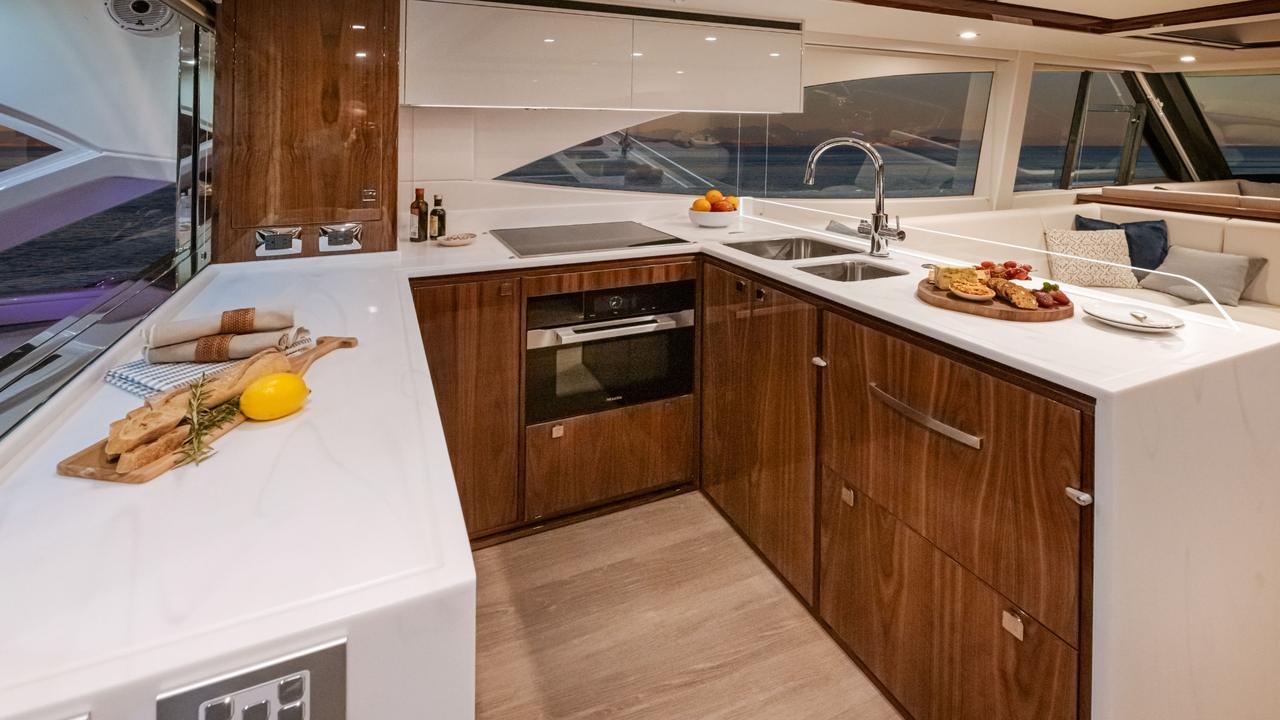
Nel salone si verificano insieme refrigerazione, cottura, aspirazione, illuminazione e climatizzazione. Cassetti, porte e apparecchi richiedono fermi adatti alla navigazione; calore e vapori non devono interessare rivestimenti, sensori o cablaggi. Rubinetti e scarichi vengono provati con la barca nelle condizioni concordate.
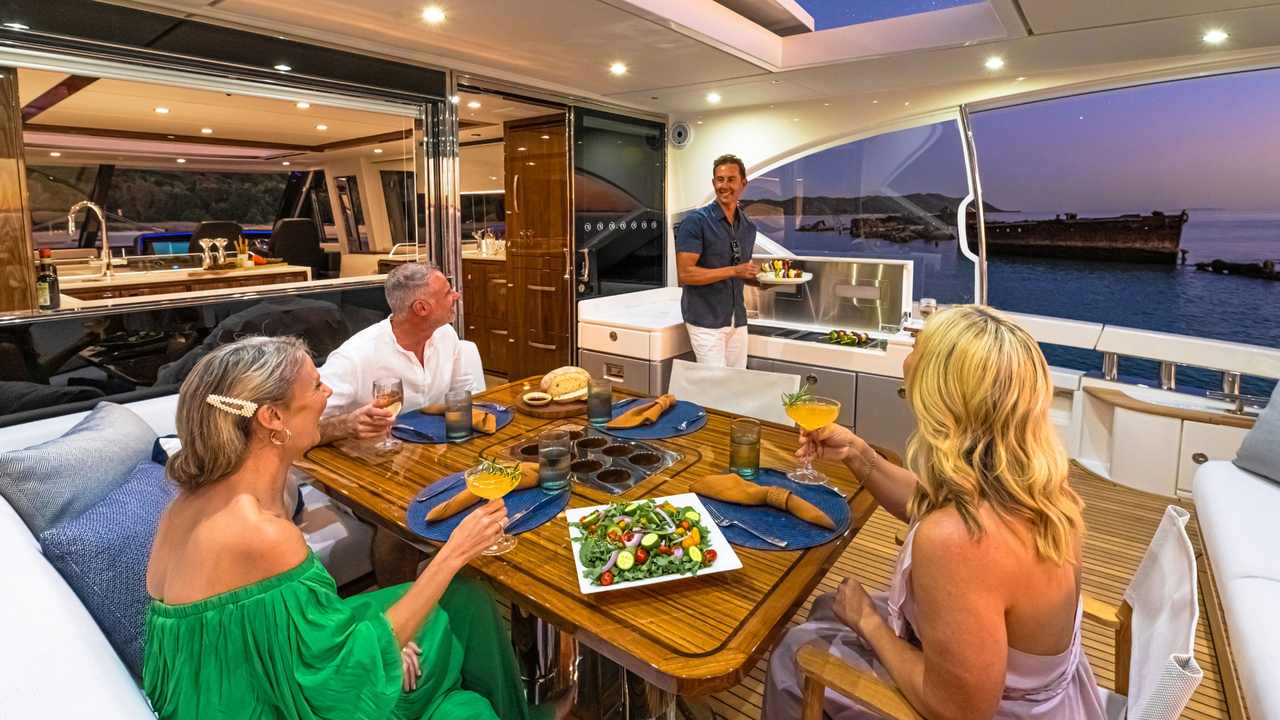
Il passaggio fra cucina, tavolo e pozzetto deve restare libero con sedute occupate e porte aperte. La configurazione da rada può essere diversa da quella da navigazione: tavoli, cuscini e oggetti mobili hanno posizioni e ritenute definite. La sequenza di verifiche fotografa entrambe le configurazioni per renderle ripetibili.

Tre o quattro cabine: verificare l’esemplare
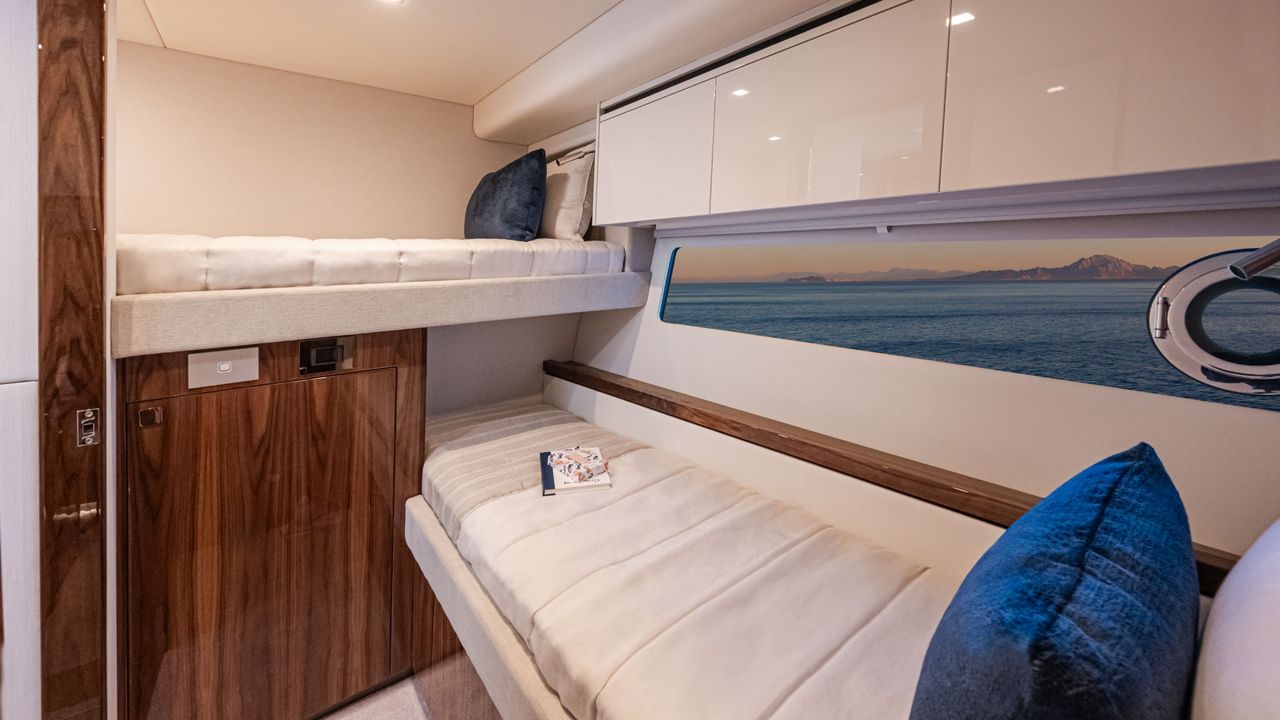
Il numero di cabine non va dedotto dalle fotografie generiche. Sul Riviera 6800 Sport Yacht sono previste configurazioni a tre o quattro cabine, e ciascuna deve essere letta nei disegni dell’unità. Porte, armadi, bagni, vie di fuga e pannelli tecnici vengono confrontati con il layout approvato.
Ogni cabina si prova con illuminazione, prese, oscuramento e clima attivi. Letti e arredi non devono impedire l’apertura dei pannelli o l’ispezione di raccordi e cablaggi. Con biancheria e bagagli presenti si ricontrollano passaggi, ventilazione e accesso alle dotazioni di sicurezza.
Cabine ospiti, bagni e privacy acustica
La verifica dei locali ospiti comprende porte, serrature, ventilazione, docce, scarichi e acqua calda. Le superfici vengono ispezionate dopo l’uso per individuare trafilamenti o condensa. Oblò e finestrature ricevono un controllo dopo navigazione e lavaggio, quando movimenti e pressione dell’acqua possono rendere evidente un difetto.
Rumore e vibrazioni si registrano con motori, climatizzazione, pompe e servizi in combinazioni definite. Il valore della baseline non consiste in una promessa assoluta di silenzio, ma nella possibilità di riconoscere variazioni future. Posizione, regime e apparecchi attivi devono accompagnare ogni lettura.
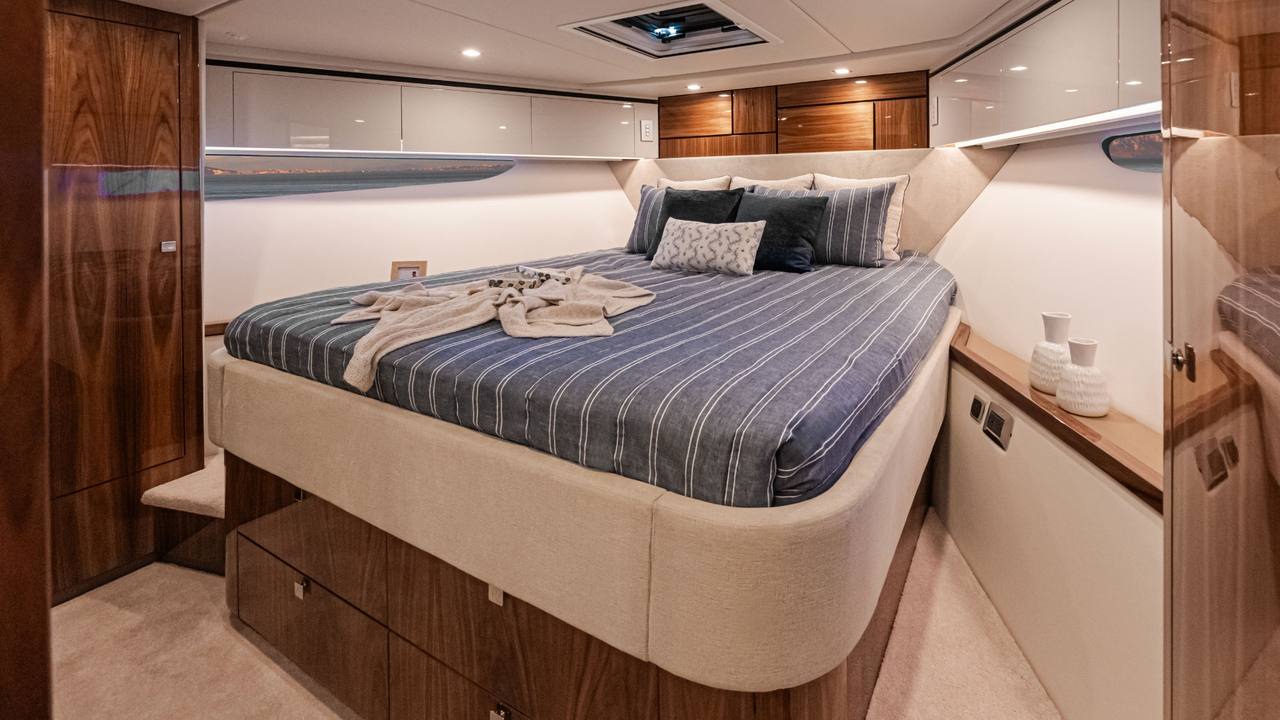
Lounge inferiore, utility o cabina equipaggio
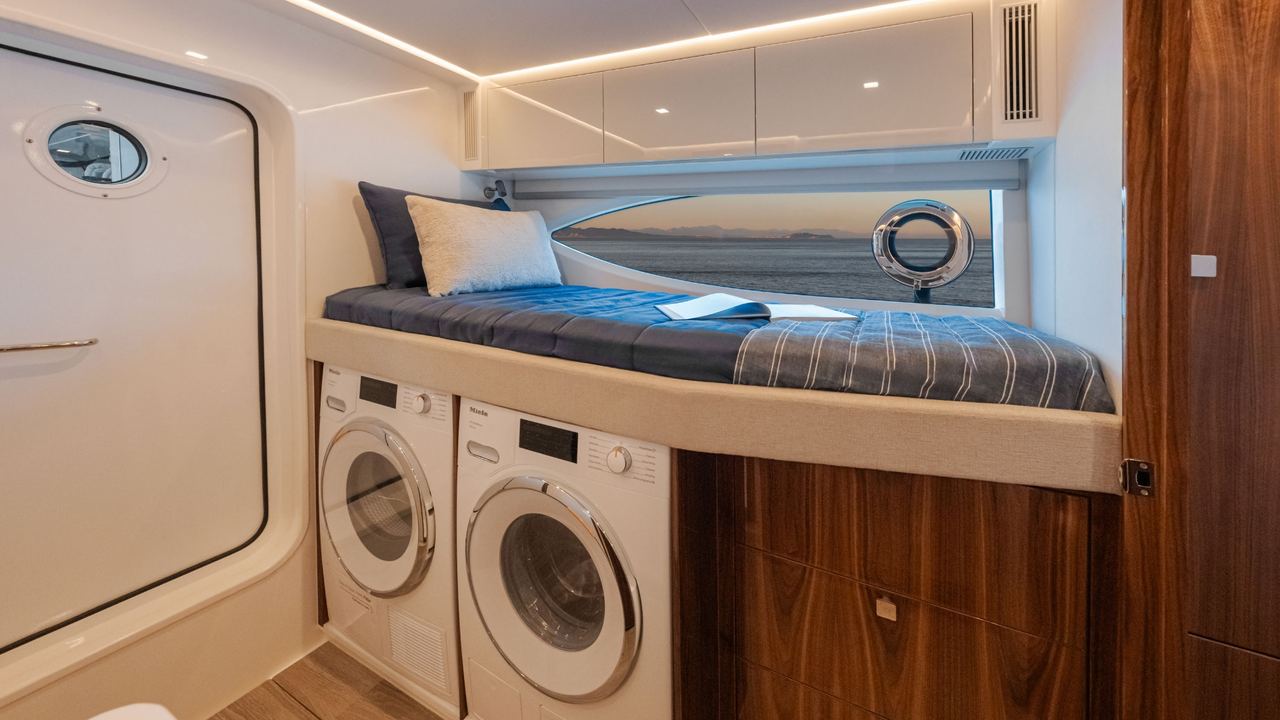
L’area inferiore opzionale può assumere funzioni diverse. Una lounge richiede climatizzazione, sedute e percorsi; un locale di servizio comporta apparecchi, acqua, scarichi e carichi elettrici; una cabina equipaggio modifica privacy, ventilazione e vie di fuga. La funzione effettiva deve essere riportata in tutti gli elaborati, non soltanto nel layout commerciale.
Qualunque scelta deve conservare accesso a valvole, cablaggi e strutture ispezionabili. Gli apparecchi installati vengono provati sotto carico e con pannelli chiusi. Se il locale ospita persone, illuminazione di emergenza, ricambio d’aria e uscita devono essere verificati nella configurazione arredata.
Garage tender e piattaforma articolata
Il tender va scelto in base a dimensioni, massa e punti di appoggio compatibili con il garage. Il collaudo comprende varo, recupero, drenaggio e fissaggio nella posizione da navigazione. Porte, culle, verricelli e sensori vengono provati con la sequenza descritta nel manuale, mantenendo le persone fuori dalle zone di schiacciamento.
La piattaforma articolata richiede controlli di cerniere, attuatori, fermi, sensori e arresto di emergenza. Il movimento si esegue con area libera e comunicazione fra gli operatori. A fine ciclo si verificano allineamento, infiltrazioni e interferenze con cime o accessi al garage.
Solar skin e pinne elettriche: opzioni da documentare
Il sistema solare integrato e le pinne elettriche Humphree sono dotazioni opzionali, quindi non vanno attribuiti automaticamente a ogni unità. Se ordinato, il solare entra nello schema con moduli, regolatori, protezioni, cablaggi e dati di produzione. La prova confronta irraggiamento, potenza e stato di carica senza confondere picco istantaneo e resa giornaliera.
Se presenti, le pinne richiedono verifica di attuatori, sensori, alimentazione, comandi e modalità di arresto. Si annotano le condizioni in cui il sistema può operare e la procedura per un guasto. L’efficacia non viene trasformata in una garanzia universale di comfort: dipende da mare, velocità, assetto e configurazione.
Sentine, incendio e accessi di emergenza
Ogni volume di sentina viene identificato e collegato a pompe, sensori e allarmi. Le prove comprendono funzionamento manuale e automatico, indicazione in plancia e accessibilità per pulizia. Arresti remoti, intercettazioni del carburante, rivelazione ed estinzione devono poter essere raggiunti senza rimuovere bagagli o attrezzature.
Il briefing comprende incendio, ingresso d’acqua, perdita di governo e uomo a mare. L’equipaggio deve associare ogni allarme alla zona e all’azione prevista. Giubbotti, zattera ed estintori restano accessibili nella configurazione reale, non soltanto durante l’ispezione a barca vuota.
Programma della prova in mare
La prova registra carico, livelli, persone, mare, vento e temperatura. Dopo il riscaldamento si stabilizzano più regimi e si annotano giri, velocità, carico, consumi indicati, temperature, pressioni, assetto, rumore e vibrazioni. Rotte reciproche, quando praticabili, riducono l’effetto di vento e corrente.
Si verificano accelerazione, arresto, virata, visibilità e risposta sull’onda, senza ricavare conclusioni da una singola lettura. Poiché non sono assunti valori di velocità o autonomia, il verbale dell’esemplare diventa il riferimento. Qualunque anomalia produce un rilievo e una prova ripetuta dopo l’intervento.
sequenza di verifiche finale e fascicolo di consegna
Prima dell’accettazione si confrontano ordine, seriali, schemi, software e installazioni. Ogni rilievo riceve responsabile, scadenza e criterio di chiusura. Le prove di tenuta, sicurezza, propulsione e allarme vengono ripetute quando una correzione può averne modificato il risultato.
Il fascicolo conserva disegni aggiornati, manuali, garanzie, codici ricambio, configurazioni elettroniche, fotografie e baseline. Il proprietario deve saper isolare carburante, acqua ed energia, riconoscere un allarme e mettere lo yacht in sicurezza. Una consegna riuscita trasforma la complessità del 6800 Sport Yacht in procedure chiare e verificabili.
Valutazione operativa del Riviera 6800 Sport Yacht
Il 6800 Sport Yacht combina 22,18 metri fuori tutto, due IPS1350, 4.500 litri di carburante e layout alternativi in una piattaforma pensata per lunghe permanenze. Il punto decisivo non è accumulare dotazioni, ma far coincidere configurazione, bilancio dei carichi, accessi e documentazione.
Una baseline costruita durante la consegna rende misurabili propulsione, energia, comfort e affidabilità. È il criterio con cui scegliere e gestire l’esemplare: dati della barca reale, prove ripetibili e responsabilità definite, senza sostituire la verifica tecnica con impressioni o valori non documentati.