
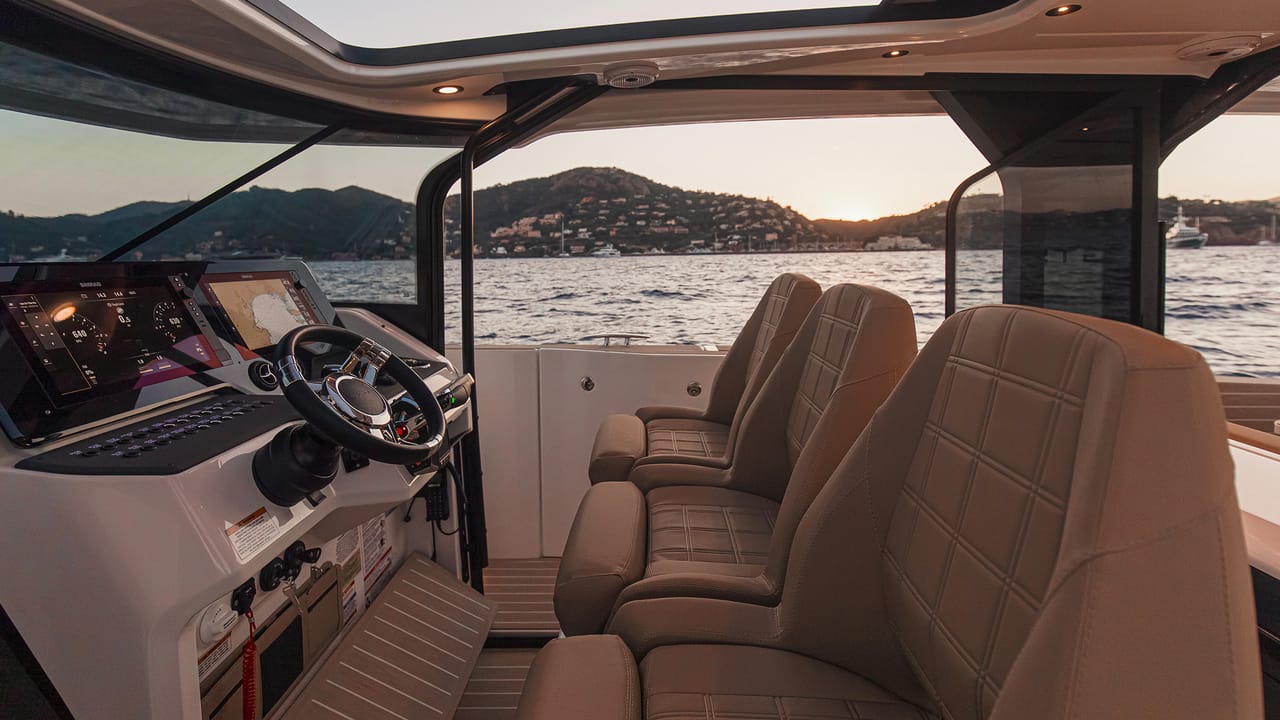
Configurare un Saxdor 400 GTS significa coordinare propulsione, servizi, coperta trasformabile e procedure d’uso, non limitarsi a selezionare una coppia di fuoribordo. La piattaforma misura 12,40 metri per 3,55, dispone di 900 litri di carburante e può ricevere motori Mercury V8 o V10 fino a 850 hp complessivi. Acqua dolce, acque grigie, acque nere e combustibile dedicato al riscaldatore hanno capacità dichiarate separate. Il costruttore associa alla carena a doppio step una velocità massima nell’ordine dei 50 nodi, ma non si tratta di una prova di NauticMag. Questa guida traduce i dati disponibili in una sequenza pratica di scelte e controlli.
Definire il programma prima dell’allestimento
La prima decisione riguarda l’uso prevalente: uscite giornaliere, trasferimenti veloci, giornate in rada o permanenze più lunghe richiedono priorità diverse. Numero abituale di persone, distanza dall’assistenza, disponibilità di energia a banchina e frequenza del rimessaggio influenzano motori, elettronica e servizi. Il limite dichiarato di dodici persone in categoria CE B non obbliga a organizzare ogni uscita al massimo della capacità. È più utile stabilire dove siederà l’equipaggio, come verranno distribuiti bagagli e attrezzature e quali funzioni dovranno restare accessibili. Una matrice d’uso evita di acquistare componenti costosi che aggiungono peso, assorbimento e manutenzione senza un beneficio concreto.
Scheda operativa di configurazione
| Sistema | Dato dichiarato | Controllo da inserire in distinta |
|---|---|---|
| Propulsione | Mercury V8 o V10, massimo 850 hp | Modelli, eliche, comandi e numeri di serie |
| Carburante | 900 l | Bocchettoni, sfiati, sensori e accessi |
| Acqua dolce | 170 l | Pompa, filtrazione, riempimento e scarico |
| Acque grigie | 96 l | Raccolta, livello e procedura di svuotamento |
| Acque nere | 53 l | Valvole, sfiato e aspirazione da banchina |
| Diesel riscaldatore | 16 l | Etichetta, linea dedicata e separazione dalla benzina |
| Carena | V 21° con doppio step | Integrità, pulizia e installazione dei sensori |
| Pescaggio | 0,65 m senza motori | Assetto reale, trim e ingombro dei piedi |
Scegliere la coppia di fuoribordo
V8 e V10 non sono etichette intercambiabili. La selezione deve specificare potenza unitaria, peso, rapporto di trasmissione, eliche, alternatori, strumenti e sistema di sterzo. Il limite di 850 hp rappresenta il massimo ammesso, non un suggerimento a installarlo sempre. Chi percorre molte miglia può privilegiare disponibilità dell’assistenza e regime di crociera; chi usa la barca vicino al porto può dare maggiore peso a semplicità e costi di esercizio. Il preventivo deve riportare componenti e manodopera del rigging. Alla consegna si confrontano targhe e numeri di serie con la documentazione, quindi si salvano le configurazioni elettroniche e si annotano gli intervalli di manutenzione.

Rigging, sterzo e movimento dei cablaggi
Due motori richiedono un percorso ordinato per alimentazione, dati, sterzo e comandi. Con i fuoribordo centrati e poi portati da una battuta all’altra, fasci e tubazioni devono muoversi senza pieghe strette, sfregamenti o trazioni sui raccordi. Le guaine devono essere sostenute ma non bloccate. Bulloneria e sigillature sullo specchio si controllano dall’esterno e dalle aree interne accessibili. Il circuito carburante deve mantenere separazione e identificazione delle linee. Eventuali funzioni di ormeggio assistito o automazione si provano solo secondo i manuali e in area libera. La tecnologia non elimina la necessità di conoscere arresto, avviamento e governo in modalità degradata.
Carburante: capacità e autonomia verificabile
I 900 litri dichiarati non producono da soli un’autonomia attendibile. Per calcolarla servono consumi misurati con la motorizzazione effettiva, livello di carico, mare e regime scelto, mantenendo una riserva coerente con la rotta. Il serbatoio aggiunge una massa variabile importante, quindi si registrano assetto e risposta anche con livelli differenti. La sequenza di verifiche comprende bocchettone, tappo, sfiato, manicotti, serraggi, filtri e indicatore. Durante il rifornimento si controllano ventilazione, messa in sicurezza delle utenze e assenza di traboccamenti. Odori persistenti, letture instabili o tracce nei vani richiedono diagnosi, non una semplice pulizia.

Serbatoio diesel del riscaldatore
Il 400 GTS dichiara un serbatoio da 16 litri per il riscaldatore, separato dalla benzina destinata ai fuoribordo. È un dettaglio che impone etichette inequivocabili: due combustibili diversi a bordo aumentano il rischio di errore durante il riempimento. Bocchettone, tappo, sfiato e linea devono essere identificati nella consegna, così come il punto di intercettazione. Il riscaldatore, se presente nella configurazione acquistata, va avviato fino a regime e spento completando il ciclo previsto, verificando scarico, aspirazione e assenza di odori anomali negli ambienti. Il carburante residuo va gestito secondo le istruzioni durante lunghi periodi di inattività.
Acqua dolce: 170 litri da gestire
La capacità di 170 litri deve essere collegata alle utenze realmente installate. Prima di riempire si ispezionano bocchettone e sfiato; poi si porta l’impianto in pressione, si aprono i punti di erogazione uno alla volta e si osserva l’arresto della pompa. Una pompa che riparte senza richiesta può indicare una perdita o un accumulo di pressione insufficiente. Filtro, autoclave e serbatoio devono essere raggiungibili per pulizia e invernaggio. L’indicatore di livello va confrontato con quantità note almeno durante la prima stagione. I prodotti per sanificazione e conservazione si scelgono in base ai materiali e alle indicazioni dei componenti installati.

Acque grigie e drenaggi di servizio
Il serbatoio grigie dichiarato contiene 96 litri. La configurazione reale deve chiarire quali scarichi vi confluiscano, come sia controllato il livello e con quale pompa venga effettuato lo svuotamento. Durante il collaudo si immette acqua pulita in ciascuna utenza, si osservano tempi di deflusso e si controllano i raccordi accessibili. Tubazioni prive di pendenza, sifoni non previsti o filtri ostruiti generano ristagni e odori. Anche la coperta aperta necessita di drenaggi indipendenti e sempre liberi. Non bisogna confondere l’acqua piovana del pozzetto con il circuito delle utenze: i percorsi devono risultare chiari dagli schemi e dall’ispezione.
Acque nere e procedura di svuotamento
La capacità dichiarata per le acque nere è 53 litri. Il proprietario deve conoscere posizione del serbatoio, indicatore, sfiato, valvole e raccordo di aspirazione, rispettando le regole dell’area di navigazione. Un’etichettatura leggibile riduce manovre errate. Il controllo si esegue con liquido pulito e quantità contenute, verificando tenuta dei collegamenti e funzionamento della pompa eventualmente prevista. Lo sfiato non deve essere ostruito e i tubi non devono presentare schiacciamenti. Dopo la consegna conviene conservare una procedura semplice a bordo con guanti, prodotti compatibili e intervalli di risciacquo, evitando sostanze aggressive non ammesse dai componenti.

Plancia, doppio schermo e inventario elettronico
Le immagini ufficiali mostrano una plancia con due display, ma modello, dimensione e sensori devono essere verificati sull’esemplare. La distinta dovrebbe elencare schermi, trasduttore, antenna di posizione, comunicazioni, dati motore e ogni interfaccia. Alla consegna si controllano avvio, luminosità, aggiornamenti autorizzati, allarmi e coerenza delle unità di misura. Una prova separata per ogni sensore evita che un dato ricevuto dalla rete venga scambiato per una misura diretta. Si esportano configurazioni e waypoint solo con procedure compatibili. L’armatore deve sapere come ridurre la luminosità, silenziare correttamente un allarme e mantenere un mezzo di navigazione indipendente.
Impianto elettrico: verifica senza supposizioni
Capacità delle batterie, caricabatterie, inverter e utenze possono variare con l’allestimento; non vanno attribuite automaticamente a tutte le unità. Il collaudo parte da schemi, etichette, sezionatori e protezioni. Si misura la tensione a riposo e sotto carico con strumenti adatti, poi si attivano le utenze una alla volta. Cavi e morsetti devono essere fissati, protetti e accessibili. Le aggiunte successive richiedono fusibili e sezioni coerenti, non derivazioni improvvisate. Se è presente un collegamento a banchina, la procedura comprende cavo, presa, protezione e indicazione della polarità secondo l’impianto installato. Ogni valore misurato va registrato per confronti futuri.

Terrazze: sequenza di apertura e sicurezza
Le fiancate abbattibili vanno trattate come un sistema operativo. Prima dell’apertura si verificano spazio laterale, cime, parabordi, persone e oggetti sui bordi. Il comando deve funzionare in modo regolare, mentre arresti e blocchi devono assumere la posizione prevista. A fine corsa si controllano allineamento e stabilità della superficie; prima di ripartire si richiudono e si conferma il fermo senza affidarsi soltanto alla memoria dell’operatore. La sequenza di verifiche comprende cerniere, attuatori, cablaggi, sensori, guarnizioni, drenaggi e segni di sfregamento. La pulizia con acqua dolce e l’ispezione periodica riducono l’accumulo di sale nelle parti mobili.
Sedute modulari, tavoli e stivaggio
Le aree di prua e poppa cambiano configurazione attraverso sedute, schienali e tavoli. Ogni componente rimovibile deve avere una sede di stivaggio che non occupi accessi tecnici e non diventi un carico libero. Si prova il montaggio con l’equipaggio abituale, annotando ordine e punti di presa. Cerniere e fermi devono chiudere senza sforzo anomalo. I cuscini si ripongono asciutti e ventilati; le cuciture si controllano nelle zone di tensione. In navigazione, la disposizione deve offrire posti utilizzabili e passaggi liberi. Una grande superficie conviviale in rada non stabilisce da sola dove le persone debbano sedere quando la barca è in movimento.

Visibilità, T-top e protezione meteo
Il parabrezza arriva al tetto e protegge frontalmente la postazione, mentre i lati restano aperti. La prova va ripetuta con sole basso, pioggia simulata a banchina e coperture eventualmente ordinate. Si verifica la visuale da seduti e in appoggio, con ospiti a prua e a poppa. Vetri, montanti e display non devono creare zone cieche inattese. Luci e accessori fissati al T-top devono avere cavi protetti e non interferire con la testa o con l’apertura dei moduli. L’equipaggiamento personale per freddo e spruzzi resta necessario: il tetto offre una protezione localizzata, non la climatizzazione di una cabina chiusa.
Controllo di carena e sensori
La carena a V di 21 gradi con doppio step richiede attenzione durante montaggio di trasduttori e altri elementi sotto la linea di galleggiamento. Posizioni improprie possono incontrare flussi disturbati oppure modificare la lettura degli strumenti. Prima del varo si fotografano fondo, pattini, step, prese e scarichi, quindi si registra lo stato dell’antivegetativa. Dopo un urto o una perdita di prestazione si confrontano queste immagini. Il pescaggio di 0,65 metri è dichiarato senza motori: in navigazione e in acqua bassa bisogna considerare piedi, trim, carico e moto ondoso. Nessun valore di catalogo sostituisce ecoscandaglio, prudenza e conoscenza locale.

Velocità dichiarata e prova di accettazione
Il valore massimo indicato dal costruttore è circa 50 nodi e dipende dalla configurazione. NauticMag non lo ha misurato. Nella prova di accettazione è più utile registrare regime, velocità, livello dei serbatoi, numero di persone, condizioni e comportamento degli allarmi. Si controllano accelerazione, tenuta della rotta, risposta dello sterzo e funzionamento del trim, senza superare limiti operativi o ambientali. I due motori devono raggiungere valori coerenti fra loro; differenze persistenti richiedono controllo di eliche, installazione o diagnostica. La consegna dovrebbe includere spiegazione delle procedure di rodaggio e delle verifiche previste dopo le prime ore.
sequenza di verifiche a banchina
Prima di mollare gli ormeggi si verificano livelli, perdite, batteria, ventilazione, pompe, luci, comunicazioni e disponibilità delle dotazioni di sicurezza. Motori e sterzo vengono controllati con area poppiera libera. Terrazze, portelli, tavoli e schienali devono essere bloccati; cime e parabordi non possono raggiungere le eliche. Si confermano numero delle persone e distribuzione dei carichi. La plancia deve mostrare dati plausibili e nessun allarme ignorato. È utile adottare una lista breve, sempre nello stesso ordine, completata da un giro fisico della barca. La ripetibilità vale più di una memoria affidata all’esperienza del momento.
sequenza di verifiche dopo l’uscita
Al rientro si annotano ore motore, consumi osservati e anomalie. I fuoribordo vengono gestiti secondo le istruzioni previste per risciacquo e rimessaggio. Coperta, ferramenta e meccanismi delle terrazze ricevono acqua dolce, senza indirizzare getti ad alta pressione su guarnizioni e componenti elettrici. Gavoni e cuscinerie si lasciano asciutti. I serbatoi di servizio vengono controllati prima che odori o livelli elevati diventino un problema. Batterie e collegamento a banchina seguono una procedura definita. Una breve ispezione a fine giornata permette di programmare la manutenzione quando la barca è ferma, invece di scoprire un guasto all’uscita successiva.
Documenti e consegna al proprietario
Il fascicolo dell’unità dovrebbe riunire identificazione, dichiarazione CE, distinta, manuali dei motori, schemi degli impianti, garanzie e verbale delle prove. Fotografie di valvole, sezionatori e accessi tecnici aiutano chi non usa la barca ogni giorno. Password, licenze e configurazioni elettroniche vanno trasferite in modo sicuro. Il venditore deve indicare chiaramente ciò che è standard, ciò che è optional e ciò che è stato aggiunto dopo la costruzione. Prima della firma finale si controllano chiavi, cuscini, tavoli, coperture, ricambi e attrezzi inclusi. Le promesse commerciali non riportate nella distinta sono difficili da verificare in seguito.
Configurazione equilibrata del Saxdor 400 GTS
Una buona configurazione conserva il carattere aperto del 400 GTS senza sovraccaricarlo. Motori, energia ed elettronica devono sostenere il programma reale; i sistemi dei liquidi devono essere accessibili; terrazze e moduli devono poter funzionare senza occupare i passaggi. Il dato di 850 hp è un limite, i 50 nodi sono una dichiarazione e la capienza di dodici persone richiede comunque organizzazione. Il proprietario che registra consumi, livelli e interventi costruisce rapidamente parametri più utili dei numeri generici. Il risultato migliore è una barca comprensibile: ogni comando identificato, ogni optional documentato e ogni controllo inserito in una routine semplice.