
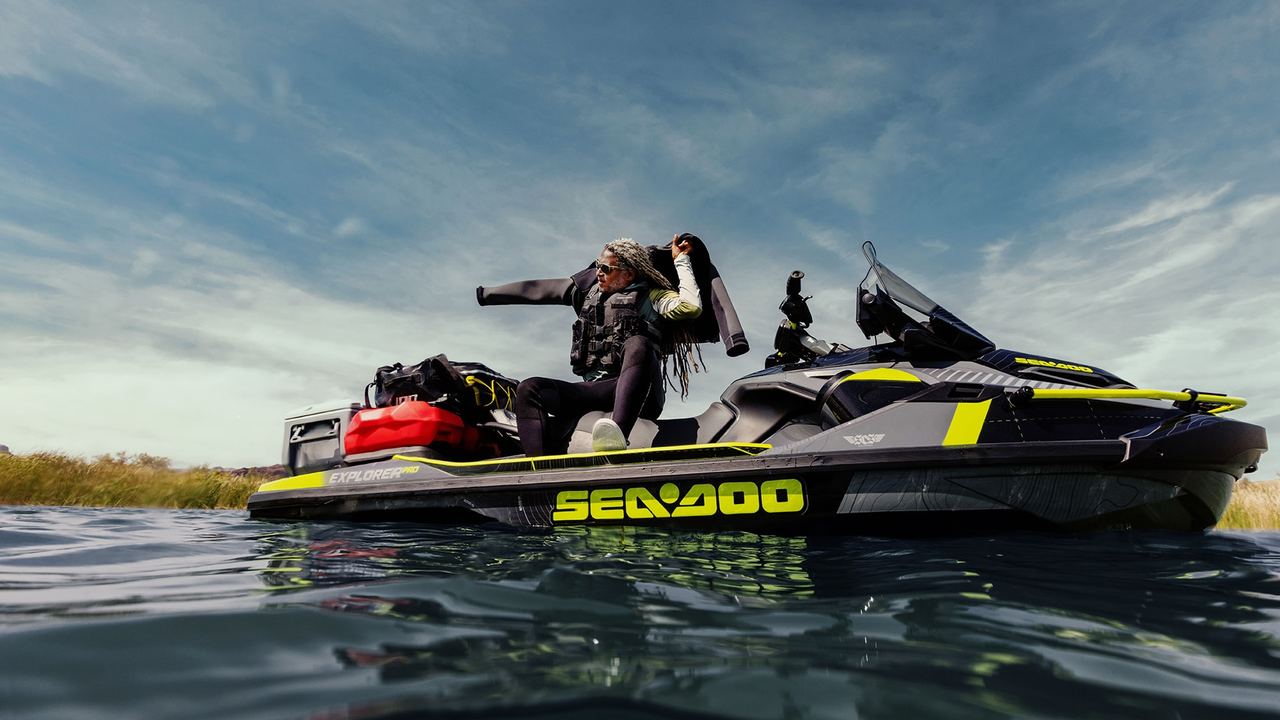
Il Sea-Doo Explorer Pro 230 2026 non è semplicemente una moto d’acqua più accessoriata. È una piattaforma touring costruita attorno a tre esigenze precise: trasportare materiale, ridurre l’affaticamento e mantenere controllo quando l’uscita dura più della consueta sessione sotto costa. Per valutarla correttamente bisogna quindi leggere insieme motore, scafo, stivaggi, interfaccia elettronica e procedure.
Il Rotax 1630 ACE da 230 hp è abbinato allo scafo ST3 in vetroresina. La lunghezza raggiunge 373,4 centimetri, la larghezza 126 e l’altezza 140; il peso a secco dichiarato è 416 chilogrammi, con olio e refrigerante ma senza carburante. Il serbatoio contiene 70 litri. Questi numeri descrivono un mezzo consistente, destinato a un carrello e a una logistica adeguati, non un giocattolo da spostare senza pianificazione.
Scheda tecnica essenziale
| Voce | Dato dichiarato | Controllo operativo |
|---|---|---|
| Motore | Rotax 1630 ACE, 230 hp | Livelli, raffreddamento, sovralimentazione e diagnostica |
| Cilindrata | 1.630 cm³ | Manutenzione secondo ore e calendario |
| Aspirazione | Sovralimentata con intercooler esterno | Tenuta manicotti e pulizia circuito aria |
| Raffreddamento | CLCS a circuito chiuso | Livello refrigerante e scambiatore |
| Scafo | ST3 in vetroresina | Carena, prese, protezioni e sigillature |
| Lunghezza / larghezza | 373,4 / 126 cm | Carrello, alaggio e posto di ricovero |
| Peso a secco | 416 kg | Aggiungere carburante, dotazioni e carico |
| Carburante | 70 l, 95 ottani | Autonomia calcolata con riserva |
| Capacità persone / peso | 3 / 273 kg | Distribuzione e limite complessivo |
| Piattaforma posteriore | 100 kg senza passeggero | Non sommare carichi statici senza verifica |
| Stivaggio totale | 198,9 l | Comprende la borsa Explorer LinQ |
| Display | Touchscreen 10,25″ con BRP Connect | Aggiornamenti, pairing e leggibilità |
La missione touring cambia la preparazione
Un’uscita lunga su una PWC espone conducente e macchina a cicli continui di urti, spruzzi, vibrazioni e variazioni di carico. L’Explorer Pro risponde con parabrezza touring, seduta Ergolock a due elementi, supporti per le ginocchia, poggiapiedi inclinati sul bordo, manubrio con riser regolabile e ammortizzatore idraulico di sterzo. Sono dispositivi che migliorano la postura, ma devono essere regolati sul conducente prima della partenza.
La sequenza di verifiche iniziale comprende altezza del manubrio, libertà dei comandi, posizione dei piedi, visuale attraverso il parabrezza e tenuta della chiave RF D.E.S.S. Ogni bagaglio aggiunto modifica la risposta del mezzo: la configurazione va provata in acque protette prima di affrontare un trasferimento.

Carico utile: 273 chilogrammi non sono tutti bagagli
La capacità di peso dichiarata è 273 chilogrammi e include persone, effetti personali e attrezzature. Non va confusa con il volume disponibile. Tre occupanti possono consumare gran parte del margine prima ancora di aggiungere acqua, abbigliamento, dotazioni di sicurezza e ricambi. Il controllo corretto usa pesi reali, non stime ottimistiche.
La piattaforma posteriore ha una capacità dichiarata di 100 chilogrammi senza passeggero. Questo limite riguarda la zona e le condizioni indicate, non costituisce un’aggiunta automatica ai 273 chilogrammi complessivi. I carichi LinQ devono essere fissati nei punti previsti e restare compatibili con imbarco, visuale posteriore e accesso alla scaletta.
Stivaggi: 96 più 100 più 2,9 litri
Il vano anteriore offre 96 litri e si raggiunge sollevando il manubrio, anche dalla seduta. Il comparto per il telefono è stagno, ammortizzato e dotato di USB. Il cassettino portaoggetti contiene 2,9 litri. La borsa Explorer LinQ aggiunge 100 litri; il totale dichiarato di 198,9 litri la include.
Il volume non dice come vada distribuita la massa. Nel vano anteriore conviene collocare oggetti compatti e protetti; nella borsa posteriore gli elementi pesanti restano bassi e vicini al centro. Ogni oggetto deve essere immobilizzato. Una tanica o un attrezzo libero può danneggiare il contenitore e alterare l’assetto durante un impatto sull’onda.

Scafo ST3 e assetto variabile
Lo ST3 è uno scafo in vetroresina, scelto per stabilità e controllo in acqua formata. La forma di carena non elimina la necessità di adattare velocità e trim. Con carico posteriore elevato, l’angolo di uscita, la risposta al gas e la sensibilità al vento cambiano; con un solo occupante, il comportamento è diverso rispetto alla configurazione a tre.
Il VTS consente di variare il trim. La procedura prudente parte da una regolazione neutra, osserva regime, spruzzi e stabilità, poi introduce piccole correzioni. Un assetto troppo positivo può aumentare il movimento verticale; uno troppo negativo può caricare la prua e rendere la guida pesante. Non esiste una posizione universale valida per ogni mare e carico.
Rotax 1630 ACE da 230 hp
Il tre cilindri da 1.630 cm³ eroga 230 hp attraverso sovralimentazione e intercooler esterno. Il sistema di alimentazione richiede benzina a 95 ottani. La potenza è rilevante, ma nell’impiego touring conta soprattutto la regolarità: risposta progressiva, temperature stabili, assenza di allarmi e capacità di mantenere un regime economico senza continui cambi di gas.
Prima della partenza si controllano livello olio secondo procedura, refrigerante, vano motore asciutto, fissaggio batteria, manicotti e segni di perdita. Dopo l’avviamento si ascoltano rumori anomali e si conferma che il display non mostri avvisi. A fine uscita il vano si riapre: tracce fresche d’acqua o olio vanno investigate subito.

Raffreddamento chiuso ed espulsione
Il CLCS usa un circuito chiuso per il motore, riducendo il contatto diretto del propulsore con acqua salata o contaminata. Non significa che l’intera macchina sia isolata dall’acqua esterna: gruppo pompa, scarico, scambiatore e componenti esposti richiedono comunque lavaggio e ispezione.
Il sistema di scarico D-Sea-BeI è parte dell’architettura dichiarata. Durante il controllo si cercano fascette lente, manicotti segnati, depositi e anomalie acustiche. Dopo uso in mare il risciacquo segue esattamente la sequenza prevista dal manuale; invertire tempi di acqua e motore può provocare danni.
Pompa, iDF e ispezione della presa
L’iDF permette di liberare la pompa da detriti tramite inversione del flusso, senza entrare in acqua. È un aiuto importante quando alghe o materiale leggero ostruiscono la presa, ma non sostituisce l’ispezione. Se vibrazione, cavitazione o perdita di spinta persistono, si arresta il motore e si verifica la zona in sicurezza.
Prima dell’alaggio si osservano griglia, girante accessibile, statore e bordo della piastra. Corde, sacchetti e sabbia possono causare danni anche dopo l’attivazione dell’iDF. Non si inseriscono mai mani o utensili nel condotto con chiave installata o sistema alimentato.
iBR: frenata, folle e retromarcia
L’iBR gestisce elettronicamente freno, folle e retromarcia. La leva non trasforma la PWC in un mezzo capace di arrestarsi istantaneamente e la direzionalità resta legata al getto. Prima di ogni uscita si prova il passaggio fra avanti, folle e retro a bassissima velocità, in uno spazio libero.
Durante l’ormeggio il conducente deve mantenere margine per vento e inerzia, evitando di affidarsi a correzioni tardive. Un comportamento irregolare, una posizione inattesa della benna o un messaggio di errore impongono lo stop della navigazione finché il sistema non è controllato.
iTC e modalità di guida
L’acceleratore elettronico iTC comprende Sport, ECO e modalità lenta; è presente anche il regolatore di velocità. ECO può aiutare a rendere più uniforme l’erogazione, ma non certifica un’autonomia specifica. Sport modifica la risposta ed è poco adatto a un carico non ancora collaudato. La modalità lenta semplifica manovre e avvicinamenti.
Il comando deve tornare libero e senza impuntamenti. Ogni cambio di modalità va confermato sul display. Se la macchina è condivisa, il briefing prima della partenza deve includere differenze di risposta, uso della chiave di sicurezza e arresto d’emergenza.

Display da 10,25 pollici e BRP Connect
Il modello 2026 adotta un touchscreen da 10,25 pollici con BRP Connect. Visualizza velocità, regime, carburante, consumo, autonomia stimata, profondità, ore veicolo, VTS e funzioni di navigazione, musica e connettività Bluetooth. La quantità di dati è utile solo se il conducente organizza la schermata prima di muoversi.
La preparazione comprende aggiornamento software, pairing del telefono, verifica delle carte disponibili, luminosità e prova dei comandi con guanti bagnati. L’autonomia mostrata è una stima che dipende dal consumo recente; non sostituisce il calcolo conservativo del carburante né una rotta alternativa.

Audio, USB e bilancio elettrico
Il BRP Premium Audio è integrato e il telefono può ricaricarsi tramite USB. Su una macchina esposta a spruzzi, vibrazioni e salsedine, connettori e tenute meritano controllo regolare. Il vano del telefono va chiuso pulito, senza sabbia sulla guarnizione e senza cavi schiacciati.
Prima di soste prolungate si evita di lasciare audio o accessori attivi. La batteria deve essere caricata con il dispositivo compatibile e fissata correttamente. Tensione bassa può generare anomalie elettroniche apparentemente scollegate, quindi la misura a riposo e durante avviamento è parte della diagnosi.
Seduta, parabrezza e ammortizzatore di sterzo
La seduta Explorer Touring a due elementi, la cinghia, i supporti per le ginocchia e i poggiapiedi sul bordo permettono di cambiare posizione nei trasferimenti. Il parabrezza riduce pressione e spruzzi. L’ammortizzatore idraulico di sterzo filtra movimenti indesiderati, soprattutto su acqua irregolare.
Questi componenti si controllano fisicamente: fissaggi della seduta, assenza di giochi nel manubrio, scorrimento del riser, integrità del parabrezza e risposta uniforme dello sterzo. Un attrito improvviso non va attribuito automaticamente all’ammortizzatore; può indicare un problema meccanico o un corpo estraneo.
Piattaforma posteriore, LinQ e imbarco
L’estensione di poppa aumenta superficie utile e ospita attacchi LinQ. La scaletta facilita la risalita, mentre le maniglie robuste aiutano nella movimentazione. Prima di partire si controllano scatti dei fissaggi, cinghie della borsa, libertà della scala e assenza di oggetti vicini alla presa del getto.
La configurazione del carico deve lasciare spazio per una risalita reale dall’acqua. È opportuno provarla con abbigliamento e giubbotto, a motore spento e chiave rimossa. Un bagaglio che rende impraticabile la scala è incompatibile con una missione di lungo raggio, anche se rientra nel volume disponibile.

Carburante e autonomia prudente
Il serbatoio contiene 70 litri, ma il costruttore non dichiara qui una distanza universale. Consumo e autonomia variano con mare, vento, velocità, carico e stile di guida. La pianificazione usa una riserva ampia, punti di rifornimento realmente operativi e una rotta di rientro più corta in caso di peggioramento.
Il dato del display va confrontato con litri imbarcati e ore percorse. Registrare rifornimenti, distanza e condizioni permette di costruire un profilo realistico della propria macchina. Durante un trasferimento non si aspetta l’allarme di basso livello per decidere il rientro.
Carrello, alaggio e lavaggio
Ai 416 chilogrammi a secco vanno aggiunti carburante, attrezzatura e carrello. Portata, assi, pneumatici, verricello e capacità di traino devono essere verificati sul complesso reale. Lo scafo ST3 richiede rulli o pattini regolati sui punti corretti, senza carichi concentrati o deformazioni.
Prima dell’alaggio si installano tappi previsti, si libera la zona della pompa e si prepara la cima. Dopo l’uso si risciacquano scafo, pompa, piattaforma e parti metalliche; il circuito segue la procedura stabilita. Il mezzo viene ricoverato asciutto e ventilato, con sedili aperti solo nelle modalità ammesse.
sequenza di verifiche prima della partenza
Il controllo comprende meteo e limiti locali, carburante, tappo, carena, presa del getto, impeller visibile, vano motore, batteria, olio, refrigerante, sterzo, acceleratore, iBR, chiave D.E.S.S., display, VTS, luci e dispositivi richiesti. Si aggiungono giubbotti della misura corretta, comunicazione, acqua, protezione termica e piano di rientro.
Bagagli e borsa LinQ vengono pesati, fissati e ricontrollati dopo i primi minuti. Telefono e strumenti di emergenza non vanno concentrati in un solo contenitore. Chi resta a terra deve conoscere itinerario e orario previsto.
sequenza di verifiche dopo il rientro
A motore spento si ispezionano carena, griglia, piattaforma, attacchi LinQ e vano motore. Si registra qualsiasi vibrazione, allarme o variazione di risposta percepita. Il lavaggio viene completato prima che il sale asciughi; poi si asciugano stivaggi, borsa e vano telefono.
Carburante, ore, interventi e anomalie entrano nel registro manutentivo. La batteria viene gestita in base alla durata della sosta. Se il mezzo ha ingerito detriti o ha urtato il fondo, l’assenza di un allarme non basta: pompa e carena richiedono una verifica dedicata.

Valutazione tecnica finale
L’Explorer Pro 230 2026 combina potenza, capacità di carico e strumenti digitali in una delle configurazioni PWC più orientate al viaggio. Il vero valore non è il singolo accessorio, ma la coerenza fra scafo ST3, ergonomia, stivaggi, estensione posteriore, iDF, iBR, VTS, ammortizzatore di sterzo e interfaccia da 10,25 pollici.
La stessa ricchezza richiede metodo. Con tre persone, borsa piena e serbatoio da 70 litri, pesi e autonomia vanno calcolati; elettronica e sistemi di assistenza devono essere provati; lavaggio e manutenzione non possono essere rimandati. Preparato con una sequenza di verifiche rigorosa, il 230 è una macchina credibile per trasferimenti e scoperta. Usato come se volume di carico e potenza eliminassero i limiti, perde invece proprio il margine di sicurezza che il progetto cerca di costruire.